
2027 Fastest Online Master’s in Industrial Engineering Programs

Co-Founder and Chief Data Scientist
Many busy professionals holding bachelor's degrees aim to advance their careers through a master's program. However, they often wonder if accelerated online master's in industrial engineering programs exist and if these virtual options match the quality of traditional on-campus degrees.
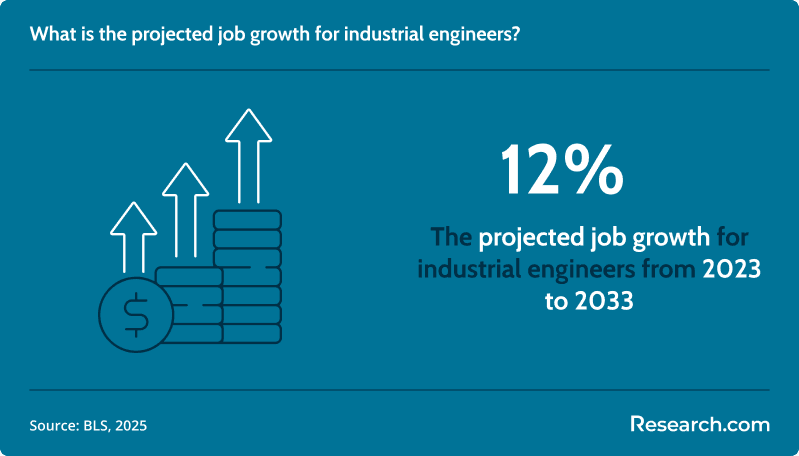
The job market for industrial engineers is robust; employment in this field is projected to grow by 12% between 2023 and 2033, making an advanced degree a significant advantage.
Research.com's team, with over a decade of expertise in career planning, has compiled this article using only reliable sources. We directly address your questions about program availability and quality. Continue reading to gain a clear understanding of the fastest online master's in industrial engineering programs available this year.
What are the benefits of getting an online master’s in industrial engineering program?
- An online master's in industrial engineering advanced positions in industrial engineering and related fields such as supply chain manager, production manager, quality engineer, logistics analyst, and management analyst, preparing you to lead in diverse industries, including aerospace, manufacturing, healthcare, and technology.
- Industrial engineers with a master's degree earn a median salary of $99,380 to $101,140 per year, significantly higher than the national average and bachelor’s degree counterparts.
- This online master's program provides ultimate flexibility for working professionals, letting you balance studies with your career and personal life while gaining the latest skills and credentials from anywhere.
What can I expect from an online master’s in industrial engineering program?
An online master’s in industrial engineering program offers a focused curriculum in areas such as operations research, quality control, supply chain management, and systems engineering. Most programs include a capstone project, letting you solve real-world industry challenges, while some also require internship hours for practical experience.
Tuition can range from $15,000 to $40,000, depending on the school and your residency status. Online courses are delivered through interactive platforms that combine live lectures, recorded sessions, group discussions, and hands-on activities. This flexible format allows you to study at your own pace, connect with classmates and faculty virtually, and apply new skills directly to your current job or career advancement.
Where can I work with an online master’s degree in industrial engineering?
An online master’s degree in industrial engineering prepares you for diverse careers across many sectors. Graduates land jobs in corporate offices, government agencies, nonprofits, and even launch their own businesses. Many find opportunities in management, consulting, process improvement, research, or highly specialized fields such as operations, logistics, and quality control.
With this degree, you can work in industries like manufacturing, aerospace, healthcare, technology, and education. Professionals often hold roles such as operations manager, supply chain manager, project manager, and business analyst.
According to recent data, openings for industrial engineers are projected to be about 25,200 each year. Essential skills gained include problem-solving, communication, and critical thinking, which help you thrive in any environment.
How much can I make with an online master’s degree in industrial engineering?
Professionals with an online master’s degree in industrial engineering can expect an average annual salary of around $101,140, although this varies by industry, experience, and location. Entry-level graduates may start at $83,498, while experienced engineers or those in leadership roles can earn significantly more.
Industries like technology and aerospace often offer higher pay than manufacturing or government sectors. Advanced degrees and certifications typically boost salary potential by 15 to 20%, positioning graduates for senior roles or specialized consulting work. Online degree holders gain the same recognition and earning potential as traditional graduates, making this a strong investment for career growth and salary advancement in the field.
- List of the Best Online Master’s in Industrial Engineering Programs for 2027 List of Programs
- How long does it take to complete an online Master’s in Industrial Engineering program? Completion Time
- How does an online Master’s in Industrial Engineering program compare to an on-campus program? How does an online Master’s in Industrial Engineering program compare to an on-campus program?
- What is the average cost of an online Master’s in Industrial Engineering program? Average Cost
- What are the financial aid options for students enrolling in an online Master’s in Industrial Engineering program? Financial Aid
- What are the prerequisites for enrolling in an online Master’s in Industrial Engineering program? Requirements
- What courses are typically in an online Master’s in Industrial Engineering program? What courses are typically in an online Master’s in Industrial Engineering program?
- What types of specializations are available in an online Master’s in Industrial Engineering program? What types of specializations are available in an online Master’s in Industrial Engineering program?
- How to Choose the Best Online Master’s in Industrial Engineering Program How to Choose the Best Online Master’s in Industrial Engineering Program
- What career paths are available for graduates of an online Master’s in Industrial Engineering program? Career Paths
- How do emerging technologies enhance accelerated online learning in industrial engineering? How do emerging technologies enhance accelerated online learning in industrial engineering?
- How can interdisciplinary skills between industrial and software engineering boost career opportunities? How can interdisciplinary skills between industrial and software engineering boost career opportunities?
- What is the job market for graduates with an online Master’s in Industrial Engineering program? Job Market
- What challenges do students face in accelerated online master’s programs and how can they overcome them? What challenges do students face in accelerated online master’s programs and how can they overcome them?
- How can industrial engineering principles enhance opportunities in the healthcare sector? How can industrial engineering principles enhance opportunities in the healthcare sector?
Best Online Master’s in Industrial Engineering Programs for 2027
Choosing an online master’s in industrial engineering is usually a career decision, not just an academic one. The right program can help engineers, analysts, operations professionals, and technical managers build stronger skills in optimization, systems design, logistics, quality improvement, simulation, and data-driven decision-making without leaving the workforce.
This guide is designed for students comparing online industrial engineering master’s programs and trying to answer practical questions: Which programs are credible? How much do they cost? How long do they take? What courses and specializations matter? How do online programs compare with campus-based options? And what career paths can follow after graduation?
Below, you will find a ranked program list, side-by-side decision tables, admissions and cost guidance, career options, common mistakes to avoid, and key questions to ask before applying.
Quick Answer: Is an Online Master’s in Industrial Engineering Worth Considering?
An online master’s in industrial engineering can be a strong fit for professionals who want to improve complex systems, reduce waste, optimize supply chains, analyze operations, or move into engineering leadership while continuing to work. Most programs require about 30 credits, often take 1.5 to 2 years of full-time study, and are commonly designed with working professionals in mind.
The best choice depends on your goals. Students seeking applied engineering leadership may prefer a Master of Engineering format, while those interested in research, analytics, or further doctoral study may lean toward a Master of Science. Before enrolling, compare accreditation, curriculum depth, tuition, residency rules, synchronous course requirements, employer support, and whether the program’s specialization matches your target industry.
How Research.com Ranked These Online Master’s in Industrial Engineering Programs
Because graduate school can be a major financial and professional commitment, our ranking process emphasizes transparent information that helps students compare programs more confidently.
The ranking uses established data sources, including the Integrated Postsecondary Education Data System, Peterson's database, the College Scorecard database, and the National Center for Education Statistics. These sources help support program evaluation across institutional quality, affordability, student outcomes, and academic factors. To learn more about how Research.com evaluates schools and programs, see our ranking methodology.
Best Online Master’s in Industrial Engineering Programs
1. Clemson University - Master of Engineering in Industrial Engineering
Clemson University offers an online Master of Engineering in Industrial Engineering for professionals who want to strengthen organizational performance, improve supply chains, and apply engineering management principles in real workplace settings. The program is delivered 100% online through asynchronous coursework, making it practical for students balancing graduate study with full-time work. Clemson also offers flexible pacing, no GRE requirement, and no U.S. residency requirement.
- Program length: Flexible, with 2-year and 3.3-year plans available.
- Cost per credit: $3,100 per 3-credit-hour class
- Total credits: 30 credits
- Accreditation: Southern Association of Colleges and Schools Commission on Colleges (SACSCOC)
2. Columbia University - Master's Degree in Systems Engineering
Columbia University provides a fully online Master’s Degree in Systems Engineering for students with a background in engineering or mathematics. The program is built around complex project management, operations knowledge, applied systems, probability, and optimization. Students can use electives to tailor the degree toward their professional interests while building a stronger foundation in large-scale systems thinking.
- Program length: 24 months
- Cost per credit: $2,584
- Total credits: 30 credits
- Accreditation: Middle States Commission on Higher Education (MSCHE)
3. Georgia Institute of Technology - Master of Science in Industrial Engineering
Georgia Tech offers an online Master of Science in Industrial Engineering for students with strong quantitative preparation who want graduate-level training in modeling, simulation, optimization, manufacturing systems, warehousing, and supply chain problem-solving. The program does not require a thesis and allows students to use electives to develop more specialized expertise.
- Program length: 1-2 years
- Cost per credit: $1,092
- Total credits: 30 credits
- Accreditation: SACSCOC
4. Kansas State University - Master of Science in Industrial Engineering
Kansas State University delivers a 100% online Master of Science in Industrial Engineering for professionals who want a mix of engineering, operations, and business-oriented coursework. Students study areas such as quality engineering, production control, and operations research. The program offers elective flexibility, but students should note the required on-campus oral examination when assessing travel and scheduling obligations.
- Program length: 1-2 years
- Cost per credit: $840.84
- Total credits: 30 credits
- Accreditation: Higher Learning Commission (HLC)
5. North Carolina State University - Master of Industrial Engineering
North Carolina State University offers an online Master of Industrial Engineering designed for self-supported students, military learners, and part-time professionals. Delivered through WolfWare, the program covers broad industrial engineering topics, including supply chain systems and economic analysis. Students can pursue optional project work, and the program does not require on-campus residency.
- Program length: 1-2 years
- Cost per credit: $679.43
- Total credits: 30 credits
- Accreditation: SACSCOC
6. Purdue University - Master of Science in Industrial Engineering
Purdue University offers a 100% online, asynchronous Master of Science in Industrial Engineering for professionals in engineering, manufacturing, logistics, and related technical fields. Students can build a customized plan of study across human factors, manufacturing, operations research, production systems, and analytical decision-making. The program is suited for learners who want a flexible graduate credential from a widely recognized engineering institution.
- Program length: 1-2 years
- Cost per credit: $1,139 (Indiana residents), $1,459 (non-residents).
- Total credits: 30 credits
- Accreditation: HLC
7. Texas A&M University - Master of Engineering in Industrial Engineering Online
Texas A&M offers an online Master of Engineering in Industrial Engineering focused on designing, analyzing, and improving complex systems. The program, ranked #1 in Texas, emphasizes data analysis, optimization, statistics, and human factors. Graduates can apply these tools in manufacturing, healthcare, supply chain systems, and other settings where organizations need better performance, reliability, and efficiency.
- Program length: 1.5 years
- Cost per credit: $54,000 (total program cost)
- Total credits: 30 credits
- Accreditation: SACSOC
8. University of Central Florida - Master of Science in Industrial Engineering
The University of Central Florida offers a fully online Master of Science in Industrial Engineering for students who want to improve effectiveness and efficiency in manufacturing and service environments. The program requires no GRE and includes both thesis and non-thesis options. Students can focus on six areas, including Human Systems, Operations Research, and Systems Engineering.
- Program length: 1-2 years
- Cost per credit: In-state: $327.32; Out-of-state: $1,151.72.
- Total credits: 30 credit hours.
- Accreditation: SACSCOC
9. University of Illinois at Urbana-Champaign - Master of Science in Industrial Engineering
The University of Illinois offers an online Master of Science in Industrial Engineering through the Grainger College of Engineering. The program is flexible and allows students to shape their coursework around career goals or research interests. Sample curricula are available, but the degree structure gives students room to build a more personalized graduate pathway.
- Program length: 1.5-2 years
- Cost per credit: $1,186
- Total credits: 36 credits
- Accreditation: HLC
10. University of Southern California - Master of Science in Industrial and Systems Engineering
The University of Southern California offers an online Master of Science in Industrial and Systems Engineering through DEN@Viterbi. The program is built for engineers and technical professionals who want a broader understanding of technical enterprises, organizational performance, systems methods, and theories that support profitability and operational improvement. Graduates may apply the degree across sectors such as healthcare, manufacturing, and technology-driven operations.
- Program length: 1.5 to 2 years
- Cost per credit: $2,665
- Total credits: 28
- Accreditation: Western Association of Schools and Colleges (WASC)
Online Master’s in Industrial Engineering Program Comparison
| School | Program | Length | Credits | Best Fit |
| Clemson University | Master of Engineering in Industrial Engineering | Flexible, with 2-year and 3.3-year plans available. | 30 credits | Working professionals who want an applied industrial engineering and management focus. |
| Columbia University | Master's Degree in Systems Engineering | 24 months | 30 credits | Students with engineering or math backgrounds who want systems-level project and optimization training. |
| Georgia Institute of Technology | Master of Science in Industrial Engineering | 1-2 years | 30 credits | Quantitative students interested in modeling, simulation, manufacturing, warehousing, and supply chain systems. |
| Kansas State University | Master of Science in Industrial Engineering | 1-2 years | 30 credits | Professionals who want engineering, business, quality, and operations coursework. |
| North Carolina State University | Master of Industrial Engineering | 1-2 years | 30 credits | Part-time, military, and self-supported learners seeking broad industrial engineering training. |
| Purdue University | Master of Science in Industrial Engineering | 1-2 years | 30 credits | Professionals seeking asynchronous study and a customizable plan across core IE areas. |
| Texas A&M University | Master of Engineering in Industrial Engineering Online | 1.5 years | 30 credits | Learners focused on complex systems, optimization, analytics, and applied engineering practice. |
| University of Central Florida | Master of Science in Industrial Engineering | 1-2 years | 30 credit hours. | Students who want thesis or non-thesis flexibility and multiple focus areas. |
| University of Illinois at Urbana-Champaign | Master of Science in Industrial Engineering | 1.5-2 years | 36 credits | Students seeking a highly customizable industrial engineering graduate curriculum. |
| University of Southern California | Master of Science in Industrial and Systems Engineering | 1.5 to 2 years | 28 | Engineers and technical professionals interested in systems engineering and organizational performance. |
How Long Does It Take to Complete an Online Master’s in Industrial Engineering?
Most online master’s in industrial engineering programs require around 30 credit hours. Full-time students often finish in 1.5 to 2 years, while accelerated formats may allow highly prepared students to complete the degree in as little as one year.
Part-time students usually need about three years or longer, depending on course availability, employer demands, family responsibilities, and whether the program has capstone, project, thesis, exam, or residency requirements. Many online programs rely heavily on asynchronous lectures and digital assignments, although some may include live sessions, group projects, or occasional in-person obligations.
Students comparing speed-focused graduate pathways may also find it useful to review how other fields structure compressed study options, such as fast-track online architecture degrees.
Online vs. On-Campus Master’s in Industrial Engineering: What Is the Difference?
An online master’s in industrial engineering often covers the same academic content as an on-campus program, especially when it is offered by the same university and taught by the same faculty. The primary difference is delivery. Online students complete lectures, assignments, discussions, projects, and exams through digital platforms, which can make graduate study more manageable for working professionals.
Campus-based programs may offer more face-to-face interaction, access to physical labs, and in-person networking. Online programs, however, increasingly use simulations, virtual collaboration tools, discussion platforms, recorded lectures, and digital modeling environments to support applied learning.
Students who want to combine engineering systems knowledge with workplace behavior, leadership, and organizational analysis may also compare related options such as fastest industrial organizational psychology master's programs online.
| Factor | Online Master’s in Industrial Engineering | On-Campus Master’s in Industrial Engineering |
| Schedule flexibility | Usually stronger, especially in asynchronous programs. | Often tied to fixed class times and campus schedules. |
| Best for | Working professionals, military students, part-time learners, and students who cannot relocate. | Students who prefer in-person instruction, campus networking, and direct access to facilities. |
| Interaction | Occurs through forums, video meetings, group projects, messaging, and virtual office hours. | Happens through classroom discussion, labs, student organizations, and campus events. |
| Hands-on learning | May use simulations, case studies, virtual labs, and remote collaboration. | May include more direct physical lab access and in-person project work. |
| Employer perception | Often viewed similarly when the institution is accredited and the curriculum is rigorous. | Traditional format may be preferred by students who value campus experience. |
| Transcript distinction | Transcripts typically do not distinguish between online and on-campus degrees. | Transcript usually reflects the degree, not the delivery mode. |
The chart below shows the projection of graduate student distribution by delivery mode in 2025.
What Is the Average Cost of an Online Master’s in Industrial Engineering?
The average total cost of an online Master’s in Industrial Engineering program in the U.S. is about $27,300 for in-state students, but actual tuition varies widely by institution, residency status, and fee structure. Some in-state options cost as little as $7,570, while other programs can exceed $40,000.
Per-credit tuition commonly ranges from around $800 to $1,500 or more, and many programs require about 30 credits. Out-of-state rates and private university tuition are often substantially higher than in-state public university rates. Students should also budget for books, software, technology fees, proctoring fees, and any required travel or campus visits.
| Cost Factor | Why It Matters | What to Ask Before Enrolling |
| Tuition per credit | This is usually the largest direct cost and varies significantly by school and residency status. | Is the posted rate the same for online students, in-state students, and out-of-state students? |
| Total credits | A lower per-credit rate may still lead to a higher total cost if the program requires more credits. | How many credits are required for graduation, and are prerequisite credits extra? |
| Online fees | Technology, platform, and distance-learning fees can raise the total cost. | Are fees included in the tuition estimate or billed separately? |
| Residency or campus requirements | Even mostly online programs may require travel for exams, presentations, or residencies. | Will I need to pay for transportation, lodging, or time away from work? |
| Employer support | Tuition reimbursement can significantly reduce out-of-pocket expenses. | Does my employer cover graduate engineering coursework, and what grade or service requirements apply? |
Students who are comparing graduate engineering with shorter, more vocational pathways may also want to review options such as the cheapest maintenance technician classes online, which serve a different training purpose and cost profile.
Financial Aid Options for Online Master’s in Industrial Engineering Students
Online graduate students may have access to several funding sources, but eligibility depends on the school, enrollment status, accreditation, employer policies, and student circumstances.
- Federal financial aid: Students in eligible accredited programs can apply for federal aid by submitting the FAFSA form.
- Institutional aid: Universities may offer scholarships, fellowships, tuition discounts, or graduate awards for online learners. Availability varies by department and funding cycle.
- Employer tuition assistance: Many engineering and operations professionals use employer reimbursement or education benefits to reduce direct costs.
- Private scholarships and fellowships: Engineering societies, professional organizations, foundations, and industry groups may offer awards for graduate engineering students.
- Military benefits: Veterans, active-duty service members, and eligible dependents may be able to use GI Bill benefits or other military education funding.
Admission Requirements for Online Master’s in Industrial Engineering Programs
Admissions requirements vary by university, but most online master’s in industrial engineering programs expect applicants to show strong quantitative preparation and readiness for graduate-level engineering coursework.
- Accredited bachelor’s degree: Applicants typically need a bachelor’s degree from an accredited institution, commonly in engineering, mathematics, science, or another quantitative field. Students who still need a quantitative undergraduate foundation may compare options such as fast-track online bachelors in mathematics degree programs.
- Minimum GPA: Many programs look for a GPA around 3.0 to 3.2 on a 4.0 scale, often focusing on the last 60–90 credits of undergraduate study or any prior graduate coursework.
- Prerequisite coursework: Common expectations include calculus, often Calculus I and II and sometimes Calculus III, as well as probability and statistics. Some programs may also require or recommend linear algebra.
- Application materials: Students usually submit an application form, official transcripts, a personal statement, and sometimes letters of recommendation.
- English proficiency: Applicants whose native language is not English may need to provide proof of English language proficiency.
- GRE or GMAT policy: Some programs waive standardized testing, while others require or recommend GRE or GMAT scores.
- Professional experience: Work experience can strengthen an application, especially for programs designed around applied engineering practice.
- Bridge coursework: Students missing prerequisites may be required to complete additional courses early in the program.
Common Courses in an Online Master’s in Industrial Engineering
Curricula differ by school, but online industrial engineering master’s programs usually combine quantitative methods, systems thinking, operations management, and applied decision tools. Students interested in environmental decision-making and sustainability alongside engineering may also compare a fast track environmental science degree online.
Core Subjects
- Operations Research: Students study optimization methods such as linear programming, integer programming, stochastic processes, and related decision models.
- Production and Operations Management: Coursework examines the planning, design, and control of manufacturing systems, service operations, supply chains, and logistics networks.
- Engineering Economics: Students learn how to evaluate cost, risk, uncertainty, resource allocation, and economic trade-offs in engineering decisions.
- Quality Control and Improvement: Courses focus on quality systems, statistical process control, assurance methods, and continuous improvement approaches.
- Systems Simulation and Modeling: Students use modeling and discrete-event simulation to analyze complex industrial and service systems.
Popular Specializations in Online Industrial Engineering Master’s Programs
Specializations help students connect the degree to a specific industry or role. The right concentration should match the problems you want to solve after graduation, not just the trendiest topic on a program website.
- Supply Chain & Logistics Management: Focuses on the design, analysis, and improvement of supply chains, distribution systems, transportation networks, and logistics processes.
- Systems Engineering: Emphasizes the integration of people, technology, processes, requirements, and large-scale engineering systems.
- Advanced Analytics or Data Science in Engineering: Applies data analytics and machine learning methods to operations, maintenance, quality, forecasting, and process improvement problems.
- Smart Manufacturing and Industry 4.0: Covers automation, digital manufacturing, industrial data, connected systems, and technology-enabled factory transformation.
- Human Systems Engineering/Ergonomics: Examines how people interact with machines, workplaces, systems, and processes to improve safety, comfort, productivity, and usability. Students who want to add policy or governance knowledge to a technical background may also review the fastest online bachelor's degree in political science.
The chart below shows the top skills for aspiring industrial engineers:
How to Choose the Best Online Master’s in Industrial Engineering Program
The best online industrial engineering master’s program is the one that fits your career target, budget, learning style, academic background, and schedule. A prestigious school may not be the best option if the curriculum does not match your goals, the tuition is unrealistic, or the delivery format conflicts with your work responsibilities. Students exploring adjacent technical and creative fields may also compare online audio and music degrees, especially if they are interested in sound engineering or production technology.
1. Confirm Institutional Accreditation
Start with institutional accreditation, because it affects credibility, transferability, and financial aid eligibility. Regional accreditation from bodies such as SACSCOC, HLC, MSCHE, or WASC helps verify that the institution meets recognized quality standards. For engineering programs, also check whether the department or related programs hold field-specific recognition and ask the school directly how accreditation applies to the graduate program you are considering.
2. Match the Curriculum to Your Career Goal
Industrial engineering is broad. A student aiming for supply chain leadership should not evaluate programs the same way as someone focused on human factors, analytics, manufacturing systems, quality engineering, or operations research. Review required courses, electives, capstone options, and faculty expertise before applying.
3. Decide Between a Master of Engineering and a Master of Science
A Master of Engineering often emphasizes applied professional practice, while a Master of Science may include more research-oriented or analytical depth, depending on the institution. The distinction can affect your course options, thesis expectations, and long-term plans. For a deeper comparison, review Research.com’s guide to Master of Engineering vs Master of Science programs.
4. Check Delivery Format Carefully
Do not assume every online program is fully asynchronous. Some include live sessions, scheduled exams, group meetings, on-campus exams, or presentation requirements. If you work full time or travel often, ask how much flexibility is built into weekly coursework.
5. Evaluate Faculty, Projects, and Networking
Strong online programs provide more than recorded lectures. Look for faculty with relevant research or industry experience, applied projects, alumni networks, virtual collaboration opportunities, career support, and employer-connected learning where available.
| Question to Ask | Why It Matters |
| Is the university institutionally accredited? | Accreditation affects credibility, financial aid, and degree recognition. |
| Does the curriculum include my target area? | Specializations should support the role or industry you want after graduation. |
| Are courses asynchronous, synchronous, or mixed? | Format determines how easily the program fits around work and personal obligations. |
| Are there thesis, capstone, exam, or residency requirements? | These requirements can affect timeline, travel, and workload. |
| What is the full cost after fees? | Tuition alone may not reflect the total cost of attendance. |
| Can I transfer credits or waive prerequisites? | Transfer and prerequisite policies can change both cost and completion time. |
Career Paths for Graduates With an Online Master’s in Industrial Engineering
Graduates can pursue roles across manufacturing, logistics, healthcare, consulting, technology, government, transportation, retail, and service operations. The degree is especially useful for professionals who want to analyze systems, improve productivity, manage complex projects, and support operational decision-making.
- Operations Manager: Oversees production or service processes, manages teams, improves efficiency, and monitors performance.
- Supply Chain Manager: Designs and manages supplier networks, logistics systems, inventory flows, and distribution strategies.
- Project Manager: Leads projects from planning through delivery while managing schedule, budget, scope, and quality. Related roles include project management specialist jobs.
- Quality Assurance Engineer: Develops and monitors systems that help organizations maintain product or service quality.
- Industrial Engineer: Uses engineering, analytics, and systems thinking to improve labor, materials, processes, equipment, and workflows.
How Technology Is Changing Online Industrial Engineering Education
Simulation tools, virtual labs, collaboration platforms, and AI-supported analytics are changing how online students practice industrial engineering skills. These tools can help students analyze process flows, model operational scenarios, test optimization strategies, and work on team-based projects without being physically present in a lab.
For accelerated online learning, technology is especially important. Students need clear access to course platforms, data tools, modeling software, faculty support, and peer collaboration spaces. Similar trends can be seen in other technical online programs, including the computer science degree fast track, where curriculum design and digital delivery strongly influence student success.
Why Industrial Engineering and Software Skills Are Increasingly Connected
Industrial engineering increasingly overlaps with software, analytics, automation, and digital operations. Professionals who understand both process optimization and technical tools may be better prepared to work on smart manufacturing, custom simulation, quality control systems, automation projects, and digital transformation initiatives.
Students who want to broaden their technical base may compare engineering graduate study with the most affordable online software engineering degree programs. This can be especially useful for learners who want stronger coding, systems development, or analytics capabilities alongside industrial engineering knowledge.
Job Market for Industrial Engineering Master’s Graduates
The job market for industrial engineers is favorable. Employment for industrial engineers is projected to grow 12% from 2023 to 2033, which is much faster than the average for all occupations. This projection equals about 25,200 openings each year in the U.S. during the decade.
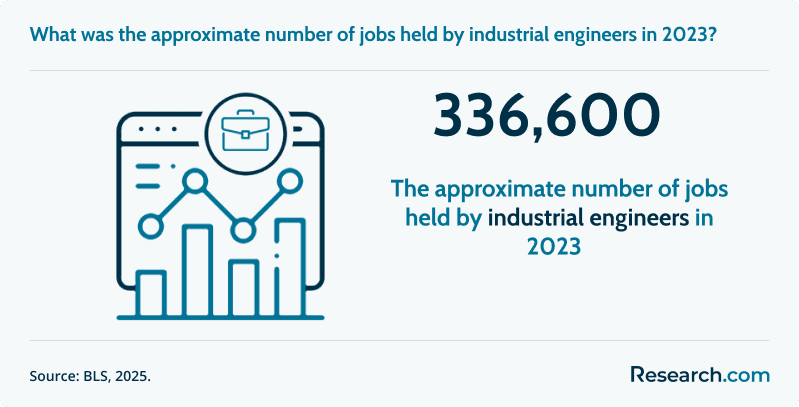
In 2023, industrial engineers held approximately 336,600 positions. The largest employers for these professionals included:
Challenges in Accelerated Online Master’s Programs and How to Manage Them
Accelerated online master’s programs can be demanding because they compress graduate-level work into a shorter timeframe. Students often face tight deadlines, limited in-person interaction, heavy reading and project loads, and a greater need for self-direction.
The best way to reduce risk is to evaluate support before enrolling. Ask whether the program provides tutoring, technical assistance, faculty access, writing help, advising, career services, and structured collaboration tools. Students comparing accelerated formats in other fields, such as fastest masters in health informatics online programs, can use those examples to understand how workload, pacing, and digital support affect the learning experience.
How Industrial Engineering Applies to Healthcare
Industrial engineering methods are highly relevant in healthcare because hospitals, clinics, insurers, and health systems all depend on complex processes. Graduates can apply systems thinking, lean methods, operations research, quality improvement, and resource allocation strategies to problems such as patient flow, staffing, scheduling, supply use, wait times, and clinical process improvement.
Professionals who want to combine process optimization with healthcare leadership may also consider a healthcare administration online degree to build management knowledge specific to healthcare organizations.
Common Mistakes to Avoid When Choosing an Online Industrial Engineering Master’s Program
- Choosing only by ranking: Rankings can help narrow a list, but curriculum fit, cost, accreditation, and schedule compatibility matter more for your personal outcome.
- Ignoring total cost: Tuition per credit is only one part of the bill. Fees, travel, books, software, and prerequisite coursework can change the real price.
- Assuming all online programs are fully flexible: Some programs have live classes, fixed deadlines, group meetings, exams, or on-campus requirements.
- Overlooking prerequisites: Missing calculus, statistics, or linear algebra preparation can delay admission or add extra coursework.
- Not comparing MS and MEng formats: The degree type can influence thesis expectations, research depth, and applied project work.
- Assuming salary outcomes are guaranteed: A master’s degree can strengthen qualifications, but career results depend on experience, location, industry, employer demand, and demonstrated skills.
- Failing to ask about career support: Online students should still have access to advising, networking opportunities, and career resources.
What Graduates Say About Earning an Online Master’s in Industrial Engineering
- Nala: "Completing my Master’s in Industrial Engineering online made it possible to keep working full time while moving forward academically. The flexible schedule let me bring new process improvement ideas into my job right away, which made the coursework feel immediately useful."
- Deither: "The online format helped me study complex systems without disrupting my work schedule. I could pause, review, and revisit difficult analytical concepts until I understood them, which gave me more confidence with large-scale optimization problems."
- Marshall: "My online master’s program gave me the balance I needed between school, work, and personal responsibilities. Courses in areas like supply chain management helped me contribute more directly to operational improvements at my company."
References
- 25 of the highest-paying industrial engineering jobs in 2025. (2025). ZipRecruiter. Retrieved July 23, 2025, from https://www.ziprecruiter.com/g/Highest-Paying-Industrial-Engineering-Jobs
- Entry-level Industrial Engineering salary. (2025). ZipRecruiter. Retrieved July 23, 2025, from https://www.ziprecruiter.com/Salaries/Entry-Level-Industrial-Engineering-Salary
- Hanson, M. (2024, August 31). Cost of Online Education vs. Traditional Education [2024]: Comparison. Education Data Initiative. https://educationdata.org/cost-of-online-education-vs-traditional-education
- How to become an industrial engineer: what it is and career path - Zippia. (2025, January 8). https://www.zippia.com/industrial-engineer-jobs
- Industrial Engineers. (2023, April 25). Bureau of Labor Statistics. https://www.bls.gov/oes/2023/may/oes172112.htm
- Industrial Engineers. (2025, August 28). Bureau of Labor Statistics. https://www.bls.gov/ooh/architecture-and-engineering/industrial-engineers.htm#tab-6
Key Insights
- An online master’s in industrial engineering is best suited for professionals who want to improve systems, operations, supply chains, quality, analytics, or engineering management while continuing to work.
- Most programs require about 30 credits and commonly take 1.5 to 2 years full time, though part-time pathways can extend to about three years or longer.
- Cost varies widely. The average total cost is about $27,300 for in-state students, but program totals can range from as little as $7,570 in-state to more than $40,000.
- Do not choose a program based only on prestige. Compare accreditation, curriculum focus, degree type, delivery format, faculty expertise, total cost, and career support.
- Students targeting applied leadership may prefer a Master of Engineering, while those interested in research depth, analytics, or doctoral preparation may prefer a Master of Science.
- Industrial engineering graduates can work in manufacturing, logistics, healthcare, consulting, government, technology, and service operations, with roles involving optimization, quality, project management, and systems improvement.
- The strongest applicants usually have quantitative preparation in calculus, probability, statistics, and related technical coursework, along with clear professional goals.
- Before enrolling, ask whether the online program has live class requirements, residency obligations, prerequisite courses, capstone or thesis expectations, and fees beyond tuition.
Other Things You Should Know About Online Master’s in Industrial Engineering Programs
The fastest online master's programs in industrial engineering for 2027 include those from reputable institutions like Purdue University and Arizona State University. These programs often feature accelerated formats, allowing completion in as little as one year, while maintaining rigorous academic standards.
Prerequisites typically include a bachelor's degree in engineering or a related field, a minimum GPA, and foundational knowledge in math and science. Some programs may also require relevant work experience or GRE scores for admission.


