2027 Considering a Major in Social Work? What You Need to Know

Co-Founder and Chief Data Scientist
Choosing a social work major is usually a values-driven decision, but it should also be a practical one. You are preparing for a profession that asks you to support individuals, families, schools, hospitals, agencies, and communities through problems such as poverty, abuse, mental illness, addiction, housing insecurity, discrimination, and crisis response.
A social work degree can lead to meaningful work, but the path is not one-size-fits-all. Your degree level, field placements, state licensure rules, specialization, and willingness to pursue graduate education can strongly affect your career options and pay. This guide explains what social work majors study, what social workers do, how much programs may cost, what jobs are available, how licensing works, and how to decide whether this major fits your goals.
Major in Social Work Table of Contents
- What should I expect from a major in social work?
- Why should I major in social work?
- What skills do I need to become a social worker?
- What can you do with a degree in social work?
- How can I advance my career in social work?
- What is the licensing procedure for social workers?
- What role does macro-level social work play in driving systemic change?
- Is earning a social work degree a worthwhile investment?
- What factors significantly impact social work compensation?
- What are the benefits of earning a doctorate in social work?
- What distinguishes advanced standing MSW programs from traditional programs?
- What are the admission requirements for social work programs?
- What are the long-term career outcomes for social work graduates?
- What extracurricular opportunities can enhance your social work education?
- How can I find affordable online programs in social work?
- How can you choose the right social work program for you?
- How can mentorship and networking transform your social work career?
- What are the career advantages of earning a degree from an accelerated MSW program?
Quick answer: Is social work a good major?
Social work can be a strong major if you want a people-centered career in counseling support, case management, child welfare, healthcare, schools, public agencies, nonprofit services, or community advocacy. It is especially useful if you plan to pursue a CSWE-accredited Bachelor of Social Work or Master of Social Work and understand your state’s licensing requirements before enrolling.
The major is less ideal if you want a high-paying career immediately after a bachelor’s degree, prefer minimal emotional stress, or do not want to complete supervised fieldwork. Social work offers purpose and mobility, but advancement often depends on graduate education, licensure, specialization, and experience.
| Choose a social work major if... | Consider another path if... |
| You want direct service, advocacy, counseling support, or community work. | You want a career with little client contact or limited emotional labor. |
| You are open to internships, field placements, and supervised practice. | You want a degree with no required hands-on placement component. |
| You may pursue an MSW, clinical licensure, or a specialized credential later. | You want maximum earnings without additional education or licensing. |
| You are comfortable working with complex social, family, health, and policy issues. | You prefer work that is less affected by regulation, documentation, and public systems. |
Technology trends shaping social work education and practice
Technology is now part of social work, not a separate add-on. Telehealth, electronic health records, digital case management systems, online support groups, data dashboards, and mobile mental health tools are changing how services are delivered and documented.
Digital health investment remains substantial. Investor funding for digital health declined to $23.3 billion, but that figure was still the second-highest in the period cited. Patient acceptance is also significant, with 67% of patients were satisfied with telemedicine appointments.
For social work students, this means technology ethics matter. You may learn how to protect client privacy, document services correctly, use telehealth appropriately, interpret data, and recognize when remote support is not enough. Rural clients, people with transportation barriers, and clients with disabilities may benefit from digital access, but social workers still need to evaluate safety, consent, confidentiality, and cultural fit.
Social work programs are also using online courses, simulations, virtual collaboration, and digital case scenarios. These tools can make education more flexible, but they do not replace field education. A strong program should teach both human-centered practice and responsible technology use.
What should I expect from a major in social work?
A social work major combines social science, human behavior, policy, ethics, research, and supervised practice. College Factual reported 58,923 degrees awarded in the most recent data year across 419 colleges (College Factual, 2025). Career demand is also part of the appeal, with the job outlook for social workers being 9% faster than average in the next decade. Social workers are employed across sectors, with the public and private sectors reported to employ 32% and 57% of social workers, respectively.
Public perception of the profession is generally favorable. A national Ipsos survey found that 80% of Americans have a favorable opinion of social workers. Among people who had interacted with a social worker, 81% said social workers improve situations for people in need. Slightly more than half of respondents also believed social workers should be paid more.
You should also expect a required field experience. Social work is not only classroom learning; it is preparation for practice. Laidlaw et al., in “Preparing Students for social work practice in contemporary societies: insights from a transnational research network,” described social work as “a value-based profession and discipline” and framed anti-oppressive practice as a core value of the field.
Their article in the European Journal of Social Work emphasized helping students become autonomous, reflective, and value-conscious practitioners. In practical terms, that means your program should help you connect ethics, policy, cultural awareness, and intervention skills to real client and community situations. If your goal is clinical licensure, compare programs that support that route, including LCSW-focused degree pathways.
What will you learn as a social work major?
Social work coursework teaches you how personal challenges connect to families, communities, policies, institutions, and social conditions. Common subjects include psychology, sociology, social welfare policy, human behavior, research methods, statistics, ethics, diversity, trauma, interviewing, case management, and intervention planning.
Programs are available from associate through doctoral levels. Lower-level degrees may prepare you for support or human services roles, while BSW and MSW programs are more closely tied to professional social work practice and licensure pathways. Graduates may work in healthcare clinics, schools, child welfare agencies, mental health programs, public agencies, nonprofit organizations, and interdisciplinary teams.
| Degree level | Typical purpose | Common next step |
| Associate degree | Introduces human services, social welfare, and support work. | Transfer into a bachelor’s program or pursue entry-level support roles. |
| Bachelor of Social Work | Prepares students for generalist practice and many case management roles. | Enter the workforce or apply to an MSW program. |
| Master of Social Work | Supports advanced practice, specialization, leadership, and clinical licensure preparation. | Pursue supervised experience, licensure, specialized roles, or management. |
| Doctorate in social work | Builds advanced capacity in research, teaching, leadership, policy, or high-level practice. | Move into academia, research, executive leadership, or policy influence. |
What do social workers do day to day?
Social workers assess client needs, evaluate risks, build service plans, connect people with resources, document cases, coordinate with professionals, advocate for clients, and monitor progress. The exact work depends on the setting. A school social worker may focus on attendance, family support, crisis response, and student well-being, while a medical social worker may help patients and families navigate diagnoses, discharge plans, insurance issues, and community services.
Some social workers provide direct counseling or clinical services after meeting state requirements. Others work in child welfare, addiction recovery, housing, disability services, aging services, community development, policy, program administration, or research. Technology is also expanding the work through telehealth, electronic records, data-informed outreach, and digital service coordination.
How much does it cost to major in social work?
The annual cost of a social work major can vary widely by school type, residency status, delivery format, and degree level. Reported costs range from $10,000 to $27,000 per year, depending on where you enroll and the credential you pursue. The reported median in-state public tuition was $10,008 in 2025, and the median out-of-state tuition was $26,954.
College Tuition Compare reported $9,757 and $26,358 for in-state and out-of-state, respectively, in 2025. It also reported that undergraduate social work programs average $28,110 per year, while graduate programs average $24,256 per year.
| Cost factor | Why it matters | Question to ask |
| Tuition rate | In-state, out-of-state, private, and online tuition can differ substantially. | Is online tuition the same for all students or based on residency? |
| Fees | Technology, field placement, graduation, and student service fees can raise the total cost. | What fees are required each term beyond tuition? |
| Field placement | Internships may affect work schedules, commuting, childcare, and income. | Can the school help secure a placement near me? |
| Transfer credits | Accepted credits can shorten the program and reduce cost. | How many credits will transfer before I enroll? |
| Licensure alignment | A cheaper program may not be a good value if it does not support your licensing goal. | Does this program meet requirements in the state where I plan to work? |
Are scholarships available for social work majors?
Yes. Social work students can apply for scholarships, fellowships, grants, and service-based funding programs. Availability, eligibility, and award amounts vary, so confirm current details with the sponsoring organization before applying.
- The Verne LaMarr Lyons Memorial Scholarship from National Association of Social Workers (NASW) Foundation Scholarships: Up to 10 awards of up to $4,000 each support master’s-level social work students who show a commitment to health or mental health practice and have a GPA of 3.0 or higher.
- Council on Social Work Education (CSWE) Minority Fellowship Program: This fellowship supports underrepresented social work students, including racial and ethnic minority students, and includes a stipend of up to $10,000 plus additional benefits.
- Meme Heineman Scholarship: This $6,000 award is for a student in a Council on Social Work Education (CSWE)-accredited program who has a GPA of 3.0 or higher and demonstrates commitment to children and families.
- National Health Service Corps (NHSC) Scholarship Program: This program covers full tuition, fees, and a living stipend for eligible students who commit to working in a Health Professional Shortage Area (HPSA) for at least two years after graduation. Social work students may apply.
- American Indian Education Fund Scholarships: This $2,000 scholarship supports Native American students pursuing social work, with eligibility including a GPA of 2.5 or higher and demonstrated financial need.
- National Association of Puerto Rican and Hispanic Social Workers (NAPRHSW) Scholarship: This $2,000 scholarship is available to a social work student of Hispanic descent enrolled in a Council on Social Work Education (CSWE)-accredited program, with a GPA of 3.0 or higher and demonstrated financial need.
- The National Association of Black Social Workers (NABSW) Scholarship: This $1,000 award supports a social work student of African descent in a CSWE-accredited program who has a GPA of 2.5 or higher and financial need.
- The Davis-Putter Scholarship Fund: This fund awards up to $15,000 to students involved in social justice movements and preparing for careers connected to social change, with financial need required.
- The Point Foundation Scholarship: This scholarship awards up to $13,600 to LGBTQ+ students preparing for social justice-focused careers and considers academic performance, leadership, and financial need.
- The National Association of Social Workers (NASW) Foundation Eileen Blackey Doctoral Fellowship: This $4,000 fellowship supports a social work doctoral student conducting health or mental health practice research, with eligibility including enrollment in a CSWE-accredited program and a GPA of 3.0 or higher.
Do not wait until admission to search for funding. Build a scholarship calendar, request recommendation letters early, and ask each program whether institutional aid is available for social work students.
Why should I major in social work?
You should consider majoring in social work if you want a career built around service, advocacy, problem-solving, and direct impact. Social workers help people manage crises, access resources, strengthen family systems, cope with mental health challenges, navigate public services, and address barriers that affect quality of life.
The profession also has broad public recognition. NASW’s 2025 survey report noted that 80% of respondents held a favorable opinion of social workers, and 81% of people who had interacted with a social worker endorsed the profession. Still, the decision should include career realities: the work can be emotionally demanding, documentation-heavy, and highly regulated.
How much do social workers make?
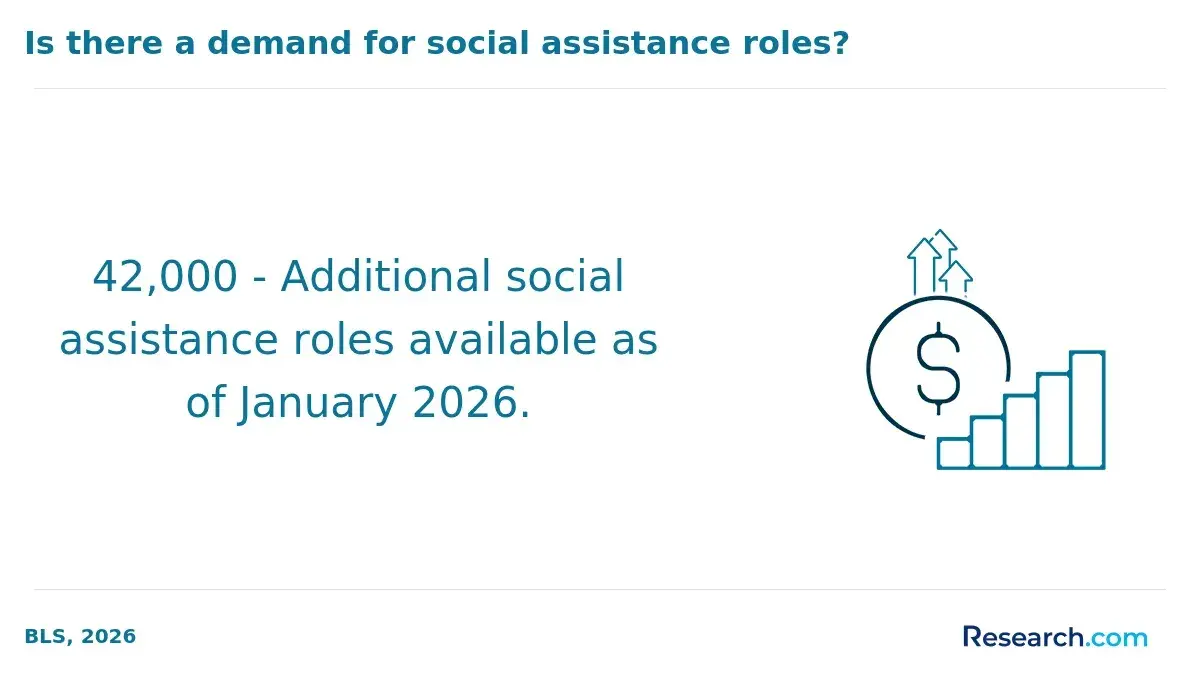
More than 778,000 people are in the U.S. workforce, earning $56,000-$66,000 annually, and employment is expected to grow by 7% through 2033, adding 53,800 employees. Pay depends on role, employer, specialization, credentials, and location. Workers in the Federal Executive Branch (OEWS Designation) earned $92,410, while those in Rhode Island earned the highest state figure at $90,720 (BLS, 2025).
If higher earnings or clinical roles are part of your plan, graduate education may be important. Compare options such as the best online graduate degrees, and review our social worker salary guide for more detail on compensation by role and setting.
What skills do I need to become a social worker?
Social work requires emotional maturity, communication skill, ethical judgment, documentation ability, and practical knowledge of service systems. A strong student is not just compassionate; they can listen carefully, analyze risk, follow procedures, manage time, and work with people whose experiences differ from their own.
| Skill area | Examples | Why employers value it |
| Interpersonal skills | Empathy, active listening, patience, rapport-building, cultural humility. | Clients must feel heard before they can participate in a service plan. |
| Practice skills | Case management, crisis intervention, interviewing, assessment, referral coordination. | Social workers often manage complex needs across multiple systems. |
| Analytical skills | Critical thinking, problem-solving, policy awareness, research literacy. | Good practice requires sound judgment, not just good intentions. |
| Administrative skills | Documentation, time management, organization, compliance, report writing. | Accurate records affect continuity of care, funding, legal compliance, and client safety. |
| Technology skills | Electronic health records, databases, telehealth platforms, spreadsheets, data analysis. | Digital tools are increasingly used in service delivery, reporting, and program evaluation. |
You do not need an online software engineering degree to become a social worker. However, comfort with digital records, telehealth systems, spreadsheets, secure communication, and data-informed decision-making can make you more effective.
- Empathy: Understand the feelings and experiences of clients without losing professional boundaries.
- Active listening: Hear what clients say, notice what they may not be saying, and ask better follow-up questions.
- Communication: Explain options clearly to clients, families, supervisors, courts, schools, medical teams, and community partners.
- Problem-solving: Identify barriers and develop realistic plans when clients face urgent or layered needs.
- Critical thinking: Weigh evidence, policy, safety, ethics, and client preferences before acting.
- Cultural competence: Work respectfully with clients across racial, ethnic, religious, socioeconomic, disability, gender, and sexual identity differences.
- Resilience: Manage stress, seek supervision, and maintain professional effectiveness when cases are difficult.
What can you do with a major in social work?
Social work and human services overlap, but they are not identical. If you are comparing the two, start with the question what can you do with a human services degree and then compare it with BSW and MSW licensing pathways. Social work can lead to jobs in government, healthcare, education, nonprofit agencies, behavioral health, child welfare, housing, and community programs.
Current workforce data shows that 57% of social workers are in the private sector and 32% are in government. According to the U.S. Bureau of Labor Statistics, major industries employing social workers include:
- Federal Executive Branch (OEWS Designation)
- Local Government, excluding schools and hospitals (OEWS Designation)
- State Government, excluding schools and hospitals (OEWS Designation)
- Individual and Family Services
- Community Food and Housing, and Emergency and Other Relief Services
| Career option | Typical work setting | Common preparation | Median salary |
| Substance Use and Recovery Treatment Counselor | Hospitals, clinics, rehabilitation centers, recovery programs. | Training in substance use, counseling support, treatment planning, crisis response, case management, communication, and cultural competence. | $54,221 per year |
| Mental Health Counselor | Hospitals, clinics, community agencies, private practices. | Strong counseling, communication, emotional intelligence, problem-solving, and time management skills; a master’s degree in social work is typically required. | $55,523 per year |
| Child Welfare Social Worker | Government agencies, nonprofit organizations, child protection systems. | Usually a bachelor’s degree in social work plus case management, child welfare knowledge, critical thinking, communication, and interpersonal skill. | $59,642 per year |
| School Social Worker | Schools and school districts. | Often a master’s degree in social work, with skills in counseling, advocacy, case management, crisis response, and family collaboration. | $67,845 per year |
| Medical Social Worker | Hospitals, clinics, hospice programs, rehabilitation settings, other healthcare organizations. | Often a master’s degree in social work, with strong case management, documentation, communication, cultural competence, and healthcare navigation skills. | $70,503 per year |
Before choosing a specialization, look at your preferred client population, work environment, tolerance for crisis work, licensure goals, and long-term salary expectations. A student drawn to therapy may need an MSW and clinical licensure, while a student interested in policy may benefit from macro practice, research, or public administration experience.
How can I advance my career in social work?
Career growth in social work usually comes from a combination of experience, licensure, specialization, advanced education, supervision, and professional reputation. Some students begin with an associate or ASW social work degree, while others enter through a BSW or MSW. Your next move should depend on the role you want, not only on the credential that seems fastest.
- Continue professional education: Continuing education helps social workers understand new research, ethical standards, practice models, regulations, and technology changes. It may also be required to maintain a license.
- Earn an advanced degree or credential: An MSW can open doors to advanced practice, leadership, supervision, and clinical licensure preparation. Doctoral options, including an online doctorate in social work, may fit professionals aiming for research, teaching, or senior leadership. Always check whether a program is accredited by the Council on Social Work Education (CSWE) when accreditation is relevant to your career goal.
- Specialize intentionally: Child welfare, school social work, clinical practice, healthcare, aging services, substance use, policy, and community development each require different experience and training.
- Move into supervision or management: Leadership roles require strong documentation, staff development, budgeting, compliance, conflict resolution, and program evaluation skills.
- Build deeper field experience: Volunteer work, internships, practicum placements, and paid roles can help you identify your preferred population and practice setting.
What certifications can help social workers specialize?
Certifications can signal focused expertise, but they do not replace state licensure when licensure is required. Review eligibility rules carefully before investing time or money.
| Credential or certification | Best fit | What to verify |
| Certified Rehabilitation Counselor (CRC) | Professionals who support people with disabilities in achieving employment, independence, or quality-of-life goals. | Education, supervised experience, and exam requirements. |
| Child Welfare Certification Programs | Social workers serving children and families in child welfare systems. | State or agency recognition and required training hours. |
| School Social Worker Certification | Social workers who want to practice in school settings. | State education department requirements and field placement expectations. |
| Academy of Certified Social Workers (ACSW) | MSW-trained professionals seeking a recognized professional credential. | Degree, supervised experience, and professional membership requirements. |
| Licensed Clinical Social Worker (LCSW) | Social workers pursuing clinical practice, therapy, diagnosis, and independent practice where allowed by state law. | MSW accreditation, supervised clinical hours, ASWB exam, and state rules. |
What is the licensing procedure for social workers?
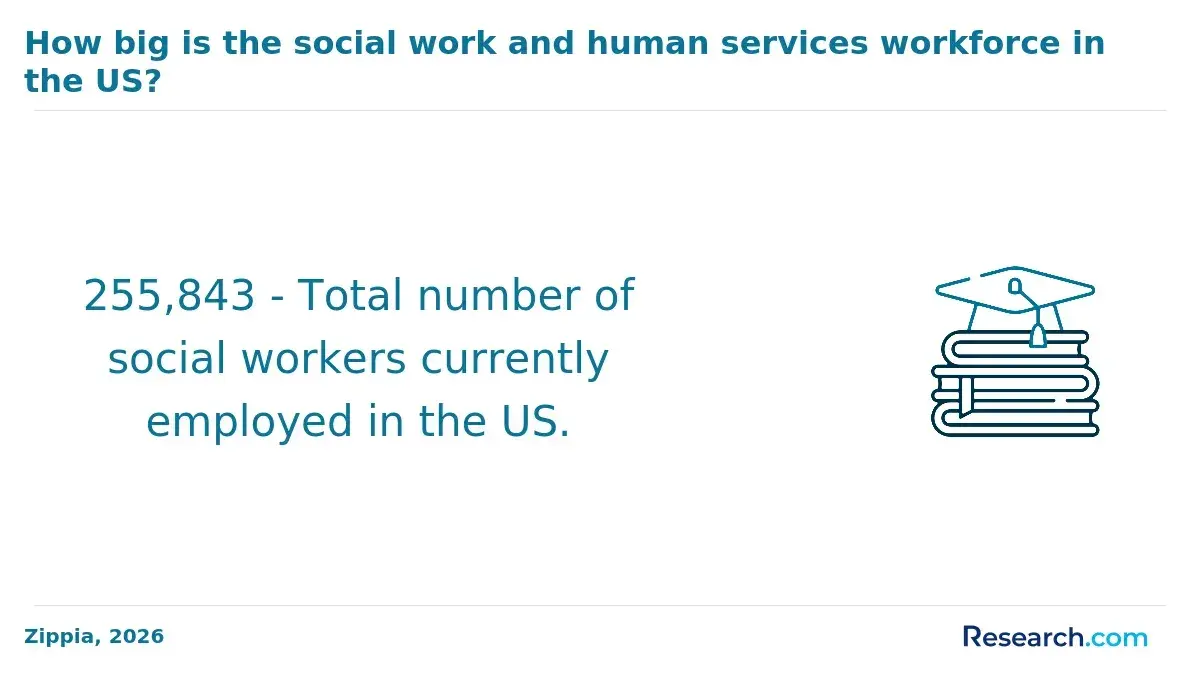
Social work licensing is handled by states, not by one national licensing authority. The United States employed over 187,402 people with social work licenses. If you plan to practice in a specific state, check that state’s board before choosing a program, concentration, or field placement.
Licensure requirements vary, but most pathways include these steps:
- Complete the required education: A BSW may qualify graduates for some license levels, while many states require an MSW from a CSWE-accredited program for full or clinical licensure. Students who need flexibility can compare an online social work master’s program.
- Finish supervised experience: States set their own supervised practice hour requirements, especially for clinical licensure.
- Pass the required exam: Many states use an Association of Social Work Boards (ASWB) exam tied to the license level.
- Maintain the license: Licensed social workers usually need continuing education, renewal applications, and compliance with ethics rules.
Some social workers licensed in one state may qualify for licensure by reciprocity in another state if they hold a comparable license and have passed the appropriate ASWB exam. Do not assume portability. Verify before moving, accepting remote clients in another state, or enrolling in an out-of-state online program.
| Common licensing mistake | Better approach |
| Choosing the cheapest program without checking CSWE accreditation. | Confirm accreditation and state board acceptance before applying. |
| Assuming every online MSW meets every state’s rules. | Ask the program for state authorization and licensure alignment information. |
| Waiting until graduation to learn about supervised hours. | Map the licensing sequence before your final year. |
| Ignoring field placement location. | Make sure approved placements are available where you live or plan to work. |
What role does macro-level social work play in driving systemic change?
Macro-level social work focuses on the systems that shape people’s lives: public policy, agency design, community planning, funding structures, housing systems, health access, education, criminal justice, and economic inequality. Instead of working only with one client or family at a time, macro practitioners try to change the conditions that create repeated harm or limited access.
This path can involve research, legislative advocacy, program leadership, coalition building, community organizing, grant writing, and policy analysis. If you are more interested in population-level impact than individual counseling, review macro social work career options.
Is earning a social work degree a worthwhile investment?
A social work degree is worth considering when it leads to the role, license, and population you want to serve at a cost you can manage. The investment looks different for a student pursuing a low-cost in-state BSW than for a student borrowing heavily for a private graduate program.
Evaluate program price, financial aid, transfer credits, field placement logistics, employment demand, licensure eligibility, and long-term advancement. A degree may have strong personal value even when salaries vary, but students should still compare expected earnings with debt and time away from work. For a deeper ROI discussion, read Is a social work degree worth it?.
What factors significantly impact social work compensation?
Social work pay is shaped by credentials, degree level, licensure, specialization, employer type, geographic location, experience, and whether the role includes clinical, supervisory, federal, or administrative responsibilities. Clinical licensure and advanced practice credentials often expand earning potential, but they also require time, supervised experience, and exam preparation.
Use salary data carefully. A national median may not reflect your city, state, practice area, or license level. For detailed comparisons by role and state, review the clinical social worker salary guide.
Is a major in social work right for you?
A social work major may fit you if you are motivated by service, comfortable with complex human problems, and willing to combine compassion with documentation, ethics, boundaries, and policy knowledge. It is a strong match for students who want to work with people directly or influence systems that affect vulnerable populations.
You may want another major if you prefer corporate operations, clinical healthcare outside social work, or a humanities path with broader academic flexibility. Depending on your goals, compare affordable online business degrees, online nursing degree programs, or a bachelor’s degree in philosophy.
What are the benefits of earning a doctorate in social work?
A doctorate in social work can prepare experienced professionals for advanced leadership, university teaching, research, policy work, program development, and high-level practice innovation. Doctoral study can deepen your understanding of theory, evidence-based intervention, organizational systems, and social justice strategy.
This path is not necessary for most entry-level roles. It makes the most sense when your goals include senior leadership, academic work, specialized research, or large-scale systems change. If cost is a major concern, compare options such as the cheapest social work doctorate degree.
What distinguishes advanced standing MSW programs from traditional programs?
Advanced standing MSW programs are designed for students who already hold a Bachelor of Social Work. Because these students have completed foundational social work coursework and field education, the MSW curriculum can often move more quickly into advanced practice.
Traditional MSW programs are generally intended for students from other academic backgrounds or those who do not qualify for advanced standing. If you have a BSW and want a shorter graduate route, compare the best online MSW advanced standing programs.
| Program type | Who it is for | Main advantage | Main caution |
| Advanced standing MSW | Students with a qualifying BSW. | Builds on prior social work education and may shorten the graduate path. | Admission can be more selective and may require recent BSW coursework or strong grades. |
| Traditional MSW | Students without a BSW or those changing careers. | Provides foundational and advanced social work training. | Usually requires more time and credits than advanced standing. |
What are the admission requirements for social work programs?
Admission requirements vary by degree level and school, but most programs look for academic readiness, communication ability, ethical maturity, and evidence that applicants understand the profession. Common requirements include transcripts, a minimum GPA, a personal statement, recommendation letters, and relevant volunteer or work experience.
MSW programs may ask applicants to explain their career goals, populations of interest, and readiness for fieldwork. Some programs may use interviews or standardized test scores. If you are still comparing adjacent pathways, an affordable option such as the cheapest human services online degree may be worth reviewing.
What are the long-term career outcomes for social work graduates?
Long-term outcomes depend heavily on degree level, licensure, specialization, state regulations, and professional development. BSW graduates may build experience in case management, community services, child welfare, or nonprofit roles. MSW graduates may qualify for advanced roles, clinical licensure pathways, healthcare social work, school social work, leadership, and specialized practice.
Over time, social workers who continue training, develop a strong practice niche, and understand technology and policy changes may have more options for advancement. For a closer look at graduate-level pathways, review MSW career paths.
What extracurricular opportunities can enhance your social work education?
Classroom learning is only part of becoming practice-ready. Extracurricular experiences can help you test your interests, strengthen your resume, build confidence with clients, and develop professional judgment before graduation.
- Volunteer work: Shelters, crisis centers, food programs, community clinics, youth organizations, and advocacy groups can expose you to real service environments.
- Student social work organizations: Campus clubs and professional association chapters can connect you with peers, speakers, workshops, and conferences.
- Additional internships: Optional experiences beyond required fieldwork can help you compare child welfare, mental health, aging services, substance use, school settings, and healthcare.
- Advocacy campaigns: Work on homelessness, mental health awareness, disability rights, voting access, or anti-poverty efforts can build policy and leadership skills.
- Peer mentorship: Mentoring newer students can strengthen communication, leadership, and professional identity.
- Workshops and conferences: Events on trauma-informed care, telehealth, ethics, crisis response, and digital practice can help you stay current.
How can I find affordable online programs in social work?
Start with accreditation and licensing alignment, not price alone. An inexpensive online program is not a good deal if it does not prepare you for the license or role you want. After confirming that a program fits your career goal, compare tuition, fees, transfer credit policies, field placement support, financial aid, and graduation requirements.
Online programs can be useful for working adults, parents, military learners, and students outside major campus areas. However, fieldwork is still typically completed in person. Ask whether the school helps arrange local placements or expects you to find them yourself.
Students seeking lower-cost bachelor’s options can compare the cheapest online BSW programs. Also apply for grants and scholarships early, including awards connected to social work, public service, underrepresented students, and service commitments.
How can you choose the right social work program for you?
The right program is the one that matches your career target, state licensing needs, budget, learning format, and field placement requirements. Do not rely only on rankings or tuition. A program should help you complete the right coursework, gain appropriate supervised experience, and move toward the role you actually want.
1. Confirm CSWE accreditation
For BSW and MSW pathways connected to professional practice and licensure, accreditation from the Council on Social Work Education (CSWE) is a critical factor. Many licensing boards require a CSWE-accredited degree. Verify accreditation directly rather than relying only on marketing language.
2. Match the concentration to your career goal
- Clinical social work: Best for students interested in therapy, diagnosis, behavioral health, and clinical licensure pathways.
- School social work: Best for students who want to support children, families, attendance, crisis response, and school-based intervention.
- Healthcare social work: Best for students interested in hospitals, clinics, discharge planning, chronic illness, hospice, and care coordination.
- Macro or policy practice: Best for students interested in systems change, advocacy, program leadership, and community-level work.
3. Compare online, hybrid, and campus formats
Online coursework can improve flexibility, but social work still requires practical training. If you are considering an online MSW, ask about synchronous class requirements, field placement assistance, technology fees, and whether the program has experience placing students in your state. Cost-conscious graduate students can compare cheapest online MSW programs.
4. Evaluate field placement support
Field education is one of the most important parts of social work training. Ask where students are placed, who approves sites, how supervision works, and what happens if you cannot secure a placement near your home.
5. Review total cost, not just tuition
Include tuition, fees, books, technology requirements, travel, lost work hours during field placement, and exam or licensing costs. Ask whether the school offers social work scholarships, graduate assistantships, employer partnerships, or payment plans.
6. Look for student support
Strong programs provide advising, career coaching, field placement guidance, writing support, licensing information, and alumni connections. Support matters especially for online students, first-generation students, working adults, and career changers.
7. Ask practical questions before enrolling
| Question | Why it matters |
| Is the program CSWE-accredited? | Accreditation may affect licensure eligibility and employer recognition. |
| Does the curriculum align with my state’s licensing requirements? | Licensure rules vary by state. |
| How are field placements arranged? | Placement quality can shape your skills, network, and job options. |
| What is the total cost through graduation? | Fees and placement-related costs can change affordability. |
| What concentrations and electives are available? | Your specialization should match your target role. |
| What career and licensing support does the school provide? | Advising can help you avoid delays after graduation. |
How can mentorship and networking transform your social work career?
Mentorship can help you understand the realities of social work that are hard to learn from course descriptions alone: managing boundaries, choosing placements, preparing for supervision, handling ethical dilemmas, and identifying sustainable career paths. Good mentors can also help you decide whether clinical practice, macro work, healthcare, child welfare, schools, or administration fits you best.
Networking through faculty, field supervisors, professional associations, alumni, conferences, and online communities can lead to internships, referrals, research projects, and leadership opportunities. Programs known for accessible admissions and student support, such as those discussed among easy MSW programs, may be especially useful for students who want structured guidance while balancing school with work or family responsibilities.
What are the career advantages of earning a degree from an accelerated MSW program?
An accelerated MSW can help qualified students move into advanced social work training more quickly. These programs may appeal to students who want to reduce time in school, enter specialized roles sooner, or move toward licensure requirements faster than a traditional timeline allows.
Some accelerated options are designed for students without a BSW. Career changers and graduates from other fields can compare accelerated MSW programs without BSW to understand how prerequisite coursework, fieldwork, and advanced practice courses are structured.
The main benefit is speed, but speed should not be the only factor. A compressed program can be demanding, especially when fieldwork, employment, and family responsibilities overlap. Before enrolling, ask whether the program’s pace is realistic, whether field placements match your goals, and whether graduates are prepared for the license level you want.
Common mistakes to avoid as a social work major
- Choosing a program without checking accreditation: Accreditation can affect licensure, graduate admission, and employer confidence.
- Looking only at tuition: Fees, books, travel, field placement costs, and lost work hours can change the real price.
- Assuming online means fully remote: Fieldwork is usually in person, even when courses are online.
- Ignoring state licensure rules: Requirements differ, and an out-of-state program may not automatically meet your state’s standards.
- Waiting too long to specialize: Field placements, electives, and volunteer work should build toward your target population or practice area.
- Assuming salary outcomes are guaranteed: Pay depends on role, employer, location, licensure, experience, and specialization.
- Underestimating emotional strain: Social work can be meaningful and difficult at the same time, so supervision and self-care are professional necessities.
Key Insights
- A social work major is best for students who want service-oriented, people-centered work. It prepares you for roles in case management, advocacy, schools, healthcare, child welfare, behavioral health, and community services.
- Licensure planning should begin before enrollment. State rules, CSWE accreditation, supervised hours, exams, and field placements can determine whether a program fits your career goal.
- Graduate education can change your options. An MSW is often important for clinical practice, advanced roles, leadership, and specialized social work careers.
- Technology is now part of competent practice. Telehealth, electronic records, data analysis, and digital communication require ethical judgment and practical skill.
- Cost and ROI require careful comparison. Look beyond tuition and evaluate fees, fieldwork logistics, scholarships, transfer credits, licensing alignment, and realistic salary expectations.
- Field experience is central to career readiness. Internships, practicums, volunteering, and mentorship help students convert classroom knowledge into professional competence.
References:
- College Factual. (2025). *2025 best social work schools*. https://www.collegefactual.com/majors/social-services-public-administration/social-work/rankings/top-ranked/
- Council on Social Work Education. (2026). About CSWE. https://www.cswe.org/
- College Board. (2025). *Trends in college pricing and student aid 2025*. https://research.collegeboard.org/trends College Tuition Compare. (2025). *Social work program 2025 tuition*. https://www.collegetuitioncompare.com/majors/44.0701/social-work/
- National Association of Social Workers. (2025). NASW standards for continuing professional education. https://www.socialworkers.org/Practice/NASW-Practice-Standards-Guidelines/NASW-Standards-for-Continuing-Professional-Education
- National Association of Social Workers. (n.d.). *National survey from Ipsos finds 80 percent of Americans have a favorable opinion of social workers*. https://www.socialworkers.org/News/News-Releases/ID/2618/National-Survey-from-Ipsos-finds-80-percent-of-Americans-have-a-favorable-opinion-of-Social-Workers
- National Association of Social Workers. (2026). Social work federal requirements. https://www.socialworkers.org/Advocacy/Policy-Issues/Social-Work-Federal-Requirements
- SocialWorkDegrees.org. (2025). Social work career guide 2026: Degrees, jobs & salaries. https://www.socialworkdegrees.org/careers-for-students
- U.S. Bureau of Labor Statistics. (2025, April 3). Occupational Employment and Wage Statistics: Social Workers. https://www.bls.gov/oes/current/oes211029.htm
- U.S. Bureau of Labor Statistics. (2026). Social workers: Occupational outlook handbook. https://www.bls.gov/ooh/community-and-social-service/social-workers.htm
Other Things You Should Know About a Major in Social Work
In 2027, a social work major typically requires core courses such as Human Behavior in the Social Environment, Social Welfare Policy, and Research Methods. These courses are designed to build foundational knowledge essential for social work practice and are part of most accredited programs.
Look for a program accredited by the Council on Social Work Education, or CSWE, for a Bachelor of Social Work. CSWE accreditation is the standard required by many states and employers, and it is often needed if you plan to pursue licensure or graduate study.
The U.S. Bureau of Labor Statistics projects a 9% growth rate for social workers from 2021 to 2031. This increase is driven by greater demand for healthcare and social services, making social work a promising career path for those entering the field by 2027.
To advance your career, consider pursuing continuing education, obtaining advanced degrees and certifications, specializing in a specific area, seeking supervisory or management positions, and gaining hands-on experience. Certifications such as Licensed Clinical Social Worker (LCSW) and Certified Rehabilitation Counselor (CRC) can enhance your credentials and career prospects.
The cost of a social work major can range from $7,000 to $56,000 per year, depending on the institution and degree level. The median in-state public tuition is around $9,757, while out-of-state private tuition is approximately $26,358. Graduate programs average $22,741 per year.
In 2027, social work majors should be aware of technological trends like telehealth services, AI-driven client management systems, and online counseling platforms. Staying updated with these trends is crucial as they enhance service delivery, expand access, and increase efficiency in providing support to individuals and communities.