2027 Best Human Development and Family Studies Online Degree Programs

Co-Founder and Chief Data Scientist
Choosing an online human development and family studies degree is really a decision about the kind of helping career you want: direct work with children and families, family life education, social services, healthcare support, advocacy, program management, or graduate study in counseling, social work, psychology, or therapy. The right program can prepare you to understand development across the lifespan, support families through stress and transition, and apply research-based strategies in schools, agencies, hospitals, nonprofits, and community organizations.
This guide is designed for students comparing online human development and family studies programs, including working adults, transfer students, parents, and career changers who need flexibility without sacrificing academic quality. You will learn what online HDFS programs include, how long they take, what they cost, which schools stand out, what careers may follow, and how to judge whether a program fits your goals.
Quick answer: Is an online human development and family studies degree worth considering?
An online human development and family studies degree can be a practical choice if you want a flexible path into family services, child development, community health, education support, advocacy, or graduate preparation in counseling, social work, psychology, or marriage and family therapy. It is strongest for students who want broad, people-centered training rather than a narrowly technical major. However, students should check accreditation, internship requirements, transfer policies, total cost, and whether the program supports any certification or graduate-school goals they may have.
What are the benefits of getting a human development and family studies degree?
- The degree can lead to roles in social work-adjacent services, counseling support, psychology-related fields, education, healthcare, public policy, family advocacy, nonprofit work, and community programs.
- Depending on the role, employer, location, credentials, and experience level, graduates may earn annual salaries between $40,000 and $80,000 or more.
- Online study gives students more control over scheduling, which can make it easier to continue working, care for family members, or complete a degree after transferring credits.
What can I expect from an online human development and family studies program?
An online human development and family studies program teaches students how individuals develop from infancy through older adulthood and how family systems, culture, relationships, institutions, health, and social conditions shape well-being. Most programs combine theory with applied coursework so students can use research to support real people in real settings.
Although formats vary by school, online HDFS students commonly encounter:
- Flexible course schedules, especially in asynchronous classes
- Some synchronous meetings, virtual discussions, or scheduled presentations
- Online learning platforms with discussion boards, video lectures, assignments, and exams
- Group projects that simulate professional collaboration
- Internships, practicums, fieldwork, or hybrid experiences that may require local placement
- Courses in lifespan development, families, culture, prevention, research, and service delivery
- Remote access to faculty, advisors, tutoring, library databases, and career services
- Digital textbooks, journal databases, multimedia case studies, and online assessment tools
This format often works best for students who are organized, comfortable communicating online, and able to manage deadlines independently. It may be less ideal for students who need frequent in-person interaction or who prefer highly structured campus routines.
Where can I work with a human development and family studies degree?
Human development and family studies graduates work in settings where professionals support children, adolescents, adults, older adults, couples, families, and communities. Some roles are direct-service positions; others focus on education, prevention, program coordination, policy, research, or administration.
| Work setting | How HDFS graduates may contribute | Best fit for students interested in |
| Childcare centers | Supporting early learning, developmental milestones, social-emotional growth, and family communication | Early childhood development, school readiness, parent engagement |
| Social service agencies | Helping families connect with housing, food, mental health, financial, child welfare, or crisis resources | Case support, advocacy, community services |
| Nonprofit organizations | Coordinating family programs, child advocacy initiatives, outreach services, and community education | Mission-driven work, program development, public service |
| Schools and educational institutions | Assisting with family engagement, student support, youth development, and community partnerships | Education, youth services, family-school collaboration |
| Healthcare facilities | Supporting patients and families as they navigate illness, hospitalization, stress, grief, and care systems | Child life, family support, patient education |
| Government agencies | Implementing programs and policies related to child development, family well-being, aging, health, and community support | Policy, public administration, social programs |
How much can I make with a human development and family studies degree?
Earnings for human development and family studies graduates vary widely because the degree can lead to many different occupations. Pay depends on the job title, state, employer type, education level, licenses, certifications, and years of experience. According to the U.S. Bureau of Labor Statistics, entry-level roles such as preschool teachers, childcare workers, and teacher assistants earn between $30,000 and $45,000.
Graduates who move into social services, counseling support, family education, or child development roles can expect annual earnings between $40,000 and $60,000. Higher salaries are more likely for professionals who complete graduate education, earn required licenses, add specialized certifications, or move into supervisory positions. Leadership roles in healthcare, nonprofits, education, and community organizations can reach $65,000 to $80,000 or more.
Location matters. Urban areas may pay more, but they can also have higher living costs. Specialized areas such as counseling, social work, health education, behavior support, child life, and program management may offer stronger earning potential than general entry-level support roles.
The best way to estimate your own earning potential is to compare the exact occupations you are considering, the credentials required in your state, and the salary ranges for employers where you hope to work.
- Best online human development and family studies degree programs for 2027
- How long does an online human development and family studies program take?
- Online vs. on-campus HDFS programs: Which format is better?
- How much does an online human development and family studies degree cost?
- Financial aid options for online HDFS students
- Admissions requirements for online human development and family studies programs
- Accreditation and quality standards to check before enrolling
- Certifications that can strengthen an HDFS career path
- How to evaluate return on investment
- How online HDFS programs provide practical experience
- Common courses in online human development and family studies programs
- Challenges of studying human development and family studies online
- Popular HDFS specializations
- How to choose the right online HDFS program
- Advanced and dual-degree options
- Career paths for HDFS graduates
- Career support and networking in online programs
- Emerging trends in online HDFS education
- Diversity and inclusion in HDFS programs
- Employer respect for online HDFS degrees
- Job market outlook for HDFS graduates
List of the Best Human Development and Family Studies Online Degree Programs for 2027
How do we rank schools?
Research.com created this ranking to help students compare online human development and family studies programs using consistent, transparent criteria rather than relying on marketing language alone. Our team reviewed programs using a structured methodology and data from the Integrated Postsecondary Education Data System, Peterson’s database and its Distance Learning Licensed Data Set, College Scorecard, and the National Center for Education Statistics. Students should use the list as a starting point, then verify current tuition, online delivery format, fieldwork rules, transfer policies, and certification alignment directly with each school.
1. University of North Carolina at Greensboro
The University of North Carolina at Greensboro offers a BS in Human Development and Family Studies that prepares students to serve individuals and families throughout the lifespan. The program uses a strengths-based framework and emphasizes effective work with diverse communities. Students may complete the degree online or in person and learn from nationally recognized faculty. A field-based internship gives students applied experience in education, prevention, intervention, and advocacy settings.
- Program Length: Four years
- Tracks/Concentrations: Human Development and Family Studies
- Cost per Credit: $235.21 (resident), $419.46–$916.50 (non-resident)
- Required Credits to Graduate: 120
- Accreditation: Southern Association of Colleges and Schools Commission on Colleges (SACSCOC)
2. University of Wisconsin-Stout
The University of Wisconsin-Stout provides an online BS in Human Development and Family Studies built around an interdisciplinary view of people, families, culture, and community systems. Students combine broad developmental knowledge with applied skills and can gain experience through relationships with hospitals, human service agencies, community organizations, adolescent group homes, and senior living facilities. These field connections help students translate classroom concepts into practice.
- Program Length: Four years
- Tracks/Concentrations: Various electives
- Cost per Credit: $392
- Required Credits to Graduate: 120
- Accreditation: National Council on Family Relations (NCFR) Certified Family Life Educator (CFLE)-approved program, Higher Learning Commission (HLC)
3. University of Alabama
The University of Alabama offers an online BS in Human Development & Family Studies with a Child Life concentration. The program focuses on healthy children and hospitalized children, making it a strong option for students interested in medical and pediatric support settings. Coursework includes Medical Ethics, Hospitalized Children and Youth, and Loss and Bereavement. Students also complete foundational study and a 600-hour internship. Graduates who satisfy eligibility requirements may sit for the Child Life Professional Certification Examination.
- Program Length: Four years
- Tracks/Concentrations: Child Life
- Cost per Credit: $385
- Required Credits to Graduate: 120
- Accreditation: SACSCOC
4. California State University, East Bay
The BA in Human Development at California State University, East Bay examines human growth across the lifespan while considering sociocultural and historical influences. Students study research, theory, and applied approaches for serving diverse communities. The interdisciplinary curriculum can support preparation for graduate study in psychology, education, social work, law, public administration, and related fields.
- Program Length: Four years
- Tracks/Concentrations:
- Early Childhood Development
- Childhood Development
- Adolescent Development
- Adult Development and Gerontology
- Women’s Development
- Estimated Tuition and Fees: $7,583
- Required Credits to Graduate: 120
- Accreditation: WASC Senior College and University Commission (WSCUC)
5. Oregon State University
Oregon State University offers a BS in Human Development and Family Sciences for students preparing for helping professions that serve individuals and families. The curriculum emphasizes ethics, social justice, empowerment, and culturally responsive practice. The General HDFS option can fit students planning careers or further study in education, social work, allied health sciences, psychology, sociology, public health, and related fields. Courses include Human Services, Professional Helping Skills, Family Violence and Neglect, and Family, School, and Community Collaboration.
- Program Length: Four years
- Tracks/Concentrations:
- General Human Development
- Family Sciences
- Cost per Credit: $366
- Required Credits to Graduate: 180 quarter credits
- Accreditation: Council on Education for Public Health (CEPH), Northwest Commission on Colleges and Universities (NWCCU)
6. Northwestern State University of Louisiana
Northwestern State University of Louisiana offers an online BS in Child and Family Studies for students interested in serving children, families, and communities. The Child Development and Family Relations concentration supports non-licensure work with children in educational environments, while the Consumer Services concentration includes coursework on creating and managing businesses that serve children and families. The program ends with an internship in a setting such as a childcare center, school, or nonprofit organization.
- Program Length: Four years
- Tracks/Concentrations:
- Consumer Services
- Child Development
- Family Relations
- Cost per Credit: $375
- Required Credits to Graduate: 120
- Accreditation: SACSCOC
7. Utah State University
Utah State University offers a BS/BA in Human Development and Family Studies that explores national and global issues affecting people and families. Students may participate in research focused on improving quality of life and complete a practicum to gain applied experience beyond the classroom. The program includes hands-on projects and contact with families and social agencies. Its four concentration areas allow students to focus on family education, child development, financial planning, or broader developmental needs.
- Program Length: Four years
- Tracks/Concentrations:
- Family and Community Services
- Child Development
- Family Finance
- Human Development
- Cost per Credit: $394
- Required Credits to Graduate: 120
- Accreditation: NCFR CFLE-approved program, NWCCU
8. New Mexico State University Global Campus
New Mexico State University Global Campus delivers a 100% online BS in Human Development and Family Science for students preparing for work in social and community agencies. The program studies how social and economic conditions affect family systems and prepares students for fields such as childcare, family life education, human services, therapy-related pathways, and community support. Coursework covers communication, development, family relationships, parenting, economic challenges, and research. Graduates may apply to become Certified Family Life Educators.
- Program Length: Four years
- Tracks/Concentrations: Human Development and Family Science
- Cost per Credit: $395.40
- Required Credits to Graduate: 120
- Accreditation: NCFR CFLE-approved program, HLC
9. Western Michigan University
Western Michigan University offers a BS in Family Science and Human Development with a Family Science and Services concentration. The program studies how people, families, and environments interact and how professionals can improve community well-being. Students examine family dynamics, parenting, human sexuality, resource management, and policy influences. Eligible students may use the accelerated pathway to a Master’s in Family and Consumer Sciences (FCS) and earn up to 12 graduate credit hours.
- Program Length: Four years
- Tracks/Concentrations:
- Family Science and Services
- Child Development and Services
- Youth and Community Development
- Cost per Credit: $630.25
- Required Credits to Graduate: 120
- Accreditation: NCFR CFLE-approved program, HLC
10. Penn State World Campus
Penn State World Campus offers a BS in Human Development and Family Studies that examines development across the lifespan in environments such as families, schools, workplaces, and communities. Students study how family relationships, culture, social institutions, and interventions influence development and well-being. The curriculum also addresses ethical, legal, and moral questions professionals may face. During the final year, students complete a 480-hour internship that links academic learning with field experience.
- Program Length: Four years
- Tracks/Concentrations: Early Childhood
- Cost per Credit: $632–$678
- Required Credits to Graduate: 120
- Accreditation: Middle States Commission on Higher Education (MSCHE)
How long does it take to complete an online human development and family studies program?
A bachelor’s degree in human development and family studies usually takes four years of full-time study. Students who enroll part time often need five to six years, especially if they are balancing coursework with work or caregiving responsibilities.
Graduate study adds more time. A master’s degree generally requires another two to three years and may include advanced research, clinical preparation, leadership coursework, or supervised field experience. Students who plan to pursue counseling, therapy, social work, or related licensed roles should expect additional supervised hours and exams after graduation, depending on state rules.
For example, students researching how to become a licensed therapist should understand that a master’s degree is only one step. Many pathways also require supervised practice and licensing exams, which can add another one to two years depending on the state.
Doctoral programs can take four to eight years. A PhD in psychology, for example, typically involves advanced coursework, original research, and a dissertation. Other doctoral routes may require fieldwork, clinical preparation, or leadership training for academic, administrative, or professional practice roles.
| Goal | Typical time commitment | Important planning note |
| Bachelor’s degree, full time | Four years | Transfer credits may shorten the timeline if accepted. |
| Bachelor’s degree, part time | Five to six years | Best for students who need a lighter course load. |
| Master’s degree after the bachelor’s | Two to three years | May be necessary for clinical, counseling, research, or leadership roles. |
| Licensure-oriented pathway | Additional one to two years depending on the state’s requirements | Check state rules before enrolling in an online program. |
| Doctoral program | Four to eight years | Usually required for advanced research, academic, or some clinical paths. |
How does an online human development and family studies program compare to an on-campus program?
The main difference between online and on-campus HDFS programs is delivery format, not necessarily academic content. Accredited online programs can cover the same core curriculum as campus-based programs and may use the same faculty. The better choice depends on how you learn, how much schedule flexibility you need, and whether you can complete any required fieldwork locally.
| Factor | Online HDFS program | On-campus HDFS program |
| Scheduling | Often more flexible, especially with asynchronous courses | More structured, with set class meeting times |
| Class interaction | Discussion boards, video meetings, group platforms, email, and virtual office hours | Face-to-face discussion, campus events, and informal peer interaction |
| Learning materials | Digital readings, e-books, recorded lectures, databases, and online modules | May combine physical textbooks, campus resources, and in-person classroom materials |
| Student resources | Virtual advising, online library access, remote tutoring, and technical support | Campus libraries, labs, student centers, and in-person support offices |
| Cost considerations | May reduce commuting and relocation costs, though tuition and fees vary by school | May involve housing, transportation, and campus-related expenses |
| Networking | Virtual career events, online alumni networks, local internships, and remote faculty mentoring | Campus clubs, in-person faculty access, local partnerships, and spontaneous networking |
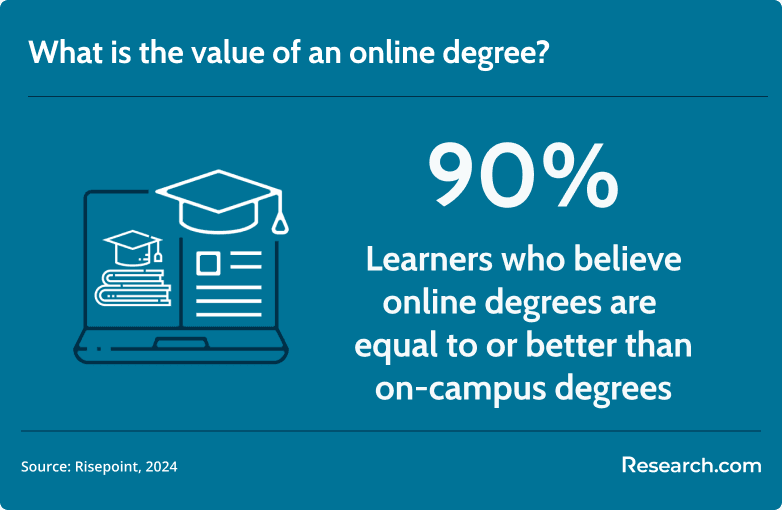
In a Risepoint survey (2024), 90% of learners believe online degrees are just as good or better than on-campus degrees. Employer acceptance is strongest when the institution is properly accredited, the program includes meaningful applied experience, and graduates can clearly explain the skills they gained.
Choose online study if flexibility is your top priority and you can stay self-motivated. Choose campus study if you want in-person structure, immediate peer interaction, and access to local campus networks.
What is the average cost of an online human development and family studies program?
Cost varies by institution, residency status, public or private control, transfer credits, course load, and fees. According to the National Center for Education Statistics (2023), average tuition and fees at four-year public institutions from 2022 to 2023 was $9,750. At private nonprofit institutions, the cost was $38,421.
Online human development and family studies tuition is commonly listed by credit hour. In the programs above, per-credit tuition ranges from the low hundreds to higher amounts depending on residency and institution. More broadly, online programs can range from $300 to $800 per credit hour. Students should also budget for technology fees, textbooks, student services, background checks, field placement costs, and travel if an internship or in-person component is required.
Do not compare HDFS costs only against unrelated degree lists, such as the easiest biology degree, because program requirements, labs, fieldwork, and career outcomes can differ substantially. Compare HDFS programs against your actual career goal and total out-of-pocket cost.
Students who want a shorter credential rather than a full bachelor’s degree may also review online certificate programs. Certificate options can cost less because they are shorter and more focused, often ranging from $1,000 to $5,000, but they may not substitute for a bachelor’s degree when employers or graduate programs require one.
| Cost factor | Why it matters | Question to ask |
| Tuition per credit | This is the largest direct cost for most online students. | Is the rate different for residents and non-residents? |
| Transfer credits | Accepted credits can reduce total time and cost. | How many prior credits can I apply to the major and general education requirements? |
| Online fees | Technology, library, and student service fees can increase the final bill. | What fees are mandatory for online students? |
| Internship expenses | Fieldwork may require background checks, travel, insurance, or unpaid hours. | Can I complete placement near where I live? |
| Financial aid eligibility | A lower sticker price is helpful, but net price matters more. | What will I pay after grants, scholarships, employer aid, and loans? |
What are the financial aid options for students enrolling in an online human development and family studies program?
Online HDFS students may qualify for many of the same aid options as campus students if they attend an eligible, accredited institution. Students who are comparing adjacent majors, including the cheapest online sociology degree options, should still evaluate the net price of each specific program rather than choosing by tuition alone.
- Institutional scholarships: Colleges may offer merit-based, need-based, transfer, departmental, or online-student scholarships.
- Private scholarships: Foundations, professional associations, community groups, and employers may fund students studying family services, child development, education, social services, or related fields.
- State-specific grants: State aid can reduce costs for eligible residents, especially those attending in-state public institutions.
- Employer tuition assistance: Students already working in schools, healthcare, nonprofits, childcare, or social services may be able to use employer benefits to pay part of tuition.
- Federal Work-Study Program: Eligible students may use part-time employment to help pay expenses while building relevant work experience.
- Federal student aid: Grants, loans, and work-study through the U.S. Department of Education can help eligible students finance an accredited program.
Students planning to continue into therapy-focused graduate education, such as an MFT masters online, should also consider how much debt they want to carry from the bachelor’s degree into graduate school.
What are the prerequisites for enrolling in an online human development and family studies program?
Admissions requirements vary, but online bachelor’s programs in human development and family studies typically look for evidence that applicants are ready for college-level writing, research, social science coursework, and independent learning.
- Application form: Students submit personal information, academic history, intended major, and residency details.
- High school transcripts or GED certificate: First-year applicants usually need proof of secondary school completion.
- Minimum GPA requirement: Many programs expect a GPA around 2.5 to 3.0 on a 4.0 scale, though policies differ by school.
- ACT/SAT scores: Some institutions request scores, while many online programs have test-optional policies.
- Required high school courses: English, math, science, and social studies are common preparation areas for HDFS coursework.
- Letters of recommendation: Some programs request recommendations from teachers, counselors, supervisors, or other people who can discuss the applicant’s readiness.
- Other materials: A personal essay, interview, resume, or proof of English proficiency through TOEFL or IELTS may be required, especially for international applicants.
Transfer applicants should ask whether previous credits apply to the major, electives, general education, or only total credit count. This can make a major difference in graduation timeline and cost.
What accreditation and quality standards should I look for in an online human development and family studies program?
Accreditation should be one of the first items students verify. At minimum, the institution should hold recognized institutional accreditation, such as accreditation from SACSCOC, HLC, WSCUC, NWCCU, MSCHE, or another accepted regional accreditor. Accreditation affects financial aid eligibility, transfer credit, graduate admissions, and employer confidence.
Some HDFS programs also identify alignment with the National Council on Family Relations Certified Family Life Educator pathway. If you are interested in CFLE preparation, ask whether the program is NCFR CFLE-approved and what additional steps are required after graduation.
Quality also depends on more than accreditation. Review faculty qualifications, fieldwork support, student outcomes, advising access, internship placement policies, online learning support, and whether the curriculum prepares you for your intended role. This is especially important for students considering careers working with children, where employers may expect practical experience, background checks, and role-specific preparation.
How can additional certifications enhance my career in human development and family studies?
Certifications can help HDFS graduates show specialized competence beyond the bachelor’s degree. They are most useful when they match a specific career direction, such as family life education, child life, early childhood, behavioral support, health education, or human services leadership.
For example, students interested in behavior-focused work may compare pathways such as BCBA master's programs online. These programs can help professionals develop applied behavior analysis skills, but certification pathways may require specific graduate coursework, supervised experience, and exam eligibility. Always verify requirements with the credentialing body before enrolling.
| Credential or preparation area | Who may benefit | What to verify |
| Certified Family Life Educator preparation | Students interested in family education, parenting programs, relationship education, and community outreach | Whether the program is NCFR CFLE-approved and what post-graduation steps remain |
| Child Life preparation | Students who want to support children and families in medical settings | Internship hours, eligibility rules, and certification exam requirements |
| Behavior analysis preparation | Students interested in evidence-based behavioral services in schools, clinics, or community settings | Graduate coursework, supervised hours, and credentialing requirements |
| Health education or community health credentials | Students interested in wellness, prevention, public health, and family education programs | Required degree level, exam eligibility, and employer preferences |
How do I evaluate the return on investment of an online human development and family studies degree?
Return on investment is not just about future salary. For HDFS students, ROI should include total cost, debt, time to completion, transfer credits, unpaid fieldwork, career goals, graduate school plans, and whether the degree leads to the roles you actually want.
Start by comparing your expected total program cost with likely entry-level roles and longer-term advancement options. Students who plan to continue into behavioral or clinical fields should also consider the additional cost of graduate study and supervised practice. Market information such as applied behavior analysis salary data can be useful if that specialization aligns with your goals.
- Calculate the full cost of attendance, not just tuition.
- Subtract grants, scholarships, employer aid, and transfer credit savings.
- Estimate loan payments if you plan to borrow.
- Compare likely first jobs with the jobs you want after two to five years.
- Check whether graduate school or certification is necessary for your preferred role.
- Ask the program for career outcome data, internship partners, and alumni examples.
How do online human development and family studies programs offer practical experience?
Strong online HDFS programs do not rely only on readings and exams. They build applied learning through local internships, practicums, supervised fieldwork, case studies, simulations, community projects, service-learning, and research assignments. These experiences help students practice observation, communication, ethical decision-making, assessment, referral, program planning, and collaboration.
Before enrolling, ask whether the school helps locate placements or expects students to find their own. Also confirm whether your state, employer, or graduate program requires a certain number of supervised hours. Some programs borrow applied ideas from adjacent fields, including clinical training models found in online Psych D programs, but HDFS bachelor’s programs generally do not qualify graduates for independent clinical practice.
What courses are typically in an online human development and family studies program?
Online HDFS curricula usually combine lifespan development, family systems, culture, research, prevention, ethics, and professional practice. Courses vary by institution and concentration, but many programs cover the following areas.
- Families and Close Relationships: Students examine family communication, intimacy, conflict, relationship development, and family transitions. This background can support later study for students researching how to become a relationship specialist.
- Human Development Across the Lifespan: This course studies physical, cognitive, social, and emotional development from infancy through older adulthood and connects individual growth to family systems.
- Family Resource Management: Students learn how families manage money, time, work, caregiving, and household responsibilities to support stability and well-being.
- Diversity and Culture: Coursework explores how culture, race, ethnicity, gender, socioeconomic status, family structure, and community context shape development and family life.
- Social Services Across Ages: Students study how human services support children, adults, older adults, and families at different life stages.
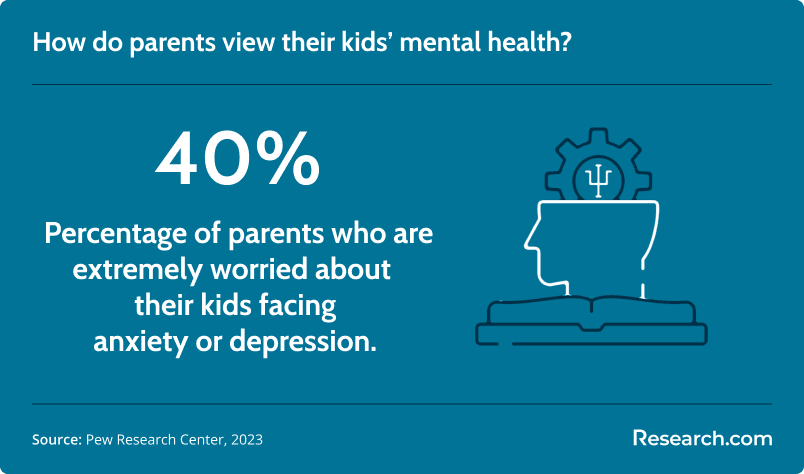
- Health, Wellbeing, and Prevention: Because 40% of parents are highly concerned about their children facing anxiety or depression (Minkin & Horowitz, 2023), this course area often emphasizes prevention, coping, family support, public health strategies, stress reduction, and early intervention.
These courses can prepare graduates for entry-level roles or further study. Students who want clinical social work or advanced social service roles may also compare easy MSW programs after completing the bachelor’s degree.
What challenges do students face in online human development and family studies programs?
Online HDFS programs are flexible, but they are not effortless. Students must manage deadlines, readings, discussion participation, group projects, exams, and sometimes fieldwork without the daily structure of campus life.
| Common challenge | Why it matters | Better approach |
| Underestimating the weekly workload | Online courses can require substantial reading, writing, and discussion. | Block regular study time before the term starts. |
| Waiting too long to plan fieldwork | Internship sites may require background checks, applications, or specific availability. | Ask about placement requirements during the admissions process. |
| Limited peer connection | Online students can feel isolated if interaction is minimal. | Choose programs with structured discussions, group work, mentoring, and student communities. |
| Technology problems | Unreliable internet or unfamiliar platforms can disrupt coursework. | Confirm technical requirements and support hours before enrolling. |
| Choosing a program without career alignment | A general degree may not meet requirements for a specialized role. | Map the curriculum to job postings, certifications, and graduate admissions expectations. |
Students interested in more practice-oriented behavior training can also review the best ABA programs to understand how adjacent applied programs structure skills-based learning.
What types of specializations are available in online human development and family studies programs?
Specializations help students align the broad HDFS major with a specific age group, service setting, or career direction. Not every school offers every option, so students should compare concentration requirements, fieldwork opportunities, and graduate-school relevance.
- Early Childhood Development: Focuses on cognitive, emotional, social, and physical development in young children, including early intervention, family influences, learning environments, and school readiness.
- Child and Adolescent Development: Examines development during childhood and adolescence, including family relationships, peer influence, mental health, education, identity, and social adjustment.
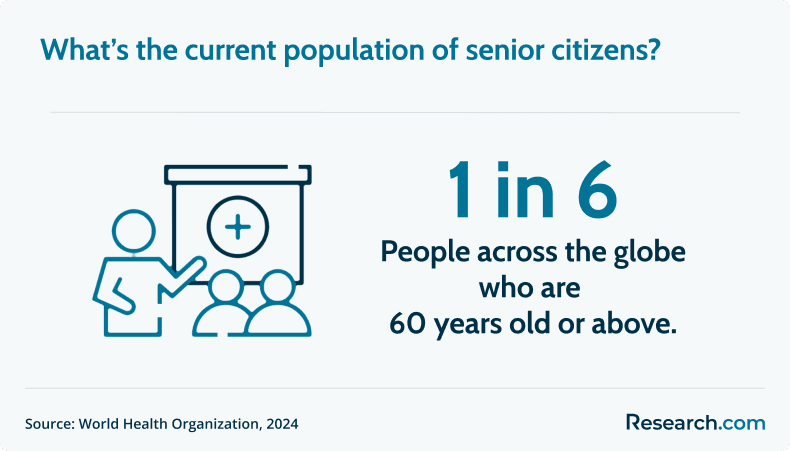
- Adulthood, Aging, and Gerontology: Studies adult development, aging, caregiving, health, family roles, and support systems for older adults. The need for this expertise is growing as one in six people will be aged 60 or older by 2030 (World Health Organization, 2024).
- Couples, Parents, and Families: Covers parenting, couple relationships, intergenerational dynamics, communication, conflict, family education, and strategies that support family well-being.
- Women’s Development: Explores women’s life experiences, gender roles, reproductive health, family expectations, work, empowerment, and social influences on development.
- Family Life Education and Advocacy: Prepares students to design, deliver, and evaluate programs that help families make informed decisions about relationships, parenting, health, finances, and quality of life.
Students who want to become licensed marriage and family therapists will typically need graduate training beyond the bachelor’s degree. In that case, compare marriage and family therapy masters programs online and verify state licensure requirements before applying.
How to choose the best online human development and family studies program?
The best online HDFS program is not simply the cheapest or highest-ranked option. It is the program that fits your career goal, budget, schedule, transfer history, and preferred learning style while meeting recognized quality standards.
- Verify accreditation first: Confirm institutional accreditation and, if relevant, NCFR CFLE approval or other program-specific recognition.
- Match the curriculum to your goal: A student interested in child life should not choose the same program blindly as someone interested in aging services, family finance, or advocacy.
- Study the fieldwork model: Ask whether internships are required, how sites are approved, whether placements can be local, and how supervision works.
- Review faculty expertise: Look for instructors with experience in the populations, research areas, or service systems you want to understand.
- Compare student support: Online students need accessible advising, tutoring, library help, technical support, and career services.
- Check transfer and prior-learning policies: Generous transfer rules can lower cost and shorten completion time.
- Look for accelerated graduate pathways: Some programs let qualified students earn graduate credits during the bachelor’s degree, which may help if you plan to enter counseling, therapy, human services management, or graduate research.
Questions to ask before enrolling
- Is the institution properly accredited?
- Does the program support my intended career or graduate-school path?
- Are internships, practicums, or field placements required?
- Can I complete fieldwork in my local area?
- What is the total cost after fees, books, and placement expenses?
- How many of my transfer credits will apply to degree requirements?
- Does the program prepare students for CFLE, child life, graduate study, or another credential?
- What career services are available to online students?
- Are courses asynchronous, synchronous, or mixed?
- What support is available if I struggle academically or technically?
Could advanced dual-degree options elevate your professional expertise?
Advanced or combined-degree pathways can make sense for students who already know they want graduate-level clinical, research, academic, or leadership roles. Options such as PsyD and masters combined programs may allow students to integrate psychological theory, clinical training, and applied practice. They are not necessary for every HDFS graduate, but they can be useful for those planning long-term careers in mental health, assessment, research, or higher-level service leadership.
Students should compare admission standards, cost, licensure alignment, supervised experience requirements, and whether the combined pathway is more efficient than completing degrees separately.
What career paths are available for graduates of online human development and family studies programs?
HDFS graduates can pursue direct-service, educational, administrative, advocacy, research-support, and business-related roles. Some positions are available with a bachelor’s degree, while others require graduate education, certification, or licensure. Salary data below are from the BLS and PayScale as stated.
| Career | Salary | What the role involves | Additional preparation to consider |
| Marriage and Family Therapists | $68,730 | Work with individuals, couples, and families on emotional, relational, and psychological concerns. | Graduate degree and licensure are typically required. |
| Social Workers | $59,190 | Support individuals and families dealing with poverty, abuse, health challenges, mental health issues, or resource barriers. | Students can review what careers can you get with a social work degree for related pathways. |
| Health Education Specialists | $69,790 | Design and deliver programs that promote health, prevention, family wellness, and community well-being. | Public health or health education credentials may help. |
| Certified Family Life Educators | $61,000 | Teach families and individuals about relationships, parenting, communication, conflict resolution, and family well-being. | CFLE preparation may strengthen candidacy. |
| Community Service Managers | $83,400 | Lead programs, manage staff, coordinate resources, and oversee services for families and communities. | Experience and graduate education may support advancement. |
| Certified Child Life Specialists | $69,000 | Help children and families cope with hospitalization, medical procedures, stress, and treatment experiences. | Students can compare requirements and certified child life specialist salary information. |
| Preschool Teachers | $41,410 | Create early learning environments that support cognitive, social, emotional, and school-readiness skills. | State and employer requirements vary. |
| Social and Human Service Assistants | $44,240 | Help clients access services, support case managers, maintain records, and connect families with resources. | Useful entry-level role for human services experience. |
| Market Research Analysts | $83,190 | Use knowledge of human behavior and family needs to analyze consumer trends, products, and services. | Data, statistics, and research methods skills are valuable. |
Graduates should read job postings carefully. Some employers welcome HDFS bachelor’s graduates for support, education, coordination, or entry-level service roles, while clinical titles usually require additional graduate education and licensure.
This chart displays the salary differences among jobs in this field.
What career support and networking opportunities do online human development and family studies programs provide?
Career support can make a major difference for online students, especially in a broad field like HDFS where job titles are not always obvious. Strong programs may offer virtual career fairs, resume reviews, mock interviews, internship advising, alumni mentoring, faculty introductions, employer panels, and access to job boards.
Ask whether online students receive the same career services as campus students. Also ask whether the department has partnerships with childcare centers, hospitals, family service agencies, nonprofits, community health organizations, schools, or aging services providers.
Students who want to broaden their options through psychology-related study may also compare a fast track psychology degree online, especially if they are deciding between HDFS, psychology, and human services pathways.
What are the emerging trends in online human development and family studies education?
Online HDFS programs are adapting to changing family needs, technology use, and employer expectations. Programs increasingly use interactive platforms, virtual simulations, remote collaboration, applied case work, and community-based projects to help students practice professional decision-making.
Curricula may also place more emphasis on digital communication, data literacy, family stress, mental health awareness, aging, public health, culturally responsive practice, and leadership in human services. Students interested in youth-focused graduate study may compare options such as affordable child and adolescent psychology masters programs online to see how related disciplines are responding to workforce needs.
How do online human development and family studies programs address diversity and inclusion?
Diversity and inclusion are central to HDFS because families differ by culture, race, ethnicity, socioeconomic background, religion, gender, sexuality, structure, ability, immigration history, and community context. Quality programs teach students to avoid one-size-fits-all assumptions and to consider how social systems affect development and family well-being.
Students should look for courses that include multicultural case studies, family diversity, equity, social justice, ethics, bias, and culturally responsive practice. Faculty experience also matters; instructors with varied research and professional backgrounds can help students connect theory to real-world communities. Students interested in behavior, systems, and justice-related questions may also explore the cheapest forensic psychology online masters options as a separate interdisciplinary path.
Are online human development and family studies degrees respected by employers?
Employers are more likely to respect an online HDFS degree when it comes from an accredited institution, includes relevant field experience, and prepares students for the duties of the role. The delivery format matters less than the credibility of the school, the quality of the curriculum, and the graduate’s ability to demonstrate practical skills.
Students can apply lessons from related employer discussions, including what do employers look for in an online psychology degree, when evaluating HDFS programs. Accreditation, institutional reputation, internship experience, faculty quality, career support, and recognized certifications can all strengthen employer confidence.
What is the job market for graduates with an online human development and family studies degree?
The job market for HDFS graduates is broad because the degree applies to social services, education, healthcare, community programs, family support, child development, aging services, and some business roles. BLS data show positive employment growth for several related careers:
- Counseling Psychologists: 13.3%
- Community Health Workers: 13.1%
- Counselors: 11.9%
- Market Research Analysts: 8.3%
Employment in community and social service occupations is projected to have 299,400 openings annually from 2023 to 2033, outpacing the average growth rate for all occupations.
Demand is especially influenced by mental health awareness, the needs of an aging population, attention to child development, and the expansion of community-based services. At the same time, students should remember that a bachelor’s degree alone may not qualify them for licensed clinical roles. Graduate education, supervised practice, certification, or state licensure may be required depending on the occupation.
Non-traditional pathways are also available. Human resources, market research, program coordination, community outreach, and nonprofit management may value graduates who understand human behavior, relationships, family decision-making, and social systems.
This chart illustrates the job growth of different careers in this field.
Common mistakes to avoid when choosing an online HDFS program
- Choosing without checking accreditation: Accreditation affects financial aid, transfer credit, graduate admissions, and employer trust.
- Looking only at tuition per credit: Fees, books, transfer policies, fieldwork expenses, and time to completion can change the real cost.
- Assuming every online program is fully online: Some require internships, practicums, campus visits, or local field placements.
- Ignoring certification or licensure rules: If your goal is therapy, counseling, child life, social work, or behavior analysis, verify requirements before enrolling.
- Relying only on rankings: Rankings are useful starting points, but your best program depends on career fit, cost, support, and fieldwork access.
- Assuming salary outcomes are guaranteed: Earnings depend on job title, state, employer, credentials, and experience.
- Not planning for graduate school: Many advanced HDFS-related careers require a master’s or doctorate, so undergraduate debt and prerequisites matter.
Key Insights
- An online human development and family studies degree is best for students who want flexible preparation for family services, child development, community programs, education support, healthcare support, advocacy, or graduate study.
- Accreditation is non-negotiable. It affects financial aid, transferability, employer confidence, and future graduate-school options.
- Field experience matters. Internships, practicums, and community projects help turn HDFS theory into employable skills.
- Costs vary widely, so compare total program cost, not just tuition. Include fees, transfer credits, books, technology, and placement expenses.
- Career outcomes are broad but not automatic. Some roles are available with a bachelor’s degree, while counseling, therapy, social work, behavior analysis, and child life may require additional credentials.
- Online degrees can be respected by employers when the school is accredited, the curriculum is rigorous, and graduates can demonstrate relevant experience.
- The strongest program choice is the one that matches your intended population, work setting, budget, schedule, and long-term credential goals.
References:
- Minkin, R. & Horowitz, J. M. (2023, January 24). Parenting in America today. Pew Research Center. https://www.pewresearch.org/social-trends/2023/01/24/parenting-in-america-today
- National Center for Education Statistics. (2023, December). Average undergraduate tuition, fees, room, and board rates charged for full-time students in degree-granting postsecondary institutions, by level and control of institution: Selected academic years, 1963-64 through 2022-23. Digest of Education Statistics. https://nces.ed.gov/programs/digest/d23/tables/dt23_330.10.asp?current=yes
- U.S. Bureau of Labor Statistics. (2024a, August 29). Occupational projections, 2023–33, and worker characteristics, 2023 (Numbers in thousands). Employment Projections. https://www.bls.gov/emp/tables/occupational-projections-and-characteristics.htm
- U.S. Bureau of Labor Statistics. (2024b, August 29). Community and Social Service Occupations. Occupational Outlook Handbook. https://www.bls.gov/ooh/community-and-social-service
Other Things You Should Know About Online Human Development and Family Studies Degrees
When choosing a Human Development and Family Studies online program in 2027, ensure it's accredited by reputable organizations like the Council for Standards in Human Service Education (CSHSE) or the Commission on Accreditation for Marriage and Family Therapy Education (COAMFTE) to guarantee quality education and enhance career prospects.
Most online human development and family studies bachelor’s programs require 120 semester credits for graduation. That usually includes general education, core family studies courses, and upper-division electives. Some schools also require a capstone course in the final term before awarding the degree.