2027 Master of Social Work or Psychology: Which Degree to Choose? Guide

Co-Founder and Chief Data Scientist
Choosing between a Master of Social Work (MSW) and a master’s degree in psychology is not just a question of subject preference. It is a career decision that affects the type of clients you serve, the license you may need, the training hours you must complete, the settings where you can work, and the long-term education required for certain roles. An MSW usually prepares graduates for social work practice, advocacy, case management, community-based services, and clinical social work licensure pathways. A master’s in psychology typically focuses more on behavior, assessment, research, counseling-related roles, organizational applications, or preparation for doctoral study.
This guide is for prospective graduate students comparing social work and psychology programs, especially those considering online or flexible study options. It explains the major academic, financial, licensing, and career differences between the two degrees so you can choose the path that fits your professional goals, preferred work environment, and tolerance for additional supervised training or doctoral education.
Quick Answer: MSW vs. Master’s in Psychology
An MSW is often the more direct graduate path for students who want to become licensed clinical social workers, work in social services, support vulnerable populations, or combine counseling with policy, advocacy, and community practice. A master’s in psychology is usually a better fit for students interested in psychological theory, assessment, research, workplace behavior, counseling-related roles, or eventual doctoral training in psychology. Neither degree is automatically “better.” The stronger choice depends on the role you want, your state’s licensing rules, the kind of field experience required, and whether you are willing to pursue education beyond the master’s level.
Key Points
- MSW programs usually emphasize systems, social justice, human services, advocacy, and practice with individuals, families, groups, and communities. Master’s in psychology programs generally focus more on behavior, mental processes, assessment, research, and specialized areas of psychological practice.
- MSW programs may be more economical for some students because they can be shorter and may require fewer total credits than some psychology graduate pathways, although actual cost depends on the school, format, residency status, transfer credit, and field placement expenses.
- Reported median annual wages vary by role: social workers had a median annual wage of $61,330. Marriage and family therapists had $63,780, while substance abuse, behavioral disorder, and mental health counselors had $59,190.
- MSW vs. master’s in psychology: what is the main difference?
- Which degree is usually more affordable?
- How does financial aid differ between MSW and psychology programs?
- What courses do MSW students usually take?
- What courses are common in master’s in psychology programs?
- What psychology specializations can master’s students pursue?
- What social work specializations are available in MSW programs?
- Which degree gives graduates broader career flexibility?
- How do job outlooks compare for MSW and psychology graduates?
- How do online programs provide practical training?
- Can an online master’s in psychology be completed faster?
- What licensing and certification rules should students check?
- Can a doctorate improve psychology career prospects?
- How can accelerated bachelor’s programs support psychology career goals?
- What support services matter in online MSW and psychology programs?
- How do work settings affect earnings?
- How should you choose between online MSW and psychology programs?
- What can you do with a master’s in psychology?
- Why is accreditation essential?
- How do online programs build counseling skills?
- How can students find affordable online psychology master’s programs?
What are the key differences between an MSW and an MPsy degree?
The biggest difference is the professional lens each degree uses. An MSW trains students to understand people in the context of families, institutions, communities, public policy, trauma, inequality, healthcare systems, and social services. A master’s in psychology focuses more heavily on individual and group behavior, cognition, development, research methods, assessment, and mental health theory. Both can lead to helping professions, but they do not always lead to the same licenses or responsibilities.
| Comparison Area | Master of Social Work | Master’s in Psychology |
| Primary focus | Social systems, direct practice, advocacy, community support, policy, and clinical social work | Human behavior, mental processes, psychological research, assessment, counseling, and specialized psychology fields |
| Typical professional goal | Social worker, clinical social worker, case manager, child welfare specialist, healthcare social worker, school social worker | Counselor, therapist in eligible license tracks, research assistant, HR specialist, organizational consultant, doctoral psychology candidate |
| Training model | Field education and practice-based placements are central parts of the degree | Training may emphasize research, assessment, counseling skills, statistics, or specialization-specific applications |
| Clinical pathway | Often designed to support the Licensed Clinical Social Worker pathway after supervised experience and state exams | May support counseling-related licensure in some states, but becoming a licensed psychologist commonly requires doctoral education |
| Best fit for | Students who want to work across direct services, community programs, advocacy, and clinical social work | Students who want deeper study of psychology, research, counseling-related work, workplace behavior, or doctoral preparation |
- Focus and approach. MSW coursework usually teaches students to view client challenges through social, economic, cultural, family, institutional, and policy contexts. Psychology programs generally spend more time on behavior, cognition, development, assessment, psychotherapy theories, and research traditions.
- Clinical training and licensure. Both degrees can be connected to mental health work, but the license route is different. MSW graduates commonly pursue Licensed Clinical Social Worker credentials after meeting state-specific supervised practice and exam requirements. Psychology graduates who want to become licensed psychologists typically need additional doctoral-level training, supervised experience, and licensing exams.
- Career settings. MSW graduates often work in hospitals, schools, nonprofit organizations, government agencies, community programs, and behavioral health settings. Psychology graduates may work in counseling, research, business, education, human resources, healthcare, or academic environments depending on their concentration and license eligibility.
Which program type tends to be more economical: MSW or Master's in Psychology?
An MSW may be the lower-cost option for some students, particularly when the program is shorter, requires fewer credits, or offers efficient field placement arrangements. However, there is no universal rule. The most economical option depends on tuition, fees, residency rules, online course charges, field placement costs, transfer policies, lost income during internships, and whether you will need additional graduate or doctoral education later.
- Tuition and program length. MSW programs can be more affordable when they require fewer credits or can be completed in less time. Students who already hold a Bachelor of Social Work may also qualify for advanced-standing options at some schools. Learners comparing online options can review affordable online MSW programs as part of their cost research.
- Field placement expenses. Both fields may require internships, practica, or supervised placements. MSW placements are often built into the curriculum and coordinated with community agencies. Psychology placements can vary widely by specialization and may be unpaid or low-paid, so students should ask how sites are assigned and whether travel or scheduling conflicts are likely.
- Materials and tools. Social work programs may require textbooks, case materials, policy resources, and practice guides. Psychology programs may add costs for testing materials, statistics software, assessment tools, or specialized texts, depending on the curriculum.
- Future education costs. If your goal is to become a licensed psychologist, a master’s degree may not be the final educational step. In many cases, doctoral study is required, which can significantly change the total cost of the pathway.
| Cost Factor | Why It Matters | Question to Ask Before Enrolling |
| Credits required | More credits usually mean higher total tuition and a longer path to graduation | How many credits are required, and are any waived for prior coursework? |
| Field placement | Placements may affect transportation, work hours, childcare, and schedule flexibility | Does the school help secure placements near where I live? |
| Online fees | Some online programs charge technology or distance-learning fees in addition to tuition | What is the full program cost, not just tuition per credit? |
| Licensure preparation | Exam preparation, supervised hours, and post-degree requirements can add time and expense | Does the program meet educational requirements for my intended state license? |
| Additional degrees | Psychology students pursuing psychologist licensure may need doctoral education | Is this master’s degree terminal for my goal, or a step toward a doctorate? |
Are there financial aid differences between MSW programs and Master's in Psychology programs?
Students in both MSW and psychology master’s programs may qualify for financial aid, but the best funding sources can differ by discipline, employer, and intended career setting. Students should compare institutional scholarships, assistantships, federal aid eligibility, employer tuition benefits, and public service loan forgiveness possibilities before committing to a program.
- Scholarships and grants tied to the field. Social work students may find awards connected to public service, community practice, or professional associations. For example, the National Association of Social Workers Foundation offers scholarship support for master’s-level social work students. Psychology students may find funding through psychology foundations, university departments, or research-focused awards.
- Assistantships and research roles. Psychology departments may offer research assistantships that involve data collection, lab work, literature reviews, or faculty research support. Social work assistantships may be connected to community programs, field education offices, outreach projects, or practice-focused initiatives.
- Loan forgiveness possibilities. Social work graduates who enter government, nonprofit, or underserved community settings may find more obvious alignment with public service loan forgiveness routes. Psychology graduates may also qualify in eligible public service positions, but they should verify whether their employer, role, and loan type meet program requirements.
- Employer tuition assistance. Students already working in healthcare, social services, counseling-adjacent roles, human resources, or education should ask whether their employer provides tuition reimbursement. This benefit may be available in either field, but it often depends more on the employer than the degree title.
What are some common courses included in MSW programs?
MSW programs are designed to prepare students for ethical, evidence-informed practice with individuals, families, organizations, and communities. The best Masters of Social Work programs generally combine classroom learning with supervised field education so students can connect theory to client and community needs.
- Social Welfare Policy and Advocacy. Students examine how social policies are developed, implemented, and experienced by different populations. The course often teaches policy analysis, advocacy strategy, and ways to address structural barriers affecting clients and communities.
- Human Behavior and the Social Environment. This course explores human development, identity, family systems, culture, trauma, social institutions, and environmental influences on behavior across the life span.
- Clinical Practice and Intervention Methods. Students learn assessment, interviewing, counseling, crisis response, case planning, and intervention approaches used with individuals, families, and groups.
- Field Education or Internship. Fieldwork places students in supervised practice settings where they apply classroom knowledge, develop professional judgment, and learn documentation, ethics, and client engagement skills.
- Research Methods in Social Work. Students learn how to evaluate evidence, interpret data, assess programs, and use research findings to improve practice and policy.
What are the core courses typically included in MPsy programs?
Master’s in psychology programs vary by specialization, but most include coursework in psychological theory, research, assessment, ethics, and human development. Some programs are practice-oriented, while others are designed for research preparation or doctoral study.
- Psychological Assessment. Students study assessment principles, standardized testing, interviewing, observation, and interpretation of cognitive, emotional, and behavioral information.
- Research Methods in Psychology. This course covers study design, data collection, statistical reasoning, research ethics, and critical evaluation of psychological literature.
- Developmental Psychology. Students examine biological, cognitive, social, and emotional development from infancy through older adulthood and consider how developmental patterns affect behavior and mental health.
- Ethics and Professional Issues in Psychology. This course addresses professional standards, confidentiality, informed consent, boundaries, legal responsibilities, and ethical decision-making in psychology-related work.
What are some specialized areas within psychology that MPsy graduates can pursue?
Master’s students can choose psychology concentrations that match their career goals, research interests, or intended doctoral pathway. Students comparing the different types of psychology degrees should pay close attention to whether a specialization leads directly to employment, prepares them for licensure, or primarily supports future doctoral study. Among the 17 specialties currently recognized by the American Psychological Association, the following are common areas students explore:
- Clinical Psychology. This area focuses on assessment, diagnosis, psychotherapy, and treatment of mental health disorders. Students should verify whether a master’s-level program alone qualifies them for the role they want in their state.
- Counseling Psychology. Counseling psychology emphasizes adjustment, well-being, coping skills, prevention, relationships, and life transitions. It can be relevant for students interested in counseling-related work or further clinical training.
- Industrial-Organizational Psychology. This specialty applies psychology to workplaces, including employee selection, motivation, leadership, training, performance, and organizational culture.
- Forensic Psychology. Forensic psychology connects psychological knowledge to legal settings, including competency issues, criminal behavior, witness credibility, correctional environments, and expert consultation.
- Health Psychology. Health psychology examines how behavior, emotions, stress, coping, and social factors influence physical health, illness prevention, treatment adherence, and wellness.
What are some specialized areas within social work that MSW graduates can focus on?
MSW specializations help students prepare for specific populations, service systems, and practice environments. The right concentration should match the clients you want to serve and the license or credential you may need after graduation.
- Clinical Social Work. This concentration prepares students for therapeutic work with individuals, families, and groups. Graduates may pursue mental health roles after meeting state licensure requirements. Some clinical practitioners later focus on geriatric social work.
- Child and Family Social Work. Students learn to support children, adolescents, parents, and caregivers in settings such as child welfare agencies, schools, family service organizations, and community programs.
- Community Organization and Development. This area focuses on coalition building, resource development, policy advocacy, program planning, and community-level responses to poverty, discrimination, inequality, and service gaps.
- Healthcare Social Work. Students prepare to help patients and families navigate illness, treatment systems, discharge planning, grief, access barriers, and psychosocial needs. Career paths can include work as a medical social worker or hospice social worker.
- School Social Work. This concentration prepares students to support students’ academic, behavioral, emotional, and family-related needs in schools, districts, and community agencies.
Which degree offers more flexibility in terms of career options: MSW or MPsy?
The MSW is often more directly flexible for students who want practice-based roles across healthcare, schools, government, nonprofits, child welfare, community agencies, and clinical social work. A master’s in psychology can also be versatile, especially in counseling-adjacent roles, research, human resources, education, and organizational settings, but some psychology career titles require additional licensure or doctoral education.
| If Your Goal Is... | MSW May Fit Better When... | Master’s in Psychology May Fit Better When... |
| Clinical helping work | You want a defined route toward clinical social work practice after supervised experience and state exams | You want counseling-related work and have confirmed that the program meets your state’s license requirements |
| Community impact | You want to combine client support with advocacy, policy, case management, or program development | You want to apply behavioral science to prevention, education, or community mental health initiatives |
| Research | You want applied social work research, program evaluation, or policy analysis | You want psychological research, data analysis, assessment, or preparation for doctoral study |
| Business or workplace roles | You are interested in employee support, workplace wellness, or organizational social responsibility | You want industrial-organizational psychology, employee assessment, training, or HR analytics |
| Doctoral study | You may pursue a DSW, PhD in social work, or related advanced credential | You may pursue a PhD or PsyD for psychologist licensure or advanced research roles |
What types of roles can MSW graduates pursue?
MSW graduates can work in direct services, case management, advocacy, program administration, healthcare, schools, community agencies, and clinical settings, depending on licensure and specialization.
- Clinical Social Worker. Clinical social workers provide therapy, counseling, assessment, and support to individuals, families, and groups. There are around 136,800 social workers were employed in the US.
- Community Outreach Coordinator. These professionals identify community needs, coordinate programs, build partnerships, and advocate for services related to poverty, homelessness, substance use, health access, and other social issues.
- Child Welfare Specialist. Child welfare specialists assess safety, coordinate services, support families, document case progress, and advocate for children who need protection or stability.
What career options are available for graduates with an MPsy degree?
Master’s in psychology graduates can work in several sectors, but their options depend heavily on specialization, supervised experience, and state licensing rules. Students should not assume that a master’s degree alone qualifies them to use the title “psychologist.” Aspiring clinical psychologists must have a Doctor of Philosophy (PhD) degree in Psychology or a Doctor of Psychology (PsyD) degree to become eligible to take licensure examinations. However, several roles may be open to master’s-level graduates:
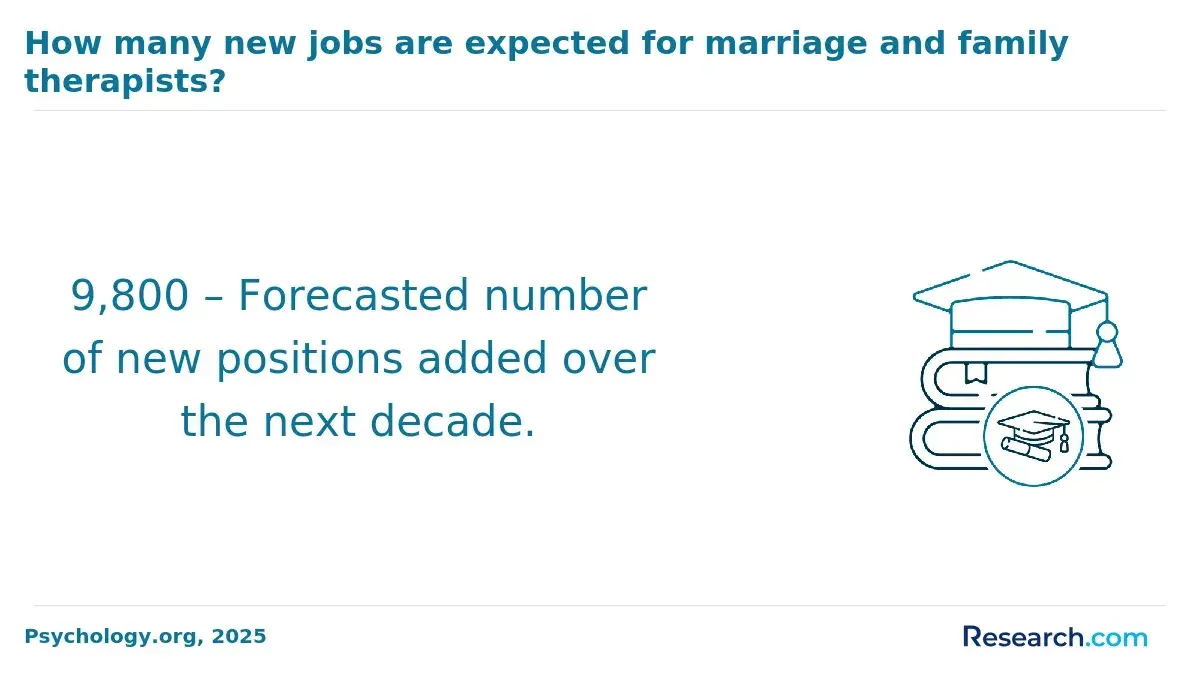
- Therapist or Counselor. With the appropriate licensure track, graduates may provide counseling or therapy to individuals, couples, families, or groups. Around 77,800 marriage and family therapists worked in the US. Meanwhile, 483,500 substance abuse, behavioral disorder, and mental health counselors were employed across the country.
- Research Assistant. Research assistants support studies in universities, hospitals, agencies, or private organizations by collecting data, reviewing literature, preparing reports, and helping analyze findings.
- Human Resources Specialist. Psychology graduates may apply knowledge of motivation, selection, training, communication, and workplace behavior in recruiting, employee relations, performance management, and organizational development.
How does the job outlook for MSW graduates compare to that of MPsy graduates?
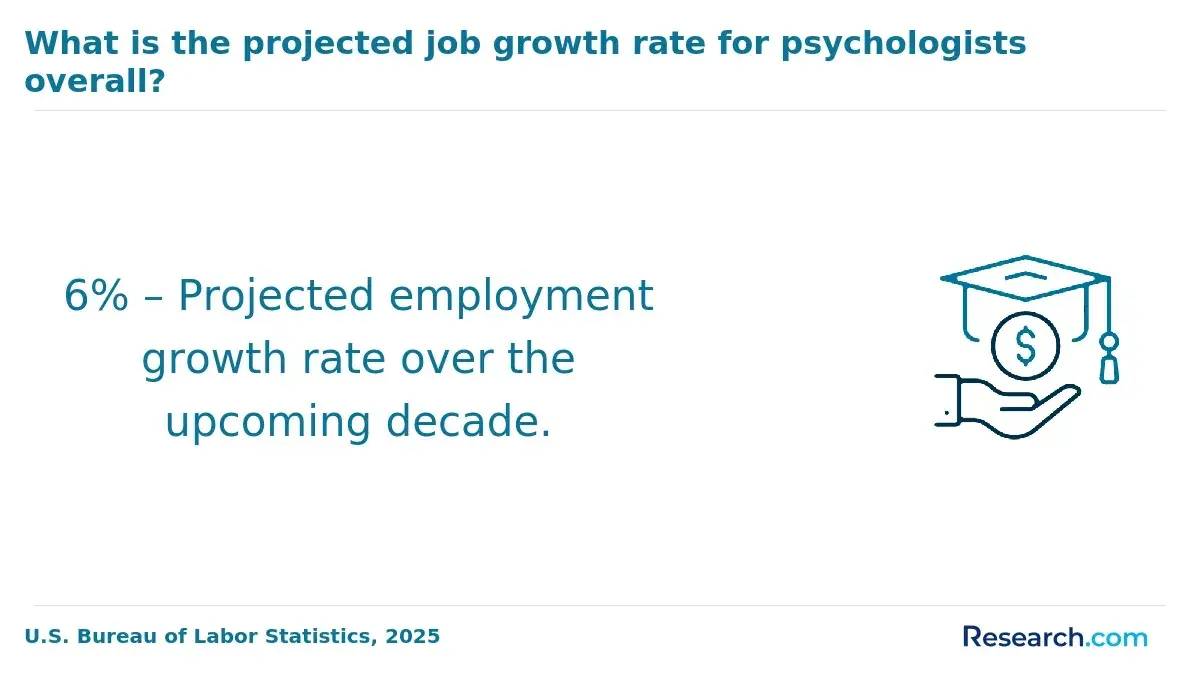
Both fields are connected to growing demand for behavioral health, counseling, social services, and community support. However, projected growth differs by occupation, and graduates should compare the exact job title they want rather than assuming the degree alone determines demand. The social work job outlook and psychologist job outlook include the following:
- Substance Abuse, Behavioral Disorder, and Mental Health Counselors are projected to experience an 17% growth rate through 2034.
- Marriage and Family Therapists are expected to see a 13% increase in employment during the same period.
- Mental Health and Substance Abuse Social Workers are forecasted to have a 10% growth rate.
These projections suggest strong demand in several counseling and behavioral health roles. Students considering a master’s in psychology may find opportunities in counseling-related occupations if their program supports the required licensure pathway. MSW graduates also have broad opportunities in clinical practice, case management, healthcare, government, schools, advocacy, and community organizations. Students interested in adjacent paths can also explore social science careers and job opportunities.
The practical takeaway is simple: choose based on the occupation and license you want, not only on the degree name. Before enrolling, look up your state’s licensing board requirements for social work, counseling, marriage and family therapy, or psychology.
How do online programs integrate technology to deliver hands-on training?
Online MSW and psychology programs can support practical learning through live video classes, virtual simulations, telehealth practice exercises, recorded skills demonstrations, interactive case studies, online supervision meetings, and digital collaboration tools. These technologies do not replace fieldwork or supervised practice when those are required, but they can help students prepare before working with real clients or research participants.
For MSW students, technology may be used for case planning, documentation practice, ethics scenarios, policy analysis, and supervision. For psychology students, online platforms may support assessment demonstrations, research software training, statistics labs, counseling role-play, and telebehavioral health modules. Students comparing online psychology programs should ask how the program verifies skills, arranges practica, and supports students who live outside the school’s local region.
Can you complete your online master's in psychology program faster?
Some online psychology master’s programs offer accelerated calendars, shorter terms, year-round enrollment, or heavier course loads. These formats can reduce time to completion, but they are not automatically easier or better. A faster program may require stronger time management, fewer breaks, and the ability to complete readings, projects, research assignments, and practicum-related obligations on a compressed schedule.
Students interested in speed should compare curriculum intensity, practicum availability, transfer credit rules, and whether acceleration affects licensure preparation. Researching the fastest master's degree in psychology can help identify programs built for shorter completion timelines, but the final choice should still be based on accreditation, outcomes, cost, and career alignment.
What are the licensing and certification requirements for online MSW and psychology graduates?
Licensing rules are state-specific, so students should verify requirements before applying to any online MSW or psychology program. An online format does not remove the need for approved coursework, supervised field experience, post-graduate supervised hours, examinations, background checks, or other state board requirements.
| Path | Common Requirement Pattern | What to Verify |
| Licensed Clinical Social Worker pathway | MSW from an appropriate program, supervised clinical experience, and state-specific examinations | Whether the program meets education requirements in the state where you plan to practice |
| Counselor or therapist pathway | Relevant graduate coursework, supervised practice, and licensure exams, depending on the license type | Whether a psychology master’s program qualifies for LPC, LMHC, MFT, or another intended license in your state |
| Licensed psychologist pathway | Doctoral education, supervised experience, and licensing exams are commonly required | Whether a master’s degree is terminal for your goal or mainly preparation for a PhD or PsyD |
Students pursuing psychology licensure should be especially cautious. A master’s degree in psychology can be valuable, but becoming a licensed psychologist generally requires doctoral training. Those seeking a shorter doctoral pathway can compare options such as the shortest online PsyD programs, while still confirming whether the program meets licensing expectations in their jurisdiction.
Can a Doctorate Degree Further Elevate Career Prospects in Psychology?
A doctorate can be essential for psychology students who want to become licensed psychologists, lead advanced research, teach at higher academic levels, or qualify for specialized clinical and assessment roles. Doctoral training typically offers deeper research preparation, supervised clinical experience, advanced theory, and specialization beyond the master’s level.
Students should weigh the benefits against the time, cost, admissions competitiveness, dissertation or doctoral project requirements, and internship expectations. Those planning advanced study can compare online PhD psychology programs and other doctoral routes to determine which format aligns with their professional goals.
How can accelerated online bachelor's programs boost my career prospects in psychology?
Students who have not yet completed an undergraduate degree may consider accelerated online bachelor’s programs as an earlier step toward graduate psychology study. A faster bachelor’s pathway can help motivated learners complete foundational coursework in human behavior, research methods, statistics, abnormal psychology, and developmental psychology before applying to master’s or doctoral programs.
Acceleration is most useful when the program is accredited, transfer-friendly, academically rigorous, and aligned with graduate prerequisites. Students comparing the fastest online psychology bachelor's degree options should also look at faculty support, research opportunities, internship access, and graduate school placement support.
What student support services enhance online MSW and psychology programs?
Strong student support can make the difference between simply enrolling online and successfully graduating prepared for practice. Online students should look beyond course delivery and ask how the school supports field placement, advising, career planning, licensure preparation, technology issues, faculty access, and networking.
- Field placement coordination. Especially important for MSW and counseling-oriented psychology programs, because students may need approved supervised sites near their location.
- Licensure advising. Programs should clearly explain which states they are designed to serve and what additional steps graduates may need after graduation.
- Career services. Useful services include resume review, interview preparation, job boards, employer connections, and guidance on clinical supervision opportunities.
- Academic and technical support. Online students need reliable access to tutoring, writing help, library databases, software support, and responsive instructors.
- Mentorship and networking. Cohort interaction, alumni connections, faculty mentoring, and professional association guidance can improve career readiness.
Students considering doctoral progression and cost control may also compare the most affordable PsyD online programs.
How do employment settings impact earning potential for MSW and MPsy professionals?
Earnings are shaped by job title, license level, experience, employer type, location, specialization, and whether the professional works in private practice, healthcare, schools, government, nonprofit services, or outpatient care. Median annual wages for selected roles include:
- Mental Health and Substance Abuse Social Workers: $60,060
- Marriage and Family Therapists: $63,780
- Substance Abuse, Behavioral Disorder, and Mental Health Counselors: $59,190
Private practice and outpatient care centers may offer higher earning potential for some licensed professionals, while nonprofit agencies, schools, residential facilities, and government programs may offer different trade-offs such as mission alignment, job stability, benefits, public service eligibility, or structured supervision. Marriage and family therapists may work in settings where compensation differs from social work or substance abuse counseling roles. Substance abuse, behavioral disorder, and mental health counselors may have more positions concentrated in settings with different pay structures.
Geography also matters. Metropolitan areas may offer higher wages, but they can also come with higher living costs and more competition. Students should compare expected earnings in the state where they plan to practice, not just national medians.
How to Choose Between Online MSW and Psychology Programs
The best way to choose is to start with the job and license you want, then work backward to the degree that meets those requirements. Do not choose based only on course titles, program speed, or the appeal of the word “psychology” or “clinical.” The strongest program is the one that prepares you for the work you actually plan to do.
- Identify your target role. Decide whether you want to be a clinical social worker, counselor, marriage and family therapist, school social worker, HR specialist, researcher, psychologist, or another professional.
- Check state licensing rules first. Look up the board requirements in the state where you plan to work. Confirm required degree type, accreditation, supervised hours, exams, and title restrictions.
- Compare curriculum against your goal. MSW students should review clinical practice, policy, field education, and specialization courses. Psychology students should evaluate research methods, assessment, ethics, statistics, and counseling or specialization coursework.
- Ask how fieldwork is arranged. Online programs should explain whether they find placements for students, approve student-identified sites, or require travel.
- Calculate total cost. Include tuition, fees, books, software, travel, lost work hours, exam fees, and any post-degree supervised training costs.
- Evaluate support services. Prioritize programs with licensure advising, placement support, responsive faculty, career guidance, and technical help.
- Consider time to completion carefully. Accelerated options can be helpful, but only if you can manage the workload and field requirements. Some students without a BSW may explore accelerated MSW programs without BSW.
| Choose an MSW If... | Choose a Master’s in Psychology If... |
| You want a practice degree connected to social services, advocacy, community systems, and clinical social work | You want deeper training in psychological science, behavior, assessment, research, counseling-related roles, or organizational psychology |
| You are interested in working with individuals while also addressing family, community, policy, and institutional barriers | You are interested in mental processes, psychological testing, research design, workplace behavior, or doctoral psychology study |
| You want to work in hospitals, schools, government agencies, nonprofits, child welfare, or community mental health | You want to work in counseling settings, research environments, HR, education, consulting, or prepare for a PhD or PsyD |
| You prefer a degree with field education as a core component | You prefer a program that may emphasize research, assessment, theory, or specialization-specific coursework |
Common Mistakes to Avoid
- Assuming all online programs lead to licensure. Online delivery does not guarantee that a program meets your state’s professional requirements.
- Looking only at tuition per credit. Total cost includes fees, books, technology, travel, field placement costs, exam fees, and potential income reduction during internships.
- Choosing a psychology master’s when your goal requires a doctorate. If you want to become a licensed psychologist, confirm whether you will need a PhD or PsyD after the master’s degree.
- Ignoring field placement logistics. A program can look flexible online but become difficult if placements are not available near you.
- Relying only on rankings. Rankings can help with discovery, but accreditation, licensure alignment, cost, placement support, and curriculum fit matter more.
What can you do with a master’s in psychology?
A master’s in psychology can support several career paths, but outcomes depend on specialization, state rules, supervised experience, and whether the graduate pursues additional credentials. Some roles are clinical or counseling-related, while others are research, education, business, or human-services focused.
- Clinical Psychologist or Therapist: Many students are drawn to therapy or clinical work. However, full licensure as a psychologist commonly requires doctoral education. A master’s degree may support licensure as a counselor, marriage and family therapist, or related provider if the program meets state requirements.
- School or Educational Psychologist: Graduates interested in learning, behavior, and student support may pursue school or educational settings, depending on credential rules and job title requirements in their state.
- Industrial-Organizational Psychologist: Students interested in business applications may use psychology to improve hiring, training, leadership, employee engagement, performance, and organizational culture.
- Researcher or Academic Professional: Graduates may assist with psychological research in universities, healthcare organizations, government agencies, or private firms. Teaching opportunities depend on institution requirements.
- Mental Health Counselor: With the correct license pathway, graduates may provide counseling for issues such as anxiety, depression, trauma, stress, grief, or substance use.
- Forensic Psychologist: Students interested in law and behavioral science may work in justice-related settings, but advanced credentials may be required for some forensic psychology roles.
- Health Psychologist: Graduates may work on programs related to behavior change, wellness, chronic illness, addiction, treatment adherence, or public health, depending on role requirements.
- Human Resources or Employee Well-being Specialist: Psychology training can be useful in employee relations, workplace wellness, talent development, training, conflict resolution, and organizational communication.
Students still comparing career outcomes can review what can you do with a masters in psychology to explore roles, specialization options, and practical next steps in more detail.
How crucial is accreditation for ensuring program quality in online MSW and psychology programs?
Accreditation is one of the first things students should verify because it affects transferability, financial aid eligibility, employer confidence, and licensure preparation. For practice-oriented degrees, accreditation can be especially important because licensing boards may require graduation from an approved or recognized program.
Students should confirm both institutional accreditation and any field-specific accreditation or approval relevant to their intended profession. They should also ask whether the program meets educational requirements in the state where they plan to work. For students interested in psychology programs with behavioral science applications, comparing options such as a behavioral psychology degree can be useful, but accreditation and licensure fit should still come first.
How Can Online Programs Bolster Practical Skills for Mental Health Counseling?
Online MSW and psychology programs can strengthen counseling skills when they include structured practice, feedback, supervised placements, ethical decision-making exercises, and opportunities to apply theory to realistic cases. Useful training features may include live role-play, recorded mock sessions, telehealth simulations, case conceptualization assignments, group supervision, crisis scenarios, and documentation practice.
Students preparing for counseling-related work should ask whether the program teaches assessment, treatment planning, multicultural practice, trauma-informed care, ethics, and referral procedures. They should also verify whether practicum or internship experiences satisfy state requirements. For students comparing specialized options, online masters degree programs mental health counseling can help identify programs focused on counseling preparation.
Affordable Pathways for Pursuing a Master’s in Psychology Online
Online psychology master’s programs can be more convenient for working adults, but affordability should be measured by total cost and career fit, not only by the listed tuition rate. A low-cost program that does not meet licensure requirements or lacks adequate support can become expensive if you need additional coursework later.
Benefits of Online Master’s Programs in Psychology
- Potential cost savings: Some online programs reduce commuting, relocation, housing, or campus-related costs, though students should still check technology fees and residency-based tuition rules.
- Scheduling flexibility: Online formats may make it easier to balance graduate school with work, caregiving, or other responsibilities.
- Financial aid access: Accredited online programs may offer access to federal, state, institutional, and employer-based aid options comparable to campus programs.
Finding the Most Affordable Online Options
Students looking for lower-cost programs should compare tuition, fees, transfer credit, expected completion time, practicum costs, and graduation requirements. A helpful starting point is Research.com’s guide to the cheapest online master’s degree in psychology, which can support budget-conscious program research.
Maximizing Financial Aid Opportunities
- Scholarships and grants: Look for school-based awards, professional association funding, need-based grants, and specialization-specific scholarships.
- Employer reimbursement: Ask whether your employer supports graduate study related to counseling, HR, healthcare, education, or behavioral health.
- Loan forgiveness programs: Graduates entering qualifying public service roles may be able to explore federal loan forgiveness options, depending on employer eligibility and loan type.
Choosing an affordable program is not just about spending less. It is about selecting a credible degree that supports your intended job, license, and long-term return on investment.
Key Insights
- An MSW is usually the more direct fit for students who want social work practice, clinical social work licensure pathways, healthcare or school social work, community programs, public service, or advocacy-focused roles.
- A master’s in psychology is often a stronger match for students interested in behavior, assessment, psychological research, counseling-related roles, organizational psychology, or preparation for a PhD or PsyD.
- Licensure should drive your decision. Before applying, confirm the exact education, accreditation, supervised experience, and exam requirements in the state where you plan to work.
- Cost comparisons should include more than tuition. Field placement logistics, fees, books, software, lost work time, exam costs, and future doctoral education can all affect affordability.
- Online programs can be effective when they provide strong placement support, live skills practice, faculty access, licensure advising, and clear state authorization information.
- Do not choose based on degree title alone. Start with your desired role, verify the required credential, compare accredited programs, and choose the path that gets you there with the least unnecessary time and cost.
References
- Psychology.org. (2025). Fastest Growing Careers In Psychology. https://www.psychology.org/resources/fastest-growing-careers-in-psychology/
- U.S. Bureau of Labor Statistics. (2025). Psychologists. https://www.bls.gov/ooh/life-physical-and-social-science/psychologists.htm
- U.S. Bureau of Labor Statistics. (2025). Social Workers. https://www.bls.gov/ooh/community-and-social-service/social-workers.htm
- U.S. Bureau of Labor Statistics. (2025). Substance Abuse, Behavioral Disorder, and Mental Health Counselors. https://www.bls.gov/ooh/community-and-social-service/substance-abuse-behavioral-disorder-and-mental-health-counselors.htm
Other Things You Should Know about Master of Social Work and Master of Psychology Programs
In 2027, Master of Social Work programs often focus on direct practice, policy, and advocacy aimed at social justice, while Psychology programs emphasize research, psychological theory, and clinical practice. Social Work curricula integrate field placements from the start, whereas Psychology may require later internships for applied experience.
Graduates with a Master of Social Work can enter fields such as clinical social work, community organization, and child welfare. Those with a Master of Psychology may pursue careers in clinical psychology, counseling, or research. Both fields offer opportunities in mental health services and educational settings.
Social workers often assist clients facing challenges like poverty, substance abuse, or family conflicts. Licensed psychologists frequently work with individuals experiencing mental health disorders, relationship problems, or personal growth issues. Both professions address diverse psychological and social needs, helping clients navigate complex life situations.
Social work or psychology programs deepen students' understanding of human behavior and societal dynamics through various means. They explore psychological theories, research methodologies, and practical interventions that shed light on individual and collective behaviors. Courses often delve into developmental psychology, social influences, cultural diversity, and mental health frameworks. Students engage in case studies, role-playing, and fieldwork, gaining insights into diverse populations and real-world challenges. Through internships and practicums, they apply theoretical knowledge to address social issues, foster well-being, and advocate for vulnerable communities. These experiences cultivate empathy, critical thinking, and ethical decision-making, preparing students for impactful roles in social services and mental health professions.
In a Master of Social Work (MSW) or Psychology program, field experiences typically include internships, practicums, or supervised clinical placements. These experiences provide hands-on opportunities for students to apply theoretical knowledge in real-world settings such as social service agencies, mental health clinics, schools, or community organizations. Students may engage in counseling sessions, client assessments, case management, advocacy work, or program development under the guidance of experienced professionals. These field experiences are crucial for developing practical skills, building professional networks, and gaining insights into diverse client populations and issues, preparing students for successful careers in social work or psychology.