
2027 Hospice & Palliative Care Social Work Careers: Guide to Career Paths, Options & Salary

Co-Founder and Chief Data Scientist
Hospice and palliative care social work is a career path for professionals who want to support people facing serious illness, complex family decisions, grief, care coordination, and end-of-life planning. The need is substantial: in the United States, 76.4% of adults are diagnosed with at least one chronic disease, including conditions such as heart disease, cancer, and diabetes (Boersma et al., 2025). For many patients and families, medical treatment is only one part of the experience. They also need help understanding care options, managing stress, finding resources, communicating with providers, and protecting dignity during an intensely difficult period.
This guide explains what hospice and palliative care social workers do, how hospice differs from palliative care, what education and licensure are typically required, what salaries and job outlook data suggest, and how to decide whether this career fits your strengths. It also covers certifications, online MSW options, cultural sensitivity, self-care, patient advocacy, related careers, and common mistakes to avoid before entering the field.
Quick Answer: What does a hospice or palliative care social worker do?
A hospice social worker supports patients who generally have a prognosis of a maximum of six months to live, while a palliative care social worker may assist patients at any stage of a serious illness. Both roles focus on psychosocial support, family counseling, care planning, resource navigation, advance care discussions, ethical decision-making, and coordination with healthcare teams. An MSW and state licensure are commonly needed for clinical roles, while bachelor’s-level or associate-level education may qualify candidates for related entry-level human services positions.
Hospice & Palliative Care Social Work Careers Table of Contents
- Why choose hospice and palliative care social work?
- Career outlook, salaries, and job demand
- Education, licensure, and training requirements
- Core skills needed in hospice and palliative care
- How to begin a career in hospice or palliative care social work
- How to move into advanced hospice and palliative care roles
- Cultural sensitivity, diversity, and respectful care
- Hospice social work compared with related mental health professions
- Online MSW benefits for hospice and palliative care careers
- Common challenges in hospice and palliative care social work
- Emerging trends shaping the field
- Self-care practices for hospice and palliative care social workers
- Patient advocacy responsibilities
- How hospice social workers differ from psychologists
- Why continuing education matters
- How evidence-based research improves practice
- Alternative careers for hospice social workers
- Is hospice and palliative care social work personally fulfilling?
Why choose hospice and palliative care social work?
Hospice and palliative care social workers help patients and families handle the nonmedical pressures that often come with serious illness. These pressures may include fear, family conflict, financial strain, caregiver exhaustion, grief, spiritual concerns, housing instability, and uncertainty about treatment choices. The central purpose of hospice is not to “give up” on care. It is to focus care on comfort, dignity, patient preferences, and family support when a life-limiting illness has reached an advanced stage.
In broader social work practice, professionals assist people who may be ill, unemployed, unhoused, isolated, disabled, or otherwise at risk. Their work often involves connecting individuals and families with public and community resources such as healthcare, food assistance, and childcare. In hospice and palliative settings, that same resource-navigation skill is applied to illness, caregiving, bereavement, and end-of-life decision-making.
A hospice or palliative care social worker may provide counseling, help families understand care plans, support advance directive conversations, assess home and caregiving needs, connect patients with benefits or community agencies, and monitor psychosocial well-being over time. Those interested in aging-related services may also want to compare this path with work as a social worker for elderly populations.
The career can also offer stable professional opportunities. In May 2022, social workers had a median annual wage of $61,420. Healthcare social workers, a category that may include hospice and palliative care professionals, had a median annual wage of $60,280 during the same period [US Bureau of Labor Statistics (BLS), 2023]. If you are still mapping the full route into the profession, Research.com also explains how many years it can take to become a social worker.
| Reason to consider this field | What it means in practice | Best fit for |
| High-impact patient support | You help patients clarify values, express wishes, and receive care aligned with their goals. | People who want emotionally meaningful work with direct client contact. |
| Family and caregiver guidance | You support relatives who may be overwhelmed by caregiving, grief, conflict, or medical decisions. | Professionals skilled at communication, mediation, and crisis support. |
| Interdisciplinary teamwork | You collaborate with nurses, physicians, chaplains, aides, counselors, and administrators. | People who prefer team-based healthcare environments. |
| Clinical and nonclinical options | You can work in counseling, care coordination, program management, education, advocacy, or administration. | Students who want several possible career directions within healthcare and social services. |
Career outlook, salaries, and job demand
The employment outlook for social work roles connected to hospice and palliative care is generally favorable, although growth rates vary by occupation, setting, and data source. The average job growth rate for all occupations in the country is 5%, and several social work-related occupations are projected above that benchmark. For a broader healthcare social work comparison, see Research.com’s guide to medical social worker salary and career options.
Social workers are expected to have a 7% employment through 2033. Healthcare social workers, including those in hospice, are predicted to have a 10% job growth over the same decade. Social and human service assistants are projected to have a 9% increase, while rehabilitation counselors can expect a 2% growth by 2033.
For people considering hospice or palliative care social work, the larger social work labor market is also relevant. About 74,000 job openings are projected annually over the decade. The median annual hospice social worker salary is $68,811. Salary, however, depends on licensure level, state, employer, years of experience, union coverage, shift structure, and whether the role is clinical, administrative, or care-coordination focused.
| Role | Median Annual Wage | Job Outlook |
| Social and Human Service Assistant | $37,610 | 12% (By 2031) |
| Rehabilitation Counselor | $38,560 | 11% (By 2031) |
| Social Worker (General) | $61,420 | 9% (By 2031) |
| Hospice Social Worker | $65,089 | 11% (By 2028) |
| Palliative Care Social Worker | $67,484 | Data unavailable |
How to interpret salary and outlook data before choosing this career
- Do not treat median pay as a guarantee. Actual compensation may be lower or higher depending on region, employer type, credentials, caseload, and clinical responsibilities.
- Compare the correct role. A hospice social worker, healthcare social worker, rehabilitation counselor, and social services assistant may work with overlapping populations but usually have different scopes of practice.
- Check state licensing rules early. Clinical social work titles and independent practice requirements are regulated at the state level.
- Consider emotional sustainability. Demand alone should not determine your choice. This field requires repeated exposure to loss, family distress, ethical complexity, and grief.
Education, licensure, and training requirements
The most common route into hospice and palliative care social work combines social work education, supervised field experience, state licensure, and specialized training in serious illness, grief, ethics, and end-of-life care. Requirements vary by state and employer, so students should confirm expectations with their state licensing board and prospective programs before enrolling.
| Credential level | Typical role options | When this path makes sense | Important limitation |
| High school diploma or HSE | Some aide, assistant, or support roles depending on employer requirements. | You want early exposure to healthcare or human services before committing to a degree. | Clinical social work responsibilities are not available at this level. |
| Associate degree | Human services assistant, community support, client services, or related entry-level work. | You want a lower-cost starting point or plan to transfer into a bachelor’s program. | Advancement may be limited without a bachelor’s or master’s degree. |
| Bachelor’s Degree in Social Work (BSW) | Case management, social services coordination, community programs, and some healthcare support roles. | You want formal social work preparation and may later pursue an MSW. | Many clinical roles require graduate education and licensure. |
| Master’s Degree in Social Work (MSW) | Hospice social worker, palliative care social worker, clinical social worker, counselor-adjacent social work roles, and advanced case management. | You want to provide higher-level psychosocial care and pursue clinical licensure. | You must complete state-specific licensure steps after graduation. |
| Doctorate in Social Work (DSW) or related doctoral study | Leadership, teaching, research, program design, policy, and advanced practice roles. | You want senior-level influence beyond direct service. | It is usually not required for entry into hospice social work practice. |
- Bachelor’s Degree in Social Work (BSW): A BSW can prepare students for foundational social services work and may qualify graduates for some entry-level positions. Students seeking a cost-conscious route can compare affordable online BSW programs before choosing a school.
- Master’s Degree in Social Work (MSW): An MSW is commonly expected for direct clinical practice and advanced healthcare social work. Programs may include coursework in grief, mental health, family systems, ethics, healthcare policy, and end-of-life care.
- Field experience: MSW field placements are especially important for this specialty. Hospice, hospital, oncology, long-term care, home health, bereavement, and palliative care settings can help students build practical skills before full-time employment.
- Licensure and certification: After earning the required degree, social workers generally pursue state licensure. Some professionals later add specialized credentials such as the Advanced Certified Hospice and Palliative Social Worker (ACHP-SW) or Certification in Hospice and Palliative Care Social Work (CHP-SW).
Core skills needed in hospice and palliative care
Hospice and palliative care social workers support people during some of the most vulnerable moments of their lives. Technical knowledge matters, but the role also requires judgment, emotional steadiness, cultural humility, and the ability to work across medical, family, legal, financial, and ethical systems. If you already work in social services and want graduate preparation for this specialty, compare master’s in social work programs with strong healthcare or clinical field placements.
Specialized practice skills
- Assessment and care planning: Social workers evaluate patient goals, family dynamics, caregiving capacity, safety concerns, financial stressors, grief risk, spiritual needs, and available supports. They use that information to help shape individualized care plans.
- Ethical decision-making: End-of-life care can raise difficult questions about autonomy, family disagreement, pain management, life-sustaining treatment, capacity, and informed consent. Social workers help teams keep the patient’s values central.
- Grief and bereavement support: Many roles involve anticipatory grief counseling, family support before death, and bereavement follow-up after a loss.
- Resource navigation: Patients and caregivers may need help with benefits, insurance questions, transportation, respite care, home services, legal planning referrals, or community support.
Professional and interpersonal skills
- Emotional intelligence: The work requires empathy without overidentification. Social workers must stay present with distress while maintaining professional boundaries.
- Collaboration: Hospice and palliative care are team-based. Social workers coordinate with physicians, nurses, chaplains, aides, therapists, administrators, and family caregivers.
- Clear communication: Families may be frightened, confused, or in conflict. Social workers often translate complex care issues into understandable choices.
- Documentation: Accurate notes, care plans, psychosocial assessments, and follow-up records help protect continuity and quality of care.
- Cultural humility: Beliefs about illness, dying, caregiving, family authority, grief, and spirituality vary widely. Respectful practice requires listening before assuming.
How to begin a career in hospice or palliative care social work
Many hospice and palliative care social work roles require an MSW from an accredited program, especially when the job involves counseling, clinical assessment, or licensure. However, students can begin building relevant experience earlier through entry-level healthcare, human services, aging services, home health, volunteer, or internship roles.
Practical exposure matters. Hospice and serious-illness work can be emotionally demanding, and early experience helps students understand whether the environment fits their temperament. Volunteering with hospice programs, interning in hospitals, working in long-term care, supporting bereavement programs, or assisting with community health services can build both skills and professional contacts.
| Social Services Path | Counseling Path | Medical Path | |
| Supporting individuals, families, and communities through mental health and social service systems. | Helping clients address socioeconomic, family, housing, foster care, homelessness, and child support concerns. | Helping patients and relatives find resources, understand choices, and navigate healthcare decisions. | |
| Entry Level Jobs | Social and Human Service Assistant ($37,610) | Rehabilitation Counselor ($38,560) | Home Health Aide ($29,430) |
| Middle Level Jobs | Social and Community Service Manager ($74,240) | Mental Health Counselor ($49,710) | Medical and Health Services Manager ($104,830) |
| Higher Level Jobs | Social Worker (General, $61,420) | Clinical and Counseling Psychologist ($90,130) | Hospice & Palliative Care Social Worker ($65,089-$67,484) |
Steps to enter the field
- Confirm your state’s licensing structure. Social work titles, supervised hours, exams, and independent practice rules vary by jurisdiction.
- Choose a CSWE-accredited social work program when required. Accreditation is important for licensure eligibility and employer acceptance.
- Use field placement strategically. Ask programs whether they offer placements in hospice, hospitals, oncology, long-term care, palliative care, home health, or bereavement services.
- Build comfort with illness and grief. Volunteer or work in settings where you can observe interdisciplinary care and family decision-making.
- Develop documentation and communication skills. These are essential in healthcare settings where teams rely on timely, accurate notes.
- Seek supervision from experienced clinicians. Strong supervision helps new professionals process loss, avoid boundary problems, and strengthen ethical judgment.
What can I do with an associate degree related to hospice and palliative care social work?
Social and Human Service Assistant
An associate degree in human services or a related field can help candidates qualify for support positions that assist social workers, case managers, and healthcare teams. If you are comparing options, Research.com’s guide to jobs available with a human services degree can help clarify possible roles.
Social and human service assistants may maintain records, connect clients with benefits or community agencies, help families complete forms, and support care coordination. Some positions require at least a high school diploma or high school equivalency (HSE), while others prefer postsecondary training. Through 2031, employment for social and human service assistants is expected to grow by 12%.
Median Annual Wage: $37,610
Home Health Aide
Home health aides provide direct daily support under appropriate supervision. Their work may include monitoring vital signs, assisting with prescribed exercises, helping with medications as directed, documenting changes, and reporting patient progress to supervisors. Some aides are trained to use equipment needed for patient care. Outlook for the job is at 25% by 2031, with an estimated 711,700 vacant positions expected annually.
Median Annual Wage: $29,430
What can I do with a bachelor’s degree related to hospice and palliative care social work?
Social and Community Service Manager
Social and community service managers oversee programs designed for specific populations or social concerns, including older adults, youth, food insecurity, mental health, and community support. They may supervise staff, track outcomes, analyze service data, and improve program delivery. Job growth for social and community service managers is expected to be at 12% annually until 2031.
Median Annual Wage: $74,240
Medical and Health Services Manager
Medical and health services managers coordinate healthcare operations, establish service goals, manage budgets and schedules, maintain compliance with regulations, represent organizations in meetings, supervise staff, and oversee records. Employment for medical and health services managers is forecast to grow by 28% annually until 2031.
Median Annual Wage: $104,830
Can a certificate alone qualify you for hospice and palliative care social work?
A certificate may strengthen a resume for some entry-level or continuing education purposes, but it usually does not replace a social work degree or state licensure for clinical practice. Many hospice and palliative care social work jobs expect candidates to hold an MSW and meet state licensing requirements. Some licenses also require at least a bachelor’s degree. Before paying for a certificate, confirm whether it is recognized by employers, whether it applies to your state licensing goals, and whether it offers supervised practice or only classroom instruction.
How to move into advanced hospice and palliative care roles
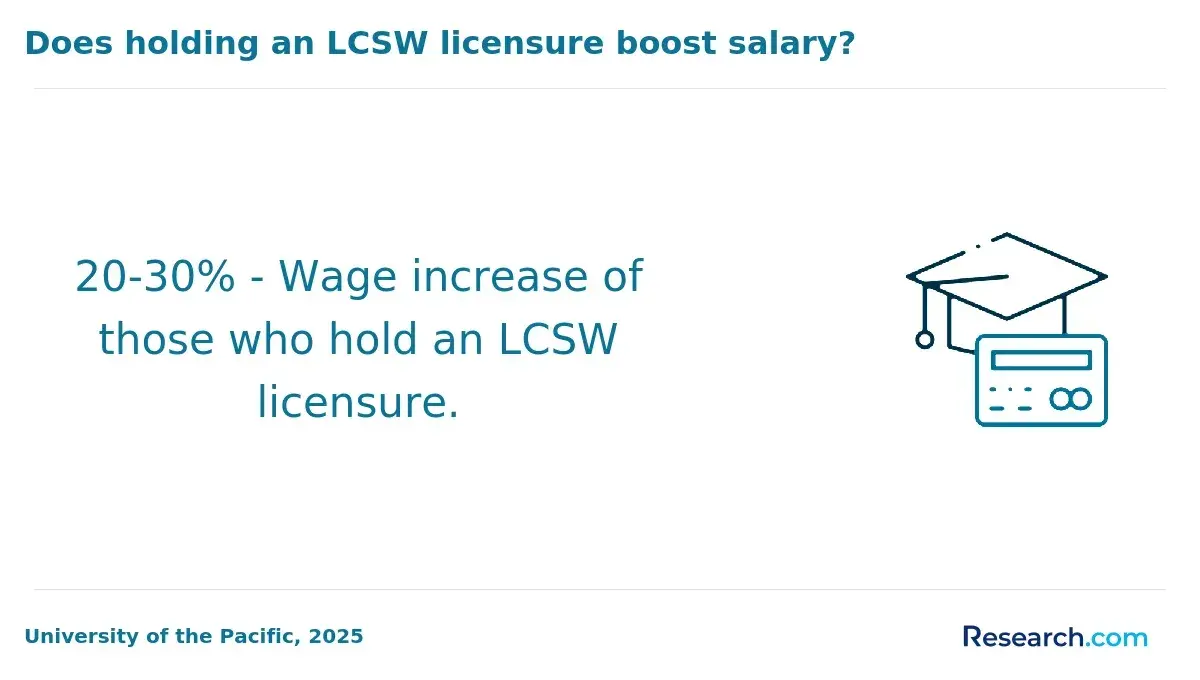
Career advancement usually depends on three factors: graduate education, supervised experience, and licensure. Completing an MSW, meeting supervised clinical requirements, and becoming a licensed clinical social worker (LCSW) can open doors to more independent practice, clinical leadership, supervision, and specialized healthcare roles. These steps are part of broader social worker education requirements. A doctorate in social work (DSW) may be useful for professionals seeking leadership, teaching, research, policy, or organizational roles.
What can I do with a master’s degree in hospice and palliative care social work?
Licensed Clinical Social Worker (LCSW)
LCSWs provide mental health and social services, contribute to program and policy development, advocate for underserved populations, and often practice with a higher level of clinical responsibility. Licensure helps ensure that practitioners meet standards for ethics, competence, supervision, and client safety.
Median Annual Wage: $61,420
Rehabilitation Counselor
Rehabilitation counselors help people with disabilities evaluate goals, strengths, limitations, interests, health needs, and support systems. They may develop treatment or service plans with other professionals, provide counseling, connect clients with resources, and revise plans based on progress. Students interested in counseling-focused work can compare online counseling degree programs.
Median Annual Wage: $38,560
What can I do with a doctorate related to hospice and palliative care social work?
Counseling Psychologist
Counseling psychologists use assessment, diagnosis, counseling, and psychotherapy to help individuals, couples, families, and groups improve functioning and address mental health concerns. They may also lead workshops related to mental health, family issues, careers, and coping. To become licensed and certified in counseling psychology, students generally need to earn a doctorate in psychology, pass applicable licensure requirements, and complete certification steps in the specialty.
Median Annual Wage: $90,130
Geropsychologist or Geriatric Psychologist
Geropsychologists apply psychological science to the needs of older adults and their families. Their expertise may include adult development, aging, late-life mental health, behavioral health, assessment, consultation, and intervention.
Median Annual Wage: $155,047
Which certifications are useful for hospice and palliative care social workers?
Specialized credentials can demonstrate advanced knowledge in serious illness, end-of-life care, ethics, and family support. Two recognized options are the Advanced Certified Hospice and Palliative Social Worker (ACHP-SW) from the National Association of Social Workers (NASW) and the Certification in Hospice and Palliative Care Social Work (CHP-SW) from the Hospice and Palliative Credentialing Center (HPCC). Eligibility generally depends on education level, professional experience, and examination requirements.
| Career goal | Most relevant next step | Why it helps |
| Move from support roles into professional social work | Earn a BSW or MSW from an appropriate program. | Employers and licensing boards often require formal social work education. |
| Provide clinical services | Complete an MSW, supervised experience, and state licensure. | Clinical practice requires regulated training and oversight. |
| Specialize in end-of-life care | Pursue hospice and palliative care fieldwork, continuing education, and certification. | Specialized preparation builds confidence with grief, ethics, family systems, and interdisciplinary care. |
| Lead programs or teach | Consider a DSW, leadership roles, supervision training, or research experience. | Advanced credentials can support administrative, academic, and policy-focused work. |
Cultural sensitivity, diversity, and respectful care
Hospice and palliative care social workers serve patients and families with different racial, ethnic, religious, linguistic, socioeconomic, family, and cultural backgrounds. Effective practice requires more than good intentions. Social workers must understand how identity, community history, spiritual beliefs, discrimination, immigration status, family roles, and healthcare access shape a person’s experience of illness and dying.
Cultural norms may influence who makes decisions, how openly death is discussed, whether spiritual rituals are requested, how pain is expressed, and what type of support feels respectful. Some families prioritize collective decision-making, while others emphasize individual autonomy. Some patients may want clergy or spiritual counselors involved, while others may not. The social worker’s job is not to impose a single model of “good” end-of-life care, but to help the team understand and honor the patient’s values whenever possible.
Language access is also essential. Social workers may coordinate with interpreters, request translated materials, and ensure that patients and families understand care options before making decisions. Cultural humility means asking careful questions, listening without stereotyping, and recognizing that each family’s preferences may differ even within the same cultural or religious group.
Equity work is part of the role as well. Some communities may underuse hospice because of stigma, mistrust of healthcare systems, lack of information, prior discrimination, or limited access to services. Social workers can advocate for culturally appropriate resources, fair access, and communication practices that reduce barriers.
Professionals can strengthen these skills through continuing education, supervision, field experience, diversity-focused training, or graduate study. Students comparing accessible graduate options can review MSW programs with more accessible admissions pathways, while still checking accreditation, field placement quality, and state licensure alignment.
Hospice social work compared with related mental health professions
Hospice social workers, therapists, counselors, psychologists, and psychiatrists may all support patients and families, but their scopes are not identical. Hospice social workers typically focus on psychosocial assessment, care planning, family communication, resource access, grief support, patient advocacy, and coordination with the hospice or palliative care team. Psychologists more often emphasize psychological testing, diagnosis, and structured psychotherapy. Therapists and counselors may focus primarily on mental health treatment, while social workers often combine counseling with systems navigation and advocacy.
These roles can complement one another. A patient may need a social worker to coordinate community supports, a chaplain for spiritual care, a nurse for symptom management, and a psychologist or therapist for specialized mental health treatment. For a broader role comparison, see Research.com’s discussion of social worker vs psychologist distinctions.
Online MSW benefits for hospice and palliative care careers
An online MSW can be useful for working adults who need graduate preparation but cannot relocate or attend a traditional daytime campus schedule. Strong programs offer advanced coursework, supervised field education, clinical training, ethics, policy, and practice preparation that can apply to hospice and palliative care settings.
The key is to evaluate the program carefully. Flexibility alone is not enough. Students should confirm accreditation, field placement support, state licensure alignment, faculty expertise, clinical course options, and total cost. If affordability is a priority, Research.com’s guide to the most affordable online MSW programs can help you compare options.
| Online MSW advantage | Why it matters for hospice and palliative care | Question to ask before enrolling |
| Schedule flexibility | Students may continue working while completing graduate study. | Are classes asynchronous, synchronous, or a mix of both? |
| Local field placement potential | Students may be able to train in nearby hospitals, hospice agencies, or community organizations. | Does the school arrange placements or require students to find their own? |
| Clinical preparation | Hospice work often requires advanced assessment, counseling, ethics, and documentation skills. | Does the curriculum support your state’s clinical licensure path? |
| Cost control | Online study may reduce relocation or commuting expenses, though tuition varies widely. | What is the full program cost, including fees, travel, books, and field placement requirements? |

Common challenges in hospice and palliative care social work
Hospice and palliative care social workers face emotional, ethical, administrative, and systemic challenges. They may experience repeated grief after patient deaths, moral distress when care preferences are unclear, family conflict about treatment choices, limited resources, high caseloads, and communication barriers across large care teams. Administrative documentation and reimbursement requirements can also compete with time spent directly supporting patients and families.
Preparation helps. Mentorship, supervision, peer debriefing, continuing education, and specialized credentials can reduce isolation and improve professional judgment. Graduate training connected to a master of social work job path may also prepare professionals for complex client systems, interdisciplinary work, and advanced practice expectations.
| Common mistake | Why it can hurt your career | Better approach |
| Choosing a program without checking accreditation | It may limit licensure eligibility or employer acceptance. | Verify accreditation and state licensing requirements before enrolling. |
| Focusing only on tuition | Fees, field placement travel, lost work time, and licensing costs can change affordability. | Compare the total cost of attendance and expected timeline. |
| Assuming every online MSW works for every state | Licensure requirements vary by jurisdiction. | Ask whether the program meets requirements in the state where you plan to practice. |
| Entering hospice work without grief support | Repeated loss can increase burnout risk. | Use supervision, peer support, counseling, and clear boundaries. |
| Relying only on rankings | A highly ranked program may not offer the field placement or licensure pathway you need. | Prioritize accreditation, placement quality, curriculum fit, and cost. |
Emerging trends shaping the field
Hospice and palliative care social work is being influenced by telehealth, digital documentation, data-informed care planning, interdisciplinary communication platforms, and growing attention to health equity. Technology can help teams reach patients, coordinate services, and monitor needs more efficiently, but it does not replace the relationship-based work at the center of serious-illness care.
Research, leadership, and policy work are also becoming more important as organizations look for better care models and more equitable access. Social workers interested in system-level change may consider advanced study such as best value online DSW programs, especially if their goals include administration, teaching, research, or program innovation.
Self-care practices for hospice and palliative care social workers
Self-care is not a luxury in hospice and palliative care; it is part of professional sustainability. Social workers who regularly witness suffering, death, family trauma, and caregiver distress need intentional routines that protect emotional health and ethical practice.
- Reflective practice and debriefing: Journaling, supervision, peer consultation, and team debriefings can help professionals process difficult cases instead of carrying them alone.
- Clear boundaries: Defined work hours, realistic caseload expectations, and protected personal time reduce the risk of compassion fatigue.
- Mindfulness and stress management: Breathing exercises, meditation, movement, yoga, prayer, or other grounding practices can help regulate stress responses.
- Professional counseling or supervision: Support from a therapist, mentor, or clinical supervisor can be especially valuable after repeated losses or ethically complicated cases.
- Healthy team culture: Hospice work is safer when teams normalize asking for help, discussing grief, and sharing responsibility instead of rewarding silent endurance.
Patient advocacy responsibilities
Hospice and palliative care social workers advocate for patients by helping ensure that care decisions reflect the patient’s wishes, rights, values, and needs. Advocacy may involve communication support, resource access, ethical consultation, family meetings, documentation of preferences, and coordination across healthcare providers.
- Protecting patient autonomy: Social workers help patients express preferences about care goals, pain management, life-sustaining treatments, and end-of-life options. They also help teams document and respect those choices.
- Improving communication: Medical information can be confusing. Social workers help patients and families understand care plans, ask questions, and participate in decisions.
- Supporting ethical decision-making: When families disagree or treatment choices are difficult, social workers facilitate conversations that keep the patient’s values at the center.
- Connecting patients with resources: Advocacy often includes helping families navigate insurance, financial assistance, transportation, community services, respite care, and bereavement support.
Professionals who want stronger clinical preparation for advocacy and counseling roles may compare accredited online LCSW programs and confirm that each option supports their state licensure goals.
How hospice social workers differ from psychologists
Hospice social workers usually take a systems-focused approach. They consider the patient, family, caregivers, benefits, community supports, care team, cultural values, housing, finances, and legal planning needs. Psychologists more commonly focus on psychological assessment, diagnosis, and therapy for mental health symptoms or disorders. Both professions can be valuable in serious-illness care, but they are trained for different responsibilities.
If you are deciding between these professions, review the difference between social worker and psychologist before choosing a degree path. The right choice depends on whether you want to focus primarily on therapy and assessment or combine counseling with advocacy, care coordination, and social systems work.
Why continuing education matters
Hospice and palliative care practice changes as laws, ethical standards, care models, technology, and clinical guidelines evolve. Continuing education helps social workers maintain competence, learn new interventions, meet licensure requirements, and respond to patient needs with current knowledge.
Options include workshops, grief and bereavement training, ethics courses, certification preparation, clinical supervision, conferences, and graduate programs. For students who want a faster path to an MSW, an accelerated MSW program may be worth exploring, provided it is accredited, manageable, and aligned with licensure requirements.
How evidence-based research improves practice
Evidence-based hospice and palliative care social work combines research findings, clinical expertise, patient values, and real-world context. Research can inform better psychosocial assessment, grief support, care planning, communication strategies, resource allocation, and ethical decision-making.
For practitioners, evidence-based practice means asking whether an intervention is appropriate for the patient, culturally respectful, measurable, and consistent with current professional standards. Students who want a broader human services foundation before advanced social work study can also explore an affordable online bachelor's degree in human services.
Alternative careers for hospice social workers
Hospice and palliative care social workers develop transferable skills in communication, crisis response, care coordination, cultural humility, documentation, ethics, and advocacy. These skills can apply to several related fields, especially for professionals who later want less direct exposure to end-of-life care or a different service population.
What else can a hospice or palliative care social worker do?
- Community Health Worker: Community health workers help address health concerns in local populations. They may provide basic services such as checking vital signs and first aid, gather information about community needs, and connect people with social service or healthcare providers. The median annual wage of community health workers was $48,860.
- Health Education Specialist: Health education specialists assess community health needs, design educational programs, help people access services, train healthcare providers, and evaluate program effectiveness. The median annual salary of health education specialists was similar to that of community health workers—$48,860.
- Forensic Psychologist: Forensic psychologists apply psychological knowledge in legal contexts. They may evaluate individuals involved in legal cases, offer expert testimony, and collaborate with attorneys or courts. Research.com’s guide to jobs with a forensic psychology degree explains this path in more detail.
Is hospice and palliative care social work personally fulfilling?
Hospice and palliative care social work can be deeply fulfilling for people who value dignity, family support, emotional presence, and practical problem-solving during serious illness. The work allows professionals to help patients be heard, help families feel less alone, and improve quality of life when time and choices may feel limited.
It is also demanding. Before choosing this path, consider whether you can work with grief, uncertainty, conflict, and repeated loss while maintaining boundaries and professional resilience. If you are still deciding whether social work is the right long-term investment, Research.com’s guide on whether a degree in social work is worth it can help you weigh cost, career fit, and outcomes.
How to decide if this career is right for you
| Ask yourself | Why it matters | Good sign | Possible concern |
| Can I stay calm around illness, grief, and death? | The role involves repeated exposure to loss and family distress. | You can be compassionate without becoming overwhelmed every time. | You avoid grief conversations or struggle to recover after emotional encounters. |
| Do I enjoy team-based healthcare work? | Hospice and palliative care rely on interdisciplinary coordination. | You communicate well with nurses, physicians, chaplains, aides, and family caregivers. | You prefer fully independent work with minimal collaboration. |
| Am I comfortable discussing values and difficult choices? | Patients and families often need help clarifying goals of care. | You can listen without forcing your own beliefs. | You find uncertainty or disagreement highly frustrating. |
| Will I follow licensure and supervision requirements? | Clinical social work is regulated and requires structured preparation. | You are willing to complete education, exams, supervision, and continuing education. | You want a quick certificate-only route into clinical work. |
Make a difference in other people’s lives
Hospice and palliative care social workers help patients and families face serious illness with more information, support, and dignity. Their contributions may not always be visible in the same way as medical treatment, but they are essential to whole-person care. Whether you work in hospice, hospitals, home health, bereavement programs, long-term care, or community services, this career can allow you to reduce suffering and support meaningful choices at critical moments.
Key Insights
- Hospice and palliative care are related but not identical. Hospice generally serves patients with a prognosis of a maximum of six months to live, while palliative care can begin at any stage of serious illness.
- The work is both clinical and practical. Social workers provide emotional support, care planning, family communication, advocacy, grief support, and resource navigation.
- Education and licensure matter. Many advanced roles require an MSW and state licensure; certificates can supplement but usually do not replace degree and licensing requirements.
- Demand is supported by broader healthcare needs. With 76.4% of U.S. adults diagnosed with at least one chronic disease, serious-illness support remains an important part of healthcare and social services.
- Salary varies by role and credential. Reported figures include $61,420 for social workers, $60,280 for healthcare social workers, $65,089 for hospice social workers, and $67,484 for palliative care social workers, but actual earnings depend on location, employer, and licensure.
- Emotional sustainability is essential. Supervision, boundaries, debriefing, counseling, and peer support help prevent burnout in a field shaped by grief and loss.
- Program choice should be practical, not just convenient. Before enrolling, verify accreditation, field placements, licensure alignment, cost, and support for hospice or palliative care career goals.
References:
- Association of Social Work Boards. (2025). Licensed social work workforce study: Earnings & licensure. https://www.aswb.org/wp-content/uploads/2025/07/Social-Work-Workforce-Study-Series-Report-2.pdf
- Council on Social Work Education (CSWE). (2025). Social work education accreditation & standards. https://www.cswe.org/education/accreditation/
- National Association of Social Workers. (2026). Joblink Career Profile: Palliative Care Social Worker. https://joblink.socialworkers.org/career/palliative-care-social-worker
- National Social Work Workforce Center. (2025). Social work employment & workforce resources. https://www.socialworkers.org/
- NASW Joblink: Forensic Social Worker Career Overview. (2026). https://joblink.socialworkers.org/career/forensic-social-worker
- NASW.org. (2026). NASW support for social work career advancement. https://www.socialworkers.org/
- SocialWorkers.org. (2026). Joblink: Forensic social worker responsibilities & duties. https://joblink.socialworkers.org/career/forensic-social-worker/job-descriptions
- U.S. Bureau of Labor Statistics. (2026). Social Workers: Occupational Outlook Handbook. https://www.bls.gov/ooh/community-and-social-service/social-workers.htm
- U.S. Bureau of Labor Statistics. (2025). Occupational Employment and Wage Statistics (OEWS). https://www.bls.gov/ooh/community-and-social-service/social-workers.htm
- U.S. Bureau of Labor Statistics. (2026). Social and Human Service Assistants: Occupational Outlook Handbook. https://www.bls.gov/ooh/community-and-social-service/social-and-human-service-assistants.htm
- ZipRecruiter. (2026). Salary: Hospice social worker. Retrieved from https://www.ziprecruiter.com/Salaries/Hospice-Social-Worker-Salary
Other Things You Should Know About Hospice & Palliative Care Social Work Careers
Social workers in hospice and palliative care provide emotional, social, and practical support to patients and families. They conduct assessments, collaborate with healthcare teams, facilitate support groups, and help navigate end-of-life care options, ensuring the patient's needs and wishes are respected.
Essential skills include emotional intelligence, ethical decision-making, assessment and care planning, and collaboration. These skills enable social workers to provide compassionate care, navigate complex ethical situations, and work effectively within multidisciplinary teams.
Hospice social workers commonly carry about 12 to 20 active patients at a time in team-based settings, with heavier caseloads in large agencies. The National Association of Social Workers also recommends manageable assignments that allow timely bereavement follow-up, care planning, and family support.
A master’s degree in social work (MSW) from an accredited program is typically required. Additionally, obtaining state licensure and certifications such as the Advanced Certified Hospice and Palliative Social Worker (ACHP-SW) or Certification in Hospice and Palliative Care Social Work (CHP-SW) can enhance career prospects.
To work as a hospice or palliative care social worker in 2027, you typically need a Master of Social Work (MSW) degree and state licensure. Licensing requirements vary by state but usually include supervised work hours and passing the Association of Social Work Boards (ASWB) exam.
Certifications like the Advanced Certified Hospice and Palliative Social Worker (ACHP-SW) and Certified Hospice and Palliative Care Social Worker (CHP-SW) are highly recommended in 2027. They enhance competencies and signify dedication to excellence in providing psychosocial care to patients and families.


