2027 Best Accredited Online Health Education Degree Programs: Compare Tuition, Admissions, and Career Outcomes

Co-Founder and Chief Data Scientist
Choosing an online health education degree is a cost, time, and career decision-not just a school search. NCES reported in 2024 that more than half of U.S. undergraduates took at least one distance education course, making online program quality harder to compare.
This guide is for first-time students, transfer students, and working adults who want an accredited path into health promotion, community health, wellness education, or graduate study. You'll learn how to compare tuition, admissions, accreditation, flexibility, support, and career outcomes so you can choose a program that fits your goals and budget.
Key Things You Should Know
- The strongest accredited online health education programs combine recognized institutional accreditation, career-aligned coursework, transparent tuition, transfer-friendly policies, and preparation for roles such as health education specialist, wellness coordinator, or community health program assistant.
- Public in-state online options are often the most affordable, while private nonprofit and for-profit programs may offer more predictable online pricing but higher per-credit rates, so total cost should include fees, transfer credits, books, and time to completion.
- BLS data updated in 2024 lists $62,860 as the median annual wage for health education specialists, which makes program ROI highly dependent on debt level, local labor markets, internship access, and whether the degree supports certification or graduate school plans.
Which Accredited Online Health Education Degree Programs Offer the Best Overall Value?
The best overall value is usually not the cheapest program. For online health education students, value comes from the balance of accreditation, total price, transfer credit acceptance, schedule flexibility, career relevance, and graduation support.
Health education degrees are commonly offered as bachelor's programs in health education, health promotion, public health education, wellness, or community health. Some students also compare these programs with adjacent healthcare pathways, such as RN to BSN online no clinicals programs, but the career targets are different: health education focuses on prevention, behavior change, program planning, outreach, and public health communication rather than direct nursing practice.
The table below summarizes common value profiles rather than ranking schools by name. This is useful because tuition, fees, and online delivery rules can change, while the decision factors remain consistent across accredited institutions.
| Program value profile | Best fit | Why it may offer strong value | Trade-off to check |
| Public university, in-state online bachelor's | Residents, transfer students, cost-sensitive learners. | Often combines lower tuition with recognized institutional accreditation and broad student services. | Out-of-state online rates may reduce the cost advantage. |
| Public university, flat-rate online tuition | Out-of-state students and working adults. | Predictable pricing can make comparison easier across states. | Program fees and course availability may affect total cost. |
| Private nonprofit online bachelor's | Adult learners needing frequent start dates. | Often offers simplified admissions, transfer evaluations, and online advising. | Per-credit tuition may be higher than public in-state options. |
| Competency-based or self-paced model | Highly independent students with prior college credit or work experience. | Can shorten time to completion when students move quickly through required work. | Not ideal for students who need fixed deadlines or live interaction. |
| Public health or wellness degree with health education concentration | Students considering graduate school or broader public health roles. | May provide a wider foundation in epidemiology, health policy, and population health. | May include fewer courses focused specifically on health education practice. |
For most students, the strongest value choice is an accredited public or nonprofit program that accepts a large number of transfer credits, publishes a clear degree map, and provides field experience or capstone opportunities. A low-tuition program can be a poor investment if it delays graduation, lacks advising, or does not align with the roles you want.
Students should be cautious about "best" lists that rely only on sticker price. A program with slightly higher tuition may be worth it if it offers stronger transfer credit evaluation, required career preparation, internship placement support, or a curriculum aligned with Certified Health Education Specialist competencies.
What Accreditation Should Students Look for in an Online Health Education Degree Program?
Accreditation is the first filter for any online health education degree. At minimum, the institution should hold accreditation from a recognized institutional accreditor. This affects federal financial aid eligibility, credit transfer, graduate school admission, and employer confidence.
Programmatic accreditation is more specialized. In health education and public health-related programs, students may see references to CEPH accreditation for public health programs or curricula aligned with CHES competencies through NCHEC standards. Not every legitimate health education bachelor's program has separate programmatic accreditation, so the key is to understand what the credential supports.
Use this comparison to understand what each accreditation signal means before you apply.
| Accreditation or quality signal | What it means | Why it matters | What to verify |
| Institutional accreditation | The college or university has met broad academic and operational standards. | Usually required for federal financial aid and commonly expected for transfer or graduate admission. | Confirm the institution appears in the U.S. Department of Education or accreditor database. |
| CEPH accreditation | The public health program or school has met public health education standards. | Can be valuable for students interested in public health practice or graduate public health pathway. | Check whether the specific online degree is included under the accredited unit. |
| CHES-aligned curriculum | Coursework supports health education specialist competencies. | May help students prepare for health education certification eligibility. | Ask whether graduates meet current exam eligibility rules. |
| State authorization | The school is approved to enroll online students in your state. | Required for many online programs serving out-of-state learners. | Confirm your state is eligible before applying. |
A common mistake is assuming that "accredited" always means the same thing. Institutional accreditation and programmatic accreditation answer different questions. Institutional accreditation tells you the college meets broad standards; programmatic accreditation or curriculum alignment tells you more about the professional relevance of a specific degree.
Before enrolling, ask the admissions office to identify the accreditor, whether the online version is covered, whether the curriculum supports CHES eligibility, and whether graduates have successfully used the degree for employment, certification, or graduate school admission.
How Do Tuition Costs Compare Across Accredited Online Health Education Degree Programs?
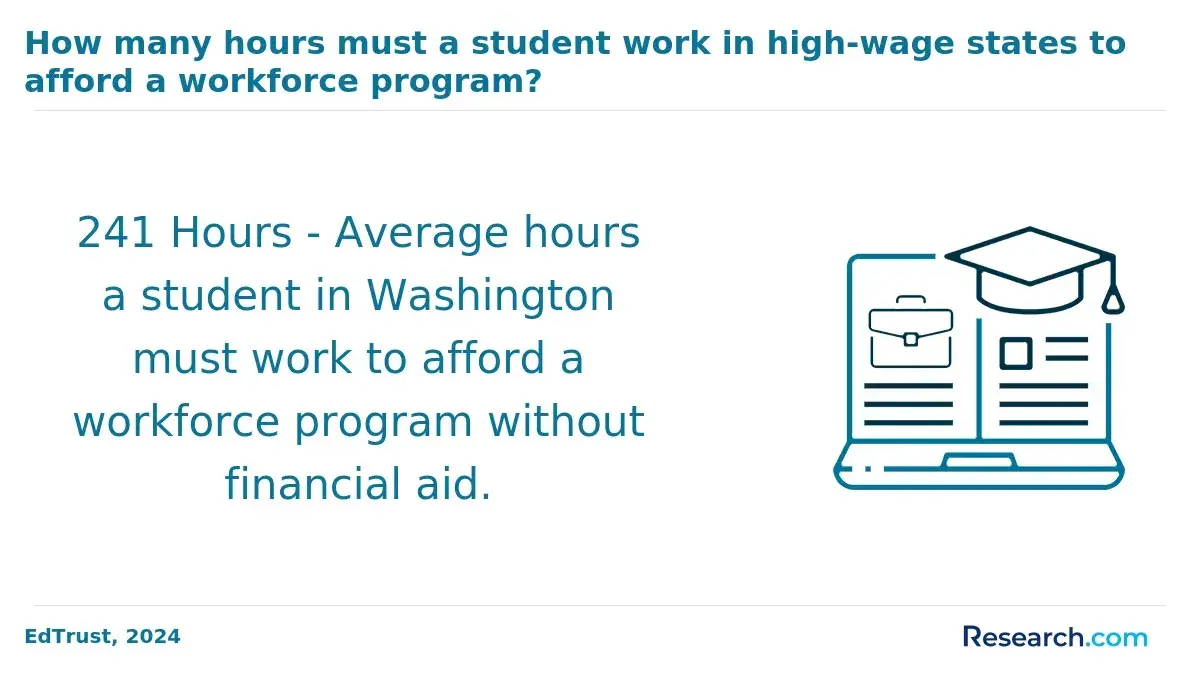
Tuition should be compared by total degree cost, not only by per-credit price. Online health education programs may charge technology fees, distance learning fees, assessment fees, graduation fees, and course material costs. Transfer credits can also make two programs with similar tuition look very different financially.
NCES data released in 2024 continues to show a large price gap between public and private four-year institutions, which matters because many online bachelor's degrees still price by institutional type. For students, the practical takeaway is simple: residency status, transfer credit, and completion speed can matter as much as the posted tuition rate.
The table below explains the cost categories students should compare when reviewing accredited online health education programs.
| Cost factor | Why it affects total price | What to ask before enrolling |
| Per-credit tuition | The base price multiplied by required credits. | Is the online rate different for in-state and out-of-state students? |
| Required credits after transfer | Determines how many credits you still need to pay for. | How many prior credits will apply to major, general education, and elective requirements? |
| Online and technology fees | Can add meaningful cost over multiple terms. | Are fees charged per course, per credit, or per term? |
| Books and digital materials | Health education courses may require platforms, texts, or assessment tools. | Are course materials included in tuition or billed separately? |
| Time to completion | Longer enrollment can increase fees and delay earnings. | Are required courses offered every term or only once per year? |
Students comparing health-related degrees often ask how much is the RN program because nursing prices can create a useful benchmark. However, health education programs usually have different cost drivers because they typically do not require clinical placement in the same way nursing programs do.
To compare programs fairly, build a side-by-side cost estimate before applying. The most useful estimate includes only the credits you still need, all mandatory fees, expected course materials, and the number of terms required to graduate.
- Request an official transfer credit evaluation before committing to a program.
- Ask for a full program cost sheet, not only the per-credit tuition rate.
- Confirm whether tuition is locked for continuing students or subject to annual increases.
- Compare net price after grants and scholarships, not just sticker price.
- Estimate opportunity cost if one program takes longer because of course sequencing.
The biggest cost red flag is a program that will not provide a clear degree plan before enrollment. If you cannot determine how many credits you need, when courses are offered, and what fees apply, you cannot reliably compare ROI.
How Competitive Is Admission to Accredited Online Health Education Degree Programs?
Admissions competitiveness varies widely. Many online bachelor's programs in health education are designed for access and completion, especially for transfer students and working adults. Others are housed within public health, health sciences, or education colleges that may require prerequisites, minimum GPA thresholds, or separate major admission.
Open or flexible admission does not automatically mean low quality. In online undergraduate education, admissions flexibility often reflects the program's mission to serve adult learners. The more important question is whether the program maintains academic standards after admission through advising, writing expectations, capstones, fieldwork, and outcome assessment.
The table below shows common admissions patterns and what they mean for applicants.
| Admissions model | Typical requirements | Best fit | What to watch |
| First-year online admission | High school diploma or equivalent, transcripts, sometimes test-optional review. | Students starting college for the first time | General education requirements may lengthen time to graduation. |
| Transfer admission | Prior college credits, minimum GPA, official transcripts. | Students with associate degrees or previous college coursework | Not all credits may apply to the major. |
| Major-specific admission | Prerequisites, minimum GPA, sometimes professional statement. | Students entering structured public health or health science programs | Meeting university admission may not guarantee major admission. |
| Adult learner admission | Work history, prior credits, simplified application, rolling starts. | Working adults returning to college | Convenience should not replace accreditation and outcome review. |
Applicants should prioritize readiness over selectivity alone. A highly selective program may offer strong academic reputation, but a less selective accredited program may be the better fit if it accepts transfer credits, offers consistent course availability, and supports working students.
Before applying, students should prepare a practical admissions checklist. This helps avoid delays and unexpected denials after investing time in applications.
- Collect official transcripts from every college previously attended.
- Ask whether the health education major has separate admission requirements.
- Confirm minimum GPA rules for transfer credits and major entry.
- Check whether prerequisite courses must be completed before upper-division coursework.
- Ask whether application essays, resumes, or professional goals statements are reviewed.
A common mistake is applying only to the easiest program to enter. Admissions flexibility is valuable, but students should also check graduation requirements, advising quality, and career relevance before enrolling.
Which Learning Formats Offer the Greatest Flexibility in Online Health Education Degree Programs?
The most flexible online health education programs are usually asynchronous, transfer-friendly, and available in multiple start terms. However, flexibility can mean different things: some students need self-paced coursework, while others need structured weekly deadlines to stay on track.
Students who need maximum schedule control may want to compare health education programs with broader online self paced colleges, especially if they already have substantial transfer credit or professional experience. Self-paced learning can be efficient, but it requires strong time management.
The table below compares the most common online formats and how they affect student experience.
| Learning format | How it works | Best for | Potential drawback |
| Asynchronous online | Students complete weekly work without required live class meetings. | Working adults, caregivers, students in different time zones. | Requires consistent self-direction. |
| Synchronous online | Students attend live virtual sessions at scheduled times. | Students who want real-time discussion and faculty interaction. | Less flexible for shift workers. |
| Hybrid | Most coursework is online, with some campus or field requirements. | Students near campus or those who value in-person components. | May not work for out-of-state students. |
| Accelerated terms | Courses run in shorter sessions than a traditional semester. | Motivated students who can handle intensive pacing. | Can be difficult when taking multiple courses while working. |
| Competency-based | Students progress by demonstrating mastery. | Independent learners with prior knowledge. | May offer less peer interaction and fewer fixed milestones. |
In health education, flexibility should not remove applied learning. Strong programs still include projects such as needs assessments, community health campaigns, program planning, evaluation reports, or capstones. These assignments help students demonstrate skills employers can understand.
To choose the right format, match the program's rhythm to your real weekly schedule rather than your ideal schedule. If you work rotating shifts, asynchronous or competency-based coursework may be better. If you learn best through discussion, a synchronous or cohort model may provide more accountability.
What Student Support Services Improve Success in Online Health Education Degree Programs?
Support services can make the difference between enrolling and graduating. Online students often need fast advising, clear course maps, library access, tutoring, technical help, career coaching, and faculty availability. These services are especially important for transfer students who must apply previous credits efficiently.
Retention and completion should matter to students because low support can increase total cost. Even one extra term can add tuition, fees, and delayed career progress. When a school advertises flexibility, students should ask how the program helps online learners stay on schedule.
The table below highlights support services that are especially useful in online health education programs.
| Support service | Why it matters for health education students | Question to ask |
| Dedicated academic advising | Helps students sequence prerequisites, major courses, electives, and capstone requirements. | Will I have an advisor who understands this specific major? |
| Transfer credit evaluation | Can reduce cost and shorten time to degree. | Can I receive a degree audit before I enroll? |
| Career services | Supports resumes, internship searches, interview preparation, and job search strategy. | Do online students receive the same career support as campus students? |
| Writing and research tutoring | Health education coursework often requires program plans, literature reviews, and evaluation reports. | Are tutoring services available outside standard business hours? |
| Fieldwork or capstone coordination | Helps students connect coursework to community health practice. | Can I complete applied projects in my local community? |
Students should be wary of programs that offer admissions support but limited academic support after enrollment. A helpful recruiter is not the same as a responsive advisor, accessible faculty member, or career coach.
Before committing, contact student services as if you were already enrolled. Ask how quickly advisors respond, whether online students can access tutoring, and how the program helps students find applied learning opportunities. The quality of those answers often reveals how online learners are treated.
Which Financial Aid Options Are Available for Accredited Online Health Education Degree Students?
Students in accredited online health education degree programs may qualify for many of the same financial aid options as campus students, provided the institution participates in federal aid programs and the student meets eligibility rules. This is one reason institutional accreditation matters.
For the 2024-25 award year, the maximum Federal Pell Grant is $7,395. That figure does not cover the full cost of many bachelor's programs, but it can substantially reduce out-of-pocket cost for eligible students, especially when combined with transfer credits, scholarships, employer benefits, or state aid.
The table below summarizes major financial aid options and how students should evaluate them.
| Aid option | Who may qualify | How to compare offers |
| Federal Pell Grant | Undergraduate students with demonstrated financial need. | Compare grant aid before loans because grants generally do not need to be repaid. |
| Federal student loans | Eligible students enrolled at participating institutions. | Borrow only what is needed after grants, scholarships, and payment plans. |
| State grants | Residents who meet state-specific rules. | Check whether online enrollment and out-of-state schools affect eligibility. |
| Institutional scholarships | Students meeting school-specific academic, transfer, need-based, or adult learner criteria. | Ask whether scholarships renew automatically or require a separate application each year. |
| Employer tuition assistance | Employees whose organizations support education benefits. | Confirm reimbursement timing, grade requirements, and annual caps. |
| Military and veteran benefits | Eligible service members, veterans, and dependents. | Ask whether the school has dedicated military benefit advising. |
Financial aid offers can look similar while producing very different debt outcomes. A larger total aid package is not always better if it relies heavily on loans. The most useful comparison is net cost after grants and scholarships, followed by estimated borrowing required to finish.
Use a consistent process when comparing aid letters from multiple schools.
- File the FAFSA as early as possible and list every school you are seriously considering.
- Separate gift aid from loans in each financial aid offer.
- Ask each school for the estimated total cost to degree after transfer credits.
- Calculate expected borrowing for the full program, not only the first term.
- Review scholarship renewal rules before assuming aid will continue.
A common mistake is choosing the school with the largest aid package without checking how much of it must be repaid. For ROI, lower borrowing is often more important than a larger headline award.
Which Career Outcomes Are Associated With Accredited Online Health Education Degree Programs?
An online health education degree can support roles focused on prevention, outreach, wellness, patient education, community programming, and public health communication. Common job titles include health education specialist, community health educator, wellness coordinator, health promotion specialist, prevention program assistant, and public health outreach coordinator.
BLS data updated in 2024 reports a median annual wage of $62,860 for health education specialists. This should be treated as a labor-market benchmark, not a guaranteed outcome, because pay depends on employer type, region, experience, certification, and whether the role is in healthcare, government, nonprofit, education, or corporate wellness.
Some students use health education as a broad foundation and later specialize in nutrition, public health, healthcare administration, or nursing-adjacent roles. Those interested in food, wellness, and behavior change may also compare a nutritionist degree online with health education to see which curriculum better matches their career target.
The table below connects common outcomes with the skills employers often look for.
| Career direction | Typical responsibilities | Useful program features | Additional credential to consider |
| Health education specialist | Designs, delivers, and evaluates health education programs. | Program planning, evaluation, communication, behavior change coursework. | CHES certification if eligible and relevant. |
| Community health educator | Works with communities to improve health awareness and access. | Community assessment, cultural competence, outreach projects. | State or employer-specific training may apply. |
| Wellness coordinator | Supports employee wellness, prevention campaigns, and health promotion activities. | Wellness, nutrition, exercise behavior, program management coursework. | Wellness or health coaching credential depending on employer. |
| Public health program assistant | Supports grant-funded programs, data collection, reporting, and education campaigns. | Public health foundations, epidemiology basics, evaluation methods. | MPH preparation for advancement. |
| Patient education coordinator | Helps patients understand prevention, treatment support, and lifestyle guidance. | Health communication, healthcare systems, literacy-focused coursework. | Employer-specific healthcare experience may be preferred. |
The degree may be worth it for students who want to work in prevention, education, outreach, wellness, or population health and who can keep debt aligned with likely entry-level salaries. It may be less suitable for students who want direct clinical authority, licensure-based patient care, or roles requiring a nursing, dietetics, counseling, or medical credential.
Career outcomes are strongest when students graduate with evidence of applied skills. Before choosing a program, look for capstones, local field projects, portfolio assignments, internship options, grant-writing exposure, and opportunities to practice health communication for different populations.
How Do Online and Campus-Based Health Education Degree Programs Compare?
Online and campus-based health education degrees can lead to similar academic outcomes when they are accredited, taught by qualified faculty, and built around comparable learning objectives. The difference is usually not academic legitimacy; it is learning environment, schedule, networking, and access to local opportunities.
Online programs are often better for working adults, caregivers, military students, rural students, and transfer students who cannot relocate. Campus programs may be better for students who want frequent in-person interaction, local internships arranged through the university, student organizations, and face-to-face faculty access.
The table below compares the main differences that affect student fit.
| Factor | Online health education degree | Campus-based health education degree |
| Schedule | Often asynchronous or designed for working adults. | Usually follows set class meeting times. |
| Location | Can be completed from home if state authorization and fieldwork rules allow. | Requires commuting or relocation. |
| Peer interaction | Occurs through discussion boards, group projects, and virtual meetings. | Happens through classes, campus events, and student organizations. |
| Applied learning | May allow local projects or virtual capstones. | May offer established partnerships near campus. |
| Cost structure | May reduce commuting and housing costs but can include online fees. | May include campus fees, housing, transportation, and meal costs. |
| Best fit | Independent learners who need flexibility. | Students who want structure and in-person community. |
Employers generally care more about accreditation, skills, experience, and fit than whether a degree was completed online. However, students should make sure the transcript and diploma come from an accredited institution and that the online program includes meaningful applied work.
A common mistake is choosing online only because it seems easier. Strong online programs require reading, writing, research, collaboration, and self-management. Students who need frequent reminders or in-person accountability may perform better in a campus or hybrid format.
How Should Students Choose the Best Accredited Online Health Education Degree Program?
The best accredited online health education degree program is the one that meets your career goal at the lowest reasonable total cost while offering enough support and flexibility for you to finish. Rankings can help you discover options, but they should not replace a personalized comparison.
Students who are licensed nurses or considering nursing completion pathways may find that an RN to BSN better matches their goals than a general health education degree. Health education is a stronger fit for students who want prevention, outreach, wellness, and population health roles rather than clinical nursing advancement.
Use the following process to make a defensible decision instead of relying on price or reputation alone.
- Define your target outcome first, such as community health education, wellness coordination, public health graduate study, or nonprofit program work.
- Eliminate any school that lacks recognized institutional accreditation or cannot enroll students in your state.
- Ask whether the curriculum supports CHES eligibility, public health competencies, internships, capstones, or portfolio development.
- Request a written transfer evaluation and degree completion plan before enrolling.
- Compare total remaining cost, including tuition, fees, books, and expected time to graduation.
- Review online format carefully, including live class requirements, term length, course availability, and fieldwork expectations.
- Ask for outcome indicators such as graduation support, career services access, internship assistance, and alumni career examples.
- Choose the program that offers the best combination of affordability, completion likelihood, academic quality, and career alignment.
Different students should prioritize different factors. Working adults should emphasize asynchronous delivery, advising responsiveness, and predictable course scheduling. Transfer students should focus on credit acceptance and degree audits. First-time college students should prioritize academic support, writing help, and structured advising. Students planning graduate school should look for research, public health, statistics, and writing-intensive coursework.
Red flags include vague accreditation language, unclear tuition, pressure to enroll before receiving a cost estimate, limited access to faculty, no published curriculum, and weak answers about career support. A trustworthy program should be willing to explain exactly what you will study, how long it will take, what it will cost, and how the degree connects to your goals.
Other Things You Should Know About Health Education
Health education focuses on teaching people and communities how to make informed health decisions. Health promotion is broader and may include policy, environmental changes, wellness initiatives, and organizational strategies that make healthier choices easier.
Yes. Many students use a health education bachelor's degree as preparation for graduate study in public health, health promotion, healthcare administration, counseling, nutrition, or related fields. Prerequisites vary, so students should check graduate program requirements early.
Some do, while others use capstones, applied projects, or local field experiences instead. Students should ask whether placements are required, whether they can be completed near home, and who is responsible for finding an approved site.
Useful skills include writing, public speaking, basic data interpretation, cultural competence, project planning, health communication, and comfort using online collaboration tools. Volunteer or work experience in schools, nonprofits, clinics, or community organizations can also be helpful.
References
- Admissions Criteria https://ed.wum.edu.pl/pl/admissions-criteria
- Cost of an Online Degree: Calculate the Cost of Your Higher Education https://www.edumed.org/articles/cost-of-an-online-degree/
- Home - Council on Education for Public Health https://ceph.org/
- Is College Worth it? | Return on Investment Analysis of College Degree https://educationdata.org/college-degree-roi
- CAAHEP https://www.caahep.org/
- Online Health Education Degree | Programs & Career Options https://www.learnhowtobecome.org/best-online-bachelors-in-health-education-degree-programs/
- Online College Accreditation https://www.onlineu.com/resources/online-college-accreditation
- Who Accredits MHA Programs? https://www.mhaonline.com/faq/who-accredits-online-mha-programs
- Programmatic Accrediting Organizations https://www.chea.org/programmatic-accrediting-organizations
- Online Health Education and Health Promotion Degree https://online.ben.edu/programs/undergraduate/health-education-promotion-bachelors/