2027 Cheapest Accredited Online Health Education Degree Programs That Accept FAFSA

Co-Founder and Chief Data Scientist
Finding a cheap online health education degree is not just about the lowest tuition—it is about whether the program is accredited, FAFSA-eligible, transferable, and useful for your career goals. The federal maximum Pell Grant is $7,395 for the current award cycle, which can significantly reduce out-of-pocket costs for eligible students.
This guide is for working adults, transfer students, and first-time undergraduates comparing online health education programs. You will learn how to evaluate real cost after aid, avoid financial aid mistakes, and choose a program that balances affordability with career value.
Key Things You Should Know
- The cheapest FAFSA-eligible online health education options are usually public universities for in-state students, but private nonprofit programs can be competitive when they accept more transfer credits or offer stronger institutional aid.
- FAFSA participation does not mean a degree will be free; the current maximum Pell Grant is $7,395, and remaining costs may include tuition, fees, books, technology charges, and living expenses.
- For career ROI, compare total borrowing with realistic health education salaries; the Bureau of Labor Statistics reported a May 2024 median annual wage of $62,860 for health education specialists.
Which Are the Cheapest Accredited Online Health Education Degree Programs That Accept FAFSA?
The table below highlights examples of accredited U.S. institutions with online health education or closely related bachelor's pathways that commonly serve students seeking FAFSA-eligible health promotion, public health education, or community health roles. Tuition can change by residency, term, and fees, so use these figures as a starting point and confirm the current cost with the school before applying.
| Institution | Online Program Type | Published Tuition Indicator | Accreditation and Aid Status | Best Fit |
| University of Florida Online | Bachelor's in Health Education and Behavior | About $129.18 per credit for Florida residents; substantially higher for nonresidents | Regionally accredited; participates in federal student aid | Florida residents seeking one of the lowest public university tuition rates |
| Southern New Hampshire University | Bachelor's in Community Health Education | $330 per credit for online undergraduate tuition | Regionally accredited private nonprofit; participates in federal student aid | Transfer students who want predictable online pricing and multiple start dates |
| Purdue Global | Bachelor's in Health Education and Promotion | $371 per quarter credit for many undergraduate online courses, before discounts or aid | Regionally accredited public nonprofit system institution; participates in federal student aid | Adult learners who need flexible scheduling and may qualify for tuition reductions |
| Arizona State University Online | Bachelor's in Health Education and Health Promotion | Online undergraduate tuition commonly varies by program and credits enrolled | Regionally accredited; participates in federal student aid | Students who want a large public university with broad online student support |
If you are comparing health education with adjacent healthcare pathways, it helps to look at how costs differ across fields. For example, students considering nursing may also compare the answers to "How much is the RN program on average in my area?" before deciding whether health education, nursing, public health, or nutrition best matches their goals.
When comparing "cheapest" programs, prioritize these cost drivers because they often change the final bill more than the advertised per-credit rate:
- Residency status, because public universities may be dramatically cheaper for in-state students than for out-of-state students.
- Transfer acceptance, because a program that accepts 60 to 90 credits may cost less overall than a lower-tuition program that accepts fewer credits.
- Required fees, because online course fees, technology fees, books, and assessment fees can raise the total price.
- Enrollment pace, because part-time students may keep working but could pay additional term-based fees over a longer timeline.
- Institutional scholarships, because some private nonprofit universities reduce net price through grants even when sticker tuition is higher.
How Does FAFSA Eligibility Work for Online Health Education Degree Programs?
FAFSA eligibility starts with the institution, but it does not end there. The school must participate in federal student aid programs, the student must meet federal eligibility rules, and the specific program must qualify for aid under the school's approved offerings.
For online health education degrees, FAFSA eligibility usually depends on four conditions. Checking each one before you enroll can prevent an expensive surprise after admission.
- Confirm the school has a federal school code and participates in Title IV federal student aid programs.
- Verify that the online health education degree itself is aid-eligible, not just the university as a whole.
- Ask whether your enrollment level qualifies for aid, because half-time status is often required for federal loans and some grants.
- Check satisfactory academic progress rules, because students usually must maintain minimum GPA and completion-rate standards to keep aid.
A common mistake is assuming that "accepts FAFSA" means the school will cover the full cost. FAFSA is an application, not a scholarship. It determines eligibility for federal grants, federal loans, work-study, and sometimes state or institutional aid, but the actual award depends on financial need, enrollment status, dependency status, cost of attendance, and remaining aid availability.
Online students should also ask whether internships, field experiences, or practicum courses affect aid. Some health education programs include community-based projects or capstone experiences; these can be valuable, but they may require transportation, background checks, immunizations, or local site coordination that adds indirect cost.
How Much Does an Online Health Education Degree Cost After Financial Aid?
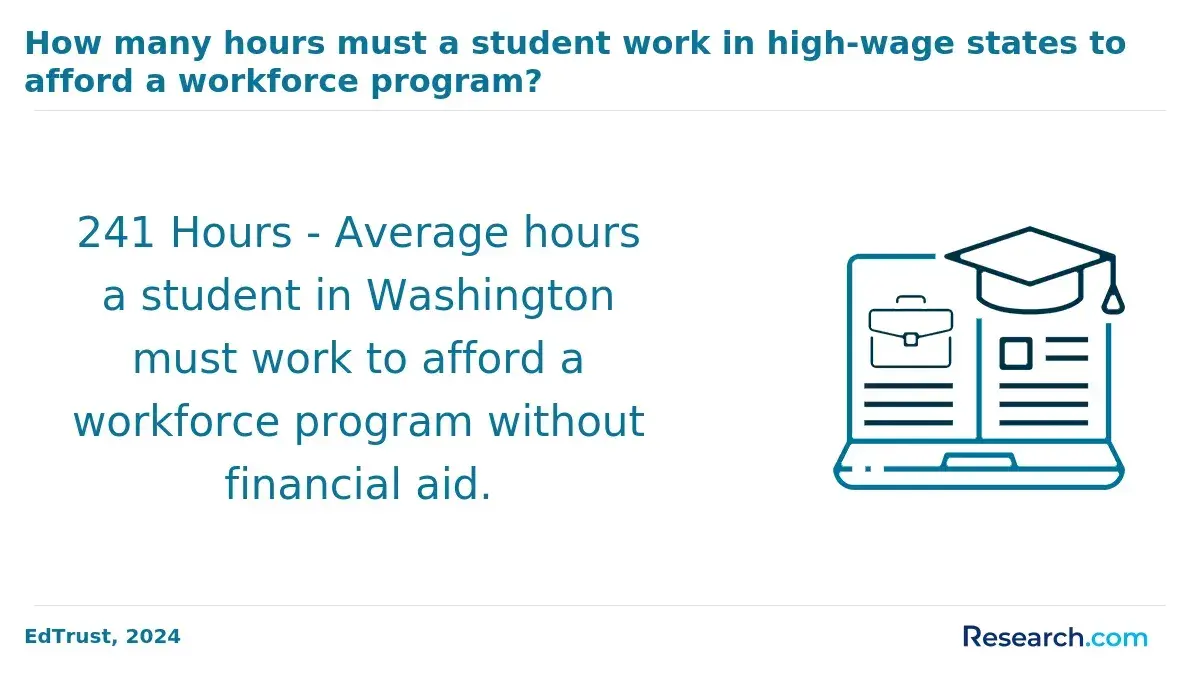
The cost of an online health education degree after financial aid depends on the gap between the school's cost of attendance and the grants, scholarships, employer benefits, and loans you receive. Published tuition is only one part of the calculation; the net price is the number that matters for affordability.
The College Board's 2024 pricing data shows that average published tuition and fees at public four-year institutions remain far lower for in-state students than for out-of-state students and private nonprofit students. For online health education majors, that means your cheapest option may be a public university in your state, even if a national online college advertises simpler pricing.
The table below shows how students should think about cost after aid. The examples are not promises of aid; they illustrate how different pricing models can change the amount a student may need to cover:
| Cost Scenario | What Usually Lowers Cost? | What Can Raise Cost? | Decision Point |
| Low in-state public tuition | Resident tuition, Pell Grant eligibility, state grants | Limited course availability or fewer transfer credits accepted | Best if you qualify for resident pricing and the program accepts your prior credits |
| Private nonprofit online tuition | Transfer credits, institutional scholarships, employer tuition assistance | Higher per-credit sticker price | Best if the school's aid package or transfer policy lowers the final balance |
| Out-of-state public online tuition | Online tuition discounts or nonresident waivers where available | Higher nonresident tuition | Best only if the program has a unique curriculum or strong credit acceptance |
| Adult degree-completion model | Prior college credits, military credits, professional training credits | Assessment fees or term fees | Best for students with substantial prior learning and clear completion plans |
To estimate your own net cost, start with the school's full cost of attendance, subtract gift aid that does not need to be repaid, then decide whether the remaining balance is affordable through savings, payment plans, employer assistance, or federal loans. Avoid comparing only tuition because two schools with the same tuition can have very different final costs after fees and aid.
Which Affordable Online Health Education Degree Programs Offer the Best Value?
The best-value affordable online health education program is not always the absolute cheapest. A higher-tuition program may be a better investment if it accepts more transfer credits, has stronger advising, offers relevant field experiences, or aligns better with Certified Health Education Specialist preparation and public health career goals.
Use the table below to separate low price from overall value. This matters because a low-cost program that delays graduation or does not support your career path can become more expensive in lost time and opportunity cost.
| Value Factor | Why It Matters | What to Ask the School |
| Transfer credit generosity | Accepted credits directly reduce the number of courses you must pay for | How many prior credits can apply to the major, general education, and electives? |
| Curriculum alignment | Courses in program planning, evaluation, epidemiology, communication, and behavior change support common health education roles | Does the curriculum align with CHES-related competencies or public health education outcomes? |
| Online support | Working adults often need accessible advising, tutoring, library access, and career services | Are services available during evenings or asynchronously? |
| Field experience flexibility | Community health projects can build experience but may require local site approval | Can I complete required projects near where I live? |
| Net price transparency | Clear financial aid estimates reduce the risk of overborrowing | Can you provide a program-level cost estimate after transfer review? |
Students who already work in healthcare may also compare health education with degree-completion nursing routes. If you are a licensed nurse, an RN to BSN pathway may offer a more direct credential for clinical advancement than a general health education degree.
A more expensive program may be worth choosing when it shortens your time to graduation, gives you access to a relevant practicum, or supports a credential your target employers recognize. The cheapest option is less attractive if it rejects many credits, has unclear accreditation, or leaves you borrowing heavily for a role with modest starting pay.
Are the Cheapest Online Health Education Degree Programs Properly Accredited?
The cheapest online health education degree is only worth considering if the institution is properly accredited. For federal financial aid, institutional accreditation is essential because Title IV aid generally depends on enrollment at an eligible institution recognized by the U.S. Department of Education.
Health education is different from some licensed clinical fields. Many roles do not require a state license, but employers may prefer a regionally accredited degree, relevant public health coursework, internship experience, and eligibility for credentials such as CHES. Some public health programs may also hold programmatic accreditation, but not every legitimate health education degree will have the same specialized accreditation.
Before enrolling, use this verification sequence to reduce risk:
- Check the institution's accreditation status using the U.S. Department of Education's accreditation database or the accreditor's own directory.
- Confirm the school participates in federal student aid and that the specific online program is eligible for aid.
- Ask whether the degree title and transcript will clearly state the major or concentration you need for your goals.
- Review whether the curriculum includes health behavior, program planning, needs assessment, evaluation, communication, and community health content.
- Ask whether graduates are academically prepared to pursue optional credentials such as CHES, if that credential matters in your target job market.
Red flags include vague accreditation claims, pressure to enroll before financial aid is finalized, unclear total cost, missing graduation requirements, or a program that cannot explain whether online students receive the same credential as campus students. If a school avoids direct answers about accreditation or aid eligibility, choose another option.
What FAFSA Grants and Federal Aid Can Pay for an Online Health Education Degree?
FAFSA can connect eligible online health education students to federal grants, federal loans, work-study, and sometimes state or school-based aid. Grants and scholarships are the most valuable because they generally do not need to be repaid, while loans should be used carefully and only after estimating repayment.
The table below summarizes major federal aid types that may apply to eligible undergraduate students in online health education programs. Award amounts and eligibility vary, so students should rely on their official aid offer rather than assuming they will receive every type of aid.
| Aid Type | What It Can Cover | Key Limitation | Best Use |
| Federal Pell Grant | Tuition, fees, books, and other education-related costs within the cost of attendance | Maximum award is $7,395 for the current award cycle and depends on eligibility and enrollment intensity | Reducing or eliminating tuition at low-cost programs |
| Federal Supplemental Educational Opportunity Grant | Additional grant aid for students with high financial need | Campus-based funding is limited and not available equally at every school | Lowering borrowing for high-need students |
| Direct Subsidized Loan | Remaining education costs after grants and scholarships | Available only to eligible undergraduates with financial need | Covering a manageable balance when grants are not enough |
| Direct Unsubsidized Loan | Education costs within annual loan limits | Interest accrues while enrolled unless paid | Last-resort federal borrowing after gift aid and payment options |
| Federal Work-Study | Part-time earnings through eligible jobs | Availability depends on the school and job placement | Reducing living or book expenses while enrolled |
Students should also ask about state grants, public health association scholarships, employer tuition reimbursement, military education benefits, and local hospital or nonprofit workforce programs. These sources can be especially useful for health education students already working in community outreach, wellness, social services, or healthcare administration.
The biggest financial aid mistake is borrowing up to the full offered loan amount without calculating need. A better approach is to accept grants first, apply for scholarships next, use employer assistance when available, and borrow only the amount required to complete the term successfully.
How Do Transfer Credits Lower the Cost of an Online Health Education Degree?
Transfer credits can be the largest cost-saving tool for an online health education degree. A student who transfers 60 accepted credits into a 120-credit bachelor's program may cut the number of credits they must pay for in half, though major requirements and residency rules can limit how credits apply.
To understand the potential savings, consider a program charging $330 per credit. If 60 credits apply toward the degree, that transfer credit could avoid about $19,800 in tuition before fees. This is why a slightly higher per-credit school can still be cheaper overall if it accepts more credits toward graduation.
Transfer policies vary widely, so students should complete these steps before committing:
- Request an official transfer credit evaluation, not just an informal estimate.
- Ask how credits apply to general education, major requirements, electives, and upper-division requirements.
- Confirm the school's maximum transfer allowance and minimum credits that must be completed in residence.
- Check whether prior professional certifications, military training, or standardized exams can earn credit.
- Compare the remaining credits and total remaining cost across at least three FAFSA-eligible schools.
Some adult learners also consider competency-based or flexible online formats when trying to finish faster. If schedule control is a major priority, compare health education programs with broader online self paced colleges, but verify that the specific degree, aid model, and credit structure match your financial aid needs.
Do not assume every associate degree will transfer cleanly. Health education programs may require specific science, statistics, public health, or behavioral science courses. A cheap program becomes less affordable if you must retake courses because they do not fit the degree plan.
Which Students Benefit Most From a Low-Cost Online Health Education Degree With FAFSA?
A low-cost online health education degree with FAFSA is often a strong fit for students who want to work in community health, wellness programming, patient education, nonprofit outreach, school health support, public health communication, or health promotion. It can also fit healthcare workers who want to move into education, prevention, or program coordination rather than direct clinical care.
The students most likely to benefit tend to share several characteristics. These factors matter because affordability is strongest when the degree matches both the student's finances and career direction.
- Transfer students with previous college credits who can reduce the number of remaining courses.
- Working adults who need asynchronous online coursework and cannot relocate for campus study.
- Pell-eligible students choosing low-tuition public or nonprofit programs with transparent fees.
- Healthcare or social service workers whose employers offer tuition assistance for related degrees.
- Students interested in prevention, community programming, wellness, nutrition education, or health communication rather than clinical licensure.
Students focused specifically on food, diet, and wellness may want to compare health education with a nutritionist degree online. Nutrition programs may better fit diet-related career goals, while health education programs usually take a broader public health and behavior-change approach.
This degree may not be the best primary choice for students who want to become registered nurses, licensed dietitians, physical therapists, physician assistants, or clinical mental health providers. Those careers usually require different accredited programs, supervised clinical training, exams, or graduate education.
How Does the Cost of an Online Health Education Degree Affect Career ROI?
The cost of an online health education degree affects career ROI because many entry-level roles in public health and community education are mission-driven but not always high-paying at the start. Lower tuition and lower borrowing give graduates more flexibility to accept nonprofit, government, school, or community-based roles without being overburdened by debt.
The Bureau of Labor Statistics reported a May 2024 median annual wage of $62,860 for health education specialists. This figure is useful as a national benchmark, but actual pay varies by location, employer, experience, degree level, credential, and whether the role is in government, hospitals, nonprofits, schools, or corporate wellness.
Use ROI as a practical comparison rather than a promise. A strong ROI usually comes from combining a reasonable total cost with career-relevant experience and a clear job target.
- Lower total borrowing improves ROI because less income is needed for loan repayment after graduation.
- Relevant fieldwork improves ROI because employers often value experience in community programming, outreach, data collection, and health communication.
- Optional credentials may improve marketability when they align with employer expectations, but they can add exam and preparation costs.
- Graduate school plans change the ROI equation because a cheap bachelor's degree may preserve borrowing capacity for a future MPH or related master's degree.
Current employer expectations are also shifting. Health education roles increasingly involve digital communication, data-informed outreach, virtual wellness programming, and culturally responsive community engagement. Students should look for programs that teach both traditional health promotion and practical communication, assessment, and evaluation skills.
How Should Students Choose the Cheapest FAFSA-Eligible Online Health Education Degree?
To choose the cheapest FAFSA-eligible online health education degree, compare schools by net cost, accreditation, transfer acceptance, curriculum relevance, and student support—not tuition alone. The right program is the one you can afford to finish and use for your intended career path.
Use this step-by-step process before enrolling. It helps you avoid common mistakes such as choosing a low sticker price while overlooking fees, rejected credits, or weak career alignment.
- Make a shortlist of accredited schools that offer online health education, health promotion, community health, or closely related public health education degrees.
- Confirm the institution and specific online program are eligible for federal student aid.
- Submit the FAFSA and compare official aid offers, not estimated marketing figures.
- Request a transfer credit evaluation from each school before choosing.
- Calculate remaining tuition, required fees, books, technology costs, and any fieldwork expenses.
- Ask how the curriculum supports your target roles, optional credentials, internships, or graduate school plans.
- Estimate borrowing at graduation and compare it with realistic salary expectations in your region.
- Choose the program with the best balance of low net price, completion speed, credible accreditation, and career fit.
If you are already in nursing or comparing clinical and nonclinical healthcare advancement routes, an RN to BSN online no clinicals program may be more relevant than a general health education degree. The best degree depends on whether your goal is clinical advancement, public health education, wellness programming, or community outreach.
Before you commit, ask admissions and financial aid offices direct questions: What is my total remaining program cost after transfer credits? Which fees are mandatory? Will my aid apply to every term? What happens if I enroll part-time? What support is available for online students? Clear answers to these questions are a good sign that the school is prepared to support you financially and academically.
Other Things You Should Know About Health Education
Yes, many online health education programs are designed for working adults, especially those with asynchronous courses. However, field experiences, group projects, or capstones may require scheduled meetings or local site coordination.
Some do, especially programs focused on public health practice or community health promotion. Others use a capstone, project, or practicum instead. Ask whether any in-person requirements can be completed near your home.
CHES certification is not required for every health education job, but some employers prefer it. If you want that credential, confirm that your coursework supports the eligibility requirements before enrolling.
Yes, eligible graduate students can submit the FAFSA for qualifying online master's programs, but Pell Grants are generally for undergraduates. Graduate students more commonly use federal unsubsidized loans, Graduate PLUS loans, employer assistance, or scholarships.
References
- How EduMed Builds the Annual Rankings for Online Nursing & Allied Health Programs - EduMed https://www.edumed.org/rankings-methodology/
- 9 Online Schools That Accept FAFSA (and How to Get Financial Aid) https://www.studentloanplanner.com/financial-aid-online-colleges/
- Types of Financial Aid https://www.hhloans.com/types-of-financial-aid/
- Online Medical Assistant Program With Financial Aid (2026) https://www.clinicalskillsinstitute.com/post/online-medical-assistant-program-with-financial-aid
- College Graduation Rates and How ACE Compares | ACE Blog https://ace.edu/blog/college-graduation-rates-and-how-ace-compares/
- Cost of College by Country [2025]: Average Tuition Fees https://educationdata.org/average-cost-of-college-by-country
- Top 5 Online Colleges That Accept FAFSA 2025 https://bold.org/blog/online-colleges-that-accept-fafsa/
- Scholarships & Financial Aid https://www.aacnnursing.org/students/scholarships-financial-aid
- College Scholarship Opportunities - Health Career Collaborative https://healthcareercollaborative.com/college-scholarship-opportunities/
- 20 Affordable Health Sciences Degrees - Healthcare Administration Degree Programs https://www.healthcare-administration-degree.net/best/affordable-health-sciences-degrees/