2027 Online Health Education Degree Programs With No Application Fee and Rolling Admissions

Co-Founder and Chief Data Scientist
Choosing an online health education degree can feel urgent when you need a flexible start date and want to avoid upfront costs. Health education matters across schools, nonprofits, hospitals, public health agencies, and wellness programs; the U. S. Bureau of Labor Statistics reported a May 2024 median annual wage of $62,860 for health education specialists. This guide is for prospective students comparing no-application-fee, rolling-admission options. You'll learn how these policies work, what they do and do not save, and how to judge programs by total cost, accreditation, flexibility, and career value.
Key Things You Should Know
- No application fee usually saves about $25 to $75 per school, but it does not prove the degree is affordable; tuition, technology fees, transfer-credit limits, books, and time to completion matter more.
- Rolling admissions means applications are reviewed continuously, but students still need to meet start-date, transcript, financial aid, and course-registration deadlines.
- BLS May 2024 wage data places health education specialists at a median annual wage of $62,860, but roles, employers, geography, experience, and credentials can change outcomes.
Which Online Health Education Degree Programs Have No Application Fee and Rolling Admissions?
The best starting point is to look for programs that combine three things: a relevant health education, health promotion, public health, community health, or health sciences curriculum; a published no-application-fee policy; and continuous or frequent admissions review.
The table below lists examples of online options that prospective students commonly compare, but policies can change, so confirm the fee and start-date policy directly with the school before applying.
| School | Relevant Online Program | Application Fee Position | Admissions and Start-Date Pattern | Best Fit |
| Southern New Hampshire University | BS in Community Health Education | No undergraduate application fee is commonly advertised | Rolling admission with multiple online terms each year | Students who want a broad community health and health education foundation with frequent start options |
| Purdue Global | BS in Health Education and Promotion | No application fee is commonly advertised | Frequent online start dates and rolling-style review | Adult learners seeking a career-focused health promotion curriculum |
| American Public University | BS in Public Health | No application fee is commonly advertised | Monthly course starts and continuous enrollment pathways | Students interested in public health, prevention, and community wellness roles |
| Walden University | BS in Health Studies or health promotion-related pathways | No application fee is commonly advertised for many programs | Multiple start dates with ongoing admissions support | Working adults who want health studies coursework with flexible online delivery |
| Western Governors University | BS in Health and Human Services | No application fee is commonly advertised | Monthly starts after admission and enrollment clearance | Students who want competency-based pacing in a health services-adjacent program |
These programs are not identical. Some are direct health education or health promotion degrees, while others are related health sciences, public health, or health and human services programs that may support similar career goals. If your target job specifically asks for a health education degree, Certified Health Education Specialist preparation, or public health coursework, compare the curriculum carefully instead of relying on the program title alone.
A no-fee, rolling-admission program is most useful when it also matches your preferred learning format. Students who need maximum scheduling control may also want to compare online self paced colleges, because self-paced coursework and rolling admission are related but not the same thing.
How Does Rolling Admission Work for Online Health Education Degree Programs?
Rolling admission means a school reviews applications as they arrive instead of waiting for one fixed deadline. For online health education degrees, this often pairs with several start dates per year, which can help working adults, transfer students, military-affiliated students, and career changers begin sooner.
However, rolling admission is not the same as "apply anytime and start tomorrow." Schools still need time to receive transcripts, evaluate transfer credits, verify prerequisites, process financial aid, and place students into the right first courses.
This comparison shows how rolling admission differs from fixed-deadline admission in practical terms.
| Feature | Rolling Admission | Fixed Deadline Admission | Why It Matters |
| Application review | Reviewed as files become complete | Reviewed after a set deadline or deadline group | Rolling review may produce a faster decision if the application is complete |
| Start dates | Often multiple terms per year | Often one to three major entry points per year | More starts can reduce waiting time, especially for working adults |
| Financial aid timing | May still have separate priority dates | Often tied closely to admission deadlines | Students can miss aid opportunities even if admission remains open |
| Course availability | May vary by term | Usually planned around cohorts or academic calendars | Not every course may be offered every start date |
| Best strategy | Apply early once materials are ready | Build backward from the posted deadline | Early complete applications give students more time to compare aid and transfer credit |
The common mistake is assuming rolling admission removes urgency. In reality, applying early can still help because online sections, scholarship funds, transfer evaluations, and advising appointments may be limited before a term begins.
How Much Can Students Save by Choosing an Online Health Education Degree With No Application Fee?
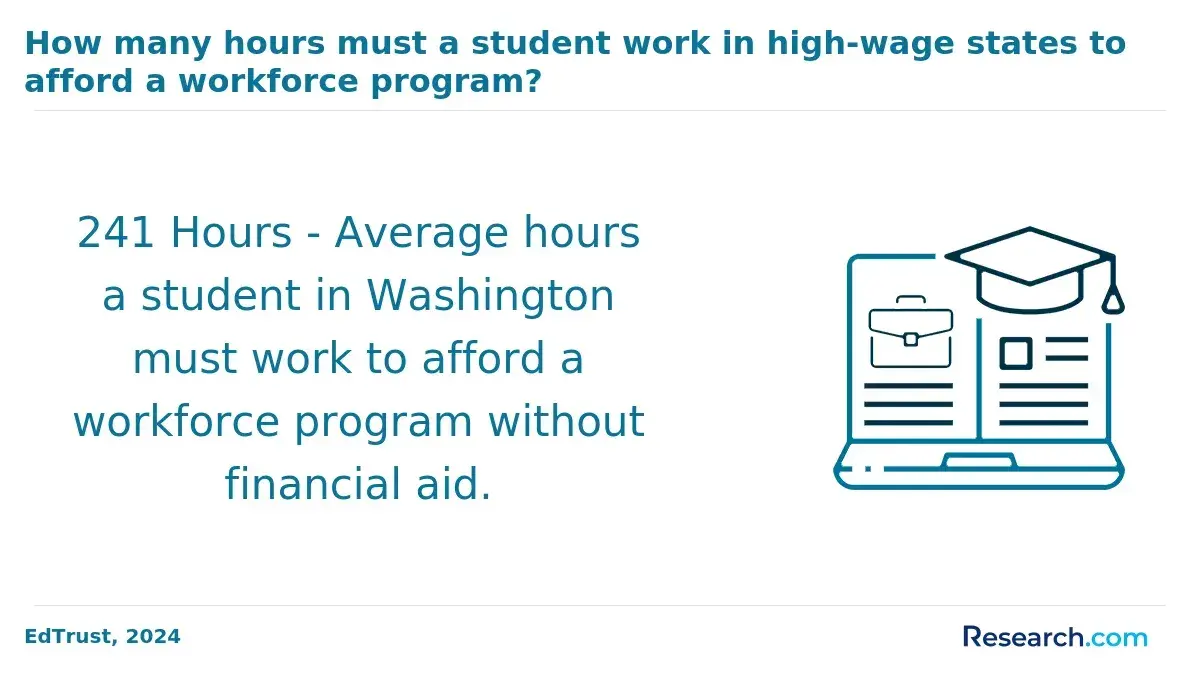
A waived application fee can make it easier to compare several schools without paying upfront. The savings are real, but they are usually small compared with the full cost of a bachelor's or master's degree.
For example, if a student applies to four schools that each would have charged a $50 application fee, avoiding those fees saves $200. That can cover transcript orders, background-check costs, or part of a textbook bill, but it should not outweigh tuition, fees, credit-transfer policies, or the number of credits required to graduate.
When estimating savings, separate application costs from enrollment and completion costs. A no-application-fee program can still become expensive if it accepts fewer transfer credits, charges high per-credit tuition, requires more courses, or has mandatory technology or student-service fees.
Students should compare these cost categories before deciding that a no-fee option is the best value:
- Application-related costs, including application fees, transcript fees, test-score fees if required, and credential evaluation fees for international or prior-learning records.
- Enrollment costs, including tuition deposits, orientation fees, student-service fees, technology fees, and course-material expenses.
- Completion costs, including per-credit tuition, required credits after transfer evaluation, practicum or fieldwork expenses, exam or certification costs, and graduation fees.
The practical takeaway is simple: use no-fee applications to widen your comparison pool, but choose based on total net cost and program fit. If a school with an application fee offers stronger transfer credit, lower tuition, or better alignment with your career goal, it may still be the better financial choice.
What Are the Admission Requirements for No-Fee Online Health Education Degree Programs?
Admission requirements vary by degree level and school, but no application fee does not mean no admission standards. Online health education and health promotion programs still need evidence that students are academically prepared for college-level health, science, communication, research, and behavioral-change coursework.
The table below summarizes common requirements by program level so students can quickly identify what to prepare before applying.
| Program Level | Common Admission Materials | Typical Academic Expectations | Possible Extra Requirements |
| Online bachelor's degree | Online application, official high school or college transcripts, transfer-credit records | High school diploma, GED, or completed college credits | Placement evaluation, prior college GPA review, or readiness assessment |
| Online bachelor's completion program | College transcripts, transfer evaluation, resume in some cases | Prior credits from accredited institutions; minimum GPA may apply | Prerequisite general education or science courses |
| Online master's degree in health education or public health-related fields | Bachelor's transcript, resume, statement of purpose, recommendations in some programs | Completed bachelor's degree; minimum GPA may apply | Statistics, health sciences, public health, or professional experience expectations |
| Graduate certificate | Application, transcript showing bachelor's degree, resume in some programs | Prior undergraduate degree or enrollment in a related graduate program | Professional background or specific prerequisite coursework |
Students coming from nursing, allied health, education, social services, fitness, or nonprofit work may be able to connect prior experience to health education goals. For example, licensed nurses comparing public health education pathways may also consider an RN to BSN route if their main goal is nursing advancement rather than community health education.
Before applying, build a document checklist and verify each item with admissions. The most common delay in rolling admission is not academic rejection; it is an incomplete file.
- Request official transcripts from every school attended, including community colleges and dual-enrollment providers.
- Ask whether unofficial transcripts can be used for a preliminary decision while official records are in transit.
- Confirm whether the program requires prerequisite courses in biology, statistics, psychology, communication, or public health.
- Check whether prior professional certifications, military training, or workplace learning can be evaluated for credit.
- Ask whether the application fee is automatically waived or requires a code, advisor confirmation, or specific online application pathway.
When Should Students Apply to Online Health Education Degree Programs With Rolling Admissions?
Students should apply as soon as their academic records are ready and they can realistically compare financial aid packages before enrolling. Rolling admission rewards complete, early applications because students have more time to review transfer credits, course plans, costs, and start-date options.
A good rule is to work backward from the start date you want. Even when schools advertise frequent starts, you may need several weeks for transcript processing, admission review, transfer-credit evaluation, financial aid packaging, and advising.
Use this timeline to avoid rushing into a program just because admission is open:
- Eight to twelve weeks before your target start date, identify three to five programs and confirm each school's application-fee policy, admissions model, and next available start dates.
- Six to eight weeks before the start date, request official transcripts and ask each school whether transfer-credit evaluations can be completed before you commit.
- Four to six weeks before the start date, submit applications and complete financial aid forms if you plan to use federal aid, employer tuition benefits, veterans benefits, or scholarships.
- Two to four weeks before the start date, compare admission decisions, net costs, degree plans, and required first-term courses.
- Before enrollment, confirm withdrawal rules, refund dates, technology requirements, synchronous attendance expectations, and whether your first courses apply directly to the degree.
One red flag is pressure to enroll before you receive a clear cost breakdown or transfer-credit evaluation. Rolling admission should create flexibility, not shorten your decision window.
How Can Students Strengthen an Online Health Education Degree Application?
Health education programs often look for students who can communicate clearly, understand community needs, and persist in an online learning environment. A strong application connects your academic record, work experience, and goals to the program's curriculum.
Applicants can improve their file by focusing on readiness rather than simply submitting quickly. These steps are especially useful for transfer students, adults returning to school, and applicants with uneven academic records.
- Write a focused goal statement that explains the population you want to serve, such as youth, older adults, patients with chronic conditions, workplace wellness participants, or underserved communities.
- Highlight experience in healthcare, education, social services, public health, nutrition, fitness, case management, outreach, military service, or volunteer work.
- Explain academic gaps honestly and show recent evidence of readiness, such as completed college courses, professional training, certifications, or stronger recent grades.
- Ask whether the program aligns with Certified Health Education Specialist-related coursework if that credential is part of your long-term plan.
- Show online learning readiness by confirming technology access, weekly study time, and familiarity with learning management systems.
Students interested in prevention, wellness, and food-related health behavior may also compare a nutritionist degree online with a health education degree. The better choice depends on whether you want broader community health education training or deeper nutrition science preparation.
Are Online Health Education Degree Programs With No Application Fees Accredited and Legitimate?
Many no-application-fee online health education programs are offered by legitimate accredited institutions. However, no application fee and rolling admission are admissions policies, not quality markers. Students still need to verify institutional accreditation, program relevance, state authorization, and any career-specific requirements.
Institutional accreditation matters because it affects federal financial aid eligibility, credit transfer, graduate school recognition, and employer confidence. Programmatic accreditation may also matter depending on the degree type and career goal, especially for public health, nursing, teacher education, counseling, or allied health pathways.
Use this verification process before submitting enrollment paperwork:
- Confirm the school is institutionally accredited by an agency recognized by the U.S. Department of Education or the Council for Higher Education Accreditation.
- Check whether the online program is authorized to enroll students in your state.
- Review whether the curriculum includes health behavior theory, program planning, needs assessment, communication, evaluation, ethics, cultural competence, and public health foundations.
- Ask whether the program includes an internship, capstone, practicum, or applied project and whether it can be completed locally or online.
- Verify whether the degree supports your intended certification, graduate school, employer, or state-specific requirement.
This is especially important for students comparing health education with nursing pathways. If your goal is licensed nursing advancement, an RN to BSN online no clinicals program may be more appropriate than a general health education degree, depending on your license status and career plan.
How Do Financial Aid and Total Costs Compare Among Online Health Education Degree Programs?
Financial aid can matter far more than the application fee. A school with no application fee may have higher tuition, while a school that charges a modest application fee may offer stronger grants, employer partnerships, transfer-credit acceptance, or a shorter path to graduation.
The U.S. Department of Education's 2024-25 Federal Pell Grant maximum was $7,395, which is a useful reminder that aid deadlines and eligibility can outweigh application-fee savings. Students should complete financial aid steps early even when admission remains open.
The table below shows the cost factors students should compare before accepting an offer. It is designed to help you focus on total net cost rather than the upfront fee alone.
| Cost Factor | Why It Affects Affordability | Question to Ask the School |
| Tuition per credit | Small per-credit differences become significant across 30 to 120 credits | What is the current tuition rate for online students in this exact program? |
| Credits required after transfer | Generous transfer credit can shorten time to completion | How many of my credits apply to the major, general education, and electives? |
| Mandatory fees | Technology, student-service, graduation, and course fees can raise the final bill | Which fees are required every term, and which are one-time fees? |
| Books and materials | Digital materials may be included or billed separately | Are course materials included in tuition or charged separately? |
| Financial aid deadlines | Rolling admission does not always mean rolling scholarships | What are the priority deadlines for institutional grants, scholarships, and employer billing? |
| Time to completion | Longer enrollment can increase fees and opportunity costs | Based on my transfer evaluation, when could I realistically graduate? |
Students comparing health education with nursing tracks often ask how much is the RN program because nursing programs may include clinical, lab, testing, and licensure-related costs that differ from health education degrees. That comparison is useful only if the career goal is also similar; health education and nursing prepare students for different kinds of work.
Which Students Benefit Most From No-Fee, Rolling-Admission Online Health Education Degrees?
No-fee, rolling-admission online health education degrees are especially valuable for students who need flexibility before they can commit. These policies can reduce friction for applicants who are comparing multiple programs, changing careers, returning to college, or trying to align enrollment with work and family obligations.
Students most likely to benefit include:
- Working adults who need multiple start dates because their schedule, childcare, or employer tuition-assistance cycle does not align with a traditional fall deadline.
- Transfer students who want to apply to several schools and compare credit evaluations without paying an application fee at each institution.
- Career changers from education, fitness, nonprofit work, social services, or healthcare support roles who need a flexible path into community health or wellness education.
- Military-affiliated students who may need monthly or frequent start dates because of deployment, relocation, or benefits timing.
- Students with limited upfront cash who want to avoid application costs while they compare tuition, aid, and degree plans.
These programs may be a weaker fit for students who need a highly specialized or licensure-directed degree, want a cohort-based campus experience, require intensive hands-on training, or have a target employer that prefers a specific accredited program. In those cases, a traditional-deadline program may be worth the wait if it provides stronger alignment with the career outcome.
How Should Students Choose Among No-Fee Online Health Education Degree Programs?
The best program is not automatically the one that is easiest to apply to. Students should choose the online health education degree that offers the strongest combination of academic fit, total affordability, transfer value, student support, accreditation, and career alignment.
Use this decision sequence to compare programs without being distracted by marketing language:
- Define your goal first: community health educator, health promotion specialist, wellness coordinator, public health program assistant, patient educator, graduate school applicant, or another path.
- Match the curriculum to that goal by checking courses in program planning, health communication, evaluation, epidemiology basics, cultural competence, and behavior-change theory.
- Confirm the admissions policy by asking whether the application fee is permanently waived, temporarily waived, or waived only through a specific code.
- Verify rolling admission by asking how often applications are reviewed, how many start dates are available, and when the next realistic start date is for a new student.
- Compare total net cost after transfer credit, grants, scholarships, employer benefits, military benefits, and required fees.
- Ask about student support, including online tutoring, advising, career services, internship placement support, library access, and technical help.
- Review outcomes carefully, but avoid schools that promise jobs, salaries, certification, or admission to graduate programs.
Common mistakes include choosing a school only because the application is free, waiting too long because admission is rolling, ignoring financial aid priority dates, overlooking synchronous class requirements, and assuming every start date offers every course. A strong choice should still make sense if the application fee were not waived.
The final test is whether the degree helps you reach the job or graduate pathway you actually want. If the program is affordable, accredited, flexible, and aligned with your goals, no-fee application and rolling admission are meaningful advantages. If not, they are conveniences rather than reasons to enroll.
Other Things You Should Know About Health Education
A health education specialist helps people and communities understand health risks, adopt healthier behaviors, and use available services. Common duties include creating education materials, planning outreach programs, evaluating community needs, leading workshops, and measuring whether programs are effective.
Health education is a focused area within the broader public health field. Public health may also include epidemiology, policy, environmental health, biostatistics, and healthcare administration, while health education focuses more directly on behavior change, communication, program planning, and community education.
Many online health education students work while enrolled, especially in asynchronous programs. Before committing, ask how many hours students typically spend per course each week and whether any live sessions, internships, fieldwork, or group projects require fixed scheduling.
Certification is not always required, but some employers prefer or request credentials such as Certified Health Education Specialist. Requirements vary by role and employer, so students should compare the curriculum with the credential or job postings they plan to pursue.
References
- Admission Requirements https://www.ualberta.ca/en/public-health/programs/admissions/admission-requirements.html
- Best Online Colleges with Open Admissions https://www.onlineu.com/online-schools/open-admissions
- Online Health Science Degrees with Financial Aid https://www.edumed.org/online-schools/health-science-degrees/financial-aid/
- Affordable Universities for International Students & Online Degrees 2026 https://northcypruseducation.com/blog/affordable-universities-for-international-students-a-guide-to-online-degrees/
- Rolling Admissions Explained: How It Works and When You Should Apply https://riseglobaleducation.com/blogs/rolling-admissions-explained-how-it-works-and-when-you-should-apply
- What Is Rolling Admission? How It Works and What to Expect | McMillan Education https://www.mcmillaneducation.com/blog/what-is-rolling-admission/
- 20 Best Online Bachelor's in Public Health - MPH Online https://www.mphonline.org/best-online-bachelors-in-public-health/
- Rolling Admissions Guide: What, When, Why? https://www.ivywise.com/blog/what-does-rolling-admissions-mean/
- Online Colleges No Application Fee: Schools With No Fees to Apply https://www.top10onlinecolleges.org/with-no-application-fee/
- Online Health Education and Health Promotion Degree https://online.ben.edu/programs/undergraduate/health-education-promotion-bachelors/