2027 Fastest Accredited Online Sports Science Programs: Accelerated Degrees and Completion Times

Co-Founder and Chief Data Scientist
The growing emphasis on athletic performance, injury prevention, and overall wellness has increased demand for professionals trained in exercise physiology, biomechanics, and sports performance. Employment for exercise physiologists is projected to grow 10% through 2033, prompting more accredited colleges and universities to expand flexible online sports science programs for aspiring fitness and healthcare professionals.
Accelerated online pathways allow students to complete degree requirements more quickly through year-round enrollment, condensed coursework, and transfer credit opportunities. This guide compares the fastest accredited online sports science programs, highlighting completion times, tuition costs, and curriculum features to help you prepare for careers in sports performance, rehabilitation, and health promotion.
Key Things You Should Know
- The fastest realistic route is usually a bachelor's-completion program: students entering with 60 to 90 transferable credits may finish in about 12 to 24 months, while first-time bachelor's students commonly need 3 to 4 years.
- Accelerated online sports science courses often run 6 to 8 weeks instead of 15 to 16 weeks, but the weekly workload is heavier; taking two accelerated courses at once can feel like a full-time academic load.
- Many transfer-friendly programs accept up to about 90 credits, and some accept more than 90 toward a 120- to 124-credit degree, but residency rules, major requirements, labs, and internships can limit how much time you actually save.
Which Colleges Offer the Fastest Accredited Online Sports Science Programs?
The fastest accredited online sports science programs are rarely labeled exactly the same way. Schools may use degree names such as exercise science, kinesiology, sports and health sciences, human performance, or strength and conditioning, so the best comparison is by accreditation, credits required, transfer policy, course length, and advertised completion model.
The table below highlights accredited U.S. options that are commonly relevant to students seeking a faster online sports science pathway. Use it as a shortlist, then confirm the current catalog, transfer evaluation, and start-date availability directly with each school before applying.
| College | Online program | Institutional accreditation | Speed factors to verify | Best fit |
| Franklin University | BS in Exercise Science | Higher Learning Commission | 124-credit bachelor's degree; transfer-friendly policy; accelerated course options; commonly positioned for adult degree completion | Students with substantial prior college credit who want an exercise science bachelor's completion route |
| California Baptist University | BS in Kinesiology | WASC Senior College and University Commission | Online and professional studies format; accelerated degree-completion style; timeline depends heavily on accepted transfer units | Transfer students seeking a Christian university with an online kinesiology pathway |
| American Public University | BS in Sports and Health Sciences | Higher Learning Commission | 120-credit degree; monthly course starts; 8- and 16-week course options; accepts many forms of transfer credit subject to review | Working adults, military-affiliated students, and learners who need frequent start dates |
| Pennsylvania Western University | Online exercise science-related bachelor's options | Middle States Commission on Higher Education | Online delivery; transfer evaluation determines remaining major and general education requirements | Students who want a public university option and can transfer applicable credits |
| United States Sports Academy | Bachelor of Sports Science programs | Southern Association of Colleges and Schools Commission on Colleges | Online sports-focused curriculum; course sequencing and transfer approval affect pace | Students focused on coaching, sports performance, or strength and conditioning careers |
The shortest advertised completion time is not automatically the best choice. A 16-month degree-completion timeline may be realistic for a student entering with most lower-division credits complete, but the same program may take much longer for a first-time college student.
How Long Does It Take to Complete an Accredited Online Sports Science Degree?
Completion time depends on whether you are starting from zero credits, transferring an associate degree, or returning with scattered credits from several schools. In most cases, "fastest" means fastest after transfer credits are applied, not fastest for every applicant.
The table below summarizes common online sports science degree timelines. These ranges are more useful than a single advertised number because they show how enrollment intensity and credit standing change the time to graduation.
| Starting point | Typical credits remaining | Likely completion time | What can speed it up | What can slow it down |
| First-time bachelor's student | 120 to 124 credits | About 3 to 4 years full time | Year-round enrollment, summer terms, heavy course loads | Part-time study, math or science prerequisites, required labs |
| Associate degree transfer student | About 45 to 65 credits | About 18 to 30 months | Block transfer, completed general education, 8-week courses | Nonmatching prerequisites, upper-division residency rules |
| High-credit transfer student | About 30 to 45 credits | About 12 to 18 months | Maximum transfer acceptance, year-round starts, flexible electives | Major courses offered only once per year, internship placement delays |
| Part-time working adult | Varies widely | About 2 to 5 years | One course every term without breaks | Skipping terms, employer schedule conflicts, family obligations |
Students comparing sports science with other accelerated pathways may also find it useful to review broader fast track schools, because the same timing variables-transfer credits, compressed terms, and course sequencing-apply across many online degrees.
How Do Accelerated and Competency-Based Online Sports Science Programs Work?
Accelerated online sports science programs usually work by shortening the academic term, increasing annual enrollment opportunities, or allowing students to move through requirements with fewer scheduling gaps. The content is not supposed to be easier; the same credit-hour expectations are compressed into a shorter calendar.
Before choosing an accelerated format, compare how the program actually saves time. These features can reduce calendar length, but each one also changes workload and planning requirements.
- Six- to eight-week courses: Students finish individual classes faster, but weekly reading, assignments, quizzes, and projects are more concentrated.
- Year-round enrollment: Taking fall, spring, and summer courses can remove long breaks and shorten the total calendar.
- Multiple start dates: Monthly or bimonthly starts help students begin sooner instead of waiting for a traditional semester.
- Asynchronous coursework: Students can complete lectures and assignments around work schedules, although exams, labs, or presentations may still have deadlines.
- Competency-based elements: Where available, students may progress by proving mastery, but full competency-based sports science bachelor's programs are less common because anatomy, physiology, assessment, and field-based skills often require structured evaluation.
In healthcare and health-adjacent fields, accelerated formats can look similar on the surface but differ greatly in clinical intensity; comparisons of easy DNP programs, for example, show why "faster" should always be evaluated alongside accreditation, workload, and required practice hours.
An online sports science degree should, at minimum, come from an institution accredited by an agency recognized by the U.S. Department of Education or the Council for Higher Education Accreditation. Institutional accreditation affects federal financial aid eligibility, credit transfer, graduate school admission, and employer confidence.
Programmatic accreditation is more specialized. For exercise science, accreditation through the Commission on Accreditation of Allied Health Education Programs, based on Committee on Accreditation for the Exercise Sciences standards, can be valuable for programs that emphasize clinical exercise physiology or preparation for professional certification. However, many legitimate sports science, kinesiology, and human performance bachelor's programs are institutionally accredited without separate programmatic accreditation.
Do not confuse accreditation with memberships, rankings, or exam-prep labels. Recognition by groups such as the National Strength and Conditioning Association can be useful for certification alignment, but it is not the same as institutional accreditation. Also, a bachelor's degree in sports science is not the same as an accredited athletic training degree; professional athletic trainer licensure typically requires a Commission on Accreditation of Athletic Training Education-accredited professional program, usually at the master's level.
Transfer credit is the biggest reason one accredited online sports science program can be much faster than another for the same student. A generous transfer policy can remove semesters from the timeline, but only if the credits apply to the degree plan rather than simply appearing on the transcript.
Use the steps below before you rely on an advertised completion time. They help you determine whether your prior learning will actually shorten your degree.
- Request an unofficial transfer review before enrolling, not after you pay a deposit.
- Ask how many credits can apply to general education, electives, major prerequisites, and upper-division requirements.
- Confirm the school's residency rule, which is the minimum number of credits you must complete at that institution.
- Check whether anatomy, physiology, statistics, nutrition, or biomechanics courses must be recent to count toward the major.
- Ask whether military training, ACE-reviewed workplace learning, professional certifications, or prior learning assessment can apply to electives.
- Get the remaining course sequence in writing, including which terms each required course is offered.
A common mistake is assuming that "accepts up to 90 credits" means all 90 of your credits will count. In practice, credits may transfer as electives but still leave you with missing science prerequisites, upper-division major courses, or a capstone requirement.
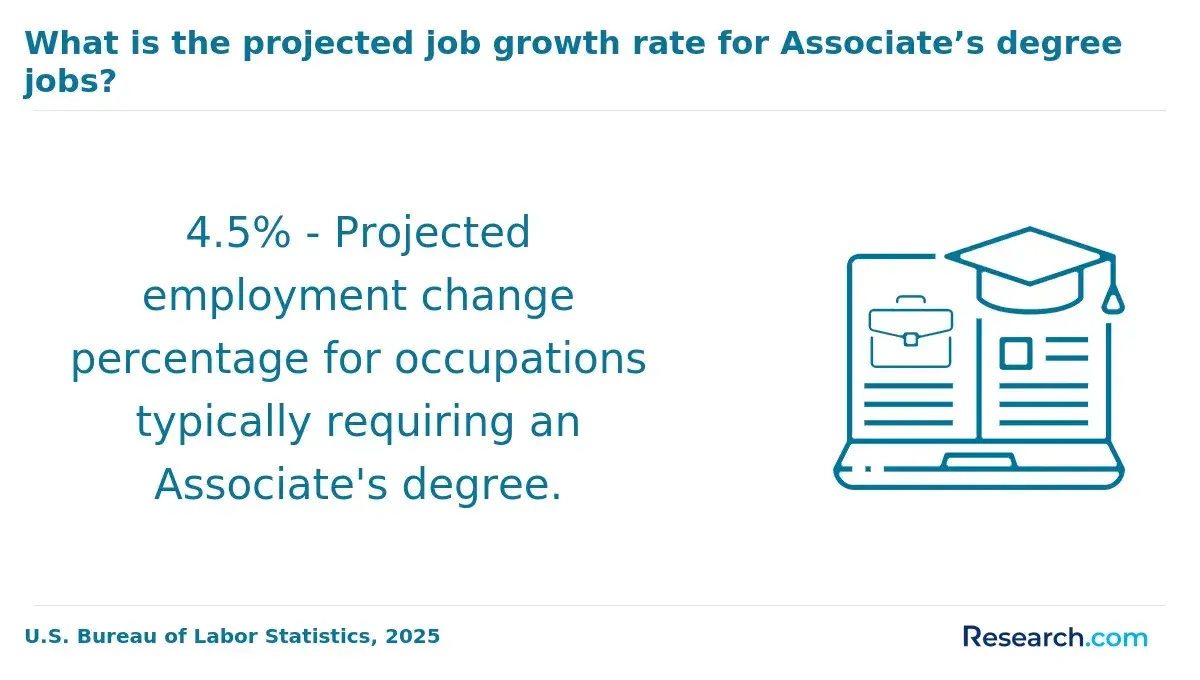
Admission requirements for accelerated online sports science programs are usually straightforward, but the details can affect how soon you start. Bachelor's-completion programs may require prior college credits, while full bachelor's programs may admit first-time students with a high school diploma or equivalent.
Most applicants should be ready to provide several items. Each one can affect start timing, especially if transcripts or prerequisite evaluations are delayed.
- Official high school and college transcripts, including transcripts from every previously attended institution
- A minimum GPA, often with different standards for first-year, transfer, or adult learners
- Proof of completed prerequisites for upper-division science courses, when required
- A transfer-credit evaluation showing remaining degree requirements
- Technology access for online learning, including reliable internet and software required for labs or video assignments
- Background check, liability insurance, or site approval if the program includes internship, practicum, or community-based fieldwork
Students who are still deciding between sports science and allied health may want to compare shorter workforce-focused options such as the best online medical assistant programs, because certificate or diploma pathways can lead to employment faster but do not replace a bachelor's degree for roles that require advanced study or graduate admission.
The cost of a fast online sports science degree depends on tuition per credit, credits remaining after transfer, fees, books, lab materials, and whether you attend a public, private nonprofit, or private for-profit institution. Faster graduation can reduce time out of the workforce, but it does not always reduce tuition if the same number of credits is required.
Recent federal aid rules are especially important for accelerated students. The maximum Federal Pell Grant for the 2024-25 award year is $7,395, which can help eligible undergraduates, but aid is still tied to enrollment status, satisfactory academic progress, and the school's participation in federal aid programs.
Use these cost categories when comparing programs, because a low per-credit price may not be the lowest total cost if many credits fail to transfer.
- Tuition per credit multiplied by the number of credits left after transfer evaluation
- Online course fees, technology fees, graduation fees, and transcript fees
- Books, digital platforms, lab kits, fitness assessment tools, or required software
- Travel or local costs for internships, practicums, CPR certification, or background checks
- Lost income or reduced work hours if the accelerated course load becomes too demanding
- Financial aid availability, including Pell Grants, federal loans, employer tuition assistance, military benefits, and scholarships
Cost comparisons in health-related education can be misleading when they ignore clinical requirements and program length; students exploring multiple healthcare options may find affordability frameworks in guides to the cheapest FNP programs online helpful when thinking about total cost rather than sticker tuition alone.
You can work full time while completing an accelerated online sports science degree, but the schedule must be realistic. A compressed course does not reduce the amount of learning; it concentrates it into fewer weeks, which can create pressure during exams, lab assignments, group projects, or fieldwork.
The table below compares common enrollment patterns for working adults. It can help you decide whether the fastest plan is sustainable or whether a slightly slower pace is more likely to lead to completion.
| Enrollment pattern | Typical pace | Work compatibility | Timeline impact |
| One accelerated course at a time | Part time | Often manageable with full-time work | Slower, but steadier for busy adults |
| Two accelerated courses at a time | Near full time or full time | Possible, but demanding during 6- to 8-week terms | Can shorten the degree if maintained year-round |
| Three or more courses in a short term | Heavy full time | Difficult with full-time work | Fastest on paper, but higher risk of withdrawal or lower grades |
| Alternating heavy and light terms | Flexible | Useful for seasonal workers or caregivers | Moderate speed with better workload control |
Students with full-time jobs should ask whether major courses have synchronous sessions, timed exams, proctored assessments, local site requirements, or group projects. Those details matter more than the word "online" when estimating weekly workload.
Accredited online sports science degrees are generally respected when the institution is properly accredited, the curriculum matches the student's career goal, and the graduate can demonstrate relevant skills. Employers tend to care about competencies such as exercise testing, program design, coaching communication, injury prevention basics, data interpretation, and professional certification readiness.
Career outcomes vary by role. The BLS reported a May 2024 median pay of $58,720 for exercise physiologists, but that figure should be used as labor-market context, not a promise of earnings. Location, certification, graduate education, employer type, and experience can all change salary prospects.
For graduate school, the main question is whether the online degree includes the prerequisites required for the next program. Physical therapy, occupational therapy, athletic training, physician assistant, and clinical exercise physiology programs may require specific labs, minimum grades, observation hours, or standardized admissions processes. If you are comparing sports science with licensed advanced nursing pathways, a guide to the shortest online nurse practitioner program can help clarify how different credential types lead to very different scopes of practice.
How Should You Compare the Fastest Accredited Online Sports Science Programs?
The best accelerated online sports science program is the one that gets you to your goal quickly without creating transfer surprises, accreditation problems, unmanageable workload, or missing prerequisites for the next step. Compare programs with the same assumptions: same number of transfer credits, same course load, same summer enrollment plan, and same career goal.
Use this checklist when speaking with admissions or academic advising. It focuses on questions that directly affect time to graduation and degree value.
- Verify institutional accreditation through an official accreditor database or the school's accreditation page.
- Ask for a written transfer-credit estimate showing exactly which credits apply to the degree.
- Confirm the shortest possible timeline for your specific transcript, not the fastest advertised timeline.
- Ask how often each required major course is offered and whether any course is locked into a once-per-year sequence.
- Clarify whether labs, internships, practicums, or capstones require local site approval or daytime availability.
- Compare total program cost after transfer credits, including fees and materials, not just tuition per credit.
- Ask whether the curriculum aligns with certifications you may want, such as strength and conditioning, personal training, health coaching, or exercise physiology credentials.
- Check graduate-school prerequisites if you plan to pursue physical therapy, athletic training, occupational therapy, or another clinical field.
Watch for red flags. Be cautious if a school will not provide a transfer evaluation before enrollment, uses "accredited" without naming the accrediting agency, promises an unusually short timeline without reviewing your transcript, or describes accelerated courses as easier. The fastest safe choice is usually transparent about workload, credit limits, and graduation requirements.
Other Things You Should Know About Sports Science
Applicants to accelerated sports science programs in 2027 often need a high school diploma or GED, prior coursework in biology and chemistry, and a minimum GPA of 3.0. Some programs may also require standardized test scores like the SAT or ACT for admission.
Yes. Some programs use virtual labs, at-home lab kits, video demonstrations, local activity assessments, or supervised field experiences. Ask how labs are delivered before enrolling, because lab format can affect both scheduling and graduate-school prerequisite acceptance.
Online sports science programs in 2027 typically require a reliable computer with high-speed internet, updated operating systems, and software like video conferencing tools and statistical analysis programs. Specific hardware, such as a webcam or microphone, may also be necessary for coursework participation.
An accelerated format may not be ideal if you have limited weekly study time, weak science preparation, unpredictable work hours, or a goal that requires high grades in prerequisite courses. A slower pace can be the better option if it helps you protect your GPA and complete labs or fieldwork well.
- 2026 Best Online Exercise Science Degrees https://www.onlineu.com/degrees/exercise-science
- How Long is an Online Master's Degree Program? OnlineEducation.com https://www.onlineeducation.com/faqs/how-long-to-earn-masters-degree
- Credit Transfer Policy - Prowess University https://www.pu-edu.us/credit-transfer-credit/
- Online Exercise Science Program https://stmary.edu/online-programs/exercise-science.html
- Time limits to complete qualifications https://www.massey.ac.nz/study/planning-your-study/time-limits-to-complete-your-qualification/
- Online Exercise Science Degrees: Top School Review https://www.edumed.org/online-schools/exercise-science-degrees/