2027 Cheapest Accredited Online Sports Science Degree Programs That Accept FAFSA

Co-Founder and Chief Data Scientist
Choosing an online sports science degree is really a cost-and-credibility decision: the program must be affordable, accredited, and eligible for federal aid. College Board data published for the latest aid cycle shows average published tuition and fees at public four-year colleges are far below private nonprofit averages, but online pricing and transfer credit can change the real cost.
This guide is for students comparing exercise science, kinesiology, sport performance, and related online bachelor's programs. You will learn how FAFSA, accreditation, transfer credits, and career ROI affect which low-cost option is actually worth choosing.
Key Things You Should Know
- The cheapest FAFSA-eligible online sports science options often start near $129 to $350 per credit before fees, but the lowest advertised tuition is not always the lowest net cost after grants, residency rules, and transfer credit.
- The maximum Federal Pell Grant for the 2024-25 award year is $7,395, which can cover a large share of annual tuition at many low-cost public or military-friendly online programs, but eligibility depends on the FAFSA calculation and enrollment intensity.
- BLS May 2024 data places median pay at $46,480 for fitness trainers and instructors, $58,160 for exercise physiologists, and $60,250 for athletic trainers, so limiting debt is especially important for students entering moderate-salary sports and fitness roles.
Which Are the Cheapest Accredited Online Sports Science Degree Programs That Accept FAFSA?
The cheapest accredited online sports science degree programs that accept FAFSA are usually public universities with flat online tuition, military-friendly institutions with low per-credit pricing, or degree-completion programs that let students transfer in many credits.
"Sports science" is used differently by schools, so this comparison includes closely related online bachelor's programs in exercise science, kinesiology, health and human performance, sport performance, and sports and health sciences.
The table below summarizes affordable online options that are institutionally accredited and generally participate in federal student aid programs. Tuition can change by residency, term, course level, and fees, so students should confirm current pricing and FAFSA eligibility directly with the school before applying:
| School and online degree | Institutional accreditation | Published online tuition indicator | Estimated tuition for 120 credits before aid | Best fit |
| University of Florida Online, Bachelor of Science in Sport Management | SACSCOC | About $129 per credit for Florida residents; higher for nonresidents | About $15,500 for in-state tuition before fees; much higher for out-of-state students | Students interested in sport organizations, operations, and management rather than exercise physiology |
| Fort Hays State University, online Health and Human Performance-related bachelor's options | Higher Learning Commission | About $259 per undergraduate online credit | About $31,100 before fees | Students seeking a public-university price with flexible online study |
| Arkansas State University, online Bachelor of Science in Exercise Science or related sport/health option | Higher Learning Commission | Often advertised in the high-$200s per credit for online undergraduate programs | Roughly mid-$30,000s before fees if all credits are completed at the school | Students who want an exercise-focused curriculum with a relatively low online tuition rate |
| American Public University, Bachelor of Science in Sports and Health Sciences | Higher Learning Commission | $350 per undergraduate credit for standard tuition, with lower military pricing available | $42,000 before fees and transfer credit | Military, veteran, working adult, and transfer students who need asynchronous flexibility |
| University of Louisiana at Lafayette, online Bachelor of Science in Kinesiology with Health Promotion and Wellness concentration | SACSCOC | About $380 per credit for many online undergraduate courses | About $45,600 before fees | Students who want a kinesiology-related public university degree with wellness and health promotion applications |
| Liberty University, online Bachelor of Science in Exercise Science | SACSCOC | About $390 per credit for full-time online undergraduate study | About $46,800 before fees and institutional discounts | Students who want a broad exercise science curriculum and frequent online start dates |
| Concordia University, St. Paul, online Bachelor of Arts in Exercise Science | Higher Learning Commission | About $420 per credit for online undergraduate study | About $50,400 before fees | Students who prefer a private nonprofit option and can reduce cost through transfer credits or employer aid |
The most affordable program for one student may not be the cheapest for another. A Florida resident considering UF Online may see a very low published tuition rate, while an out-of-state student with 60 transfer credits may find better value at a school with a higher per-credit rate but a more generous transfer policy.
How Does FAFSA Eligibility Work for Online Sports Science Degree Programs?
FAFSA eligibility means a school participates in federal student aid programs and the student may be considered for grants, federal loans, and work-study. It does not mean the student will automatically receive free aid, and it does not mean every online program, certificate, or enrollment pattern at that school qualifies in the same way.
For an online sports science degree, students should verify both institutional eligibility and program-level eligibility. The safest process is to confirm the following before paying an application fee or enrollment deposit:
- Check that the school has a federal school code and participates in Title IV federal student aid programs.
- Confirm that the specific online sports science, exercise science, kinesiology, or health performance degree is aid-eligible, not just the university as a whole.
- Ask whether the program is a full bachelor's degree, a degree-completion pathway, or a nondegree certificate, because aid rules can differ.
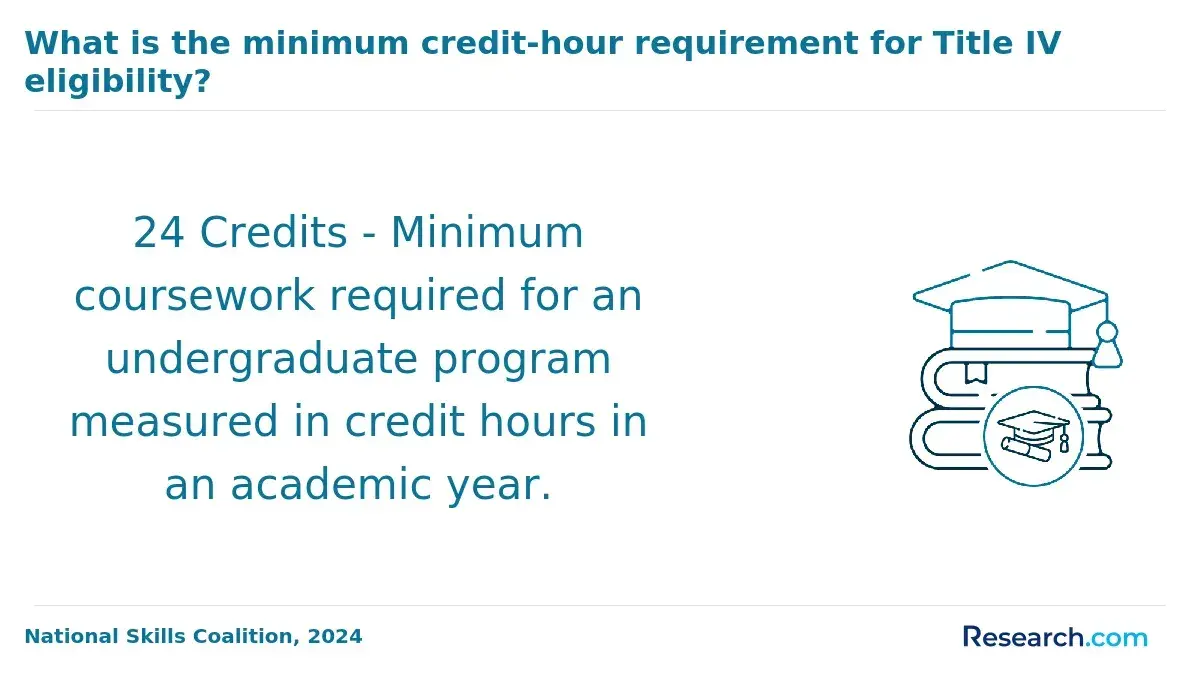
- Verify the minimum credit load required for grants, loans, and institutional scholarships.
- Ask whether online students pay the same fees, have the same aid access, and qualify for the same scholarships as campus students.
A common mistake is assuming that "accepts FAFSA" means the full cost will be paid by grants. FAFSA is only the application; the actual aid package depends on financial need, dependency status, cost of attendance, enrollment intensity, satisfactory academic progress, and annual federal aid limits.
How Much Does an Online Sports Science Degree Cost After Financial Aid?
The cost after financial aid depends on tuition, mandatory fees, books or digital materials, transfer credits, grants, scholarships, and how much the student chooses to borrow.
The Department of Education's maximum Pell Grant for the 2024-25 award year is $7,395, which is enough to substantially reduce annual tuition at lower-cost online public programs but may cover only a smaller share at higher-priced private programs.
The table below shows how the same Pell Grant maximum can affect estimated annual tuition at different online tuition levels. These examples use 30 credits in one academic year and exclude fees, books, and living costs so students can see the tuition effect clearly:
| Published tuition per credit | Annual tuition for 30 credits | Tuition remaining after maximum Pell Grant | What this means |
| $129 | $3,870 | $0 before fees | A high-need student could potentially cover tuition with Pell, but fees and materials may still remain. |
| $259 | $7,770 | $375 before fees | Pell can nearly cover annual tuition at this price point for eligible full-time students. |
| $350 | $10,500 | $3,105 before fees | Students may need scholarships, employer aid, payment plans, or limited borrowing. |
| $420 | $12,600 | $5,205 before fees | The program may still be affordable if transfer credits shorten the degree. |
Students comparing sports science with healthcare programs should be especially careful about debt. For example, graduate nursing pathways such as cheapest FNP programs online can lead to different salary ranges and licensure outcomes, so their higher costs are evaluated under a different ROI model than most undergraduate sports science degrees.
The best-value affordable online sports science degree is not always the one with the lowest tuition. Value comes from the combination of low net price, recognized accreditation, relevant coursework, transfer acceptance, student support, and alignment with the student's career goal.
Use the comparison below to separate "cheap" from "good value." The categories focus on decision factors that affect both cost and outcomes:
| Value factor | Why it matters | Best-value signal | Possible red flag |
| Net price after aid | Published tuition does not show what the student actually pays. | The school provides a clear aid estimate and itemized cost of attendance. | The program advertises low tuition but adds large online, technology, or course fees. |
| Transfer credit policy | Accepted credits can reduce both time and tuition. | The school reviews prior college, military, ACE, CLEP, or industry training before enrollment. | The school gives vague transfer estimates until after the student commits. |
| Curriculum fit | Sports science programs vary widely across exercise science, kinesiology, wellness, and sport business. | Courses match the student's target role, such as strength and conditioning, wellness coaching, or graduate study. | The title sounds relevant, but the curriculum is mostly unrelated to the student's goal. |
| Career preparation | Employers may value certifications, internships, labs, and practical experience. | The program includes internship options, applied projects, or preparation for respected certifications. | The program is fully theoretical with little guidance on field experience. |
| Graduate or licensure pathway | Some careers require additional education. | The school clearly explains prerequisites for graduate exercise physiology, athletic training, physical therapy, or occupational therapy programs. | The school implies that a bachelor's degree alone qualifies students for licensed clinical roles. |
A more expensive program can be worth choosing if it accepts far more transfer credits, has stronger advising for graduate school prerequisites, or includes internship support in the student's local area. A lower-cost program may be the better choice for students seeking general fitness, wellness, coaching, or sport organization roles where minimizing debt is central to ROI.
The cheapest online sports science degree should be institutionally accredited by an agency recognized by the U.S. Department of Education or the Council for Higher Education Accreditation. Institutional accreditation is the baseline for federal financial aid, transferability, graduate admissions, and employer confidence.
Sports science students should understand the difference between institutional accreditation and specialized program approval. Institutional accreditation applies to the school, while specialized accreditation may apply to certain clinical or professional programs.
For example, an online exercise science bachelor's may be legitimate and FAFSA-eligible without preparing students for athletic trainer licensure, because athletic training generally requires completion of a CAATE-accredited professional program and state-specific requirements.
Before enrolling, students should take these verification steps because accreditation errors can be expensive and difficult to fix later:
- Confirm the institution's accreditor on the school website and in the federal accreditation database.
- Ask admissions whether the online version of the degree is covered by the same institutional accreditation.
- Check whether the degree is designed for employment, graduate school prerequisites, certification preparation, or general health and fitness education.
- If the goal is a licensed or regulated role, contact the relevant state board or graduate program before assuming the bachelor's degree qualifies.
- Save written answers from admissions, financial aid, and academic advising in case program claims later need to be reviewed.
The biggest red flag is a school that avoids naming its accreditor or emphasizes "national recognition" without clear institutional accreditation. Low tuition is not a good deal if credits do not transfer or the degree is not accepted by employers or graduate schools.
Federal aid for an online sports science degree can include grants, loans, and work-study, but each type affects affordability differently. Grants lower the price without repayment, while loans can make enrollment possible but increase long-term cost.
Students should understand the main federal aid categories before comparing award letters. These aid types are common for eligible undergraduate students at FAFSA-participating institutions:
- Federal Pell Grant: Need-based grant aid for eligible undergraduates, with a maximum award of $7,395 for the 2024-25 award year.
- Federal Supplemental Educational Opportunity Grant: Campus-based grant aid for students with exceptional financial need, available only at participating schools with limited funds.
- Federal Work-Study: Part-time work funding that may help with expenses, though online students should ask whether remote or local placements are available.
- Direct Subsidized Loan: Need-based federal loan where the government pays interest during certain in-school and deferment periods.
- Direct Unsubsidized Loan: Federal loan not based on financial need, with interest accruing while the student is in school.
- Parent PLUS Loan: Federal loan for eligible parents of dependent undergraduates, often used when grants and student loans do not cover the remaining cost.
Students comparing sports science with healthcare pathways should not assume aid works the same way across degree levels. Doctoral and graduate programs, including easy DNP programs, usually have different borrowing limits, grant access, and ROI considerations than undergraduate FAFSA-eligible sports science programs.
Transfer credits can be the biggest cost reducer in an online sports science degree because most bachelor's programs require about 120 semester credits. If a student transfers 60 accepted credits from a community college, the remaining tuition may be cut roughly in half compared with completing every credit at the four-year school.
The table below shows how transfer credit changes estimated tuition at a $350-per-credit online program. It does not include fees or financial aid, but it illustrates why transfer review should happen before enrollment:
| Credits completed at the online university | Tuition at $350 per credit | Potential savings compared with 120 credits | Best for |
| 120 credits | $42,000 | $0 | First-time college students with little or no prior credit |
| 90 credits | $31,500 | $10,500 | Students with one year of accepted prior college credit |
| 60 credits | $21,000 | $21,000 | Associate degree graduates and community college transfers |
| 45 credits | $15,750 | $26,250 | Students entering a degree-completion program with extensive accepted credit |
Students looking for faster completion should compare transfer-friendly sports science programs with broader accelerated options, including fast track schools, because speed only saves money when credits apply to degree requirements and do not increase per-term fees.
A low-cost online sports science degree with FAFSA is most useful for students who need flexibility, want to limit borrowing, and have career goals that match the curriculum.
It can be a strong fit for working adults, community college transfers, military learners, fitness professionals seeking a bachelor's credential, and students planning for graduate study in a related health or performance field.
This type of degree may fit especially well for students in the following situations:
- Transfer students who already completed general education credits and want to finish a bachelor's degree without relocating.
- Current personal trainers, coaches, wellness staff, or recreation professionals who need an accredited degree for advancement.
- Students planning graduate prerequisites for exercise physiology, physical therapy, occupational therapy, athletic training, or public health, provided they verify course requirements in advance.
- Military and veteran students who can combine FAFSA, military tuition assistance, GI Bill benefits, or school discounts.
- Students in rural or working-adult situations who cannot attend a campus-based kinesiology or exercise science program full time.
Some students should be cautious about choosing solely on price. If the goal is a short, job-focused entry into healthcare, a certificate or diploma pathway such as the best online medical assistant programs may be more direct than a four-year sports science degree, depending on the desired role and local employer requirements.
The career ROI of an online sports science degree depends heavily on total debt because many common roles offer moderate starting pay compared with licensed clinical professions.
BLS May 2024 data reports median pay of $46,480 for fitness trainers and instructors and $58,160 for exercise physiologists, which means borrowing $50,000 for an undergraduate sports science degree may be harder to justify than borrowing far less through grants, transfer credits, or a public online program.
Sports science can lead to roles in fitness training, strength and conditioning support, wellness programming, corporate health, recreation, sport operations, coaching, and preparation for graduate study.
However, students should not assume the degree automatically qualifies them for physical therapy, athletic training, dietetics, or other licensed clinical roles. Those paths usually require graduate education, exams, supervised experience, or state-specific approval.
Use the following ROI questions before choosing a program because they connect cost to likely career use:
- What role do I want within two years of graduation, and does this degree directly support it?
- What is the total tuition after transfer credits, grants, and scholarships?
- How much federal loan debt would I carry at graduation?
- Does the program include internship support, certification preparation, or applied experience?
- If I need graduate school, will this bachelor's degree include the required science prerequisites?
- Would a cheaper program leave me missing prerequisites that I would later need to pay for separately?
ROI comparisons vary by profession. For example, students researching advanced clinical paths such as the shortest online nurse practitioner program are usually comparing post-licensure graduate credentials, while sports science students are often evaluating an undergraduate degree for fitness, wellness, sport, or graduate-prep goals.
How Should Students Choose the Cheapest FAFSA-Eligible Online Sports Science Degree?
Students should choose the cheapest FAFSA-eligible online sports science degree by comparing net cost, accreditation, program fit, and completion risk together. A low tuition rate is helpful, but the best choice is the program that gets the student to a useful credential with the least unnecessary debt.
Follow this decision process before committing to a school. It keeps the comparison practical and prevents common cost surprises:
- Build a shortlist of accredited online programs in exercise science, kinesiology, sports and health sciences, health and human performance, or sport performance.
- Confirm that each school participates in federal student aid and that the specific online degree is eligible.
- Request a written transfer credit evaluation before enrollment whenever possible.
- Compare total tuition for remaining credits, not just per-credit tuition.
- Add mandatory fees, books, digital platforms, background checks, internship expenses, and graduation fees.
- Review the financial aid offer and separate grants from loans.
- Ask whether scholarships are renewable and what GPA or credit completion rules apply.
- Check whether the curriculum supports your target career, certification, or graduate school prerequisites.
- Ask about online student support, internship placement, faculty access, and career services.
- Choose the program with the strongest combination of low net price, credible accreditation, relevant curriculum, and realistic completion timeline.
The most common mistakes are choosing based only on advertised tuition, assuming FAFSA equals free college, ignoring fees, overlooking transfer policies, and enrolling before verifying accreditation.
Other Things You Should Know About Sports Science
Many programs are fully online for coursework, but some may require internships, practicums, labs, or field experiences that must be completed locally. Ask whether any in-person requirements apply before enrolling.
Some programs align coursework with fitness, strength and conditioning, wellness, or coaching certifications, but exam eligibility is set by the certification organization. Students should verify requirements directly with the certifying body.
An associate degree may support entry-level fitness, recreation, or transfer goals, but many professional, management, wellness, and graduate-school pathways prefer or require a bachelor's degree.
Choose exercise science if you want human performance, fitness, wellness, or graduate health prerequisites. Choose sport management if you want business, operations, marketing, events, or administration in sport organizations.
- 5 Best Online Sports Science Degrees: Top Programs https://cricproz.com/online-sports-science-degrees/
- 2026 Best Online Exercise Science Degrees https://www.onlineu.com/degrees/exercise-science
- Online Exercise Science Program https://stmary.edu/online-programs/exercise-science.html
- Study Sports Science in Malaysia 2026 | Top Universities & Fees https://www.easyuni.com/malaysia-sports-science/
- Bachelor of Science (B.S.) Major in Exercise and Sports Science https://mycatalog.txstate.edu/undergraduate/education/health-human-performance/exercise-sports-science-bs/
- A comprehensive guide to types of financial aid for college students https://www.citizensbank.com/learning/types-of-federal-financial-aid.aspx
- Free Application for Federal Student Aid (FAFSA) | USAGov https://www.usa.gov/fafsa
- Financial Aid - Center for Employment Training https://cetweb.edu/financial-aid