2027 Accredited Online Sports Science Degree Programs for Working Adults: Flexible, Part-Time, and Self-Paced Options

Co-Founder and Chief Data Scientist
Choosing an online sports science degree while working full time means weighing accreditation, weekly workload, cost, and how much flexibility is real. NCES reported in 2024 that 53% of U. S. postsecondary students took at least one distance education course, showing how mainstream online learning has become. This guide is for adults comparing accredited online sports science programs, including part-time, asynchronous, and self-paced options. You will learn how to evaluate format, transfer credits, tuition, hands-on requirements, and career fit before committing time and money.
Key Things You Should Know
- Accreditation should be your first filter: choose a school with recognized institutional accreditation, then check whether the sports science, exercise science, kinesiology, or athletic training pathway has relevant program-level recognition when your career goal requires it.
- Most working adults do best with part-time or asynchronous study; a 3-credit online course commonly requires about 6 to 9 hours per week, while full-time enrollment can create a 24 to 36 hour weekly academic workload on top of employment.
- Typical bachelor's completion can take about 4 years from the start, but transfer-friendly programs may accept up to 60 to 90 prior credits; College Board's 2024 tuition benchmark puts average published 4-year tuition and fees at $11,610 for in-state public colleges and $43,350 for private nonprofit colleges.
What Is an Accredited Online Sports Science Degree Program and Why Does Accreditation Matter?
An accredited online sports science degree program is a college program delivered fully or mostly online that studies human movement, exercise physiology, biomechanics, strength and conditioning, performance assessment, injury prevention, health behavior, and sport-related wellness. Depending on the school, the degree may be called sports science, exercise science, kinesiology, human performance, health and fitness, or sport and exercise science.
Accreditation matters because it affects financial aid eligibility, credit transfer, graduate school admission, employer recognition, and in some cases eligibility for certification or licensure pathways. For working adults, it is also a protection against spending limited time and tuition money on a credential that may not be recognized.
There are two main accreditation checks to make before applying. The first is institutional accreditation, which applies to the college or university. The second is programmatic accreditation or recognition, which applies to a specific academic program and may matter for specialized careers.
| Accreditation or recognition type | What it means | Why it matters for working adults |
| Institutional accreditation | The college or university is reviewed by an accreditor recognized by the U.S. Department of Education or CHEA. | It is usually required for federal financial aid, easier credit transfer, and broad employer acceptance. |
| Programmatic accreditation | A specialized body reviews a specific program, such as exercise science or athletic training. | It may be important for graduate admission, certification preparation, or regulated career pathways. |
| Professional recognition | A program aligns with standards from a professional organization but may not be formal accreditation. | It can signal career relevance, but it should not replace recognized accreditation. |
| State authorization | The school is allowed to offer online education to students in your state. | It protects online students from enrolling in a program that cannot legally serve them where they live. |
A key distinction is that a general sports science bachelor's degree is not the same as an athletic training license pathway. Athletic trainers typically need a professional master's degree from a CAATE-accredited program and must meet state requirements. If your goal is coaching, fitness, strength and conditioning, wellness, or graduate preparation, an online sports science degree may be appropriate; if your goal is licensed athletic training, verify the exact clinical pathway before enrolling.
Which Flexible Sports Science Degree Formats Are Best for Working Adults: Part-Time, Full-Time, or Self-Paced?
The best format depends on your work schedule, family responsibilities, learning style, and urgency. "Online" does not automatically mean flexible, and "self-paced" does not mean unlimited time, so adults should compare how classes are scheduled, how deadlines work, and whether labs or field experiences require fixed hours.
The table below compares the most common online sports science formats from the perspective of a working adult. Use it to narrow your search before looking at individual schools.
| Format | Typical structure | Best fit | Main trade-off |
| Part-time online | Usually 1 to 2 courses per term with regular deadlines | Adults working full time, parents, military students, and learners managing unpredictable schedules | Graduation takes longer, but workload is more realistic |
| Full-time online | Usually 4 or more courses in a standard term | Students who can reduce work hours or want faster completion | Academic workload can feel like a second full-time job |
| Asynchronous online | Lectures and assignments are completed on your own schedule within weekly or module deadlines | Shift workers and adults in different time zones | You must manage time without live class accountability |
| Synchronous online | Live virtual classes meet at scheduled times | Students who benefit from real-time discussion and instructor interaction | Less flexible for evening, weekend, healthcare, coaching, or rotating work schedules |
| Self-paced or competency-based | Students move through material faster or slower within school-defined term limits | Motivated adults with prior college credits, relevant work experience, and strong self-direction | Not all courses, labs, or internships may be self-paced |
| Cohort-based online | Students progress through the same course sequence together | Learners who want structure, peer support, and predictable scheduling | Less room to pause, accelerate, or rearrange courses |
For most working adults, part-time asynchronous study is the safest starting point because it offers structure without requiring live attendance every week. Self-paced formats can be excellent for disciplined learners, but they can become risky if you underestimate the science content, delay assignments, or need frequent instructor feedback.
Before choosing a format, ask admissions or advising staff these questions so you understand the real schedule behind the marketing language:
- Are courses asynchronous, synchronous, or a mix of both?
- How many hours per week should I expect for one 3-credit sports science course?
- Are exams proctored, and can they be scheduled outside business hours?
- Do lab, internship, or practicum courses require specific days, locations, or live check-ins?
- Can I switch between full-time and part-time enrollment without losing financial aid eligibility or delaying course sequencing?
- Does the program allow breaks or stop-outs, and what happens if I need to pause for work or family reasons?
What Are the Admission Requirements for Accredited Online Sports Science Degree Programs?
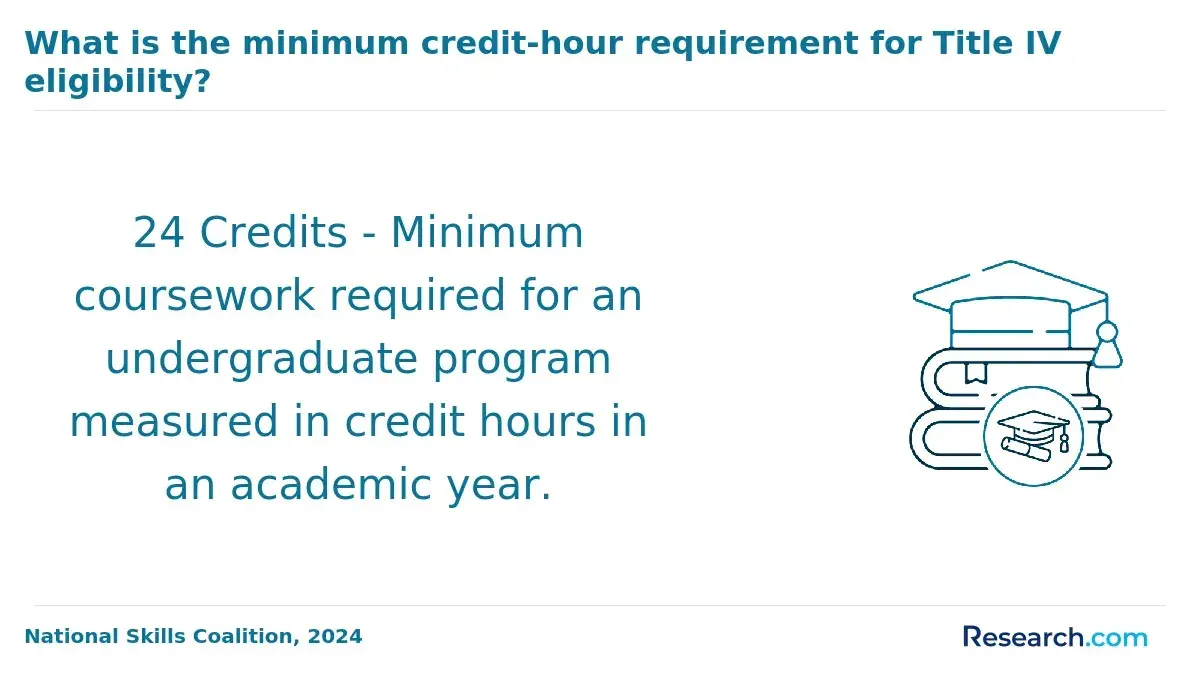
Admission requirements vary by degree level and school selectivity, but online sports science programs are often designed to admit both first-time college students and adults returning with prior credits. Bachelor's programs usually require a high school diploma or equivalent, transcripts, an application, and sometimes a minimum GPA. Degree-completion programs may require a set number of transferable credits before you can enter upper-division coursework.
Admissions can be more selective when the program includes advanced science courses, clinical preparation, or internship placements. If you are comparing health-related pathways more broadly, reviewing admissions structures in programs such as the best online medical assistant programs can help you understand how online healthcare and wellness programs handle prerequisites, financial aid, and student readiness.
Common admission materials include the following. Adults with older transcripts should ask whether the school has a transcript evaluation service before applying.
- Official high school, GED, or college transcripts
- Online application and application fee or fee waiver
- Minimum GPA, often with conditional admission options at some schools
- Prerequisite courses in biology, anatomy, physiology, math, or composition for upper-division entry
- Resume or work history for adult-friendly or degree-completion programs
- Personal statement, especially for competitive or career-focused programs
- Proof of immunizations, background check, or liability insurance if field placement is required
Do not assume test scores are required. Many online bachelor's programs are test-optional, especially for adult learners and transfer students. The more important issue is whether your prior coursework satisfies science and general education requirements.
A practical admissions strategy is to apply only after receiving a preliminary transfer review. That review can show whether your previous anatomy, biology, statistics, psychology, or wellness courses reduce your total cost and time to graduation.
Online sports science degree costs vary widely because tuition depends on residency, public versus private status, credit load, transfer credits, fees, and whether courses require lab kits, proctoring, software, or travel for field experiences. For a broad U.S. benchmark, College Board's 2024 Trends in College Pricing reported the following average published tuition and fees for 4-year institutions.
- $11,610 for in-state students at public 4-year colleges
- $30,780 for out-of-state students at public 4-year colleges
- $43,350 for students at private nonprofit 4-year colleges
Those figures are sticker prices, not necessarily what you will pay after grants, employer tuition benefits, scholarships, military benefits, or transfer credits. For working adults, the more useful number is total program cost after subtracting accepted transfer credits and aid.
The cost factors below often explain why two online programs with similar tuition rates can produce very different final bills.
| Cost factor | What to check | Why it affects value |
| Per-credit tuition | Whether tuition is the same for online, in-state, and out-of-state students | A flat online rate can make some public universities more affordable for nonresidents |
| Transfer credits | Maximum credits accepted and whether science courses expire | Accepted credits can reduce both tuition and time away from full career earnings |
| Fees | Technology, proctoring, graduation, lab, and distance learning fees | Fees can make a low tuition rate less competitive |
| Course materials | Textbooks, lab kits, wearables, software, or assessment tools | Sports science courses may require materials beyond standard e-books |
| Field experience costs | Travel, background checks, insurance, CPR certification, or placement fees | Hands-on requirements can create out-of-pocket costs not shown in tuition |
| Enrollment pace | Part-time, full-time, accelerated, or self-paced billing rules | Some schools charge by term, making pace an important affordability variable |
Financial aid may include federal grants, federal student loans, state aid, institutional scholarships, military education benefits, employer tuition reimbursement, and payment plans. The maximum Pell Grant for the 2024-25 award year is $7,395, which can make a meaningful difference for eligible undergraduates, but it rarely covers the entire cost of a bachelor's degree.
Adults who already hold a healthcare credential should be careful when comparing education ROI across fields. For example, a registered nurse considering a clinical graduate route may compare sports science with the cheapest FNP programs online, but the admissions rules, licensure outcomes, and clinical placement obligations are very different.
To estimate your real cost, ask each school for a written cost breakdown based on your transcript evaluation, expected enrollment pace, and financial aid eligibility. Avoid choosing a program only because the per-credit tuition looks low; total completion cost is the number that matters.
A traditional bachelor's degree in sports science usually requires about 120 credits. Students entering with no college credit often need around 4 years of full-time study, while part-time students may take longer. Adult learners with prior credits can sometimes finish substantially faster if their previous coursework fits the degree plan.
Transfer credit is one of the biggest advantages for working adults because it can reduce tuition, shorten the timeline, and prevent you from retaking general education courses. Some schools accept community college credits, military training, professional certifications, prior learning assessment, CLEP exams, or portfolio-based credit, but policies vary significantly.
The table below summarizes common completion scenarios. These are planning estimates, not guarantees, because course availability, prerequisites, grades, and transfer policies can change the timeline.
| Starting point | Likely enrollment pace | Possible completion range | Important condition |
| No prior college credit | Full-time | About 4 years | Requires steady enrollment and successful completion of general education and major courses |
| No prior college credit | Part-time | Often 5 to 6 or more years | Better for work-life balance but slower to completion |
| 30 transferable credits | Part-time or full-time | Often 3 to 4 years | Depends on whether credits meet degree requirements or only count as electives |
| 60 transferable credits | Degree-completion format | Often 2 to 3 years | Best when general education and lower-division prerequisites are already complete |
| 90 transferable credits | Upper-division completion | Often 1 to 2 years | Only possible when the school accepts a high transfer maximum and required major courses remain available online |
Accelerated courses can help some adults finish faster, but they are not automatically easier. An 8-week anatomy, biomechanics, or exercise physiology course may require twice the weekly intensity of a 16-week course. If you are exploring acceleration across degree types, the same time-management questions used to compare fast track schools apply here: course length, weekly workload, transfer policies, and support availability matter more than the word "accelerated."
Before enrolling, complete these steps to protect your timeline:
- Request an unofficial transfer evaluation before paying a deposit.
- Ask which credits satisfy major requirements, not just elective totals.
- Confirm whether anatomy, physiology, statistics, or science courses have age limits.
- Ask how often required upper-division courses are offered online.
- Check whether part-time students receive priority registration for sequenced courses.
- Get the expected graduation plan in writing before committing.
When comparing accredited online sports science degree programs, look beyond the program name. A strong program should combine recognized accreditation, flexible delivery, credible faculty, practical coursework, transparent costs, transfer-friendly policies, and career-aligned learning experiences.
The strongest choice is not always the fastest or cheapest program. It is the program that fits your schedule while still preparing you for your intended next step, whether that is employment, certification, graduate school, coaching, wellness work, strength and conditioning, or health promotion.
Use the following comparison criteria to separate strong options from risky ones:
- Accreditation: Verify institutional accreditation and any relevant programmatic accreditation or professional recognition.
- Curriculum fit: Look for courses in anatomy, exercise physiology, biomechanics, motor learning, sport psychology, nutrition, research methods, and strength and conditioning if those match your goals.
- Schedule design: Confirm whether classes are asynchronous, synchronous, self-paced, cohort-based, or term-based.
- Adult learner policies: Review part-time enrollment, stop-out policies, transfer credit, prior learning credit, and evening advising availability.
- Faculty experience: Check whether instructors have academic preparation and professional experience in exercise science, coaching, rehabilitation, wellness, or performance settings.
- Hands-on learning: Ask how labs, practicums, internships, or local site placements work for online students.
- Career alignment: Review whether the program prepares students for certifications, graduate school prerequisites, or entry-level roles in fitness, wellness, coaching, or performance support.
- Transparency: Prefer schools that publish tuition, fees, course sequence, accreditation status, and graduation requirements clearly.
Red flags often appear before enrollment. Avoid programs that use vague accreditation language, promise unrealistic salaries, refuse to provide a transfer evaluation, describe everything as "flexible" without explaining deadlines, or cannot clearly explain how online students complete labs and fieldwork.
Working adults should also avoid choosing a program based only on speed. A shorter program can be valuable if it accepts legitimate transfer credits and offers required courses frequently, but it can backfire if accelerated terms overload your schedule or if missing one course delays graduation by a year.
A sports science degree can support careers in fitness, coaching, wellness, sport performance, health promotion, recreation, corporate wellness, and graduate preparation for fields such as physical therapy, occupational therapy, athletic training, exercise physiology, or public health. The best outcome depends on your degree level, certifications, internship experience, local job market, and whether your target role requires licensure or graduate education.
BLS May 2024 wage data provides useful salary context for several sports science-adjacent roles. These figures describe national median wages for occupations, not guaranteed earnings for degree holders.
| Career path | Typical responsibilities | Relevant preparation | Median annual wage context |
| Fitness trainer or group fitness instructor | Lead workouts, teach exercise technique, monitor basic fitness progress, and motivate clients | Bachelor's degree can help, but certifications and experience are often central | BLS reported $46,480 for fitness trainers and aerobics instructors in May 2024 |
| Exercise physiologist | Develop fitness and exercise programs, often for clients with health considerations under defined settings | Bachelor's degree in exercise science or a related field is common; requirements vary by employer and state | BLS reported $58,160 for exercise physiologists in May 2024 |
| Athletic trainer | Prevent, assess, and manage sport-related injuries under regulated practice standards | Typically requires a professional athletic training master's degree and state credentialing | BLS reported $60,250 for athletic trainers in May 2024 |
| Coach or scout | Develop athletes, plan practices, analyze performance, recruit or evaluate talent, and manage competition preparation | Playing experience, coaching credentials, sport knowledge, and communication skills are important | BLS reported $45,910 for coaches and scouts in May 2024 |
| Wellness coordinator | Plan workplace, community, or campus wellness programs and promote healthy behavior | Sports science, health promotion, public health, or wellness coursework can be relevant | Salary varies by employer because this role may fall under multiple occupational categories |
Sports science is strongest for students who want to work with movement, performance, exercise behavior, and wellness. It may not be the best standalone path if your goal is a licensed clinical role unless you plan for the required graduate degree, prerequisites, exams, and state rules.
If you already work in healthcare and want a direct patient-care graduate credential, compare the clinical scope carefully. A sports science degree serves different goals than advanced nursing pathways such as the shortest online nurse practitioner program, which is designed around nursing licensure, advanced practice preparation, and clinical requirements.
To improve career value, build your degree around a clear outcome. For fitness and strength roles, prioritize internships, coaching experience, and recognized certifications. For graduate school, confirm prerequisites early. For wellness or health promotion, look for courses in program planning, behavior change, data tracking, and communication.
Balancing an online sports science degree with work and family is possible, but it requires a realistic weekly plan. Science-heavy courses often involve reading, recorded lectures, quizzes, lab simulations, discussion posts, projects, and exam preparation, so adults should avoid treating online coursework as something that can be squeezed into leftover time.
A practical rule is to start with one course if you are working full time, especially if the course is anatomy, physiology, biomechanics, statistics, or exercise testing. After one term, you can decide whether adding a second course is manageable.
Use this planning sequence before your first term begins:
- Map fixed commitments first, including work shifts, commute time, childcare, caregiving, sleep, and recurring appointments.
- Block 6 to 9 study hours per 3-credit course each week, then add extra time for exams or projects.
- Choose courses strategically by pairing a demanding science course with a lighter elective only if your advisor approves.
- Create a weekly deadline checklist for discussions, quizzes, labs, readings, and exams.
- Tell family members or roommates your protected study times before classes begin.
- Contact instructors early if work travel, coaching seasons, military duty, or caregiving may conflict with deadlines.
Self-paced learners need an even clearer structure because flexibility can become procrastination. Set artificial deadlines ahead of the school's official deadlines, track completed modules weekly, and schedule advisor check-ins if the program does not provide regular pacing reminders.
Adults comparing demanding online health programs may notice similar challenges in clinical fields; for example, guides to easy DNP programs still emphasize structure, practicum planning, and workload management. The lesson applies to sports science too: a more flexible format helps only if you have the time system to use it well.
Strong student support can determine whether an online program is manageable for a working adult. You should expect more than access to recorded lectures. A good online sports science program should provide academic advising, technology support, tutoring, library access, career services, disability accommodations, and clear communication channels.
Support is especially important in sports science because students may need help with science tutoring, data analysis, lab software, internship planning, certification preparation, and graduate school prerequisites. Before enrolling, ask whether services are available in the evenings or on weekends, not only during standard business hours.
Look for these online learning resources and support services:
- Dedicated academic advisor familiar with part-time and transfer students
- Online tutoring for anatomy, physiology, statistics, writing, and research methods
- 24/7 or extended-hours technical support
- Virtual library access with sports science, exercise science, and health databases
- Career services that help with resumes, internships, certifications, and employer connections
- Clear online orientation for learning management systems, proctoring tools, and course expectations
- Disability and accessibility services for remote learners
- Faculty office hours available by video, phone, or asynchronous messaging
- Peer discussion spaces or cohorts for accountability and networking
One common mistake is assuming support quality is the same across all online programs. Ask for examples: How quickly do advisors respond? Who helps if a local internship site falls through? Are tutoring sessions live or only self-service? Can career services help online students outside the school's region?
For adults, support availability should be treated as part of program value. A slightly higher tuition rate may be worthwhile if the school offers stronger advising, better transfer planning, and more reliable help during field placement or difficult science courses.
Do Online Sports Science Degree Programs Include Internships, Practicums, or Other Hands-On Learning Requirements?
Many online sports science programs include some hands-on learning, even when lectures are fully online. Requirements may include virtual labs, at-home fitness assessments, video demonstrations, local internships, practicums, capstone projects, research assignments, or supervised experiences with fitness, wellness, coaching, rehabilitation, or performance organizations.
Hands-on requirements are not a downside; they can strengthen your resume and help you test whether the field fits your career goals. The challenge for working adults is logistics. You need to know when, where, and how these requirements happen before enrolling.
Common experiential components include the following:
- Virtual labs using simulation tools, case studies, motion analysis videos, or data interpretation exercises
- At-home assessments involving heart rate, flexibility, strength, movement screening, or exercise programming within safe course guidelines
- Local internships at gyms, schools, wellness centers, recreation departments, sport organizations, or performance facilities
- Practicums requiring supervised hours, site approval, liability documentation, and evaluations
- Capstone projects that analyze a sport, wellness, coaching, or performance problem using evidence-based methods
- Research methods projects involving literature review, data collection, or applied program design
Ask whether the school places students at sites or expects you to find your own. Also confirm whether internship hours can be completed during evenings or weekends, because many adult learners cannot leave a full-time job for daytime fieldwork.
Clinical programs in other fields often show why placement details matter. For instance, a learner comparing a sports science practicum with the shortest online nurse practitioner program would find very different supervision, licensure, and hour requirements, so the right question is not only "Is it online?" but "What must I complete in person?"
Before committing, request the internship handbook or field experience policy. If the program cannot explain placement responsibilities, required hours, acceptable sites, insurance, background checks, and scheduling flexibility, treat that as a serious warning sign.
Other Things You Should Know About Sports Science
Not always. Sports science usually focuses on performance, exercise, training, and applied movement, while kinesiology is the broader study of human movement. Many schools use the terms differently, so compare the curriculum rather than relying only on the degree title.
For many fitness, coaching, and strength-related roles, certifications can improve employability or may be required by employers. Common areas include personal training, strength and conditioning, group fitness, corrective exercise, CPR, and first aid. Requirements vary by job and organization.
It can be a useful undergraduate foundation, but only if you complete the required prerequisites for the physical therapy programs you plan to apply to. Check biology, chemistry, physics, anatomy, physiology, psychology, and statistics requirements early because they vary by school.
Employers are more likely to respect an online degree when it comes from an accredited institution and includes relevant coursework, practical experience, and credible skills. The delivery format matters less than accreditation, program quality, experience, certifications, and how well the degree fits the role.
- Cost of an Online Degree: Calculate the Cost of Your Higher Education https://www.edumed.org/articles/cost-of-an-online-degree/
- Sport Science Short Courses | Exercise Science Academy Online https://www.exercisescienceacademy.online/online-cpd-courses
- 2025 Most Affordable Online Colleges & Degrees https://www.onlineu.com/most-affordable-colleges
- Bachelor of Exercise and Sport Science https://www.vu.edu.au/courses/bachelor-of-exercise-and-sport-science-sbec
- Shaping Well-Rounded Students Through Sports https://eunice-university.eu/shaping-well-rounded-students-through-sports/
- Online Exercise Science Program https://stmary.edu/online-programs/exercise-science.html
- Boost Income with Flexible Online Degrees https://www.marian.edu/blog/2026/02/how-flexible-online-degrees-help-you-boost-income-on-a-budget.php
- Home https://www.scienceforsport.com/
- ESSA's career guide for Accredited Exercise Scientists https://www.essa.org.au/Web/Web/Resources/Tools-and-templates/ESSA-AES-Guide.aspx
- Who Hires Sports Science Graduates? https://blog.portobelloinstitute.com/who-hires-sports-science-graduates