2027 Online Sports Science Degree Programs With No Application Fee and Rolling Admissions

Co-Founder and Chief Data Scientist
Choosing an online sports science degree is not just about finding a free application; it is about avoiding wasted time, missed aid deadlines, and programs that do not match your career goal. The latest U.S. Bureau of Labor Statistics data reports a May 2024 median wage of $58,260 for exercise physiologists, showing that education choices can affect long-term options.
This guide is for working adults, transfer students, and first-time applicants who want flexible admission. You will learn how no-fee applications and rolling admissions work, what they save, and how to compare programs beyond marketing claims.
Key Things You Should Know
- No application fee usually saves a small upfront amount, often less important than tuition, technology fees, transfer-credit limits, internship costs, and whether the program prepares you for your intended role.
- Rolling admission means applications are reviewed continuously, but seats, scholarships, course availability, and financial aid timelines can still create practical deadlines.
- Sports science outcomes vary by pathway: BLS May 2024 wage data places exercise physiologists at a median of $58,260 and athletic trainers at $60,250, but many clinical or certified roles require specific credentials beyond a general degree.
Which Online Sports Science Degree Programs Have No Application Fee and Rolling Admissions?
Online sports science programs with no application fee and rolling admissions are most common in broad fields such as exercise science, sports and health sciences, kinesiology, fitness and wellness, strength and conditioning, and sport management. Because schools can change fee waivers, start dates, and admissions calendars by term, students should treat any list as a starting point and verify the current application page before applying.
The table below shows examples of online or mostly online sports-related degree options that prospective students commonly compare when looking for no-fee applications and flexible admissions. Use it to understand program fit, not as a substitute for checking the school's current catalog and admissions page.
| School or program type | Relevant online degree area | Application-fee status to verify | Rolling or flexible admission pattern | Best-fit student |
| American Public University | Sports and health sciences | Publicly markets no application fee for many online applicants | Frequent monthly course starts are commonly used | Adults seeking broad preparation in fitness, wellness, coaching, or human performance support roles |
| Southern New Hampshire University | Sport management and related online programs | Publicly markets no application fee | Multiple undergraduate and graduate terms with rolling-style review | Students interested in the business, operations, event, or administration side of sports |
| Liberty University Online | Exercise science, health, wellness, and sport-related pathways vary by level | Online application-fee policies and waivers should be confirmed for the exact degree | Multiple annual online start dates are commonly offered | Students who want many start-date options and a large online-course catalog |
| Concordia University Chicago | Applied exercise science and related graduate study | Graduate application-fee policies should be confirmed for the intended term | Programs often use several annual start dates and rolling review | Students with a bachelor's degree seeking advanced study in exercise science, performance, or fitness leadership |
| Other regionally accredited public and nonprofit universities | Kinesiology, exercise science, sport coaching, wellness, or sport administration | Some waive fees during campaigns, for online applicants, or for specific terms | Rolling review may still have priority deadlines | Transfer students who need the lowest total price or a state-university credential |
A key distinction is that "sports science" is not always the same as "sport management." Sports science usually emphasizes anatomy, exercise physiology, biomechanics, nutrition, injury prevention, strength and conditioning, and performance testing. Sport management usually emphasizes marketing, finance, event operations, facility management, and leadership in sport organizations. Both can be useful, but they lead to different course requirements and career paths.
If you are comparing sports science with healthcare-adjacent online programs, review the admissions and clinical-hour expectations carefully. For example, guides to the best online medical assistant programs can help you see how allied health training differs from a sports science degree in cost, timeline, and hands-on requirements.
How Does Rolling Admission Work for Online Sports Science Degree Programs?
Rolling admission means a school reviews applications as they arrive instead of waiting for one fixed deadline. In online sports science programs, this can shorten the time between applying and receiving an admissions decision, especially when the program has several start dates per year.
Rolling admission does not mean "apply whenever with no consequences." The following comparison shows why students should still build an application calendar around the start date they actually want.
| Feature | Rolling admission | Fixed-deadline admission | What it means for the applicant |
| Application review | Reviewed as files become complete | Reviewed after a stated deadline | Rolling review can produce faster decisions when transcripts arrive on time |
| Start dates | Often several per year | Often one or two major entry terms | Rolling programs may fit working adults who cannot wait for fall admission |
| Seat availability | May close when a term fills | Usually tied to a deadline cycle | Applying early can still matter, especially for cohort-based courses |
| Financial aid timing | May have separate priority dates | Often aligned with academic deadlines | Students should check aid deadlines even if admissions is still open |
| Course availability | Not every course may run every start date | Usually follows a planned sequence | Late applicants may be admitted but unable to take an ideal first course |
The safest approach is to ask admissions three direct questions before submitting materials:
- What is the last date to complete my application for the start term I want?
- Are scholarships, transfer-credit evaluations, or financial aid documents due earlier than the admission file?
- Will the first required sports science courses be available in my chosen start term?
Students sometimes wait too long because they assume rolling admissions removes urgency. That can lead to rushed transcript requests, fewer financial aid options, or a later start even after admission.
How Much Can Students Save by Choosing an Online Sports Science Degree With No Application Fee?
A no-application-fee sports science program saves money at the point of applying, but the savings are usually modest compared with total tuition. A waived $50 application fee saves exactly $50; it does not make a high-tuition program affordable on its own.
The table below illustrates how application-fee savings compare with larger enrollment costs that often matter more. The exact amounts vary by school, degree level, transfer credits, residency status, and online course fees.
| Cost category | Why it matters | How to compare it |
| Application fee | Small upfront cost that can add up if applying to several schools | Confirm whether the fee is automatically waived or requires a code |
| Tuition per credit | Main driver of total program cost | Multiply by required credits after transfer evaluation |
| Online or technology fees | May be charged per course, credit, or term | Ask for a full cost sheet, not just tuition |
| Books, software, and lab materials | Sports science courses may require anatomy resources, assessment tools, or lab kits | Ask whether course materials are included in tuition |
| Internship, practicum, or certification costs | Some career paths require supervised experience or external exams | Ask which costs are required and which are optional |
| Transfer-credit policy | Accepted credits can reduce both time and tuition | Request an official transfer evaluation before enrolling |
College Board's 2024 Trends in College Pricing reported average published tuition and fees of $11,610 for in-state students at public four-year institutions and $43,350 at private nonprofit four-year institutions for the 2024-25 academic year. Those averages are not specific to sports science, but they show why total price should outweigh the application fee in any serious comparison.
Students who are mainly trying to finish faster should also compare accelerated formats, transfer policies, and course availability. Fast-track schools can help applicants understand when speed lowers total cost and when it simply compresses the workload.
No-fee online sports science programs usually have the same academic requirements as similar programs that charge an application fee. The fee waiver removes a payment barrier; it does not remove the need to prove academic readiness.
Requirements vary by degree level, but most applicants should expect some version of the following materials. Review them early because an incomplete file can delay a rolling-admission decision.
- Completed online application for the exact degree, concentration, and start term.
- Official high school transcript, GED documentation, or college transcripts from every institution attended.
- Minimum GPA requirement or conditional-admission review for applicants below the standard threshold.
- Transfer-credit evaluation for students who have prior college coursework.
- Personal statement, resume, or goal statement for some bachelor's-completion and graduate programs.
- Prerequisite coursework for some upper-division or graduate sports science programs, often in anatomy, physiology, biology, statistics, exercise science, or health science.
- English-language proficiency documentation for applicants whose prior education was not in English.
- Recommendation letters for some graduate programs, especially those focused on applied exercise science, coaching, or performance.
Admissions requirements can also signal program rigor. A school that asks for prerequisites in anatomy or exercise physiology may be preparing students for more technical coursework than a program focused mainly on sport administration or recreation leadership.
A common mistake is applying to the easiest-looking program without checking whether it leads to the desired credential. If your goal is athletic training, for example, a general sports science bachelor's degree is not the same as a Commission on Accreditation of Athletic Training Education-accredited professional program. If your broader comparison includes clinical healthcare careers, resources on the easy DNP programs pathway can also show how regulated health professions differ from sports science degrees in admissions, clinical requirements, and licensure expectations.
Students should apply to rolling-admission sports science programs earlier than they think they need to. The best target is usually several weeks before the preferred start date, and even earlier if transfer credits, financial aid, military benefits, employer tuition assistance, or graduate prerequisites are involved.
Use the following sequence to build a practical application timeline. It keeps rolling admission from turning into a last-minute rush.
- Choose a target start term and ask the school for the final date by which your file must be complete.
- Request all transcripts before starting the application if you attended more than one school.
- Ask whether transfer credits are evaluated before admission, after admission, or only after enrollment.
- Check whether financial aid, scholarships, or employer reimbursement require separate deadlines.
- Confirm whether required first-term courses are available during your preferred start date.
- Submit the application only after you know whether the fee is waived automatically or requires a waiver code.
- Follow up until the admissions office confirms that the file is complete, not merely submitted.
Working adults benefit from rolling admissions because they can align enrollment with work schedules, family obligations, and tuition-reimbursement cycles. However, students should avoid choosing the next available start date if it produces an unrealistic course load.
If you are comparing sports science with nursing or advanced-practice healthcare pathways, note that clinical programs may have stricter start terms even when online coursework is flexible. The shortest online nurse practitioner program options shows how start dates, clinical placements, and credential rules can be more constrained in licensed fields.
A strong online sports science application shows that the student understands both the science and the career path. Admissions teams are often looking for academic readiness, realistic goals, and evidence that the applicant can succeed in an online format.
Applicants can strengthen their file by focusing on evidence, not hype. The following steps are especially useful for students applying to exercise science, kinesiology, sport performance, or health-and-wellness programs.
- Explain your career goal clearly, such as strength and conditioning, wellness coaching, fitness management, graduate study, coaching, or sport performance support.
- Highlight relevant coursework in biology, anatomy, physiology, statistics, psychology, nutrition, health, or exercise science.
- Document practical experience, including coaching, personal training, military fitness leadership, athletic participation, physical therapy aide work, recreation programming, or wellness volunteering.
- Discuss online-learning readiness by mentioning time management, work schedule planning, and comfort with learning platforms.
- Request recommendations from supervisors, coaches, instructors, or healthcare professionals who can describe your reliability and communication skills.
- Address weak grades honestly by explaining what changed and pointing to stronger recent coursework if available.
- Ask whether certifications such as CPR, first aid, personal training, or strength-and-conditioning credentials are helpful, required, or only optional.
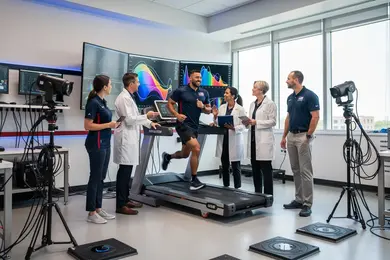
One current trend is the growing use of wearable technology, motion analysis tools, and data dashboards in fitness and performance settings. Applicants do not need to be data scientists, but comfort with evidence-based training, basic statistics, and technology can make their goals more credible.
Students considering clinical healthcare alternatives should compare how application strength is judged in different fields. For example, cheapest FNP programs online may prioritize nursing licenses, clinical experience, and advanced-practice prerequisites rather than the coaching, wellness, or performance background valued in many sports science applications.
No application fee and rolling admissions do not automatically make a sports science program suspicious. Many legitimate online universities use these features to reduce barriers and serve adult learners. The important question is whether the institution and, when relevant, the program hold appropriate accreditation.
Start with institutional accreditation. In the U.S., students should confirm that the college or university is accredited by an agency recognized by the U.S. Department of Education or the Council for Higher Education Accreditation. Institutional accreditation affects federal financial aid eligibility, transfer-credit acceptance, graduate-school recognition, and employer confidence.
Programmatic accreditation depends on the career goal. A general exercise science, kinesiology, or sport management degree may not require separate programmatic accreditation. Athletic training is different: professional athletic training preparation must meet specific accreditation expectations, and entry into the profession generally requires a relevant accredited master's pathway and certification requirements. Licensure or registration rules can also vary by state.
Use these checks before submitting any deposit:
- Confirm the institution's accreditation status through an official federal or accreditor database, not only the school's marketing page.
- Verify whether the exact online program, not just the campus program, is included under the institution's accreditation.
- Ask whether the degree prepares students for any external certification exam or whether additional coursework, supervised experience, or exams are required.
- Check whether online students have any campus visits, synchronous sessions, proctored exams, lab kits, internships, or local field-experience requirements.
- Search for state authorization disclosures if you live outside the school's home state.
Red flags include vague accreditation language, pressure to enroll immediately, unclear tuition, no faculty credentials, no catalog, no student outcome information, and claims that admission is guaranteed. Rolling admission can be flexible, but legitimate schools still review academic records.
Financial aid and total costs can vary more than application fees. A program with no application fee may still be expensive if tuition is high, fees are layered onto each course, or transfer credits are limited. Conversely, a program with a small application fee may be the better investment if it accepts more credits or charges lower tuition.
The table below summarizes the cost factors students should compare before deciding that a no-fee program is the most affordable option.
| Cost or aid factor | Why it changes total value | Question to ask the school |
| Federal financial aid eligibility | Requires an eligible institution and eligible program | Is this exact online degree eligible for federal student aid? |
| Scholarship deadlines | May close before rolling admission ends | What is the priority scholarship deadline for my start term? |
| Transfer-credit acceptance | Can reduce credits needed and shorten time to completion | How many credits can I transfer into this program? |
| Prior learning credit | May help adults with military, professional, or certification-based experience | Do you award credit for certifications, exams, military training, or portfolios? |
| Employer tuition assistance | May require enrollment timing, grades, or approved providers | Can the billing schedule match my employer's reimbursement rules? |
| Course load flexibility | Affects work hours, aid status, and completion time | What is the minimum enrollment needed for aid or scholarships? |
Federal Student Aid reported that the 2024-25 FAFSA introduced a redesigned aid formula and new Student Aid Index terminology. For applicants, the practical takeaway is simple: do not assume admission timing and aid timing are the same. File aid documents early enough for the school to package funding before the start term.
Students should compare net cost, not sticker price. Net cost includes tuition after transfer credits, mandatory fees, books, aid, scholarships, employer benefits, and the cost of delaying graduation if courses are not available when needed.
No-fee, rolling-admission online sports science degrees are especially useful for students who need flexibility, want to compare several schools without paying multiple application fees, or cannot wait for a traditional fall deadline. They are less useful when the program does not match the student's career requirement.
The table below identifies which students gain the most from these admissions features and which students should be more cautious.
| Student profile | Why no-fee and rolling admission helps | Main caution |
| Working adults | Can apply around work schedules and choose from multiple start dates | Fast starts may create unrealistic weekly workloads |
| Transfer students | Can compare several schools without paying multiple application fees | The cheapest option may be the one accepting the most credits, not the one with the free application |
| Military-affiliated students | Frequent starts may align with benefits and relocation timelines | Benefit processing and transcript evaluation can still take time |
| Career changers | Can enter the field without waiting for one annual deadline | Prerequisites may delay entry into upper-division science courses |
| Students seeking coaching, wellness, or fitness roles | May benefit from flexible online coursework plus local practical experience | External certifications may still be needed for some employers |
| Students seeking athletic training licensure | Admissions flexibility can help with prerequisite planning | A general sports science degree is not a substitute for the required accredited professional pathway |
The students who should be most cautious are those choosing a program mainly because the application is free. A free application is useful only if the program also has appropriate accreditation, reasonable total cost, relevant coursework, transparent outcomes, and a format the student can complete.
Some students comparing sports science to advanced clinical pathways may discover that licensure-based healthcare programs have higher admissions barriers but clearer credential requirements. The shortest online nurse practitioner program options can help illustrate how credential-driven timelines differ from broader sports science degrees.
How Should Students Choose Among No-Fee Online Sports Science Degree Programs?
Students should choose among no-fee online sports science programs by ranking the features that affect completion, cost, and career value. The application fee should be one small factor, not the deciding factor.
A practical comparison should move in this order:
- Define the career goal first, such as exercise physiology support, strength and conditioning, coaching, wellness, sport administration, graduate study, or pre-professional preparation.
- Match the degree title and curriculum to that goal, paying special attention to anatomy, physiology, biomechanics, nutrition, statistics, research methods, and practicum options.
- Verify institutional accreditation and any programmatic accreditation needed for the intended career.
- Request a full tuition-and-fee estimate after transfer credits, not before.
- Confirm that rolling admission applies to the exact degree and term, not only to the university overall.
- Ask whether the application fee is permanently waived, temporarily waived, or waived only with a code.
- Compare start dates with course sequencing so the first term does not delay required classes.
- Review internship, lab, synchronous attendance, proctoring, and residency requirements.
- Ask what career services, certification preparation, employer partnerships, or graduate-school advising are available to online students.
- Choose the program with the best combination of fit, affordability, flexibility, and credibility.
Students should avoid programs that cannot answer basic questions about total cost, transfer credits, accreditation, or required hands-on experiences. They should also be cautious about schools that advertise "apply anytime" but provide little information about when courses are actually offered.
If you are comparing sports science with other healthcare or advanced-practice routes, remember that the best degree is the one aligned with the credential you actually need. The shortest online nurse practitioner program options can help students see how program length, licensure, and clinical requirements change the decision framework in nursing compared with sports science.
Other Things You Should Know About Sports Science
Yes, many bachelor's programs admit students without formal fitness or coaching experience. Prior experience can strengthen an application, but schools usually focus first on transcripts, GPA, prerequisites, and readiness for online study.
Sports science, exercise science, or kinesiology can be useful pre-physical therapy majors if they include the prerequisites required by Doctor of Physical Therapy programs. Students should check biology, chemistry, physics, anatomy, physiology, psychology, and statistics requirements early.
Some do. Online programs may use virtual labs, at-home lab kits, local field assignments, recorded movement analysis, or proctored assessments. Students should ask how lab-based courses are delivered before enrolling.
A degree may help with knowledge and credibility, but personal training certifications are usually awarded by external organizations. Eligibility, exam requirements, renewal rules, and employer preferences vary by certification provider and job setting.
- 2026 Top Online Schools for Exercise Science https://www.collegeaffordabilityguide.org/subjects/exercise-science/online/
- Sports Science - StudyinEurope.eu https://www.studyineurope.eu/sports-science/
- How to Fund College as a Student-Athlete - Honest Game https://honestgame.com/blog/how-to-fund-college/
- What Is Rolling Admission? How It Works and What to Expect | McMillan Education https://www.mcmillaneducation.com/blog/what-is-rolling-admission/
- Rolling Admissions Explained: How It Works and When You Should Apply https://riseglobaleducation.com/blogs/rolling-admissions-explained-how-it-works-and-when-you-should-apply
- Rolling Admissions Guide: What, When, Why? https://www.ivywise.com/blog/what-does-rolling-admissions-mean/
- Ivy League Cost of Attendance: 2025-2026 Tuition & Fees | Ivy Coach https://www.ivycoach.com/the-ivy-coach-blog/other-tidbits/ivy-league-tuition-costs/
- Study Sports Science in Poland - Study in Poland https://studyinpoland.biz/programs/study-sports-science-in-poland/
- Who Hires Sports Science Graduates? https://blog.portobelloinstitute.com/who-hires-sports-science-graduates
- Average Cost of College [2025]: Yearly Tuition + Expenses https://educationdata.org/average-cost-of-college