2027 Online Sports Science Degree Programs With No Letters of Recommendation Required

Co-Founder and Chief Data Scientist
Applicants who lack recent professors, supervisors, or coaches to recommend them may find traditional admissions unnecessarily difficult. Online sports science programs can offer a more direct path, especially at the undergraduate level, where schools may rely on transcripts and basic application materials instead. National Center for Education Statistics data released in 2024 showed that 54% of postsecondary students took at least one distance education course in fall 2022. This guide explains how no-recommendation admissions work, how to verify a program, and how to choose an option that supports your career goals.
Key Things You Should Know
- "No letters of recommendation required" means the published application checklist does not require references; it does not mean letters are merely optional, waived for selected applicants, or replaced by no other review criteria.
- Most legitimate online undergraduate sports science, exercise science, kinesiology, fitness, or sport management programs instead review official transcripts, prior coursework, GPA, and sometimes a personal statement, resume, or placement information.
- Compare institutional accreditation, science curriculum, practical-learning options, total price, and career alignment before applying; College Board reported average 2024-25 published tuition and fees of $11,610 at public four-year in-state institutions and $43,350 at private nonprofit four-year institutions.
Which Online Sports Science Degree Programs Require No Letters of Recommendation?
The most common no-recommendation options are online bachelor's-completion and undergraduate degrees labeled exercise science, kinesiology, health and human performance, fitness and wellness, sport management, or sports studies. "Sports science" is not a standardized degree title, so applicants should search related academic fields rather than exclude programs with a different name.
Schools frequently use a centralized undergraduate application that does not request recommendations. By contrast, master's programs in exercise physiology, athletic training, strength and conditioning, and research-oriented kinesiology commonly request two or three letters because the curriculum is more specialized.
This comparison shows the types of programs where streamlined admissions are most likely. Requirements can change by term, campus, degree level, and applicant status, so treat a school's current program page and application portal as the final authority.
| Program type | Typical online availability | Likelihood of no required letters | Common goal |
| Bachelor's in sport management | Widely available | Often available | Sports business, events, facilities, marketing |
| Bachelor's-completion in exercise science or kinesiology | Available at selected institutions | Often available for transfer applicants | Fitness, wellness, graduate preparation |
| Health and human performance or wellness degree | Widely available | Often available | Health promotion, coaching support, wellness |
| Master's in exercise science or kinesiology | Available at selected institutions | Less common | Advanced practice, research, leadership |
Applicants considering a faster degree path can also compare fast track schools, but an accelerated format should not replace checking whether the curriculum includes the anatomy, physiology, biomechanics, and supervised experiences needed for the intended role.
What Are the Admission Requirements for Online Sports Science Degree Programs With No Recommendation Letters?
Eliminating recommendation letters removes one application document, not the school's academic standards. Undergraduate applicants generally need a high school diploma or equivalent and official transcripts. Transfer and degree-completion programs also review prior college credits, particularly science prerequisites.
The following materials are commonly requested in place of recommendations or as part of a standard application review.
- Official high school, GED, and/or college transcripts
- Completed online application and application fee, if charged
- Minimum cumulative GPA or a holistic review when GPA is below the preferred threshold
- Prerequisite coursework in biology, chemistry, anatomy and physiology, algebra, or statistics when applicable
- Personal statement, goal statement, resume, or brief activities history when the program uses holistic review
- Proof of English proficiency for applicants who must meet that requirement
SAT and ACT scores are frequently optional at undergraduate institutions, while GRE requirements vary more at the graduate level. Ask admissions whether a "test optional" policy applies to your exact program, rather than assuming it applies to all online degrees. Applicants pursuing clinical athletic training, physical therapy, occupational therapy, or dietetics should also confirm that an online degree supplies the prerequisites required for later professional study.
Are Online Sports Science Programs With No Letters of Recommendation Easier to Get Into?
A streamlined application is a good fit if you have a clear academic record and need flexibility. It may be a poor fit if you need a recommender to explain a low GPA, a long academic gap, or unusual circumstances; in that case, a program with a personal statement or holistic review may give you more context to present your strengths.
Do not confuse admission accessibility with professional qualification. Sports science careers range from nonclinical wellness and sports business roles to regulated clinical professions. For example, athletic trainers must meet state licensure requirements, while many fitness-related roles value industry certification, hands-on experience, and CPR/AED training in addition to a degree.
Without recommendations, admissions teams usually look for evidence that an applicant can succeed in college-level coursework and complete online assignments independently. Transcripts remain the central record because they show grades, completed credits, and readiness for science-based courses.
This table separates the most common substitute materials from what they help a school assess.
| Application material | What it can show | How to strengthen it |
| Official transcript | Academic performance and prerequisite completion | Confirm every prior institution sends records directly |
| Personal or goal statement | Career direction, motivation, and program fit | Connect goals to specific coursework and realistic roles |
| Resume | Employment, coaching, fitness, military, or volunteer experience | Use measurable responsibilities and current certifications |
| Prerequisite grades | Readiness for anatomy, physiology, statistics, and research methods | Address missing courses before enrollment when needed |
| Placement or readiness assessment | Preparation for college-level writing or math | Complete it early so advising can place you correctly |
Applicants can improve a no-recommendation application by submitting complete records early, using the statement to explain relevant goals, and disclosing only information the school requests. Avoid assuming that an impressive athletic background substitutes for academic prerequisites; playing experience can be valuable, but science-based programs still require coursework and sustained study.
Students whose interests overlap with broader health-care support roles may also explore best online medical assistant programs. That is a separate training route, however, and it does not prepare graduates for every sports science or exercise-related career.
Start with institutional accreditation. A legitimate college should identify its accreditor clearly, and the accreditor should be recognized by the U.S. Department of Education or the Council for Higher Education Accreditation. Institutional accreditation affects federal aid eligibility, transfer-credit review, and the credibility of the degree.
Programmatic accreditation may matter for particular professional goals, but it is not universal across sports science titles. Athletic training, for example, follows specialized educational and licensure expectations that differ from sport management or general wellness programs. If your goal requires certification or licensure, verify requirements with the relevant certifying organization and your state board before enrolling.
Use these steps to verify the exact program rather than relying on advertising language.
- Read the current online program page and download the catalog description for your intended degree.
- Confirm the institution and accreditation status in official federal or accreditor directories.
- Ask whether online students receive the same degree title, transcript treatment, faculty access, and student services as campus students.
- Request a written list of required labs, internships, practica, background checks, and local placement responsibilities.
- Check whether the degree meets prerequisites for your intended certification, graduate school, or licensure path.
Red flags include vague accreditation claims, pressure to enroll before reviewing tuition, unclear faculty credentials, promises of professional licensure without state-specific details, and a curriculum that omits foundational science courses for a science-intensive goal. No recommendation requirement alone is not a red flag; missing transparency is.
Admissions requirements do not determine tuition. Online sports science costs depend on whether the college is public or private, residency rules, transfer credits, technology fees, required course materials, lab kits, and any in-person practicum or internship expenses. Some online public programs charge a single distance-learning rate, while others charge different in-state and out-of-state rates.
For context, College Board's 2024-25 published tuition and fee averages were $11,610 for public four-year in-state students and $43,350 for private nonprofit four-year students. These are broad institutional averages, not quotes for an online sports science degree, and they exclude living costs and many program-specific charges.
Compare the full expected price rather than the per-credit headline. Ask for the number of credits required after transfer evaluation, whether fees apply to online courses, costs for proctoring or clinical requirements, and whether tuition is locked for continuing students. Students looking at other advanced health pathways can review cheapest FNP programs online, although nurse practitioner education has different clinical and licensure costs.
Yes. A no-recommendation admissions policy does not by itself affect eligibility for federal student aid. Students attending an eligible accredited institution can submit the Free Application for Federal Student Aid (FAFSA) and may be considered for grants, work-study, and federal loans based on eligibility rules. State aid, institutional scholarships, employer tuition assistance, and military education benefits may also be available.
Online enrollment can affect the amount of aid when a student takes fewer credits, so confirm whether the planned schedule is full-time, half-time, or less than half-time for aid purposes. A school's financial aid office can provide a cost-of-attendance budget and explain whether asynchronous courses count toward enrollment status.
Before accepting loans, compare net price after gift aid, not just the award total. Read renewal conditions for scholarships, estimate how many terms remain after transfer credits, and ask whether grants apply to online students. Applicants exploring doctoral nursing routes should recognize that aid and clinical-placement rules differ; see easy DNP programs for a separate degree category.
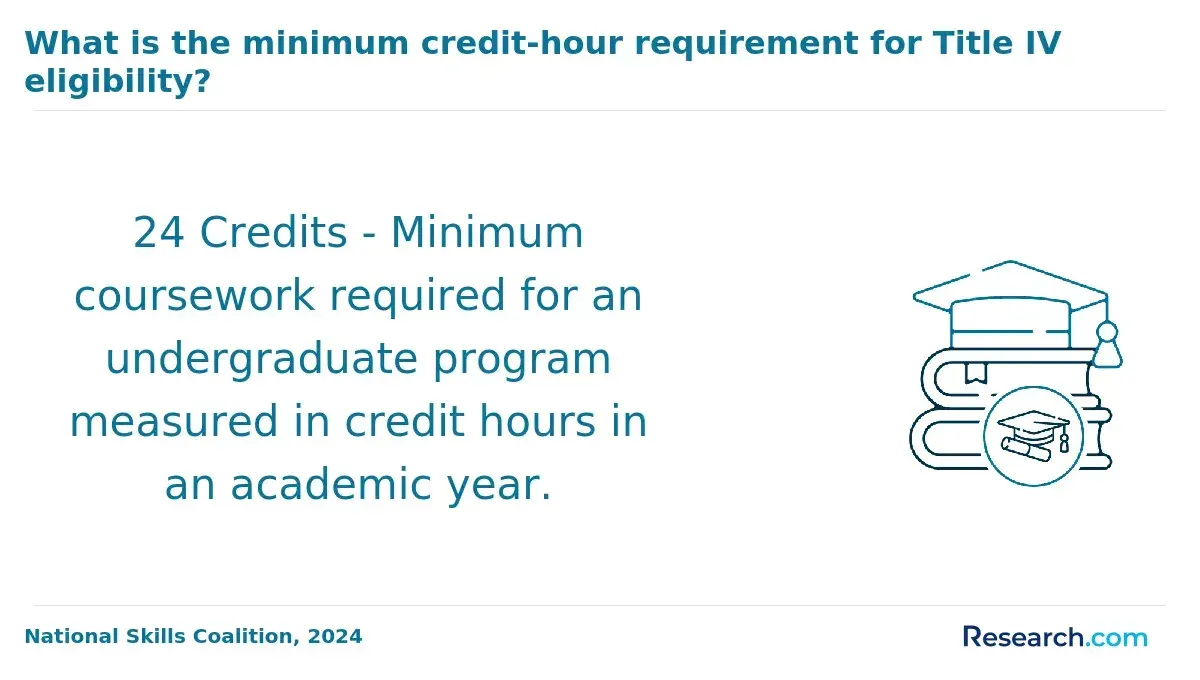
Completion time depends more on degree level, transfer credits, course sequencing, and enrollment pace than on whether letters are required. A traditional bachelor's degree commonly requires about 120 semester credits. A transfer-friendly completion program may take substantially less time if it accepts general education and prerequisite credits, while a master's program often requires additional graduate credits and may include a capstone.
Online learning can make scheduling more flexible, but it does not eliminate time demands. Courses in biomechanics, exercise physiology, statistics, and research methods may have fixed deadlines, group work, proctored exams, or lab components. Internship and practicum requirements can also follow an organization's schedule rather than the academic calendar.
Before enrolling, request a term-by-term degree plan that identifies prerequisite chains, required synchronous sessions, experiential learning, and the latest possible completion date. This prevents a common mistake: selecting a program marketed as fully online and discovering later that a local placement, intensive, or laboratory visit is required.
Many online undergraduate programs accept transfer credit, but each school decides which courses apply toward the degree. Recommendations are usually unrelated to transfer evaluation; the registrar and academic department typically review official transcripts, course descriptions, grades, credit level, and equivalency to required courses.
Transfer students should take these practical steps before committing to a program.
- Send official transcripts from every prior college, even if you withdrew or earned few credits.
- Request a written preliminary transfer evaluation showing accepted credits and remaining requirements.
- Save syllabi and catalog descriptions for anatomy, physiology, biology, chemistry, statistics, and exercise-related courses that may need departmental review.
- Ask about minimum grade requirements, credit-age limits for science courses, residency-credit rules, and maximum transferable credits.
- Compare the evaluated degree plan with the career or graduate-school prerequisites you need.
Do not enroll based solely on a verbal estimate of transfer credit. Written evaluation matters because a course can transfer to the institution but still count only as elective credit rather than satisfy a major requirement. For students already holding a graduate nursing credential, a shortest online nurse practitioner program is also a distinct post-master's option with different transfer and clinical rules.
How Should You Compare Online Sports Science Degree Programs That Do Not Require Letters of Recommendation?
Use admissions simplicity as one filter, not the deciding factor. The right program is one that accepts your academic background while delivering the curriculum, applied learning, affordability, and credential alignment needed for your target role. Sport management is typically appropriate for business-facing sports roles, while exercise science or kinesiology is more relevant to fitness, wellness, rehabilitation-adjacent, and graduate health-profession pathways.
This comparison framework helps applicants weigh outcomes and requirements that a no-recommendation label cannot reveal.
| Comparison factor | What to verify | Why it matters |
| Admissions policy | Exact degree, start term, and applicant type require zero letters | Policies may differ between undergraduate, graduate, and transfer applications |
| Accreditation | Recognized institutional accreditor and applicable program standards | Supports aid, transferability, and professional credibility |
| Curriculum | Science, business, research, and practical courses tied to your goal | Degree titles alone do not show career preparation |
| Experiential learning | Internships, labs, local placement support, and supervision | Applied experience can matter to employers and graduate programs |
| Total cost | Tuition, fees, materials, travel, and credits remaining after transfer | Produces a more realistic affordability comparison |
| Career fit | Certification, graduate-school, or licensure prerequisites | Prevents choosing a convenient degree that cannot support the next step |
Career outcomes vary by concentration and location. The U.S. Bureau of Labor Statistics reported a 2023 median annual wage of $58,160 for exercise physiologists and projects 9% employment growth from 2023 to 2033. That occupation generally requires at least a bachelor's degree, but employers and states can set additional expectations. Use occupational data as context, not as a prediction of an individual salary.
Ask admissions advisors for the current checklist in writing, then speak with a department advisor about curriculum and career pathways. A strong final question is: "Will this exact online degree, with my planned electives and transfer credits, meet the prerequisites for my intended certification, job, or graduate program?"
Other Things You Should Know About Sports Science
Often, yes. No-recommendation policies can be especially useful for adults without recent academic contacts. You may still need official transcripts, and older science prerequisites may require review or retaking depending on the institution and intended concentration.
Some do. A personal statement may be required or optional, particularly for transfer, graduate, or holistic-review applicants. Read the checklist for your specific degree and term because institutional policies can differ across programs.
Check the current program admissions page, application portal, and graduate or undergraduate catalog. If the answer is unclear, email admissions and ask whether letters are required, optional, conditionally requested, or waived only for certain applicants. Keep the written response.
Usually, employers focus on the degree, institution, skills, experience, and relevant credentials rather than the application materials you did not submit. Confirm how the school lists the degree on transcripts and prioritize internships, practical experience, and certifications relevant to your target role.
- How to Fund College as a Student-Athlete - Honest Game https://honestgame.com/blog/how-to-fund-college/
- Online Exercise Science Degrees: Top School Review https://www.edumed.org/online-schools/exercise-science-degrees/
- Online College Costs: A Breakdown of Tuition and Fees | OnlineColleges.net https://www.onlinecolleges.net/for-students/online-college-costs/
- How to Use Career Outcome Data to Attract Prospective Students https://writesea.com/blog/how-to-use-career-outcome-data-to-attract-prospective-students/
- Online Exercise Science Program https://stmary.edu/online-programs/exercise-science.html
- Data Sources for Post-Graduation Outcomes https://www.airweb.org/article/2021/09/30/data-sources-for-post-graduation-outcomes
- Your Complete Guide to Paying for College https://sportsrecruits.com/resources/managing-recruiting/paying-for-college
- 2025 Most Affordable Online Colleges & Degrees https://www.onlineu.com/most-affordable-colleges
- Undergraduate Research Experiences Grow Career-Ready Transferable Skills - The Council on Undergraduate Research https://www.cur.org/journal-article/undergraduate-research-experiences-grow-career-ready-transferable-skills/