2027 Fastest Accredited Online Sports Science Degree Programs That Accept Transfer Credits

Co-Founder and Chief Data Scientist
Transfer credits can turn an online sports science degree from a four-year plan into a much shorter degree-completion path, but only if the credits apply to the major and the school is properly accredited. The National Student Clearinghouse Research Center reported in 2024 that transfer enrollment rose 5.3%, showing renewed interest in credit mobility. This guide is for transfer students, adult learners, military students, and degree completers who want the fastest legitimate route to graduation. You will learn how to compare programs, verify accreditation, estimate timelines, avoid credit-transfer traps, and choose an option with real career value.
Key Things You Should Know
- The fastest realistic path is usually a regionally accredited online bachelor's program in exercise science, kinesiology, sport science, or sport-related health science that accepts up to 90 transfer credits and requires about 30 credits in residence.
- A 120-credit bachelor's degree can sometimes be finished in about 12 months after 90 usable transfer credits, but students with 60 transferable credits should more often plan for 18 to 24 months.
- Transfer-friendly schools are not automatically the fastest; the key question is how many credits apply to general education, electives, prerequisites, and upper-division sports science major requirements.
What Are the Fastest Accredited Online Sports Science Degree Programs That Accept Transfer Credits?
The fastest accredited online sports science degree programs are usually degree-completion bachelor's programs that combine short online terms, year-round enrollment, generous transfer policies, and a clear remaining-credit plan. In this field, "sports science" may appear under several names, including exercise science, kinesiology, sport and health sciences, exercise and wellness, human performance, or sport management with health-related coursework.
Students comparing fast track schools should focus less on marketing phrases like "accelerated" and more on the school's catalog rules: transfer maximum, minimum residency credits, upper-division major requirements, course availability, and whether labs or internships can be completed online or locally.
The table below compares common transfer-friendly online options in sports science and closely related fields. Policies can change, so use this as a decision framework and confirm the current catalog before applying.
| Program type or example | Accreditation to verify | Published transfer-friendly feature | Why it may be fast | Best fit |
| Online BS in Exercise Science, such as Liberty University | Institutional accreditation from a recognized accreditor, such as SACSCOC | May allow up to 75% of a bachelor's degree to transfer, commonly up to 90 credits | Eight-week courses and a large transfer allowance can reduce remaining coursework | Students seeking exercise science, wellness, fitness, or pre-allied-health preparation |
| Online BS in Sports and Health Sciences, such as American Public University | Institutional accreditation from HLC | Often accepts substantial prior college credit, military credit, and other evaluated learning | Monthly or frequent online start options can reduce waiting time between terms | Military students, adult learners, and students with mixed prior credits |
| Online BS in Exercise Science or similar, such as Franklin University | Institutional accreditation from HLC | Many bachelor's programs are designed for transfer students and may allow high credit transfer | Degree-completion structure can work well for students with associate degrees | Working adults who need an online completion pathway |
| Online BS in Exercise Science, wellness, or kinesiology-related programs at public universities | Institutional accreditation from a recognized regional accreditor | Often accept associate-degree blocks, but may cap community college transfer credits | Short online terms may help, but major sequencing can slow completion | Students who want a public university credential and clear graduate-school preparation |
| Online sport management bachelor's programs with health, coaching, or performance electives | Institutional accreditation; programmatic business accreditation may be relevant for management tracks | Often accept up to 90 transfer credits at transfer-focused universities | Fewer lab sciences may make scheduling easier than exercise science | Students aiming for sports administration, recreation, coaching operations, or athletic program management |
The best candidates for these programs already have general education credits, an associate degree, military training, CLEP or DSST exam credit, or previous coursework in biology, anatomy, psychology, health, nutrition, statistics, or exercise-related subjects. Students with few credits can still enroll, but the degree will usually take closer to the standard timeline even if the online terms are accelerated.
Before choosing a program, ask each school for an unofficial transfer estimate and a term-by-term graduation plan. A school that accepts 90 credits but schedules required major courses only once per year may be slower than a school that accepts 75 credits but offers every required course in multiple online terms.
How Fast Can You Complete an Online Sports Science Degree With Transfer Credits?
A fast online sports science bachelor's degree usually requires 120 total credits. Transfer credits shorten the degree only when they satisfy actual requirements rather than sitting as unused electives. That distinction is especially important in exercise science and kinesiology programs because the major may require sequential courses such as anatomy and physiology, biomechanics, exercise physiology, statistics, motor learning, nutrition, and research methods.
The table below shows realistic completion ranges based on credits that actually apply to the degree. The timeline assumes continuous enrollment, online course availability, and no repeated courses.
| Usable transfer credits | Approximate remaining credits | Realistic full-time completion range | What can slow the plan |
| 90 credits | 30 credits | About 10 to 15 months | Upper-division residency rules, capstone timing, internship approval, or missing prerequisites |
| 75 credits | 45 credits | About 15 to 20 months | Major courses that must be taken in sequence |
| 60 credits | 60 credits | About 18 to 24 months | Science labs, statistics, or anatomy requirements not met by prior coursework |
| 30 credits | 90 credits | About 30 to 36 months | Limited prior general education completion |
| 0 credits | 120 credits | About 36 to 48 months | Standard bachelor's workload, even with short terms |
Students comparing speed across health-related degrees should also understand that sports science is different from nursing or nurse practitioner preparation. A resource on the shortest online nurse practitioner program may be useful for readers exploring healthcare credentials, but nurse practitioner pathways require prior nursing education and licensure, while sports science programs typically do not.
To estimate your own fastest timeline, start with the remaining credits, then test the plan against the program's course calendar. A 30-credit remainder can be completed quickly only if the needed courses are available when you need them and the school allows the course load you plan to take.
- Request a preliminary transfer evaluation before enrolling, not after registration.
- Ask which credits satisfy general education, major core, major electives, and free electives.
- Confirm whether any required courses must be taken in a fixed sequence.
- Ask whether the capstone, practicum, internship, or lab requirement is offered every term.
- Compare the fastest full-time plan with a realistic working-adult plan if you have job or family obligations.
The most common mistake is assuming "90 credits accepted" means "only 30 credits left." If 20 of those credits do not fit the degree audit, the student may still need 50 credits or more to graduate.
How Many Transfer Credits Can You Apply Toward an Online Sports Science Degree?
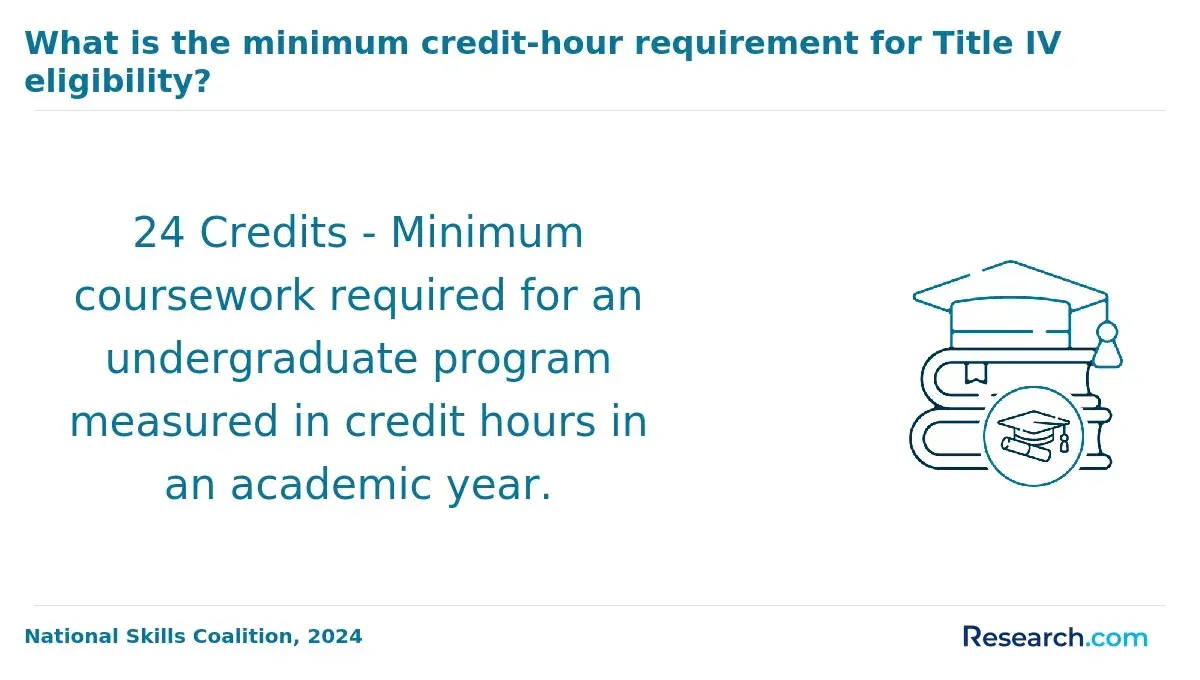
Many transfer-friendly online bachelor's programs allow up to 75% of a degree to come from transfer credit, which equals up to 90 credits in a 120-credit program. Some institutions may allow a slightly higher number, but major, upper-division, and residency rules often matter more than the headline maximum.
The table below explains how different transfer-credit limits affect sports science students. Use it to separate generous admissions policies from policies that truly shorten time to graduation.
| Transfer policy feature | Common range in online bachelor's programs | What it means for sports science students | Decision impact |
| Maximum transfer credits | Often up to 90 credits; sometimes slightly higher | The school may accept a large amount of prior coursework | Helpful only if those credits apply to the degree plan |
| Community college transfer cap | Often around 60 to 75 credits, depending on school | Associate-degree students may still need upper-division credits | Important for students transferring mostly lower-division coursework |
| Minimum institutional residency | Often about 30 credits | You must complete a set number of credits at the degree-granting school | Usually determines the fastest possible finish |
| Upper-division major requirement | Varies by program | Exercise science majors may require advanced coursework at the home institution | Can prevent a student from graduating with only electives remaining |
| Age limits on science coursework | Varies by school and major | Anatomy, physiology, nutrition, or lab science credits may expire or require review | Important for returning students with older credits |
When reviewing transfer rules, separate three questions. Schools may answer each one differently, and the fastest program is the one with the best combined answer.
- How many credits will the institution accept in total?
- How many credits will the sports science department allow inside the major?
- How many credits must still be completed at the school awarding the degree?
Students with an Associate of Arts, Associate of Science, or completed general education block may have an advantage because schools can often apply those credits cleanly. Students with many unrelated electives may receive a high transfer total but still need major prerequisites and upper-division coursework.
Accreditation is the first quality check for any fast online sports science degree. In the United States, the most important baseline is institutional accreditation from an accreditor recognized by the U.S. Department of Education or the Council for Higher Education Accreditation. This affects federal financial aid eligibility, graduate-school recognition, employer confidence, and future transferability.
Sports science programs may not always have a separate programmatic accreditor, so students should not assume that the absence of programmatic accreditation is automatically a red flag. However, if the program is designed for a regulated clinical or allied health pathway, you should confirm whether additional requirements apply.
Use this sequence before you submit an application fee or commit to enrollment. It helps you avoid diploma mills, nonrecognized accreditors, and programs that sound fast but may not support your next step.
- Search the institution in the U.S. Department of Education's Database of Accredited Postsecondary Institutions and Programs.
- Confirm that the accreditor listed is current and recognized, not merely "approved" by an unrelated organization.
- Check whether the online program is offered by the same accredited institution that awards the diploma.
- Review the catalog for the exact degree title, credit requirement, residency rule, and graduation requirements.
- If you plan graduate school, ask target graduate programs whether the degree and prerequisites meet their admissions expectations.
- If you plan certification, ask the certification body whether the degree supports eligibility or only helps with preparation.
A major red flag is a school that advertises unusually fast completion without showing a transparent degree audit, catalog, faculty information, accreditation status, or transfer-credit policy. Speed should come from valid prior credits and efficient scheduling, not from cutting academic requirements.
Transfer credits can come from several sources, and each type is evaluated differently. Traditional college courses are usually the easiest to apply, but exam credit, military training, professional certifications, and prior learning assessments may also reduce the remaining course load at some schools.
The table below summarizes common credit sources and how they may apply to an online sports science degree. The important question is not whether the school accepts the credit source, but where the credit lands in the degree audit.
| Credit source | How it may apply | Best use in a sports science degree | Limitation to check |
| Regionally accredited college coursework | Course-by-course transfer | General education, biology, psychology, statistics, health, nutrition, or electives | Grades, course age, and equivalency rules |
| Completed associate degree | Block transfer or general education waiver at some schools | Reducing lower-division requirements | May not satisfy major prerequisites |
| CLEP or DSST exams | Exam-based credit | General education, social science, math, or elective requirements | Score thresholds and maximum exam-credit limits |
| Military training | Evaluated through ACE recommendations or institutional review | Fitness, leadership, health, physical training, or elective credit | May not replace upper-division exercise science courses |
| Professional certifications | Credit by evaluation or prior learning assessment | Coaching, personal training, emergency care, wellness, or electives | Not every certification is credit-bearing |
| Portfolio-based prior learning | Faculty-reviewed evidence of college-level learning | Applied wellness, coaching, recreation, or fitness experience | Requires documentation and may cost extra |
Students with healthcare or fitness experience should be careful not to overestimate how much professional experience will count. A personal training certification, coaching background, or military physical training role may help, but most accredited programs still require academic coursework in anatomy, physiology, research, assessment, and exercise programming.
If your credits are from multiple schools, send every transcript. Omitting an old transcript can delay admission, financial aid, and the official degree audit, even if you believe the coursework will not transfer.
Residency requirements determine the minimum number of credits you must complete at the school awarding the degree. Major requirements determine which courses must be completed for the sports science credential itself. Together, these two rules often decide the real fastest path.
A student may transfer 90 credits into a university but still need 36 or 45 credits if the remaining courses include required upper-division exercise science classes. This is common when prior credits are mostly general education or unrelated electives.
The table below shows how residency and major rules can change the graduation timeline even when two schools appear equally transfer-friendly.
| Scenario | Credits accepted | Credits that apply cleanly | Likely result |
| Associate degree matches general education and prerequisites | 60 to 75 | Most credits apply | Student may enter upper-division major coursework quickly |
| Many unrelated electives transfer | 75 to 90 | Some credits apply only as electives | Student may still need science prerequisites and major core |
| Prior science courses are old or non-equivalent | 60 to 90 | General education applies, but science may not | Student may need to repeat anatomy, physiology, or lab science |
| School requires 30 residency credits | 90 | 90 apply | Fastest possible plan is usually the residency minimum |
| Major requires upper-division institutional coursework | 90 | 75 to 85 apply | Completion may take longer than the advertised transfer maximum suggests |
Before enrolling, ask for written answers to these questions. They are more useful than asking only whether the school "accepts transfer credits."
- How many upper-division credits must be completed in the major?
- Can transferred anatomy, physiology, biomechanics, nutrition, or statistics courses satisfy major requirements?
- Is there a minimum grade, such as C or higher, for major transfer courses?
- Are any courses too old to transfer into the major?
- Can the capstone, internship, or practicum be completed online, locally, or through a current workplace?
- How often are required major courses offered online?
The better program is often the one that gives you a complete degree map before you enroll. If a school cannot explain exactly what remains, you may be taking on timeline and cost risk.
Prior learning credit can help some students finish faster, especially adult learners with military, coaching, fitness, recreation, wellness, or healthcare experience. However, these credits usually work best for electives or lower-division requirements. They rarely replace the full sports science core.
Students considering adjacent healthcare careers may also compare shorter certificate-based pathways, such as the best online medical assistant programs, but those programs serve a different purpose. A medical assistant program can lead to entry-level clinical support roles, while a sports science bachelor's degree is broader and may support fitness, wellness, coaching, performance, recreation, or graduate study goals.
These credit options may be worth exploring if you are close to the residency minimum or need to clear remaining general education or elective requirements.
- CLEP exams may help satisfy subjects such as college composition, psychology, sociology, history, or math, depending on the school's exam-credit chart.
- DSST exams may be useful for adult learners and military students, especially for general education or elective categories.
- ACE-evaluated military training may translate into physical fitness, leadership, health, first aid, or elective credit.
- Current fitness or coaching certifications may be reviewed for credit, but schools vary widely in what they accept.
- Portfolio assessment may allow experienced professionals to document college-level learning, but it requires evidence, reflection, and faculty review.
The practical strategy is to use prior learning credit after you see the degree audit. If you take exams or pay for portfolio assessment before knowing which requirements remain, you may earn credits that do not move you closer to graduation.
The cost of a fast online sports science degree depends on tuition per credit, how many credits remain, fees, books or digital materials, transfer evaluation costs, exam fees, and financial aid. Transfer credits can lower total tuition sharply, but only if they reduce required credits rather than simply increasing the number of elective credits on your transcript.
College Board's 2024 pricing data listed average published tuition and fees for in-state public four-year institutions at $11,610 for an academic year. That benchmark helps online students evaluate whether a per-credit online program is truly low-cost or simply convenient.
Use the following cost categories when comparing programs. A cheap per-credit rate is not always the cheapest total degree if the school accepts fewer usable credits or requires extra terms.
- Remaining tuition: multiply the per-credit tuition by the credits left after the official transfer evaluation.
- Mandatory fees: include technology, online learning, graduation, transcript, lab, and assessment fees.
- Course materials: check whether books, access codes, lab kits, or software are included.
- Prior learning costs: CLEP, DSST, portfolio assessment, or certification review may cost less than tuition but should apply to needed requirements.
- Financial aid: confirm eligibility for federal aid, scholarships, employer tuition assistance, veterans benefits, or transfer-student awards.
- Opportunity cost: a faster program may help you finish sooner, but an excessive course load can increase the risk of withdrawal or repeated classes.
Readers comparing sports science with clinical healthcare routes may also review affordability guides such as cheapest FNP programs online, but the cost structure is different. Nurse practitioner programs are graduate-level and require nursing credentials; sports science bachelor's programs are usually undergraduate degrees with broader wellness, fitness, and performance applications.
The best financial decision is usually the lowest total cost for the degree that meets your career or graduate-school requirements. Do not compare tuition alone. Compare the total remaining credits, aid eligibility, time to completion, course availability, and whether the degree title fits your intended path.
Fast online sports science programs may use accelerated terms, competency-based education, self-paced coursework, or a traditional semester calendar with generous transfer credit. Each format can work, but they suit different students.
The table below compares the main online formats. The fastest choice depends on your prior credits, learning style, schedule, and how many required courses are available when you need them.
| Format | How it works | Speed advantage | Best for | Risk to consider |
| Accelerated term | Courses run in short sessions, often 5 to 8 weeks | Students can complete more course cycles per year | Organized students who can handle compressed deadlines | Heavy reading, labs, and projects can stack quickly |
| Competency-based | Students progress by demonstrating mastery | Experienced learners may move faster through familiar material | Adults with strong prior knowledge and self-discipline | Not all sports science requirements fit this model |
| Self-paced online | Students control pacing within course or term limits | Motivated students may finish modules quickly | Independent learners with predictable study time | Procrastination can erase the speed advantage |
| Traditional online semester | Courses follow standard 15- or 16-week terms | May be slower per course but easier to manage | Working adults, caregivers, and students taking science-heavy courses | Fewer start dates can delay graduation |
| Hybrid local practicum model | Online coursework plus approved local fieldwork | Can avoid campus relocation | Students needing internship or applied experience | Site approval can take time |
Accelerated formats are becoming more common across online education, including graduate healthcare pathways such as easy DNP programs. For sports science students, however, the key issue is not whether courses are short; it is whether the program preserves enough applied learning, science preparation, and advising support to make the credential useful.
Choose an accelerated program if you already have strong study habits, can dedicate weekly time to coursework, and have many applicable transfer credits. Choose a slower format if you need to protect your GPA for graduate school, work full time, or must complete science-heavy courses that require deeper study.
Are Fast Accredited Online Sports Science Degrees Respected by Employers and Graduate Schools?
Fast accredited online sports science degrees can be respected by employers and graduate schools when the institution is properly accredited, the curriculum matches the student's goals, and the graduate can demonstrate relevant skills. The word "online" is usually less important than accreditation, course rigor, hands-on or applied experience, and whether the degree includes the prerequisites needed for the next step.
The Bureau of Labor Statistics' 2024 Occupational Outlook Handbook reported a 2023 median pay of $58,160 for exercise physiologists. That figure is not a guaranteed outcome for sports science graduates, but it shows why students should connect degree choice to specific roles, certifications, internships, and graduate prerequisites rather than choosing a program based only on speed.
Sports science graduates may pursue roles in fitness, wellness, strength and conditioning support, recreation, coaching, corporate wellness, health promotion, or preparation for graduate programs in athletic training, occupational therapy, physical therapy, exercise physiology, or related fields. Some of those graduate or clinical paths have strict prerequisite and observation-hour requirements, so students should check them before selecting the fastest bachelor's option.
If your goal is immediate entry into patient-facing healthcare rather than sports performance or wellness, a shorter vocational or allied-health pathway may be more direct.
Employers and graduate schools are more likely to value an accelerated online degree when you can show evidence of applied competence. Build that evidence while enrolled, not after graduation.
- Complete an internship, practicum, coaching placement, or workplace-based applied project when available.
- Earn relevant certifications only if they align with your goal, such as personal training, strength and conditioning, CPR/AED, health coaching, or sport-specific coaching credentials.
- Keep syllabi for anatomy, physiology, statistics, exercise physiology, biomechanics, and research courses in case graduate schools request prerequisite verification.
- Use electives strategically for nutrition, psychology, public health, coaching, data analysis, or business skills.
- Ask admissions advisors whether graduates have entered the specific graduate programs or job settings you are considering.
The main red flag is choosing the fastest program without checking whether it supports your intended outcome. A sport management degree may be excellent for administration but may not satisfy science prerequisites for physical therapy. An exercise science degree may be better for graduate health pathways but may include lab or practicum requirements that make it less flexible.
Other Things You Should Know About Sports Science
Possibly, but usually only if you already have about 90 usable transfer credits and the school requires roughly 30 credits in residence. You also need every remaining required course to be available in the right terms.
Some do. Exercise science and kinesiology programs may require labs, practicums, internships, or locally approved field experiences. Ask whether these can be completed online, through simulations, at an approved local site, or through your current workplace.
It depends on the receiving institution. Regionally accredited universities often review nationally accredited coursework more selectively. Always request a transcript evaluation before assuming those credits will apply.
No. Sport management focuses more on administration, business, events, and organizations. Sports science, exercise science, and kinesiology focus more on movement, health, performance, physiology, and human function. Choose based on your career or graduate-school goal.
- ESSA's career guide for Accredited Exercise Scientists https://www.essa.org.au/Web/Web/Resources/Tools-and-templates/ESSA-AES-Guide.aspx
- Best Online Schools for Transferring Credits [2026 Guide] https://www.straighterline.com/blog/transfer-best-online-schools-for-transferring-credits
- Online Exercise Science Degrees: Top School Review https://www.edumed.org/online-schools/exercise-science-degrees/
- Financial Aid For Online Colleges https://www.affordablecollegesonline.org/financial-aid/financial-aid-for-online-colleges/
- Transfer Credits https://www.ontariocolleges.ca/en/applying/transfer-credits
- 2026 Best Online Exercise Science Degrees https://www.onlineu.com/degrees/exercise-science
- Online Exercise Science Program https://stmary.edu/online-programs/exercise-science.html
- Who Hires Sports Science Graduates? https://blog.portobelloinstitute.com/who-hires-sports-science-graduates
- Home https://www.scienceforsport.com/
- Is a Sports Science Degree Worth It? - StudyinEurope.eu https://www.studyineurope.eu/sports-science/is-a-sports-science-degree-worth-it/