
2027 Online Speech Pathology Bachelor's Degree Programs With Monthly Start Dates

Co-Founder and Chief Data Scientist

Reviewed by Rhea Paul, PhD
SLP Education & Research Expert
The key question for many prospective speech pathology students is not whether online study is convenient, but whether a flexible calendar can still lead to a credible degree. Monthly start dates can help working adults, transfer students, military learners, caregivers, and career changers begin sooner instead of waiting for the next fall or spring term. The trade-off is that students must check accreditation, financial aid timing, course sequencing, and clinical or fieldwork requirements carefully.
Recent data shows that online enrollment in healthcare-related bachelor's programs with flexible start dates increased by 35% between 2020 and 2023, reflecting demand for adaptable learning schedules. For speech pathology, that flexibility matters because the bachelor's degree is often a foundation for support roles, graduate study, or related communication sciences careers rather than a direct route to independent clinical licensure.
This guide explains how online speech pathology bachelor's programs with monthly start dates work, what to verify before applying, how costs and aid are typically structured, and what career outcomes are realistic after graduation.
Key Things to Know About Online Speech Pathology Bachelor's Degree Programs With Monthly Start Dates
- Most online speech pathology bachelor's programs with monthly starts hold regional accreditation and require prerequisites such as biology and communication courses for admission.
- Curricula typically blend general education with specialized courses in speech science and disorders, averaging total tuition costs around $25,000 to $45,000.
- Graduates are prepared for roles as speech-language pathology assistants and can pursue graduate licensure-required degrees, with employment projected to grow 17% through 2035.
What Are Online Speech Pathology Bachelor's Degree Programs With Monthly Start Dates, and How Do They Work?
Online speech pathology bachelor's degree programs with monthly start dates allow admitted students to begin coursework at the start of many or all months of the year instead of waiting for a traditional semester. The model is designed for students who need a faster or more flexible entry point, including adults changing careers, military-affiliated students, parents, and learners transferring credits from another college.
Most programs use asynchronous coursework, accelerated terms, competency-based pacing, or a combination of these formats. Asynchronous courses let students watch lectures and complete assignments within weekly deadlines. Competency-based education may allow faster progress when students can demonstrate mastery, although not every speech pathology program uses this structure.
These programs typically require between 120 and 130 credit hours. Students usually complete general education courses, communication sciences foundations, anatomy and physiology content, linguistics, phonetics, speech and language development, audiology, and introductory study of communication disorders. Some programs also include observation, practicum preparation, simulations, or supervised field experiences, depending on state rules and institutional design.
The most important point is that monthly start dates do not remove academic sequencing. Speech pathology coursework often builds in a specific order, so students may still need prerequisites before upper-division courses. A flexible start date can shorten the wait to enroll, but it does not automatically shorten the total degree by itself.
Students considering this pathway should ask three practical questions before enrolling:
- Will the monthly start apply to my major courses or only to general education courses? Some schools advertise frequent starts but offer specialized speech pathology classes less often.
- How are clinical observation, practicum, or applied learning requirements handled online? Students may need approved local sites, background checks, or scheduled synchronous activities.
- Will this bachelor's degree prepare me for my next step? Independent practice as a speech-language pathologist typically requires graduate education and additional credentials, so students should confirm graduate admission prerequisites early.
For students planning ahead to graduate study, comparing speech language pathology programs online can help clarify which bachelor's prerequisites, observation hours, and academic records may matter later. Students interested in related behavioral and communication-focused credentials may also review online BCBA masters programs as a separate pathway.
Which Regional Accreditation Bodies Approve Online Speech Pathology Bachelor's Programs With Monthly Start Dates?
For an online speech pathology bachelor's degree, regional accreditation is the first accreditation status to verify. It shows that the institution meets recognized standards for academic quality, governance, student support, financial stability, and assessment. It also affects transfer credit, graduate school eligibility, employer recognition, and access to federal financial aid.
Regional accreditation may be granted by agencies such as the Higher Learning Commission (HLC), Southern Association of Colleges and Schools Commission on Colleges (SACSCOC), New England Commission of Higher Education (NECHE), WASC Senior College and University Commission (WSCUC), Middle States Commission on Higher Education (MSCHE), and Northwest Commission on Colleges and Universities (NWCCU).
Students should be careful not to confuse regional accreditation with marketing claims such as “approved,” “recognized,” or “career-ready.” A school can offer monthly starts and still fail to meet the standards students need for transfer, aid, or future graduate admission. National accreditation may be legitimate in some sectors, but it is often less portable for students who want graduate study or professional pathways in speech-language pathology.
Programmatic accreditation should also be understood correctly. The Council on Academic Accreditation in Audiology and Speech-Language Pathology (CAA) is especially relevant for students pursuing licensure or graduate study in speech-language pathology or audiology. Because accreditation rules and degree levels can differ, students should verify whether CAA status applies to the specific program, department, or graduate pathway they intend to use.
Before applying, check accreditation through the U.S. Department of Education's Database of Accredited Postsecondary Institutions and Programs (DAPIP) or the Council for Higher Education Accreditation (CHEA) database. Do not rely only on a school's homepage. Confirm the institution name, accreditor, accreditation dates, and whether any sanctions or warnings are listed.
Warning signs include schools that promise unusually fast completion without transfer review, refuse to identify an accreditor, list unrecognized accrediting bodies, pressure students to enroll immediately, or claim that monthly start dates make accreditation less important. Students comparing adjacent helping-profession degrees can also review an online counseling bachelor's degree online to see how accreditation expectations differ across fields.
How Do Monthly Start Dates in Online Speech Pathology Programs Differ From Traditional Semester or Quarter Systems?
Monthly start dates change the rhythm of enrollment, coursework, advising, and financial aid. They can make a program more accessible, but they also require stronger planning because courses may move quickly and administrative deadlines can occur more often.
- Enrollment timing: Monthly-start programs let students begin far more often than semester or quarter systems. This is useful if a student changes jobs, completes transfer paperwork midyear, leaves the military, or cannot wait several months for the next traditional start.
- Course pacing: Instead of taking several 15-week courses at once, students may complete one course or a small cluster of courses in shorter terms. This can improve focus, but falling behind for even one week can be harder to recover from.
- Course sequencing: Speech pathology courses often have prerequisites. Monthly enrollment may help students enter the pipeline sooner, but advanced courses may still run on a planned schedule.
- Peer interaction: Smaller monthly cohorts can create closer discussion groups and more direct faculty attention. Larger semester cohorts may offer broader networking and more active class forums.
- Instructor availability: Shorter course cycles often require frequent feedback, regular check-ins, and clear grading timelines. Students should ask whether faculty or teaching support is available during evenings or weekends.
- Financial aid timing: Federal Title IV aid depends on enrollment status, academic year definitions, payment periods, and satisfactory academic progress. Monthly starts can work with federal aid, but the school must administer aid correctly for that calendar.
- Academic breaks: Traditional calendars have predictable long breaks. Monthly-start programs may run continuously, so students need to schedule rest periods intentionally to avoid burnout.
Before enrolling, ask the financial aid office whether the specific monthly-start version of the program is eligible for federal aid, how disbursement dates are set, and what happens if you pause between terms. Students should also ask how many credits count as full-time enrollment in the program's calendar.
- : "The frequent new classes meant I had to be very organized; there was no room to fall behind. But I appreciated that I didn't have to wait months to enroll when my schedule changed."
That experience captures the main trade-off. Monthly starts can reduce waiting time and fit unpredictable lives, but they reward students who can manage deadlines, communicate early, and maintain steady weekly study habits.
What Are the Admission Requirements for Online Speech Pathology Bachelor's Programs With Monthly Start Dates?
Admission requirements for online speech pathology bachelor's programs with monthly start dates are usually similar to those for traditional online bachelor's programs. The difference is process timing: schools with rolling or frequent starts may review applications more often and may set earlier document deadlines for each monthly cohort.
- High school diploma or GED: First-year applicants typically need proof of high school completion or an equivalent credential.
- Official transcripts: Applicants must submit transcripts from high school and any colleges attended. Transfer students may be allowed to upload unofficial transcripts for an initial review, but official transcripts are normally required before final credit evaluation.
- Minimum GPA: Programs commonly set a GPA threshold, often between 2.5 and 3.0 on a 4.0 scale, although policies vary by institution and applicant type.
- Standardized tests: Many online bachelor's programs have made SAT or ACT scores optional or no longer require them, especially for adult and transfer applicants.
- Placement or readiness review: Some schools require math, writing, or reading placement if prior coursework does not demonstrate college readiness.
- Personal statement: A short essay may help applicants explain career goals, prior academic challenges, or interest in communication sciences and disorders.
- Letters of recommendation: These may be optional, but they can strengthen applications from students with uneven academic records.
- Technology requirements: Students may need reliable internet, webcam access, specific software, and the ability to participate in virtual meetings or proctored assessments.
- Background checks or health documentation: If the program includes fieldwork, observation, or practicum components, additional screening may be required before placement.
Rolling admission does not mean automatic admission. Reputable programs still evaluate academic readiness, transfer history, and fit for the major. Students with lower GPAs should ask about provisional admission, academic success plans, bridge courses, or starting with general education requirements before entering upper-division major courses.
Applicants comparing online degree formats in other fields, including a masters in game design online, should apply the same basic screening approach: confirm accreditation, admission standards, transfer policies, and whether the online calendar supports the student's actual timeline.
What Is the Minimum GPA Requirement for an Online Speech Pathology Bachelor's Program With Monthly Start Dates?
Most online speech pathology bachelor's programs with monthly start dates set minimum admission GPAs between 2.0 and 2.5 on a 4.0 scale. Some highly selective programs may require above a 3.0 GPA, while open-admission programs often accept students closer to the lower end of that range.
GPA requirements can apply at several points, not just admission. Students may need to maintain at least a 2.0 cumulative GPA to remain in good academic standing, continue receiving financial aid, and qualify for graduation. Some major courses may require a minimum grade to count toward the degree, especially if they serve as prerequisites for upper-division speech pathology coursework.
If your GPA is below the published minimum, do not assume you are disqualified. Many schools offer one or more alternatives:
- Provisional admission: Students may enroll on the condition that they meet specific grade requirements during initial coursework.
- Academic probation recovery: Enrolled students who fall below GPA standards may receive a structured period to improve.
- Transfer credit review: Stronger recent college coursework may offset older academic struggles.
- Appeal process: Applicants may explain documented circumstances that affected prior grades.
- Bridge or preparatory courses: Students can demonstrate readiness before entering the full major sequence.
The program tier matters. Open-admission programs may provide broader access, but students should still check advising quality, tutoring, completion rates, and transfer acceptance. Moderately selective programs may offer a balance of access and academic structure. Competitive programs may expect stronger GPAs but can provide deeper faculty networks, research exposure, or clearer graduate school preparation.
- : "It took some pressure off knowing I could prove myself in the first semester. The probation and appeal options gave me a structured way to recover instead of giving up."
Because GPA policies can change, applicants should review the current academic catalog and ask admissions staff how GPA is calculated for first-year, adult, and transfer students.
How Long Does It Take to Complete an Online Speech Pathology Bachelor's Degree With Monthly Enrollment Options?
An online bachelor's degree in speech pathology typically requires around 120 semester credit hours. Full-time students who average about 15 credits per semester usually finish in approximately four years. Monthly enrollment can help students start sooner and avoid long gaps, but completion time still depends on course load, transfer credits, prerequisites, and whether specialized courses are available every month.
Students with prior college credit may finish faster if the school accepts those credits toward general education, electives, or major requirements. Prior learning assessments, military training credits, CLEP exams, and portfolio reviews may also reduce the number of credits needed, depending on institutional policy.
Part-time students should expect a longer timeline. Many working adults take one or two courses at a time to keep a sustainable pace. That can be a smart choice if it prevents withdrawals, failed courses, or burnout. A faster calendar is only useful if the student can complete courses successfully.
Several factors can slow completion even in a monthly-start program:
- Prerequisites that must be completed before upper-division speech pathology courses
- Major courses offered in a fixed rotation rather than every month
- Limited availability of practicum, observation, or applied learning placements
- Transfer credits that count as electives but not toward major requirements
- Financial aid limits tied to enrollment intensity or satisfactory academic progress
The best way to estimate time-to-degree is to request a written degree plan before committing. Transfer students should ask for a course-by-course evaluation showing exactly which credits apply, which requirements remain, and when each required course is next available.
What Does an Online Speech Pathology Bachelor's Program With Monthly Start Dates Typically Cost, and What Financial Aid Is Available?
Costs vary by institution, residency status, transfer credits, and program format. Tuition is typically charged per credit hour, ranging from $300 to $700 per credit. With around 120 credits needed to complete the degree, tuition alone can range from $36,000 to $84,000 before financial aid.
Students should look beyond advertised tuition. Common added costs include:
- Technology fees: These generally range from $50 to $150 per term for learning platforms, online support, or digital systems.
- Course materials: Textbooks, access codes, and digital resources may cost $500 to $1,200 annually.
- Residency and practicum expenses: Even mostly online programs may require observation, practicum preparation, or applied experiences. Background checks, immunizations, liability insurance, travel, and placement-related costs may total roughly $1,000 to $3,000 over the program's duration.
- Transfer evaluation and transcript fees: These are usually smaller costs, but they matter for students applying to several schools.
- Lost income or reduced work hours: Working adults should include schedule changes in their financial planning.
Federal financial aid may be available if the institution and program are eligible. Students should submit the FAFSA annually to be considered for Pell Grants, Direct Loans, including subsidized and unsubsidized loans, and Federal Work-Study. Monthly-start programs can still use federal aid, but disbursement dates may differ from a traditional semester calendar.
Scholarships may come from colleges, state programs, professional organizations, and communication sciences or health-related foundations. Many scholarships specifically support speech pathology students, including awards from professional bodies like the American Speech-Language-Hearing Foundation, state organizations, and colleges themselves. Platforms such as the College Board Scholarship Search and Fastweb can help students identify awards tied to speech pathology, disability services, education, healthcare, and adult learners.
When comparing programs, calculate net cost rather than sticker price. For example:
- Program A: Charges $300 per credit with $100 technology fees per term and modest practicum costs of about $1,000. Using Pell Grants and Direct Loans, students might see net costs near $20,000.
- Program B: Charges $500 per credit plus $150 term technology fees and higher practicum expenses. Scholarships from universities and associations reduce costs by 25%, with net prices around $35,000.
- Program C: Private institutions charging $700 per credit may offer extensive scholarships, stipends, and work-study, resulting in net expenses close to $40,000.
Before enrolling, ask for a full cost sheet that includes tuition, fees, materials, placement expenses, payment deadlines, and refund policies. Also confirm how dropping or pausing a monthly-start course affects financial aid, loan repayment status, and satisfactory academic progress.
Which Schools Offer the Most Reputable Online Speech Pathology Bachelor's Degree Programs With Monthly Start Dates?
Reputation in an online speech pathology bachelor's program should be judged by accreditation, curriculum quality, student support, transfer policy, fieldwork preparation, graduate school alignment, and employer recognition. Monthly start dates are valuable only when they are attached to a legitimate, well-supported program.
Several institutions are commonly considered by students researching online speech pathology bachelor's options with flexible enrollment structures:
- University of Northern Colorado: Students should review current accreditation information, online availability, transfer policies, and clinical or practicum expectations. The original program profile identifies the Council on Academic Accreditation (CAA) in Audiology and Speech-Language Pathology, monthly starts, competitive tuition for both in-state and out-of-state students, transfer credit options, supervised clinical practicum, small student-to-instructor ratios, and regional healthcare partnerships as key points to verify.
- Arizona State University: Regionally accredited by the Higher Learning Commission, ASU is noted for online speech pathology bachelor's study with monthly start dates, flexible pacing, transparent tuition, financial aid support, alumni networks in public schools and medical settings, and faculty guidance in evidence-based practice and research.
- Liberty University: Liberty is described as combining a faith-based approach with accreditation from the Southern Association of Colleges and Schools Commission on Colleges (SACSCOC). Monthly enrollment, generous transfer credit policies, support for working adults and military personnel, coursework in communication disorders, and faculty with speech-language pathology backgrounds are key factors to evaluate.
- University of Central Florida: UCF is identified with monthly start options, Southern Association of Colleges and Schools accreditation, acceptance of up to 90 transfer credits, interdisciplinary coursework, applied practica overseen by licensed clinicians, online tutoring, and career services.
- Florida International University: FIU is described as offering flexible monthly starts, CAA and regional accreditation, affordable tuition, community college transfer pathways, partnerships with local hospitals and school districts, and faculty research in bilingual and multicultural communication disorders.
Because program formats, accreditation details, and start dates can change, students should verify each claim directly with the school before applying. Ask admissions and the department these questions:
- Is the bachelor's program itself fully online, or are some requirements campus-based?
- Are monthly starts available for all students or only for selected terms?
- How many major courses are offered each month?
- What graduate programs have admitted recent graduates?
- What student support is available outside standard business hours?
- How are observation, practicum, or applied learning experiences arranged?
A program's reputation within speech pathology and related employer communities can matter as much as the university's general brand. Students considering broader management or healthcare leadership paths later may also compare future graduate options, including an MBA under 35k, but the immediate priority should be choosing a credible bachelor's program that supports speech pathology prerequisites and career goals.
What Courses and Curriculum Can Students Expect in an Online Speech Pathology Bachelor's Program?
An online speech pathology bachelor's curriculum usually combines general education, communication sciences foundations, speech and language coursework, and applied learning. The goal is to help students understand human communication, typical and atypical development, and the scientific basis of speech, language, hearing, and swallowing disorders.
General education courses often include biology, psychology, statistics, writing, communication, linguistics, and anatomy. These courses are not filler; they support later study in language development, research methods, speech science, and neurological bases of communication.
Lower-division major courses commonly introduce phonetics, communication disorders, speech and language development, audiology, and professional issues in speech-language pathology. These classes help students learn core terminology and decide whether the field fits their interests before moving into advanced coursework.
Upper-division courses may cover language acquisition, articulation and phonological disorders, speech science, hearing science, neurological communication disorders, assessment principles, intervention planning, multicultural communication, and evidence-based practice. Some programs also offer electives in pediatric speech pathology, adult neurogenic disorders, bilingual or multicultural communication, augmentative and alternative communication, or early intervention.
Applied learning varies by program. Students may complete virtual simulations, case studies, capstone projects, observation activities, employer-integrated assignments, or supervised practicum preparation. If a program advertises practicum or fieldwork, students should ask where placements occur, who approves sites, and whether additional costs or background checks apply.
Quality online programs also teach students to use professional tools and research resources, such as speech analysis software, virtual therapy platforms, clinical documentation systems, and academic databases. These tools help students connect theory to practice and prepare for support roles or graduate education.
Students looking for short-term add-ons while completing a degree may review easy certifications to get online, but certifications should complement rather than replace accredited degree planning in speech pathology.
How Do Online Speech Pathology Programs With Monthly Start Dates Support Working Adults and Non-Traditional Students?
Online speech pathology programs with monthly start dates are often built for students who cannot pause work, caregiving, military service, or other responsibilities for a rigid academic calendar. The strongest programs combine flexible access with structured support so students do not have to manage the degree alone.
Common flexibility features include asynchronous lectures, recorded demonstrations, online discussion boards, mobile-friendly learning platforms, and assignment windows that allow students to study before work, after shifts, or on weekends. Some programs also offer optional live sessions, virtual office hours, and accelerated course blocks.
Support services are especially important for non-traditional students. Reputable programs may provide dedicated academic advisors, career counseling, writing support, tutoring, library access, disability accommodations, military and veteran support, and technical help outside standard business hours. These services can help students manage common challenges such as returning to academic writing, learning unfamiliar technology, balancing family schedules, or rebuilding confidence after time away from school.
Many adult learners also benefit from credit for prior learning. Schools may award credit through CLEP exams, portfolio reviews, military training, professional certifications, or prior college coursework. This can shorten time-to-degree and reduce cost, but students should request a written evaluation before assuming credits will apply to the major.
A 2023 study found that flexible start dates and course delivery formats boosted enrollment among adult learners by more than 25%, reflecting growing demand for accessible and adaptable education models.
Students should still be realistic about weekly workload. Flexible does not mean easy. A sustainable plan may include blocking study hours, discussing schedule needs with family or employers, using tutoring early, and taking fewer credits during demanding work or caregiving periods.
What Career Outcomes and Salary Expectations Are Realistic for Speech Pathology Bachelor's Graduates?
A bachelor's degree in speech pathology or communication sciences can lead to entry-level and support roles, but it usually does not qualify graduates to work independently as licensed speech-language pathologists. Students who want full clinical practice should expect to pursue a master's degree and meet certification and licensure requirements.
- Employment growth: Careers related to speech pathology are expected to expand by about 17% from 2025 to 2035. Growth is connected to an aging population, increased awareness of communication disorders, and demand for services in schools, healthcare settings, and early intervention.
- Entry-level roles: Bachelor's graduates may work as speech-language pathology aides, therapy assistants, rehabilitation aides, educational assistants, behavioral or developmental support staff, case support workers, or program coordinators, depending on state rules and employer requirements.
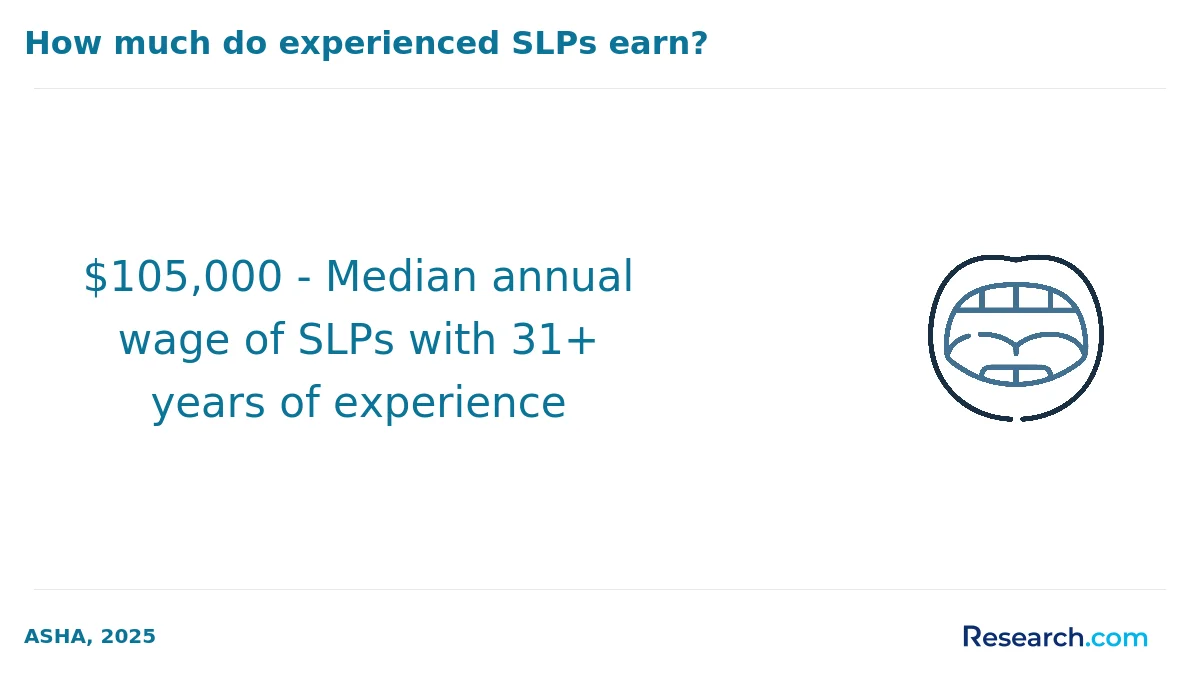
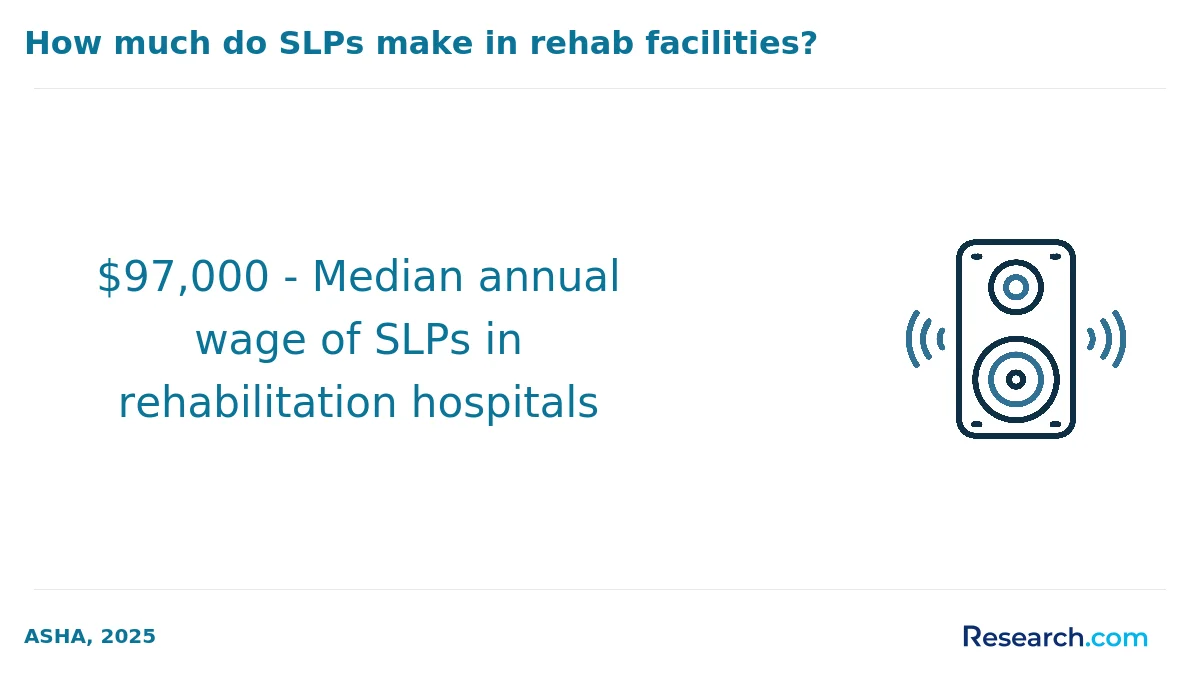
- Salary expectations: Earnings vary by role, location, employer, and additional credentials. Entry-level positions such as speech-language pathology aides generally earn between $30,000 and $40,000 annually. Certified speech-language pathologists, who usually hold a master's degree, can make median salaries near $97,870.
- Graduate school pathway: For many students, the bachelor's degree is a stepping stone. Strong grades, prerequisite completion, observation experience, faculty recommendations, and relevant work or volunteer experience can all matter for graduate admission.
- Regional variation: Salary levels and job availability differ by state and metro area. California, New York, and Texas may offer higher wages and more vacancies, especially in areas with large healthcare systems and school districts.
- Emerging roles: Telepractice support, early intervention, aging services, bilingual communication support, and community outreach are growing areas. Bachelor's graduates may improve their options with relevant experience and supplementary credentials, but scope-of-practice rules still apply.
The most realistic way to evaluate return on investment is to compare the degree's total net cost with the role you expect immediately after graduation and the graduate pathway you may need later. Students should research state requirements before assuming a bachelor's degree will qualify them for assistant or aide roles.
What Graduates Say About Their Online Speech Pathology Bachelor's Degree Programs With Monthly Start Dates
- : "The program's accreditation gave me confidence right from the start. Knowing it met high standards was crucial in my decision. I appreciated the flexible monthly start dates because they worked with my schedule, and the curriculum felt comprehensive without becoming unaffordable. — Drake"
- : "The admission process was straightforward and reassuring, which helped me focus on learning rather than paperwork. The course content covered the essential areas of speech pathology, and the degree helped me move toward clinical settings where I can make a meaningful impact. — Faith"
- : "I looked at the program from a career perspective, so recognized accreditation mattered to me. Monthly enrollment gave me flexibility, and the balance between cost and quality felt reasonable. Graduating opened doors to healthcare-related roles and gave me a stronger foundation for the challenges ahead. — Elsa"
Other Things You Should Know About Speech Pathology Degrees
Yes. Many speech pathology bachelor’s tracks include supervised clinical observation or practicum hours, often 25 to 50 hours, before graduate study. Programs should state where those hours occur, whether they are virtual or in person, and which faculty or licensed supervisor approves them.
To enroll in 2027 online speech pathology programs with monthly start dates, you typically need a high school diploma or equivalent, a minimum GPA of 3.0, and transcripts. Some programs may also require a personal statement or letters of recommendation.
In 2027, an online speech pathology bachelor's degree with monthly start dates typically serves as a foundational step toward state licensure or certification. However, licensure often requires further graduate study and supervised clinical experience. It's vital to verify individual state requirements, as they can vary significantly.
References
- U.S. Bureau of Labor Statistics - Speech-Language Pathologists https://www.bls.gov/ooh/healthcare/speech-language-pathologists.htm
- ASHA EdFind - Accredited Speech-Language Pathology Programs https://find.asha.org/ed/
- Audiology and Speech-Language Pathology Interstate Compact https://aslpcompact.com/compact-map/
- University of Nebraska at Kearney - Speech-Language Pathology, Master of Science in Education (Online Track) https://www.unk.edu/online/degrees-programs/speech-language-pathology-online.php
- California State University-Northridge - Master of Science in Communicative Disorders (Online) https://tsengcollege.csun.edu/programs/CDS
- West Virginia University - Speech-Language Pathology, M.S. - Online https://medicine.hsc.wvu.edu/communications-sciences-and-disorders/speech-language-pathology-ms/future-students/curriculum/online-slp-program/
- Pennsylvania Western University - Master of Science in Speech-Language Pathology https://online.pennwest.edu/programs/speech-language-pathology-grad/index.php
- California State University-San Marcos - Online MS in Speech-Language Pathology https://www.csusm.edu/slp/programs/mastersonline/index.html


