
2027 What Jobs Can You Get With a Speech Pathology Bachelor's Degree?

Co-Founder and Chief Data Scientist

Reviewed by Rhea Paul, PhD
SLP Education & Research Expert
A speech pathology bachelor’s degree can lead to meaningful work, but it usually does not qualify you to practice independently as a licensed speech-language pathologist. That distinction matters. Many graduates use the degree to enter support, education, healthcare coordination, research, early intervention, or assistive technology roles while deciding whether to pursue graduate school.
The field is attractive because demand is strong: the Bureau of Labor Statistics projects 17% growth in speech-language pathology-related roles through 2035. Still, your options depend on state rules, employer requirements, supervised experience, certifications, and whether you plan to earn a master’s degree later.
This guide explains what jobs you can pursue with a speech pathology bachelor’s degree, which industries hire graduates, where certification or graduate study may be required, and how to think about salary, remote work, career changes, and long-term advancement.
Key Benefits of the Jobs You Can Get With a Speech Pathology Bachelor's Degree
- A bachelor's degree in speech pathology offers versatility across healthcare, education, and research industries, enabling graduates to adapt to various professional environments.
- Professionals with this degree often access competitive salaries, with median wages above $80,000 and strong potential for career advancement in specialized roles.
- The degree supports long-term growth by providing foundational skills essential for graduate study, certification, and diverse career pathways in clinical and academic settings.
What Entry-Level Jobs Can I Get With a Speech Pathology Bachelor's Degree?
With a bachelor’s degree in speech pathology, the most realistic entry-level jobs are support roles rather than independent clinical practice roles. You may assist licensed professionals, work with students or patients under supervision, coordinate services, prepare therapy materials, or support communication-focused programs. Studies show that about 70% of individuals holding a bachelor's degree in Speech Pathology-related fields secure jobs within their area of study soon after graduation, which suggests that the degree can be useful when paired with practical experience and clear job targeting.
Common entry-level options include:
- Speech-Language Pathology Assistant: Speech-language pathology assistants typically work under licensed speech-language pathologists. They may help implement treatment activities, prepare materials, document progress, and support clients during sessions. Requirements vary by state, so graduates should check whether a state license, registration, or certification is required before applying.
- Rehabilitation Aide: Rehabilitation aides support therapists in hospitals, clinics, skilled nursing facilities, and rehabilitation centers. In speech-related settings, they may help prepare therapy spaces, organize equipment, assist with communication exercises, and provide general patient support. This role can be a practical way to gain exposure to clinical environments before graduate school.
- Case Manager in Communication Disorders: Case managers help clients and families navigate services, appointments, referrals, and care plans. A speech pathology background can be useful because graduates understand the language of assessments, therapy goals, and communication-related needs, even if they are not providing therapy themselves.
- Communication Specialist Assistant: These assistants may support communication programs in schools, clinics, nonprofits, or healthcare organizations. Work can include helping create educational materials, supporting group activities, coordinating screenings, or assisting professionals who design communication strategies.
When comparing entry-level postings, look closely at supervision language. Jobs that involve therapy delivery, screenings, or client exercises may require work under a licensed clinician, while administrative or educational support jobs may focus more on coordination and communication skills. Graduates who want a shorter credential before committing to a graduate degree may also explore related online associate degrees as possible stepping stones or supplemental training options.
What Industries Hire Speech Pathology Bachelor's Degree Graduates?
Speech pathology bachelor’s graduates are hired in industries that need people who understand communication development, disability services, therapy support, patient coordination, and educational intervention. The strongest opportunities tend to be in healthcare and education, but graduates may also find roles in research, social services, early childhood programs, and assistive technology.
- Healthcare Industry: Hospitals, outpatient clinics, rehabilitation centers, long-term care facilities, and private therapy practices may hire graduates for assistant, aide, intake, patient support, or care coordination roles. These positions often require strong documentation habits, professionalism with patients and families, and an understanding of clinical boundaries.
- Educational Institutions: Public schools, private schools, special education programs, and tutoring or intervention providers may employ graduates as classroom aides, speech support staff, behavior or learning support workers, or special education assistants. In school settings, graduates often work with children who have speech, language, developmental, or learning challenges.
- Early Childhood Development: Childcare centers, Head Start-style programs, early intervention agencies, and developmental screening programs may value graduates who can recognize communication milestones and support families. These roles are not the same as licensed diagnosis or treatment, but they can help identify children who may need referral or additional services.
- Research Organizations: Universities, clinics, and research groups may hire graduates as research assistants on projects related to speech, language, cognition, hearing, swallowing, or communication technology. Duties may include recruiting participants, managing data, supporting assessments, and helping with literature reviews.
- Community and Social Services: Nonprofits, disability service agencies, vocational programs, elder care organizations, and government-funded programs may hire graduates for advocacy, outreach, case support, and client services roles. Communication skills and sensitivity to disability access are especially important in these settings.
Industry fit matters. Healthcare roles may offer closer exposure to clinical practice, while education roles can be better for graduates interested in children, schools, and special education. Community service roles may suit graduates who prefer advocacy and coordination. Those who later want to move into broader administrative or leadership positions may consider additional education, including options such as a doctorate in leadership online, depending on their long-term goals.
Can You Get Jobs Outside Your Major With a Speech Pathology Bachelor's Degree?
Yes. A speech pathology bachelor’s degree can support careers outside the major because it builds skills that employers value beyond clinical communication disorders. Research indicates that around 30% of college graduates work in professions unrelated to their major, and speech pathology graduates are often able to pivot because they study human communication, development, assessment, documentation, and client interaction.
Good outside-major options may include healthcare administration, admissions counseling, human services, academic advising, disability services, customer success for health technology companies, nonprofit program coordination, and training or learning support roles. The best fit depends on how well you translate your degree into employer language.
- Transferable Skills: Speech pathology programs often strengthen listening, observation, written documentation, problem-solving, interviewing, and interpersonal communication. These skills can apply to roles that require client support, education, coordination, or service delivery.
- Employer Hiring Trends: Many employers do not require a degree in one exact major for entry-level coordinator, assistant, training, support, or administrative roles. They often look for reliability, communication skills, professionalism, and the ability to learn systems quickly.
- Experience and Additional Training: Internships, volunteer work, campus jobs, research experience, or short professional certificates can make a career pivot more credible. A graduate interested in human resources, for example, should add HR coursework or experience; one interested in health technology should learn common software tools and customer support workflows.
The main mistake is applying with a resume that only says “speech pathology” without explaining the relevant business or service skills. Reframe coursework and experience around outcomes: client communication, documentation accuracy, scheduling, teamwork, accessibility, family support, data entry, program coordination, or training.
What Remote Jobs Can I Get With a Speech Pathology Bachelor's Degree?
Remote jobs are possible with a speech pathology bachelor’s degree, but most bachelor’s-level remote roles are support, coordination, content, or technology positions. Graduates should be cautious with job postings that imply independent therapy work without proper licensure or supervision. As remote work becomes more common, many employers—over 70% according to recent data—are more willing to offer telecommuting roles, but healthcare and education jobs still have strict privacy, supervision, and credentialing rules.
- Telepractice Assistant: A telepractice assistant may help a licensed speech-language pathologist prepare digital materials, schedule sessions, troubleshoot technology, upload documents, and support clients or families during virtual appointments. State and employer rules determine what an assistant can do during sessions.
- Speech-Language Telecoach: Some employers use coaching-style roles for practice support, caregiver education, or communication activities. Graduates should confirm whether the role is educational support or clinical therapy, because clinical treatment generally requires proper credentials and supervision.
- Care Coordinator for Speech Services: Remote care coordinators may schedule evaluations, follow up with families, manage referrals, verify documentation, and coordinate communication among providers. This can be a strong fit for graduates who are organized and comfortable with health records or school service systems.
- Content Developer for Speech Therapy Tools: Graduates may help create worksheets, activity guides, app content, caregiver handouts, or training materials for speech and language development. These jobs often require writing ability, basic design skills, and knowledge of age-appropriate communication goals.
- Customer Support Specialist in Assistive Technology: Assistive technology companies may hire graduates to help users understand speech-related software, communication devices, or accessibility tools. This role blends product support with knowledge of communication needs.
To compete for remote roles, highlight comfort with video platforms, digital documentation, privacy practices, scheduling tools, and written communication. Remote employers also look for self-management because supervisors cannot observe your work as easily as they can in person.
One graduate described the transition as challenging at first because telehealth platforms changed how she read client engagement and managed sessions. She said, “It took time to build confidence in managing sessions virtually.” Over time, she found that strong organization, clear written follow-up, and better online communication habits made remote work more manageable and flexible.
Can I Switch Careers With a Speech Pathology Bachelor's Degree?
Yes. A speech pathology bachelor’s degree can be a useful foundation for switching careers, especially into fields that involve people, communication, service coordination, education, healthcare, accessibility, or program support. Data suggests that nearly 40% of graduates in health-related fields explore new career options within five years of completing their degree, so changing direction is common rather than unusual.
The strongest career switches usually build on what the degree already provides. For example, a graduate who enjoyed child development may move toward early childhood education or student services. A graduate who liked anatomy, healthcare systems, and documentation may move toward healthcare administration, patient advocacy, medical sales support, or health technology. Someone interested in disability rights may pursue nonprofit, vocational rehabilitation, or accessibility work.
A successful switch usually requires three steps:
- Name the target role clearly: “I want to work in healthcare coordination” is stronger than “I am open to anything.” Employers respond better when your resume and cover letter point toward a specific job family.
- Fill skill gaps: Add relevant experience through internships, volunteering, online courses, workshops, or entry-level roles. For career changes, evidence matters more than interest alone.
- Translate your background: Replace academic language with employer language. Instead of emphasizing only coursework in phonetics or language disorders, explain your strengths in documentation, client communication, observation, family support, and service coordination.
Some graduates eventually choose a different graduate path entirely. For example, those drawn to counseling, casework, and social services may compare programs such as an MSW online degree. The key is to avoid assuming that a speech pathology bachelor’s degree locks you into one profession; it can also serve as a platform for broader people-centered careers.
What Are the Highest-Paying Jobs With a Speech Pathology Bachelor's Degree?
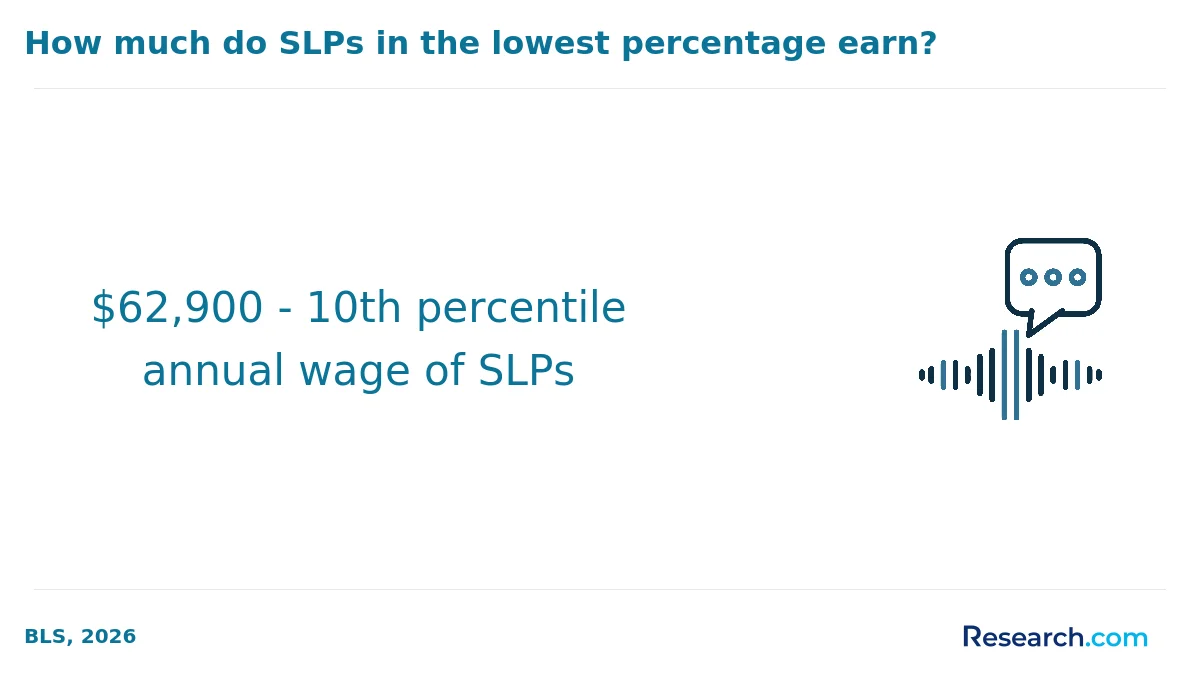
The highest-paying options for speech pathology bachelor’s graduates are usually roles that combine communication-disorders knowledge with healthcare coordination, specialized support, research, technology, or supervisory responsibilities. Independent speech-language pathologist roles typically require graduate education and licensure, so bachelor’s-level salary growth often comes from experience, certifications, employer type, location, and administrative responsibility.
Research shows that bachelor's degree holders in health-related fields earn about 20% more on average than those with only an associate degree. That does not guarantee a specific salary in speech pathology, but it does suggest that the bachelor’s degree may improve access to higher-responsibility roles compared with shorter training alone.
- Speech-Language Pathology Assistant: This can be one of the more directly related bachelor’s-level roles, particularly in states or settings where assistants are formally credentialed. Pay may improve with experience, specialized populations, bilingual ability, and consistent work under licensed supervision.
- Rehabilitation Aide: Rehabilitation aides may earn more as they gain experience in hospitals, outpatient clinics, or specialized rehabilitation settings. The role is often a starting point rather than a long-term ceiling, so graduates should look for employers with advancement pathways.
- Special Education Teacher Aide: In school systems, speech pathology graduates may support students with communication, developmental, or learning needs. Compensation can vary widely by district, contract structure, and whether the role is full-time, paraprofessional, or instructional support.
- Healthcare Case Manager: Case management and care coordination roles may offer stronger earning potential when they involve complex scheduling, documentation, compliance, insurance coordination, or interdisciplinary teamwork. Some roles may require additional experience or credentials.
- Research Assistant in Communication Sciences: Research roles may be a good fit for graduates considering graduate school or academic careers. Pay depends on the institution, funding source, project complexity, and required technical skills such as data management or participant assessment support.
To improve earning potential, graduates should look beyond job titles and evaluate whether a role offers supervised clinical exposure, certification eligibility, full-time benefits, tuition support, promotion tracks, or experience that strengthens future graduate school applications.
What Career Growth Opportunities Are Available With a Speech Pathology Bachelor's Degree?
A speech pathology bachelor’s degree can support long-term growth, but the path depends on whether you want to stay close to clinical speech-language services or move into a related field. Without a master’s degree and required licensure, advancement in direct clinical practice is limited. However, graduates can still grow into stronger support, coordination, training, administrative, research, technology, or program roles.
Common growth paths include:
- Assistant to senior assistant or lead support role: Experienced graduates may train new staff, manage therapy materials, support scheduling systems, or help standardize documentation workflows.
- Clinical support to care coordination: Graduates who understand patient or student needs may move into intake, referral management, family support, insurance coordination, or service navigation.
- Education support to special education leadership: School-based graduates may move into paraprofessional leadership, student services, disability support, or education administration with additional credentials.
- Research assistant to project coordination: Graduates in research settings may advance by learning data management, participant recruitment, compliance procedures, and project operations.
- Bachelor’s-level work to graduate preparation: Many graduates use early jobs to confirm whether they want to pursue a master’s degree in speech-language pathology or a related field.
A professional with a speech pathology bachelor’s degree described advancement as a shift from direct support tasks to broader responsibility: “Shifting from direct therapy to a supervisory role required me to develop new skills in team coordination and conflict resolution.” He called it a “steep learning curve” because he had to balance clinical knowledge with administrative work, but he also said the transition expanded his impact beyond one client at a time.
The best growth strategy is to choose roles that build evidence of responsibility. Keep track of measurable accomplishments such as caseload support, training duties, documentation improvements, family communication, research tasks, or program coordination. Those details can matter when applying for promotions or graduate programs.
What Jobs Require Certifications After a Speech Pathology Bachelor's Degree?
Some jobs available after a speech pathology bachelor’s degree require certification, registration, or state authorization. Requirements vary widely, so graduates should check state rules and employer postings before assuming they qualify. Certification can improve credibility, but it does not replace licensure for roles that legally require a licensed speech-language pathologist.
Speech-Language Pathology Assistant: SLPA roles commonly require state credentialing, registration, or certification, and some employers may prefer candidates familiar with American Speech-Language-Hearing Association (ASHA) standards. Graduates should note that the Certificate of Clinical Competence in Speech-Language Pathology (CCC-SLP) is not a typical bachelor’s-level credential; it is associated with the professional speech-language pathologist pathway and requires advanced preparation beyond the bachelor’s level.
Rehabilitation Technician: Rehabilitation technician roles may prefer or require credentials that show readiness for clinical support work. Certifications such as the Certified Rehabilitation Therapy Specialist (CRTS) credential may help demonstrate knowledge of rehabilitation settings, depending on employer expectations.
Early Intervention Specialist: Early intervention roles often involve infants and toddlers with developmental delays. Employers may require a Developmental Specialist Credential or state-specific early intervention certification. A speech pathology background can be useful, but graduates may still need training in family-centered services, child development, and state early intervention procedures.
Augmentative and Alternative Communication (AAC) Technician: AAC-related roles support people who use communication devices or software. Employers may value technology-focused credentials such as the Assistive Technology Professional (ATP) from RESNA, especially for positions involving device setup, user training, or accessibility support.
Certification choices should match the job you want. Before paying for a credential, review postings in your state and confirm whether the certification is required, preferred, or only loosely related. Graduates considering management or business-oriented paths can also compare options such as affordable online MBA programs no GMAT if their goals extend beyond direct speech pathology support.
What Jobs Require a Master's After a Speech Pathology Bachelor's Degree?
A master’s degree is required for many of the roles people most commonly associate with speech pathology, especially positions involving independent evaluation, diagnosis, treatment planning, and clinical practice. Nationally, about 70% of speech pathology-related careers demand graduate education for certification and practice. In most cases, a bachelor’s degree is the foundation, not the endpoint, for becoming a licensed speech-language pathologist.
- Speech-Language Pathologist: Speech-language pathologists evaluate, diagnose, and treat speech, language, communication, cognitive-communication, voice, fluency, and swallowing disorders. A master’s degree is essential for state licensure and prepares students for supervised clinical practice.
- Clinical Specialist: Clinical specialists in hospitals, rehabilitation centers, or specialty clinics often work with complex neurological, developmental, medical, or swallowing-related cases. These roles require deeper clinical training than a bachelor’s program provides.
- School Speech Therapist: Most public school systems require a master’s degree and state licensure for professionals who provide speech-language services, develop individualized education plans, and collaborate with teachers and families. Bachelor’s-level graduates may support school services, but advanced roles generally require graduate education.
- Research Analyst in Speech Pathology: Some research roles require graduate-level methods, clinical knowledge, and specialized subject expertise. A master’s degree can prepare graduates to contribute to evidence-based practice, intervention research, and advanced analysis.
- Voice Therapist: Voice therapy roles often involve professional voice users and patients with voice disorders. The work requires advanced study in anatomy, physiology, assessment, and therapy techniques.
If your goal is to become a licensed speech-language pathologist, compare admission requirements early, including prerequisites, clinical observation expectations, GPA policies, and accreditation status. Students who need flexible graduate options can research slp programs online while also confirming that any program they consider supports licensure preparation in their intended state. Applicants with nontraditional academic records may also look into online colleges that accept low GPA as they plan possible pathways toward advanced study.
What Is the Job Outlook for Speech Pathology Careers?
The job outlook for speech pathology careers is strong. Employment is expected to increase about 17% between 2025 and 2035, according to the U.S. Bureau of Labor Statistics. That growth is faster than the average for most occupations and reflects demand in healthcare, schools, rehabilitation, early intervention, and telepractice-related services.
Several factors support demand. An aging population can increase the need for services related to stroke, neurological conditions, swallowing disorders, and cognitive-communication challenges. Schools continue to need professionals who can support children with speech and language impairments. Telepractice has also expanded access to services, especially for clients in areas where providers are harder to reach.
Even with a strong outlook, job availability varies by location, employer type, funding, credential requirements, and state regulations. Healthcare employers may recruit consistently because of patient needs, while school-based hiring can be affected by budgets and staffing policies. Rural and underserved areas may have different needs from large urban markets.
For bachelor’s degree holders, the outlook is best understood in two layers. The broader profession is growing, but the highest-authority clinical roles generally require a master’s degree and licensure. Bachelor’s graduates can still benefit from field growth by pursuing assistant, aide, coordinator, research, technology, and education-support roles that connect to speech-language services.
What Graduates Say About the Jobs You Can Get With a Speech Pathology Bachelor's Degree
- : "Choosing a speech pathology major was driven by my passion for helping individuals overcome communication barriers. With a bachelor's degree, I discovered a range of job opportunities, from rehabilitation centers to educational settings. This degree laid a strong foundation for my career and opened doors to meaningful work in diverse clinical environments. — Stephanie"
- : "The speech pathology bachelor's program sharpened my understanding of language disorders and gave me practical skills I could discuss with employers. Finding the first job was challenging, but internships and university networking helped me connect with roles in schools and outpatient clinics. The degree shaped both my professional direction and my personal growth. — Alexis"
- : "As a speech pathology graduate, I value how the degree balanced theory with hands-on experience. It prepared me for roles such as therapy assistant positions and early intervention support. The communication and collaboration skills I gained helped me advocate for clients and work effectively with healthcare teams. — Eli"
Other Things You Should Know About Speech Pathology Degrees
Strong communication skills, patience, and empathy are crucial for jobs related to speech pathology. Additionally, a solid foundation in anatomy, linguistics, and psychology helps in understanding speech and language disorders. Analytical skills and attention to detail are also important when assessing client needs and developing intervention plans.
Direct clinical roles as a certified speech-language pathologist typically require a master's degree and appropriate certification. However, graduates with a bachelor's degree can work in supportive roles, such as speech pathology assistants or aides, where they assist licensed professionals in therapy sessions and administrative tasks.
Yes, volunteer and internship opportunities are common and highly recommended for gaining practical experience. Many healthcare facilities, schools, and community centers offer positions that help build hands-on skills and enhance résumés for future advanced study or employment in speech pathology.
After earning a bachelor's degree in speech pathology, consider pursuing a master's degree in speech-language pathology or communicative disorders. This advanced education is often required for certification and licensure, allowing you to practice as a speech-language pathologist.
References
- U.S. Bureau of Labor Statistics - Speech-Language Pathologists https://www.bls.gov/ooh/healthcare/speech-language-pathologists.htm
- ASHA EdFind - Accredited Speech-Language Pathology Programs https://find.asha.org/ed/
- O*NET OnLine - Speech-Language Pathologists https://www.onetonline.org/link/summary/29-1127.00
- James Madison University - Master of Science (M.S.) in Speech-Language Pathology (Distance Education / Online) https://www.jmu.edu/chbs/csd/online_ms/index.shtml
- California State University-San Marcos - Online MS in Speech-Language Pathology https://www.csusm.edu/slp/programs/mastersonline/index.html
- Idaho State University - Master of Science in Speech-Language Pathology (Online/Distance Education) https://www.isu.edu/slp/programs-offered/slp-graduate-program/
- University of North Carolina at Greensboro - Speech-Language Pathology, M.A. (Online) https://csd.uncg.edu/graduate/masters-of-arts-online/
- California State University-East Bay - Online Master of Science in Speech-Language Pathology https://ce.csueastbay.edu/programs/speech-language-pathology/


