
2027 Construction Superintendent Careers: Skills, Education, Salary & Job Outlook

Co-Founder and Chief Data Scientist
Becoming a construction superintendent is a practical leadership path for people who want to run job sites, coordinate trades, solve problems in real time, and take responsibility for getting buildings and infrastructure finished safely. The role is not usually an instant promotion; most superintendents build credibility through field experience, technical knowledge, safety awareness, and the ability to lead crews under pressure.
The payoff can be meaningful. National salaries range from $51,620 for entry-level roles to over $118,000 for senior superintendents, and experienced professionals who manage larger or more complex projects can build strong long-term earning power. This guide explains what construction superintendents do, the skills and credentials that matter, what the work environment is really like, and how to decide whether this career path fits your goals.
Key Things You Should Know About Construction Superintendent Career
- The typical earning potential for a construction superintendent ranges from about $77,480 to $85,218 annually, with entry-level positions starting near $51,620 and experienced professionals making up to $134,830.
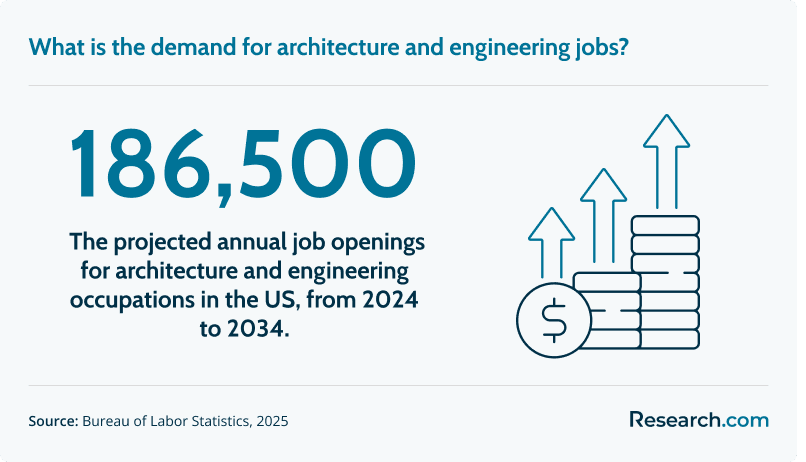
- This field is expected to grow steadily over the next decade due to ongoing demand for new construction and infrastructure projects, though growth can vary by region and sector.
- A high school diploma or equivalent is usually the minimum requirement, but many employers prefer candidates with an associate or bachelor's degree in construction management, engineering, or related fields.
- Strong leadership, project management, communication, time management, problem-solving skills, and technical knowledge of construction methods and safety regulations are essential to succeed.
- Career progression often moves from assistant superintendent to construction superintendent, then to senior superintendent, project manager, or construction manager, with opportunities to advance to executive roles or start a construction firm.
What do Construction Superintendents do?
Construction superintendents manage the day-to-day work on active construction sites. They make sure crews, subcontractors, materials, equipment, schedules, safety rules, and quality standards come together so the project can move from plans to finished structure.
While project managers often focus more on budgets, contracts, client communication, and office-based coordination, superintendents are the field leaders. They are usually the person on site making immediate decisions when weather, labor shortages, design questions, delivery delays, or safety issues threaten the schedule.
A day in the life of Construction Superintendents
A typical day often starts before crews arrive. The superintendent reviews the schedule, checks site conditions, confirms deliveries, walks the jobsite, and identifies problems that could slow the day’s work. From there, the day may include coordinating subcontractors, answering questions from foremen, meeting with inspectors, checking work quality, documenting progress, and communicating updates to the project manager or owner’s representative.
The work is fast-moving and rarely predictable. A superintendent may spend one hour reviewing drawings and the next resolving a conflict between trades, handling a safety concern, or adjusting the sequence of work because a material shipment arrived late. The best superintendents keep the project moving without ignoring safety, workmanship, or documentation.
What are the key responsibilities of Construction Superintendents?
Construction superintendents are responsible for field execution. Their job is to turn the project plan into daily action while protecting safety, quality, cost control, and schedule performance.
- Open and assess the jobsite: Inspect site conditions early, identify hazards, confirm readiness for the day’s work, and address urgent subcontractor or vendor needs.
- Coordinate daily schedules: Sequence trades, assign priorities, and adjust work plans when delays or conflicts appear.
- Manage crews and subcontractors: Keep workers aligned on expectations, site rules, productivity goals, and project milestones.
- Enforce safety requirements: Conduct site checks, support safety briefings, document issues, and make sure work follows required standards.
- Monitor quality: Compare completed work with drawings, specifications, codes, and owner expectations before small errors become expensive rework.
- Communicate between field and office: Relay progress, risks, requests for information, schedule impacts, and field decisions to project managers and stakeholders.
- Maintain daily documentation: Record labor activity, weather, deliveries, site visitors, inspections, delays, incidents, and completed work.
- Oversee materials and equipment: Confirm that tools, machinery, supplies, and critical materials arrive when needed and are used efficiently.
The most challenging vs. the most rewarding tasks
The most difficult part of the job is balancing competing pressures. Superintendents must keep the schedule moving while responding to weather delays, labor gaps, inspection issues, supply shortages, design conflicts, and disagreements between trades. The role requires quick decisions, but those decisions still need to be safe, documented, and defensible.
The most rewarding part is seeing a complex project come together because the field team executed well. A superintendent can point to a finished school, hospital, office building, bridge, or housing development and know their leadership helped make it safe, functional, and lasting. For working adults who want to strengthen their management foundation while staying employed, an accelerated online degree for working adults may be one way to build relevant knowledge more efficiently.
What are the key skills for Construction Superintendents?
Construction superintendents need a mix of technical construction knowledge, field judgment, leadership, and communication. Technical skills help them understand the work; soft skills help them get the work done through people.
Key hard skills
- Construction project management software: Superintendents often use tools such as Procore or Primavera P6 to track schedules, document progress, manage drawings, coordinate tasks, and communicate updates.
- Blueprint and construction plan interpretation: Reading drawings, specifications, and details is essential for verifying that crews are building what was designed.
- OSHA and safety regulation knowledge: Superintendents must recognize hazards, enforce safety plans, support training, and help prevent incidents on site.
- Scheduling and resource allocation: The job requires sequencing trades, planning labor needs, anticipating bottlenecks, and adjusting schedules when conditions change.
- Quality control: Strong superintendents know how to inspect work, identify defects early, and prevent rework that can damage budgets and timelines.
- Construction methods and materials: Field leaders need practical knowledge of how different trades work, how materials perform, and how one phase affects the next.
Key soft skills
- Leadership: Superintendents set the tone for the jobsite. Crews look to them for priorities, accountability, and calm decision-making.
- Communication: The role requires clear direction to subcontractors, accurate updates to project managers, and professional communication with owners, inspectors, and vendors.
- Problem-solving: Jobsite conditions change constantly. Superintendents must evaluate options quickly and choose practical solutions.
- Time management: Daily priorities compete for attention, so organization is critical.
- Attention to detail: Small mistakes in layout, sequencing, safety, or documentation can create major cost and schedule problems.
- Accountability: Superintendents must be willing to own decisions, correct issues, and follow through.
The overlooked skill that separates good from great
Conflict resolution is one of the most valuable superintendent skills because construction sites bring together many parties with different priorities. Subcontractors may compete for workspace, deliveries may arrive out of sequence, and design questions may stop a crew from proceeding. A superintendent who can de-escalate disputes, clarify responsibilities, and negotiate workable solutions can protect both productivity and morale.
This skill directly affects profitability. A disagreement that stops work for a day can ripple through the entire schedule. A superintendent who resolves the issue in hours instead of days can prevent costly delays and preserve trust across the project team.
Professionals who combine conflict management with strong technical, safety, scheduling, and leadership skills are better positioned for larger projects and higher-responsibility roles. If you want a faster way to strengthen specific competencies, exploring fast certifications that pay well can help you compare options that may fit your career stage.
Construction Superintendent Careers: A Step-by-Step Guide to Getting Started
The path to becoming a construction superintendent usually builds in stages. Employers want evidence that you understand field operations, can lead people, and can make sound decisions when work is under pressure.
- Build a construction foundation: Start with education or training in construction management, construction science, engineering, architecture, trades, or a related field. The goal is to understand drawings, materials, methods, safety, and project delivery.
- Gain hands-on field experience: Entry-level field roles help you learn how sites actually operate. Experience as a laborer, craft worker, assistant, field engineer, or coordinator can build credibility with crews.
- Move into crew or trade supervision: Roles such as foreman, lead hand, assistant superintendent, or field supervisor teach you how to coordinate people, sequence tasks, document progress, and manage daily issues.
- Develop jobsite leadership habits: Learn to run meetings, document decisions, communicate with subcontractors, enforce safety expectations, and identify schedule risks before they become crises.
- Earn relevant credentials: Certifications can strengthen your profile, especially when paired with field experience. Choose credentials that align with the type of construction you want to manage.
- Advance into superintendent roles: Use your experience to manage smaller scopes first, then progress to full-site leadership, larger projects, or specialized sectors.
- Keep building expertise: Construction methods, software, safety expectations, and project delivery models continue to change. Strong superintendents keep learning throughout their careers.
The biggest mistake is trying to skip the field-learning stage. A superintendent needs respect from crews, and that respect usually comes from practical knowledge, consistency, and sound judgment under real jobsite conditions.
What education, training, or certifications are required?
There is no single education path for every construction superintendent, but many employers prefer candidates with formal training plus substantial field experience. Common academic options include a Bachelor of Science in Construction Management, Construction Science, Architecture, or Engineering. For a more career-focused starting point, an Associate of Applied Science (A.A.S.) in Construction Superintendency can also provide practical preparation.
Field experience remains essential. Many superintendents spend months or years developing through roles such as assistant superintendent, foreman, field engineer, or other site-based positions before managing projects independently. Classroom knowledge helps, but the role depends heavily on judgment built through real jobsite exposure.
Common credentials to consider
- Certified Construction Manager (CCM): Offered by the Construction Management Association of America, this credential can support candidates who want to demonstrate professional construction management knowledge.
- Associate Constructor (AC): Issued by the American Institute of Constructors, this credential can be useful for early-career professionals building formal validation.
- Certified Professional Constructor (CPC): This more advanced credential can support experienced professionals seeking stronger recognition in construction leadership.
Are advanced degrees or niche certifications worth the investment?
Advanced credentials such as a Master of Science in Construction Management or the Certified Professional Constructor (CPC) may be valuable for professionals targeting complex projects, larger firms, government work, executive leadership, or specialized construction sectors. They can signal commitment and may strengthen a candidate’s competitiveness for certain employers.
However, additional education is not automatically the best return for every superintendent. Tuition, study time, exam fees, and renewal requirements can be significant. In many superintendent roles, employers place equal or greater weight on field performance, leadership record, safety results, and the ability to deliver projects. If you are considering graduate study, reviewing the highest paying master degrees can help you think more strategically about potential return on investment.
A practical approach is to choose credentials based on your target role. If you want to move from assistant superintendent to superintendent, a respected certification and stronger field documentation may matter most. If you want regional leadership, executive construction management, or specialized technical oversight, advanced education may be more useful.
What is the earning potential for Construction Superintendents?
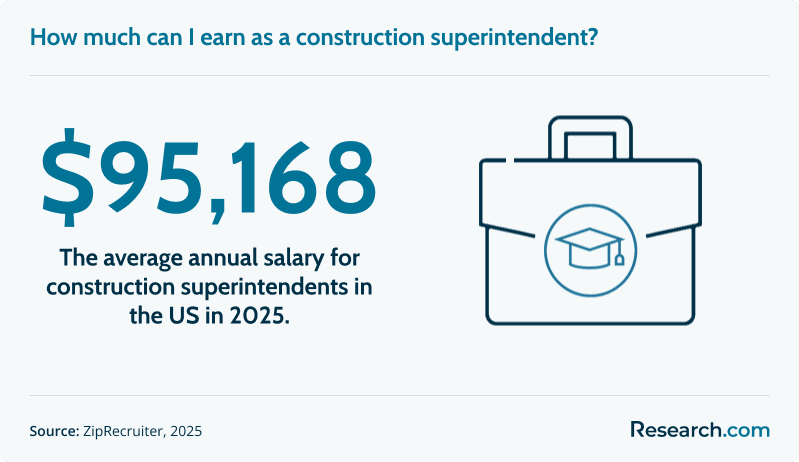
The construction superintendent salary range 2025 shows solid earning potential for professionals who build experience and take on larger responsibilities. The median annual salary for construction superintendents stands at $95,168. Entry-level professionals can expect to start at about $54,063, while highly experienced senior superintendents may earn up to $125,000 per year.
Pay usually rises as superintendents move from supporting field operations to independently managing full job sites, larger crews, tighter schedules, and more complex projects. Senior superintendents are often compensated for their ability to prevent delays, coordinate multiple trades, maintain safety, and protect project quality.
What affects superintendent pay?
- Experience level: Superintendents with a record of successful project delivery generally have stronger negotiating power.
- Project size and complexity: Large commercial, infrastructure, industrial, healthcare, high-rise, or data center projects may require deeper expertise than small residential work.
- Location: Metropolitan areas and regions with strong construction activity often offer higher pay, though cost of living can also be higher.
- Industry segment: Commercial, residential, civil, industrial, and specialty construction can differ in compensation expectations.
- Certifications and software skills: Credentials and proficiency with scheduling, documentation, and project management platforms can support advancement, especially with larger firms.
- Leadership reputation: Employers value superintendents who can keep work safe, organized, documented, and on schedule.
When comparing offers, look beyond base salary. Vehicle allowances, bonuses, per diem, relocation support, overtime expectations, health benefits, retirement plans, and travel requirements can significantly affect the overall value of a role.
What is the job outlook for Construction Superintendents?
The job outlook for construction superintendent roles is strong, with a projected growth rate of 9% from 2024 to 2034. This is much faster than the average for all occupations. Demand is supported by ongoing construction activity, infrastructure needs, and the continuing need for experienced leaders who can manage complex job sites.
The key factors shaping the future outlook
- Skilled labor shortages: When qualified tradespeople are difficult to find, strong field coordination becomes even more important. Superintendents who can plan labor efficiently and reduce rework are valuable.
- Infrastructure investment: Public and private construction activity creates demand for professionals who can manage schedules, safety, inspections, and stakeholder coordination.
- Technology adoption: Building information modeling, mobile documentation tools, AI-supported scheduling, drones, and project management platforms are changing how sites are managed. Superintendents who can use these tools without losing field awareness will be better positioned.
- Higher safety and compliance expectations: Owners and contractors increasingly expect strong documentation, proactive hazard control, and consistent jobsite standards.
- Replacement demand: As experienced construction leaders retire or move into higher management, employers need capable field supervisors ready to step up.
The role is likely to remain important because construction still depends on real-time field judgment. Technology can improve coordination and visibility, but it does not replace the superintendent’s responsibility to lead people, interpret conditions, and make practical decisions on site. If you are exploring education options to prepare for this field, the top online accredited colleges with waived application fee can be a useful starting point for comparing accessible programs.
What is the typical work environment for Construction Superintendents?
Construction superintendents work primarily on active job sites rather than in traditional offices. Their environment may include outdoor work areas, partially completed structures, temporary on-site office trailers, equipment zones, staging areas, and spaces shared by multiple subcontractors. Common industries include nonresidential building construction (19%), residential building construction (18%), and specialty trade contractors (15%).
The schedule can be demanding. Full-time hours frequently exceed 40 per week, with days beginning as early as 7:00 a.m. and sometimes extending past 7:00 p.m. Evening or weekend work may be required when deadlines, inspections, concrete pours, weather windows, deliveries, or client needs demand it.
Remote or hybrid work is generally limited because the superintendent’s value is tied to being present on site. They need to see conditions firsthand, respond quickly to field issues, verify work quality, coordinate crews, and maintain safety visibility. Some reporting, scheduling, and documentation tasks may be done digitally, but the core role remains hands-on.
What to expect day to day
- Frequent walking, standing, climbing, and movement across the site
- Exposure to weather, noise, dust, equipment, and changing site conditions
- Regular interaction with subcontractors, inspectors, project managers, owners, and vendors
- High accountability for safety, schedule, and quality
- Constant prioritization as new problems arise throughout the day
This work environment suits people who prefer active, practical, people-centered work over desk-bound routines. It may not suit those who need predictable hours, low-stress conditions, or fully remote flexibility.
What are the pros and cons of Construction Superintendent careers?
A construction superintendent career can be rewarding, but it is not an easy path. The role offers visible impact, leadership responsibility, and strong earning potential, while also requiring long hours, pressure, and constant problem-solving.
Pros
- Tangible results: You can see the buildings, facilities, and infrastructure your leadership helped create.
- Strong responsibility: Superintendents are trusted with important decisions that shape project outcomes.
- Daily variety: Each jobsite, crew, schedule, and project phase brings different challenges.
- Leadership growth: The role builds communication, negotiation, planning, and team management skills.
- Meaningful earning potential: Experienced superintendents can earn competitive salaries, especially on larger or more specialized projects.
- Career mobility: Field leadership experience can lead to senior superintendent, general superintendent, project management, or construction executive roles.
Cons
- Long and irregular hours: Superintendents are often among the first to arrive and last to leave.
- High stress: Schedule delays, safety issues, labor conflicts, weather, inspections, and client expectations can converge quickly.
- Physical demands: The job requires regular site presence, walking, standing, and exposure to active construction conditions.
- Limited remote flexibility: Most core responsibilities must be handled on site.
- Accountability for problems: Even when delays are outside their control, superintendents are expected to help solve them.
- Conflict management: Disputes between trades, suppliers, designers, or clients can become part of the daily workload.
This career is a strong fit for people who like responsibility, field leadership, practical problem-solving, and visible outcomes. It is a weaker fit for people who prefer predictable schedules, low-pressure environments, or mostly independent desk work. If you are comparing credential-driven career options, reviewing roles tied to the highest paying certifications can help you weigh different paths.
What are the opportunities for advancement for Construction Superintendents?
Construction superintendent careers offer several advancement routes. Some professionals move upward into larger field leadership roles, while others specialize in complex project types or transition into project management and operations leadership.
Advancement paths
- Assistant Superintendent: Supports the superintendent with field coordination, schedules, site documentation, subcontractor communication, and quality checks.
- Superintendent: Leads daily jobsite operations, coordinates trades, manages site safety and quality, and keeps work aligned with the project schedule.
- Lead Superintendent: Manages larger projects, more complex scopes, or major phases requiring advanced coordination and leadership.
- General Superintendent: Oversees multiple projects or multiple superintendents, often focusing on field standards, staffing, schedules, safety culture, and operational consistency.
- Construction Operations Leadership: Experienced superintendents may move into field operations, director-level construction roles, or executive positions depending on company structure.
Specialization opportunities
- Healthcare/Hospital Construction: Requires attention to infection control, critical systems, patient safety, phasing, and strict regulatory expectations.
- High-Rise/Vertical Construction: Involves tower cranes, complex sequencing, vertical logistics, structural coordination, and dense urban jobsite constraints.
- Industrial/Data Center Construction: Requires precision in mechanical, electrical, power, cooling, and commissioning coordination.
- Infrastructure/Civil Construction: Includes bridges, highways, utilities, and public works projects with complex permitting, inspections, and stakeholder coordination.
- Residential or Multifamily Construction: Emphasizes production efficiency, quality consistency, trade sequencing, and customer or owner expectations.
To advance, superintendents should document project outcomes, build a safety record, learn scheduling and construction software, strengthen cost awareness, and develop a reputation for reliable communication. Promotions are more likely when employers can see that a superintendent can handle greater complexity without sacrificing safety or quality.
What other careers should you consider?
If you are interested in construction leadership but unsure whether superintendent work is the right fit, several related careers use similar knowledge in different ways. Comparing these options can help you choose a path that matches your strengths, preferred work setting, and long-term goals.
- Construction Project Manager: Focuses more on budgets, contracts, schedules, client communication, procurement, and overall project delivery. This may fit people who want broader business responsibility and more office-based work.
- Construction Estimator: Uses construction knowledge to calculate project costs, review drawings, price labor and materials, and support bids. This may fit detail-oriented professionals who prefer analysis over daily site leadership.
- Project Manager: Manages planning, execution, risk, communication, and delivery across construction or other industries. This path can suit people who want transferable management skills.
- Foreman: Directly supervises crews and hands-on trade work. This can be a strong step toward superintendent roles or a long-term fit for people who prefer closer involvement with craft labor.
- Construction Inspector: Reviews work for compliance with codes, plans, and quality standards. This may appeal to professionals who value precision, documentation, and regulatory oversight.
The best choice depends on what kind of responsibility you want. If you enjoy being on site, leading crews, and solving immediate field problems, superintendent work may be the strongest match. If you prefer budgeting, planning, estimating, compliance, or client management, a related construction career may fit better.
Here's What Professionals Say About Their Construction Superintendent Careers
- : "Every project I oversee reminds me why this role matters so much—like when I managed the build of a new community hospital last year. Knowing that my daily decisions impact a facility where lives will be saved is something I carry with me every day. It is not just about schedules or budgets; it is about creating a space that supports people’s well-being. That connection to the community gives my work real meaning and pride. — Edelson"
- : "Unexpected delays and disputes over material deliveries can throw a whole schedule out of balance, but I have learned how vital clear communication is in those moments. Just recently, I had to mediate between subcontractors and engineers to resolve conflicts over steel shipments, which demanded patience and quick thinking. I find that being proactive and keeping all parties aligned is the key to turning setbacks into progress. These challenges teach me something new every time and keep me sharp. — Rose"
- : "There is nothing quite like walking the finished site, knowing I helped turn blueprints into a vibrant community center. The satisfaction of seeing families gather in a space I played a part in creating keeps me motivated through long days on site. That feeling of accomplishment, knowing the project is safe, sound, and serving people, makes all the detailed coordination and problem-solving worth it. — Ivy"
Key Findings
- Construction superintendents are field leaders who manage daily jobsite operations, coordinate trades, enforce safety expectations, monitor quality, and keep projects moving.
- The role usually requires a blend of construction knowledge, hands-on experience, leadership ability, scheduling skill, safety awareness, and strong communication.
- Common education paths include a Bachelor of Science in Construction Management, Construction Science, Architecture, or Engineering, as well as an Associate of Applied Science (A.A.S.) in Construction Superintendency.
- Important credentials include the Certified Construction Manager (CCM), Associate Constructor (AC), and Certified Professional Constructor (CPC), depending on career stage and goals.
- The median annual salary for construction superintendents stands at $95,168, with entry-level professionals starting at about $54,063 and highly experienced senior superintendents earning up to $125,000 per year.
- The job outlook is strong, with a projected growth rate of 9% from 2024 to 2034.
- The work is hands-on and site-based, often exceeding 40 hours per week, with days that may begin as early as 7:00 a.m. and extend past 7:00 p.m.
- This career is best suited for people who can handle pressure, lead teams, communicate clearly, solve problems quickly, and stay accountable for safety and project outcomes.
Other Things You Should Know About Construction Superintendent
In 2027, construction superintendents typically need a bachelor's degree in construction management, civil engineering, or a related field. Some positions may accept extensive experience and professional certifications in lieu of a degree.
To become a construction superintendent in 2027, certifications like OSHA safety certification and PMP or advanced project management credentials are often required. These certifications enhance leadership skills and ensure adherence to construction safety standards.
References
- Construction Manager | Alternative Jobs https://settlement.org/alternative-jobs/architect/construction-manager/
- Steps to Become a Construction Superintendent - Bridgit https://gobridgit.com/blog/achieving-your-construction-superintendent-certification/
- How Much Do Construction Superintendents Make? - Elevate Constructionist https://elevateconstructionist.com/how-much-do-construction-superintendents-make/
- How to Become a Construction Superintendent in 2025 - https://thebirmgroup.com/how-to-become-a-superintendent-of-construction/
- Top Soft Skills for Construction Success | CIC Group https://cicconstruction.com/blog/the-top-soft-skills-that-lead-to-success-in-the-construction-industry/
- The Ultimate Construction Superintendent Career Guide https://www.4cornerresources.com/career-guides/construction-superintendent/
- Construction Superintendent Interview Questions https://www.talentlyft.com/template/construction-superintendent-interview-questions
- Superintendent Jobs: How To Advance Your Construction Career https://www.webuildstaffing.com/superintendent-jobs-how-superintendents-can-advance-their-construction-careers/
- Construction Superintendent Careers: Job Description & Salary Info https://learningpath.org/articles/Construction_Superintendent_Career_Overview.html
- Construction Superintendent Certification Program Details https://www.nccer.org/programs-crafts/programs/construction-superintendent-certification/construction-superintendent-certification-program-details/


