
2027 Forensic Toxicologist Careers: Skills, Education, Salary & Job Outlook

Co-Founder and Chief Data Scientist
Choosing a forensic toxicologist career means deciding whether you want a science-heavy role where laboratory accuracy can affect investigations, court cases, public safety, and families seeking answers. The work is not a general “crime lab” job. It is a specialized career built around chemistry, biology, toxicology, analytical instruments, evidence handling, and clear reporting under legal scrutiny.
This path is best for people who enjoy precise laboratory work, can stay objective in sensitive cases, and are willing to build strong credentials over time. Education matters, but so do supervised lab experience, documentation habits, communication skills, and the ability to explain technical results to non-scientists.
The field can be competitive, yet it offers a clear professional track. With an 11% growth projected for forensic science roles and median salaries ranging from $67,000 to over $81,000, forensic toxicology can provide both stability and meaningful work for candidates who prepare carefully. This guide explains what forensic toxicologists do, what training is typically expected, how salaries and advancement work, and how to decide whether this career fits your strengths.
Key Things You Should Know About Forensic Toxicologist Career
- Forensic toxicologists need strong analytical, critical thinking, and communication skills to accurately detect and interpret toxins or drugs in biological samples.
- A bachelor’s degree in chemistry, biology, or toxicology is required, with advanced degrees and ABFT certification enhancing career prospects.
- Forensic toxicologists earn an average of $60,000–$90,000 annually, with higher pay for experienced or specialized professionals.
What do Forensic Toxicologists do?
Forensic toxicologists analyze biological samples to determine whether drugs, alcohol, poisons, chemicals, or other substances were present and whether those substances may have contributed to impairment, injury, illness, or death. Their findings can support criminal investigations, workplace or postmortem cases, impaired-driving matters, medical examiner reports, and court proceedings.
The job is not simply “running tests.” A forensic toxicologist must choose appropriate analytical methods, verify results, interpret concentrations in context, document each step, and communicate conclusions in a way that can withstand scientific and legal review. The same result may have different meaning depending on the sample type, timing, dosage, metabolism, medical history, and case facts.
A Day in the Life of Forensic Toxicologists
A typical day may include reviewing case information, checking chain-of-custody documentation, preparing blood, urine, tissue, or other biological samples, operating instruments, evaluating quality-control data, interpreting results, and writing reports. Some days are highly routine; others require complex troubleshooting or interpretation of unusual substances.
Most work takes place in controlled laboratory settings, but the role also involves communication with medical examiners, law enforcement, attorneys, supervisors, and other forensic scientists. In more experienced positions, forensic toxicologists may testify in court, defend their methods, explain toxicology limits, and answer questions from attorneys who may challenge their conclusions.
What are the key responsibilities of Forensic Toxicologists?
The central responsibility of a forensic toxicologist is to produce scientifically reliable toxicology findings that can be used in legal, medical, or investigative decisions. That requires technical competence, strict documentation, impartial interpretation, and careful communication.
- Receive, label, store, and document biological samples while maintaining a defensible chain of custody.
- Prepare samples such as blood, urine, tissue, vitreous fluid, or other matrices for analysis.
- Use analytical instruments to detect, confirm, and quantify drugs, alcohol, poisons, and other chemical substances.
- Review quality-control data to confirm that testing methods performed as expected.
- Interpret results in relation to toxic, therapeutic, or impairing ranges when appropriate.
- Prepare reports that clearly state methods, findings, limitations, and conclusions.
- Communicate with investigators, medical examiners, attorneys, laboratory staff, and agency partners.
- Testify as an expert witness when required, explaining technical findings in plain language.
- Assist with method development, validation, audits, accreditation requirements, and staff training.
The Most Challenging vs. The Most Rewarding Tasks
The most challenging part of the work is the combination of precision and pressure. Toxicology results may influence charges, convictions, death investigations, insurance matters, custody decisions, or public health concerns. A small documentation error, an unsupported interpretation, or a poorly explained limitation can weaken the value of the evidence.
The most rewarding part is the direct usefulness of the work. Forensic toxicologists help clarify what happened in cases where uncertainty can be painful, consequential, or contested. They may help identify a cause of death, support an impaired-driving case, detect a poisoning, or provide evidence that helps protect the innocent.
Short credentials can sometimes help strengthen a broader science background, especially for laboratory support roles or career changers. Readers comparing fast training options can review the best 6 month online course with high salary, but forensic toxicologist roles usually require more than a short certificate alone.
What are the key skills for Forensic Toxicologists?
Forensic toxicologists need a mix of laboratory science, data interpretation, documentation discipline, and communication skills. Employers generally look for candidates who can produce accurate results, follow validated procedures, recognize analytical problems, and explain conclusions without overstating what the science can prove.
Hard Skills
- Analytical chemistry: Understanding qualitative and quantitative analysis, calibration, controls, validation, and method limitations.
- Chromatography and spectrometry: Operating and interpreting data from instruments such as gas chromatographs and mass spectrometers.
- Toxicology principles: Understanding dose, exposure, metabolism, impairment, postmortem redistribution, and toxic versus therapeutic concentrations.
- Sample preparation: Handling biological samples safely and preparing them consistently for reliable testing.
- Quality assurance: Following standard operating procedures, reviewing controls, documenting deviations, and supporting audit readiness.
- Data interpretation and statistical analysis: Evaluating whether results are valid, meaningful, and appropriately reported.
- Laboratory Information Management Systems (LIMS): Managing case data, workflows, reporting, and documentation within laboratory systems.
Soft Skills
- Attention to detail: Maintaining accuracy in sample handling, instrument work, calculations, and reports.
- Critical thinking: Connecting analytical results to case context while avoiding unsupported assumptions.
- Problem solving: Troubleshooting unexpected findings, instrument issues, contamination concerns, or unusual substances.
- Written communication: Producing reports that are clear, complete, and defensible.
- Oral communication: Explaining scientific evidence to attorneys, investigators, judges, and juries.
- Professional objectivity: Remaining neutral even when case facts are emotionally difficult or legally contentious.
The One Overlooked Skill That Separates the Good from the Great
Courtroom communication is often the skill that separates competent forensic toxicologists from highly trusted ones. A toxicologist may have excellent technical results, but those results must still be explained accurately to people who do not have advanced science training.
Strong expert witnesses avoid jargon, acknowledge limitations, answer only what the data support, and remain composed under cross-examination. That balance of clarity and restraint can protect the credibility of the laboratory and the usefulness of the evidence.
Professionals who continue learning across science, communication, and technology often become more adaptable. Those exploring flexible education options later in life can compare the best online college courses for seniors as one way to build or refresh relevant academic skills.
Forensic Toxicologist Careers: A Step-by-Step Guide to Getting Started
The usual starting point for a forensic toxicologist career is a bachelor’s degree in a relevant science, followed by practical laboratory experience. Because the field is specialized, students should plan early for coursework and experiences that build chemistry, biology, toxicology, analytical instrumentation, and evidence-handling skills.
- Earn a relevant bachelor’s degree. Common majors include chemistry, biochemistry, biology, forensic science, or toxicology. Prioritize programs with strong laboratory requirements.
- Build a strong science foundation. Courses in analytical chemistry, organic chemistry, biology, pharmacology, statistics, and instrumental analysis are especially useful.
- Gain hands-on laboratory experience. Look for internships, undergraduate research, crime laboratory opportunities, medical examiner office experience, or technician roles.
- Learn forensic documentation standards. Chain of custody, standard operating procedures, quality assurance, and report writing are as important as technical testing.
- Apply for entry-level laboratory roles. Many professionals begin as laboratory technicians, forensic science technicians, or toxicology analysts before moving into more independent casework.
- Consider graduate study if your goals require it. Advanced degrees can help with specialized, supervisory, research, or expert roles, but they are not always required for entry-level work.
- Pursue professional certification when eligible. Certification can strengthen credibility after you meet education and experience requirements.
- Develop a specialty over time. Areas such as postmortem toxicology, impaired driving, emerging drugs, method validation, or alternative matrices can support advancement.
The strongest candidates do not rely on a degree alone. They combine academic preparation with documented laboratory competence, quality-control awareness, and the ability to communicate clearly about scientific uncertainty.
What education, training, or certifications are required?
Forensic toxicology roles typically require at least a bachelor’s degree in a scientific discipline. Common options include a Bachelor of Science in Chemistry, Biochemistry, Forensic Science, or Toxicology. Programs accredited by the Forensic Science Education Programs Accreditation Commission (FEPAC) are highly recommended because they are designed around recognized forensic science education standards.
Course selection matters. A student with a forensic science degree but weak chemistry preparation may be less competitive for toxicology work than a chemistry or biochemistry graduate with strong instrumental analysis experience. Look for programs that include substantial laboratory coursework, analytical chemistry, organic chemistry, biology, pharmacology or toxicology, statistics, and scientific writing.
Training usually continues on the job. New hires often complete supervised casework, instrument training, laboratory-specific procedures, quality assurance instruction, and competency testing before handling work independently. Internships at crime laboratories, medical examiner offices, public health labs, or toxicology laboratories can make applications stronger.
Professional certification is also valuable. The American Board of Forensic Toxicology (ABFT) offers recognized credentials, including Diplomate or Fellow Certification and Analyst Certification. ABFT certification can enhance professional credibility, but candidates must meet specific education and professional experience requirements.
Are advanced degrees or niche certifications worth the investment?
Advanced degrees can be worth it when they match a clear career goal. A Master of Science or Ph.D. in forensic science, toxicology, chemistry, pharmacology, or a related field may help candidates qualify for more specialized work, research roles, senior technical positions, supervisory responsibilities, or expert-level testimony.
The trade-off is time and cost. Graduate school can delay full-time earnings, and not every employer requires an advanced degree for entry-level toxicology roles. Before enrolling, compare job postings in your target region, ask laboratories which credentials they prefer, and consider whether the program offers relevant lab access, research opportunities, or professional connections.
For many students, the best strategy is to start with a rigorous bachelor’s degree, gain laboratory experience, and then decide whether graduate study is necessary for the next step. If you are still comparing undergraduate options, reviewing the highest paying bachelor's degrees can help you think about long-term value while choosing a science-focused foundation.
What is the earning potential for Forensic Toxicologists?
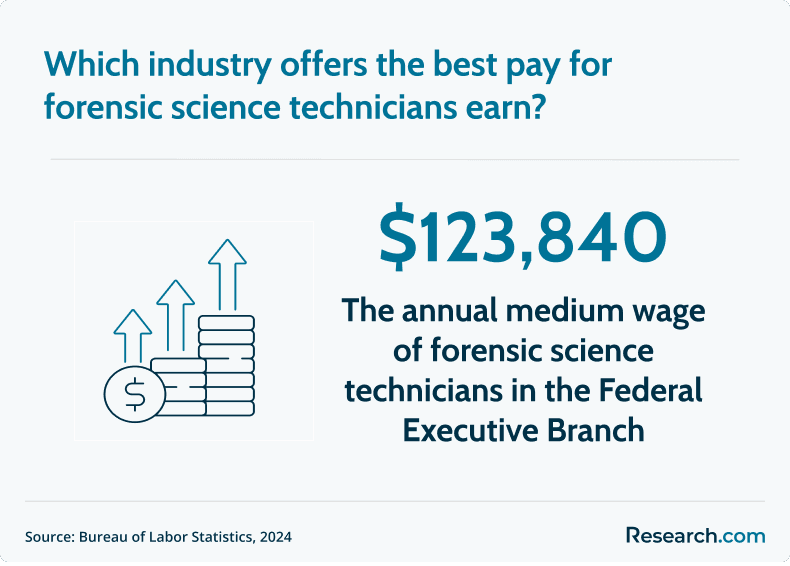
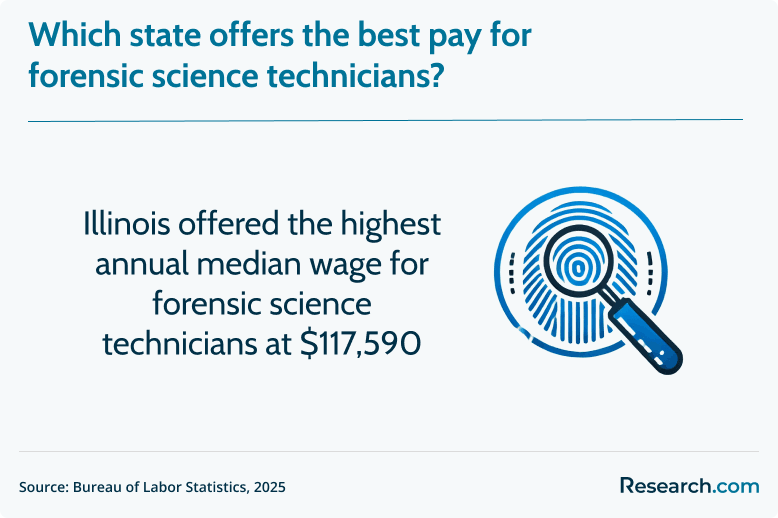
Forensic toxicologist pay varies by employer, location, education, experience, certification, and the level of responsibility attached to the role. Entry-level forensic toxicologist starting pay typically begins around $47,500 annually, especially in state or local laboratories where new professionals are building casework experience and technical independence.
The forensic toxicologist average salary 2025 is approximately $67,440, which provides a practical benchmark for professionals who have moved beyond the earliest stage of their careers. Salaries can increase as toxicologists gain experience with complex cases, method validation, expert testimony, quality assurance, supervision, or specialized testing.
Senior forensic toxicologists can earn salaries near $93,000, particularly in federal labs, major metropolitan areas, or roles requiring advanced credentials and significant professional judgment. Compensation may also be higher for positions that involve leadership, testimony, accreditation responsibilities, or high-demand analytical expertise.
When evaluating salary, look beyond the headline number. Public laboratories may offer stronger benefits and stability, while some private or specialized roles may offer different pay structures. Cost of living, overtime expectations, court obligations, and opportunities for advancement all affect the real value of a position.
What is the job outlook for Forensic Toxicologists?
The projected growth rate for forensic science technicians, including forensic toxicologists, is 13% from 2024 to 2034. That is much faster than the average for all occupations, which typically increases by about 3-5% per decade. Demand is supported by the continuing use of forensic evidence in criminal investigations, medical examiner work, impaired-driving cases, and public safety matters.
Even with strong projected growth, forensic toxicology remains a specialized field. Openings may be concentrated in government laboratories, medical examiner offices, and private forensic labs, and hiring can depend on public funding, local caseloads, retirements, and laboratory expansion. Candidates who are geographically flexible and well prepared in chemistry and instrumentation may have more options.
The Key Factors Shaping the Future Outlook
Several forces support long-term demand. Courts and investigative agencies continue to rely on toxicology results, and laboratories must keep pace with changing drug patterns, emerging substances, and more sensitive analytical techniques. As methods improve, employers need professionals who can validate procedures, interpret complex data, and explain results responsibly.
Public sector funding also matters. When crime labs and medical examiner offices receive more support, they can reduce backlogs, update instruments, and hire additional staff. When funding is limited, hiring may slow even if the need for testing remains high.
Students comparing flexible science pathways can explore programs at top accredited online universities, but they should verify that any online program provides adequate laboratory preparation or transfer options for hands-on science requirements.
What is the typical work environment for Forensic Toxicologists?
Forensic toxicologists usually work in specialized laboratories within state and local government crime laboratories, medical examiner and coroner offices, and private forensic labs. The setting is structured, procedure-driven, and quality controlled. Much of the work happens at lab benches, analytical instruments, computers, and office workstations where toxicologists review data and prepare reports.
The work environment combines independent concentration with regular collaboration. A toxicologist may spend hours preparing samples or reviewing chromatograms alone, then meet with supervisors, analysts, medical examiners, investigators, or attorneys to discuss case status and findings. Accuracy, confidentiality, and documentation are constant expectations.
Schedules are often based on standard business hours, but some roles may require evening, night, or weekend work depending on laboratory staffing, urgent cases, court schedules, or deadlines. Court appearances can disrupt normal routines. Remote work is uncommon because sample handling, instrument operation, and evidence procedures require secure laboratory access, though some report review or administrative tasks may occasionally be completed off-site when allowed by the employer.
What are the pros and cons of Forensic Toxicologist careers?
Forensic toxicology can be a strong fit for people who want meaningful scientific work and can handle the seriousness of legal and death-investigation settings. It is less ideal for those who dislike repetitive lab procedures, strict documentation, or adversarial questioning in court.
Pros
- Meaningful impact: The work can help clarify causes of death, identify impairment, detect poisoning, and support fair legal outcomes.
- Strong scientific focus: The role uses chemistry, biology, toxicology, instrumentation, and data interpretation in practical ways.
- Varied casework: Although some lab procedures are routine, case context, substances, sample types, and interpretations can vary widely.
- Public service value: Toxicology findings can contribute to public safety, medical understanding, and accountability.
- Professional growth: Experienced toxicologists can move into expert testimony, supervision, method development, quality assurance, or specialization.
Cons
- High stakes: Errors in testing, documentation, or interpretation can have serious legal and personal consequences.
- Emotional strain: Cases may involve deaths, overdoses, violence, trauma, or grieving families.
- Repetitive tasks: Sample preparation, instrument maintenance, documentation, and quality checks can become monotonous.
- Courtroom pressure: Expert testimony requires confidence, preparation, and the ability to stay composed under cross-examination.
- Limited remote flexibility: Most core duties require secure laboratory access and physical sample handling.
If the career appeals to you but you need a flexible or lower-cost path into science education, reviewing affordable online colleges for working students may help you compare options. Just confirm that any program you choose can support the laboratory training expected for forensic toxicology roles.
What are the opportunities for advancement for Forensic Toxicologists?
Advancement in forensic toxicology usually comes from a combination of experience, demonstrated accuracy, stronger interpretation skills, certification, advanced education, testimony experience, and leadership ability. The path can lead upward into supervision or deeper into technical specialization.
Advancement Path
- Entry-Level (0-3 Years): Professionals may begin as forensic toxicology technicians, laboratory analysts, or support staff. Work often includes sample preparation, routine screening, documentation, and supervised analysis.
- Mid-Level (3-7 Years): Forensic toxicologists may handle more complex cases independently, review data, support method validation, prepare reports, train newer staff, and begin providing expert testimony.
- Senior Level (7-15 Years): Senior forensic toxicologists or supervisors may oversee casework, review reports, manage quality issues, mentor staff, coordinate with agencies, testify in complex matters, and help shape laboratory policy.
Specialization Areas
- Hair Analysis: Focuses on detecting drugs and toxins through hair samples, often for longer detection windows than some traditional sample types.
- Alternative Matrices: Involves analyzing non-traditional biological samples such as saliva or sweat in forensic contexts.
- Emerging Drugs: Develops expertise in identifying and interpreting novel psychoactive substances and changing drug trends.
- Novel Analytical Techniques: Centers on developing, validating, or applying new methods and technologies in forensic toxicology.
Promotion is not based only on years worked. Laboratories tend to reward professionals who produce reliable results, document carefully, communicate well, handle pressure, and help improve laboratory operations. Building a reputation for scientific judgment is often as important as technical skill.
What other careers should you consider?
If forensic toxicology sounds interesting but not quite right, several related careers use similar strengths in science, evidence handling, analysis, and reporting. Comparing alternatives can help you choose a path that fits your preferred work setting and daily tasks.
- Forensic Scientist: Analyzes physical evidence for criminal investigations. This path may be broader than toxicology and can include trace evidence, firearms, biology, controlled substances, or other specialties.
- Crime Scene Investigator (CSI) / Forensic Investigator: Focuses more on fieldwork, evidence collection, scene documentation, photography, and coordination with law enforcement.
- Forensic Chemist: Specializes in chemical analysis of biological and non-biological evidence, including controlled substances, residues, or unknown materials.
- Digital Forensic Analyst / Computer Forensics Specialist: Recovers and analyzes digital evidence from computers, phones, networks, and storage devices while maintaining chain-of-custody procedures.
- Forensic DNA Analyst: Performs genetic analysis for criminal and identity-related cases, requiring precision with biological samples, contamination control, and statistical interpretation.
Choose forensic toxicology if you want your primary work to center on substances in biological systems. Consider another forensic path if you prefer crime scene work, digital evidence, DNA, or broader physical evidence analysis.
Here's What Professionals Say About Their Forensic Toxicologist Careers
- : "When I started, the lab work felt monotonous, especially preparing simulated gastric and intestinal fluids, but I quickly realized how crucial attention to detail was under the strict gaze of FDA inspectors. The pressure was intense, yet it pushed me to refine my skills. After nearly a year, I was given the chance to work on method development and validation, which reignited my enthusiasm. Tackling those challenges head-on made me appreciate the complexity behind every test result. — Marcus"
- : "I take great pride in being part of a forensic toxicology team that's grown to over 40 specialists, offering diverse services across various sample types. Even now, more than a decade in, I find myself fascinated by new techniques and discoveries that surface regularly. The constant learning keeps the work fresh and meaningful. I feel truly fortunate to contribute to a field that demands both precision and curiosity every day. — Yasmin"
- : "One of the most rewarding aspects of my role has been giving expert witness testimony in court. Preparing for those moments requires deep knowledge and careful explanation, and it's incredibly satisfying to see how my work can influence real cases. Early in my career, presenting a poster on our findings at a conference in South Korea broadened my perspective and confidence. Forensic toxicology is far more intricate than TV shows portray, but that complexity is exactly what keeps me engaged. — Javier"
Key Findings
- Forensic toxicologists analyze biological samples to detect and interpret drugs, alcohol, poisons, and other substances in legal, medical, and investigative contexts.
- The career requires strong preparation in chemistry, biology, toxicology, analytical instrumentation, quality assurance, and scientific reporting.
- A bachelor’s degree in Chemistry, Biochemistry, Forensic Science, Toxicology, or a related science is the common starting point; FEPAC-accredited programs are highly recommended.
- ABFT credentials, including Diplomate or Fellow Certification and Analyst Certification, can strengthen credibility once education and experience requirements are met.
- Entry-level forensic toxicologist starting pay typically begins around $47,500 annually, while the forensic toxicologist average salary 2025 is approximately $67,440 and senior salaries can reach near $93,000.
- The projected growth rate for forensic science technicians, including forensic toxicologists, is 13% from 2024 to 2034, but hiring can still vary by location, public funding, and laboratory demand.
- The best candidates combine technical lab skill with careful documentation, objective judgment, and the ability to explain complex results in court.
- This career is a strong fit for detail-oriented science professionals who want meaningful work, but it requires resilience because cases can be high-pressure, repetitive, and emotionally difficult.
Other Things You Should Know About Forensic Toxicologist Careers
In 2027, aspiring forensic toxicologists typically need a bachelor's degree in forensic science, chemistry, or a related field. Most positions require advanced education, such as a master's or doctoral degree, with coursework in toxicology, pharmacology, and analytical techniques. Relevant laboratory experience is also crucial.
In 2027, the job prospects for forensic toxicologists in the U.S. are promising, with a projected growth rate of 14% according to the Bureau of Labor Statistics. This increase is driven by advancements in forensic science and the need for specialized toxicological analysis in legal contexts.
References
- Careers in Toxicology | American Academy of Forensic Sciences https://www.aafs.org/careers-toxicology
- How I became a Toxicologist https://www.cellmarkforensics.co.uk/about/news/how-i-became-a-toxicologist/
- Forensic Toxicologist Salary & Job Trends | Hospital Careers https://hospitalcareers.com/resources/job-salary-trends/forensic-toxicologist-salary
- Forensic toxicologist https://edu.rsc.org/job-profiles/forensic-toxicologist/4011380.article
- Discover Your Career Options with Top Forensic Medicine Jobs » Forensic Medicine Distance Education Program » College of Medicine » University of Florida https://forensicmedicine.med.ufl.edu/2024/08/26/discover-your-career-options-with-top-forensic-medicine-jobs/
- How to Become a Forensic Toxicologist https://www.careerherd.com/forensic-toxicologist/
- 5 Essential Forensic Scientist Skills & Qualities to Consider https://www.alliant.edu/blog/forensic-scientist-skills
- Career Outlook https://forensicscience.ucdavis.edu/career-outlook


