2027 Best Pathways to Pursue MSN without a BSN Degree

Co-Founder and Chief Data Scientist
Considering an MSN, but don't have a BSN? You're not alone. Many professionals and career changers with non-nursing bachelor's degrees are looking to enter the high-demand, rewarding field of advanced nursing. The good news is that specialized educational options exist.
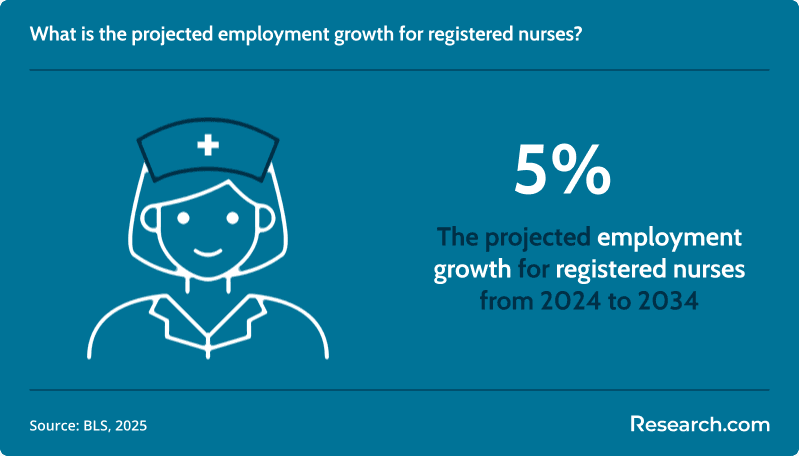
With registered nurse employment projected to grow 5% until 2034, excellent career stability awaits you. Our team, with over ten years of career planning experience, uses credible sources to clearly explain the eligibility, time commitment, specializations, and career advantages of earning an MSN without a BSN degree.
Key Things You Should Know About the Pathway to Pursue MSN Without a BSN Degree
- Two primary routes exist for an MSN without a BSN degree—the RN-to-MSN Bridge for existing nurses and the Direct-Entry MSN for non-nursing bachelor's holders, who generally need a minimum 3.0 GPA and prerequisite science courses for admission.
- The intensive Direct-Entry MSN path takes 15 to 36 months and costs roughly $60,000 to $150,000 in tuition, leading to specializations like FNP and PMHNP, and requires essential ACEN or CCNE accreditation for licensure eligibility.
- Graduates enter a high-demand job market (RN employment projected to grow 5% by 2034) with eligibility for loan forgiveness programs. They can achieve top-paying advanced practice registered nurse (APRN) roles like nurse anesthetist, which averages $259,707/year.
- What are the different pathways to pursue an MSN without a BSN degree? Pathways Overview
- Who is eligible for a direct-entry MSN program, and what are the typical requirements? Eligibility & Requirements
- What is the typical time commitment and cost for an accelerated BSN (ABSN) vs. a direct-entry MSN pathway? Time Commitment
- Is it better to get an ABSN first and then an MSN, or pursue a direct-entry MSN? Is it better to get an ABSN first and then an MSN, or pursue a direct-entry MSN?
- What clinical specializations are available in direct-entry MSN programs? Specializations
- Why is ACEN or CCNE accreditation essential for a direct-entry MSN program? Why is ACEN or CCNE accreditation essential for a direct-entry MSN program?
- What specific scholarships and grants are available for direct-entry MSN students without a BSN? Scholarships & Grants
- Are there federal loan forgiveness programs applicable to accelerated or direct-entry nursing students? Loan Forgiveness
- What are the top-paying APRN roles available to direct-entry MSN graduates? Top-Paying Jobs
- Can a direct-entry MSN lead directly to becoming an NP or CNS? Can a direct-entry MSN lead directly to becoming an NP or CNS?
- How does the job market differ for direct-entry MSN graduates compared to experienced BSN nurses pursuing their MSN? How does the job market differ for direct-entry MSN graduates compared to experienced BSN nurses pursuing their MSN?
Can You Earn an MSN Without a BSN? Pathways, Requirements, Costs, and Career Trade-Offs
You can pursue a Master of Science in Nursing without first completing a traditional Bachelor of Science in Nursing, but the right route depends on your starting point. An ADN-prepared registered nurse, a nursing diploma graduate, and a career changer with a non-nursing bachelor’s degree do not follow the same path.
This guide explains the main options for earning an MSN without a BSN, how direct-entry and RN-to-MSN programs differ, what admissions committees usually look for, how costs compare with an Accelerated BSN, and what to check before applying. It is designed for working RNs, second-degree students, and career changers who want a practical way to evaluate time, cost, licensure, accreditation, specialization, and long-term return on investment.
Quick answer: the two main routes
The two most common ways to earn an MSN without a BSN are an RN-to-MSN bridge program and a direct-entry MSN program. RN-to-MSN programs are for licensed RNs who usually hold an ADN or nursing diploma. Direct-entry MSN programs are for students who already have a bachelor’s degree in a non-nursing field and want to enter nursing at the graduate level.
| Pathway | Best for | Starting credential | Typical outcome | Main caution |
| RN-to-MSN bridge program | Licensed RNs who do not have a BSN | ADN or nursing diploma plus active RN license | MSN preparation for advanced clinical, education, informatics, or leadership roles | Some programs expect recent clinical experience or specific prerequisite coursework |
| Direct-entry MSN program | Career changers with a non-nursing bachelor’s degree | Accredited bachelor’s degree in another field | RN licensure preparation followed by graduate nursing coursework | Programs are intensive, expensive, and may not always lead directly to NP licensure without a specialty track |
RN-to-MSN bridge programs
An RN-to-MSN bridge is built for registered nurses who entered the profession through an associate degree in nursing or a hospital-based diploma program. Instead of completing a separate BSN and then applying to an MSN, students take bridge coursework that fills bachelor’s-level gaps before moving into graduate nursing study.
These programs often serve working nurses, so many schools offer part-time, hybrid, and online formats. The usual timeline is two to three years, depending on transfer credits, enrollment pace, specialty, and clinical placement requirements. Applicants generally need an active RN license, and some programs also prefer or require professional nursing experience.
This route is strongest for nurses who already understand bedside care and want to move into nurse practitioner, nurse educator, nurse administrator, informatics, public health, or other graduate-level roles without stopping to earn a standalone BSN.
Direct-entry MSN programs
A direct-entry MSN is intended for students who hold a bachelor’s degree outside nursing. The first phase covers foundational nursing content comparable to prelicensure BSN preparation. Students then become eligible to take the NCLEX-RN exam and seek RN licensure before continuing into graduate-level MSN coursework.
Most direct-entry MSN programs are full-time and demanding because students are learning nursing fundamentals, clinical reasoning, patient safety, pharmacology, health assessment, and graduate-level practice in a compressed sequence. The usual timeline is two to four years full-time, depending on whether the program includes an advanced practice specialty or stops at generalist MSN preparation.
The distinction is similar to how graduate public health degrees differ by purpose. For example, the difference between MSPH and MPH comes down to research versus applied practice emphasis. In nursing, RN-to-MSN and direct-entry MSN programs may both lead to a master’s credential, but they are designed for very different applicants.
Direct-Entry MSN Eligibility: Who Can Apply and What Do Programs Usually Require?
Direct-entry MSN programs usually admit applicants who already earned a non-nursing bachelor’s degree from an accredited institution. Many programs look for a minimum cumulative GPA of about 3.0 on a 4.0 scale, though exact standards vary by school and applicant pool.
These programs are not designed for licensed RNs who already have a nursing degree. They are primarily for career changers who want to become nurses and, in many cases, move toward advanced practice, leadership, education, or specialized graduate nursing roles.
| Requirement | What it usually means for applicants | Why it matters |
| Non-nursing bachelor’s degree | A completed bachelor’s degree in another field from an accredited institution, such as history, communications, biology, psychology, business, or an online human services bachelor's degree | Shows the applicant has already completed undergraduate general education and upper-level academic work |
| Prerequisite courses | Common prerequisites include human anatomy, physiology, microbiology, chemistry, statistics, nutrition, and developmental psychology | Prepares students for accelerated nursing science and clinical coursework |
| GPA standard | Many schools expect a minimum cumulative GPA of 3.0 or higher on a 4.0 scale | Helps programs assess readiness for an intensive graduate-entry curriculum |
| Application documents | Letters of recommendation, resume or CV, personal statement, and sometimes GRE or TEAS scores | Allows admissions committees to evaluate motivation, communication skills, academic readiness, and healthcare exposure |
| Screening requirements | Some programs require criminal background checks and drug screening before clinical placement | Clinical partners often require these checks before allowing students to work with patients |
Questions to ask before applying
- Does the program prepare students for RN licensure before graduate coursework begins?
- Is the MSN generalist-focused, or does it include a nurse practitioner, CNS, educator, administrator, or informatics specialty?
- Are clinical placements arranged by the school, or must students find their own sites?
- Will the program meet licensure requirements in the state where you plan to practice?
- Does the school require healthcare experience, shadowing, CNA work, or volunteer hours?
ABSN vs. Direct-Entry MSN: Time, Cost, and Practical Differences
An Accelerated BSN and a direct-entry MSN can both help non-nurses enter the nursing profession, but they serve different goals. An ABSN is usually the faster route to becoming an RN. A direct-entry MSN may make sense for students who are certain they want graduate-level nursing preparation and are willing to take on a longer, more expensive pathway.
| Factor | Accelerated BSN | Direct-Entry MSN |
| Typical length | About 16 to 18 months of full-time study | Usually 15 to 36 months, depending on school and format |
| Typical tuition range | Approximately $35,000 to $70,000 total tuition | Roughly $60,000 to $90,000, with some programs reaching up to $150,000 |
| Per-credit cost | Often between $350 and $600 | Often $600 to $2,000 |
| Primary goal | Fast preparation for RN licensure with a BSN | RN preparation combined with graduate nursing study |
| Best fit | Students who want to enter nursing quickly and decide on graduate school later | Students who already know they want master’s-level nursing preparation |
Cost and time differences are common across healthcare education pathways. A similar trade-off appears when comparing an associate degree in medical assistant vs certificate: shorter credentials may support faster entry, while longer programs can create more room for advancement.
Should You Earn an ABSN First or Go Straight Into a Direct-Entry MSN?
The better choice depends on how certain you are about advanced nursing roles, how much debt you can responsibly manage, whether you need to work while studying, and whether you want RN experience before specializing. Neither route is automatically better for every student.
Choose ABSN first, then MSN, if you want flexibility
- You want faster RN licensure. ABSN programs typically focus on getting students ready for RN practice sooner.
- You want to work before committing to graduate school. RN experience can help you choose a specialty more confidently.
- You want lower upfront cost. ABSN tuition is often lower than direct-entry MSN tuition.
- You are not fully sure about becoming an NP, CNS, educator, or administrator. A BSN allows you to enter the workforce and revisit graduate education later.
- You want a more step-by-step transition. Some students prefer to master RN practice before adding graduate-level expectations.
Choose a direct-entry MSN if your long-term target is clear
- You are committed to graduate-level nursing preparation. A direct-entry MSN avoids applying separately to an MSN program later.
- You want an integrated academic plan. The program combines prelicensure nursing education with graduate coursework.
- You are prepared for a heavier workload. Direct-entry MSN programs can be academically and clinically intense.
- You are aiming for roles such as nurse practitioner, nurse educator, nurse administrator, or clinical nurse leader. Make sure the specific program actually supports that outcome.
This decision resembles choosing between an MBA degree vs certificate. A degree usually offers broader preparation, while a shorter credential can be more targeted. In nursing, the best option depends on whether you need broad RN entry first or a direct route into graduate-level nursing study.
Decision checklist
| If this describes you | Consider this route | Reason |
| You need to start earning as an RN as soon as possible | ABSN | It is typically designed for faster prelicensure preparation |
| You already know you want an advanced nursing role | Direct-entry MSN | It may reduce the need for a separate graduate application later |
| You are unsure which nursing specialty fits you | ABSN first | Working as an RN can clarify your interests before you specialize |
| You are an ADN-prepared RN | RN-to-MSN | You already hold RN licensure and may not need a prelicensure pathway |
| You need to keep working full-time | RN-to-MSN or part-time BSN/MSN route | Direct-entry MSN programs are often harder to combine with full-time employment |
Direct-Entry MSN Specializations: Which Tracks Are Available?
Direct-entry MSN programs vary widely. Some prepare students as master’s-level generalist nurses, while others include an advanced practice, leadership, education, or specialty track. Before enrolling, confirm whether the program’s specialty actually leads to the certification or licensure outcome you want.
| Specialization | Focus area | Best for students interested in |
| Family Nurse Practitioner (FNP) | Primary care for patients and families across the lifespan, including health promotion, prevention, and management of acute and chronic conditions | Community clinics, primary care, outpatient care, and broad family-centered practice |
| Psychiatric-Mental Health Nurse Practitioner (PMHNP) | Mental health assessment, diagnosis, treatment, and ongoing management across patient populations | Behavioral health, psychiatry, telehealth, community mental health, and integrated care |
| Adult-Gerontology Acute Care Nurse Practitioner (AGACNP) | Care for adults and older adults with acute, critical, and complex chronic illnesses | Hospital-based advanced practice, specialty units, and acute care settings |
| Certified Nurse Midwife (CNM) | Pregnancy, childbirth, postpartum care, and women’s reproductive health | Midwifery, maternal health, and reproductive healthcare |
| Clinical Nurse Specialist (CNS) | Expert practice within a specialty population, often combining clinical expertise, consultation, and care improvement | Advanced clinical leadership, quality improvement, and specialty population care |
| Clinical Nurse Leader (CNL) | Care coordination, safety, quality, and clinical leadership at the point of care | Bedside leadership, systems improvement, and patient outcomes |
| Nurse Educator | Teaching nursing students, staff nurses, or clinical teams | Academic instruction, hospital education, simulation labs, and professional development |
| Nurse Administrator | Management, operations, staffing, policy, and healthcare leadership | Unit leadership, nursing management, and executive-track roles |
| Nurse Researcher | Research design, evidence-based practice, and nursing science | Academic research, clinical trials, healthcare improvement, and doctoral study preparation |
| Nursing Informatics | Healthcare data, electronic health records, workflow improvement, and clinical technology | Health IT, clinical systems, analytics, and technology-enabled care |
| Public Health Nursing | Population health, prevention, community education, and disease control | Public agencies, community health, prevention programs, and health promotion |
Specialty choice matters because similar-sounding nursing roles can have different patient populations, workplaces, and certification requirements. For example, understanding the difference between a nurse practitioner and an acute care nurse practitioner can help you decide whether primary care or hospital-based advanced practice is the better fit.
Why ACEN or CCNE Accreditation Matters Before You Enroll
Programmatic nursing accreditation is one of the most important factors to verify before choosing a direct-entry MSN or RN-to-MSN program. ACEN (Accreditation Commission for Education in Nursing) and CCNE (Commission on Collegiate Nursing Education) review nursing programs against national standards for curriculum quality, faculty qualifications, student outcomes, clinical learning, and continuous improvement.
Why accreditation should be non-negotiable
- Educational quality: ACEN and CCNE accreditation indicate that a nursing program has undergone external review and meets recognized standards.
- Licensure and certification planning: Graduating from an appropriately accredited program can affect eligibility for RN licensure, APRN certification, and state authorization. Requirements vary, so students should verify rules with the state board of nursing where they plan to practice.
- Financial aid access: Federal financial aid depends on institutional eligibility and accreditation, and programmatic accreditation can also affect scholarships, employer tuition support, and graduate progression.
- Credit transfer and future education: Accredited coursework is more likely to be recognized by other schools. This matters if you later pursue a post-graduate option, such as nurse administrator graduate certificate online programs.
- Employer confidence: Many healthcare employers prefer or require graduates from accredited nursing programs, especially for advanced practice, leadership, academic, and specialty positions.
- Ongoing accountability: Accredited programs must continue evaluating curriculum, faculty, clinical partnerships, and student outcomes to maintain status.
ACEN vs. CCNE: what is the difference?
| Accreditor | Programs covered | General emphasis |
| ACEN | Nursing programs from practical nursing through doctoral levels | Broad nursing education review, including practical and academic preparation |
| CCNE | Baccalaureate, master’s, and doctoral nursing programs | Academic quality, graduate preparation, and continuous program improvement |
How to verify accreditation
- Search the program on the ACEN or CCNE website rather than relying only on marketing pages.
- Confirm that the specific nursing program, not just the university, is accredited.
- Check whether accreditation applies to the exact campus, online format, and degree level you plan to enter.
- Ask the admissions office whether the program meets licensure requirements in your state.
- Contact your state board of nursing if you plan to practice outside the school’s home state.
Scholarships and Grants for Direct-Entry MSN Students Without a BSN
Direct-entry MSN students often face a complex financial aid situation because their programs may include both prelicensure and graduate coursework. Funding options can come from national nursing organizations, universities, private scholarships, employer programs, federal aid, and state-based workforce incentives.
Funding options to investigate
- AACN Scholarships and Financial Aid: The AACN offers scholarship information and funding resources for nursing students, including students in graduate-entry pathways.
- RegisteredNursing.org scholarships: Some awards, including the “RN to BSN/MSN Challenge” scholarship, may become relevant once students hold RN licensure.
- Foundation of the National Student Nurses' Association (FNSNA) Scholarships: These awards support nursing students enrolled in programs leading to a first nursing degree, which may include some direct-entry MSN students.
- Niche Nursing Scholarship: This scholarship is open to nursing students from different backgrounds and has no minimum GPA requirement.
- Institutional scholarships: Many universities with direct-entry MSN programs offer school-based aid for second-degree and graduate-entry nursing students.
- Government grants and loans: Depending on program structure and student eligibility, federal options may include Pell Grants, Stafford Loans, and Graduate PLUS Loans.
- Special population scholarships: Students who are veterans, single parents, underrepresented minorities, or future advanced practice nurses may qualify for targeted awards. Former service members may also want to compare education benefits across nursing and related fields such as military studies online.
How to reduce the total cost
- Ask whether prerequisite courses can be completed at a lower-cost accredited community college.
- Compare total program cost, not only tuition per credit.
- Find out whether clinical fees, lab fees, simulation fees, background checks, uniforms, testing, and travel are included.
- Ask if graduate assistantships or tuition discounts are available after the RN-licensure phase.
- Check whether local hospitals offer tuition assistance, residency programs, or hiring incentives for graduates.
Federal Loan Forgiveness Options for ABSN and Direct-Entry MSN Nursing Students
Federal loan forgiveness and repayment programs can apply to nurses who complete accelerated or direct-entry nursing pathways, but eligibility usually begins after the student becomes a licensed RN or APRN and works in a qualifying role. Borrowers should read program rules carefully because qualifying loans, employers, payment plans, and service commitments matter.
Major federal and public-service repayment options
| Program | How it may help nurses | Important eligibility issue |
| Public Service Loan Forgiveness (PSLF) | Forgives remaining qualifying federal loan balances after 120 qualifying monthly payments while working full-time in eligible public service employment, including many government and nonprofit healthcare roles | Requires qualifying loans, qualifying payments, and qualifying employment |
| Nurse Corps Loan Repayment Program (NCLRP) | May repay up to 85% of unpaid student nursing education debt for registered nurses and advanced practice nurses who work at least two years in eligible critical shortage facilities | Requires work in approved shortage settings and compliance with service obligations |
| National Health Service Corps (NHSC) Loan Repayment Program | Provides repayment assistance for eligible APRNs who work in designated Health Professional Shortage Areas with a service commitment | Applies to qualifying clinicians and approved practice sites |
| Perkins Loan Cancellation | Some nursing roles may qualify for partial or full cancellation of Perkins Loans | Only applies to borrowers with eligible Perkins Loans |
| State-level loan forgiveness | Many states offer repayment programs for nurses who work in underserved communities or shortage areas | Rules vary by state, profession, location, and service period |
Eligibility points to confirm
- You must have qualifying federal student loans for federal forgiveness or repayment programs.
- You must usually work full-time in an eligible nursing role.
- Qualifying employers may include nonprofit hospitals, public health agencies, government facilities, and shortage-area clinics.
- You must generally be a U.S. citizen or eligible non-citizen.
- Your nursing degree must be recognized by the licensing authorities connected to your role.
Top-Paying APRN and Advanced Nursing Roles for Direct-Entry MSN Graduates
Direct-entry MSN graduates may qualify for advanced nursing roles after completing the required licensure, certification, clinical experience, and specialty preparation. The MSN can support higher-level clinical, leadership, education, and systems-focused roles, but salary outcomes depend on specialty, region, employer, certification, experience, and scope-of-practice rules.
The salary figures below reflect the average annual salaries provided in the source material.
| Role | Average annual salary | Notes for direct-entry MSN students |
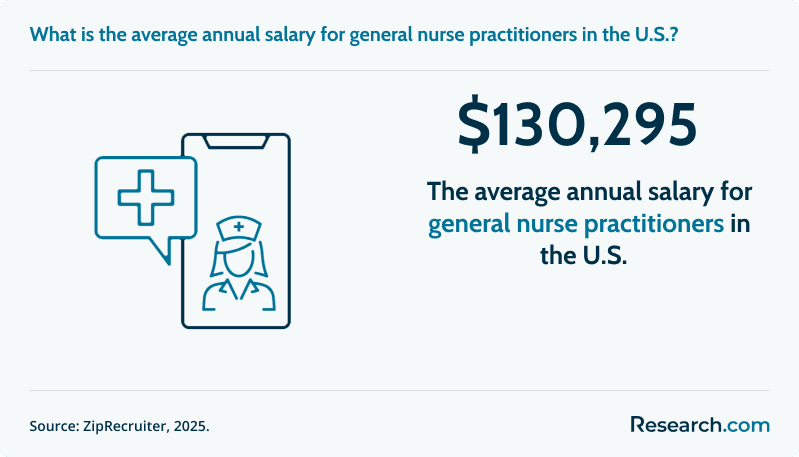
| Nurse Practitioner (general) | $130,295 | Requires RN licensure, graduate NP preparation, national certification, and state authorization |
| Psychiatric-Mental Health NP | $141,112 | Best aligned with students who choose a PMHNP specialty and meet certification requirements |
| Acute Care Nurse Practitioner | $130,295 | Usually aligned with acute care specialty preparation and hospital-based practice interests |
| Certified Nurse Midwife | $116,247 | Requires midwifery-focused graduate preparation and certification |
| Clinical Nurse Specialist | $94,545 | Requires CNS specialty preparation and certification in many states |
| Nurse Anesthetist (CRNA) | $259,707 | A high-paying APRN path, but students should verify current education, experience, and certification requirements before planning this route |
Not every high-value MSN role is an APRN position. Students interested in technology, analytics, and systems improvement may want to explore how specialization affects MSN nursing informatics salary. Clinical Informatics Managers often earn over $100,000, and Chief Nursing Informatics Officers can average over $149,000, combining nursing knowledge with digital health leadership.
Can a Direct-Entry MSN Lead to Nurse Practitioner or Clinical Nurse Specialist Practice?
A direct-entry MSN can lead toward NP or CNS practice, but only if the program includes the required specialty preparation or the graduate completes additional post-graduate coursework. Students should not assume that every direct-entry MSN automatically makes them eligible for nurse practitioner or clinical nurse specialist certification.
The typical sequence is: complete the prelicensure phase, become eligible for the NCLEX-RN, obtain RN licensure, complete graduate-level specialty coursework and clinical hours, pass the relevant national certification exam, and meet state APRN licensure requirements.
Clinical Nurse Specialist pathway
Students pursuing CNS practice usually complete an MSN or Doctor of Nursing Practice program with a CNS specialty track. The curriculum includes advanced practice coursework and clinical hours focused on a defined population or specialty, such as Adult-Gerontology CNS. After graduation, candidates generally need to pass a national CNS certification exam to qualify for APRN licensure in many states.
Nurse Practitioner pathway
Students pursuing NP practice need graduate-level NP coursework, supervised clinical practice, national certification in the chosen population focus, and state licensure or authorization. Some direct-entry MSN programs include NP preparation, while others require students to complete a post-graduate NP certificate after earning the MSN.
Some nurses later continue into doctoral study, including options such as the best online women's health nurse practitioner DNP programs, especially when they want terminal advanced practice preparation.
Master’s degrees remain a common educational route for nurse practitioners, as reflected in the following data.
Job Market: Direct-Entry MSN Graduates vs. Experienced BSN Nurses Earning an MSN
The job market can look different for direct-entry MSN graduates and experienced BSN-prepared nurses because employers consider both credentials and clinical experience. A master’s degree is valuable, but it does not replace the judgment and confidence that come from years of nursing practice.
| Candidate type | Strengths | Potential challenge | Best early strategy |
| Direct-entry MSN graduate | Graduate-level education, strong academic preparation, and a clear transition into nursing | Limited RN work experience immediately after graduation | Build clinical credibility through RN roles, residencies, specialty experience, and certification planning |
| Experienced BSN nurse pursuing an MSN | Established clinical background plus graduate education | May need to balance work, school, and family responsibilities while studying | Use prior experience to target advanced practice, leadership, educator, or specialty roles |
Direct-entry MSN graduates often need time after licensure to develop hands-on clinical judgment before moving into the most competitive advanced roles. Their graduate credential can help, especially for leadership, education, informatics, or specialized pathways, but employers may still look closely at clinical experience.
Experienced BSN nurses who pursue an MSN often have a stronger immediate practice foundation. Their bedside, community, acute care, or specialty experience can make the transition into NP, CNS, administration, or teaching roles more direct once they complete the required graduate preparation and certification.
To understand the broader employment context, review the following projections for Registered Nurses and related healthcare roles.
Current Trends Affecting MSN Without BSN Pathways
Several trends are shaping how students should evaluate direct-entry MSN and RN-to-MSN programs in 2026. The most important shift is that employers and state boards are paying close attention to whether graduates are truly prepared for safe, independent, and team-based practice. A fast pathway is not valuable if it does not meet licensure, certification, or clinical readiness expectations.
- Clinical placement capacity matters more than ever. Programs may advertise online or hybrid coursework, but nursing still requires supervised clinical training. Ask how placements are secured and what happens if a site falls through.
- Technology skills are becoming core nursing skills. Electronic health records, clinical decision tools, telehealth, analytics, and AI-supported workflows make informatics and data literacy useful even for bedside and advanced practice nurses.
- Employers still value experience. A direct-entry MSN can accelerate education, but many employers expect new graduates to prove clinical competence before moving into highly autonomous roles.
- State authorization and licensure rules remain critical. Online and hybrid programs may not meet requirements in every state, especially for APRN tracks.
- Cost pressure is rising. Students should evaluate total debt against realistic early-career earnings, not only long-term salary potential.
Common Mistakes to Avoid When Choosing an MSN Without a BSN Program
| Mistake | Why it can hurt you | Better approach |
| Assuming every direct-entry MSN leads to NP licensure | Some programs are generalist MSN programs and do not include NP preparation | Confirm the exact specialty track, certification eligibility, and state licensure alignment |
| Checking university accreditation but not nursing program accreditation | Institutional accreditation and nursing program accreditation are not the same | Verify ACEN or CCNE status for the specific nursing program |
| Comparing only tuition | Fees, supplies, testing, travel, insurance, and lost work time can significantly change total cost | Build a full cost-of-attendance estimate before applying |
| Ignoring clinical placement policies | Students may struggle if they must locate their own sites in competitive markets | Ask whether the school secures placements and where previous students completed clinicals |
| Choosing the fastest program without considering workload | Accelerated nursing education can be difficult to combine with employment or caregiving | Choose a pace that matches your finances, support system, and learning style |
| Assuming salary outcomes are guaranteed | Pay varies by role, region, certification, employer, and experience | Research local job postings and speak with nurses in your intended specialty |
| Relying only on rankings or brand name | A well-known school may still be a poor fit for your state, schedule, budget, or specialty | Compare accreditation, licensure outcomes, clinical support, cost, and graduate placement |
What Graduates Say About Earning an MSN Without a BSN
- : "I had a bachelor’s degree in history and wanted the most direct route into advanced nursing. The direct-entry MSN let me complete foundational nursing coursework, qualify for RN licensure, and move into graduate study without adding a separate BSN. I now work as a family nurse practitioner, and the combined pathway helped me avoid two additional years of separate schooling. — Belinda"
- : "After years of working with an ADN, I chose an RN-to-MSN bridge because I could continue working while advancing my credentials. The MSN helped me qualify for teaching and administration opportunities, and my salary is now more than 30% higher than it was in my previous bedside RN role. The program recognized my experience and helped me move into leadership. — Rachel"
- : "My background was in a non-clinical science field, so the direct-entry MSN was challenging from the start. The pace was intense, but it fit the way I learn. I moved into psychiatric-mental health nurse practitioner preparation and was able to connect my prior science training with advanced clinical care. — Thia"
References
- ZipRecruiter. Acute nurse practitioner salary. Retrieved October 11, 2025, from https://www.ziprecruiter.com/Salaries/Acute-Nurse-Practitioner-Salary
- ZipRecruiter. Acute nurse practitioner salary. Retrieved October 11, 2025, from https://www.ziprecruiter.com/Salaries/Acute-Nurse-Practitioner-Salary
- Bureau of Labor Statistics, U.S. Department of Labor, Occupational Outlook Handbook, Registered Nurses, at https://www.bls.gov/ooh/healthcare/registered-nurses.htm
- ZipRecruiter. Certified Nurse Midwife salary. Retrieved October 11, 2025, from https://www.ziprecruiter.com/Salaries/Certified-Nurse-Midwife-Salary
- ZipRecruiter. Certified Nurse Midwife salary. Retrieved October 11, 2025, from https://www.ziprecruiter.com/Salaries/Certified-Nurse-Midwife-Salary
- ZipRecruiter. Certified Registered Nurse Anesthetist CRNA salary. Retrieved October 11, 2025, from https://www.ziprecruiter.com/Salaries/Certified-Registered-Nurse-Anesthetist-Crna-Salary#Yearly
- ZipRecruiter. Clinical nurse specialist salary. Retrieved October 11, 2025, from https://www.ziprecruiter.com/Salaries/Clinical-Nurse-Specialist-Salary
- ZipRecruiter. General Nurse Practitioner salary. Retrieved October 11, 2025, from https://www.ziprecruiter.com/Salaries/General-Nurse-Practitioner-Salary
- ZipRecruiter. Psych NP salary. Retrieved October 11, 2025, from https://www.ziprecruiter.com/Salaries/Psych-Np-Salary
Key Insights
- An MSN without a BSN is possible, but the correct pathway depends on whether you are already an RN or a career changer with a non-nursing bachelor’s degree.
- RN-to-MSN programs are usually best for ADN or diploma-prepared RNs who want graduate-level roles without completing a standalone BSN.
- Direct-entry MSN programs are designed for non-nurses with a bachelor’s degree in another field and usually include RN licensure preparation before graduate coursework.
- An ABSN is often the faster and lower-cost way to become an RN, while a direct-entry MSN may fit students who are already certain about graduate nursing goals.
- Not all direct-entry MSN programs lead directly to NP or CNS practice. Always confirm specialty tracks, certification eligibility, clinical hours, and state licensure alignment.
- ACEN or CCNE accreditation is essential to check because it can affect licensure, certification, employer acceptance, credit transfer, and future graduate study.
- Total cost should include tuition, fees, clinical expenses, testing, travel, lost income, and loan interest—not just the advertised per-credit rate.
- The strongest program choice is not simply the fastest or most prestigious one. It is the one that matches your state licensure needs, budget, specialty goal, clinical placement support, and realistic career timeline.
Other Things You Should Know About the Pathway to Pursue MSN without a BSN Degree
Most MSN programs for students without a BSN require around 500 clinical hours. These programs often incorporate practicum experiences tailored to the student's current nursing practice, ensuring that they meet advanced competencies required for the MSN degree by 2027.
Most direct-entry MSN programs require an active, unencumbered RN license before the clinical portion begins, usually after passing the NCLEX-RN. Some accelerated bridge tracks admit students first and issue provisional status until licensure is verified, but the RN license remains the key legal requirement for advanced clinical coursework.