
2027 Fastest Online Graduate Certificate Nurse Education Programs

Co-Founder and Chief Data Scientist
Aspiring nurse educators often face a key challenge: how to quickly gain the credentials needed to teach in academic or clinical settings without committing to a lengthy degree program. The fastest online graduate certificate in nurse education offers a practical, accelerated path—but many nurses aren’t sure how these programs work, what they cost, or how they compare to traditional routes.
This article solves that problem by providing a clear, expert-backed guide to everything you need to know before enrolling. You'll learn about program length, admission requirements, course content, costs, job prospects, and more—helping you make an informed, confident decision.
What are the benefits of getting the fastest online graduate certificate nurse education program?
- Advance into in-demand roles such as academic nurse educator, clinical instructor, staff development coordinator, or simulation lab facilitator in nursing schools and healthcare settings.
- Earn a median salary of $86,530 per year as a nurse educator, with higher earnings possible in universities, government agencies, or leadership roles.
- Study 100% online and finish in under a year, allowing you to keep working while gaining flexible, career-focused training that qualifies you to teach and mentor the next generation of nurses.
What can I expect from the fastest online graduate certificate nurse education program?
The fastest online graduate certificate in nurse education is a short, flexible program designed for registered nurses who want to transition into teaching roles without committing to a full-length degree. Typically completed in six to twelve months, this certificate equips nurses with essential skills in curriculum development, instructional strategies, and student assessment.
Whether you're aiming to teach in a nursing school, lead clinical education programs, or mentor new nurses, this program provides the foundation you need.
Many programs include a teaching practicum to offer hands-on experience in real educational settings. Offered fully online, these certificates are ideal for working nurses who need a convenient and accelerated path to advance their careers. With the growing demand for nurse educators, especially due to nationwide faculty shortages, this credential opens the door to a range of rewarding teaching positions while helping to shape the future of nursing.
Where can I work with the fastest online graduate certificate nurse education program?
Graduates of the fastest online graduate certificate in nurse education programs often find employment across a range of healthcare and academic settings. Many work in higher education institutions such as community colleges, universities, and nursing schools, where they teach courses, supervise clinical rotations, and contribute to curriculum development. These roles are essential for training the next generation of nurses, and with growing enrollment in nursing programs, demand for qualified educators continues to rise.
Others work in clinical and healthcare organizations, including hospitals, outpatient centers, and long-term care facilities. In these settings, nurse educators typically serve as clinical instructors, staff development coordinators, or training specialists. Common employers include:
- Teaching hospitals and academic medical centers
- Public health departments
- Healthcare corporations and private clinics
- Simulation centers and continuing education providers
These professionals lead onboarding programs, deliver continuing education, and ensure clinical staff maintain compliance and competency, making their role critical to patient care quality.
How much can I make with the fastest online graduate certificate nurse education program?
Graduates of the fastest online graduate certificate in nurse education typically enter roles such as academic nurse educators, clinical educators, and staff development coordinators. According to recent data, the median salary range for nurse educators in the U.S. falls between $80,000 and $100,000 per year, with more specific sources citing averages of $86,900 and $99,375.
Early-career nurse educators (0–2 years experience) often start around $53,000, while those with 2–5 years can earn approximately $68,100 annually. Mid-career professionals often earn around $94,000, and seasoned educators with over ten years’ experience may earn above $116,000, with top earners reaching $125,000 to $133,000.
These certificate program graduates may begin at the lower end of the scale but can quickly advance through experience, workplace setting, and geographic location. As nurse educator roles increasingly demand credentialed teachers, salary growth remains strong—especially in academic institutions and major healthcare systems.
- Fastest Online Graduate Certificate Nurse Education Programs for 2027 List of Programs
- How long does it take to complete the fastest online graduate certificate nurse education program? Completion Time
- How does the fastest online graduate certificate nurse education program compare to an on-campus program? How does the fastest online graduate certificate nurse education program compare to an on-campus program?
- What is the average cost of the fastest online graduate certificate nurse education program? Program Cost
- What are the financial aid options for students enrolling in the fastest online graduate certificate nurse education program? Financial Aid
- What are the prerequisites for enrolling in the fastest online graduate certificate nurse education program? Program Requirements
- What courses are typically in the fastest online graduate certificate nurse education program? What courses are typically in the fastest online graduate certificate nurse education program?
- What types of specializations are available in the fastest online graduate certificate nurse education program? What types of specializations are available in the fastest online graduate certificate nurse education program?
- How do you choose the best among the fastest online graduate certificate nurse education programs? How do you choose the best among the fastest online graduate certificate nurse education programs?
- What career paths are available for graduates of the fastest online graduate certificate nurse education program? What career paths are available for graduates of the fastest online graduate certificate nurse education program?
- What is the job market like for graduates of the fastest online graduate certificate nurse education program? Job Outlook
- What are the potential challenges of pursuing the fastest online graduate certificate nurse education program? What are the potential challenges of pursuing the fastest online graduate certificate nurse education program?
- How does an online nurse educator certificate differ from a fastest online DNP program? How does an online nurse educator certificate differ from a fastest online DNP program?
- How can you confirm the quality and credibility of your online nurse educator certificate program? How can you confirm the quality and credibility of your online nurse educator certificate program?
Fastest Online Graduate Certificate in Nurse Education Programs for 2027
Nurses who want to move into teaching often face a practical problem: they need formal preparation in curriculum design, assessment, and clinical instruction, but they may not want another full graduate degree. An online graduate certificate in nurse education can be the shorter route, especially for BSN- or MSN-prepared registered nurses who want to teach students, precept new nurses, lead staff development, or strengthen their qualifications for academic and clinical educator roles.
This guide focuses on the fastest online graduate certificate nurse education programs, how they compare, what they cost, what admissions requirements to expect, and how to decide whether a short certificate is the right credential for your goals. It also explains the trade-offs of accelerated study, including workload, practicum requirements, accreditation, and employer expectations.
Quick answer: What is the fastest online graduate certificate in nurse education?
The fastest online graduate certificate nurse education programs can be completed in as few as 6 months, although many take 9-12 months depending on course sequencing, practicum expectations, and whether you enroll full-time or part-time. The best option is not always the shortest one. A strong program should be accredited, match your current degree level, include supervised teaching experience, and fit your work schedule without sacrificing academic quality.
How do we rank schools?
This ranking uses a transparent Research.com methodology that considers program structure, completion speed, online accessibility, credit requirements, tuition information, and institutional quality indicators. Data sources include the Integrated Postsecondary Education Data System (IPEDS), Peterson's databases, including the Distance Learning Licensed Data Set, and the College Scorecard from the National Center for Education Statistics.
Use this ranking as a starting point, not as the only basis for enrollment. Before applying, confirm current tuition, state authorization, practicum rules, admission requirements, and whether the certificate meets your academic or clinical teaching goals.
| Rank | School | Fastest listed completion time | Credits or units | Best fit |
| 1 | University of Southern Maine | 6 months | 21 credit hours | MSN-prepared nurses seeking an accelerated post-master’s nurse educator certificate |
| 2 | Western Governors University (WGU) | 12 months | 16 competency units | Working MSN-prepared nurses who prefer competency-based online study |
| 3 | University of North Dakota | 9-12 months | 9 credit hours | BSN- or MSN-prepared RNs who want a compact online certificate |
| 4 | Penn State World Campus | 3 semesters (9 months) | 9 credits | Nurses interested in classroom, clinical, and online teaching strategies |
| 5 | UNC Charlotte | 12 months | 12 credits | Working nurses who want part-time online study with supervised teaching experience |
| 6 | University of Colorado Anschutz | 3 semesters (1 year) | 9 credits | Nurses who can complete hybrid requirements in Aurora, CO |
| 7 | Quinnipiac University | 2 semesters (8-9 months) | 12–13 credits | BSN- and MSN-prepared nurses seeking a short fully online certificate |
| 8 | Davenport University | 1 year, flexible pacing | 28 credits | MSN graduates seeking post-graduate preparation for educator roles |
| 9 | Arkansas State University | 6–12 months | 12 credits | BSN- and MSN-prepared RNs who want online study with multiple start dates |
| 10 | University of Texas at Arlington | 6 months full-time | 12 credits | Working RNs who want a fast online certificate with a practicum |
1. University of Southern Maine
The University of Southern Maine offers a fully online post-master’s graduate certificate for MSN-prepared nurses who want to develop formal nurse educator skills. The program can be finished in as few as 6 months through four accelerated 7-week courses. Students study instructional methods, curriculum design, and program evaluation in an asynchronous format, then complete an in-person teaching practicum.
- Program Length: 6 months, via accelerated 7-week courses
- Tracks/Concentrations: Nurse Education (post-master’s)
- Cost per Credit: $300–$500/credit
- Required Credits: 21 credit hours
- Accreditation: Commission on Collegiate Nursing Education
2. Western Governors University (WGU)
Western Governors University offers a 100% online, CCNE-accredited post-master’s nursing education certificate designed for MSN-prepared nurses. The program is typically completed in 12 months and uses a competency-based model, which may allow students to move faster through material they already know. Coursework emphasizes curriculum design, teaching facilitation, and assessment of student learning.
- Program Length: 12 months
- Tracks/Concentrations: Post-Master’s Nursing Education Certificate
- Cost per Credit: Flat rate for 6-month term $5,035
- Required Credits: 16 competency units (equivalent to credits across 8 courses)
- Accreditation: Commission on Collegiate Nursing Education
3. University of North Dakota
The University of North Dakota offers a 9-credit fully online graduate certificate in nurse education that can be completed over three semesters with no required campus visits. The curriculum is built for BSN- or MSN-prepared RNs and covers curriculum development, teaching methods, and assessment strategies. Its structure is well suited to working nurses who may want to connect practicum activities to their current clinical environment.
- Program Length: 9-12 months
- Tracks/Concentrations: Graduate Certificate in Nurse Education
- Cost per Credit: $600–$700/credit
- Required Credits: 9 credit hours (three 3-credit courses)
- Accreditation: Commission on Collegiate Nursing Education
4. Penn State World Campus
Penn State World Campus provides a fully online post-baccalaureate 9-credit certificate for BSN- and MSN-prepared nurses. Courses address teaching theory and evidence-based instructional strategies for classroom, clinical, and online environments. Students may choose a practicum option if they want applied teaching experience.
- Program Length: 3 semesters (9 months)
- Tracks/Concentrations: General Nurse Educator
- Cost per Credit: $632 per credit
- Required Credits: 9 credits (3 courses)
- Accreditation: Commission on Collegiate Nursing Education
5. UNC Charlotte
UNC Charlotte offers a 12-credit part-time online nurse educator certificate for BSN- or MSN-prepared nurses. The program is designed for completion within 12 months and includes four specialty courses plus 15 hours of supervised teaching experience. Its part-time structure may appeal to nurses who need a predictable academic schedule while continuing to work.
- Program Length: 12 months
- Tracks/Concentrations: General Nurse Educator
- Cost per Credit: Resident: $288.82
- Required Credits: 12 credits (4 courses)
- Accreditation: Southern Association of Colleges and Schools Commission on Colleges (SACSCOC)
6. University of Colorado Anschutz
The University of Colorado Anschutz offers a hybrid online certificate that spans three semesters (1 year). Students complete online coursework but must also participate in some required on-site activities in Aurora, CO. The curriculum focuses on curriculum development, teaching strategies, learner assessment, and preparation for the Certified Nurse Educator (CNE) exam.
- Program Length: 3 semesters (1 year)
- Tracks/Concentrations: General Nurse Educator
- Cost per Credit: $525–$640/credit
- Required Credits: 9 credits (3 courses)
- Accreditation: Commission on Collegiate Nursing Education
7. Quinnipiac University
Quinnipiac University offers a fully online 12–13 credit certificate for BSN- and MSN-prepared nurses. Completed over two semesters, the program covers educational theory, curriculum planning, instructional methods, and evaluation. Students who do not already have MSN-level clinical hours may need to complete an additional advanced practice course.
- Program Length: 2 semesters (8-9 months)
- Tracks/Concentrations: General Nurse Educator (plus advanced practice clinical course if needed)
- Cost per Credit: $765 per credit
- Required Credits: 12–13 credits (plus 1 extra credit for those without MSN-level clinical experience)
- Accreditation: Commission on Collegiate Nursing Education
8. Davenport University
Davenport University offers a post-graduate certificate for MSN graduates who want to pursue roles as faculty members or staff development educators. The fully online curriculum includes educator-focused coursework and advanced clinical foundations. Completion commonly takes 1 year, although pacing depends on the student’s course load.
- Program Length: 1 year, flexible pacing
- Tracks/Concentrations: General Nurse Educator
- Cost per Credit: $1,006 per credit
- Required Credits: 28 credits
- Accreditation: Commission on Collegiate Nursing Education
9. Arkansas State University – Graduate Certificate in Nursing Education
Arkansas State University offers an online graduate certificate in nursing education with multiple start dates. Students may complete the program in approximately 6–12 months. The certificate is designed for BSN- and MSN-prepared RNs and includes study in curriculum development, instructional strategies, assessment, and practicum-based application.
- Program Length: 6–12 months
- Tracks/Concentrations: General Nurse Educator
- Cost per Credit: $340 per credit
- Required Credits: 12 credits
- Accreditation: Commission on Collegiate Nursing Education
10. University of Texas at Arlington – Nurse Educator Graduate Certificate
The University of Texas at Arlington offers a 12-credit online nurse educator graduate certificate that can be completed in as few as 6 months with full-time enrollment. The program serves working RNs at the BSN or MSN level and includes core educator coursework plus a practicum for hands-on teaching experience. Courses are delivered online with flexible scheduling.
- Program Length: 6 months full-time
- Tracks/Concentrations: General Nursing Educator
- Cost per Credit: $515 per credit
- Required Credits: 12 credits
- Accreditation: Commission on Collegiate Nursing Education
How long does the fastest online graduate certificate nurse education program take?
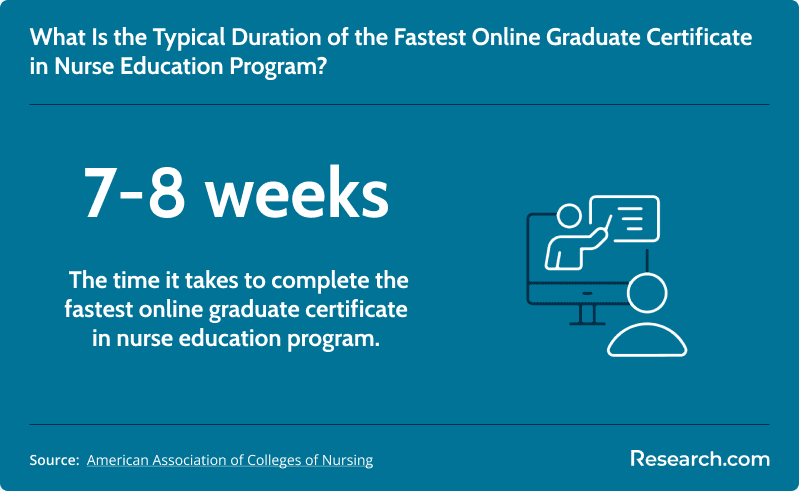
The shortest online graduate certificate nurse education programs can take as little as six to nine months, but many realistic completion plans fall closer to 9-12 months for working nurses. Timeline depends on the number of required credits, the availability of 7- or 8-week courses, whether courses must be taken in sequence, and how quickly the student can complete any practicum or supervised teaching requirement.
Most accelerated certificates are designed for registered nurses who already have strong clinical experience and want focused educator preparation instead of a multi-year degree. Many programs require around 12 to 18 credit hours, although some have fewer or more credits depending on whether they are post-baccalaureate, post-master’s, or competency-based.
Asynchronous online courses may help students fit school around shifts, family responsibilities, and clinical work. Cohort-based programs can be less flexible but may provide a clearer schedule and more peer interaction. A shorter calendar is not automatically easier; compressed courses often require weekly reading, discussion posts, projects, lesson plans, assessment work, and practicum preparation at the same time.
Nurses who want to broaden their credentials may also compare certificate study with additional online nursing certifications, especially if their goals include staff development, specialty instruction, or leadership in clinical education.
| Completion pace | Typical timeline | Who it may fit | Trade-off to consider |
| Full-time accelerated | 6 months to nine months | Nurses with predictable schedules and strong study habits | Higher weekly workload and less time for reflection |
| Standard online pace | 9-12 months | Working nurses balancing shifts and school | May take longer but can be more manageable |
| Part-time or flexible | 1 year or more | Nurses with rotating shifts, family obligations, or heavy clinical responsibilities | Slower completion but lower academic pressure per term |
Online vs. on-campus nurse educator certificates: Which format is better?
Online graduate certificates in nurse education are usually the better fit for nurses who need speed, flexible scheduling, and minimal travel. Courses can often be completed from home, and asynchronous formats allow students to study after shifts or on days off. This structure is especially useful for nurses who cannot attend fixed weekly campus classes.
On-campus programs may be stronger for students who want regular face-to-face discussion, easier access to simulation labs, and in-person mentoring. However, campus-based study can add commuting time, fixed class schedules, and less flexibility for nurses working nights, weekends, or rotating shifts.
Cost-conscious students may also compare certificate programs with broader graduate pathways, including the most affordable online MSN programs, if they eventually want a full master’s degree rather than a stand-alone certificate. Students comparing flexible online formats across disciplines can also review how accelerated structures work in areas such as the fastest online humanities degree programs, although nursing certificates have distinct clinical and accreditation considerations.
| Factor | Online certificate | On-campus certificate |
| Schedule | Often asynchronous or designed for working nurses | Usually tied to set class times |
| Speed | May allow accelerated completion in less than a year | May follow standard semester sequencing |
| Practicum | May be completed locally or through approved arrangements | May use campus or affiliated clinical education sites |
| Networking | Depends on virtual engagement and faculty availability | Often more direct face-to-face interaction |
| Best for | Working nurses who need flexibility | Students who prefer in-person learning and campus resources |
What does a fast online graduate certificate in nurse education cost?
The average cost of the fastest online graduate certificate in nurse education program typically ranges from $5,000 to $12,000 in total tuition. Final cost depends on required credits, public versus private school pricing, residency rules, institutional fees, technology charges, books, and practicum-related expenses.
Many programs require 12 to 18 credit hours, with per-credit tuition rates ranging from $300 to $700. Some schools charge a flat term rate, while others bill per credit. Public universities may offer lower resident tuition, while private schools often use one online rate for all students. As with accelerated online philosophy degrees, shorter completion time does not always mean lower total cost; credit count and fee structure matter more than calendar length.
Accelerated certificates may require students to pay the full cost over a shorter period, which can affect cash flow. Before enrolling, ask whether the quoted tuition includes online fees, books, background checks, clinical placement fees, proctoring, and graduation charges.
A nurse educator certificate may support advancement into teaching, training, or leadership-oriented roles. Nurses comparing long-term earning potential may also research the highest paying nursing jobs, but salary outcomes depend on degree level, employer, location, experience, and role type. Among nursing educators in 2023, 50.9% have a doctoral degree while 45% have completed a masters program.
The chart below shows the educational credentials held by full-time nurse educators in the U.S., helping prospective students understand how common master’s and doctoral preparation are in the field.
Financial aid options for fast online nurse educator certificate students
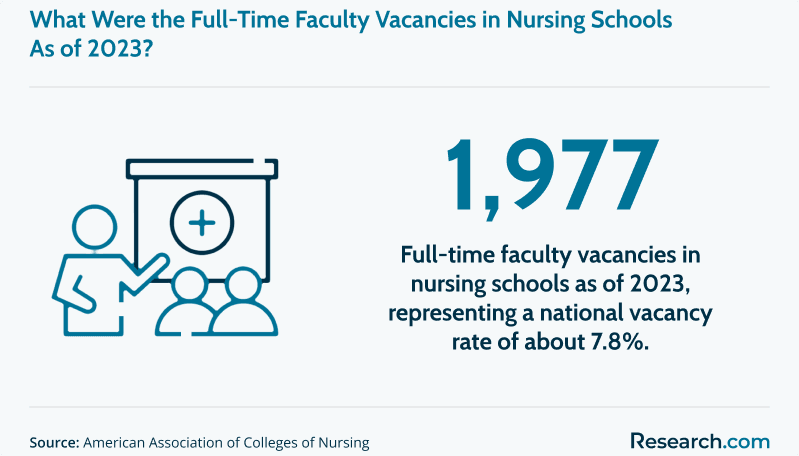
Graduates of nurse education programs can expect a full-time faculty nursing school vacancy of around 7.8% based on 2023 figures. That demand does not guarantee financial aid, but it does explain why some schools, employers, and nursing organizations support educator preparation.
Certificate students should ask each school whether the program is eligible for federal aid. Short graduate certificates can have more limited aid options than full degrees, especially if the program does not meet enrollment or credit requirements. Students comparing shorter credentials with degree pathways may also look at affordable accelerated nursing programs to understand broader cost-saving options.
Federal financial aid
- Direct Unsubsidized Loans: Graduate certificate students may qualify if the certificate is offered by an accredited institution and the student meets enrollment requirements, often including at least 6+ credits per term.
- Graduate PLUS Loans: These credit-based federal loans can help cover remaining approved costs after other aid is applied.
State financial aid
- State grants and scholarships: Some state programs support residents in post-baccalaureate certificate study, particularly when the credential aligns with workforce needs such as nurse education.
- Loan repayment programs: State-based repayment or forgiveness options may be available for nurse educators who teach in qualifying settings or underserved areas.
Institutional aid
- School scholarships: Universities may offer merit-based or need-based awards for nursing students, education students, or graduate certificate students.
- Tuition discounts: Some schools reduce tuition for alumni, in-state residents, military-affiliated students, or employees of partner healthcare systems.
Employer tuition assistance
- Hospitals and health systems may provide reimbursement or education stipends for nurses preparing to teach, precept, or lead staff development. Employer support may also apply to specialized graduate pathways, such as the fastest online MSN in forensic nursing programs, when the education aligns with organizational needs.
Private scholarships and grants
- Nursing organizations: Groups such as the American Association of Colleges of Nursing (AACN) and the National League for Nursing (NLN) may offer awards or scholarship opportunities for future nurse educators.
- Professional associations: Regional and national nursing associations may sponsor grants, scholarships, or professional development funds.
Private loans
- Students who cannot access federal aid or institutional funding may consider private loans through banks, credit unions, or private lenders. Compare interest rates, repayment terms, and cosigner requirements carefully before borrowing.
Admission requirements for fast online graduate certificate nurse education programs
Admissions standards vary by school, but most online nurse educator certificates require applicants to be licensed registered nurses with prior nursing education at the BSN or MSN level. Some programs are explicitly post-master’s certificates, while others admit BSN-prepared nurses.
For nurses exploring a move away from bedside intensity, nurse education may be one possible direction. It can also be useful to compare this path with broader nursing career paths before choosing a program.
| Requirement | What schools commonly expect | Why it matters |
| RN license | A current, unencumbered U.S. registered nurse license | The certificate builds on active nursing practice and professional standards |
| Prior nursing degree | Usually a BSN, MSN, or both depending on program level | Determines whether you qualify for post-baccalaureate or post-master’s admission |
| Minimum GPA | Often 2.5 to 3.0 from the most recent nursing degree | Schools use GPA to assess readiness for graduate-level coursework |
| Clinical experience | Some programs prefer or require at least one year | Teaching is stronger when students can connect theory to practice |
| Transcripts | Official records from all colleges or universities attended | Confirms degree completion, prerequisites, and academic standing |
| Recommendations | One to two academic or professional references may be requested | Helps schools evaluate professionalism and readiness |
| Personal statement | A short essay about educator goals and program fit | Shows whether your career plan aligns with the certificate |
| Resume or CV | Current nursing experience, certifications, precepting, and teaching activities | Highlights preparation for educator-focused coursework |
Courses commonly found in fast online nurse educator certificate programs
Most accelerated online graduate certificates in nurse education include four to six focused courses. The curriculum usually teaches nurses how to design learning experiences, evaluate student performance, teach in clinical settings, and use evidence-based instructional methods.
If you are still early in your nursing education planning, resources on the easiest nursing schools to get into may help you understand admissions accessibility at earlier degree levels. For graduate certificate applicants, however, the key issue is whether the curriculum prepares you for the teaching setting you want.
- Teaching and learning in nursing education: Introduces adult learning theory, learner engagement, classroom teaching, and strategies for adapting instruction to diverse students.
- Curriculum development: Covers course planning, program objectives, accreditation alignment, sequencing, and measurable learning outcomes.
- Instructional strategies for nurse educators: Examines lectures, case-based learning, online teaching, clinical instruction, simulation, and active learning methods.
- Assessment and evaluation in nursing education: Focuses on test design, grading, clinical competency assessment, feedback, and program evaluation.
- Clinical teaching practicum or capstone: Gives students supervised teaching experience in an academic, clinical, or staff development setting.
- Technology in nursing education: May address learning management systems, digital assessment tools, online engagement, virtual simulation, and educational technology.
Specializations and focus areas in online nurse educator certificates
Many nurse educator certificates are generalist programs, preparing nurses to teach in academic, clinical, or professional development settings. Nurses who want a full graduate degree focused on education may compare certificates with fast track MSN nursing education online options.
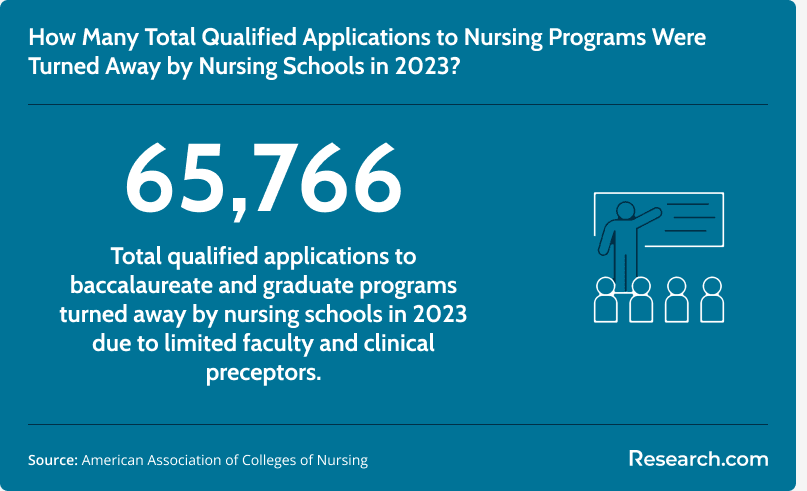
Some certificates allow students to shape projects, practicum work, or electives around a preferred teaching environment. In 2023, about 55,111 qualified nursing baccalaureate degree applicants were turned-away due to lack of faculty, which underscores why educator preparation remains important.
- Academic nurse educator: Focuses on teaching in colleges, universities, and community colleges, including curriculum design, classroom instruction, clinical supervision, and student evaluation.
- Clinical nurse educator: Prepares nurses to train staff in hospitals, clinics, long-term care facilities, and other healthcare organizations.
- Simulation-based education: Emphasizes simulation labs, high-fidelity mannequins, virtual scenarios, and structured debriefing.
- Online and distance education: Develops skills in online course design, digital engagement, learning management systems, and remote assessment.
- Specialty area teaching: Allows students to connect practicum or assignment work to clinical areas such as pediatrics, critical care, mental health, or community health.
The ongoing nursing faculty shortage has contributed to qualified applicants being turned away from nursing programs. The chart below shows entry-level baccalaureate nursing applications turned away each year from 2014 to 2023.
How to choose the best fast online graduate certificate in nurse education
The right program should match your current credentials, teaching goals, budget, schedule, and state requirements. Do not choose based only on completion speed. A certificate that is fast but lacks support, practicum guidance, or recognized accreditation may create problems later.
1. Verify accreditation first
Confirm that the institution is properly accredited and that the nursing program is recognized by relevant nursing accreditors such as CCNE or ACEN when applicable. You can review recognized agencies through CHEA and U.S. Department of Education-recognized accrediting organizations. Accreditation can affect financial aid eligibility, employer recognition, transferability, and future graduate study.
2. Match the program to your degree level
Some certificates are open to BSN-prepared RNs, while others are post-master’s only. Applying to the wrong type wastes time. If your long-term plan includes graduate nursing leadership, compare certificate requirements with MSN or DNP pathways before committing.
3. Study the practicum requirement
Ask whether the school finds placements, allows workplace-based teaching experiences, requires local preceptors, or has specific site approval rules. Practicum logistics can delay completion if you start planning too late.
4. Compare total cost, not just tuition
Review per-credit tuition, flat-rate terms, online fees, books, background checks, clinical documentation, and travel requirements. A lower per-credit price may not be cheaper if the program requires more credits.
5. Check course delivery carefully
Asynchronous courses are usually easier for nurses with changing shifts. Synchronous courses may provide more structure but can conflict with clinical schedules. Hybrid programs may be excellent, but only if you can attend the required in-person sessions.
6. Review faculty experience and student support
Look for faculty with nurse educator, curriculum, clinical teaching, simulation, or academic leadership experience. Also ask about advising, writing support, technology support, and practicum coordination.
7. Ask how the certificate supports your target role
If you want to teach in a college of nursing, ask whether graduates have moved into adjunct or faculty roles. If you want hospital-based education, ask how the curriculum addresses staff development, onboarding, competency assessment, and continuing education.
| Question to ask before enrolling | Why it matters |
| Is the certificate for BSN-prepared nurses, MSN-prepared nurses, or both? | Eligibility depends on your current degree. |
| Is the program fully online, hybrid, synchronous, or asynchronous? | Format determines whether it will fit your work schedule. |
| Who arranges the practicum or teaching experience? | Placement responsibility can affect completion time. |
| Does the curriculum prepare students for academic, clinical, or simulation teaching? | Programs vary in focus even when they use similar titles. |
| What fees are not included in the advertised tuition? | Total cost can be higher than the headline rate. |
| Can credits apply toward a future MSN, DNP, or doctoral program? | Transfer or stackable credits may improve long-term value. |
Career paths after an online graduate certificate in nurse education
Graduates can pursue teaching, training, mentoring, and educational leadership roles in academic and healthcare settings. Job titles and qualifications vary by employer. Some faculty roles may require an MSN or doctoral degree in addition to a certificate, while clinical educator positions may place more weight on specialty experience and staff training skills.
Academic nurse educator
Academic nurse educators teach in colleges, universities, and community colleges. They may lecture, lead labs, supervise clinical learning, design course materials, evaluate students, and contribute to curriculum development.
Clinical nurse educator
Clinical nurse educators work in healthcare organizations to train nursing staff, support onboarding, evaluate competencies, and promote evidence-based practice at the unit or system level.
Staff development coordinator
Staff development coordinators plan continuing education, compliance training, competency validation, and professional development programs for healthcare employees.
Simulation lab instructor or coordinator
Simulation educators use scenarios, mannequins, debriefing, and digital tools to help students and staff practice clinical decision-making in controlled environments.
Online nursing instructor
Online nursing instructors teach theory-based courses remotely and need strong skills in online communication, course design, student engagement, and timely feedback.
Continuing education specialist
Continuing education specialists create learning experiences for licensed nurses who need renewal credits, updated competencies, or specialty training.
Patient education coordinator
Patient education coordinators design and deliver instruction for patients and families, often around chronic disease management, medication use, discharge planning, and self-care. The infographic below may help you evaluate whether this credential supports your next career move.
Job market outlook for nurse educator certificate graduates
The job market for nurse educator preparation is supported by ongoing faculty shortages, demand for clinical training, and the need to prepare new nurses entering the workforce. A graduate certificate alone may not qualify someone for every faculty position, but it can strengthen an RN’s teaching profile, especially when combined with an MSN, clinical expertise, precepting experience, or doctoral study.
The shortage is driven by several factors, including projected retirement of about one-third of nurse faculty by 2025, slower enrollment in doctoral programs, and salary gaps where clinical nurses often earn $40,000 more than educators. One report indicates nearly 62% of nurse schools report vacant faculty positions, and many faculty cite low compensation, unrealistic workloads, and burnout as reasons for leaving or considering leaving academia.
Graduates may find opportunities as academic nurse educators, clinical educators, staff development coordinators, simulation lab instructors, adjunct faculty, and continuing education specialists. The strongest candidates usually combine teaching preparation with clinical credibility, communication skills, assessment experience, and comfort using educational technology.
Challenges of accelerated online nurse educator certificates
Fast online programs are convenient, but they are not light. Students may have to complete graduate-level reading, discussion, lesson planning, evaluation design, and practicum work in compressed terms. Nurses working full-time should be realistic about how many hours they can study each week.
- Compressed workload: Short terms can make deadlines arrive quickly, especially when assignments build on one another.
- Limited face-to-face interaction: Online students may need to be more proactive about building relationships with faculty and peers.
- Practicum coordination: Local teaching experiences may require approvals, preceptors, documentation, and scheduling flexibility.
- Technology demands: Online teaching and learning require reliable internet, comfort with learning platforms, and digital communication skills.
- Variable employer requirements: Some academic roles require an MSN or doctoral degree, not just a certificate.
Students comparing quality and affordability can use benchmarks from the most affordable online nursing programs to think more critically about tuition, support, flexibility, and outcomes.
Online nurse educator certificate vs. fastest online DNP program
An online nurse educator certificate is a short, focused credential for nurses who want to learn how to teach. It emphasizes curriculum design, instructional strategies, learner assessment, clinical teaching, and often a practicum. It is usually best for nurses who already have a nursing degree and want targeted educator preparation.
The fastest online DNP program is a doctoral pathway focused on advanced clinical leadership, evidence-based practice, systems improvement, policy, and high-level healthcare decision-making. A DNP may include education-related work, but its scope is broader than a nurse educator certificate.
| Credential | Main purpose | Typical focus | Best for |
| Online nurse educator certificate | Short teaching-focused preparation | Curriculum, instruction, assessment, practicum teaching | Nurses moving into academic, clinical, or staff development education |
| Fastest online DNP program | Doctoral-level practice and leadership preparation | Evidence-based practice, systems leadership, policy, advanced practice | Nurses seeking advanced leadership, clinical, or doctoral-level roles |
How to confirm the quality of an online nurse educator certificate
Start with accreditation, then examine the curriculum, faculty, practicum support, completion expectations, and student services. A credible program should clearly state who it admits, what students learn, how teaching experience is completed, and whether credits can transfer into a future degree.
Do not rely only on rankings or marketing language. Ask for current program details, read the academic catalog, review faculty backgrounds, and contact admissions or advising with specific questions. If you are considering other advanced nursing pathways, comparing requirements with options such as direct NP programs can help clarify how different credentials lead to different careers.
What professionals say about online graduate certificate nurse education programs
- Rachel: "Online nurse educator coursework made it possible for me to keep my full-time nursing schedule while preparing for a teaching role. I could study after shifts, participate in discussions, and still get meaningful feedback from faculty. The flexibility was the reason I could make the transition."
- James: "The certificate helped me become more confident with curriculum planning, learning objectives, and student evaluation. I expected the online format to feel distant, but the discussions and faculty support were stronger than I anticipated. I now use those teaching strategies with new nurses and students."
- Lena: "I needed a program that fit around family responsibilities and work. The courses were organized, practical, and connected directly to the kind of teaching I wanted to do. Earning the certificate online helped me move forward without stepping away from nursing practice."
Common mistakes to avoid when choosing a fast online nurse educator certificate
- Choosing only the shortest program: A 6-month program may be attractive, but it still needs strong faculty, meaningful teaching experience, and appropriate accreditation.
- Ignoring degree-level requirements: Some certificates require an MSN. Others accept BSN-prepared nurses. Confirm eligibility before applying.
- Overlooking practicum logistics: Ask early whether you must find your own site or preceptor.
- Comparing tuition without fees: Online, technology, practicum, and course material fees can change the real cost.
- Assuming a certificate guarantees a faculty job: Employers may require an MSN, doctorate, specialty certification, or prior teaching experience.
- Forgetting future plans: If you may pursue an MSN, DNP, or doctorate later, ask whether certificate credits can apply to a degree.
Key Insights
- The fastest online graduate certificate nurse education programs can be completed in as few as 6 months, but many working nurses may find 9-12 months more manageable.
- Speed should not outweigh accreditation, practicum quality, faculty expertise, and fit with your career goal.
- Total tuition commonly ranges from $5,000 to $12,000, but fees, credit requirements, and payment timing can significantly affect affordability.
- Most programs teach curriculum design, instructional strategies, assessment, clinical teaching, and education technology.
- A certificate can support roles in academic teaching, clinical education, simulation, staff development, continuing education, and patient education, but some positions require an MSN or doctoral degree.
- Before enrolling, verify accreditation, admission requirements, online format, practicum expectations, financial aid eligibility, and whether credits can transfer into a future graduate degree.
References:
- American Association of Colleges of Nursing. (2024). 2024 AACN annual report.
- American Association of Colleges of Nursing. (n.d.). Fact sheet: Nursing faculty shortage.
- Bureau of Labor Statistics. (2024). Occupational employment and wages, May 2023: Nursing instructors and teachers, postsecondary (25-1072). U.S. Department of Labor.
- Center for Health Workforce Studies. (2025, June). Addressing the nurse educator workforce shortage: A study of nurse educators in New York.
- Health Resources and Services Administration. (n.d.). Nursing workforce dashboards. U.S. Department of Health and Human Services.
- National League for Nursing. (2023). Annual survey of schools of nursing: Academic year 2022–2023.
- Research.com. (n.d.). Doctorate in nursing salary: Average DNP salary by state.
- Spector, N., Silvestre, J., & Ulrich, B. (2025). New nurses in 2024: Realities, challenges, and recommendations. Journal of Nursing Regulation, 15(1).
- Xue, Y., Hossain, M. M., Spetz, J., & Fraher, E. P. (2024). Nurse educators in the United States: Characteristics and employment trends. BMC Nursing, 23(93).
Other Things You Should Know About the Fastest Online Graduate Certificate Nurse Education Programs
In 2027, many online graduate certificate nurse education programs are designed to be completed in less than a year. Universities like Duke and Johns Hopkins offer accelerated tracks that allow nurses to gain essential teaching skills swiftly, often in 9 to 12 months.
Generally, accredited nurse educator certificate programs are designed to align with national standards such as those set by the National League for Nursing (NLN) or AACN. However, they may not automatically meet state licensure or credentialing requirements for all teaching positions. If you plan to teach in a state-regulated setting, verify that the program meets your state’s specific educational requirements.
A graduate certificate is often shorter and more focused, typically for nurses with a BSN or MSN who want foundational training in education. A post-master’s certificate is specifically for those who already hold a master’s degree and want to add a teaching specialization. Both prepare nurses for educator roles, but post-master’s programs may go deeper into leadership or curriculum design. The right choice depends on your current credentials and career goals.


