2027 Most Affordable Online Graduate Certificate Nurse Education Programs

Co-Founder and Chief Data Scientist
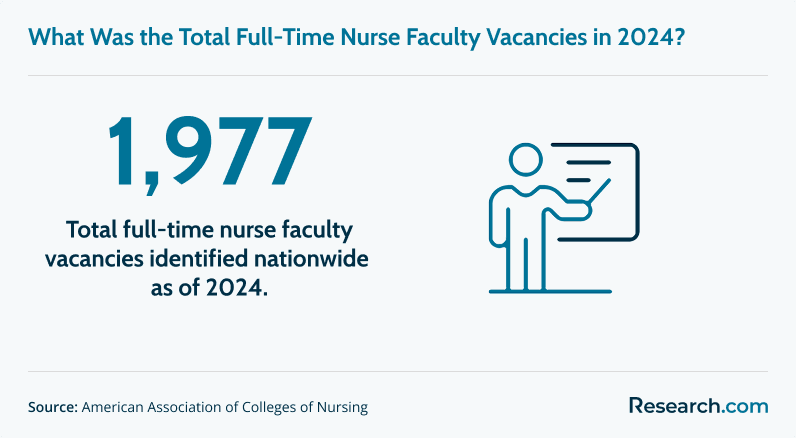
A nurse education graduate certificate is a focused credential for registered nurses who want to teach nursing students, train clinical staff, lead onboarding programs, or move into nursing professional development without committing immediately to a full master's degree. The timing matters: in a survey of 922 U.S. nursing schools offering baccalaureate or graduate programs, 1,977 full-time faculty vacancies were reported nationwide, showing how educator shortages continue to limit nursing program capacity.
This guide is for working RNs comparing affordable online graduate certificate nurse education programs. You will learn what these certificates cover, how much they cost, how long they take, what jobs they may support, how online programs compare with campus-based options, and how to choose a program that fits your licensure status, schedule, budget, and long-term career goals.
Quick answer: Is an affordable online graduate certificate in nurse education a good option?
An affordable online graduate certificate in nurse education can be a practical choice for licensed nurses who already hold a BSN, MSN, DNP, or related graduate nursing credential and want targeted preparation for teaching roles. These programs are usually shorter than a full graduate degree, commonly require 9 to 15 credits, and often take 6 months to 1.5 years to complete.
The certificate is most useful if you want to become a clinical instructor, academic nurse educator, clinical nurse educator, staff development specialist, or patient educator. It is not a substitute for an MSN or doctoral degree when an employer, state board, or faculty appointment requires a higher credential.
What are the benefits of getting an affordable online graduate certificate nurse education program?
- It targets a real workforce need. Graduates may qualify for educator-focused roles in colleges, universities, hospitals, healthcare systems, and staff development departments. Common positions include academic nurse educator, nurse faculty member, clinical instructor, clinical nurse educator, staff development specialist, and patient educator.
- It can support career advancement. According to the U.S. Bureau of Labor Statistics (BLS), Nurse Educators (Postsecondary) have a median annual salary of around $80,780, and some top earners can exceed $120,000 annually. Actual earnings depend on employer type, region, credentials, specialty background, and years of experience.
- It is designed for working nurses. Many online certificates use asynchronous coursework, allowing nurses to study around shifts, family responsibilities, and clinical obligations. Online delivery can also reduce commuting, parking, relocation, and campus-related costs.
| Best fit | Why the certificate may help | When to consider another path |
| Experienced RN with a BSN | Can build teaching, assessment, and curriculum skills for entry educator responsibilities | If the desired employer requires an MSN for faculty or leadership roles |
| MSN-prepared nurse in another specialty | Adds formal preparation for teaching without repeating a full degree | If a doctoral credential is needed for tenure-track or senior academic leadership |
| Hospital-based nurse preceptor or charge nurse | Can strengthen orientation, competency validation, and staff education skills | If the role requires nursing professional development certification or broader leadership training |
What can I expect from an affordable online graduate certificate nurse education program?
An online graduate certificate in nurse education is a compact program focused on how nurses teach, evaluate learning, design curriculum, and support clinical competency. Unlike a full MSN, the certificate usually concentrates on educator competencies rather than a broad set of advanced nursing courses.
Students typically study learning theory, evidence-based instructional methods, curriculum planning, evaluation, simulation or instructional technology, and the professional responsibilities of nurse educators. Many programs also include a practicum or supervised teaching experience so students can apply education concepts in an academic or clinical setting.
Graduates may use the credential to pursue academic, clinical, staff development, or patient education roles. Some programs also help students prepare for professional educator credentials such as the CNE exam, although eligibility requirements should always be checked directly with the credentialing organization.
Where can I work with an affordable online graduate certificate nurse education program?
Most graduates use the certificate in either academic nursing education or healthcare-based education. In academic settings, nurse educators may work for universities, community colleges, vocational nursing schools, or nursing departments that need classroom, lab, simulation, or clinical instructors.
Academic responsibilities can include teaching courses, facilitating clinical rotations, creating assignments, assessing student performance, advising learners, revising curriculum, and mentoring future nurses. These roles are especially important because faculty shortages can limit the number of qualified applicants nursing schools are able to admit.
In healthcare organizations, certificate holders may work as clinical nurse educators, staff development specialists, or nursing professional development specialists. These roles focus on training licensed nurses and other healthcare staff after they enter practice.
Hospital and health system responsibilities may include new nurse orientation, competency checks, in-service education, training on new equipment or protocols, continuing education, and implementation of evidence-based practice. Some nurses also use education training in patient-facing roles, helping patients and families understand diagnoses, medications, self-care, discharge instructions, and preventive care.
How much can I make with an affordable online graduate certificate nurse education program?
Pay varies widely because nurse education roles span colleges, hospitals, healthcare systems, community settings, and professional development departments. The BLS reported that the median annual wage for Nursing Instructors and Teachers, Postsecondary was $80,780 as of May 2023.
Employer setting can make a major difference. Nurse educators in general medical and surgical hospitals tend to earn higher on average, around $106,620 annually. Location, degree level, teaching load, specialty experience, union agreements, and whether the job is full-time, adjunct, or administrative also affect compensation.
For hospital-based Clinical Nurse Educator roles, ZipRecruiter data from May 2025 reports average annual pay of around $94,727. Staff Development Specialists in healthcare organizations have an average annual salary of approximately $56,194, though experienced nurses with specialized clinical backgrounds may see different pay ranges.
The certificate can improve your competitiveness for educator roles, but it does not guarantee a salary increase. Before enrolling, compare local job postings, required credentials, expected salary ranges, and whether your current employer rewards certificate completion.
- Most Affordable Online Graduate Certificate Nurse Education Programs for 2027
- How long does an affordable online graduate certificate nurse education program take?
- Online vs. on-campus nurse education certificates: which format fits better?
- What does an affordable online graduate certificate in nurse education cost?
- What financial aid options are available for nurse education certificate students?
- What admission requirements should applicants expect?
- What courses are included in a nurse education graduate certificate?
- Are there specializations in online nurse education certificate programs?
- How should you choose the best affordable online nurse education certificate?
- What careers can graduates pursue?
- What is the job market for nurse educators?
- Should you continue your education after the certificate?
- Can the certificate improve your professional opportunities?
- What challenges should online students prepare for?
- Is an affordable online graduate certificate in nurse education worth it?
Most Affordable Online Graduate Certificate Nurse Education Programs for 2027
How do we rank schools?
Choosing an affordable online graduate certificate nurse education program requires more than finding the lowest tuition. Students also need to review accreditation, total cost, delivery format, credit requirements, practicum expectations, and whether the credential matches their career goal.
Research.com uses a transparent methodology supported by data from the Integrated Postsecondary Education Data System (IPEDS), Peterson's databases including the Distance Learning Licensed Data Set, and the College Scorecard from the National Center for Education Statistics. These sources help students compare programs using consistent information rather than relying only on marketing claims.
1. Lamar University
Lamar University offers an Online Program Certificate in Nursing Education for BSN-prepared registered nurses who want introductory preparation in teaching. The 9-credit hour program can often be completed in as few as 6 months and is delivered 100% online with asynchronous coursework. Students study curriculum development, learning theories, and teaching and evaluation methods for academic or clinical educator roles. Lamar has offered online nursing programs since at least 2013, reflecting a long-running online nursing presence.
- Program Length: As few as 6 months; often up to 1 year for part-time study
- Tracks/concentrations: Nursing Education
- Cost per Credit: $418
- Required Credits to Graduate: 9 credit hours
- Accreditation: Accreditation Commission for Education in Nursing (ACEN)
2. Arkansas State University (Jonesboro, AR)
Arkansas State University offers an Online Graduate Certificate – Nurse Educator for MSN-prepared nurses who want an added educator credential. The 12-credit hour program may be finished in as few as 6 months and emphasizes teaching approaches for varied learners in clinical and academic environments. Coursework is fully online and includes curriculum-development technology, evidence-based practice, and clinical experiences that may involve a practicum. A-State is known for affordable online nursing certificate tuition.
- Program Length: As few as 6 months; often up to 1 year for part-time study
- Tracks/concentrations: Nurse Educator
- Cost per Credit: $340
- Required Credits to Graduate: 12 credit hours
- Accreditation: Commission on Collegiate Nursing Education (CCNE) and Accreditation Commission for Education in Nursing (ACEN)
3. Youngstown State University (Youngstown, OH)
Youngstown State University provides an online Nurse Educator – Post Graduate Certificate for nurses who already hold an MSN and want focused preparation in education. The 15-credit hour certificate generally takes around 8 to 10 months and is offered fully online. Students build knowledge in curriculum design, instructional strategies, and evaluation methods. Graduates may pursue nursing faculty, clinical educator, or patient educator positions, and YSU’s online tuition makes the certificate a competitive post-master’s option.
- Program Length: As few as 8 months
- Tracks/concentrations: Nurse Educator
- Cost per Credit: $415
- Required Credits to Graduate: 15 credit hours
- Accreditation: Commission on Collegiate Nursing Education (CCNE) and Accreditation Commission for Education in Nursing (ACEN)
4. Millersville University (Millersville, PA)
Millersville University offers an online Graduate Certificate in Nursing Education for MSN-prepared nurses who want to strengthen their teaching expertise. The 15-credit program may be completed in as few as 10 months and is offered entirely online, often with asynchronous coursework. Topics include educational theory, instructional methods, assessment, program evaluation, and curriculum design. The certificate prepares nurses for academic education and nursing professional development roles, while Millersville’s e-tuition rates support affordability.
- Program Name: Graduate Certificate in Nursing Education Online
- Program Length: As few as 10 months
- Tracks/concentrations: Nursing Education
- Cost per Credit: $605
- Required Credits to Graduate: 15 credit hours
- Accreditation: National League for Nursing Commission for Nursing Education Accreditation (NLN CNEA)
5. University of Northern Colorado (Greeley, CO)
The University of Northern Colorado offers a Nursing Education Post-Master's Certificate for nurses with master’s or doctoral preparation who want additional teaching skills. The 9-credit hour online certificate can typically be completed in a year or less. Coursework is fully online and provides advanced preparation in nursing education while supporting preparation for the NLN Certified Nurse Educator (CNE) designation. UNC’s Extended Campus administers the certificate with competitive tuition for online graduate study.
- Program Length: Varies; can be completed in a year or less
- Tracks/concentrations: No separate tracks; focused on Nursing Education
- Cost per Credit: $734
- Required Credits to Graduate: 9 credit hours
- Accreditation: Higher Learning Commission (HLC), Commission on Collegiate Nursing Education (CCNE)
6. Methodist University
Methodist University offers an online Graduate Nursing Education Certificate for BSN-prepared registered nurses planning to move toward educator roles. The 12-credit hour program can be completed in as little as one year and uses an asynchronous online format with eight-week terms and multiple annual start dates. Coursework covers education theory, assessment, and curriculum development for teaching in healthcare settings and undergraduate nursing education. Up to nine credit hours may also count as dual credit toward the MSN: Administrative Leadership degree.
- Program Length: 1 year; can be completed in 3 semesters
- Tracks/concentrations: Nursing Education
- Cost per Credit: $545
- Required Credits to Graduate: 12 credit hours
- Accreditation: For Commission on Collegiate Nursing Education (CCNE) accreditation
7. Western Governors University (WGU)
Western Governors University offers a Nursing – Education (Post-Master’s Certificate) through its competency-based learning model. The program is intended for nurses who already hold an MSN and want to specialize in nursing education. Because coursework is online and self-paced, highly motivated students may be able to progress quickly and potentially reduce cost under WGU’s term-based tuition structure. The curriculum focuses on demonstrated competency in skills relevant to nurse educator positions.
- Program Length: Typically 12 months; competency-based
- Tracks/concentrations: Nursing Education
- Cost per Credit: WGU uses a flat-rate tuition model per 6-month term, not per credit. Approximately $5,035 per 6-month term, plus a $200 e-books/resources fee per term
- Required Credits to Graduate: 16 competency units, WGU's equivalent of credits
- Accreditation: Commission on Collegiate Nursing Education (CCNE)
8. American Public University
American Public University (APU) offers an online Graduate Certificate in Nursing Education for registered nurses who want structured preparation in teaching and learning. The program is generally a post-baccalaureate certificate for BSN-prepared RNs. APU began offering online courses in 1998, with graduate programs moving fully online by 2000. The asynchronous format allows students to complete coursework around work and personal responsibilities, making it a flexible option for nurses seeking an educator credential.
- Program Length: Accelerated: 8 months, or 2 trimesters; Working Professional: 16 months, or 4 trimesters
- Tracks/concentrations: Nursing Education
- Cost per Credit: $700
- Required Credits to Graduate: 18 credit hours
- Accreditation: Higher Learning Commission (HLC), Commission on Collegiate Nursing Education (CCNE)
9. Georgia Southwestern State University
Georgia Southwestern State University (GSW) offers a Post BSN/MSN Nurse Educator Certificate for nurses seeking advanced preparation for teaching. GSW has supported online nursing education since at least 2012. The certificate is designed for both BSN- and MSN-prepared nurses and is offered fully online. Students study curriculum development, teaching strategies, and clinical education concepts for roles in healthcare and academic settings.
- Program Length: Around 1 year when focused only on certificate coursework
- Tracks/concentrations: Nurse Educator
- Cost per Credit: $257
- Required Credits to Graduate: 12-18 credits
- Accreditation: Commission on Collegiate Nursing Education (CCNE)
10. The University of Texas at Arlington
The University of Texas at Arlington (UTA) offers an Online Certificate in Nursing Education for BSN-prepared registered nurses who want to teach Licensed Vocational Nurses (LVNs) or Certified Nurse Assistants (CNAs). The 12-credit hour program has a total tuition cost under $7,000 and can be completed in as few as 6 months. UTA offers multiple start dates each year and uses 8-week courses. The fully online curriculum covers the nurse educator role, curriculum development, teaching theory, and assessment.
- Program Length: As few as 6 months
- Tracks/concentrations: Nursing Education
- Cost per Credit: $515
- Required Credits to Graduate: 12 credit hours
- Accreditation: Commission on Collegiate Nursing Education (CCNE)
How long does it take to complete an affordable online graduate certificate nurse education program?
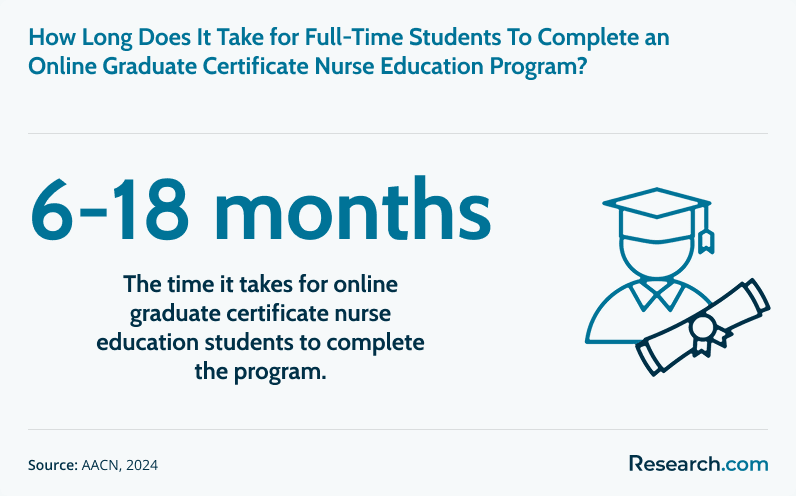
Most affordable online graduate certificates in nurse education take 6 months to 1.5 years. Many are built for working RNs and can be finished in one year, often across 2-3 semesters. Students comparing this path with other nursing certifications should pay attention to whether the program is a graduate academic certificate, a professional certification preparation pathway, or both.
Program length is usually tied to credit requirements. Many nurse education certificates require 9 to 15 credits, although some programs are shorter or longer. Accelerated options with fewer credits, condensed terms, or a heavier course load may take only 6 to 8 months.
Online format can make scheduling easier, but it does not always reduce workload. Condensed 7- or 8-week sessions move quickly, and practicum requirements may add scheduling complexity. Students should ask early whether they must find their own preceptor, whether local placement is allowed, and how many teaching or clinical education hours are required.
| Timeline | Who it fits | Trade-off |
| 6 to 8 months | Nurses who can handle an accelerated pace and have stable work schedules | Less time to absorb material and more intense weekly workload |
| About 1 year | Working RNs who want steady progress without overload | Still requires consistent weekly study time |
| 1.5 years | Nurses balancing shift work, family responsibilities, or practicum placement delays | Slower completion may extend total time before career transition |
How does an affordable online graduate certificate nurse education program compare to an on-campus program?
The main advantage of an online nurse education certificate is scheduling flexibility. Many nurses work rotating shifts, nights, weekends, or overtime, so a program that allows asynchronous study can be easier to complete than one requiring regular campus attendance.
Some students compare these certificates with other quick online degrees, but the better comparison is whether the program’s format supports your nursing schedule and career goal. Online courses can remove commuting and relocation barriers, and they may reduce costs tied to transportation, parking, childcare, and campus fees.
Campus-based programs may be better for students who prefer face-to-face discussion, immediate instructor access, a structured weekly rhythm, and in-person networking. They may also simplify simulation, teaching labs, or practicum coordination if the student lives near campus or a partner healthcare site.
| Factor | Online certificate | On-campus certificate |
| Schedule | Often asynchronous and better for shift workers | Usually requires set class times |
| Cost considerations | May reduce commuting, parking, and relocation expenses | May include additional campus-related costs |
| Interaction | Uses discussion boards, video meetings, and virtual office hours | Offers in-person discussion and immediate classroom engagement |
| Practicum | May require the student to locate an approved preceptor nearby | May have stronger local campus placement networks |
| Best for | Self-directed nurses who need flexibility | Students who want structure and in-person support |
What is the average cost of an affordable online graduate certificate nurse education program?
An affordable online graduate certificate nurse education program often costs about $5,000 to $10,000 in total, although prices vary by school, credit load, fees, and tuition model.
The largest cost driver is usually the per-credit rate. Many programs require 9 to 15 credits, and online graduate certificate rates may range from around $400 to $800+ per credit hour. Some institutions charge a flat total program price, while others use per-credit billing or term-based tuition.
Students should calculate the full cost before applying. Include tuition, required fees, technology fees, books, course materials, background checks, health documentation, travel for practicum if needed, and any costs related to securing or completing a teaching placement. Some students may find financial support through employer benefits, scholarships, private loans, or limited federal aid options.
| Cost category | What to check | Why it matters |
| Tuition | Per-credit, per-term, or total program pricing | The lowest per-credit rate may not mean the lowest total cost |
| Fees | Technology, online learning, application, graduation, and student service fees | Fees can change the true affordability of a program |
| Books and materials | Required texts, e-books, software, and assessment tools | Some programs bundle materials while others charge separately |
| Practicum expenses | Background check, immunizations, drug screening, travel, and preceptor requirements | Practicum costs are easy to overlook during program comparison |
| Employer support | Tuition reimbursement rules, annual caps, grade requirements, and service commitments | Employer funding can reduce out-of-pocket cost but may come with conditions |
When comparing cost, do not evaluate a nurse education certificate only against broader healthcare options such as an online graduate certificate in nurse education search or the cheapest online health education programs. Nursing education has its own accreditation, licensure, clinical, and employer expectations that can affect value.
What are the financial aid options for students enrolling in an affordable online graduate certificate nurse education program?
Financial aid for graduate certificates can be more limited than aid for full degree programs. However, students in online nursing programs may still have several funding routes depending on the school, program eligibility, employer benefits, and scholarship availability.
Federal financial aid
- Direct Unsubsidized Loans: Graduate students commonly use this federal loan type when the certificate program is eligible at their institution. Interest accrues while the student is enrolled, so borrowers should estimate total repayment cost before accepting loans.
- Federal Work-Study (FWS) Program: This option provides part-time employment for students with financial need, but it is less common for online-only certificate students. Ask the school’s financial aid office whether certificate students can participate.
- Pell Grants/Federal Supplemental Educational Opportunity Grants (FSEOG): These programs generally serve undergraduate students with significant financial need. They are unlikely to apply to most graduate nurse education certificates unless a specific exception exists.
Scholarships and grants
Scholarships are often the most attractive funding source because they do not require repayment. Nurses should search broadly and apply early because deadlines, eligibility rules, and award amounts vary.
- Professional nursing organizations: Groups such as the National League for Nursing (NLN) Foundation for Nursing Education, American Association of Colleges of Nursing (AACN), Sigma Theta Tau International Honor Society of Nursing, and specialty nursing associations may offer funding for nurses pursuing graduate education.
- University scholarships: Many institutions provide graduate nursing awards, although some may be reserved for degree-seeking students. Review scholarship pages carefully; do not assume aid available to unrelated programs, such as affordable online energy policy degree programs, will apply to nursing education certificates.
- Private foundations: Healthcare, community, minority professional, women in STEM, and rural workforce organizations may sponsor awards for nurses advancing their education.
- Hospital or health system scholarships: Some employers support nurses who are preparing for hard-to-fill educator, preceptor, leadership, or training roles.
Employer tuition reimbursement
Employer reimbursement is one of the most practical options for working nurses. Many hospitals and healthcare systems reimburse part of the cost of graduate coursework after the employee completes the class successfully.
Review the policy carefully. Employers may set an annual maximum, require a minimum grade, limit reimbursement to job-related programs, or require the nurse to remain employed for a specific period after receiving funds. Do not assume a certificate will automatically lead to one of the highest paid nurses roles; reimbursement should be evaluated separately from future salary expectations.
What are the prerequisites for enrolling in an affordable online graduate certificate nurse education program?
Admission requirements vary, but most online graduate certificates in nurse education are designed for licensed nurses with prior nursing education and clinical experience. Applicants should confirm whether the program is post-baccalaureate, post-master’s, or open to both BSN- and MSN-prepared nurses.
- Active RN license: Most programs require a current, unencumbered RN license. If a practicum will occur in another state, confirm whether licensure in that state is required.
- BSN or higher nursing degree: Many certificates require a BSN from an accredited institution. Nurses who still need this credential may compare bridge or accelerated nursing programs before applying.
- MSN or doctoral degree for post-master’s certificates: Some programs accept only nurses who already hold an MSN, DNP, or equivalent graduate nursing credential.
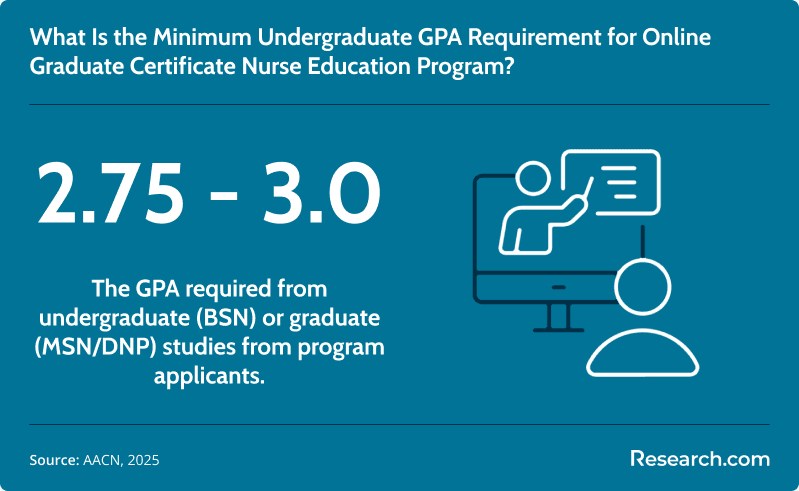
- Minimum GPA: Schools commonly look for a GPA of 2.75 to 3.0 on a 4.0 scale, although some may review applicants holistically.
- Official transcripts: Applicants usually submit transcripts from every college or university attended.
- Resume or CV: A professional document should summarize nursing experience, specialty practice, leadership, certifications, teaching exposure, and achievements.
- Personal statement: Many schools ask applicants to explain why they want to teach and how the certificate supports their career plan.
- Recommendation letters: Programs may request 1-3 recommendations from supervisors, faculty members, or colleagues who can address clinical competence and readiness for graduate work.
- Clinical experience: Many schools prefer at least 1-2 years of post-licensure nursing experience, even when it is not a strict admission requirement.
- English language proficiency: International applicants may need TOEFL, IELTS, PTE, or another approved test score if English is not their first language.
- Background and health clearance: Before practicum, students may need a criminal background check, immunization records, drug screening, and other clinical site documentation.
| Question to ask admissions | Why it matters |
| Is this certificate for BSN-prepared nurses, MSN-prepared nurses, or both? | Applying to the wrong level can waste time and application fees |
| Does the program require a practicum? | Practicum placement can affect schedule, cost, and completion time |
| Can I complete practicum hours in my home state? | State authorization and licensure rules may limit placement options |
| Will certificate credits transfer into an MSN or DNP later? | Transferability can improve long-term value if you plan further study |
What courses are typically in an affordable online graduate certificate nurse education program?
Coursework in these programs is built around the knowledge nurses need to become a nurse educator. Because the credential is shorter than a degree, each course usually has a direct teaching, curriculum, evaluation, or practicum purpose.
- Foundations of Nursing Education or Role of the Nurse Educator: Introduces educator responsibilities in academic, clinical, staff development, and patient education settings. Topics may include professional standards, ethics, role expectations, and the evolution of nursing education.
- Teaching and Learning Theories in Nursing Education: Covers adult learning, active learning, clinical judgment development, classroom facilitation, online teaching, simulation, and strategies for diverse learners.
- Curriculum Development and Program Evaluation: Teaches students how to design courses, write objectives, align content with outcomes, evaluate curriculum effectiveness, and understand accreditation-related expectations such as CCNE or ACEN standards.
- Assessment and Evaluation: Focuses on measuring learning through exams, rubrics, clinical performance evaluation, formative feedback, summative assessment, and ethical grading practices.
- Instructional Technology: Explores learning management systems, simulation tools, virtual learning environments, telehealth education, digital engagement, and technology-supported teaching.
- Practicum or Teaching Experience: Provides supervised application of educator skills with a preceptor in an academic or clinical learning environment. Required hours differ by program.
The data below points to an important workforce issue in nursing education: many faculty members are aging toward retirement. That trend increases the need for prepared educators who can step into teaching, clinical instruction, and staff development roles.
What types of specializations are available in affordable online graduate certificate nurse education programs?
Most affordable online graduate certificate nurse education programs do not offer multiple formal specializations. The certificate itself is usually the specialization, especially when compared with broader MSN or DNP programs that may offer advanced practice, leadership, informatics, or administration tracks.
Even without separate tracks, students can often shape assignments, practicum placements, or career applications toward one of two major settings.
- Academic nursing education: This path supports teaching in universities, community colleges, vocational schools, simulation labs, and clinical instruction sites. Nurses who still need a bachelor’s completion route may review options such as RN to BSN without clinicals, but graduate certificate admission requirements should be confirmed separately.
- Healthcare organization education: This path supports staff development, competency validation, orientation, continuing education, patient education, and nursing professional development roles in hospitals, clinics, long-term care, and health systems.
How does one choose the best affordable online graduate certificate nurse education program?
The October 2023 survey of 922 U.S. nursing schools offering baccalaureate or graduate programs identified 1,977 full-time faculty vacancies, but high demand should not lead to a rushed program choice. Affordability matters, but it should never replace accreditation, fit, practicum feasibility, and employer recognition. This principle applies across online education; even when comparing unrelated options such as the cheapest online training for construction, students still need to verify quality and outcomes rather than relying only on price.
1. Verify institutional and nursing accreditation
Confirm that the university holds recognized institutional accreditation and that the nursing program has appropriate nursing accreditation, commonly through CCNE or ACEN when applicable. Check accreditation directly with the accreditor rather than relying only on a program webpage.
2. Calculate total cost, not just tuition
Compare complete program cost across schools. Include tuition, required fees, books, technology costs, practicum documentation, background checks, and possible travel. Ask whether certificate students qualify for scholarships, employer reimbursement, or federal loans.
3. Match the program level to your current degree
A post-baccalaureate certificate may accept BSN-prepared nurses, while a post-master’s certificate may require an MSN or doctorate. Applying to the wrong type can delay your plan.
4. Review flexibility and workload
Ask whether classes are asynchronous, whether live sessions are required, how many courses students usually take at once, and whether multiple start dates are available. A short program is not automatically easier; accelerated courses can be demanding.
5. Investigate practicum requirements early
Find out how many hours are required, whether the school helps arrange placement, whether you can use your current workplace, and what qualifications the preceptor must hold. Practicum logistics are a common source of delays.
6. Confirm career alignment
Review syllabi and learning outcomes for teaching theory, curriculum design, evaluation, instructional technology, and educator role development. The same scrutiny students might apply to a niche program such as the cheapest esports business degree online should be applied here: the coursework should match the job you actually want.
7. Evaluate online student support
Ask about academic advising, technical help, library access, faculty availability, writing support, career services, and practicum coordination. Strong support can make the difference between finishing on time and struggling alone.
| Common mistake | Better approach |
| Choosing the lowest posted tuition | Compare total program cost, fees, and employer reimbursement rules |
| Ignoring accreditation | Verify institutional and nursing accreditation before applying |
| Assuming online means self-paced | Ask whether the program is asynchronous, synchronous, accelerated, or competency-based |
| Overlooking practicum logistics | Confirm placement rules, preceptor qualifications, and state authorization |
| Assuming the certificate replaces an MSN | Check job postings and faculty requirements in your target setting |
What career paths are available for graduates of affordable online graduate certificate nurse education programs?
Graduates may pursue roles centered on teaching, training, competency development, and patient or staff education. Job titles and requirements vary by employer, so nurses should compare local postings before enrolling.
- Academic Nurse Educator or Nurse Faculty Member: Teaches nursing students in colleges, universities, community colleges, and vocational schools. Duties may include course delivery, curriculum development, classroom instruction, online teaching, student advising, clinical oversight, grading, and participation in program improvement.
- Clinical Nurse Educator: Works in hospitals, clinics, or healthcare systems to train nursing staff. Responsibilities may include assessing learning needs, creating orientation programs, teaching new procedures, supporting evidence-based practice, and validating competency.
- Staff Development Specialist or Nursing Professional Development Specialist: Designs and facilitates professional development for nurses and healthcare teams. This role often supports onboarding, continuing education, retention, skills development, and quality initiatives.
- Patient Educator: Helps patients and families understand conditions, medications, treatment plans, discharge instructions, lifestyle changes, and self-management strategies. These roles may exist in hospitals, outpatient clinics, community health centers, and home health settings.
- Clinical Coordinator or Clinical Instructor: Supervises nursing students in clinical settings, connects classroom learning to patient care, evaluates hands-on skills, and coordinates with healthcare sites. Some roles are part-time or adjunct.
| Career path | Typical setting | Certificate value |
| Academic nurse educator | College, university, vocational nursing school | Builds teaching, curriculum, and assessment preparation |
| Clinical nurse educator | Hospital or health system | Supports staff education, orientation, and competency training |
| Staff development specialist | Healthcare organization | Strengthens professional development and adult learning skills |
| Patient educator | Clinic, hospital, community health, home health | Improves ability to design clear, learner-centered education |
| Clinical instructor | Academic-clinical partnership site | Provides formal preparation for supervising students in practice settings |
What is the job market like for graduates with an affordable online graduate certificate nurse education program?
The job market for nurse educators is supported by nursing faculty shortages, an aging nursing education workforce, and the ongoing need to prepare more nurses for clinical practice. Nursing schools have reported difficulty expanding capacity because of limited faculty, clinical sites, and resources.
The U.S. Bureau of Labor Statistics projects 18% job growth for nurse educators through 2033, which is much faster than the average for all occupations. This projection points to strong demand, but job opportunities will still vary by region, institution type, degree level, and specialty.
Academic roles may require an MSN, doctoral degree, teaching experience, or specialty expertise. Hospital-based educator roles may place more emphasis on clinical background, leadership, precepting experience, and familiarity with quality improvement or evidence-based practice. A certificate can strengthen an application, but it should be paired with the credential level employers require.
What do nurses say about online graduate certificates in nurse education?
- The online certificate helped me continue working hospital shifts while learning how to teach more effectively. The flexibility mattered, but the biggest benefit was confidence: I now understand how to plan learning activities, evaluate students, and step into clinical instruction with a stronger foundation. Caitlin
- I wanted to help prepare future nurses, but I could not pause my career for a campus program. The asynchronous format let me study curriculum design and assessment when my schedule allowed. The program helped me see education as a direct way to improve patient care. David
- The certificate gave me practical tools I now use as a staff development specialist. Because the coursework was online, I also learned firsthand how digital teaching tools work from the student perspective, which has made me a better educator. Sarah
Should I pursue further education beyond my certificate?
A graduate certificate can be a strong first step, but it may not be the endpoint if your goals include full-time faculty work, graduate-level teaching, academic leadership, research, or advanced clinical leadership. Some universities and employers require an MSN, DNP, PhD, or other graduate credential for certain positions.
If you plan to move into doctoral-level practice leadership, compare certificate credits, transfer policies, and long-term degree pathways. For nurses seeking a faster doctoral route, reviewing the fastest DNP program options may help clarify whether a certificate should stand alone or become part of a broader academic plan.
Will earning an affordable online graduate certificate in nurse education enhance my professional opportunities?
The certificate can improve professional opportunities when it matches the role you want and complements your existing nursing experience. It may help a clinical preceptor become a clinical instructor, support a charge nurse moving into staff development, or strengthen an MSN-prepared nurse’s qualifications for teaching.
It can also signal commitment to education, curriculum design, and evidence-based teaching. However, the credential works best when paired with the right degree level, an active RN license, specialty experience, and employer demand. Nurses comparing workplaces may also consider broader employment factors such as culture, advancement, compensation, and location, including resources on the best place to work as a nurse.
What challenges might I encounter in completing an affordable online graduate certificate nurse education program?
Online certificates are flexible, but they still require disciplined time management. Nurses balancing shift work, overtime, family responsibilities, and graduate coursework may find accelerated terms especially demanding.
Practicum placement can also create delays. Students may need an approved preceptor, a qualified teaching site, background checks, health clearance, and state authorization approval. Before enrolling, ask whether the school arranges placements or expects students to secure them independently.
Technology expectations can be another challenge. Students should confirm learning management system requirements, webcam or proctoring rules, access to library resources, and technical support hours. Comparing program structures with other online nursing pathways, such as the easiest RN to BSN options, can help applicants understand how pacing, support, and workload differ across credential types.
Is the investment in an affordable online graduate certificate nurse education program worth it?
An affordable online graduate certificate in nurse education can be worth it if it helps you qualify for a realistic target role at a cost you can manage. The strongest return is usually for nurses who already meet the degree and licensure requirements for educator positions but need formal teaching preparation.
Before enrolling, compare total program cost with likely career benefits. Review job postings in your area, salary ranges, degree requirements, practicum expectations, and whether your employer offers tuition support. Also ask whether credits can apply to a future MSN or DNP if your long-term goals change.
The certificate is less likely to be worth it if your desired job requires a full graduate degree you do not yet have, if the program lacks appropriate accreditation, if practicum placement is unrealistic, or if the tuition creates debt that is not supported by career advancement. Nurses exploring additional mobility pathways may also compare options such as the 6 month LPN-RN bridge program online, depending on their current credential level and career stage.
Key Insights
- An online graduate certificate in nurse education is best for licensed nurses who want focused teaching preparation without immediately completing a full graduate degree.
- Programs commonly take 6 months to 1.5 years and often require 9-15 credit hours, with condensed 7-8 week terms available in some formats.
- Affordable programs often cost $5,000 to $10,000, but students should compare total cost, not only tuition or per-credit pricing.
- Admission commonly requires an active RN license, a BSN or higher, transcripts, a resume, recommendations, and often a GPA of 2.75-3.0.
- The certificate may support roles such as academic nurse educator, clinical nurse educator, staff development specialist, patient educator, and clinical instructor.
- The BLS projects 18% job growth for nurse educators through 2033, but actual opportunities depend on location, employer requirements, degree level, and experience.
- The most important selection factors are accreditation, career alignment, practicum feasibility, online support, transferability of credits, and employer recognition.
- The investment is strongest when the certificate fills a clear gap between your current nursing background and the educator role you want.
References:
- American Association of Colleges of Nursing. (n.d.). AACN clinical nurse leader (CNL) certification: 2024 job analysis final report.
- American Association of Colleges of Nursing. (n.d.). Nursing faculty shortage fact sheet.
- American Association of Colleges of Nursing. (n.d.). Nursing workforce fact sheet.
- American Association of Colleges of Nursing. (2023). Special survey on vacant faculty positions.
- U.S. Bureau of Labor Statistics. (2024). Occupational employment and wages, May 2023: 25-1072 Nursing Instructors and Teachers, Postsecondary.
- U.S. Bureau of Labor Statistics. (2024). Registered nurses: Job outlook. Occupational Outlook Handbook.
Other Things You Should Know About the Most Affordable Online Graduate Certificate Nurse Education Programs
Yes, an online nurse educator certificate program is specifically designed to prepare you for the Certified Nurse Educator (CNE) exam offered by the National League for Nursing (NLN). The curriculum directly aligns with the CNE exam blueprint, covering the core competencies essential for effective nursing education. Many programs will even highlight this preparation as a key benefit.
Most programs accept up to 6 transfer graduate credits, but the credits usually must be from a regionally accredited institution and fall within a recent time limit, often 5 years. The courses must also match the certificate curriculum and receive approval from the program director.