
2027 Best Online RN to MSN Programs

Co-Founder and Chief Data Scientist
A note from Imed Bouchrika, PhD, career planning expert:
If you are a licensed RN and want to move into advanced practice, nursing education, leadership, or administration, an RN-to-MSN program can shorten the path to a graduate nursing credential. The challenge is choosing wisely. With 189 RN-to-MSN programs available nationwide, the right option depends on your current degree, license status, preferred specialty, clinical placement needs, budget, work schedule, and long-term career plan.
This guide is designed for working RNs comparing online and hybrid RN-to-MSN programs. You will learn what these programs include, how long they take, what they cost, which schools stand out, what admission requirements to expect, how accreditation affects licensure and employment, and how to evaluate whether the MSN is worth the investment for your goals.
Quick Answer: Is an RN-to-MSN Program Worth It?
An RN-to-MSN program can be worth it for registered nurses who want to qualify for graduate-level nursing roles without taking a longer, separate route through a BSN and then an MSN. The strongest candidates are RNs who already know the role they want next, such as nurse practitioner, nurse educator, nurse administrator, or another advanced nursing position.
The degree is not automatically the best choice for every RN. It requires graduate-level coursework, clinical or practicum hours, tuition planning, and careful attention to state licensure rules. Before enrolling, confirm that the program is accredited, supports your intended specialty, fits your work schedule, and prepares you for any required certification or licensing exam.
Top Benefits of an RN-to-MSN Degree
- Broader career options: RNs with advanced preparation may work in hospitals, primary care clinics, specialty clinics, nursing homes, public health agencies, and leadership settings.
- Higher earning potential: Nurses with an MSN degree can earn around $70,000, and salary outcomes often vary by role, experience, state, specialty, and employer.
- Flexible study formats: Many online RN-to-MSN programs are built for working nurses who need to balance employment, family responsibilities, clinical hours, and graduate coursework.
What Is an RN-to-MSN Degree?
An RN-to-MSN degree is a bridge program that helps registered nurses move from RN-level preparation into graduate nursing study. Depending on the school, it may be designed for nurses with an associate degree in nursing, a nursing diploma, a BSN, or another approved academic background.
The curriculum usually fills gaps between RN preparation and master’s-level nursing expectations. Students build on existing clinical experience while studying advanced nursing theory, evidence-based practice, leadership, healthcare policy, research, and specialty-specific content.
What You Can Expect in the Program
- Bridge and graduate coursework: Programs commonly connect undergraduate nursing foundations with MSN-level study in advanced practice, leadership, education, or administration.
- Two- to three-year completion window: It can be completed in two to three years of full-time study, although individual timelines depend on transfer credits, enrollment pace, and specialty requirements.
- Graduate-level tuition: Master’s degrees in nursing start at $11,231, but the final cost depends on school pricing, residency status, fees, clinical costs, and the number of credits required.
Where Can You Work With an RN-to-MSN Degree?
RN-to-MSN graduates may work in a range of healthcare settings. According to the US Bureau of Labor Statistics (BLS), California, Texas, Florida, New York, and Pennsylvania have the highest employment levels for RNs. Your MSN specialty will strongly influence where you can work and what responsibilities you can hold.
| Work Setting | How MSN-Prepared Nurses May Contribute | Best Fit For |
| Hospitals | Graduate-prepared nurses may work in critical care, surgical services, specialty units, care coordination, management, or advanced practice roles. | RNs who want fast-paced clinical work, team leadership, or acute care advancement. |
| Primary Care Clinics | MSN-prepared nurses may provide comprehensive care to patients and families, depending on role, scope of practice, and licensure. | Nurses interested in preventive care, chronic disease management, and patient education. |
| Specialty Clinics | Graduates may pursue focused roles in cardiology, oncology, dermatology, or other specialty areas. | RNs who want expertise in a defined patient population or clinical specialty. |
| Nursing Homes and Long-Term Care Facilities | MSN-prepared nurses may supervise patient care, coordinate teams, improve care quality, and support older adults or medically complex residents. | Nurses interested in leadership, gerontology, care planning, and quality improvement. |
| Public Health Agencies | Graduates may contribute to community health programs, disease prevention, health education, and population-based initiatives. | RNs who want to work beyond bedside care and address community health needs. |
How Much Can You Make With an RN-to-MSN Degree?
The starting salary of nurses who have completed an MSN program typically hovers around $70,000. With a few years of experience, it can quickly surpass $110,000. Glassdoor reported the average annual MSN salary in the US as $103,577 in 2024.
For RNs without an MSN, median pay is $81,220 annually. State location can also affect pay. The top-paying states for RNs include California, where the mean annual wage reaches $133,340; Hawaii at $113,220; Oregon at $106,610; Massachusetts at $104,150; and Alaska at $103,310.
Salary should not be viewed as guaranteed. Actual earnings depend on your MSN concentration, licensure, certifications, employer type, shift schedule, years of experience, and local labor market.
- Best Online RN-to-MSN Program for 2027
- How long does it take to complete an online RN-to-MSN program?
- How does an online RN-to-MSN program compare to an on-campus program?
- What is the average cost of an online RN-to-MSN program?
- What are the financial aid options for students enrolling in an RN-to-MSN program?
- What are the prerequisites for enrolling in an online RN-to-MSN program?
- What courses are typically in an online RN-to-MSN program?
- What types of specializations are available in online RN-to-MSN programs?
- How to choose the best online RN-to-MSN program?
- What career paths are available for graduates of RN-to-MSN programs?
- Can a dual degree approach enhance career advancement in nursing leadership?
- Is accreditation critical when selecting an online RN-to-MSN program?
- What are the hidden costs and value considerations of online RN-to-MSN programs?
- Should I consider pursuing an MSN after completing an RN-to-BSN program?
- What is the job market for graduates of an RN-to-MSN program?
- Can accelerated RN-to-MSN programs deliver quality outcomes for busy professionals?
- How can RN-to-MSN programs streamline the path to specialized certifications?
- What are the current trends in RN-to-MSN education?
- How do online RN-to-MSN programs cultivate professional networking and industry partnerships?
- What challenges might students encounter in an online RN-to-MSN program?
- Student success and support resources for online RN-to-MSN programs
Best Online RN-to-MSN Programs for 2027
How the Programs Were Reviewed
To build this list, I reviewed available information on online delivery, academic quality, affordability, and other school-level indicators from the IPEDS database, Peterson’s database, the College Scorecard database, and the National Center for Education Statistics (NCES).
Because graduate nursing education is a major financial and professional decision, our ranking process uses a transparent methodology built around accessible data and decision-relevant criteria.
1. University of West Florida RN-to-MSN Program
The University of West Florida offers an online nursing pathway for RNs who want graduate preparation without leaving the workforce. Its online format and modular design may appeal to nurses who need a program that can fit around changing work schedules.
- Program Length: Student progress and transferred credits determine completion time.
- Tracks/Concentrations: Family Nurse Practitioner FNP, MSN; Nurse Executive, MSN; Nursing Education, MSN
- Tuition: $425 per credit hour
- Required Credits: 39 credit hours
- Accreditation: Commission on Collegiate Nursing Education (CCNE)
2. University of Central Florida RN-to-MSN Program
The University of Central Florida provides an online MSN option for working RNs seeking graduate-level preparation in education, leadership, management, or simulation-focused nursing roles.
- Program Length: 16-week terms
- Tracks/Concentrations: Nursing And Health Care Simulation; Nurse Educator; Nursing Leadership and Management
- Tuition: $327.32 per credit hour in-state; $1,151.72 out-of-state
- Required Credits: 36 credit hours
- Accreditation: CCNE
3. Johns Hopkins University RN-to-MSN Program
Johns Hopkins University offers graduate nursing options for nurses pursuing advanced clinical or organizational leadership preparation. The program may suit students looking for a rigorous healthcare-focused curriculum with flexible study options.
- Program Length: 16-30 months of full-time study
- Tracks/Concentrations: DNP Advanced Nursing Practice Tracks; MSN Healthcare Organizational Leadership Track; or MSN Healthcare Organizational Leadership/MBA Dual Degree
- Tuition: $53,242 (full-time per year)
- Required Credits: 35 credit hours
- Accreditation: CCNE, Council on Accreditation of Nurse Anesthesia Educational Programs, Society for Simulation in Healthcare Accredited Program (Teaching and Learning)
4. Appalachian State University RN-to-MSN Program
Appalachian State University offers an MSN focused on nursing education. The program includes graduate nursing coursework, teaching preparation, practicum experiences, and a thesis or research project.
- Program Length: 24 months
- Tracks/Concentrations: Nursing Education
- Tuition: $304 per credit hour in-state; $1,138 out-of-state
- Required Credits: 39 credit hours
- Accreditation: CCNE
5. Ohio State University-Main Campus RN-to-MSN Program
Ohio State University-Main Campus offers online nursing education designed to help RNs develop advanced clinical knowledge and graduate-level competencies for specialized practice roles.
- Program Length: 24 months
- Tracks/Concentrations: Family Nurse Practitioner; Neonatal Nurse Practitioner; Psychiatric Mental Health Nurse Practitioner
- Tuition: $9,682 per semester in-state; $22,982 out-of-state
- Required Credits: 55-to-63-credit hours
- Accreditation: CCNE
6. University of Southern California RN-to-MSN Program
The USC MSN program includes study in pathophysiology and pharmacology and emphasizes community-based research, patient diagnosis and treatment, prescribing, and health education.
- Program Length: 21-33 months
- Tracks/Concentrations: No information available
- Cost Per Credit: $2,137
- Required Credits: No information available
- Accreditation: CCNE
7. Michigan State University BSN-to-MSN Program
MSU offers a hybrid MSN program shaped around healthcare complexity, professional nursing needs, and graduate preparation for Nurse Practitioner certification.
- Program Length: 3 years
- Tracks/Concentrations: Nurse Practitioner-Family, Nurse Practitioner-Adult Gerontology Primary Care and Nurse Practitioner Psychiatric Mental Health
- Cost Per Credit: $867
- Required Credits: 54
- Accreditation: CCNE
8. California State University-Chico MSN Program
Chico State has offered its MSN program since 1970. The curriculum includes research and theory, information technology, ethics, and current issues in nursing.
- Program Length: 1 year
- Tracks/Concentrations: Nurse Educator, Nursing Leadership
- Cost Per Credit: $3,199
- Required Credits: 30
- Accreditation: CCNE
9. University of Arkansas MSN Program
U of A offers an MSN that supports either full-time or part-time enrollment. Coursework covers topics such as health promotion, evidence-based practice, curriculum development, and healthcare policy.
- Program Length: 1 year
- Tracks/Concentrations: No information available
- Cost Per Credit: $583
- Required Credits: 39
- Accreditation: CCNE
10. Gonzaga University RN-to-MSN Program
Gonzaga University offers an RN-to-MSN pathway that includes 180 undergraduate clinical hours and 360 graduate hours. The program can also prepare students for continued doctoral nursing study at the university.
- Program Length: 9 semesters
- Tracks/Concentrations: Clinical Nurse Manager, Chief Nursing Officer, Director of Nursing, and more
- Cost Per Credit: $965
- Required Credits: 45
- Accreditation: CCNE
What Online RN-to-MSN Graduates Say About the Experience
-
: "
Completing my RN-MSN online helped me keep working while building the graduate-level skills I needed for advancement. The format made it easier to fit coursework into an unpredictable nursing schedule, and the virtual classroom structure helped me connect with classmates. Evidence-based practice became much clearer to me, and I finished the program with more confidence in my clinical judgment. Sandy
"
-
: "
Starting an online RN-MSN program changed my career plan. I could study with nurses from different regions while still managing work and family responsibilities. Online discussions gave me exposure to different practice settings, and the flexibility helped me keep moving toward becoming a nurse practitioner. Juno
"
-
: "
The online RN-MSN format gave me the flexibility to continue full-time work while earning an advanced nursing degree. The curriculum used digital resources, simulations, and peer collaboration in ways that felt practical and relevant. I also built professional connections that continued after graduation. Imani
"
Key Findings
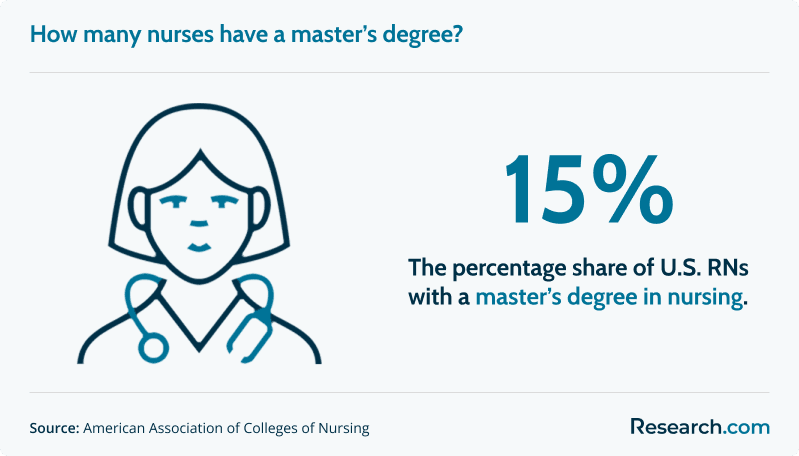
- About 15% of RNs in the country hold a master’s degree in nursing.
- MSN degrees can support advancement into better-paying positions such as advanced practice registered nurse roles and nurse administrator positions.
- The median annual wage for APRNs is $125,900.
- Many RN-to-MSN programs are offered in mostly online or hybrid formats.
- MSN degrees may cost over $30,000, so cost comparison and financial planning matter.
How Long Does It Take to Complete an Online RN-to-MSN Program?
Online RN-to-MSN timelines vary by school, enrollment status, concentration, prior education, transfer credits, and required clinical hours. The shortest RN-to-MSN online program could take two years to finish, while other full-time programs are structured for three years of study.
Part-time students may need longer, especially if they continue working full time. Nurses comparing bridge pathways should also consider whether an ADN to NP route better matches their background, licensing goals, and desired role.
| Enrollment Factor | How It Can Affect Completion Time |
| Full-time vs. part-time study | Full-time study may shorten the timeline, while part-time enrollment can make the workload more manageable for employed nurses. |
| Transfer credits | Accepted credits may reduce the number of courses needed, but policies vary by institution. |
| Specialization | Advanced practice tracks may require more clinical preparation than leadership or education tracks. |
| Clinical placement availability | Delays in securing approved clinical sites can extend the program timeline. |
Online RN-to-MSN vs. On-Campus RN-to-MSN: Which Is Better?
The better format depends on your schedule, learning style, clinical needs, and access to campus. Online programs are often stronger for working nurses who need flexibility. Campus programs may be better for students who prefer face-to-face instruction, structured schedules, and in-person networking.
| Factor | Online RN-to-MSN | On-Campus RN-to-MSN |
| Flexibility | Often better for nurses working rotating shifts or managing family responsibilities. | Usually requires scheduled attendance and commuting. |
| Interaction | Uses discussion boards, video meetings, group projects, and virtual office hours. | Provides regular face-to-face contact with faculty and classmates. |
| Clinical learning | Clinical placements are often arranged at approved facilities near the student. | Clinical sites may be tied more closely to the school’s local healthcare partners. |
| Technology requirements | Requires reliable internet, a computer, digital learning tools, and comfort with online platforms. | Still uses technology, but less of the experience is fully online. |
| Best for | Self-directed learners who need schedule flexibility. | Students who want structured in-person learning and campus-based support. |
RNs considering multiple bridge options may also compare online LPN to BSN programs with RN-to-MSN routes if their current credential, license status, or career goals point to a different academic pathway.
What Is the Average Cost of an Online RN-to-MSN Program?
Program cost depends on residency status, credit load, tuition model, specialty, clinical fees, technology fees, and how many credits a school accepts from prior nursing education. According to various sources:
- In-state master’s degrees in nursing cost $11,231, while out-of-state programs cost $21,140.
- Undergraduate programs in nursing cost $9,069 and $25,912, respectively.
- The total cost of an online RN-to-MSN program may range from $12,000 to over $30,000, while typical per-credit tuition falls between $300 and $1,200.
Cost Factors to Compare Before Enrolling
| Cost Item | Why It Matters |
| Tuition per credit | A lower per-credit rate may still be expensive if the program requires more credits. |
| Residency status | Public universities may charge different rates for in-state and out-of-state students. |
| Clinical and practicum expenses | Travel, background checks, immunizations, liability insurance, and site-related fees can add to the total cost. |
| Technology and course materials | Online programs may require software, simulation access, textbooks, or platform fees. |
| Lost income or reduced hours | Some students reduce work hours during clinical-heavy terms, which affects the real cost of attendance. |
Financial Aid Options for RN-to-MSN Students
RN-to-MSN students may use a mix of scholarships, employer tuition assistance, loans, repayment programs, and service-based aid. Always confirm eligibility directly with the program or agency because award rules can change.
- US Health Services Corps: The US Department of Health and Human Resources offers a scholarship program for future nurses. Students can cover a full year of tuition for every two years of full-time service after graduation.
- AISES A.T. Anderson Scholarship: Students with tribal citizenship who are enrolled in STEM-related fields, including nursing, may apply. It grants $2,000 for graduate students.
- Public Service Loan Forgiveness (PSLF): Nurses employed full time by qualifying nonprofits or government hospitals may be eligible after making at least 120 qualifying loan payments.
- NHSC SUD Loan Forgiveness: This option is available to nurse practitioners (NPs), certified nurse midwives (CNWs), RNs, and psychiatric nurses with qualifying loans who work at NHSC-approved substance use disorder sites.
Admission Requirements for Online RN-to-MSN Programs
Requirements vary by institution, but applicants to nursing degree programs should expect schools to verify academic preparation, licensure, clinical readiness, and professional fit.
- Prior nursing degree: Many programs require a BSN from an accredited institution. Some programs admit associate degree in nursing (ADN) graduates but require bridge coursework before graduate-level MSN courses. Students comparing options may also review BSN programs.
- Active RN license: Applicants generally need a valid, unrestricted RN license before starting the program or clinical components.
- Official transcripts: Schools use transcripts to confirm degree completion, prerequisite coursework, GPA, and transfer credit eligibility.
- Work experience: Some programs consider professional nursing experience, particularly for advanced practice or leadership tracks. Similar expectations may appear in the best RN to BSN online programs and BSN to DNP programs online.
Common Courses in an Online RN-to-MSN Program
RN-to-MSN coursework typically combines graduate nursing theory, leadership, research, policy, assessment, and specialty preparation. Course names vary, but many programs include the following subjects.
| Course Area | What Students Learn |
| Advanced Nursing Concepts | Students examine advanced nursing theories, professional roles, and evidence-based approaches. The best online MSN programs often use this foundation to connect theory with patient care, leadership, and systems improvement. |
| Healthcare Policy and Ethics | This area covers policy, ethical decision-making, legal issues, and the nurse’s role in navigating complex healthcare systems. |
| Advanced Health Assessment | Students build advanced physical and psychosocial assessment skills and learn to connect findings with care planning. |
| Leadership and Management | Coursework may include organizational behavior, strategic planning, finance, communication, quality improvement, and team leadership. |
RN-to-MSN Specializations: Which Track Should You Choose?
Common RN-to-MSN specializations include family nurse practitioner, nurse midwife, nurse administrator, and nurse anesthetist. The best choice depends on whether you want direct patient care, leadership, education, anesthesia, women’s health, or another focused nursing role.
| Specialization | Typical Focus | Consider This Track If You Want To... |
| Family Nurse Practitioner | Primary care across the lifespan, including prevention, diagnosis, chronic disease management, and patient counseling. | Provide broad primary care to patients from infants to older adults. |
| Nurse Midwife | Care for women across the reproductive lifespan, with emphasis on low-risk pregnancy, childbirth, postpartum care, and patient education. | Work in women’s health, maternal care, birth settings, and reproductive health. |
| Nurse Administrator | Operations, staffing, quality improvement, budgeting, policy implementation, and healthcare team leadership. | Move from bedside care into management, administration, or systems leadership. |
| Nurse Anesthetist | Anesthesia administration, pain management, patient assessment, safety monitoring, and perioperative care. | Pursue a highly specialized advanced practice anesthesia role. |
Your specialization and work setting can strongly influence salary potential. The chart below shows the difference in annual mean wage for APRNs employed in offices of other healthcare practitioners compared with those working in hospitals.
How to Choose the Best Online RN-to-MSN Program
Choosing an RN-to-MSN program should not start with name recognition alone. Start with your intended role, then work backward to identify the program structure, accreditation, clinical support, and cost profile that can realistically get you there.
Our experts use criteria similar to those applied when evaluating the best online nursing programs.
- Clinical experience: Online RN-to-MSN programs still need practical learning. Ask whether the school helps arrange clinical rotations at approved facilities near you or expects you to find sites independently.
- Accreditation: Look for programs accredited by CCNE or the Accreditation Commission for Education in Nursing (ACEN). The US Secretary of Education recognizes CCNE nationally, while the Council for Higher Education Accreditation (CHEA) recognizes ACEN for nursing education programs in the US, its territories, and internationally.
- Graduation and NCLEX pass rates: Graduation rates and pass rates can reveal whether students are completing the program and receiving adequate preparation and support.
Questions to Ask Before You Apply
- Is the program accredited by CCNE or ACEN?
- Does the curriculum match the certification or licensure path required in my state?
- Who is responsible for finding clinical placements?
- How many campus visits, intensives, labs, or synchronous sessions are required?
- What is the total cost after fees, books, technology charges, and clinical expenses?
- Can I attend part time without losing financial aid eligibility?
- What happens if I move to another state during the program?
- What support is available for working nurses during clinical-heavy terms?
Career Paths for RN-to-MSN Graduates
Graduates of online RN-to-MSN programs and direct entry nurse practitioner programs may qualify for a range of clinical, educational, and leadership roles. The specific jobs available depend on your specialization, state scope-of-practice rules, certifications, and experience.
- Nurse Practitioner (NP): NPs provide primary or specialized healthcare services. Depending on state regulations and specialty preparation, they may diagnose conditions, treat illnesses, prescribe medications, and order diagnostic tests.
- Nurse Educator: Nurse educators teach nursing theory, clinical skills, patient care, and professional practice. They may design curricula, supervise learning experiences, and evaluate student progress.
- Nurse Administrator: Nurse administrators manage departments, teams, systems, or healthcare operations. Nurses seeking further executive or academic advancement may later consider a PhD in healthcare administration or explore online healthcare administration degree options as part of broader healthcare leadership planning.
How Does an RN-to-MSN Degree Affect Long-Term Career Advancement?
An RN-to-MSN degree can support long-term advancement by preparing nurses for specialized practice, leadership, education, management, and policy-related responsibilities. Graduate coursework often develops skills in evidence-based practice, clinical protocol development, interdisciplinary leadership, and systems-level decision-making.
The degree may also improve career mobility because some advanced nursing and leadership positions require or strongly prefer graduate education. For salary context by role and credential, review Research.com’s MSN salary analysis.
Can a Dual Degree Approach Enhance Career Advancement in Nursing Leadership?
A dual nursing and business degree can be useful for nurses who want leadership roles that combine clinical judgment with operational strategy. These programs may cover finance, organizational planning, healthcare management, and administrative decision-making alongside advanced nursing content.
This pathway may fit RNs aiming for executive leadership, service line management, consulting, or healthcare operations. Nurses interested in combining clinical and business preparation can compare MBA MSN dual degree programs online.
Is Accreditation Critical When Selecting an Online RN-to-MSN Program?
Yes. Accreditation is one of the most important filters when comparing RN-to-MSN programs. Accredited programs are reviewed against recognized standards for curriculum quality, faculty qualifications, clinical learning, student outcomes, and academic integrity.
Accreditation can affect eligibility for federal financial aid, graduate transfer options, certification preparation, employer recognition, and state licensure processes. If you may continue beyond the MSN, also compare advanced pathways such as online DNP education programs.
Hidden Costs and Value Considerations in Online RN-to-MSN Programs
Tuition is only one part of the total cost. Online RN-to-MSN students may also pay for technology fees, digital learning platforms, simulation tools, textbooks, background checks, drug screening, immunizations, malpractice insurance, clinical travel, certification exam preparation, and licensing-related expenses.
Value should be measured against your target role, expected program length, employer support, certification requirements, and opportunity cost. If you are comparing nursing pathways at different levels, reviewing the LPN program price can help you understand how educational costs differ across nursing credentials.
What Is the Job Market for RN-to-MSN Graduates?
The labor market for advanced nursing graduates remains favorable in many areas. According to the U.S. Bureau of Labor Statistics, APRNs, including nurse midwives, nurse anesthetists, and nurse practitioners, can expect employment growth of 38% until 2032.
Demand is also shaped by ongoing nursing workforce pressures. Hospitals have reported high RN vacancy rates; 62% had registered nurse vacancies of over 7.5%, while fewer than 25% had RN vacancies below 5%.
The American Association of Colleges of Nursing reported that MSN graduates have an average job offer rate of 82%.
What Is the Most Cost-Effective Pathway From RN to MSN?
The most cost-effective route depends on your current credential and how many credits a school will accept. Some RNs may first complete an RN-to-BSN program and then enter an MSN program, especially if that route lowers tuition, increases transfer credit, or gives them access to employer reimbursement. Affordable stepping-stone options include the cheapest online RN to BSN programs.
Other students may save time through a bridge RN-to-MSN program that combines BSN-level transition coursework with graduate nursing study. Before choosing, compare total credits, transfer policies, clinical requirements, tuition, fees, scholarships, and employer tuition reimbursement.
How Do Online RN-to-MSN Programs Teach Research and Evidence-Based Practice?
Research and evidence-based practice are central to graduate nursing education. RN-to-MSN students learn how to evaluate clinical evidence, apply research findings, improve patient outcomes, and support safer healthcare processes.
- Research methodology: Students study how research is designed, how data are collected, and how evidence is evaluated.
- Evidence-based practice: Coursework trains nurses to assess research quality and apply findings to patient care and clinical decision-making.
- Capstone or research project: Many programs require a final project focused on a real healthcare problem, quality improvement goal, or practice change.
- Digital library access: Online students typically use electronic journals, databases, and academic resources to stay current with nursing research.
- Collaborative research opportunities: Some programs connect students with healthcare organizations or research partners for applied projects.
- Clinical decision-making: Evidence-based courses help nurses use data and research to make stronger care decisions.
Can Accelerated RN-to-MSN Programs Deliver Quality Outcomes for Busy Professionals?
Accelerated RN-to-MSN programs can work well for disciplined students who have enough time for intensive coursework, clinical preparation, and independent study. These programs compress graduate nursing requirements into a shorter schedule, so they are not necessarily easier than traditional options.
Before enrolling in an accelerated pathway, ask how clinical hours are arranged, whether the program is accredited, how student support works, and whether the schedule is realistic with your job. For related fast-track options, review a 1 year nursing program online.
How Can RN-to-MSN Programs Streamline the Path to Specialized Certifications?
Many advanced nursing roles require specialized certification after completing the appropriate graduate education and clinical preparation. A well-designed RN-to-MSN program aligns courses and practicums with certification expectations in areas such as family nursing, pediatric care, psychiatric care, or other advanced specialties.
Students interested in family nurse practitioner preparation can compare certification-focused pathways, including the cheapest FNP degree online, while verifying state practice requirements and exam eligibility.
Current Trends in RN-to-MSN Education
RN-to-MSN education is changing as healthcare employers place greater emphasis on flexibility, advanced clinical preparation, leadership, and technology-enabled care. These trends can influence which program format and specialization make sense for you.
- More online and hybrid options: Many programs now use online coursework to serve working nurses who cannot relocate or attend campus full time.
- Greater specialization: Tracks such as Family Nurse Practitioner, Nurse Anesthetist, and Nurse Midwifery reflect demand for advanced clinical expertise.
- Leadership and administration focus: Programs increasingly include management, policy, quality improvement, and systems leadership content.
- Technology and telemedicine: Digital health tools, remote care, and simulation-based learning are becoming more visible in nursing education.
- Interdisciplinary learning: Programs may encourage collaboration with physicians, administrators, public health professionals, and other healthcare workers.
Nurses who want a focused advanced practice route may also compare online BSN to FNP programs as part of their specialization planning.
How Do Online RN-to-MSN Programs Support Networking and Industry Partnerships?
Strong online RN-to-MSN programs do more than post lectures online. Many create structured networking opportunities through virtual career events, mentorship, faculty advising, peer discussion groups, professional projects, and healthcare partnerships.
These connections can help students understand employer expectations, explore clinical sites, build professional contacts, and plan later advancement. Nurses who want to continue into doctoral leadership may also compare options such as the shortest MSN to DNP program.
Challenges Students May Face in an Online RN-to-MSN Program
Online RN-to-MSN programs can be flexible, but they also require strong self-management. Students often balance graduate coursework, clinical hours, full-time employment, family responsibilities, and technology-based learning.
| Common Challenge | Better Strategy |
| Underestimating the workload | Ask for a sample course plan and identify clinical-heavy terms before enrolling. |
| Assuming the school finds every clinical placement | Confirm the school’s placement policy in writing before accepting admission. |
| Choosing based only on tuition | Compare total program cost, fees, clinical expenses, and time to completion. |
| Ignoring state licensure rules | Verify that the program meets requirements in the state where you plan to practice. |
| Overlooking learning style | Choose online study only if you can manage deadlines, independent reading, and virtual communication. |
If a traditional RN-to-MSN program does not fit your current situation, you may want to compare alternative pathways, including nursing programs easy to get into, while still checking accreditation and licensure alignment.
Student Success and Support Resources for Online RN-to-MSN Programs
Student support can make a major difference in whether an online RN-to-MSN program is manageable. Look for schools that provide academic advising, clinical placement guidance, tutoring, writing support, technology help, faculty access, and career services.
Career support may include resume review, interview preparation, job search assistance, alumni networking, and specialty-specific career advising. Peer communities, online workshops, and virtual study groups can also help students stay engaged while learning remotely.
If affordability is a priority, compare the cheapest online MSN programs while still evaluating support quality, accreditation, clinical placement help, and specialty fit.
Common Mistakes to Avoid When Choosing an RN-to-MSN Program
- Choosing a program before choosing a career goal: A nurse practitioner track, educator track, and leadership track lead to different outcomes.
- Skipping accreditation checks: Accreditation affects aid eligibility, employer confidence, and licensure or certification pathways.
- Looking only at tuition: Fees, travel, clinical costs, books, and lost work hours can change the real price.
- Assuming every online program works in every state: State authorization and licensure requirements can limit where you can study or practice.
- Ignoring clinical placement logistics: A flexible online program can become stressful if you cannot secure approved clinical sites.
- Relying only on rankings: A highly ranked school is not automatically the best fit for your schedule, budget, specialty, or state requirements.
Key Insights
- An RN-to-MSN program is best for licensed RNs who want a faster path into graduate nursing roles and already have a clear specialty or leadership goal.
- Program timelines commonly range from two to three years of full-time study, but part-time enrollment, transfer credits, clinical placements, and specialty requirements can change the schedule.
- Cost varies widely. Master’s degrees in nursing start at $11,231, and complete online RN-to-MSN programs may cost from $12,000 to over $30,000.
- Accreditation should be a nonnegotiable factor. Look for CCNE or ACEN accreditation and confirm that the program supports your state licensure or certification goals.
- Online RN-to-MSN programs can be practical for working nurses, but success requires strong time management, reliable technology, and early planning for clinical hours.
- The MSN can support advancement into roles such as nurse practitioner, nurse educator, nurse administrator, and other advanced nursing positions, but salary and job outcomes are not guaranteed.
- The best program is not simply the cheapest or most recognizable one. It is the program that matches your license status, specialty goals, budget, state requirements, support needs, and realistic study schedule.
References
- Glassdoor. (2024, January 22). How much does a RN, MSN make? Glassdoor.
- Nurse.org. (2025). New 2025 Report Shows Where Nurse Pay Is Growing Fastest. https://nurse.org
- NCSBN. (2025). 2024 National Nursing Workforce Study. https://www.ncsbn.org/workforce
- Nightingale College. (2024). Nursing Shortage: 2026 US Statistics. https://nightingale.edu/blog/nursing-shortage-by-state.html
- U.S. Bureau of Labor Statistics. (2025). Occupational Outlook Handbook: Registered Nurses. https://www.bls.gov/ooh/healthcare/registered-nurses.htm
Other Things You Should Know About Online RN-to-MSN Programs
In 2027, the best online RN to MSN programs should have accreditation from the Commission on Collegiate Nursing Education (CCNE) or the Accreditation Commission for Education in Nursing (ACEN). These accreditations ensure that the program meets rigorous academic and professional standards required for nursing education.
Pursuing an RN to MSN program in 2027 offers several key advantages, such as increased career opportunities, higher earning potential, and specialized skills acquisition. The flexibility of online programs also allows students to balance their studies with professional and personal commitments, making advanced education more accessible.


