2027 Fastest Online RN to MSN (No ADN Required) Bridge Programs

Co-Founder and Chief Data Scientist
An RN without an ADN who delays pursuing a master’s degree risks missing out on advanced roles in a nursing workforce projected to grow over 6% by 2035, with demand peaking for those with graduate-level credentials. As bridge programs fill quickly, hesitation could mean losing ground to peers already securing leadership roles and higher pay.
This expert-prepared guide outlines the fastest online RN to MSN bridge programs for 2027 that don’t require an ADN. Developed by career planning professionals, it highlights flexible, accredited programs that help motivated nurses act now—before limited seats and rising competition close the door on this opportunity.
What are the benefits of the fastest online RN to MSN (no ADN required) bridge programs?
- Qualify for advanced roles like Nurse Practitioner, Clinical Nurse Leader, Nurse Educator, and Healthcare Administrator—positions often reserved for MSN-prepared nurses.
- Boost your earning potential with a median salary of $125,900 per year for nurse practitioners, according to the U.S. Bureau of Labor Statistics.
- Complete your degree faster and with more flexibility through online, no-ADN-required bridge programs—designed to fit around work shifts and family life.
What can I expect from the fastest online RN to MSN (no ADN required) bridge programs?
Graduates of the fastest online RN to MSN (no ADN required) programs unlock a wide range of career options. They can work in hospitals, clinics, government agencies, nonprofit organizations, schools, or even start their own practices.
Many take on leadership roles in healthcare management, clinical research, consulting, or policy-making. Others become nurse educators, helping train the next generation of nurses. The U.S. Bureau of Labor Statistics projects 45% job growth for nurse practitioners from 2022 to 2032—much faster than average.
An MSN also equips graduates with communication, critical thinking, and leadership skills, making it easier to transition into roles across corporate healthcare, tech, or education sectors.
Where can I work with an online RN to MSN degree?
An online RN to MSN degree opens doors far beyond bedside care. Graduates can work in hospitals, public health departments, corporate wellness programs, government agencies, or nonprofit organizations. Some even launch independent practices or consulting businesses.
MSN holders often move into leadership, research, education, or healthcare tech roles. Others specialize in informatics, case management, or policy development. According to the U.S. Bureau of Labor Statistics, healthcare occupations are projected to add over 2 million new jobs by 2032, with strong demand for advanced-practice nurses.
The degree also sharpens communication, problem-solving, and critical thinking—skills that make it easier to adapt across industries like tech, education, and healthcare innovation.
How much can I make an online RN to MSN degree?
With an online RN to MSN degree, professionals can earn a strong income. The average salary for nurse practitioners—a common role for MSN graduates—is $125,900 per year, according to the U.S. Bureau of Labor Statistics.
Earnings vary based on specialization, experience, and location. For example, nurse anesthetists can make over $200,000 annually, while nurse educators may earn around $85,000. Entry-level MSN graduates often start in the $90,000–$100,000 range, with the potential for six-figure salaries as they gain experience. Holding an MSN also makes it easier to pursue advanced certifications, which can boost earnings and lead to higher-paying leadership or specialist roles.
- List of the Fastest Online RN to MSN (No ADN Required) Bridge Programs for 2027 List of Programs
- How long does it take to complete the fastest online RN to MSN (no ADN required) programs? Program Length
- How do the fastest online RN to MSN (no ADN required) programs compare to an on-campus program? How do the fastest online RN to MSN (no ADN required) programs compare to an on-campus program?
- What is the average cost of the fastest online RN to MSN (no ADN required) programs? Cost
- What are the financial aid options for students enrolling in the fastest online RN to MSN (no ADN required) programs? What are the financial aid options for students enrolling in the fastest online RN to MSN (no ADN required) programs?
- What are the prerequisites for enrolling in the fastest online RN to MSN (no ADN required) programs? What are the prerequisites for enrolling in the fastest online RN to MSN (no ADN required) programs?
- What courses are typically in the fastest online RN to MSN (no ADN required) programs? Courses
- What types of specializations are available in the fastest online RN to MSN (no ADN required) programs? Specializations
- How to Choose the Best Online RN to MSN (No ADN Required) Bridge Programs How to Choose the Best Online RN to MSN (No ADN Required) Bridge Programs
- What career paths are available for graduates of the fastest online RN to MSN (no ADN required) programs? Career Paths
- What is the job market like for graduates of the fastest online RN to MSN (no ADN required) programs? Job Market
- What Challenges Should Prospective Students Anticipate? What Challenges Should Prospective Students Anticipate?
- How Do Online RN to MSN Programs Ensure Hands-On Clinical Experience? How Do Online RN to MSN Programs Ensure Hands-On Clinical Experience?
- Could Direct-Entry Nurse Practitioner Programs Serve as an Alternative? Could Direct-Entry Nurse Practitioner Programs Serve as an Alternative?
Fastest Online RN to MSN Bridge Programs With No ADN Requirement for 2027
Many registered nurses want to move into advanced practice, education, leadership, or informatics roles without spending unnecessary time repeating undergraduate nursing coursework. Online RN to MSN bridge programs with no ADN requirement are built for nurses who already hold an RN license but do not fit the traditional ADN-to-BSN-to-MSN sequence. Some are designed for RNs with a non-nursing bachelor’s degree, while others combine BSN-level bridge coursework with graduate MSN study.
This guide explains how fast these programs can be completed, what they cost, how online and campus formats compare, what prerequisites to expect, and how to choose a program that supports licensure, clinical placement, and long-term career goals. If you are comparing accelerated options, you may also want to review fastest RN to BSN to MSN online programs to understand how bridge formats differ.
Quick Answer: What Is the Fastest Online RN to MSN Path With No ADN Requirement?
The fastest online RN to MSN programs with no ADN requirement can be completed in as little as 10 months in some advertised tracks, while many accelerated options take about 18 to 24 months. Program length depends on your prior degree, transfer credits, bridge-course requirements, specialty, clinical hours, and whether you study full-time or part-time.
The right program is not always the shortest one. Nurses pursuing nurse practitioner tracks should pay close attention to clinical placement support, state authorization, certification eligibility, and whether the program’s accreditation is accepted by employers and licensing bodies.
How do we rank the programs?
Research.com rankings are designed to help students compare programs using transparent, evidence-informed criteria rather than marketing claims alone. We review publicly available institutional and government data from sources such as IPEDS, Peterson's, the College Scorecard, and the National Center for Education Statistics. These sources help us evaluate program structure, affordability, institutional quality, and student-relevant outcomes. You can learn more about the ranking process on Research.com's methodology page.
| Program | Best Fit | Time and Credit Snapshot | Cost Snapshot | Accreditation |
| Chamberlain University – RN to MSN Online Bridge Option | Working RNs seeking several MSN specialty choices | As little as 18 months; 45–52 credits | $32,400 total | CCNE |
| Liberty University – RN to BSN to MSN Track | RNs with a non-nursing bachelor’s degree who want leadership or education | Just over a year; credits vary | $11,880 total | CCNE |
| Capella University – RN to MSN FlexPath Option | Self-directed learners who can progress quickly in a competency-based format | Most finish in 14–18 months; credits vary | Under $15,000 total | CCNE |
| Walden University – RN to MSN Accelerated Pathway | RNs seeking an online bridge into PMHNP, education, or other MSN tracks | About 14–20 months; credits vary | Starting around $13,000 (specialization dependent) | CCNE |
| Charleston Southern University – Online RN to MSN Bridge Program | RNs interested in leadership or education in a faith-based setting | Just 16 months; credits vary | $24,375 total | CCNE |
| University of Mississippi Medical Center – RN to MSN Early Entry Program | Mississippi-based students seeking BSN and MSN progression with NP options | Four to five semesters; 53–66 credits | $29,430 in-state; $86,346 out-of-state | CCNE |
| Northeastern State University – Online RN to MSN Program | RNs prioritizing a very short completion timeline and affordability | Potential completion in just 10 months; credits vary | $9,309 total | CCNE |
| Arizona State University – RN to MSN Online | Students who want short 7.5-week courses and a defined 36-credit curriculum | 36 credits | $20,736–$23,940 total | CCNE |
| Western Governors University – RN to MSN Pathway | Competency-based learners who want BSN and MSN coursework in one pathway | 90 credits (BSN + MSN); many finish within 2.5 to 3 years | $5,325/term (BSN); $5,035/term (MSN) | CCNE |
| University of Central Florida – RN to MSN Online Program | RNs with a non-nursing bachelor’s degree, especially Florida residents | 31–36 graduate credits; as little as two years | $6,916 in-state; $25,759 out-of-state | CCNE |
Chamberlain University – RN to MSN Online Bridge Option
Chamberlain University offers an online RN to MSN bridge option for registered nurses who do not have an ADN or BSN. The program is designed for accelerated progress, with completion possible in as little as 18 months depending on pace and specialty. Students can choose from multiple MSN areas, including FNP and Nurse Educator, while completing coursework online.
- Required Credits to Graduate: 45–52
- Cost: $32,400 total
- Accreditation: CCNE
Liberty University – RN to BSN to MSN Track
Liberty University provides an online RN to BSN to MSN track for RNs who already hold a non-nursing bachelor’s degree. The program uses short 8-week courses and offers leadership and education specializations. Its transfer-friendly structure may help qualified students reduce both time and total cost.
- Required Credits to Graduate: Varies
- Cost: $11,880 total
- Accreditation: CCNE
Capella University – RN to MSN FlexPath Option
Capella University offers an RN to MSN FlexPath option that uses a competency-based, subscription-style model. Students move through coursework at their own pace, and most finish in 14–18 months depending on available study time and motivation. This format can work well for experienced nurses who are comfortable with independent learning and want predictable flat-rate tuition.
- Required Credits to Graduate: Varies
- Cost: Under $15,000 total
- Accreditation: CCNE
Walden University – RN to MSN Accelerated Pathway
Walden University allows nurses to move toward an MSN through bridge coursework rather than completing a separate BSN first. The pathway can take about 14–20 months, with available specializations including PMHNP and Nursing Education. Courses are online and structured with deadlines, which may benefit working nurses who want flexibility but still need regular pacing.
- Required Credits to Graduate: Varies
- Cost: Starting around $13,000 (specialization dependent)
- Accreditation: CCNE
Charleston Southern University – Online RN to MSN Bridge Program
Charleston Southern offers an online RN to MSN bridge program that can be completed in just 16 months. The program is oriented toward nurses pursuing leadership or education roles and combines accelerated coursework with practical applications. Students who prefer a faith-based academic environment may find the format especially relevant.
- Required Credits to Graduate: Varies
- Cost: $24,375 total
- Accreditation: CCNE
University of Mississippi Medical Center – RN to MSN Early Entry Program
UMMC offers an RN to MSN Early Entry Program that allows registered nurses to earn both BSN and MSN credentials in four to five semesters. The program includes multiple nurse practitioner tracks and provides a more structured pathway than many self-paced options. Its cost difference for in-state and out-of-state students makes residency an important factor when comparing value.
- Required Credits to Graduate: 53–66
- Cost: $29,430 in-state; $86,346 out-of-state
- Accreditation: CCNE
Northeastern State University – Online RN to MSN Program
NSU offers an online RN to MSN bridge program with potential completion in just 10 months. Students may choose focused tracks in nursing leadership, education, or informatics. This option is especially notable for nurses comparing speed and total tuition, although applicants should confirm whether their background and state eligibility align with program requirements.
- Required Credits to Graduate: Varies
- Cost: $9,309 total
- Accreditation: CCNE
Arizona State University – RN to MSN Online
ASU structures its online RN to MSN program around 7.5-week courses and a 36-credit curriculum. The program is designed for nurses who want a clear graduate pathway in areas such as leadership or education. Its published cost range differs for students depending on applicable tuition factors, so applicants should request a full cost estimate before enrolling.
- Required Credits to Graduate: 36
- Cost: $20,736–$23,940 total
- Accreditation: CCNE
Western Governors University – RN to MSN Pathway (BSN & MSN)
WGU offers a competency-based RN to MSN pathway that includes both BSN and MSN coursework. Students advance by demonstrating mastery, and many finish within 2.5 to 3 years. The flat-rate term model can be cost-effective for disciplined learners who complete courses efficiently.
- Required Credits to Graduate: 90 (BSN + MSN)
- Cost: $5,325/term (BSN); $5,035/term (MSN)
- Accreditation: CCNE
University of Central Florida – RN to MSN Online Program
UCF offers an online RN to MSN bridge program for RNs with a non-nursing bachelor’s degree. Tracks include education and leadership, and students can complete the program in as little as two years. The cost difference between in-state and out-of-state tuition is significant, making this program especially attractive for eligible Florida residents.
- Required Credits to Graduate: 31–36 graduate credits
- Cost: $6,916 in-state; $25,759 out-of-state
- Accreditation: CCNE
How Long Does It Take to Complete the Fastest Online RN to MSN Programs With No ADN Requirement?
Many fast online RN to MSN programs with no ADN requirement take 18 to 24 months, although some listed programs advertise shorter or longer timelines. The shortest path usually requires full-time enrollment, accepted transfer credits, year-round coursework, and a specialty that does not add extensive additional clinical or certification requirements.
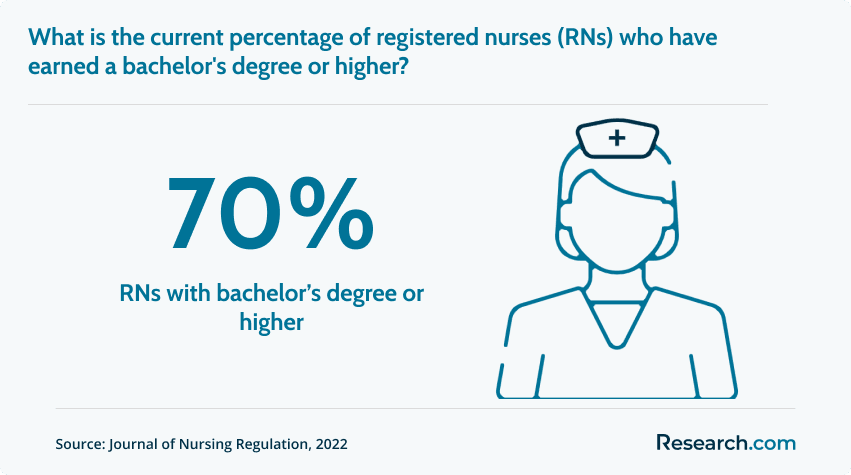
These bridge pathways reflect the nursing profession’s continued movement toward higher academic preparation. According to the Journal of Nursing Regulation (2022), 70% of registered nurses now hold a bachelor’s degree or higher. For RNs who already have a license but lack a standard ADN-to-BSN academic pathway, a bridge MSN can be a way to move toward advanced credentials without starting over.
Choosing among nursing credentials is similar to comparing professional pathways in other fields, such as understanding the difference between an MSW and an LCSW. The name of the credential matters, but so do licensure outcomes, supervised experience, state requirements, and career intent.
What usually affects completion time?
- Enrollment pace: Full-time students usually finish more quickly, while part-time students often need additional terms.
- Bridge-course load: Students without a nursing bachelor’s degree may need foundational nursing courses before graduate work.
- Transfer policy: Accepted prior coursework can shorten the path, while strict transfer rules may add time.
- Clinical requirements: Nurse practitioner tracks often require more planning than non-clinical leadership or education tracks.
- Term format: Programs with 8-week courses, 7.5-week courses, or year-round starts may allow faster progression than traditional semesters.
- Competency-based pacing: Some programs allow experienced nurses to accelerate by demonstrating mastery, a model also seen in other fast online fields such as online logistics and supply chain management programs.
If speed is your top priority, ask each school for a written degree plan showing the exact courses, clinical hours, expected start dates, and graduation timeline for your chosen specialization.
Online vs. On-Campus RN to MSN Programs: Which Format Makes Sense?
Online RN to MSN programs can be a strong fit for working nurses because they reduce commuting and allow more control over study time. However, online does not mean entirely remote. Most advanced nursing tracks still require supervised clinical experiences, and some programs may include campus intensives, simulations, or proctored assessments. Students comparing formats may also find it useful to review online BSN to MSN bridge programs to see how different bridge options handle coursework and clinical learning.
| Factor | Online RN to MSN | On-Campus RN to MSN | Decision Tip |
| Schedule | Often more flexible, with asynchronous or short-term courses | Usually follows fixed class meeting times | Online may suit nurses working variable shifts. |
| Program speed | Accelerated options may take 18–24 months, with some shorter advertised timelines | May follow a traditional semester calendar | Compare actual degree plans, not just advertised completion time. |
| Learning style | Uses digital lectures, discussion boards, virtual simulations, and online assessments | Offers face-to-face classes and direct campus interaction | Choose online only if you can stay organized without daily in-person structure. |
| Clinical experience | Usually completed locally with school approval | Often coordinated through nearby campus partners | Ask who secures clinical sites: the student, the school, or both. |
| Networking | Depends on online cohort design and faculty access | Can provide more spontaneous peer and faculty interaction | Look for faculty office hours, alumni networks, and career support. |
Choose an online program if:
- You need to keep working while studying.
- You are comfortable with digital learning platforms.
- You can manage deadlines independently.
- You have access to approved clinical sites in your area.
Consider an on-campus or hybrid program if:
- You learn best through in-person instruction.
- You want stronger campus-based clinical coordination.
- Your state or specialty has complex placement or licensure requirements.
- You prefer direct access to simulation labs and faculty.
What Is the Average Cost of the Fastest Online RN to MSN Programs With No ADN Requirement?
The average total tuition for the fastest online RN to MSN programs without an ADN requirement ranges from $20,000 to $45,000. Some listed programs fall below that range, while others cost more depending on residency, specialty, fees, and program structure. Students comparing nurse practitioner pathways should also evaluate related options such as online FNP programs.
What drives the total cost?
- Public vs. private tuition: Public universities may be less expensive for in-state students, while private schools often use one tuition rate.
- Residency status: Some programs have a large difference between in-state and out-of-state tuition.
- Credit requirements: A lower per-credit rate does not always mean a lower total price if the program requires more credits.
- Specialization: Nurse practitioner and clinical tracks may involve additional fees, clinical requirements, and certification-related costs.
- Transfer credits: Accepted credits can reduce the number of courses you need to complete.
- Technology and clinical fees: Online programs may charge fees for platforms, proctoring, simulations, background checks, or placement support.
Common tuition ranges
- Low end: $18,000–$25,000 (often public schools or in-state tuition)
- Mid range: $25,000–$35,000 (often private or out-of-state options)
- High end: $35,000–$45,000+ (often higher-cost private programs or specialty-heavy tracks)
Do not compare tuition alone. Request a full program cost sheet that includes tuition, university fees, course materials, clinical fees, travel, background checks, certification exam preparation, and graduation costs.
Financial Aid Options for Fast Online RN to MSN Students
Fast-track RN to MSN students may be able to use federal aid, employer tuition benefits, school scholarships, state programs, and loan repayment options. This matters because many nurses are weighing graduate study against workplace burnout and staffing pressures.
Recent data show that 40% of registered nurses (RNs) and 41% of licensed practical/vocational nurses (LPN/LVNs) plan to leave the profession within the next five years. Addressing the broader nursing shortage challenge requires accessible pathways for nurses who want to advance without taking on unmanageable debt.
Federal aid
- FAFSA: Graduate students should complete the Free Application for Federal Student Aid to determine eligibility for federal loans and other aid.
- Federal Direct Loans: Many graduate nursing students use unsubsidized loans to help cover tuition and approved education costs.
Scholarships and grants
- Institutional scholarships: Nursing schools may offer awards based on financial need, academic performance, background, or specialty interest.
- Nursing organizations: Groups such as the American Association of Colleges of Nursing (AACN) and the National Black Nurses Association (NBNA) may provide scholarship opportunities.
- State aid: Some states offer tuition support, grants, or forgiveness programs for nurses who work in high-need settings.
Employer tuition assistance
Hospitals and healthcare systems often provide tuition reimbursement or education benefits. Before enrolling, ask whether your employer requires a minimum grade, continued employment, a service commitment, or repayment if you leave your job.
Loan forgiveness and repayment
Programs such as Public Service Loan Forgiveness (PSLF) and NURSE Corps Loan Repayment may help qualifying nurses reduce debt if they work for eligible employers or in underserved communities. Eligibility rules can be specific, so confirm requirements before relying on loan forgiveness as part of your financial plan.
Admission Requirements and Prerequisites for Online RN to MSN Programs With No ADN Requirement
Admissions requirements vary by school, but these programs typically expect applicants to have an active RN license and prior college education that qualifies them for bridge or graduate-level nursing coursework. As with other credentialed career paths, such as learning how to become a psychometrician, the details matter: eligibility, required coursework, experience, and post-graduation certification can differ by program and state.
Common prerequisites
- Active RN license: Programs generally require a current, unencumbered license.
- Bachelor’s degree in another field: Many no-ADN bridge options are built for RNs with a BA or BS outside nursing.
- Minimum GPA: Schools commonly expect a GPA between 2.75 and 3.0.
- Official transcripts: Applicants usually submit records from every previously attended college.
- Prerequisite science and statistics courses: Anatomy, physiology, microbiology, and statistics are often required.
- Nursing experience: Some programs prefer or recommend hands-on RN experience, especially for advanced practice tracks.
Common application materials
- Letters of recommendation
- Personal statement or admissions essay
- Resume or CV
- Proof of RN licensure
- Background check or clinical compliance documentation, when required
Before applying, ask the admissions office to review your transcripts. A preliminary evaluation can help you avoid applying to programs that require additional prerequisites you did not expect.
Typical Courses in Fast Online RN to MSN Bridge Programs
RN to MSN bridge programs combine undergraduate-level transition courses with graduate nursing coursework. The exact curriculum depends on your prior education and specialization. Students who are earlier in their nursing education journey may need a different route, such as fast CNA to RN bridge programs online, before becoming eligible for RN-to-MSN study.
Bridge courses
Bridge coursework helps fill gaps for students who do not hold a nursing bachelor’s degree. Common subjects include:
- Health assessment
- Pathophysiology
- Nursing theory
- Evidence-based practice
Core MSN courses
Graduate nursing courses build advanced clinical, leadership, research, and systems-level knowledge. Common topics include:
- Advanced pharmacology
- Advanced health assessment
- Advanced pathophysiology
- Nursing leadership and ethics
- Research and statistics
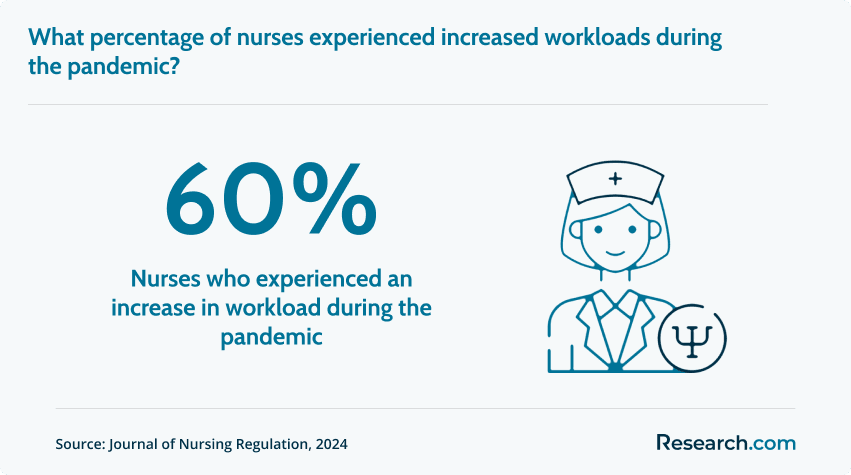
These courses are especially relevant as nursing workloads remain a concern. Over 60% of nurses reported increased workloads due to the pandemic, making leadership, evidence-based practice, and systems improvement central to advanced nursing preparation.
Specialty courses
Specialty coursework depends on your track:
- Nurse Practitioner: Family care, adult-gerontology, population-specific care, diagnosis, and treatment planning
- Nursing Education: Teaching strategies, curriculum development, assessment, and clinical instruction
- Leadership: Healthcare systems, quality improvement, strategic planning, finance, and policy
Clinical and capstone requirements
Most programs include supervised clinical hours, a practicum, or a final capstone project. Nurse practitioner students should verify that the program’s clinical structure supports certification and state licensure requirements in the state where they plan to practice.
Common RN to MSN Specializations
Your specialization determines what jobs you can pursue after graduation, what certification exams may be required, and how your clinical hours are structured. Choosing a track is similar to comparing professional identities in counseling, such as MFT vs LMFT degree programs: the titles may look similar, but the preparation and practice authority can differ.
| Specialization | Primary Focus | Best For |
| Family Nurse Practitioner (FNP) | Primary care for patients across the lifespan | RNs who want broad outpatient and primary care preparation |
| Adult-Gerontology Nurse Practitioner (AGNP) | Care for adolescent, adult, and older adult populations | Nurses interested in adult and aging populations |
| Pediatric Nurse Practitioner (PNP) | Care for infants, children, and adolescents | RNs committed to pediatric settings |
| Psychiatric-Mental Health Nurse Practitioner (PMHNP) | Mental health assessment, treatment, and therapy-related care | Nurses interested in behavioral health and psychiatric care |
| Nurse Educator | Teaching, curriculum design, and clinical instruction | RNs who want to teach students or train clinical staff |
| Nurse Leadership or Administration | Healthcare management, policy, operations, and team leadership | Nurses aiming for management or executive roles |
| Informatics | Data, technology, systems improvement, and clinical workflows | RNs interested in health IT and quality improvement |
Other possible tracks
- Women’s health
- Public health
- Informatics
Not every school offers every specialization. If you plan to become an advanced practice registered nurse, confirm that the track prepares you for the correct certification exam and is accepted in your state.
How to Choose the Best Online RN to MSN Program With No ADN Requirement
The best program is the one that fits your academic background, state requirements, clinical needs, budget, and career goal. A short completion timeline is valuable only if the program also supports licensure, certification, and employability.
Program selection checklist
- Confirm accreditation: Look for recognized nursing accreditation such as CCNE or ACEN.
- Verify state authorization: Make sure the school can enroll students in your state and place you in clinical settings there.
- Match the specialty to your goal: Do not choose a leadership track if your goal is nurse practitioner certification.
- Ask about clinical placement: Find out whether the school finds sites, supports you in finding sites, or leaves the process mostly to students.
- Compare total cost: Include tuition, fees, books, clinical compliance costs, travel, and certification-related expenses.
- Review transfer credit rules: Ask which credits will apply before you enroll.
- Evaluate pacing: Accelerated formats are demanding; make sure the weekly workload fits your schedule.
- Check student support: Strong advising, faculty access, technical support, writing support, and career services can make a major difference online.
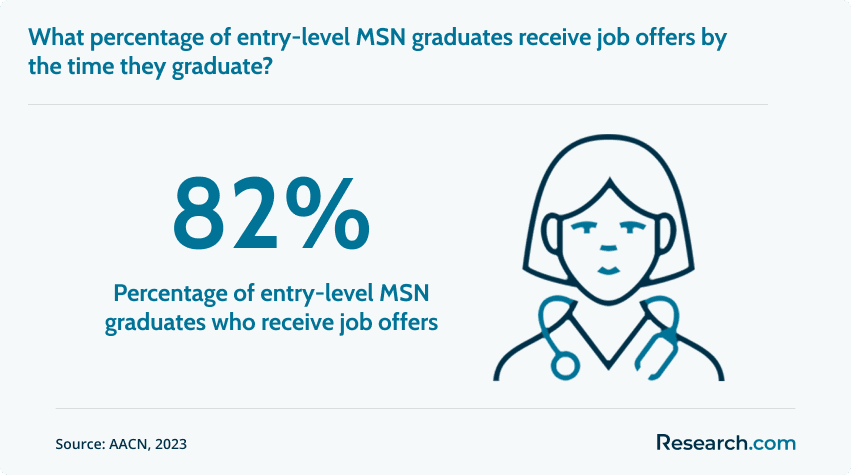
Program quality can affect both your learning experience and your transition into a new role. AACN employment data show that 82% of entry-level MSN graduates receive job offers by the time they graduate. This reinforces the importance of investing in a quality nursing program that matches workforce needs and your professional direction.
Questions to ask before applying
- Will this program meet education requirements for my intended role in my state?
- Who is responsible for finding clinical placements?
- How many students fail to progress because of clinical placement delays?
- What is the total estimated cost through graduation?
- Can I study part-time if my work schedule changes?
- What happens if I cannot complete clinical hours during the planned term?
- Which certification exams does the specialization prepare students to take?
- Are there required campus visits, intensives, simulations, or proctored exams?
Common mistakes to avoid
| Mistake | Why It Can Hurt You | Better Approach |
| Choosing the shortest program automatically | A very fast timeline may be unrealistic with full-time nursing work and clinical obligations. | Ask for a term-by-term plan and expected weekly workload. |
| Ignoring accreditation | Accreditation can affect certification, licensure, employer acceptance, and financial aid. | Verify nursing accreditation before applying. |
| Looking only at tuition | Fees, clinical costs, travel, books, and exam preparation can change the real price. | Compare full cost of attendance, not just per-credit tuition. |
| Assuming online means no in-person work | Clinical hours usually require supervised practice in approved healthcare settings. | Confirm clinical expectations and placement rules in writing. |
| Overlooking state rules | A program may not meet requirements in every state. | Check state authorization and licensure alignment before enrollment. |
| Relying only on rankings | A highly ranked program may not offer your specialty or fit your schedule. | Use rankings as a starting point, then verify fit, cost, and outcomes. |
Career Paths After a Fast Online RN to MSN Program
An RN to MSN can prepare nurses for advanced clinical, educational, administrative, and systems-focused roles. Some careers require specialty certification and state licensure beyond the MSN itself. This is similar to other healthcare role questions, such as whether medical assistants need a license: the degree or training pathway is only one part of professional eligibility.
- Family Nurse Practitioner (FNP): Provides primary care across age groups.
- Adult-Gerontology Nurse Practitioner (AGNP): Focuses on adult and older adult health.
- Psychiatric-Mental Health Nurse Practitioner (PMHNP): Supports mental health assessment and treatment.
- Pediatric Nurse Practitioner (PNP): Cares for infants, children, and adolescents.
- Nurse Educator: Teaches nursing students or trains clinical teams.
- Nurse Administrator or Leader: Oversees units, teams, departments, or healthcare operations.
- Clinical Nurse Specialist (CNS): Helps improve care quality in specialized clinical areas.
- Public Health Nurse: Works on community health, prevention, and population-level interventions.
- Informatics Nurse: Uses data and technology to improve clinical workflows and patient care.
- Case Manager or Consultant: Coordinates care, advises organizations, or supports complex patient needs.
Some graduates also work closely with interdisciplinary care teams and specialists. For example, nurses in neurology-related care may coordinate with physicians, therapists, and specialists whose roles are outlined in resources such as this neurologist career guide.
Job Market Outlook for RN to MSN Graduates
The job market is especially strong for nurse practitioners. According to the U.S. Bureau of Labor Statistics, nurse practitioner jobs are projected to grow 45% from 2022 to 2032, much faster than the average for all occupations. Demand is connected to an aging population, stronger emphasis on preventive care, and physician shortages in many areas.
MSN-prepared nurses may also pursue roles in education, healthcare leadership, informatics, and public health. Registered nurse employment remains concentrated in major healthcare settings: hospitals (state, local, and private) employ 58% of RNs, followed by ambulatory healthcare services at 19%, government agencies at 6%, nursing and residential care facilities at 5%, and educational institutions at 3%.
Online MSN programs can help working nurses advance without leaving the workforce, but outcomes are not guaranteed. Salary, role availability, and hiring timelines depend on specialty, state scope-of-practice laws, experience, local labor demand, and certification status.
Challenges Prospective Students Should Expect
Accelerated online RN to MSN programs are demanding. Students often balance graduate coursework, clinical planning, employment, family responsibilities, and licensure paperwork at the same time. The pace can be difficult for nurses who work long shifts or rotating schedules.
Clinical placement can also be a major challenge. Some schools provide strong placement support, while others expect students to identify potential preceptors and sites. Technology issues, proctored exams, group projects, and online discussion deadlines can add pressure. If affordability is a major concern, compare lower-cost options carefully with resources such as affordable online nursing programs, but do not trade lower tuition for weak accreditation, poor advising, or inadequate clinical support.
How Online RN to MSN Programs Provide Hands-On Clinical Experience
Online RN to MSN programs typically combine remote coursework with supervised clinical learning in approved healthcare settings. Students may complete clinical rotations near where they live, provided the site and preceptor meet school and state requirements. Some programs also use simulation labs, virtual case studies, or structured clinical scenarios to strengthen decision-making before or alongside in-person practice.
For advanced practice tracks, clinical quality is essential. Ask how preceptors are approved, whether placements align with your specialty, and how the program handles delays. Nurses who plan to continue beyond the MSN can also compare hands-on expectations in advanced pathways such as the shortest DNP online program.
Are Direct-Entry Nurse Practitioner Programs an Alternative?
Direct-entry nurse practitioner programs may be an option for people with non-nursing bachelor’s degrees who want to enter nursing and move toward advanced practice. These programs are different from RN to MSN bridge programs because they are generally designed for career changers who do not already hold RN licensure, while RN to MSN bridge programs usually require an active RN license.
When comparing routes, look at time to licensure, clinical quality, certification eligibility, cost, and how quickly you can begin working as a nurse. If you are evaluating this route, Research.com’s guide to direct-entry nurse practitioner programs can help you compare the structure against RN-to-MSN options.
What Graduates Say About Fast Online RN to MSN Bridge Programs
- : "Fast-tracking my MSN helped me avoid repeating years of coursework. I stayed employed full-time while preparing for a leadership position at my hospital. — Arthur"
- : "The accelerated schedule was demanding, but I completed the program in under two years and took my certification exam soon after graduation. Balancing school, work, and family was difficult, but the structure helped me stay on track. — Jenny"
- : "My program recognized my non-nursing bachelor’s degree and gave me a direct route toward becoming a Nurse Practitioner. The experience was challenging, but it made my career goal feel realistic. — Ralph"
References
- American Association of Colleges of Nursing. (n.d.). New graduate employment data. American Association of Colleges of Nursing.
- National Council of State Boards of Nursing. (2023). 2022 National nursing workforce study. Journal of Nursing Regulation.
- National Council of State Boards of Nursing. (2024). 2024 workforce study – Registered Nurses (RNs). National Council of State Boards of Nursing.
- National Council of State Boards of Nursing. (2025). 2024 national nursing workforce study – Early data report. Journal of Nursing Regulation.
- U.S. Bureau of Labor Statistics. (2024). Registered nurses: Occupational outlook handbook. U.S. Department of Labor.
Key Insights
- The fastest listed online RN to MSN options advertise timelines ranging from just 10 months to 2.5 to 3 years, but many accelerated programs take 18 to 24 months.
- No ADN requirement does not mean no nursing background. These programs typically require an active RN license and often a non-nursing bachelor’s degree or bridge coursework.
- Accreditation, state authorization, clinical placement support, and specialty alignment are more important than speed alone.
- Total tuition commonly ranges from $20,000 to $45,000, but individual programs may cost less or more depending on residency, credits, terms, and specialization.
- Nurse practitioner tracks can lead to strong job prospects, with nurse practitioner employment projected to grow 45% from 2022 to 2032, but certification and state licensure requirements must be verified before enrollment.
- Before choosing a program, request a written degree plan, full cost estimate, transfer review, and clinical placement explanation for your state and intended MSN specialty.
Other Things You Should Know About the Fastest Online RN to MSN (No ADN Required) Bridge Programs
Yes, fast RN to MSN programs online in 2027 typically require clinical practice hours to complete the degree. Students without an ADN must meet specific clinical hour requirements, which can vary by program. This hands-on experience is essential for practical learning and licensure eligibility.
Most 2027 online RN to MSN bridge programs require applicants to hold a valid RN license and a bachelor's degree in nursing (BSN). Additional prerequisites might include letters of recommendation and a minimum GPA of 3.0 in undergraduate courses.
Most online RN to MSN bridge programs require a criminal background check, drug screen, current RN license, and proof of immunizations such as MMR, varicella, hepatitis B, Tdap, and annual flu. Clinical placements may also require a TB test and CPR certification from the American Heart Association.