2027 How to Become a Neurologist

Co-Founder and Chief Data Scientist
Becoming a neurologist is a long medical training path, but it can lead to a highly specialized career diagnosing and treating disorders of the brain, spinal cord, nerves, and muscles. The decision matters because the route requires years of education, competitive admissions, licensing exams, residency training, and often fellowship specialization before independent practice.
This guide is designed for students, pre-med applicants, medical students, residents, and career changers comparing neurology with other healthcare paths. It explains what neurologists do, how training works in the United States, what skills and credentials are required, how salaries and work settings vary, and what challenges to weigh before committing to the field.
Quick Answer: How Do You Become a Neurologist?
To become a neurologist in the USA, you typically complete a bachelor's degree with pre-medical coursework, take the MCAT, earn an M.D. or D.O. degree, pass the USMLE or COMLEX licensing exams, complete a four-year neurology residency, obtain a state medical license, and pursue board certification through the American Board of Psychiatry and Neurology. Many neurologists then complete fellowship training to specialize in areas such as stroke, epilepsy, movement disorders, pediatric neurology, neurocritical care, or neuromuscular medicine.
| Stage | What You Complete | Why It Matters |
| Undergraduate preparation | Bachelor's degree with required science and pre-med courses | Builds the academic foundation needed for medical school admission |
| Medical school admission | MCAT, application materials, interviews, and clinical exposure | Shows readiness for intensive medical training |
| Medical degree | M.D. or D.O. program | Provides the clinical and scientific training required to become a physician |
| Licensing exams | USMLE or COMLEX | Required for physician licensure and progression through training |
| Residency | Four-year neurology residency | Develops supervised expertise in diagnosing and managing neurological disease |
| Board certification | ABPN certification process | Demonstrates recognized professional competency in neurology |
| Optional specialization | Fellowship training, usually 1-2 years depending on area | Prepares neurologists for advanced subspecialty practice |
Key Things You Should Know Before Choosing Neurology
- The training path is lengthy: Neurology requires undergraduate study, medical school, licensing exams, residency, and sometimes fellowship training.
- Licensure is mandatory: Physicians must pass the United States Medical Licensing Examination (USMLE) or Comprehensive Osteopathic Medical Licensing Examination (COMLEX)1 to practice medicine.
- Residency is central: A four-year neurology residency provides the clinical foundation for independent practice.
- Subspecialties shape your work: Epilepsy, stroke, movement disorders, neurocritical care, pediatric neurology, neuro-oncology, and neuromuscular medicine lead to very different daily responsibilities.
- Board certification matters: Certification through the American Board of Psychiatry and Neurology (ABPN) is widely used to verify professional qualifications.
- Fellowships can improve fit: Additional training can help you focus on a narrower patient population or procedure-heavy area.
- Continuous learning is unavoidable: Neurology changes quickly because of advances in imaging, medications, genetics, AI-supported diagnostics, and clinical research.
- Communication is a core skill: Neurologists often explain complex diagnoses, uncertain prognoses, and long-term treatment plans to patients and families.
- The work can be emotionally demanding: Many neurological conditions are chronic, disabling, progressive, or life-threatening.
- Compensation varies widely: Pay depends on subspecialty, employer, location, experience, and practice model.
- Demand remains meaningful: The aging population and prevalence of neurological disorders continue to support the need for neurologists.
- Personal resilience matters: Patience, empathy, curiosity, and disciplined decision-making are essential in this specialty.
- How to become a neurologist in 2027
- What neurologists do in clinical practice
- Education requirements for future neurologists
- Skills neurologists need to succeed
- Licensing and board certification requirements
- Ethical and legal responsibilities in neurology
- Neurologist salary expectations
- Neurology job market and common work settings
- Interdisciplinary collaboration in neurology
- Dual-degree options for neurologists
- Billing, coding, and practice management
- Neurology subspecialties and advancement paths
- Health informatics in neurology
- Challenges of a neurology career
- Advanced academic programs for research and care improvement
- Networking and mentorship in neurology
- Leadership pathways for neurologists
- Technology trends changing neurology
- Work-life balance strategies for neurologists
How to Become a Neurologist in 2027
The route to neurology is structured, sequential, and regulated. You cannot skip medical school or residency if your goal is to practice as a physician neurologist in the United States. However, you can make the path more strategic by choosing strong prerequisites, getting early clinical exposure, and understanding how each stage affects residency competitiveness.
- Earn a bachelor's degree: Most future neurologists complete a science-heavy pre-med curriculum that includes biology, chemistry, physics, mathematics, and related laboratory work.
- Prepare for and take the MCAT: The Medical College Admission Test helps medical schools evaluate readiness for rigorous medical coursework.
- Apply to M.D. or D.O. programs: Medical school usually takes four years and combines classroom instruction, laboratory learning, standardized exams, and clinical rotations.
- Build a neurology-focused profile: During medical school, students interested in neurology should seek neurology electives, research, case presentations, mentorship, and strong clerkship performance.
- Pass licensing exams: Students and graduates complete the USMLE or COMLEX sequence as part of the licensing pathway.
- Match into neurology residency: Neurology residency is a four-year program that includes supervised inpatient, outpatient, consult, emergency, and subspecialty training.
- Obtain a state medical license: Licensure requirements vary by state, but medical degree completion, exam passage, and graduate medical training are core requirements.
- Pursue board certification: Board certification signals that a neurologist has met professional standards beyond basic licensure.
- Decide whether to complete a fellowship: Fellowships can deepen expertise in stroke, epilepsy, neurocritical care, neuromuscular disease, movement disorders, pediatric neurology, or other areas.
Students who are drawn to medical innovation, biotech startups, device development, or practice ownership may also explore business-oriented education alongside medicine. Research.com's guide on degrees for aspiring entrepreneurs can be useful for readers considering the intersection of healthcare and entrepreneurship.
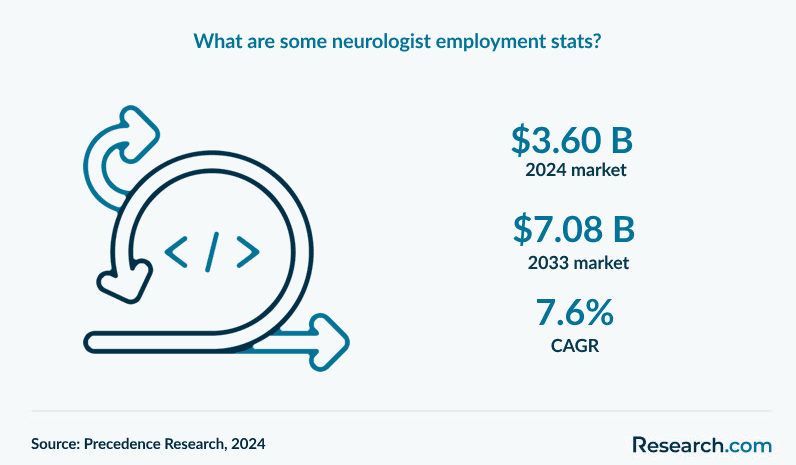
The global neurology market was valued at $3.60 billion in 2024 and is projected to reach $7.08 billion by 2033. This represents a compound annual growth rate (CAGR) of 7.6% during the forecast period. The expected growth reflects rising neurological disease burden, ongoing treatment development, and continued investment in neurological research and care delivery. The graphic below presents these figures.
What Does a Neurologist Do?
A neurologist is a physician who evaluates and treats disorders involving the central and peripheral nervous systems. Unlike neurosurgeons, neurologists usually do not perform brain or spine surgery, although some subspecialists perform procedures such as electrodiagnostic testing or minimally invasive stroke interventions depending on training.
- Evaluate symptoms: Neurologists assess concerns such as weakness, numbness, seizures, memory problems, tremor, headache, dizziness, vision changes, speech problems, and altered consciousness.
- Diagnose neurological conditions: Common diagnoses include stroke, epilepsy, Parkinson's disease, Alzheimer's disease, multiple sclerosis, migraine, neuropathy, neuromuscular disease, and movement disorders.
- Perform neurological examinations: They test strength, reflexes, sensation, coordination, gait, cranial nerve function, cognition, and mental status.
- Order and interpret tests: Neurologists may use MRI, CT scans, EEG, EMG, nerve conduction studies, lumbar punctures, laboratory testing, and other diagnostic tools.
- Create treatment plans: Care may involve medications, lifestyle counseling, rehabilitation referrals, procedures, monitoring, and coordination with other specialists.
- Manage chronic illness: Many patients need long-term follow-up for progressive or recurring neurological conditions.
- Educate patients and families: Neurologists often explain complicated diagnoses, treatment trade-offs, safety precautions, and prognosis.
Neurology is highly collaborative. A neurologist may work with nurses, rehabilitation therapists, psychologists, pharmacists, social workers, radiologists, primary care physicians, and advanced practice clinicians. Readers comparing physician and nursing roles may find it helpful to review pathways such as affordable online FNP programs, especially when evaluating broader patient-care career options.
| Setting | Typical Neurology Work | Best Fit For |
| Outpatient clinic | Diagnosis, medication management, follow-up care, chronic disease monitoring | Physicians who prefer longitudinal patient relationships |
| Hospital neurology | Consults, acute neurological evaluation, inpatient management | Physicians comfortable with urgent cases and interdisciplinary teams |
| Academic medicine | Teaching, research, subspecialty clinics, complex referrals | Neurologists interested in scholarship and training future physicians |
| Research or industry | Clinical trials, drug development, device research, data analysis | Physicians drawn to innovation and evidence generation |
| Subspecialty practice | Focused care in stroke, epilepsy, neuromuscular disease, movement disorders, or other areas | Neurologists who want deep expertise in a defined patient group |
Education Requirements to Become a Neurologist
Neurology education is demanding because the specialty requires broad medical knowledge and highly detailed understanding of the nervous system. A strong academic record is important, but successful applicants also need clinical exposure, communication skills, and evidence that they understand the realities of physician training.
- Undergraduate education: A bachelor's degree is required before medical school.
- Core coursework: Biology, general chemistry, organic chemistry, physics, mathematics, and laboratory science are common prerequisites.
- Major selection: A science major is common, but medical schools may consider applicants from other majors if prerequisite courses are completed.
- Helpful electives: Psychology, sociology, neuroscience, statistics, ethics, and humanities courses can strengthen preparation for patient care and medical school admissions.
- Medical school: Students complete an M.D. or D.O. program, typically structured across four years.
- Preclinical work: Anatomy, physiology, biochemistry, pharmacology, pathology, microbiology, immunology, and neuroscience help establish the medical foundation.
- Clinical rotations: Students rotate through core specialties and can pursue neurology electives to confirm fit and build residency readiness.
- Specialized experiences: Research, case reports, neurology interest groups, and mentorship can help students explore subspecialties.
- Neurology residency: Residency follows medical school and lasts four years, combining supervised patient care, didactics, call responsibilities, and subspecialty exposure.
- Licensing exams: Passing the USMLE or COMLEX is required for physician licensure.
Neurology is not the only route into nervous-system or behavioral health care. Nurses interested in psychiatric care may compare physician training with affordable online psychiatric nurse practitioner programs. Nurses seeking doctoral-level clinical leadership can also review accelerated DNP programs, while students drawn to speech, language, and swallowing disorders may explore online master's programs in communication disorders.
What Skills Are Required for Neurologists?
Neurology rewards physicians who can combine careful observation, analytical reasoning, technical knowledge, and compassionate communication. The diagnosis is not always obvious, and small details in the neurological exam can change the entire treatment plan.
- Advanced medical knowledge: Neurologists need a deep understanding of neuroanatomy, neurophysiology, pharmacology, imaging, and disease mechanisms.
- Diagnostic reasoning: They must connect symptoms, exam findings, patient history, and test results into a coherent diagnosis.
- Neurological examination skill: Accurate bedside exams remain central even as imaging and laboratory tools improve.
- Clear communication: Patients and families need understandable explanations of complex conditions and treatment choices.
- Empathy: Many neurological disorders affect independence, identity, cognition, mobility, and quality of life.
- Critical thinking: Neurologists must weigh uncertainty, competing diagnoses, evolving evidence, and patient goals.
- Attention to detail: Small findings in reflexes, gait, visual fields, speech, or sensation can be clinically meaningful.
- Team-based care: Collaboration with rehabilitation, pharmacy, psychiatry, primary care, neurosurgery, and nursing is routine.
- Technology comfort: Neurologists use imaging, electrodiagnostics, electronic health records, telehealth, and increasingly data-driven clinical tools.
- Adaptability: The specialty changes as new therapies, devices, and diagnostic methods become available.
- Time management: Clinic schedules, hospital consults, documentation, patient messages, and call responsibilities can compete for attention.
- Research literacy: Evidence-based practice requires the ability to read, interpret, and apply new studies appropriately.
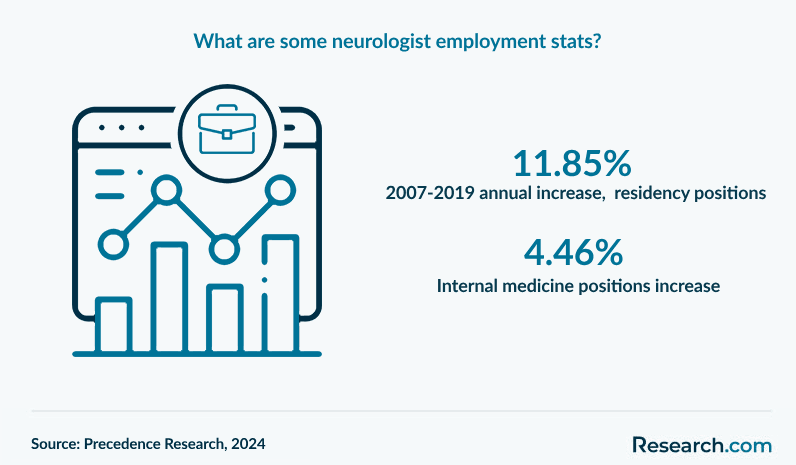
Between 2007 and 2019, neurology residency positions increased annually by 11.85%. Internal medicine positions increased by 4.46% annually over the same period. The National Center for Biotechnology Information (2021) data shown below suggests that neurology training capacity expanded rapidly during that period.
What Is the Certification and Licensing Process for Neurologists?
Licensure and certification serve different purposes. A medical license gives a physician legal authority to practice medicine in a state. Board certification shows that the physician has completed specialty training and met professional standards in neurology.
- State medical licensure: Physicians must graduate from medical school, complete required training, pass the USMLE or COMLEX, and satisfy state-specific requirements.
- Board certification: The American Board of Psychiatry and Neurology administers neurology board certification for eligible physicians who complete required training and examinations.
- Maintenance of certification: Board-certified neurologists must participate in ongoing professional development and assessment activities to maintain certification.
Credentialing exists to protect patients and help employers verify physician competence. This principle is common across regulated professions; for comparison, Research.com explains how credential rules work in education through its guide to physical education teacher certification requirements.
What Ethical and Legal Guidelines Should Neurologists Follow?
Neurologists often care for patients facing cognitive impairment, disability, loss of independence, life-threatening disease, or uncertain prognosis. Ethical decision-making is therefore central to safe and respectful practice.
- Confidentiality: Patient information must be protected according to legal and professional standards.
- Informed consent: Patients should understand the purpose, benefits, risks, and alternatives of tests and treatments.
- Beneficence: Care decisions should aim to promote the patient's well-being.
- Non-maleficence: Neurologists must avoid unnecessary harm and balance treatment risks against expected benefit.
- Autonomy: Patients have the right to participate in decisions about their care whenever possible.
- Justice: Care should be provided fairly and without inappropriate discrimination.
- Professional boundaries: Physicians must maintain respectful and appropriate relationships with patients, families, trainees, and colleagues.
- Legal compliance: Neurologists must follow laws and regulations governing medical practice, privacy, prescribing, documentation, and billing.
Physicians interested in the legal side of healthcare, compliance, ethics, or policy may find it useful to compare clinical training with programs discussed in Research.com's guide on whether a master of legal studies is worth it.
How Much Can You Earn as a Neurologist?
Neurologist compensation depends on subspecialty, employer, geography, years of experience, call duties, productivity model, academic versus private practice setting, and whether the physician performs procedures. Salary figures should be treated as estimates rather than guarantees.
- Base specialty compensation: Neurologists are generally well-compensated because the role requires extensive education and specialized clinical judgment.
- Subspecialty impact: Neurocritical care, stroke, interventional work, and surgical-adjacent roles may command different compensation than general outpatient neurology.
- Location differences: Cost of living, local demand, payer mix, and employer competition can influence offers.
- Practice model: Academic medical centers, hospitals, physician groups, and private practices may use different salary, bonus, and call compensation structures.
| Role or Category | Salary Figure Stated | Source Context |
| Physician - Neurology | $290,573 | Salary.com (2025) |
| Neurologist | $290,600 | Salary.com (2025) |
| Neurologist average annual wage in the USA | $271,470 | Bureau of Labor Statistics, 2024 |
| Neurocritical Care Physician | $378,000 | ZipRecruiter |
| Stroke Neurologist in NY | $380,413 | Salary data stated in source summary |
| Pediatric Neurologist | $286,440 | ZipRecruiter |
The average salary for a Physician - Neurology is $290,573, while the average salary for a Neurologist is slightly higher at $290,600. Neurosurgeons in California earn the highest average salary at $863,501, followed by those in New York at $806,901. Neurosurgeons in Texas earn an average of $724,701, while those in Florida and Pennsylvania earn similar salaries at $656,301 and $655,801, respectively. Neurocritical Care Physicians earn an average of $378,000, Stroke Neurologists in NY earn $380,413, and Pediatric Neurologists earn $286,440. Overall, the Salary.com (2025) figures show that procedure-heavy, highly specialized, and high-demand roles can have substantially different earnings from general neurology.
What Is the Job Market Like for Neurologists?
The neurology job market is shaped by population aging, chronic neurological disease, hospital stroke systems, outpatient access needs, academic research, and the availability of subspecialists. Demand can still vary by region, employer type, and subspecialty, so students should avoid assuming that every location offers the same opportunities.
- Demand drivers: Neurological disorders become more common with age, and many conditions require long-term specialist management.
- Employer demand: Physician offices and hospitals employ most neurologists in the data provided.
- Geographic variation: Rural areas, underserved regions, and high-growth metro areas may have different access needs and recruitment patterns.
- Subspecialty variation: Stroke, epilepsy, pediatric neurology, neurocritical care, and movement disorders may have different hiring dynamics.
The majority of neurologists, 5,980, are employed in offices of physicians. General medical and surgical hospitals employ 2,280 neurologists. Academic institutions account for 270 neurologists working in colleges, universities, and professional schools. Outpatient care centers employ 230 neurologists, while specialty hospitals excluding psychiatric and substance abuse facilities employ 150. These figures indicate that physician offices and hospitals are the dominant employment settings for neurologists, as shown in the graph below.
How Interdisciplinary Collaboration Improves Neurology Practice
Neurological care rarely happens in isolation. Stroke recovery may require rehabilitation, epilepsy care may involve pharmacy review and safety counseling, and neurodegenerative disease often requires social support, mental health care, and caregiver education.
- Pharmacists: Help optimize complex medication regimens, monitor interactions, and support adherence.
- Rehabilitation specialists: Assist patients with mobility, speech, swallowing, activities of daily living, and functional recovery.
- Mental health professionals: Support patients with depression, anxiety, cognitive changes, behavioral symptoms, and adjustment to chronic illness.
- Primary care clinicians: Coordinate preventive care, chronic disease management, and referrals.
Neurologists interested in deeper medication expertise may compare clinical practice with pharmacy pathways, including affordable online doctorate in pharmacy programs.
Should Neurologists Explore Dual-Degree Opportunities?
Dual-degree or complementary graduate study can make sense for neurologists who want careers in research, drug development, health policy, administration, informatics, or healthcare entrepreneurship. It is not necessary for most clinical neurologists, so the decision should be tied to a clear career goal.
| Goal | Helpful Additional Training | When It Makes Sense |
| Medication research or pharmacology-focused practice | Pharmacy-related coursework or a Pharm.D. pathway | When a neurologist wants deeper drug-development or therapeutic expertise |
| Healthcare leadership | Healthcare administration or management training | When aiming for department, service line, or executive roles |
| Data-driven research | Bioinformatics, informatics, statistics, or clinical research training | When working with large datasets, genomics, imaging, or trials |
| Policy or compliance | Legal studies, public health, or health policy coursework | When focusing on regulation, ethics, advocacy, or system design |
For physicians who want stronger pharmacological training, an online doctor of pharmacy program may be worth comparing with shorter continuing education or research-focused options.
How Billing and Coding Affect Neurology Practice Management
Neurology practices handle complex visits, diagnostic testing, chronic care, prior authorizations, procedures, and documentation requirements. Inaccurate coding can delay payment, increase administrative burden, and create compliance risk.
- Accurate documentation: Notes should support the complexity of the visit, medical necessity, and clinical decisions.
- Efficient claims workflows: Organized billing processes help reduce denials and delayed reimbursement.
- Staff training: Well-prepared administrative teams can improve scheduling, authorization, coding, and patient communication.
- Compliance awareness: Billing practices must align with payer rules and regulatory standards.
Practices that need stronger administrative support can use Research.com's resource on accredited online medical billing and coding schools to understand training options for billing staff.
What Subspecialties and Career Paths Are Available for Neurologists?
Neurology offers many subspecialty choices. The best path depends on the patient population you want to serve, the pace of work you prefer, your tolerance for emergencies, your interest in procedures, and whether you want a clinical, academic, research, or administrative career.
| Neurology Path | Primary Focus | Good Fit For |
| Stroke neurology | Acute stroke diagnosis, prevention, and treatment | Physicians comfortable with urgent decision-making |
| Epilepsy | Seizure diagnosis, EEG interpretation, and epilepsy management | Clinicians interested in longitudinal care and diagnostic testing |
| Movement disorders | Parkinson's disease, tremor, dystonia, and related disorders | Neurologists who enjoy detailed exams and chronic care |
| Multiple sclerosis | Diagnosis and treatment of demyelinating disease | Physicians interested in immunology and long-term disease management |
| Neuromuscular disorders | Diseases affecting nerves, muscles, and neuromuscular junctions | Clinicians drawn to EMG, nerve conduction studies, and complex diagnosis |
| Headache medicine | Migraine and other headache disorders | Physicians who want high-volume outpatient practice |
| Neuro-oncology | Brain and spinal cord tumors | Neurologists interested in oncology, imaging, and multidisciplinary care |
| Neurocritical care | Critically ill patients with severe neurological conditions | Physicians comfortable in intensive care environments |
| Behavioral neurology | Cognitive, memory, and behavioral symptoms | Neurologists interested in dementia, cognition, and neuropsychiatric overlap |
| Sleep medicine | Sleep disorders and related neurological concerns | Physicians interested in diagnostic testing and outpatient treatment |
| Interventional neurology | Minimally invasive procedures such as thrombectomy for stroke | Neurologists seeking procedure-based acute care |
| Pediatric neurology | Neurological disorders in infants, children, and adolescents | Physicians who want to work with children and families |
| Geriatric neurology | Neurological disease in older adults | Clinicians interested in aging, dementia, stroke, and mobility disorders |
| Research | Clinical trials, disease mechanisms, diagnostics, and treatment development | Physicians motivated by discovery and evidence generation |
| Academic medicine | Teaching, mentoring, publishing, and subspecialty care | Neurologists who want to train students and residents |
| Administration | Service line management, department leadership, operations, and policy | Physicians interested in systems-level impact |
Some readers may discover that they are more interested in behavior, cognition, counseling, or psychology than physician neurology. In that case, comparing neurology with alternatives such as affordable online PsyD programs may clarify fit. Clinicians interested in teaching advanced practice nurses can also review online DNP programs, while physicians considering administrative advancement may compare options such as affordable master's in healthcare administration programs.
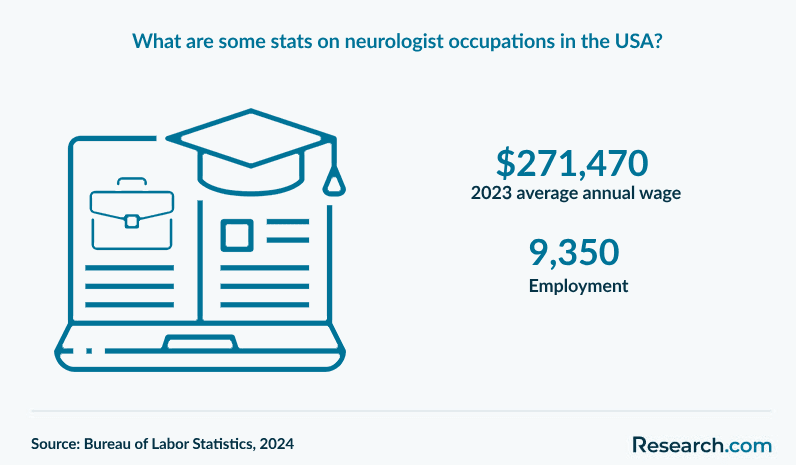
In 2024, the Bureau of Labor Statistics reported that the average annual wage for neurologists in the USA was $271,470. The total employment of neurologists was 9,350. These figures show that neurology is a highly compensated physician specialty with a substantial workforce in the United States.
How Health Informatics Can Advance Neurology Practice
Health informatics is increasingly relevant because neurology depends on imaging, longitudinal records, medication tracking, outcome measurement, and coordination across care teams. Better use of data can improve follow-up, support clinical decisions, and reduce administrative friction.
- Electronic health records: Structured documentation helps track symptoms, medication changes, imaging, and disease progression.
- AI-supported tools: Imaging analysis and decision-support systems may help clinicians identify patterns faster, although physician judgment remains essential.
- Population health data: Practices can identify gaps in follow-up, medication monitoring, and preventive care.
- Regulatory support: Strong informatics workflows can improve documentation, reporting, and compliance.
Neurologists and healthcare professionals who want to connect clinical care with data systems may explore affordable online health information management degree programs.
What Challenges Should You Consider Before Becoming a Neurologist?
Neurology can be intellectually exciting, but the work is not easy. Before committing, students should understand the professional, emotional, and operational pressures that come with caring for patients who often face serious neurological disease.
- Complex diagnoses: Symptoms may be subtle, overlapping, or difficult to localize.
- Uncertainty: Some patients do not receive immediate answers, and prognosis can be hard to predict.
- Serious illness: Stroke, dementia, ALS, brain tumors, refractory epilepsy, and neurodegenerative disease can be emotionally heavy.
- Long hours: Hospital neurology and call schedules can be demanding.
- Administrative load: Documentation, insurance rules, prior authorizations, and test coordination can consume time.
- Rapid knowledge growth: Neurologists must keep up with new therapies, diagnostic criteria, guidelines, and technologies.
- Communication difficulty: Explaining complex findings to frightened patients and families requires skill and patience.
- Limited treatment options: Some neurological diseases have few disease-modifying therapies.
- Burnout risk: High workload, emotional strain, and limited recovery time can affect well-being.
- Research pressure: Academic neurologists may face expectations to publish, obtain funding, teach, and maintain clinical productivity.
| Common Mistake | Why It Can Hurt Your Career Plan | Better Approach |
| Choosing neurology only for salary | The training is too long and the work too demanding if the specialty itself does not interest you | Shadow neurologists, complete neurology electives, and speak with residents before committing |
| Ignoring accreditation and licensure requirements | Medical training must meet standards for residency, licensing, and board eligibility | Verify school accreditation, residency eligibility, and state licensure rules early |
| Assuming all neurologists have the same schedule | Outpatient headache practice, stroke call, neurocritical care, and academic research can feel very different | Compare subspecialties based on call, patient acuity, procedures, and lifestyle |
| Focusing only on medical school admission | Residency competitiveness, mentorship, and clinical performance also matter | Build a long-term plan that includes research, electives, board exams, and letters of recommendation |
| Underestimating communication demands | Neurologists often deliver life-changing diagnoses and explain uncertain outcomes | Develop patient-centered communication and practice shared decision-making |
| Treating technology as optional | Modern neurology increasingly uses telehealth, imaging systems, EHR data, and AI-supported tools | Build comfort with digital workflows while maintaining clinical reasoning skills |
Can Advanced Academic Programs Improve Neurology Research and Clinical Outcomes?
Advanced academic training can be valuable for neurologists who want to lead clinical trials, analyze complex datasets, work in genomics, develop new diagnostic tools, or translate research into patient care. It is most useful when matched to a specific goal rather than pursued only to collect credentials.
For neurologists interested in computational biology, imaging analytics, genetics, or large-scale clinical datasets, a bioinformatics master's program may provide relevant data-analysis skills for research and translational medicine.
What Graduates Say About Neurology Careers
-
: "
Neurology has been a demanding but deeply meaningful career for me. I enjoy the challenge of solving complicated diagnostic problems, and it is powerful to see patients regain function or improve their daily lives after treatment. Alyssa
"
-
: "
I chose neurology because the nervous system is endlessly fascinating. The work requires collaboration, curiosity, and humility, and I value being part of a team that supports patients through difficult conditions. Dimitri
"
-
: "
For me, neurology is more than a specialty. It gives me the opportunity to guide patients and families through frightening diagnoses, explain options clearly, and keep learning as the field evolves. Eliana
"
How Networking and Mentorship Can Accelerate a Neurology Career
Mentorship can help future neurologists choose electives, prepare residency applications, understand subspecialty culture, and evaluate academic versus private practice paths. Networking also supports research collaborations, fellowship opportunities, job leads, and professional confidence.
- For pre-med students: Seek physician shadowing, neuroscience research, and volunteer roles that expose you to patient care.
- For medical students: Build relationships with neurology faculty, residents, and research mentors early.
- For residents: Use mentors to compare fellowships, job markets, academic expectations, and work-life trade-offs.
- For practicing neurologists: Professional societies, conferences, alumni networks, and hospital committees can open leadership and research opportunities.
Not every healthcare worker needs physician-level neurology training to contribute meaningfully to care teams. Readers considering faster entry into clinical support roles may compare options such as a 6 week medical assistant program.
How Can Neurologists Transition Into Leadership Roles?
Neurologists can move into leadership through department administration, hospital service line management, residency program leadership, research directorships, quality improvement, health policy, or executive roles. Clinical excellence helps, but leadership also requires skills in finance, operations, conflict management, staffing, compliance, and strategy.
- Start with local leadership: Join committees related to stroke programs, quality improvement, patient safety, curriculum, or clinical operations.
- Develop management skills: Learn budgeting, staffing, performance metrics, negotiation, and change management.
- Document impact: Track outcomes from clinical projects, workflow improvements, publications, or teaching initiatives.
- Consider formal training: Programs in healthcare administration can help physicians prepare for broader operational responsibility.
Physicians who want structured management preparation may compare accelerated healthcare administration degree programs with executive education, fellowships, or employer-sponsored leadership training.
How Technological Advancements Are Changing Neurology Practice
Technology is reshaping how neurologists diagnose, monitor, document, and coordinate care. AI-supported imaging analysis, telemedicine, remote monitoring, electronic records, and data dashboards can improve efficiency, but they do not replace clinical judgment or patient-centered communication.
- AI and imaging: Tools that assist with pattern recognition may help clinicians review imaging or identify urgent findings more efficiently.
- Telemedicine: Virtual visits can improve access for follow-up care, medication management, and some outpatient evaluations.
- Remote monitoring: Wearables and digital tools may support tracking of symptoms, movement, sleep, or seizure-related concerns.
- Administrative automation: Scheduling, documentation support, and referral workflows can reduce nonclinical workload when implemented well.
- Team-based digital workflows: Trained support staff help coordinate records, tests, messages, and patient follow-up.
Neurology practices that rely on well-trained support teams may benefit from staff who complete programs such as online medical assistant school.
How Can Neurologists Maintain Work-Life Balance?
Work-life balance in neurology depends heavily on subspecialty, practice setting, call schedule, documentation demands, patient volume, and institutional support. A neurologist in outpatient headache medicine may have a very different schedule from a neurocritical care physician or stroke specialist covering emergency call.
- Choose the right practice model: Compare outpatient, hospital-based, academic, private practice, and hybrid roles before accepting a job.
- Clarify call expectations: Ask about frequency, night coverage, weekend requirements, backup support, and compensation.
- Protect documentation time: Efficient notes, templates, and team workflows can reduce after-hours work.
- Use delegation appropriately: Nurses, medical assistants, administrative staff, and care coordinators can reduce avoidable physician workload.
- Set boundaries: Define expectations for patient messages, result review, meetings, and nonurgent work.
- Build peer support: Colleagues can help normalize difficult cases, share strategies, and reduce isolation.
- Monitor burnout signs: Emotional exhaustion, cynicism, sleep disruption, and reduced professional fulfillment should be taken seriously.
Clinicians interested in reducing administrative inefficiency through better data and records management may also explore fast online health information management degree programs.
Questions to Ask Before Committing to Neurology
- Do I enjoy complex diagnostic reasoning enough to sustain years of training?
- Am I comfortable caring for patients with chronic, disabling, progressive, or uncertain conditions?
- Do I prefer outpatient continuity, hospital urgency, procedural work, research, or teaching?
- Which neurology subspecialties match my preferred pace, patient population, and lifestyle?
- How much call, night work, and emergency care am I willing to accept?
- What kind of mentorship and neurology exposure can I obtain before applying to residency?
- Am I prepared for the cost, time, and competitiveness of medical training?
- Would another healthcare path better match my interests, timeline, or risk tolerance?
Key Insights
- Neurology is a physician specialty, not a short certificate path: You need a bachelor's degree, medical school, licensing exams, a four-year neurology residency, and state licensure before independent practice.
- Board certification strengthens professional credibility: Certification through the American Board of Psychiatry and Neurology demonstrates specialty-level competence beyond basic licensure.
- Subspecialty choice strongly affects daily work: Stroke, epilepsy, neurocritical care, movement disorders, pediatric neurology, and outpatient general neurology differ in pace, schedule, procedures, patient acuity, and lifestyle.
- Salary is strong but variable: The stated sources report neurologist salary figures from $271,470 to $290,600, while certain specialized roles and neurosurgery-related comparisons show higher figures.
- Employment is concentrated in physician offices and hospitals: The data provided lists 5,980 neurologists in offices of physicians and 2,280 in general medical and surgical hospitals.
- The field is expanding and technologically evolving: The global neurology market was valued at $3.60 billion in 2024 and is projected to reach $7.08 billion by 2033, while AI, telehealth, informatics, and data-driven care continue to influence practice.
- Fit matters as much as prestige: Students should shadow neurologists, seek mentors, compare subspecialties, and be honest about their tolerance for uncertainty, emotional strain, and long training.
- There are adjacent healthcare alternatives: Nursing, pharmacy, psychology, communication disorders, health informatics, and healthcare administration may better suit readers who want neurological or healthcare impact without becoming a physician neurologist.
References:
- Bureau of Labor Statistics (BLS). (2023, April 25). Neurologists. Bureau of Labor Statistics.
- Salary.com. (2025, February 1). Hourly Wage for Neurologist Salary in the United States. Salary.com.
- Salary.com. (2025, February 1). Neurosurgeon Salary, Hourly Rate (February, 2025) in the United States. Salary.com.
- Salary.com. (2025, February 1). Neurosurgeon Salary in California (February, 2025). Salary.com.
- Salary.com. (2025, February 1). Neurosurgeon Salary in Florida (February, 2025). Salary.com.
- Salary.com. (2025, February 1). Neurosurgeon Salary in New York (February, 2025). Salary.com.
- Salary.com. (2025, February 1). Neurosurgeon Salary in Pennsylvania (February, 2025). Salary.com.
- Salary.com. (2025, February 1). Neurosurgeon Salary in Texas (February, 2025). Salary.com.
- Salary.com. (2025, February 1). Physician - Neurology Salary, Hourly Rate (February, 2025) in the United States. Salary.com.
- ZipRecruiter. (n.d.). Neurocritical Care Physician Salary. ZipRecruiter.
- ZipRecruiter. (n.d.). Pediatric Neurologist Salary. ZipRecruiter.
Other Things You Should Know About Becoming a Neurologist
A neurology residency should be accredited by the Accreditation Council for Graduate Medical Education, or ACGME, in the United States. After medical school, residents complete a one-year internal medicine internship plus three years of neurology training in an accredited program.
To practice neurology in 2027, you must obtain board certification from the American Board of Psychiatry and Neurology (ABPN). This involves passing the ABPN Neurology examination after completing your medical degree and residency in neurology.
Neurology residency programs in 2027 emphasize skills like clinical neurology, neuroradiology, and neurophysiology. Residents focus on patient assessment, diagnosis, and management of neurological disorders, as well as developing proficiency in procedures like lumbar punctures and EEG interpretation, under the supervision of experienced neurologists.