2027 Fastest Online MSN in Patient Safety & Healthcare Quality

Co-Founder and Chief Data Scientist
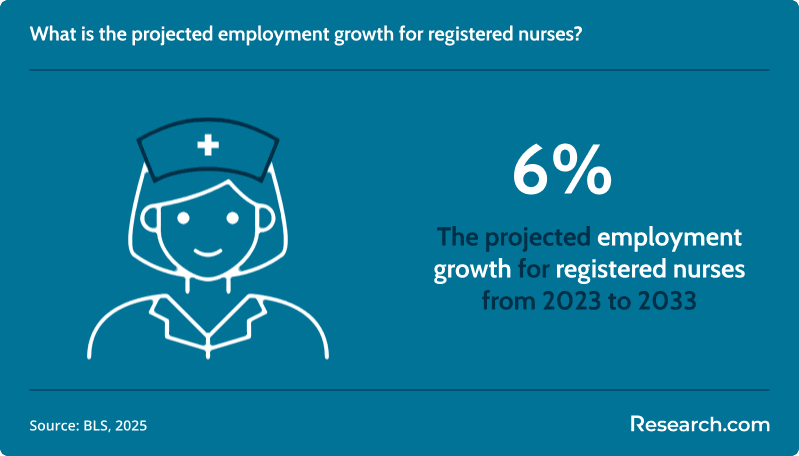
Professionals often aim to advance their nursing careers by earning a Master of Science in Nursing (MSN) with a specialization in Patient Safety and Healthcare Quality. However, busy schedules present a common hurdle. They frequently wonder if a fast online MSN program exists and if it offers real value. Addressing these concerns is crucial, particularly since the number of employed registered nurses is expected to increase by 6% from 2023 to 2033, indicating a steady demand for skilled healthcare workers.
The Research.com team, with over ten years of experience in career planning, carefully put together this article using only reliable sources. We answer these key questions. Reading on will help you understand if a quick online MSN in Patient Safety and Healthcare Quality makes sense for your career.
What are the benefits of getting an online MSN in Patient Safety and Healthcare Quality?
- Prepares you for in-demand leadership roles like Patient Safety Officer, Director of Quality Management, Healthcare Risk Manager, and Quality Improvement Coordinator in various healthcare settings.
- Offers strong earning potential. For example, Medical and Health Services Managers, typical roles for MSN graduates in this field, earn a median annual salary of around $117,960.
- Provides flexible, accessible, and often faster completion options through online programs. This allows you to balance your degree with a busy work or family schedule, study from anywhere, and access a wider range of schools without relocating or commuting.
What can I expect from an online MSN in Patient Safety and Healthcare Quality?
An online MSN in Patient Safety and Healthcare Quality prepares you to lead quality improvement and patient safety initiatives in healthcare. The curriculum covers healthcare systems, safety sciences, risk management, and leadership. Programs typically include a capstone project where you solve real-world issues, plus supervised internship hours for practical experience.
Tuition ranges widely, with most programs costing between $20,000 and $50,000. Online classes are usually delivered through flexible, interactive platforms featuring live or recorded lectures, discussion boards, and virtual simulations. This setup allows you to learn from home while balancing work or family commitments.
Where can I work with an online MSN in Patient Safety and Healthcare Quality?
An online MSN in Patient Safety and Healthcare Quality prepares graduates for diverse roles across healthcare and beyond. You can work in corporate environments, government agencies, nonprofit organizations, or launch your own consulting business.
Common positions include Patient Safety Officer, Director of Quality Management, Risk Manager, and Quality Improvement Coordinator in healthcare settings. Some graduates move into education, technology, or research, while others find opportunities in consulting and project management.
The leadership, analytical, and communication skills you gain make you valuable across industries, allowing you to adapt to a variety of dynamic work settings.
How much can I make with an online MSN in Patient Safety and Healthcare Quality?
Professionals with an online MSN in Patient Safety and Healthcare Quality typically earn a median salary between $104,280 and $109,860 per year, depending on their specific role and experience level. Salary can vary widely—entry-level positions may start around $77,000, while experienced professionals, especially those in managerial or director roles, often earn over $110,000 annually or more.
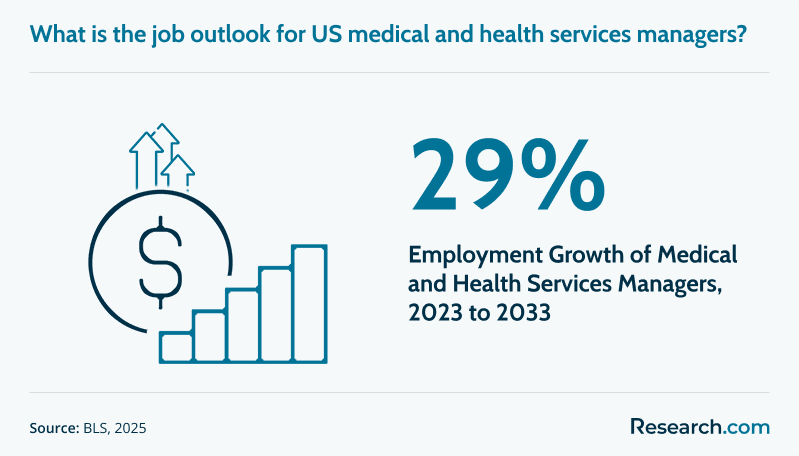
Advanced degrees and certifications can significantly boost earning potential, opening doors to leadership and specialized roles such as Medical and Health Services Manager, which saw a projected 29% job growth from 2023 to 2033. Location also impacts pay, with higher salaries often found in major urban centers or regions with a high demand for healthcare expertise.
- List of the Best Online MSN in Patient Safety and Healthcare Quality Programs for 2027 List of Programs
- How long does it take to complete an online MSN in Patient Safety and Healthcare Quality program? How long does it take to complete an online MSN in Patient Safety and Healthcare Quality program?
- How does an online MSN in Patient Safety and Healthcare Quality program compare to an on-campus program? How does an online MSN in Patient Safety and Healthcare Quality program compare to an on-campus program?
- What is the average cost of an online MSN in Patient Safety and Healthcare Quality program? Average Program Cost
- What are the financial aid options for students enrolling in an online MSN in Patient Safety and Healthcare Quality program? Financial Aid
- What are the prerequisites for enrolling in an online MSN in Patient Safety and Healthcare Quality program? What are the prerequisites for enrolling in an online MSN in Patient Safety and Healthcare Quality program?
- What courses are typically in an online MSN in Patient Safety and Healthcare Quality program? What courses are typically in an online MSN in Patient Safety and Healthcare Quality program?
- What types of specializations are available in an online MSN in Patient Safety and Healthcare Quality program? What types of specializations are available in an online MSN in Patient Safety and Healthcare Quality program?
- How to Choose the Best Online MSN in Patient Safety and Healthcare Quality Programs How to Choose the Best Online MSN in Patient Safety and Healthcare Quality Programs
- What Is the Long-Term Return on Investment for an Online MSN in Patient Safety and Healthcare Quality? What Is the Long-Term Return on Investment for an Online MSN in Patient Safety and Healthcare Quality?
- What career paths are available for graduates of an online MSN in Patient Safety and Healthcare Quality programs? Career Paths
- What is the job market for graduates with an online MSN in Patient Safety and Healthcare Quality Programs program? Job Market
- What challenges should I anticipate with an online MSN in Patient Safety and Healthcare Quality program? What challenges should I anticipate with an online MSN in Patient Safety and Healthcare Quality program?
- How Does This MSN Program Facilitate Transition to Advanced Clinical Roles? How Does This MSN Program Facilitate Transition to Advanced Clinical Roles?
Best Online MSN in Patient Safety and Healthcare Quality Programs for 2027
An online MSN in Patient Safety and Healthcare Quality is designed for nurses who want to move beyond bedside care into system-level work: reducing preventable harm, improving clinical processes, analyzing quality data, managing risk, and leading safer care environments. The degree can be a strong fit for registered nurses pursuing roles in quality improvement, patient safety leadership, healthcare operations, compliance, or nursing administration.
This guide compares online MSN and closely related graduate programs in patient safety, healthcare quality, risk management, and leadership. You will find program details, tuition information, accreditation notes, admission expectations, course topics, career paths, cost factors, and practical questions to ask before enrolling. The goal is not just to list schools, but to help you decide whether this degree matches your career goals, schedule, budget, and licensure needs.
Quick Answer: Is an Online MSN in Patient Safety and Healthcare Quality Worth Considering?
An online MSN in Patient Safety and Healthcare Quality can be worth considering if you are an RN who wants to lead quality improvement projects, reduce clinical risk, improve patient outcomes, or qualify for nursing leadership roles. Most programs take about two to three years, require roughly 36 to 46 credit hours, and include a practicum or capstone. The best choice is usually a CCNE- or CAHME-accredited program with coursework in quality improvement, safety science, data analysis, risk management, compliance, leadership, and evidence-based practice.
| Decision Factor | What to Look For | Why It Matters |
| Accreditation | CCNE, CAHME, or another recognized accreditor relevant to the program type | Accreditation affects employer recognition, academic quality, and future education options. |
| Program focus | Patient safety, quality improvement, risk management, leadership, informatics, or compliance | Different programs prepare students for different roles, even when titles sound similar. |
| Format | Fully online, asynchronous, self-paced, hybrid, or online with residency requirements | The delivery model determines how easily you can balance work, family, and school. |
| Practicum or capstone | Local placement, employer-based project, virtual simulation, or faculty-mentored capstone | Applied experience helps translate coursework into measurable workplace improvement. |
| Total cost | Tuition, fees, technology costs, travel, books, and time away from work | The listed cost per credit does not always reflect the full cost of attendance. |
How We Rank Schools
Because a graduate nursing degree can require a substantial financial and time commitment, program comparisons should be based on transparent, verifiable information. Research.com uses trusted education data sources, including the IPEDS database, Peterson's database, the College Scorecard database, and the National Center for Education Statistics.
These sources help support consistent evaluation of online MSN in Patient Safety and Healthcare Quality programs. To understand how Research.com evaluates programs, review the Research.com methodology page.
Program Comparison at a Glance
| School | Program | Program Length | Cost | Credits or Courses | Accreditation |
| Benedictine University | Master of Science in Nursing (M.S.N.) Online Degree Program | As little as 2 years | $670 per credit | 36 | CCNE |
| Drexel University | MSN in Quality, Safety, and Risk Management in Healthcare | 2 years | $1,075 per credit | 45 quarter credits (equivalent to 30 semester credits) | CCNE |
| Fayetteville State University | Online Master of Science in Nursing: Patient Safety and Quality Degree (MSN) | As little as 2 years | $250 in-state, $500 out-of-state per credit | 36 | CCNE |
| Georgetown University | Executive Master's in Clinical Quality, Safety & Leadership | 16 months | $1,805 per credit | 32 | CCNE |
| George Washington University | Master of Science in Health Sciences in Healthcare Quality | 24 months | $1,630 per credit | 36 | CAHME |
| Grand Canyon University | Master of Science in Nursing (MSN) with an Emphasis in Health Care Quality & Patient Safety | 2 years | $600 per credit | 36 | CCNE |
| Purdue Global University | Master of Science in Nursing (MSN) | Average 2 years | $420 per credit | 60–90 quarter credits | CCNE |
| Southern New Hampshire University | Master of Science in Nursing (MSN) in Healthcare Quality and Safety | 18-24 months | $659 per credit | 36 | CCNE |
| University of Illinois Chicago | Master of Science in Patient Safety Leadership | 2 years | $800 per credit | 36 | CAHME |
| Western Governors University | Master of Science, Nursing - Leadership and Management | Average 23 months (BSN to MSN) | $5,035 per 6-month term (flat rate) | 15 courses (BSN to MSN) | CCNE |
1. Benedictine University - Master of Science in Nursing (M.S.N.) Online Degree Program
Benedictine University offers an online MSN for registered nurses who want to develop ethical leadership skills for complex healthcare settings. The program uses an asynchronous format and flexible start dates, which can help working nurses plan graduate study around clinical schedules. Its Nurse Executive Leadership track includes preparation related to patient safety and quality, with coursework aligned to AACN outcomes in leadership, technology, evidence-based practice, and systems improvement. Students complete a local practicum and capstone project.
- Program length: As little as 2 years
- Cost per credit: $670
- Total credits: 36
- Accreditation: CCNE
2. Drexel University - MSN in Quality, Safety, and Risk Management in Healthcare
Drexel University provides an online MSN in Quality, Safety, and Risk Management in Healthcare for professionals interested in leading performance improvement and reducing organizational risk. The 100% online format includes interactive teaching methods and virtual simulations. The curriculum emphasizes patient safety, quality measurement, risk management, interdisciplinary collaboration, data-informed decision-making, and the legal and ethical dimensions of healthcare operations.
- Program length: 2 years
- Cost per credit: $1,075
- Total credits: 45 quarter credits (equivalent to 30 semester credits)
- Accreditation: CCNE
3. Fayetteville State University - Online Master of Science in Nursing: Patient Safety and Quality Degree (MSN)
Fayetteville State University offers an online MSN in Patient Safety and Quality for nurses who want to understand healthcare system problems, preventable errors, and the operational factors that affect outcomes. The program is described as the first of its kind in North Carolina and is built for working professionals. Students study safety culture, healthcare regulations, system design, quality improvement, and leadership practices used to guide safety initiatives.
- Program length: As little as 2 years
- Cost per credit: $250 (in-state), $500 (out-of-state)
- Total credits: 36
- Accreditation: CCNE
4. Georgetown University - Executive Master's in Clinical Quality, Safety & Leadership
Georgetown University offers an online Executive Master's in Clinical Quality, Safety & Leadership for healthcare professionals who want to improve patient outcomes at the organizational level. The program combines online coursework with a required three-day onsite immersion. Students focus on health systems leadership, healthcare policy, ethics, patient safety, quality improvement, and risk mitigation across varied healthcare environments.
- Program length: 16 months
- Cost per credit: $1,805
- Total credits: 32
- Accreditation: CCNE
5. George Washington University - Master of Science in Health Sciences in Healthcare Quality
George Washington University offers a 100% online Master of Science in Health Sciences (MSHS) in Healthcare Quality for professionals seeking leadership, management, research, or policy-focused roles in healthcare quality. The competency-based curriculum includes health informatics, quality improvement, and leadership theory. Many students complete a capstone project that allows them to apply quality and safety concepts to real healthcare challenges.
- Program length: 24 months
- Cost per credit: $1,630
- Total credits: 36
- Accreditation: CAHME
6. Grand Canyon University - Master of Science in Nursing (MSN) with an Emphasis in Health Care Quality & Patient Safety
Grand Canyon University offers an online MSN with an emphasis in Health Care Quality & Patient Safety for experienced nurses who want to lead improvement work. The curriculum includes nationally recognized metrics, healthcare technologies, quality improvement methods, patient safety practices, leadership development, and data analysis. Students also complete a local practicum to connect classroom learning with applied healthcare practice.
- Program length: 2 years
- Cost per credit: $600
- Total credits: 36
- Accreditation: CCNE
7. Purdue Global University - Master of Science in Nursing (MSN)
Purdue Global University offers an online MSN for working nurses pursuing leadership or advanced nursing roles. Students interested in patient safety and healthcare quality may find the Executive Leader track especially relevant because it covers organizational theory, healthcare finance, health policy, systems leadership, and preparation for industry certifications. The program is structured to support nurses who need flexibility while maintaining employment.
- Program length: Average 2 years
- Cost per credit: $420
- Total credits: 60–90 quarter credits
- Accreditation: CCNE
8. Southern New Hampshire University - Master of Science in Nursing (MSN) in Healthcare Quality and Safety
Southern New Hampshire University offers an online MSN in Healthcare Quality and Safety for registered nurses preparing for leadership responsibilities. The program is delivered fully online with flexible terms and includes coursework in evidence-based practice, policy advocacy, interprofessional leadership, healthcare outcomes, and practical quality improvement. A required practicum gives students an opportunity to apply safety and quality principles in a real-world setting.
- Program length: 18-24 months
- Cost per credit: $659
- Total credits: 36
- Accreditation: CCNE
9. University of Illinois Chicago - Master of Science in Patient Safety Leadership
The University of Illinois Chicago offers an online Master of Science in Patient Safety Leadership for both clinical and non-clinical healthcare professionals. The curriculum covers patient safety, quality improvement, risk assessment, and practical leadership skills. The format includes online coursework, a virtual residency, a three-day onsite residency in Chicago, and a faculty-mentored capstone project.
- Program length: 2 years
- Cost per credit: $800
- Total credits: 36
- Accreditation: CAHME
10. Western Governors University - Master of Science, Nursing - Leadership and Management
Western Governors University offers a 100% online, competency-based MSN in Leadership and Management for working nurses. The program includes quality improvement, risk management, strategic leadership, and healthcare administration concepts. Its self-paced structure and flat-rate tuition model may appeal to students who can move quickly through material they already know.
- Program length: Average 23 months (BSN to MSN)
- Cost per term: $5,035 per 6-month term (flat rate)
- Total courses: 15 (BSN to MSN)
- Accreditation: CCNE
How Long Does It Take to Complete an Online MSN in Patient Safety and Healthcare Quality?
Most online MSN in Patient Safety and Healthcare Quality programs take about two to three years to finish. Some accelerated pathways may be completed in as little as 12 to 18 months, depending on the school, transfer policies, enrollment pace, course sequencing, and whether the student studies full time or part time.
Many programs require around 36 to 46 credit hours and include a mix of core nursing courses, specialized quality and safety coursework, a practicum, and a capstone. Online delivery typically includes recorded lectures, live or asynchronous discussions, digital assignments, virtual simulations, and faculty feedback. This kind of accelerated graduate structure is also common in other fields, including some of the shortest online master's in business analytics programs.
| Enrollment Style | Typical Fit | Trade-Off |
| Accelerated | Students with strong time management skills and predictable work schedules | Faster completion, but heavier weekly workload |
| Full time | Nurses who can reduce work hours or manage a steady course load | Balanced timeline, but still demanding with clinical or practicum requirements |
| Part time | Working nurses with family, leadership, or rotating shift responsibilities | More manageable pace, but longer time to graduation |
| Competency-based | Experienced nurses who can demonstrate mastery quickly | Potential cost and time advantages, but requires high self-direction |
How Does an Online MSN in Patient Safety and Healthcare Quality Compare to an On-Campus Program?
An online MSN in Patient Safety and Healthcare Quality is usually built for working nurses and healthcare professionals who need flexibility. Courses may be asynchronous, synchronous, self-paced, or delivered through a mix of recorded content, live sessions, online discussion boards, and virtual simulations. This format can be especially useful for students working full time, rotating shifts, or living far from a university campus.
On-campus programs may provide more face-to-face interaction, easier access to campus resources, and stronger in-person networking. However, they can also require commuting, relocation, fixed class times, and more schedule disruption. Online programs may reduce transportation and housing costs, but students should still review technology fees, residency requirements, practicum expectations, and possible travel costs.
Both online and campus-based programs can be rigorous when they include a strong curriculum, qualified faculty, meaningful applied projects, and recognized accreditation. Nursing-focused programs often seek CCNE accreditation, while some healthcare management or quality programs may hold accreditation from the Commission on Accreditation of Healthcare Management Education, also known as CAHME. Similar quality considerations apply in other online learning fields, including online graphic design programs, where program format matters less than curriculum quality, portfolio or project work, and faculty expertise.
| Feature | Online Program | On-Campus Program |
| Schedule flexibility | Often stronger, especially with asynchronous coursework | Usually more structured around fixed class times |
| Networking | Requires intentional effort through online groups, faculty meetings, and professional associations | More natural in-person interaction with classmates and faculty |
| Practicum | Often completed locally or through employer-based projects | May use campus-affiliated clinical or healthcare partners |
| Cost considerations | May reduce commuting or relocation expenses | May include campus fees, travel, housing, or lost work flexibility |
| Best for | Working nurses who need flexibility | Students who prefer in-person instruction and campus support |
What Is the Average Cost of an Online MSN in Patient Safety and Healthcare Quality?
The average cost of an online MSN in Patient Safety and Healthcare Quality typically ranges from $20,000 to $50,000 for the entire program. Some accredited options may cost less, with totals as low as $8,910 to $18,000, while higher-end or private school programs may reach up to $57,000 or more. Actual costs depend on tuition, residency status, fees, transfer credits, program length, financial aid, and whether tuition is charged by credit, course, or term.
Students should compare the full cost of attendance rather than focusing only on the advertised tuition rate. Books, technology fees, residency travel, background checks, clinical documentation, graduation fees, and unpaid practicum time can affect affordability. Cost comparison is also important for related nursing credentials, such as the cheapest post master's certificate pediatric nurse practitioner online options, where tuition and fees can vary widely by institution.
| Cost Item | Why It Can Change the Final Price |
| Cost per credit or term | Credit-based tuition and flat-rate tuition can produce very different totals depending on pace. |
| Residency status | Public universities may charge different rates for in-state and out-of-state students. |
| Transfer credits | Accepted graduate credits can reduce the number of courses required. |
| Residency or immersion travel | Hybrid programs may require hotel, airfare, meals, or time away from work. |
| Employer reimbursement | Tuition assistance can reduce out-of-pocket costs but may require continued employment. |
What Financial Aid Options Are Available for Online MSN Students?
Online MSN students often have access to many of the same financial aid options available to students in campus-based graduate nursing programs. Eligibility depends on the school, enrollment status, citizenship or residency requirements, academic progress, and program accreditation.
- Federal financial aid: Students can begin by submitting the FAFSA to determine eligibility for federal loans and, in some cases, grant aid.
- School-based scholarships: Universities may offer awards for graduate nursing students, healthcare leaders, or students in quality and safety concentrations.
- Employer tuition assistance: Hospitals, health systems, insurers, and other healthcare employers may reimburse part of the tuition for nurses pursuing leadership-relevant graduate education.
- Private loans and outside grants: Private education loans and external grants may help cover remaining costs, though repayment terms should be reviewed carefully.
- Professional association scholarships: Nursing and healthcare quality organizations, including groups such as the American Association of Nurse Practitioners (AANP), may offer competitive scholarship opportunities for eligible graduate students.
What Are the Prerequisites for an Online MSN in Patient Safety and Healthcare Quality?
Admission requirements vary by school, but MSN programs in patient safety and healthcare quality generally expect applicants to have prior nursing education, an active nursing license, and evidence of academic readiness for graduate study.
- A Bachelor of Science in Nursing (BSN) from an accredited program is commonly required.
- A valid, unencumbered Registered Nurse (RN) license is usually mandatory for nursing-focused MSN pathways.
- Many programs expect a minimum cumulative Grade Point Average (GPA), often around 3.0, based on previous nursing or undergraduate coursework.
- Some schools may consider applicants with an Associate Degree in Nursing (ASN) and a BSN from an accredited institution, while related non-MSN master’s programs may accept applicants with a bachelor’s degree from a regionally accredited university. Students comparing broader healthcare or interdisciplinary options may also review pathways such as an accelerated humanities degree online.
- Common application materials include official transcripts, a resume, letters of recommendation, a statement of professional goals, and proof of RN licensure.
What Courses Are Typically Included in an Online MSN in Patient Safety and Healthcare Quality?
Coursework usually combines advanced nursing leadership with quality improvement, patient safety science, data analysis, regulatory compliance, and applied practice. The strongest programs connect theory to measurable improvement work through projects, simulations, practicums, or capstones.
- Quality & Safety in Healthcare: Introduces frameworks for improving care quality, preventing harm, reducing clinical errors, and building a safety-focused organizational culture.
- Research Methods & Biostatistics: Teaches students how to evaluate evidence, interpret data, and apply research findings to clinical and operational decisions.
- Legal Compliance and Regulations: Covers healthcare law, privacy, HIPAA, compliance systems, reporting requirements, and ethical responsibilities.
- Performance Standards and Metric Analysis: Focuses on using quality indicators, dashboards, benchmarks, and performance data to evaluate outcomes and guide improvement.
| Course Area | Skills Students Build | Workplace Application |
| Quality improvement | Process mapping, outcome tracking, intervention planning | Redesigning workflows to reduce errors or delays |
| Patient safety | Root cause analysis, safety culture assessment, risk identification | Investigating adverse events and preventing recurrence |
| Healthcare data | Metric interpretation, reporting, evidence-based decision-making | Using dashboards and quality indicators to guide leadership decisions |
| Leadership | Change management, team communication, stakeholder engagement | Leading interdisciplinary quality and safety initiatives |
| Compliance and risk | Policy review, regulatory awareness, documentation practices | Reducing organizational exposure and improving care consistency |
What Specializations Are Available in an Online MSN in Patient Safety and Healthcare Quality?
Many online MSN programs in this area treat patient safety and healthcare quality as the specialization itself rather than offering multiple sub-specializations. Students usually focus on quality improvement, patient safety, risk management, compliance, leadership, healthcare technologies, data-informed decision-making, and systems change.
Some programs use different titles even when the curriculum overlaps. For example, one school may call the pathway Patient Safety and Quality, while another may frame it as Healthcare Quality and Safety, Quality, Safety, and Risk Management, or Nursing Leadership with quality improvement content. Related programs, including the fastest online MSN in health systems management options, may emphasize broader operational leadership while still covering performance standards, regulatory issues, change management, and stakeholder coordination.
Students may also encounter adjacent MSN tracks such as Nursing Leadership, Health Informatics, Nursing Education, Care Coordination, or Executive Leadership. These can be useful alternatives if your goals extend beyond patient safety into administration, informatics, staff development, or broader health systems management. Nurses researching how to become a charge nurse may also find that quality and safety coursework supports team leadership, clinical supervision, and unit-level performance improvement.
| Program Focus | Best For | Potential Limitation |
| Patient Safety and Healthcare Quality | Nurses who want roles in safety, quality improvement, risk reduction, or compliance | May not prepare students for direct advanced practice licensure |
| Nursing Leadership | Nurses aiming for management, director, or executive-track roles | May include less specialized safety science coursework |
| Health Informatics | Professionals interested in data systems, electronic records, analytics, and reporting | May be more technology-focused than clinically focused |
| Care Coordination | Nurses who want to improve transitions, continuity of care, and interdisciplinary planning | May focus less on enterprise-level quality and risk management |
| Nursing Education | RNs who want to teach nurses or develop clinical education programs | May not align with quality management leadership roles as directly |
Salary potential varies by role, employer, location, experience, and whether the graduate moves into management. The following chart provides additional context for earning potential connected to patient safety skills.
How to Choose the Best Online MSN in Patient Safety and Healthcare Quality Program
The best online MSN program is not always the cheapest, fastest, or highest ranked. The right choice is the program that fits your professional goal, licensure status, schedule, budget, and preferred learning style. Before applying, compare programs using the same criteria so that marketing language does not obscure important differences.
1. Confirm Accreditation First
Choose a program with recognized accreditation appropriate to the degree. For MSN programs, CCNE or ACEN accreditation is often important. For healthcare management-oriented programs, CAHME accreditation may be relevant. Accreditation can influence employer confidence, academic credibility, and eligibility for future graduate or doctoral study.
2. Match the Curriculum to Your Career Goal
Review required courses, electives, practicum expectations, and capstone structure. A strong patient safety and healthcare quality curriculum should cover quality improvement, risk management, safety culture, healthcare data, regulatory compliance, leadership, and evidence-based practice. Students who want broader problem-solving preparation may also compare flexible academic pathways such as the fastest interdisciplinary studies degree online.
3. Evaluate Faculty Background
Look for faculty with advanced nursing credentials, clinical leadership experience, quality improvement work, healthcare administration expertise, or research in patient safety. Faculty experience matters because this field depends heavily on applied judgment, organizational change, and real healthcare problem-solving.
4. Understand Practicum and Capstone Requirements
Ask whether the program helps students identify practicum sites, permits employer-based projects, requires in-person activities, or expects students to secure their own placements. A strong capstone should allow you to produce a measurable improvement project that can be discussed with current or future employers.
5. Review Student Outcomes and Support
Graduation rates, retention data, student testimonials, career support, academic advising, and alumni outcomes can reveal whether the program supports working adults effectively. Rankings can be helpful, but they should not replace direct questions about support services, faculty access, and practicum logistics.
| Question to Ask | Why It Matters |
| Is the program accredited, and by whom? | Accreditation helps validate academic quality and employer recognition. |
| Does the curriculum specifically cover patient safety and healthcare quality? | Some leadership programs mention quality but do not provide deep specialization. |
| Can I complete the practicum locally or through my employer? | Placement rules can affect feasibility for working nurses. |
| Are there required campus visits or residencies? | Travel requirements can add cost and scheduling challenges. |
| What is the full cost after fees? | Program affordability depends on total cost, not only tuition per credit. |
| Will this program meet my long-term career or licensure goals? | Quality and safety MSN programs typically differ from nurse practitioner pathways. |
What Is the Long-Term Return on Investment for an Online MSN in Patient Safety and Healthcare Quality?
The long-term return on investment depends on how well the program helps you move into a role that requires or rewards graduate-level leadership, quality improvement, risk management, or patient safety expertise. Potential benefits may include stronger eligibility for leadership positions, broader responsibility, improved professional credibility, and preparation for roles tied to healthcare quality and compliance. However, salary gains are not automatic and depend on employer policies, local labor markets, experience, and job openings.
To evaluate ROI, compare total program cost with realistic career outcomes. Ask whether graduates move into quality coordinator, patient safety officer, risk manager, clinical quality director, nursing leadership, or healthcare administration roles. Also consider opportunity cost: time spent studying, possible reduced work hours, and practicum demands. If your immediate goal is a lower-cost nursing credential, it may be useful to compare alternatives such as the cheapest RN to BSN programs online before committing to a graduate program.
What Career Paths Are Available After an Online MSN in Patient Safety and Healthcare Quality?
Graduates often pursue roles focused on reducing preventable harm, improving clinical quality, managing compliance, analyzing performance metrics, and leading organizational change. These positions exist in hospitals, health systems, long-term care organizations, clinics, insurers, consulting firms, government agencies, and corporate healthcare settings.
- Patient Safety Officer: Develops and monitors safety policies, reviews adverse events, supports safer care processes, and helps lead initiatives that improve patient outcomes.
- Director of Quality Management: Oversees quality assurance programs, audits compliance, reviews patient care performance, and coordinates improvement work across departments.
- Healthcare Risk Manager: Identifies organizational risks, supports regulatory compliance, works with leadership on mitigation strategies, and helps reduce exposure related to safety or quality failures.
- Quality Improvement Coordinator: Tracks quality concerns, analyzes complaints or incidents, documents trends, and recommends changes that strengthen nursing practice and patient care.
Many of these positions overlap with healthcare administration. For readers comparing broader leadership careers, the question is healthcare administration a good career is worth exploring because quality, safety, compliance, and operations often intersect in management roles.
| Career Path | Main Responsibilities | Best Fit For |
| Patient Safety Officer | Safety event review, prevention planning, safety culture initiatives | Nurses interested in harm reduction and systems improvement |
| Quality Improvement Coordinator | Data tracking, process improvement, outcome reporting | Detail-oriented nurses comfortable with metrics and documentation |
| Healthcare Risk Manager | Risk assessment, compliance coordination, mitigation planning | Professionals interested in legal, regulatory, and operational risk |
| Director of Quality Management | Quality strategy, audits, team leadership, performance oversight | Experienced nurses pursuing management or director-level responsibilities |
| Nursing Leadership Role | Staff leadership, workflow improvement, policy implementation | RNs who want to combine clinical leadership with safety and quality expertise |
The chart below highlights the highest-paying industries connected to graduates with MSN-level preparation in Patient Safety and Healthcare Quality.
What Is the Job Market for Graduates With an Online MSN in Patient Safety and Healthcare Quality?
Graduates with an online MSN in Patient Safety and Healthcare Quality enter a healthcare labor market where quality, safety, compliance, risk management, and operational leadership are important priorities. Healthcare organizations need professionals who can improve outcomes, manage regulatory expectations, interpret data, lead interdisciplinary teams, and respond to complex system challenges.
Some nurses strengthen their profile further through related graduate options, including a fast track MSN care coordination online program, especially if they want to focus on transitions of care, patient navigation, and cross-team coordination.
One relevant occupational category is medical and health services managers. The Bureau of Labor Statistics projects nearly 29% growth for these positions from 2023 to 2033, equal to about 61,000 new job openings annually. In 2023, medical and health services managers held approximately 562,700 jobs. Their largest employers included:
What Challenges Should You Expect in an Online MSN in Patient Safety and Healthcare Quality?
Online study can be flexible, but it is not effortless. Students must manage graduate-level reading, writing, data analysis, group work, practicum requirements, and professional responsibilities at the same time. Nurses working rotating shifts may need extra planning to meet discussion deadlines, attend live sessions, or coordinate capstone activities.
Other challenges include fewer spontaneous networking opportunities, dependence on reliable internet access, adjustment to virtual simulations, and the need to secure or complete meaningful applied projects. Students should ask whether the program provides placement support, faculty mentoring, technical assistance, and clear expectations for practicum hours or capstone deliverables. Nurses considering deeper clinical leadership or doctoral preparation may also compare accelerated DNP programs online as a possible future pathway.
| Common Mistake | Better Approach |
| Choosing a program before checking accreditation | Verify accreditation directly and confirm it matches your career and education goals. |
| Comparing only tuition per credit | Calculate the full cost, including fees, travel, materials, and time away from work. |
| Assuming online means self-paced | Ask whether courses are asynchronous, synchronous, cohort-based, or competency-based. |
| Ignoring practicum logistics | Confirm placement rules, employer-site approval, supervision requirements, and capstone expectations. |
| Assuming the degree leads to advanced clinical practice licensure | Check whether the program is a leadership or quality track rather than a nurse practitioner track. |
| Relying only on rankings | Use rankings as one input, then compare curriculum, cost, support, and outcomes. |
How Can This MSN Support a Transition Into Advanced Clinical or Leadership Roles?
An MSN in Patient Safety and Healthcare Quality can help nurses move into roles that require systems thinking, leadership, evidence-based decision-making, risk reduction, and quality improvement. It is especially useful for nurses who want to influence care beyond individual patient assignments by improving policies, workflows, metrics, and team performance.
However, students should distinguish this degree from advanced practice registered nurse pathways. A patient safety and quality MSN may strengthen leadership and clinical systems expertise, but it typically does not replace the requirements of a nurse practitioner program. Nurses who want to expand clinical scope should compare specialized options such as direct entry online nurse practitioner programs and confirm licensure requirements in their state.
What Graduates Say About Online MSN Programs in Patient Safety and Healthcare Quality
- : "I was working full time as a nurse, so I needed a program that would not force me to step away from my job. The online format helped me apply patient safety concepts directly on my unit while continuing to meet my work responsibilities. — Seb"
- : "My goal was to lead quality improvement work, and the program helped me understand how to use data, reduce risk, and make process changes that were practical in a clinical setting. Being online gave me the space to study difficult topics at a pace I could manage. — Realyn"
- : "The online structure worked well with my family schedule. I could access course materials when I needed them and collaborate with classmates from different healthcare settings. The degree helped me contribute more confidently to safety and policy discussions. — Primo"
Current Trends Affecting Patient Safety and Healthcare Quality Education
Graduate programs in patient safety and healthcare quality are increasingly shaped by healthcare data, interdisciplinary care, virtual learning tools, regulatory complexity, and employer demand for measurable improvement. Students should look for programs that teach how to interpret performance metrics, use evidence in decision-making, communicate across departments, and lead change in complex systems.
Technology is also changing the field. Virtual simulations, online collaboration tools, electronic health record data, quality dashboards, and analytics platforms are now central to many safety and quality roles. At the same time, employers still value human judgment, ethical leadership, communication, and the ability to build trust across clinical teams. The most useful programs develop both technical and leadership skills.
Practical Steps Before You Apply
- Define your target role. Decide whether you want quality improvement, patient safety, risk management, nursing leadership, healthcare administration, or advanced clinical practice.
- Verify accreditation. Confirm CCNE, CAHME, or another relevant accreditation before comparing costs or schedules.
- Request a full cost breakdown. Ask about tuition, fees, travel, books, technology costs, and whether tuition changes during the program.
- Ask about practicum support. Find out whether you can complete projects at your current workplace and whether the school assists with placement.
- Compare curriculum depth. Look for courses in quality improvement, safety science, data analysis, compliance, leadership, risk management, and evidence-based practice.
- Speak with admissions and faculty. Ask direct questions about workload, student support, capstone examples, and career outcomes.
- Plan your schedule honestly. Consider work shifts, family obligations, clinical responsibilities, and how many hours per week you can realistically study.
Key Insights
- An online MSN in Patient Safety and Healthcare Quality is best suited for RNs who want leadership, quality improvement, patient safety, risk management, or compliance-focused roles.
- Most programs take about two to three years, although some accelerated options may be completed in as little as 12 to 18 months.
- The average program cost typically ranges from $20,000 to $50,000, but totals can be lower or higher depending on the school, tuition model, fees, and financial aid.
- Accreditation should be a non-negotiable factor. Look for CCNE for nursing programs and CAHME when evaluating healthcare management-oriented programs.
- Online and on-campus programs can both be rigorous, but online students should pay close attention to practicum logistics, residency requirements, faculty access, and technology support.
- This degree can support advancement into quality and safety leadership, but it should not be confused with a nurse practitioner pathway unless the program specifically includes advanced practice preparation.
- The strongest program choice is the one that aligns with your target role, budget, schedule, and long-term career plan—not simply the one with the lowest tuition or fastest timeline.
References
- How to find a job with patient safety skills. (2024). Zippia. Retrieved July 16, 2025, from https://www.zippia.com/skills/patient-safety
- Medical and health services managers. (2025, April 18). Bureau of Labor Statistics. https://www.bls.gov/ooh/management/medical-and-health-services-managers.htm
- Registered nurses. (2025, August 28). Bureau of Labor Statistics. https://www.bls.gov/ooh/healthcare/registered-nurses.htm#tab-6
Other Things You Should Know About Online MSN in Patient Safety and Healthcare Quality Programs
The fastest 2027 Online MSN in Patient Safety & Healthcare Quality program can typically be completed in 12-18 months. This accelerated timeline is designed to accommodate working professionals, enabling them to advance their education without significant disruption to their careers.
Earning a 2027 Online MSN in Patient Safety & Healthcare Quality can lead to advanced roles such as Clinical Nurse Specialist, Quality Improvement Coordinator, or Patient Safety Officer. These positions often involve overseeing healthcare quality and patient safety programs and implementing quality improvement initiatives.
Most programs require a BSN from an accredited nursing school and an unencumbered RN license. Some also expect a minimum GPA of 3.0 and recent statistics or research coursework. Applicants without a BSN are usually directed to RN-to-MSN or bridge pathways before admission.