
2027 Child Counselor Careers: Guide to Career Paths, Options & Salary

Co-Founder and Chief Data Scientist
Choosing a child counselor career means preparing for emotionally demanding work with children, families, schools, healthcare providers, and community agencies. The path can be rewarding, but it is not as simple as earning one degree and applying for a generic “child counselor” job. Education level, state licensure rules, supervised clinical experience, work setting, and specialization all affect what you can legally do, where you can work, and how much you may earn.
This guide explains how child counseling careers work in 2026, including common job titles, required skills, education routes, licensure considerations, salary information, advancement options, related careers, and practical questions to ask before choosing a program. It is designed for students, career changers, and working professionals who want a realistic roadmap into child and adolescent mental health support.
Quick Answer: Is Child Counseling a Good Career Path?
Child counseling can be a strong career choice for people who want to support children facing anxiety, trauma, family conflict, behavioral challenges, developmental concerns, or school-related stress. The field has favorable demand indicators: the Bureau of Labor Statistics (BLS) projects a 19% job growth for mental health counselors from 2023 to 2033, and the National Institute of Mental Health (NIMH) reports that one in six children experiences a mental health disorder yearly.
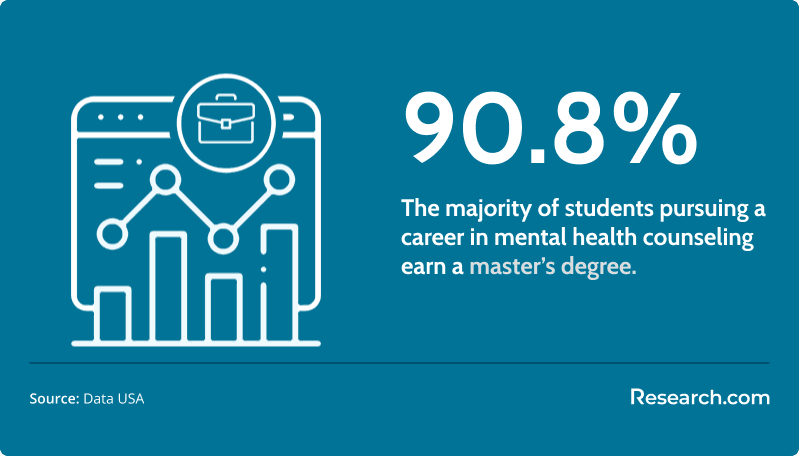
However, most independent counseling roles require a master’s degree in counseling, psychology, social work, or a closely related field, followed by state licensure. Entry-level support jobs may be available with an associate’s degree, bachelor’s degree, or certificate, but those roles usually do not allow independent therapy.
Key Things You Should Know About Child Counselor Careers
- Demand is strong, but job titles vary. The U.S. Bureau of Labor Statistics (BLS) projects a 19% growth in employment for child mental health counselors from 2023 to 2033, though official labor categories may group child counselors with broader mental health, behavioral disorder, or school counseling occupations.
- Pay depends heavily on credentials and setting. Salaries typically range between $35,000 and $65,000 annually, depending on factors such as experience, location, and employer.
- Work environments are diverse. Child counselors and related professionals may work in outpatient mental health and substance abuse centers, individual and family services, offices of other health practitioners, residential mental health and substance abuse facilities, hospitals, schools, and community programs.
- Licensure matters. A master’s degree in counseling or psychology and state licensure are typically required for clinical counseling roles, especially if you want to diagnose, treat, or practice independently.
- The work can be meaningful but emotionally intense. Studies indicate that psychologists and counselors generally report moderate to high job satisfaction, particularly in areas like clinical service and peer support, but burnout prevention and supervision are important.
- Why pursue a career in child counseling?
- What is the career outlook for child counseling for 2027?
- What are the required skills for child counseling?
- How to Start Your Career in Child Counseling
- How can I advance my career in child counseling?
- What are the financial implications of obtaining child counseling education?
- What challenges do child counselors face and how can they overcome them?
- How Can Integrating Spiritual Perspectives Enhance Child Counseling?
- How Can Telehealth and Technology Advance Child Counseling?
- Should I pursue a PsyD to enhance my child counseling career?
- How can leadership and organizational strategies enhance child counseling outcomes?
- How can selecting the right education program impact my child counseling career?
- What ethical and legal considerations should child counselors follow?
- What are the alternative career options for child counseling?
- What is the relationship between child counseling and substance abuse counseling?
- What professional development opportunities should child counselors pursue?
Why pursue a career in child counseling?
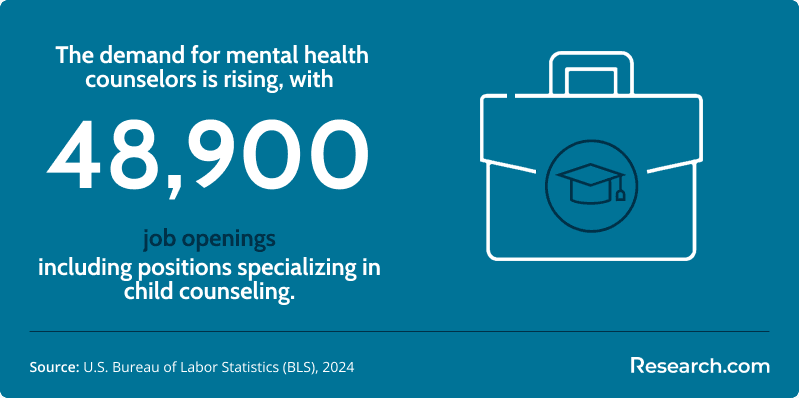
Students often consider child counseling because they want work that combines psychology, advocacy, family support, and practical problem-solving. The need is visible across schools, clinics, hospitals, family service agencies, and private practices. The Bureau of Labor Statistics (BLS) reports 48,900 job openings for mental health counselors, including roles specializing in child counseling, which reflects continuing demand for professionals who can support children with emotional and behavioral concerns.
The value of the role goes beyond employment stability. Child counselors help identify patterns in mood, behavior, communication, school performance, trauma responses, and family relationships. They may work with children who are grieving, adjusting to divorce, experiencing anxiety, managing anger, recovering from abuse, or struggling with peer relationships. If you want to compare counseling with a broader family-support profession, this career guide for child and family social workers explains a related path that often overlaps with child welfare and case coordination.
This career is best suited for people who can stay calm under stress, communicate clearly with both children and adults, respect confidentiality, and work within legal and ethical boundaries. It may not be the right fit if you want fast entry into independent clinical practice without graduate education or if you prefer work with minimal emotional exposure.
What is the career outlook for child counseling for 2026?
The career outlook for child counseling remains favorable because demand for youth mental health support continues across education, healthcare, community services, and private practice. Schools need counselors to address academic, social, and emotional concerns, while clinics and hospitals rely on child-focused mental health professionals to help children and families manage more complex conditions.
It is important to interpret labor data carefully. “Child counselor” is often not tracked as one single occupation. Salary and growth figures may come from related categories such as school counselors, mental health counselors, behavioral therapists, and clinical child psychologists.
| Job Title | Median Salary | Projected Growth Rate |
| School Counselor | $63,090 | 10% increase (2022-2032) |
| Licensed Child Counselor | $55,480 | 22% increase (2022-2032) |
| Behavioral Therapist | $50,280 | 19% increase (2022-2032) |
| Clinical Child Psychologist | $88,510 | 13% increase (2022-2032) |
| Sources: Bureau of Labor Statistics (2024), American Counseling Association (2024) |
These figures suggest that child-focused counseling careers can offer steady opportunities, especially for professionals with graduate training, supervised experience, and licensure. According to Statista, over 17% of U.S. children aged 12-17 received mental health treatment, which helps explain why schools and healthcare organizations continue expanding youth mental health services.
If your goal is to work in K-12 settings, licensure and state school counselor requirements should guide your program choice. Research.com’s list of affordable online school counseling master’s programs can help you compare education options that may support school counseling preparation.
What are the required skills for child counseling?
Child counselors need both clinical knowledge and strong interpersonal judgment. The work involves assessment, treatment planning, age-appropriate communication, collaboration with caregivers, documentation, and crisis response. Strong technical skills help counselors choose evidence-based interventions, while soft skills help them build trust with children who may not yet have the language to explain what they feel.
Technical Skills for Child Counselor Careers
- Psychological assessment and diagnosis. Child counselors evaluate emotional, behavioral, and developmental concerns using interviews, observation, caregiver input, and standardized tools such as the Child Behavior Checklist (CBCL).
- Behavioral therapy techniques. Evidence-based approaches, including Cognitive Behavioral Therapy (CBT), can help children understand thoughts, emotions, and behaviors. Research has found that CBT can significantly reduce anxiety symptoms in children after treatment.
- Crisis intervention and conflict resolution. Child counselors may respond to self-harm concerns, family conflict, bullying, abuse disclosures, school crises, or high-intensity behavioral episodes.
- Trauma-informed care. Counselors working with children must understand how abuse, neglect, violence, grief, and instability affect behavior and emotional regulation without using interventions that may retraumatize the child.
- Child and adolescent development. Effective treatment depends on understanding cognitive, emotional, social, and language development so interventions match the child’s age and needs.
- Documentation and treatment planning. Counselors must write clear notes, track progress, maintain confidentiality, and coordinate with schools, families, physicians, or social service providers when appropriate.
Students who want a broader role that combines counseling, advocacy, and family support may also compare this field with child and family social work careers.
General Skills for Child Counselor Careers
- Active listening and clear communication. Children may communicate through play, silence, behavior, or indirect statements, so counselors must listen beyond words and explain concepts in age-appropriate language.
- Empathy and patience. Progress can be slow, especially when children are fearful, guarded, dysregulated, or unsure how to describe their experiences.
- Problem-solving. Counselors must translate assessment findings into realistic intervention plans that families and schools can actually follow.
- Collaboration. Many cases require teamwork with parents, teachers, pediatricians, social workers, school administrators, and other mental health providers.
- Emotional resilience. Child counseling can involve trauma, neglect, family instability, and crisis situations, so professionals need boundaries, supervision, and self-care habits.
- Cultural humility. Counselors must consider family structure, language, religion, disability, immigration background, community context, and cultural expectations when planning care.
These skills develop through formal education, supervised practice, continuing education, and direct client experience. If you are interested in intervention-based roles focused heavily on behavior change, Research.com’s behavior therapist career guide explains another closely related option.
How to Start Your Career in Child Counseling
The usual path into licensed child counseling begins with undergraduate study, continues through a master’s program, and includes supervised clinical experience plus state licensure. Some support roles are available earlier, but independent counseling authority is generally reserved for licensed professionals.
| Education Level | What It Can Prepare You For | Important Limitation |
| Certificate | Entry-level support roles such as behavioral technician or crisis hotline support, depending on employer requirements | Usually not enough for independent counseling or diagnosis |
| Associate’s degree | Paraprofessional, classroom support, behavioral health assistant, or technician roles | Clinical responsibility is limited and supervised |
| Bachelor’s degree | Case management, youth services, school support, behavioral services, or preparation for graduate study | Most therapy roles still require graduate education and licensure |
| Master’s degree | Licensure-track counseling, school counseling, clinical mental health counseling, marriage and family therapy, or social work roles | Must meet state-specific supervised experience and exam requirements |
| Doctoral degree | Advanced clinical assessment, psychology practice, leadership, research, or specialized child psychology work | Requires significant time, cost, and licensing preparation |
What can I do with an associate’s degree in child counseling?
Behavioral Health Technician
A behavioral health technician supports licensed counselors, psychologists, or behavioral specialists by helping carry out treatment plans for children with emotional or behavioral disorders. Duties may include observing behavior, documenting progress, supporting structured activities, and helping maintain a safe therapeutic environment.
Median salary: $35,000
Teacher’s Aide (Special Education)
A special education teacher’s aide assists students with learning, behavioral, developmental, or emotional challenges. This role may involve classroom support, social-emotional skill practice, learning material preparation, and communication with teachers or support staff.
Median salary: $30,000
What can I do with a bachelor’s degree in child counseling?
School Counselor Assistant
A school counselor assistant works under licensed school counseling staff to support student programs, conflict resolution activities, emotional development initiatives, and academic or social support services.
Median salary: $40,000
Case Management or Youth Services Support
Bachelor’s-level professionals may coordinate resources for children and families who need mental health referrals, social services, school support, or community-based assistance. This work often involves communication with families, agencies, and educational teams rather than independent therapy.
If you want a more hands-on intervention role while building experience, compare these options with the behavior therapist career path.
Can you get a child counseling job with just a certificate?
A certificate may help you qualify for some support positions, such as behavioral technician, youth program aide, crisis hotline specialist, or mental health support worker. It is usually not enough to become a licensed child counselor. Employers and states generally require more education, supervised experience, and licensure for professionals who diagnose conditions, provide therapy, or practice independently.
According to the NSF, 71% of psychology bachelor’s degree holders work full-time, though many are in support roles like behavioral health assistants or case managers rather than licensed child counselors. If your long-term goal is clinical practice, review child psychologist education requirements early so you understand the difference between counseling, psychology, social work, and behavioral therapy pathways.
How can I advance my career in child counseling?
Career advancement in child counseling usually comes from three sources: graduate education, specialized credentials, and supervised experience with specific populations. Advanced preparation can open doors to independent practice, school counseling, clinical supervision, private practice, trauma work, behavioral specialization, leadership, or doctoral-level assessment roles.
| Credential | Best For | Common Requirements Listed |
| Licensed Professional Counselor (LPC) | Counselors seeking independent clinical practice in many states | Master’s degree, supervised clinical hours, and passing the National Counselor Examination (NCE) |
| Registered Play Therapist (RPT) | Professionals who work primarily with young children through play-based interventions | Master’s degree, 150 hours of play therapy training, and supervised clinical experience |
| Certified Clinical Trauma Professional (CCTP) | Counselors who want formal preparation in trauma-informed care | Trauma-focused training and passing an exam |
| National Certified Counselor (NCC) | Counselors seeking a national professional credential | Master’s degree, 3,000 supervised hours, and passing the NCE |
| Board Certified Behavior Analyst (BCBA) | Professionals focused on applied behavior analysis and behavioral intervention | Master’s in applied behavior analysis, supervised experience, and passing the BCBA exam |
| Certified School Counselor | Counselors planning to work in school systems | Graduate degree, internship hours, and passing a state licensure exam |
Many professionals use graduate education to move from support roles into licensed counseling. Others begin with psychology and later specialize through clinical training, school counseling, trauma work, or behavioral intervention. If time is a concern, an accelerated online psychology degree may help some students complete foundational coursework more quickly before pursuing graduate-level licensure preparation.
What are the financial implications of obtaining child counseling education?
The financial commitment can be significant because licensed child counseling usually requires more than one credential step. Students should consider tuition, fees, books, technology, commuting or residency costs, unpaid or lower-paid internship time, licensing exam fees, background checks, professional liability insurance, supervision expenses, and continuing education after licensure.
Cost should be evaluated alongside career goals. A low-cost program is not a good value if it does not support your state’s licensure requirements. A more expensive program may still be difficult to justify if it lacks strong internship placement support or does not align with your intended role. Before enrolling, compare total cost, accreditation, field placement quality, graduate outcomes, and licensing compatibility. Research.com’s guide to affordable online counseling degree options can help you begin that cost comparison.
Questions to Ask Before Paying for a Child Counseling Program
- Does the program meet educational requirements for the state where I plan to work?
- Is the program accredited by an agency recognized for counseling, psychology, social work, or school counseling preparation?
- Will the school help me secure practicum, internship, or supervised clinical placements with children or adolescents?
- Are online students eligible for the same advising, placement support, and licensure guidance as campus students?
- What additional costs should I expect beyond tuition?
- Does the curriculum include trauma, ethics, child development, family systems, assessment, and crisis intervention?
- Can I transfer credits or use employer tuition assistance?
What challenges do child counselors face and how can they overcome them?
Child counselors often work with emotionally complex cases involving trauma, family conflict, school pressure, grief, behavioral escalation, abuse concerns, or crisis situations. The job can also include heavy documentation, coordination with multiple adults, legal reporting duties, and high caseloads. These pressures can affect both counselor well-being and quality of care.
| Common Challenge | Why It Matters | Better Practice |
| Emotional fatigue | Repeated exposure to children’s trauma and family distress can contribute to burnout | Use supervision, peer consultation, manageable boundaries, and regular self-care routines |
| Boundary confusion | Children and families may expect constant access or personal involvement | Set clear communication policies, session expectations, and emergency procedures |
| High caseloads | Too many clients can weaken documentation, follow-up, and treatment quality | Track capacity, use structured treatment plans, and advocate for realistic workloads |
| Family disagreement | Parents, guardians, schools, and children may have different goals | Clarify consent, roles, confidentiality limits, and treatment objectives early |
| Mandatory reporting pressure | Counselors must act when abuse, neglect, or safety concerns arise | Know state law, document carefully, and consult supervisors when appropriate |
Professionals who want a faster but still responsible route into licensed practice should compare education, supervision, and state rules carefully. This Research.com guide on the fastest way to become a licensed counselor or therapist can help clarify realistic timelines and shortcuts to avoid.
How Can Integrating Spiritual Perspectives Enhance Child Counseling?
Spiritual or faith-informed perspectives can support child counseling when they are handled ethically, clinically, and with respect for the family’s beliefs. For some families, faith, prayer, religious community, or spiritual identity may be part of coping, meaning-making, grief, and resilience. For others, spiritual themes may not be relevant or may even be a source of conflict.
The key is client-centered practice. Counselors should not impose beliefs, substitute spiritual advice for evidence-based treatment, or ignore consent and cultural context. Professionals who want formal preparation in faith-integrated care can review Christian counseling master’s programs to understand how some programs approach biblical counseling, ethics, and clinical application.
How Can Telehealth and Technology Advance Child Counseling?
Telehealth has expanded access to child counseling, especially for families in rural areas, underserved communities, or situations where transportation and scheduling are barriers. Video sessions, secure messaging, digital assessments, and interactive tools can help counselors maintain continuity of care and monitor progress between appointments.
Technology also introduces important responsibilities. Counselors must consider privacy, consent, emergency protocols, data security, state practice rules, and whether a child’s age or home environment makes telehealth clinically appropriate. A child may need a private space, caregiver assistance, or in-person support depending on the concern.
Professionals who want flexible graduate training while improving their technology readiness can compare options such as an affordable online master’s degree in psychology, while still confirming whether the program supports their intended licensure path.
Should I pursue a PsyD to enhance my child counseling career?
A Doctor of Psychology (PsyD) can be useful if your goal is advanced clinical practice, psychological assessment, leadership, or specialized work with children and adolescents. PsyD programs generally emphasize applied clinical training and may provide deeper preparation in diagnosis, testing, supervision, and complex case formulation.
A PsyD is not necessary for every child counseling career. If your goal is to become a licensed professional counselor, school counselor, clinical social worker, or marriage and family therapist, a licensure-track master’s degree may be the more direct route. Before choosing a doctoral path, review accreditation, practicum and internship structure, child-focused training opportunities, cost, licensure alignment, and career goals. Research.com’s guide to APA accredited online PsyD programs can help you compare doctoral options.
How can leadership and organizational strategies enhance child counseling outcomes?
Child counseling often depends on systems, not only individual sessions. A counselor may need to coordinate with schools, pediatricians, social workers, courts, guardians, community agencies, and crisis teams. Strong leadership and organizational skills help ensure that services are coordinated, referrals are clear, documentation is accurate, and children do not fall through gaps between providers.
Organizational psychology concepts can support better team communication, workflow design, program evaluation, staff training, and service quality. Counselors who move into clinical leadership, school mental health coordination, nonprofit management, or program administration may benefit from broader organizational training. An affordable online master’s in organizational psychology can be relevant for professionals who want to lead teams or improve mental health service systems.
How can selecting the right education program impact my child counseling career?
Your program choice can determine whether you qualify for licensure, where you can complete supervised experience, and how prepared you feel for real child counseling work. A strong program should align with your target career: school counseling, clinical mental health counseling, social work, marriage and family therapy, psychology, or behavioral analysis.
Do not choose a program based only on convenience or admission ease. Look for accreditation, state licensure alignment, child and adolescent coursework, supervised fieldwork, faculty experience, career support, and transparent cost information. Students who want social work as a pathway into child and family services may compare flexible options such as the easiest online MSW programs to get into, while still verifying field placement and licensure requirements.
Common Mistakes When Choosing a Child Counseling Program
- Assuming all counseling degrees lead to the same license. School counseling, mental health counseling, social work, psychology, and MFT programs can lead to different credentials.
- Ignoring state licensure rules. A program that works in one state may not meet requirements in another.
- Looking only at tuition. Internship support, supervision access, exam preparation, and licensure outcomes matter too.
- Choosing online study without checking placement requirements. Many online programs still require in-person practicum or internship hours.
- Assuming salary outcomes are guaranteed. Earnings depend on employer, location, credentials, experience, and specialty.
- Overlooking accreditation. Accreditation can affect licensure eligibility, transfer options, financial aid, and employer recognition.
What ethical and legal considerations should child counselors follow?
Ethics are central to child counseling because clients are minors and often depend on adults for consent, transportation, safety, and decision-making. Counselors must understand confidentiality, informed consent, assent, guardian involvement, mandated reporting, recordkeeping, scope of practice, cultural competence, and professional boundaries.
One of the hardest parts of child counseling is balancing the child’s privacy with caregiver rights and safety obligations. Counselors should explain confidentiality limits at the start of services in language both the child and guardian can understand. They must also follow mandatory reporting laws when abuse, neglect, or danger is suspected.
Family dynamics frequently shape child counseling cases. Professionals who want deeper preparation in family systems, relational ethics, and multi-person treatment contexts may explore an online marriage and family therapy program.
What are the alternative career options for child counseling?
Not every professional who wants to help children needs to become a licensed child counselor. Related careers in healthcare, education, social services, family therapy, rehabilitation, and behavioral health also support children’s emotional, developmental, and practical needs. These paths may differ in licensure, scope of practice, daily responsibilities, and education requirements.
The following options may be worth considering if you want to work with children but are still deciding whether clinical counseling is the best fit.
1. Child Life Specialist
Child life specialists support children and families during illness, hospitalization, medical procedures, and stressful healthcare experiences. They use preparation, emotional support, coping strategies, and therapeutic play to reduce fear and help children understand medical care.
Median salary: $59,190 per year
2. Social Worker
Social workers help children and families address challenges such as family conflict, behavioral concerns, housing instability, abuse or neglect risk, and access to community resources. An online bachelor’s degree in social work can provide a foundation for entry-level human services roles or future graduate study.
Median salary: $58,380 per year
3. Family Therapist
Family therapists focus on emotional and mental health concerns within the family system. They may help families improve communication, address parenting concerns, manage conflict, and support children whose symptoms are connected to household or relational stress.
Median salary: $58,510 per year
4. Occupational Therapist
Occupational therapists help children build or regain skills needed for school, play, self-care, sensory regulation, and daily routines. A psychology background can be useful for understanding development and behavior, and students comparing undergraduate routes may review the most affordable online psychology degree programs.
Median salary: $82,227 per year
5. Rehabilitation Counselor
Rehabilitation counselors work with people who have physical, emotional, developmental, or mental disabilities. In child and youth contexts, they may help clients build independence, coordinate services, and plan educational or vocational goals.
Median salary: $53,710 per year
BLS occupational employment data show the high employment of rehabilitation counselors in states like California, Texas, and New York, reflecting strong demand for counseling-related services. This does not mean every state or employer has the same demand, but it does show that counseling skills can transfer across multiple service settings.
What is the relationship between child counseling and substance abuse counseling?
Child counseling and substance abuse counseling can overlap when children or adolescents are affected by substance use, whether through their own behavior, family substance use, trauma exposure, peer pressure, or community risk factors. Counselors who understand substance use frameworks may be better prepared to identify warning signs, coordinate referrals, and support family-based interventions.
Substance-related concerns often do not occur in isolation. They may be connected to anxiety, depression, trauma, family conflict, school problems, or unstable environments. Professionals who want to expand into this area can explore how to become a substance abuse counselor and compare that pathway with child and adolescent mental health counseling.
What professional development opportunities should child counselors pursue?
Child counselors should continue learning after graduation and licensure because best practices, legal standards, technology tools, and treatment models continue to evolve. Continuing education also helps counselors maintain licensure, reduce burnout, and expand into specialized populations or treatment approaches.
High-Value Professional Development Areas
- Trauma-informed counseling for children and adolescents
- Play therapy and expressive therapies
- Crisis intervention and suicide risk assessment
- Family systems and parent consultation
- School-based mental health services
- Telehealth ethics and digital privacy
- Substance use prevention and early intervention
- Cultural competence and work with diverse families
- Assessment, documentation, and treatment planning
For students and working professionals who need flexible study options, CACREP-accredited online counseling programs can be a useful place to compare programs that may support counseling preparation while allowing more scheduling flexibility.
References
- American Psychological Association. (2016). Data point: Employment by highest degree earned in psychology. Retrieved February 18, 2025, from APA psychology employment data.
- American Psychological Association. (n.d.). Child behavior checklist. Retrieved February 18, 2025, from APA child behavior resource.
- American Psychological Association. (n.d.). Cognitive behavioral therapy for PTSD: Patients and families. Retrieved February 18, 2025, from APA cognitive behavioral therapy resource.
- Data USA. (n.d.). Mental health counseling. Retrieved February 19, 2025, from Data USA mental health counseling profile.
- National Alliance on Mental Illness. (n.d.). Mental health by the numbers. Retrieved February 18, 2025, from NAMI mental health statistics.
- National Library of Medicine. (2018). Cognitive behavioral therapy for childhood anxiety disorders: Review and recommendations. Retrieved February 18, 2025, from PMC review on childhood anxiety and CBT.
- U.S. Bureau of Labor Statistics. (2024). Substance abuse, behavioral disorder, and mental health counselors. Retrieved February 18, 2025, from BLS occupational outlook data.
- ZipRecruiter. (2024). Children’s counselor salary. Retrieved February 18, 2025, from ZipRecruiter children’s counselor salary data.
Key Insights
- Child counseling is a strong path for people who want to support children’s emotional, behavioral, developmental, and family-related needs, but most clinical roles require graduate education and state licensure.
- The BLS projects 19% job growth for mental health counselors from 2023 to 2033, and NIMH reports that one in six children experiences a mental health disorder yearly, both of which point to sustained need for qualified youth mental health professionals.
- Entry-level jobs are possible with a certificate, associate’s degree, or bachelor’s degree, but these roles are usually supervised support positions rather than independent counseling jobs.
- Program choice matters. Before enrolling, confirm accreditation, state licensure alignment, field placement support, total cost, and child-focused clinical training.
- Strong child counselors combine clinical skills, trauma-informed practice, communication, patience, documentation ability, legal awareness, and collaboration with families and schools.
- Alternative paths such as social work, family therapy, child life, occupational therapy, rehabilitation counseling, and behavioral therapy may be better fits depending on your preferred work setting and scope of practice.
- Do not rely on salary figures or rankings alone. The best decision depends on your state, target license, financial situation, preferred population, and willingness to complete supervised experience.
Other Things You Should Know About Child Counseling
Aspiring child counselors in 2027 need a master's degree in counseling or a related field. Licensure, typically overseen by state boards, requires passing exams like the National Counselor Examination (NCE) and completing supervised clinical hours, which vary by state.
Most U.S. states require 2,000 to 4,000 hours of supervised post-degree clinical experience before licensure. These hours are completed under an approved supervisor, usually over 18 to 36 months, and must be documented before you can sit for the state licensing exam.


