2027 How to Become a School Counselor in Oklahoma

Co-Founder and Chief Data Scientist
Becoming a school counselor in Oklahoma is a regulated career path: you need graduate training, state certification, supervised field experience, exams, and a clean background check before you can work in most public school counseling roles. The process can feel confusing because degree requirements, alternative pathways, renewal rules, and reciprocity policies are not always explained in one place.
This guide breaks down the Oklahoma school counselor pathway for prospective graduate students, career changers, teachers considering counseling, and licensed professionals thinking about relocating. You will learn what degree is required, how long the process takes, what certification steps to complete, what salary and job outlook data suggest, and how to compare school counseling with related roles such as school psychology or professional counseling.
The need for counseling support is also part of the decision. Oklahoma reported a 12% increase in demand for school counseling services over the past five years, reflecting growing student needs in academic planning, mental health support, career readiness, and crisis response. That demand can make school counseling a meaningful career option, but the path requires careful planning.
Quick Answer: How do you become a school counselor in Oklahoma?
To become a school counselor in Oklahoma, you generally need to earn a bachelor’s degree, complete a master’s degree in school counseling from an accredited program, pass the required school counseling exam, complete fingerprinting and a background check, and apply for certification through the Oklahoma State Department of Education. Many candidates complete supervised school-based practicum and internship experience, commonly including 600+ hours, as part of their graduate program.
Key Things to Know About Becoming a School Counselor in Oklahoma
- Plan on graduate school. Oklahoma school counselor candidates typically need a master’s degree in school counseling from an accredited program that satisfies state preparation standards.
- Certification is required for public school roles. Candidates must complete the Oklahoma Professional Educator License (OPEL) process, pass the School Counselor Praxis exam or applicable state test, and clear required background checks.
- Field experience matters. Supervised school-based practicum and internship work, often totaling 600+ hours, helps candidates meet program and certification expectations while building practical counseling skills.
- Licensure portability is not automatic. If you leave Oklahoma, another state may review your transcripts, license, exams, background checks, and experience before granting certification.
- Salary and opportunities vary by district. Urban districts, larger schools, higher-need settings, additional credentials, and experience can influence pay and advancement options.
- Degree requirements for Oklahoma school counselors
- School counseling specializations and focus areas in Oklahoma
- How long the Oklahoma school counseling pathway takes
- Certification required to work as a school counselor in Oklahoma
- Transferring an Oklahoma school counseling license to another state
- Credential renewal rules for Oklahoma school counselors
- Alternative pathways into Oklahoma school counseling
- Average salary for school counselors in Oklahoma
- School counselor vs. school psychologist roles in Oklahoma
- Continuing education and professional development expectations
- Job outlook for Oklahoma school counselors
- Career advancement options for school counselors in Oklahoma
- Common challenges in Oklahoma school counselingAdditional planning questionsWhat Oklahoma school counselors say about the careerPrivate practice considerationsBest undergraduate majorsDegree cost factorsPracticum expectationsReferences
What degree do I need to become a school counselor in Oklahoma?
Oklahoma school counselor preparation starts with undergraduate education and continues through graduate-level counseling training. A bachelor’s degree alone is not enough for standard school counseling certification, but it is the required foundation for admission to a master’s program.
- Bachelor’s degree: Complete an undergraduate degree, typically over four years, before applying to graduate school. Psychology, education, human development, sociology, social work, and related majors can be useful, but candidates from other fields may also qualify if they meet graduate admission requirements.
- Master’s degree in school counseling: Earn a graduate degree specifically designed for school counseling preparation. These programs commonly take 2 to 3 years and include counseling theory, school counseling practice, ethics, assessment, career development, group counseling, child and adolescent development, and supervised fieldwork.
Oklahoma programs may require at least 60 graduate credit hours in school counseling preparation. Coursework commonly includes data-driven decision-making, ethical practice, student development, consultation, crisis response, and school-based intervention. Some programs also require candidates to maintain a minimum GPA of 3.0 and earn a grade of B or better in core courses.
When comparing graduate programs, do not look only at the degree title. Confirm that the program prepares students for Oklahoma school counselor certification, includes the required supervised experience, and aligns with Oklahoma State Department of Education expectations. If you want broader context on counseling-related career options, Research.com’s guide to the counseling psychology career outlook can help you compare school counseling with other counseling and psychology paths.
| Education Stage | Why It Matters | What to Check Before Enrolling |
| Bachelor’s degree | Required for graduate admission and provides the academic base for counseling training. | Check prerequisite courses, GPA expectations, and whether your major supports your graduate goals. |
| Master’s in school counseling | Primary credential-building degree for Oklahoma school counseling certification. | Verify accreditation, field placement support, exam preparation, and Oklahoma certification alignment. |
| Practicum and internship | Builds supervised experience in real school settings and helps satisfy program expectations. | Ask whether placements are available in Oklahoma schools and how supervision is documented. |
Are there school counseling specializations in Oklahoma?
School counseling is already a specialized field within counseling, but Oklahoma students may be able to choose electives, emphasis areas, or dual-preparation tracks that shape the type of students and services they are prepared to support. The right focus depends on whether you want to work primarily in K-12 school systems, expand into mental health work, or serve high-need student populations.
- School counseling certification track: This is the most direct route for candidates who want to serve K-12 students. Coursework usually emphasizes academic planning, social-emotional development, career readiness, ethical school counseling practice, collaboration with families, and support for students with diverse learning needs.
- Addictions counseling emphasis: This option can benefit counselors who expect to work with students affected by substance use, family addiction issues, or high-risk environments. Training may include five state-approved addiction-related courses.
- Clinical mental health counseling integration: Some students pursue coursework that overlaps with clinical mental health counseling. This can be useful for professionals who want a broader mental health foundation or who may later pursue additional credentials.
- Special education counseling focus: Training in disability support, individualized education plans (IEPs), behavior supports, and inclusive school practices can be valuable in districts where counselors work closely with special education teams.
Specializations should be chosen strategically. A focus area is most useful when it supports the certification you need, the students you want to serve, and the career path you may pursue later. If you are exploring related counseling careers outside a traditional psychology undergraduate pathway, see Research.com’s guide on how to become a therapist without a bachelor's in psychology.
| Focus Area | Best Fit | Decision Tip |
| K-12 school counseling | Students who want the clearest route into public or private school counseling roles. | Prioritize programs that explicitly prepare graduates for Oklahoma school counselor certification. |
| Addictions counseling | Candidates interested in prevention, intervention, or support for students affected by substance use. | Confirm whether courses support any additional credential goals beyond school counseling. |
| Clinical mental health integration | Students who may later pursue broader counseling work or dual credentials. | Ask whether the curriculum meets requirements for school counseling, LPC preparation, or both. |
| Special education counseling | Future counselors who want stronger preparation for IEPs, disability services, and inclusive supports. | Look for supervised fieldwork with diverse student populations. |
How long does it take to complete a school counseling degree in Oklahoma?
After the bachelor’s degree, most Oklahoma school counseling master’s programs take two to three years of full-time study. Program length depends on credit requirements, enrollment pace, field placement scheduling, and how quickly a candidate completes certification steps after graduation.
Programs commonly require between 42 and 60 graduate credit hours. Many state universities, including Northeastern State University and the University of Oklahoma, use a 60-credit curriculum to align with certification expectations and national accreditation standards. Part-time students may take up to four years, especially if they are working full time or completing fieldwork around school schedules.
Several requirements can affect the timeline:
- Practicum and internship scheduling: Candidates may need to complete a 100-hour practicum and a 600-clock-hour internship, usually near the later part of the program. These experiences often depend on school calendars and site availability.
- Credit-hour differences: Some online options may offer a 42-credit-hour path, while many campus-based or certification-focused programs require 60 credit hours.
- Exam and background check timing: Passing the Oklahoma Subject Area Test (OSAT) or Praxis School Counselor exam and completing the required background check can add time after coursework is finished.
- Transfer credit policies: Previously completed graduate coursework may shorten the degree, but only if the program accepts the credits and they meet current certification requirements.
- Course recency rules: Some school counseling coursework may need to be completed within three years of certification application.
From the beginning of undergraduate study through certification, the total preparation period often spans 6 to 10 years. Career changers who already have a bachelor’s degree may complete the graduate and certification portion more quickly, but they should still plan around internship placement, testing, background checks, and application processing.
| Pathway | Typical Timeline | Who It Works Best For |
| Full-time master’s program | Two to three years after the bachelor’s degree | Students who can prioritize coursework and field placements. |
| Part-time master’s program | Up to four years | Working adults, parents, and career changers needing a slower pace. |
| Accelerated online format | Potentially faster if courses are taken consecutively | Self-directed students who can handle intensive terms and secure field placements. |
| Traditional bachelor’s-to-certification route | Usually 6 to 10 years total | Students starting from undergraduate education. |
What certification is required to work as a school counselor in Oklahoma?
Oklahoma public school counselors must hold the appropriate state credential. The key credential is the Standard Certificate, School Counselor, a five-year professional certificate issued through the Oklahoma State Department of Education (OSDE). Candidates should confirm current rules directly with OSDE because certification processes can change.
The standard certification process generally includes these steps:
- Complete an approved school counseling program: Finish a graduate program that meets Oklahoma preparation standards for school counselors.
- Pass the required school counseling exam: Candidates may need to pass the Oklahoma Subject Area Test (OSAT) or the School Counselor Praxis exam, depending on the applicable state requirement at the time of application.
- Complete fingerprinting and background checks: Submit to required state and national criminal history screening before certification is issued.
- Apply through the OSDE system: Use the state’s online portal to submit the certification application, exam documentation, background check clearance, transcripts, and any required program verification.
- Document field experience when required: Practicum and internship records may be needed, especially for alternative-route, out-of-state, or nontraditional applicants.
- Renew the certificate on schedule: The Standard Certificate, School Counselor is valid for five years and must be renewed to remain eligible for Oklahoma public school employment.
| Certification Step | Purpose | Common Mistake to Avoid |
| Program completion | Shows that you completed graduate-level school counseling preparation. | Choosing a counseling degree that does not lead to Oklahoma school counselor certification. |
| Exam requirement | Verifies subject-area knowledge for school counseling practice. | Waiting until after graduation to learn which exam is required. |
| Background check | Confirms eligibility to work with children in school settings. | Assuming an old background check will automatically satisfy a new application. |
| OSDE application | Creates the official request for state certification. | Submitting incomplete transcripts or missing verification forms. |
Can I transfer my Oklahoma school counseling license between states?
An Oklahoma school counseling certificate does not automatically transfer to every other state. Oklahoma does not rely on a simple universal reciprocity system that guarantees immediate licensure elsewhere. Instead, other states typically review applicants through endorsement, reciprocity certification, or a comparable credential-evaluation process.
If you move from Oklahoma to another state, you may be asked to provide:
- A licensure-by-endorsement or reciprocity application.
- Official graduate transcripts.
- Verification of your Oklahoma school counseling certificate.
- Documentation of supervised field experience or professional work history.
- New state and federal background checks.
- Passing scores on state-specific exams, which may include ethics or jurisprudence tests.
- Evidence of additional coursework if the new state requires content Oklahoma did not require.
- Letters of recommendation or employer verification, if requested.
- A temporary or provisional credential while you complete remaining requirements.
Because there is no national compact or universal school counselor certification, portability depends on the rules of the state where you want to work. The developing Counseling Compact does not yet include school counseling as a direct substitute for school-based certification. If relocation is likely, keep copies of syllabi, practicum logs, internship evaluations, transcripts, exam scores, and all certification documents.
-
: "
Practical planning tip: Before choosing an Oklahoma program, check the certification pages for any other state where you might eventually live. A program that works well for Oklahoma may still require supplemental coursework or exams for another state.
"
How often do Oklahoma school counselors need to renew their credentials?
Oklahoma school counselors must renew the Standard Certificate in School Counseling every five years to keep the credential active for public school employment. Renewal is handled through the Oklahoma State Department of Education’s online system.
- Renewal cycle: The certificate must be renewed every five years.
- Continuing education for renewal: As of early 2025, no continuing education or professional development hours are required for renewal of this certificate.
- Application method: Submit the renewal application through the Oklahoma State Department of Education Single Sign-On portal using your personal profile.
- Fee: A non-refundable $50 renewal fee is required.
- Background check: Make sure any required background check remains current and compliant with state rules.
- Employment proof: Proof of employment is not required for renewal.
- Submission format: Renewal documents and payment are submitted electronically through the state system.
- Certification Office contact: For assistance, contact the Oklahoma State Department of Education Certification Office at (405) 521-3337 or [email protected].
Renewal rules are only one part of professional readiness. Counselors should also track employer-required professional development, district training, ethics updates, crisis response training, and student mental health practices even when the state certificate renewal process does not require continuing education hours.
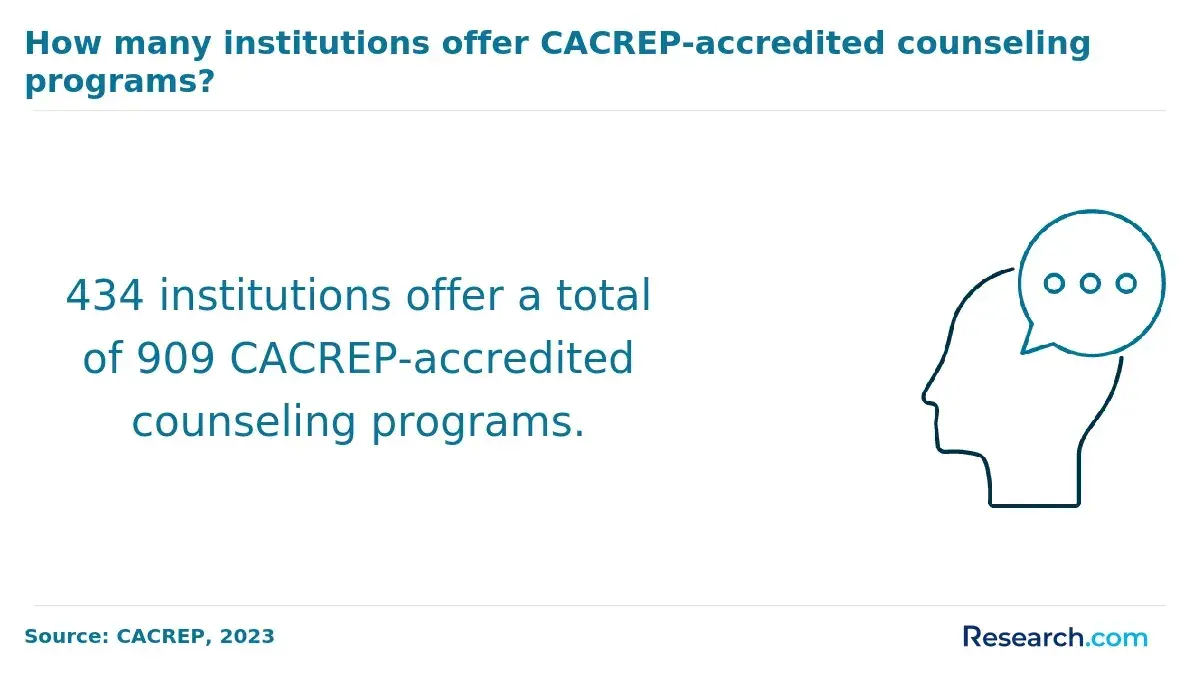
The image below provides broader context on CACREP-accredited counseling programs across the United States.
What are the alternative pathways to become a school counselor in Oklahoma?
Alternative pathways can help career changers, educators, or professionals with related experience move toward Oklahoma school counseling roles without following the most traditional route from undergraduate study directly into a school counseling master’s program. These options still require candidates to meet state standards; they are not shortcuts around preparation, ethics, or student safety requirements.
- Oklahoma Alternative Placement Program: This route may allow candidates with a bachelor’s degree in any field to pursue certification by passing the Oklahoma School Counseling subject area test and completing at least two graduate courses within three years.
- Provisional or emergency licensure through the SEAL Program: This option may support candidates who do not yet have full master’s-level school counseling preparation by providing virtual training and provisional status under state rules.
- Post-baccalaureate certificates and graduate coursework: Some universities offer targeted coursework or certificate options that help candidates meet certification requirements or strengthen preparation before entering a full degree path.
- Relevant work experience and professional development: Documented experience in education, youth services, mental health support, advising, or related fields may support an alternative application, but it usually does not replace required exams, coursework, or background checks.
Alternative pathways are best for applicants who already understand school environments and can handle credential requirements while working. If you need focused graduate coursework, Research.com’s list of the best rated online graduate counseling certificate program options can help you compare flexible programs.
| Route | Best For | Important Caution |
| Traditional master’s in school counseling | Students seeking the clearest certification preparation. | Still verify that the program meets Oklahoma requirements before enrolling. |
| Alternative Placement Program | Career changers with a bachelor’s degree and a strong interest in school counseling. | Passing an exam and completing graduate coursework are still required. |
| Provisional or emergency route | District-supported candidates filling urgent staffing needs. | Provisional permission may be temporary and may require additional steps for full certification. |
| Graduate certificate or added coursework | Professionals who need specific courses to strengthen eligibility. | A certificate alone may not equal full certification preparation. |
What is the average salary of school counselors in Oklahoma?
The median annual salary for school counselors in Oklahoma is about $61,626. Pay varies widely by district, location, years of experience, education level, school size, and whether the counselor takes on leadership duties or specialized responsibilities.
Several factors can influence earnings:
- District and location: Oklahoma City, Tulsa, and other larger districts may offer stronger pay opportunities than some smaller or rural districts.
- Experience: Counselors generally gain access to higher pay as they build years of service, professional expertise, and district knowledge.
- Education and additional credentials: Advanced training, specialized certifications, or additional licensure can improve competitiveness for higher-paying or leadership roles.
- School size and need level: Larger schools or high-need environments may provide stipends or additional compensation when budgets allow.
- Hiring market conditions: Limited job openings in some areas can reduce negotiation leverage for new graduates, while shortage areas may create stronger opportunities.
One Oklahoma school counselor described the early-career salary as modest but said that remaining in the state made it easier to build local professional relationships, participate in relevant professional development, and eventually move into a larger district with better benefits. The main lesson: salary growth often depends on experience, district choice, added credentials, and willingness to pursue leadership opportunities.
| Salary Factor | How It Can Affect Pay | Question to Ask |
| Location | Metro districts may have different pay scales than rural districts. | What is the district’s published salary schedule for counselors? |
| Experience | Years in the field can affect placement on a pay scale. | How does the district credit prior counseling or teaching experience? |
| Credentials | Additional training may support advancement or specialized roles. | Are stipends available for advanced credentials or leadership duties? |
| Benefits | Health insurance, retirement, and leave can significantly affect total compensation. | What is the full compensation package, not just the base salary? |
How do school counselors' roles differ from school psychologists in Oklahoma?
School counselors and school psychologists both support student well-being, but they are trained for different primary functions. In Oklahoma schools, counselors usually focus on academic guidance, career planning, social-emotional support, short-term counseling, classroom lessons, college and workforce readiness, and coordination with families and teachers. School psychologists more often focus on psychological assessment, learning evaluations, behavioral analysis, eligibility support, intervention planning, and consultation for students with complex needs.
The training also differs. School counseling programs emphasize counseling theories, developmental support, ethics, group work, career development, and school counseling program design. School psychology preparation includes more intensive training in assessment, testing, diagnosis-related processes, data interpretation, and intervention systems. If you are comparing the two careers, review Research.com’s guide on how to become a school psychologist in Oklahoma.
| Role | Primary Focus | Common Responsibilities |
| School counselor | Academic, career, and social-emotional development. | Course planning, student meetings, group counseling, college readiness, referrals, family collaboration. |
| School psychologist | Assessment, evaluation, and psychological intervention planning. | Testing, behavior plans, eligibility support, consultation, intervention design, data review. |
What are the continuing education requirements for school counselors in Oklahoma?
For the Oklahoma Standard Certificate in School Counseling, no continuing education or professional development hours are required for renewal as of early 2025. However, that does not mean professional learning is optional in practice. Districts may require training for employment, and counselors often pursue professional development to stay current on ethics, suicide prevention, trauma-informed support, college and career readiness, crisis response, special education collaboration, and student mental health practices.
It is also important not to confuse school counselor certificate renewal with requirements for other counseling licenses. Licensed Professional Counselor rules are separate from school counselor certification. If you are considering clinical counseling credentials in addition to school counseling, review Research.com’s overview of LPC licensure requirements in Oklahoma.
What is the job outlook for school counselors in Oklahoma?
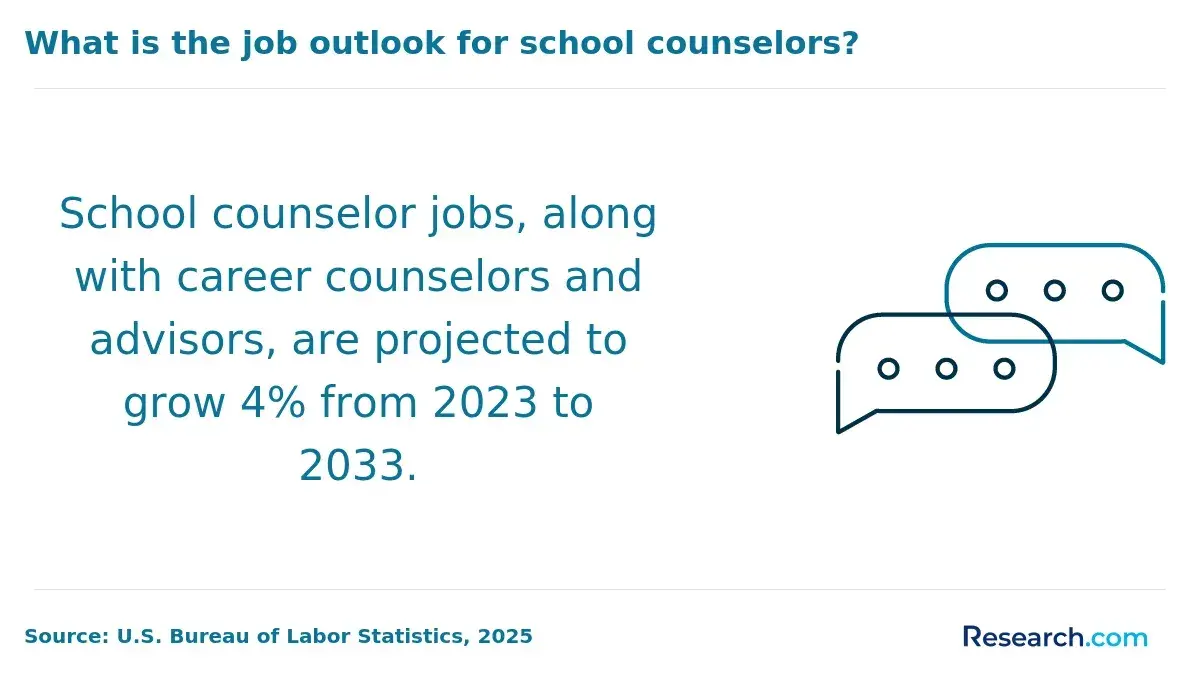
The employment growth rate for school counselors in Oklahoma is projected at 6.3% from 2022 to 2032. That signals steady demand, though growth is slightly below the national average. The need is shaped by student mental health concerns, academic support demands, career readiness initiatives, budget limits, and district hiring patterns.
- Student-to-counselor ratio: Oklahoma’s 398:1 ratio is well above the recommended 250:1, which points to significant need but also heavy caseloads for many counselors.
- Student mental health and academic support: Schools continue to rely on counselors for social-emotional learning, crisis support, academic planning, and postsecondary readiness.
- Funding limitations: Demand does not always translate into immediate hiring if districts lack budget authority to add positions. Federal COVID-19 relief funds that supported temporary hires are set to expire with no replacement plans.
- Recruitment and salary challenges: Oklahoma’s average salary of $55,778 ranks 50th nationally, which can make recruitment difficult for a profession that requires a master’s degree.
- Regional differences: Pay can be stronger in some metro areas, including Lawton ($73,536) and Tulsa ($65,914), compared with many rural areas.
- National comparison: Oklahoma’s job market is less active than some states, and pay is below the national median, which may affect long-term supply and retention.
Prospective students should evaluate both mission fit and financial fit. If cost is a concern, comparing an affordable online college for counseling degree can help reduce debt while meeting educational requirements.
| Reason Demand Exists | What It Means for Candidates | Decision Consideration |
| High student needs | Counselors may have meaningful opportunities to support students directly. | Be prepared for emotionally demanding work and large caseloads. |
| Shortage indicators | Some districts may struggle to fill counseling positions. | Research openings by region rather than relying only on statewide averages. |
| Funding pressure | Need may not always equal immediate job creation. | Ask districts about long-term funding for counseling positions. |
| Regional salary differences | Pay may vary substantially across Oklahoma. | Compare salary schedules, benefits, and cost of living by district. |
What are the career advancement opportunities for school counselors in Oklahoma?
School counselors can advance by gaining experience, developing leadership skills, completing additional credentials, and moving into broader student support or administrative roles. Advancement does not always mean leaving direct student counseling; for many professionals, it means taking on more program leadership, specialized responsibilities, or district-level influence.
- Lead counselor or counseling department chair: Experienced counselors may coordinate counseling services, mentor newer counselors, and help align services across grade levels.
- District-level counseling coordinator: This role typically involves program design, data review, counselor training, compliance support, and coordination across multiple schools.
- School administrator: Counselors who complete educational administration coursework and certification may pursue assistant principal or principal roles.
- Career and college readiness specialist: Counselors may specialize in ICAP, workforce development, college advising, scholarship support, and career pathway planning.
- Professional development trainer or consultant: Experienced counselors with strong communication skills may train other educators on counseling systems, student support, trauma-informed practice, or college and career readiness.
- Licensed Professional Counselor or private practice pathway: Some school counselors pursue additional licensure and supervised experience to provide counseling outside school settings.
- Higher education advisor or academic role: Counselors with graduate or doctoral preparation may move into college advising, student success, counselor education, or research-related work.
Professional associations, continuing education, supervision experience, district committees, and national or state certifications can strengthen advancement opportunities. If you are deciding between graduate degree types, Research.com’s guide to the difference between MS and MA in counseling can help clarify how academic structure may affect your goals.
The chart below shows enrollment rates in school counseling programs over time, offering additional context for the preparation pipeline.
What do school counselors in Oklahoma say about their career?
- My school counseling preparation helped me understand the realities of working with Oklahoma students, especially in communities where access to services can be limited. Starting in a local school made the work personal. I saw how academic planning, family communication, and emotional support can change a student’s direction. The work is demanding, but the stability and professional growth opportunities have made it worthwhile. Reeva
- After completing my counseling program at the University of Central Oklahoma, I quickly learned that school counseling is not only about schedules and college forms. Students bring stress, grief, family concerns, and uncertainty about the future into school every day. Oklahoma’s close communities make relationships central to the job, and that has helped me grow as both a counselor and a person. Norman
- My training at Northeastern State University prepared me for the variety of needs Oklahoma students bring to school. I have worked with rural access issues, cultural considerations, and students navigating major family and academic challenges. The role has pushed me into leadership while keeping me connected to direct student support, which is the reason I chose the field. Judith
What are the common challenges faced by school counselors in Oklahoma?
Oklahoma school counselors often work in environments where student needs are high and resources are limited. Large caseloads can make it difficult to deliver individualized support, and counselors may be pulled into administrative tasks that reduce time for direct counseling. Rural schools may face access barriers, while urban schools may have higher student volume and more complex service coordination needs.
- High caseloads: A 398:1 student-to-counselor ratio can limit individual attention and increase burnout risk.
- Limited funding: District budgets may restrict hiring, program development, or access to mental health partnerships.
- Role confusion: Counselors may be assigned testing coordination, scheduling, or administrative tasks that reduce time for counseling services.
- Student mental health needs: Counselors increasingly support anxiety, grief, family instability, crisis concerns, and referral coordination.
- Rural access issues: Some communities have fewer outside providers, making school-based support especially important.
- Licensure and policy changes: Candidates and working counselors must stay alert to updates in certification, exams, and district expectations.
If you are looking for a streamlined route into the broader counseling field, Research.com’s guide to the fastest way to become a counselor in Oklahoma can help you compare school counseling with other counseling pathways.
How should you choose an Oklahoma school counseling program?
The best school counseling program is not simply the cheapest, fastest, or highest ranked. It is the program that fits your certification goal, field placement needs, schedule, budget, and long-term career plan.
- Confirm Oklahoma certification alignment. Ask whether the program is designed to prepare graduates for Oklahoma school counselor certification.
- Check accreditation and state approval. Make sure the program’s accreditation and approval status support your licensure goals.
- Review credit hours and fieldwork. Compare whether the program requires 42 and 60 graduate credit hours and how practicum or internship placements are arranged.
- Ask about exam preparation. Find out how the curriculum prepares students for the OSAT or Praxis requirement.
- Compare total cost, not just tuition. Include fees, books, exam costs, background checks, commuting, technology, and unpaid fieldwork time.
- Evaluate schedule fit. Online programs can be flexible, but fieldwork still requires school-based availability.
- Ask about graduate outcomes. Request information on certification pass rates, placement support, and district partnerships when available.
Can Oklahoma school counselors work in private practice?
A school counseling certificate authorizes school counseling work; it does not automatically qualify someone to provide independent clinical counseling in private practice. Counselors who want to work outside schools usually need a separate clinical license, such as the Licensed Professional Counselor pathway, plus required supervised experience and state approval.
If private practice is part of your long-term plan, choose graduate coursework carefully. Some programs are built only for school counseling, while others may include clinical mental health coursework that can support additional licensure goals. Before enrolling, ask the program directly whether its curriculum supports school counselor certification, LPC preparation, or both.
Which majors are best for aspiring school counselors in Oklahoma?
Oklahoma school counseling graduate programs may accept students from many undergraduate majors, but some degrees provide a stronger foundation than others. Useful majors include psychology, education, human development, sociology, social work, family studies, communication, and related behavioral science fields.
The major matters less than your readiness for graduate-level counseling work. Admissions committees may look for academic performance, writing ability, interpersonal maturity, experience with youth, recommendation letters, and a clear understanding of the school counselor role.
How much does a school counseling degree in Oklahoma cost?
The cost of becoming a school counselor in Oklahoma depends on the institution, residency status, credit requirements, delivery format, fees, and how much aid or employer support you receive. A 60-credit program will usually cost more than a shorter program if tuition is charged per credit, but a lower-credit option is only valuable if it meets your certification needs.
| Cost Category | Why It Matters | How to Reduce the Cost |
| Tuition | The largest direct cost for most students. | Compare public universities, online options, and in-state tuition policies. |
| Fees and materials | Technology fees, books, and course materials can add up. | Ask for a full program cost estimate before enrolling. |
| Fieldwork expenses | Internships may require travel, schedule changes, or reduced work hours. | Choose placements near your home or workplace when possible. |
| Exams and background checks | Certification-related expenses are separate from tuition. | Budget for testing, fingerprinting, and application fees early. |
| Time away from work | Part-time employment changes can affect total affordability. | Consider part-time enrollment or employer tuition assistance if available. |
What do supervisors look for in a school counseling practicum student in Oklahoma?
Practicum and internship supervisors want candidates who are ethical, dependable, reflective, and ready to learn in a real school environment. Technical knowledge matters, but so do judgment, communication, confidentiality, cultural awareness, and professionalism.
- Reliability: Show up on time, meet deadlines, and communicate schedule changes early.
- Ethical awareness: Protect student confidentiality and know when supervision or referral is required.
- Student-centered communication: Listen carefully, use age-appropriate language, and avoid making assumptions.
- Professional boundaries: Understand your role as a trainee and work within supervision limits.
- Documentation skills: Keep accurate logs, notes, and fieldwork records according to program and site rules.
- Collaboration: Work respectfully with teachers, administrators, families, and outside service providers.
- Growth mindset: Accept feedback and use supervision to improve your counseling practice.
Common mistakes to avoid when becoming a school counselor in Oklahoma
| Mistake | Why It Can Hurt You | Better Approach |
| Choosing a program without checking certification alignment | You may graduate with a counseling degree that does not meet Oklahoma school counselor requirements. | Ask the program and OSDE how the degree supports certification before enrolling. |
| Focusing only on tuition | Fees, fieldwork travel, exam costs, and lost work time can change the real cost. | Calculate total program cost and compare financial aid options. |
| Assuming online means fully remote | School counseling programs still require supervised school-based fieldwork. | Ask how practicum and internship placements are arranged in Oklahoma. |
| Waiting too long to plan for exams | Testing delays can slow certification and job applications. | Ask when students usually take the OSAT or Praxis exam and how the program prepares them. |
| Ignoring reciprocity requirements | Another state may require extra exams, coursework, or documentation. | Research out-of-state certification rules before graduation if relocation is possible. |
| Assuming salary outcomes are guaranteed | Pay varies by district, location, experience, and funding. | Review district salary schedules and benefits before accepting an offer. |
Key Insights
- Oklahoma school counseling usually requires a bachelor’s degree, a master’s degree in school counseling, supervised field experience, exam completion, background checks, and OSDE certification.
- The Standard Certificate, School Counselor is a five-year credential, and renewal is required every five years.
- Most full-time graduate students complete the master’s portion in two to three years, while part-time students may take up to four years.
- Program choice matters. Confirm accreditation, Oklahoma certification alignment, field placement support, credit requirements, and exam preparation before enrolling.
- Oklahoma’s projected 6.3% employment growth from 2022 to 2032 and 398:1 student-to-counselor ratio suggest continuing need, but district funding and regional salary differences affect actual opportunities.
- The median annual salary for school counselors in Oklahoma is about $61,626, but pay can differ based on district, location, experience, credentials, and leadership responsibilities.
- School counseling certification does not automatically transfer to other states or authorize private clinical practice. Plan separately for reciprocity or LPC goals.
- The strongest candidates prepare early: they document fieldwork, understand exam requirements, choose placements carefully, and compare total program cost rather than tuition alone.
Related Articles for Nearby States
- 2027 How to Become a School Counselor in Texas
- 2027 How to Become a School Counselor in Kansas
- 2027 How to Become a School Counselor in Arkansas
- 2027 How to Become a School Counselor in Missouri
- 2027 How to Become a School Counselor in Colorado
- 2027 How to Become a School Counselor in New Mexico
- 2027 How to Become a School Counselor in Nebraska
- 2027 How to Become a School Counselor in Louisiana
- 2027 How to Become a School Counselor in Iowa
- 2027 How to Become a School Counselor in Mississippi
References:
- Council for Accreditation of Counseling and Related Educational Programs. (2023). Results from a national survey of accredited programs. CACREP report
- Northwestern Oklahoma State University. (2025). Graduate Studies: School Counseling. Northwestern Oklahoma State University
- Northeastern State University. (2025). Master's in Counseling. Northeastern State University
- Mid-America Christian University. (2025). School Counseling. Mid-America Christian University
- Oklahoma State University. (2025). Counseling: School Counseling, MS. Oklahoma State University catalog
- Remnant Counselor Collective. (n.d.). School Counselor Licensure in Oklahoma. Remnant Counselor Collective
- SchoolCounselorCertification.com. (2025). Oklahoma School Counselor Certification Reciprocity. SchoolCounselorCertification.com
- Southeastern Oklahoma State University. (2025). Master of Education in School Counseling Online. Southeastern Oklahoma State University
- University of Central Oklahoma. (2025). Master of Education in School Counseling. University of Central Oklahoma
- Zippia. (2025). School counselor demographics and statistics in the US. Zippia
Other Things You Need to Know About Becoming a School Counselor in Oklahoma
Oklahoma requires a supervised school counseling internship as part of an approved graduate program, usually totaling at least 400 clock hours. The internship must be completed in a school setting and documented for certification through the Oklahoma State Department of Education.
To become a school counselor in Oklahoma in 2027, you must pass the Oklahoma Professional Teaching Examination (OPTE) and the Oklahoma Subject Area Test (OSAT) for school counselors. These exams assess your teaching skills and specialized counseling knowledge respectively.