2027 Best Online Graduate Certificate Programs in Counseling

Co-Founder and Chief Data Scientist
Mental health services are crucial to public well-being, with millions seeking professional support each year. In 2023 alone, about 59.2 million U.S. adults received mental health treatment, underscoring the growing reliance on counseling services (Statista, 2024a). As awareness and accessibility increase, the need for trained professionals who can address mental health challenges continues to rise.
For those seeking a pathway into the field, online graduate certificate programs in counseling provide an accessible and convenient way to gain specialized training. These programs allow students to enhance their expertise. With flexible formats designed for working professionals, graduates can apply their skills in clinical settings, nonprofit organizations, educational institutions, and private practice.
In this guide, we will explore the top online certificate programs that help professionals. We will also cover key considerations such as academic requirements, job prospects, salary potential, and industry trends to help you develop the knowledge and credentials needed to make a meaningful impact in the field.
What are the benefits of getting an online graduate certificate program in counseling?
- These programs provide targeted education in counseling, helping professionals expand their expertise and qualify for specialized roles.
- While a certificate alone does not lead to licensure, it can help fulfill continuing education requirements, strengthen a graduate school application, or supplement a master’s degree to meet state licensing criteria.
- Completing a graduate certificate can make candidates more competitive for counseling-related positions, helping them earn as much as $60,000 to $70,000 yearly.
What can I expect from an online graduate certificate program in counseling?
Earning a graduate certificate in counseling online provides a flexible and fast-paced learning experience designed for working professionals. While coursework is delivered remotely, many programs incorporate interactive elements to ensure students develop the practical skills necessary for counseling practice.
Key features of these programs often include:
- Flexible and Accelerated Coursework: Online courses are typically offered in asynchronous or synchronous formats, and many programs use accelerated terms, enabling students to earn their certificate in a shorter time frame.
- Fieldwork and Practical Experience: Many programs also integrate internships to provide hands-on experience, with students completing these requirements at approved local sites.
- Comprehensive and Specialized Curriculum: The coursework is designed to cover core counseling concepts while allowing students to focus on specialized areas.
An online graduate certificate program in counseling can be a valuable step toward career advancement or meeting additional credentialing requirements. These programs provide a convenient yet rigorous way to develop counseling expertise while balancing personal and professional responsibilities.
Where can I work with an online graduate certificate in counseling?
Earning a graduate certificate in counseling can open doors to a variety of professional settings where mental health and support services are in high demand. Many graduates find opportunities in healthcare, education, community services, and private practice, offering essential support to individuals and families in need.
- Community Mental Health Centers: Counselors in this setting may assist clients with substance use recovery, crisis intervention, and ongoing therapy for mental health conditions.
- Schools and Educational Institutions: Professionals with additional training in school counseling or child development can work in K-12 settings or higher education institutions to support students’ emotional and academic well-being.
- Healthcare and Rehabilitation Facilities: Hospitals, clinics, and rehabilitation centers employ counselors to assist patients in coping with chronic illnesses, injuries, or addiction recovery.
- Correctional Facilities and Criminal Justice Programs: Prisons, juvenile detention centers, and probation programs need counselors to provide rehabilitation services to individuals involved in the criminal justice system.
- Nonprofit and Social Service Organizations: Many nonprofits focus on mental health advocacy, crisis intervention, and support for vulnerable populations.
- Private Practice and Employee Assistance Programs (EAPs): With the appropriate credentials and licensure, counselors may work independently in private practice. They can also serve in EAPs, providing workplace counseling to help employees manage work-life balance.
How much can I make with an online graduate certificate in counseling?
Earnings for professionals with a graduate certificate in counseling vary based on the type of counselor, work setting, geographic location, and level of experience. While a certificate alone may not lead to licensure, it can enhance qualifications, allowing individuals to pursue specialized roles or advance within their current careers.
According to the U.S. Bureau of Labor Statistics, counselors in different specialties earn a wide range of salaries. For example, rehabilitation counselors earn $48,430 yearly, and substance abuse, behavioral disorder, and mental health counselors earn $60,080. Meanwhile, school counselors earn $66,990, and marriage and family therapists (MFTs) earn $68,730. Across these roles, professionals can earn anywhere from $31,390 to $104,710.
For rehabilitation counselors, salaries tend to be higher for those working in agencies, brokerages, and other Insurance industries, landing at $75,440. Substance abuse, behavioral disorder, and mental health counselors earn the most in business, professional, labor, political, and similar industries, taking home as much as $94,050. Lastly, MFTs earn top dollar in home and healthcare services, with their annual salary reaching $122,120.
While a graduate certificate may not immediately increase earning potential, it can provide specialized training that leads to career advancement or new job opportunities. Many professionals use it as a stepping stone to licensure or a master’s degree, which can significantly boost long-term salary prospects. By gaining expertise in high-demand areas, you can position yourself for more competitive salaries and leadership roles in the field.
- List of the Best Online Graduate Certificate Programs in Counseling for 2025 Best Certificate Programs
- How long does it take to complete an online graduate certificate program in counseling? Completion Time
- How does an online graduate certificate program in counseling compare to an on-campus program? Online vs. On-campus
- What is the average cost of an online graduate certificate program in counseling? Certification Cost
- What are the financial aid options for students enrolling in an online graduate certificate program in counseling? Financial Aid
- What are the prerequisites for enrolling in an online graduate certificate program in counseling? Prerequisites
- What courses are typically in an online graduate certificate program in counseling? What courses are typically in an online graduate certificate program in counseling?
- What types of specializations are available in online graduate certificate programs in counseling? Specializations
- What accreditation measures ensure program quality? What accreditation measures ensure program quality?
- How do employers view online graduate certificate programs in counseling? How do employers view online graduate certificate programs in counseling?
- How can an online graduate certificate in counseling pave the way for further academic advancement? How can an online graduate certificate in counseling pave the way for further academic advancement?
- How to choose the best online graduate certificate program in counseling? How to choose the best online graduate certificate program in counseling?
- What career paths are available for graduates of online graduate certificate programs in counseling? What career paths are available for graduates of online graduate certificate programs in counseling?
- What is the job market for graduates with an online graduate certificate in counseling? What is the job market for graduates with an online graduate certificate in counseling?
- What challenges might you face in earning an online graduate certificate in counseling? What challenges might you face in earning an online graduate certificate in counseling?
- Is an Online Graduate Certificate in Counseling a Worthwhile Investment? Is an Online Graduate Certificate in Counseling a Worthwhile Investment?
- How Do Online Graduate Certificate Programs in Counseling Support Ongoing Professional Development? How Do Online Graduate Certificate Programs in Counseling Support Ongoing Professional Development?
- How Are Technological Innovations Integrated in Online Graduate Certificate Programs in Counseling? How Are Technological Innovations Integrated in Online Graduate Certificate Programs in Counseling?
- Can Online Graduate Certificate Programs Bridge to Advanced Behavioral Analysis Credentials? Can Online Graduate Certificate Programs Bridge to Advanced Behavioral Analysis Credentials?
- How Can Prospective Students Verify the Legitimacy of an Online Graduate Certificate in Counseling? How Can Prospective Students Verify the Legitimacy of an Online Graduate Certificate in Counseling?
- How Do Online Graduate Certificate Programs Compare to an Online Accelerated Psychology Degree? How Do Online Graduate Certificate Programs Compare to an Online Accelerated Psychology Degree?
Best Online Graduate Certificate Programs in Counseling for 2027
Choosing an online graduate certificate in counseling is usually not about collecting another credential. For many students, it is a practical decision: meet additional coursework requirements, specialize in addiction, trauma, play therapy, school counseling, or pastoral care, or strengthen an existing counseling, education, healthcare, or social services career without committing immediately to another full degree.
This guide is designed for licensed counselors, counseling graduate students, educators, behavioral health professionals, social workers, ministry leaders, and psychology graduates comparing online certificate options. It explains which programs stand out, how long they take, what they cost, how employers may view them, when a certificate is worth it, and what to verify before enrolling—especially accreditation, fieldwork, licensure relevance, and transfer credit policies.
Quick answer: Is an online graduate certificate in counseling worth considering?
An online graduate certificate in counseling can be worthwhile if you already have, or are pursuing, a relevant graduate-level background and need focused training in a counseling specialty. It is best used as a targeted credential for professional development, specialization, or meeting selected educational requirements. It usually does not replace a master’s degree or state licensure for independent counseling practice.
How Research.com ranked these programs
Research.com evaluated online graduate certificate programs in counseling using our documented ranking methodology. To support a more complete comparison, our team also reviewed institutional and program data from the Integrated Postsecondary Education Data System, Peterson’s database and its Distance Learning Licensed Data Set, College Scorecard, and the National Center for Education Statistics (NCES). Students should use the ranking as a starting point, then confirm current tuition, admissions rules, licensure fit, and state-specific requirements directly with each school.
Top online graduate certificate programs in counseling
| Rank | School | Certificate focus | Program length | Credits | Cost per credit | Accreditation |
| 1 | Saint Joseph’s University | Addictions Counseling | 3–6 months | 12 | $905 | Middle States Commission on Higher Education (MSCHE) |
| 2 | Marshall University | Violence, Loss, and Trauma Counseling | 6–12 months | 18 | $535.25 (resident), $1,239.75 (non-resident) | Council for Accreditation of Counseling and Related Educational Programs (CACREP) (Reaffirmation in Process) |
| 3 | MidAmerica Nazarene University | Play Therapy | 12 months | 12 | $385 | Higher Learning Commission (HLC) |
| 4 | University of Florida Health | Addiction and Recovery | 12 months | 18 | $590 | Southern Association of Colleges and Schools Commission on Colleges (SACSCOC) |
| 5 | University of Massachusetts Global | Educational Counseling | 4–6 months | 9 | $730 | WASC Senior College and University Commission (WSCUC) |
| 6 | Arizona State University | Addiction and Substance-Use Related Disorders | 6–12 months | 21 | $719 | HLC |
| 7 | Regent University | Clinical Mental Health Counseling; Marriage, Couple, and Family Counseling; School Counseling; Trauma Counseling | 4–6 months | 9 | $730 | SACSCOC |
| 8 | Grand View University | Clinical Mental Health Counseling | 6–12 months | 24 | $560 | HLC |
| 9 | Liberty University | Pastoral Counseling | 4–6 months | 9 | $395 | Commission on Accrediting of the Association of Theological Schools |
| 10 | University of Wyoming | Play Therapy | 3–6 months | 7 | $385 (resident), $585 (non-resident) | CACREP |
1. Saint Joseph’s University
Saint Joseph’s University provides a fully online Addictions Counseling Certificate that may be finished in two semesters or added to the MS in Clinical Mental Health Counseling. The program is built for students and working professionals who want addiction-specific preparation without relocating or pausing their careers. Coursework focuses on helping clients with addiction and co-occurring mental health concerns. Faculty with field experience teach the curriculum, which is designed to meet academic requirements for the Pennsylvania Certified Advanced Alcohol and Drug Counselor (CAADC), National Board for Certified Counselors (NBCC), and Master Addictions Counselor (MAC) certifications.
- Program Length: 3–6 months
- Tracks/Concentrations: Addictions Counseling
- Cost per Credit: $905
- Required Credits to Graduate: 12
- Accreditation: Middle States Commission on Higher Education (MSCHE)
2. Marshall University
Marshall University offers the Graduate Certificate in Violence, Loss, and Trauma Counseling (VoLT), a clinically oriented program for professionals who want deeper preparation in trauma-informed support. It is especially relevant for professional counselors, graduate-level behavioral health students, and people in leadership or support roles who work with individuals affected by violence, grief, or trauma. Students study the effects of trauma and loss while learning creative and experiential interventions that can support resilience and recovery. Applicants must be involved in clinical practice or client support services and apply to Marshall University as certificate students.
- Program Length: 6–12 months
- Tracks/Concentrations: Violence, Loss, and Trauma Counseling
- Cost per Credit: $535.25 (resident), $1,239.75 (non-resident)
- Required Credits to Graduate: 18
- Accreditation: Council for Accreditation of Counseling and Related Educational Programs (CACREP) (Reaffirmation in Process)
3. MidAmerica Nazarene University
MidAmerica Nazarene University’s Play Therapy Certificate prepares professionals to use play therapy approaches in clinical settings. The program combines current play therapy theory with applied learning in MNU’s clinical facilities, which include four dedicated play therapy and sand tray rooms. Students participate in seven on-site weekend sessions and complete both synchronous and asynchronous online coursework. As the only APT Approved Provider in the Midwest offering master’s-level credit, MNU structures the certificate to satisfy the academic requirements for the Registered Play Therapist (RPT) credential.
- Program Length: 12 months
- Tracks/Concentrations: Play Therapy
- Cost per Credit: $385
- Required Credits to Graduate: 12
- Accreditation: Higher Learning Commission (HLC)
4. University of Florida Health
The University of Florida Health offers an online Addiction and Recovery Graduate Certificate for students who hold a graduate or bachelor’s degree and have a background connected to substance use disorder treatment. National and international addiction experts lead the program, which can help students satisfy educational requirements for addiction counselor certifications through various external boards. The certificate may be useful for professionals in social work, counseling, healthcare, education, law, business, law enforcement, and religious-based service. Course examples include Counseling and Treatment Methods, Referral and Service Coordination, and Clinical Evaluation and Treatment.
- Program Length: 12 months
- Tracks/Concentrations: Addiction and Recovery
- Cost per Credit: $590
- Required Credits to Graduate: 18
- Accreditation: Southern Association of Colleges and Schools Commission on Colleges (SACSCOC)
5. University of Massachusetts Global
University of Massachusetts Global’s Educational Counseling Graduate Certificate is designed for educators, school administrators, and counseling professionals who want structured training in counseling methods, ethics, and culturally responsive practice. The certificate includes three courses, each with 10 hours of fully online simulated fieldwork. Students take Introduction to Counseling and Interpersonal Relations, Introduction to the Ethical Practice of School Counseling, and Advanced Counseling and Intervention. Eligible students in a Master of Arts in Counseling or Educational Psychology program may be able to apply the certificate credits toward their degree.
- Program Length: 4–6 months
- Tracks/Concentrations: Educational Counseling
- Cost per Credit: $730
- Required Credits to Graduate: 9
- Accreditation: WASC Senior College and University Commission (WSCUC)
6. Arizona State University
Arizona State University’s graduate certificate in Addiction and Substance-Use Related Disorders blends research-based coursework with practice-focused instruction from licensed psychologists and substance abuse counselors with substantial clinical experience. The program is intended for professionals in counseling, social work, psychology, medicine, and related fields who work with individuals and families affected by addiction. Its curriculum fulfills licensure requirements established by the Arizona State Board of Behavioral Health Examiners and aligns with many national and state certification standards for substance abuse counseling.
- Program Length: 6–12 months
- Tracks/Concentrations: Addiction and Substance-Use Related Disorders
- Cost per Credit: $719
- Required Credits to Graduate: 21
- Accreditation: HLC
7. Regent University
Regent University offers a Certificate of Graduate Studies in Mental Health Counseling online and on campus in Virginia Beach. The certificate is intended for licensed counselors and individuals who already meet additional state credentialing expectations. It does not provide initial licensure. Instead, it functions as professional development with a Christian perspective. Students build skills in assessment administration and interpretation and study intervention approaches for clinical, crisis, and trauma situations, including triage, support, and advocacy.
- Program Length: 4–6 months
- Tracks/Concentrations:
- Clinical Mental Health Counseling
- Marriage, Couple, and Family Counseling
- School Counseling; Trauma Counseling
- Cost per Credit: $730
- Required Credits to Graduate: 9
- Accreditation: SACSCOC
8. Grand View University
Grand View University’s graduate certificate in Clinical Mental Health Counseling is intended for students who already hold a graduate degree in a counseling-related field, including school counseling or marriage and family therapy, and want to work toward the requirements for Licensed Mental Health Counselor (LMHC) certification. The online format uses seven-week courses, making it easier for working adults to manage coursework alongside professional and personal responsibilities. Students may start in spring or fall, and practicum and internship experiences can be arranged locally so learners can gain supervised experience in their own communities.
- Program Length: 6–12 months
- Tracks/Concentrations: Clinical Mental Health Counseling
- Cost per Credit: $560
- Required Credits to Graduate: 24
- Accreditation: HLC
9. Liberty University
Liberty University’s Graduate Certificate in Pastoral Counseling prepares students to provide faith-informed support in Christian and community contexts that do not require licensure. The curriculum combines biblical study with counseling concepts, giving graduates tools to help people address emotional, relational, and spiritual concerns. Courses include Introduction to Pastoral Counseling, Integration of Psychology and Theology, and Theology and Spirituality in Counseling.
- Program Length: 4–6 months
- Tracks/Concentrations: Pastoral Counseling
- Cost per Credit: $395
- Required Credits to Graduate: 9
- Accreditation: Commission on Accrediting of the Association of Theological Schools
10. University of Wyoming
The University of Wyoming’s online Post-Master’s Certificate in Play Therapy helps professionals develop focused skills in therapeutic play-based interventions. Play therapy gives children a developmentally appropriate way to express feelings, strengthen communication, and work through difficult experiences. The program is designed to meet the 150-hour training requirement from the Association for Play Therapy (APT) for candidates pursuing Registered Play Therapist credentials. Students follow a cohort model and begin each fall semester, with completion designed for one academic year.
- Program Length: 3–6 months
- Tracks/Concentrations: Play Therapy
- Cost per Credit: $385 (resident), $585 (non-resident)
- Required Credits to Graduate: 7
- Accreditation: CACREP
How long does it take to complete an online graduate certificate program in counseling?
Most online graduate certificate programs in counseling are short, focused programs created for adults who already have college or graduate-level preparation. Completion time depends on the number of required credits, whether courses are offered in fixed terms or accelerated sessions, and whether the student enrolls full time or part time.
The shortest online graduate certificate programs in counseling typically take six to eight weeks. These options usually require fewer than 10 credit hours and focus on a narrow topic or foundational counseling area. Other programs last 16 to 18 weeks, while some 6 month certificate programs require 12 to 24 credit hours or more and offer broader coverage of counseling techniques, ethics, assessment, or intervention methods.
Students who need to balance coursework with employment can often choose part-time enrollment. That flexibility is one reason online certificates appeal to professionals exploring additional credentials, including those comparing counseling with related options such as types of ABA certification online.
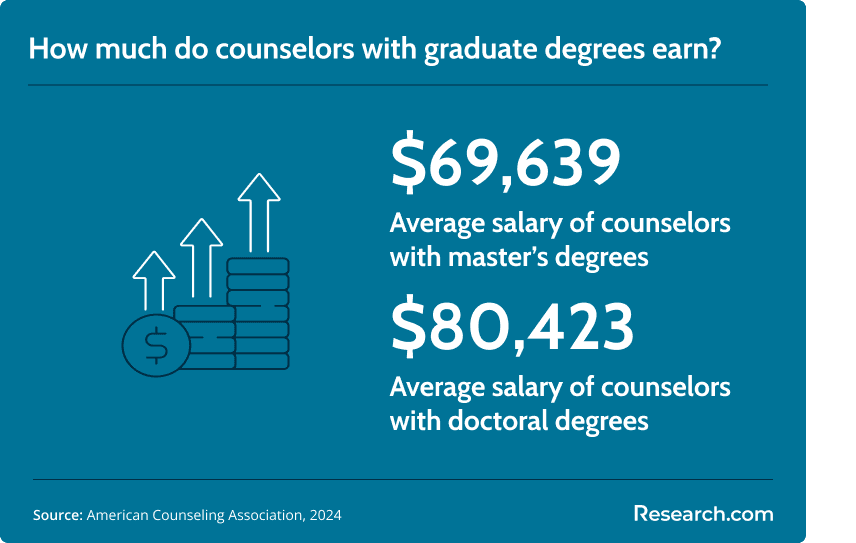
However, a certificate is not a substitute for a counseling master’s degree when a state requires graduate education for licensure. According to the American Counseling Association (2024), master’s degree holders earn an average of $69,639, compared to $56,784 for bachelor’s graduates and $80,423 for those with a doctorate. These figures highlight why students should compare a short-term certificate with longer graduate pathways before investing.
| Completion pace | Typical fit | What to consider before choosing |
| Six to eight weeks | Students seeking a compact credential with fewer than 10 credit hours | May be too limited for students who need extensive specialization or licensure-related coursework |
| 16 to 18 weeks | Professionals who want structured training but cannot commit to a full degree | Check whether courses are offered every term or only during specific sessions |
| 6–12 months | Students completing 12 to 24 credit hours or more | Often provides deeper preparation but requires more tuition and time |
| Part-time enrollment | Working adults balancing family, employment, and fieldwork | May extend completion time and delay credential-related benefits |
How does an online graduate certificate program in counseling compare to an on-campus program?
Online and on-campus graduate certificates can cover similar counseling content, but the learning experience is different. The better choice depends on your schedule, learning preferences, clinical training needs, and access to local fieldwork sites. Students pursuing flexible counseling-related pathways, including those researching how to become a spiritual counselor, often prefer online coursework when they cannot relocate or attend classes at fixed times.
| Factor | Online graduate certificate | On-campus graduate certificate | Best choice if... |
| Schedule | Often offers asynchronous or hybrid coursework | Usually requires attendance at set times | Choose online if you need maximum flexibility; choose campus if you prefer a predictable weekly routine |
| Interaction | Uses discussion boards, video meetings, recorded lectures, and digital simulations | Provides in-person conversations, live classroom discussion, and campus networking | Choose online if you are comfortable communicating virtually; choose campus if face-to-face learning is important to you |
| Fieldwork | May allow students to arrange practicum or internship work in their local area | May rely on established local placement partnerships | Choose online only after confirming how placements are approved and supervised |
| Access | Works well for students far from campus or employed full time | Works well for students near the institution or able to commute | Choose the format that lets you finish without disrupting employment or family obligations |
Online programs are not automatically easier. They require strong time management, reliable technology, and comfort with independent learning. On-campus programs may offer more immediate peer and faculty interaction, but they can be less practical for working professionals. Before enrolling, ask whether online students receive the same academic advising, library access, career support, and field placement guidance as campus students.
What is the average cost of an online graduate certificate program in counseling?
The average tuition for online graduate certificate programs in counseling can range from $5,000 to $15,000. The final cost depends on credit requirements, per-credit tuition, residency status, school type, and fees. Public institutions may be less expensive for residents, while private universities and non-resident tuition rates can increase the total price.
Many schools charge by the credit, typically between $250 and $1,000 per credit. Some programs use a flat program fee instead. Students comparing credential pathways should also consider opportunity cost, not just tuition. For example, someone searching for the fastest way to become a counselor should understand that a certificate may add skills or meet selected requirements but may not replace the education needed for licensure.
Cost is also closely tied to licensure decisions. A report from Motivo (McCrickard, n.d.) cites cost as the second reason for not obtaining licensure. Because master’s-level education and licensure preparation require significant time and money, 57% of graduate-educated individuals forgo the process.
A counseling certificate can be a lower-cost way to gain specialized training, but it should be evaluated carefully. It is most useful when it supports a specific goal: meeting an educational requirement, improving current practice, adding a specialty, or preparing for further graduate study.
| Cost item | Why it matters | Question to ask the school |
| Tuition | The largest direct expense, usually based on credit hours | Is tuition charged per credit or as a flat program rate? |
| Fees | Technology, distance learning, graduation, or student service fees can raise the total cost | What mandatory fees apply to online certificate students? |
| Books and materials | Specialized counseling courses may require texts, assessment tools, or digital resources | Can the program provide an estimated materials budget? |
| Fieldwork expenses | Travel, background checks, liability insurance, or placement documentation may be required | What costs are connected to practicum or internship requirements? |
| Transferability | Credits may or may not apply to a future master’s or doctoral program | Can certificate credits transfer into a degree at this institution? |
This chart explains common reasons some people do not continue toward counseling or social work licensure.
What are the financial aid options for students enrolling in an online graduate certificate program in counseling?
Financial aid for graduate certificates varies more than aid for full degree programs, so students should verify eligibility before assuming they can use federal loans, grants, scholarships, or employer benefits. Start by asking whether the certificate is aid-eligible at the institution and whether it is connected to a degree pathway.
- Federal Financial Aid: Some FAFSA-approved online certificate programs may qualify for federal grants or loans. Students should complete the Free Application for Federal Student Aid and confirm whether the specific certificate, not just the school, is eligible.
- State Grants and Scholarships: Some states support students entering high-need fields, including counseling. Awards may be based on financial need, academic performance, or service commitments in underserved communities.
- Institutional Scholarships: Universities may offer scholarships to graduate certificate students based on professional experience, financial need, or academic strength. Availability can differ by department.
- Employer Tuition Assistance: Healthcare, education, nonprofit, government, and social service employers may help pay for professional development. Ask whether the employer requires continued employment after reimbursement.
- Private Loans: Private loans may be an option when federal aid is unavailable, but repayment terms are often less flexible and interest rates may be higher. Compare total repayment costs before borrowing.
- Work-Study and Assistantships: Some institutions may provide part-time work, research support roles, or administrative opportunities that reduce expenses while building experience.
- Military and Veteran Benefits: Active-duty service members, veterans, and eligible family members may qualify for education benefits that help cover tuition, fees, and related costs.
How to reduce the cost before you enroll
- Ask for the full program cost in writing, including tuition, fees, books, and fieldwork expenses.
- Confirm whether the certificate is eligible for federal aid or only institutional payment plans.
- Check whether your employer reimburses graduate certificates in counseling or behavioral health.
- Compare the cost of the certificate with the cost of a related master’s degree if licensure is your long-term goal.
- Ask whether credits can transfer into a degree program later.
What are the prerequisites for enrolling in an online graduate certificate program in counseling?
Admissions requirements depend on the school and the certificate’s purpose. Some certificates are open to bachelor’s degree holders with related experience, while others are post-master’s or designed for already licensed professionals. Applicants should read prerequisites carefully because enrolling in the wrong certificate can waste time and money.
| Requirement | What it usually means | Why it matters |
| Bachelor’s or Master’s Degree | Many programs require at least a bachelor’s degree, while advanced practice certificates may require a master’s in counseling, psychology, or a related field | Programs want evidence that students are prepared for graduate-level counseling content |
| Minimum GPA Requirement | Some schools expect a minimum GPA, often around 2.75 to 3.0 | A GPA threshold helps programs evaluate readiness for rigorous coursework |
| Licensure | Some certificates require a current counseling license | This is common for advanced specialization programs that build on clinical training |
| Professional Experience | Applicants may need experience in counseling, social work, education, healthcare, ministry, or client services | Experience can be important when coursework assumes familiarity with client-facing work |
| Letters of Recommendation | Programs may request one to three academic or professional references | References help admissions teams evaluate professionalism, communication skills, and fit |
| Personal Statement or Statement of Purpose | Applicants explain their goals, background, and reasons for pursuing the certificate | A focused statement can clarify whether the certificate aligns with the applicant’s career plan |
| Interview Requirement | Some programs interview applicants before admission | Interviews help programs assess interpersonal readiness and motivation |
Before applying, verify whether the certificate is designed for pre-licensure students, licensed professionals, educators, ministry professionals, or post-master’s counseling graduates. The same phrase—“counseling certificate”—can mean very different things across institutions.
What courses are typically in an online graduate certificate program in counseling?
Coursework in an online graduate certificate in counseling depends on the specialization. A short certificate may focus on one practice area, while a longer certificate may include theories, ethics, assessment, diagnosis, and intervention. Students wondering what can you do with a master’s degree in psychology may use a certificate to add counseling-focused preparation for settings such as mental health clinics, rehabilitation centers, social services agencies, or private practice support roles.
- Counseling Theories and Techniques: Students examine major counseling models and learn how different therapeutic approaches are applied in practice.
- Ethics and Professional Standards in Counseling: This course covers legal duties, ethical decision-making, boundaries, confidentiality, and professional conduct.
- Assessment and Diagnosis in Mental Health Counseling: Students study tools and processes used to evaluate mental health conditions and guide treatment planning.
- Multicultural Issues and Context: Coursework examines how culture, identity, social context, and lived experience shape counseling relationships and mental health care.
- Group Therapy: Students learn how to facilitate groups, manage group dynamics, support participation, and create a therapeutic environment.
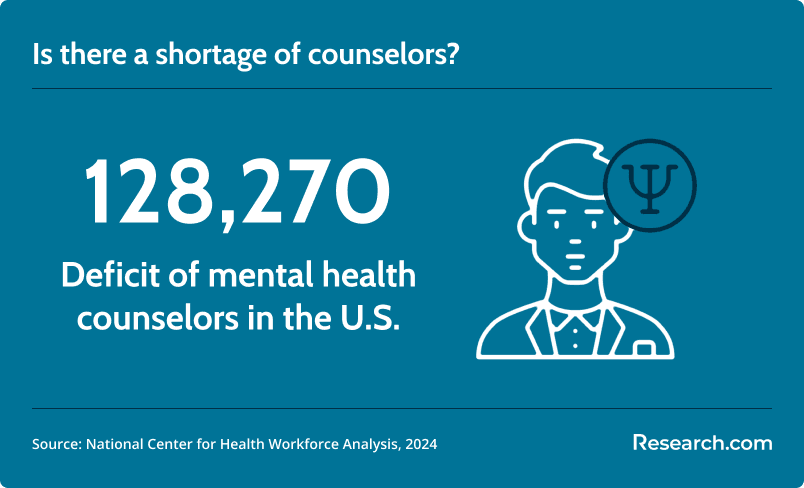
Specialized training matters because the behavioral health workforce faces significant shortages. The National Center for Health Workforce Analysis reported a shortage of 128,270 mental health counselors and 154,860 addiction counselors in 2024. A certificate alone does not solve workforce gaps, but it can help qualified professionals deepen expertise in high-need areas.
What types of specializations are available in online graduate certificate programs in counseling?
Specialization is one of the main reasons to choose a counseling certificate. Instead of repeating broad graduate coursework, students can focus on a specific population, practice issue, or setting.
| Specialization | What students study | Who it may fit |
| Clinical Mental Health Counseling | Diagnosis, intervention planning, crisis response, and therapeutic approaches for mental health concerns | Students adding coursework for clinical mental health practice or licensure-related preparation |
| Substance Abuse and Addiction Counseling | Addiction treatment models, recovery support, relapse prevention, and the psychological, social, and biological aspects of substance use | Counselors, social workers, healthcare professionals, and behavioral health workers serving clients with substance use disorders |
| Marriage and Family Counseling | Family systems, communication patterns, conflict, parenting concerns, and relationship-based interventions | Professionals interested in couples, families, and relational counseling; students may also compare this route with an online MFT degree |
| Pastoral Counseling | Integration of counseling concepts with spiritual care and faith-informed support | Ministry professionals, chaplains, church staff, and community leaders in non-licensure settings |
| Grief and Trauma Counseling | Trauma-informed care, bereavement support, crisis response, and recovery-focused interventions | Counselors and support professionals working in hospitals, hospice, schools, emergency response, or trauma recovery programs |
| Play Therapy | Developmentally appropriate therapeutic play, child-centered interventions, and supervised practice approaches | Professionals who work with children and want preparation aligned with play therapy credentialing requirements |
Employment settings vary by specialization. The BLS records that 17% of substance abuse, behavioral disorder, and mental health counselors work in outpatient mental health and substance abuse centers. Some (16%) work in individual and family services, and others (14%) work in physicians’ offices. Choosing a specialization should therefore reflect both your client population and the type of workplace you are targeting.
What accreditation measures ensure program quality?
Accreditation is one of the first details to verify because it affects credibility, transfer credit, financial aid eligibility, and sometimes licensure-related acceptance. At minimum, students should confirm that the institution holds recognized institutional accreditation. For counseling programs, programmatic accreditation or alignment with professional standards can also matter, especially for students who plan to pursue licensure or additional graduate study.
Do not rely only on a school’s marketing language. Confirm the accreditor on the school’s official accreditation page and, when relevant, through the accreditor’s directory. If you are comparing counseling careers and education routes, Research.com’s guide to different types of counselors can help you understand why accreditation and licensure requirements differ by role.
Accreditation questions to ask before enrolling
- Is the institution regionally or nationally accredited by a recognized accreditor?
- Is the counseling program itself accredited, and if so, by which organization?
- Does this certificate meet any educational requirements for my state license or certification?
- Will these credits transfer into a master’s, doctoral, or post-master’s program?
- Does the program include supervised fieldwork, and who approves the placement?
- Are online students eligible for the same advising and student services as campus students?
How do employers view online graduate certificate programs in counseling?
Employers generally evaluate an online counseling certificate based on relevance, accreditation, skill development, and how it complements the applicant’s existing education and licensure. A certificate can strengthen a candidate’s profile when it clearly adds expertise in an area the employer needs, such as addiction counseling, trauma-informed care, school counseling support, or play therapy.
However, employers do not usually treat a certificate as a replacement for licensure when a role legally requires licensed practice. In healthcare, education, community services, and nonprofit settings, the credential is strongest when it supports an already relevant degree, license, supervised experience, or role-specific competency.
How can an online graduate certificate in counseling support further academic advancement?
A graduate certificate can help students test a specialization, show commitment to counseling, and build graduate-level academic momentum before entering a larger program. Some institutions may allow certificate credits to count toward a master’s or doctoral program, but this is never guaranteed. Students who ultimately want research, teaching, advanced clinical leadership, or psychology-focused doctoral training may compare certificate credits with longer pathways such as online psychology doctorate programs.
Before assuming a certificate will shorten a future degree, ask for the school’s transfer credit policy in writing. Also ask whether credits expire, whether a minimum grade is required, and whether the receiving program must be at the same institution.
How to choose the best online graduate certificate program in counseling
The best online counseling certificate is not simply the cheapest, shortest, or highest-ranked option. It is the one that fits your career stage, state requirements, schedule, learning style, and budget. Students comparing broader online credential options may also review Research.com’s guide to the best online certificate programs to understand how certificate formats differ across fields.
- Start with your end goal. Decide whether you need professional development, a specialization, licensure-related coursework, certification preparation, or credits toward a future degree.
- Check accreditation first. Confirm institutional accreditation and any programmatic accreditation or professional approval that matters for your field.
- Match the curriculum to your intended population. Addiction, trauma, play therapy, school counseling, pastoral counseling, and clinical mental health counseling prepare students for different settings.
- Verify licensure relevance with your state board. Do not assume that an online certificate meets requirements outside the school’s home state.
- Compare total cost, not only tuition. Include fees, materials, practicum costs, travel, and the possibility that credits may not transfer.
- Evaluate fieldwork support. If the program includes practicum or internship hours, ask who finds the site and how supervision is handled.
- Review online student services. Strong programs provide advising, technical support, library access, faculty interaction, and career guidance.
Common mistakes to avoid
| Mistake | Why it can hurt you | Better approach |
| Choosing a program without checking accreditation | Credits may not transfer, employers may question the credential, or licensure boards may not accept the coursework | Verify accreditation through the school and accreditor before applying |
| Assuming every certificate leads to licensure | Most certificates do not provide initial counseling licensure on their own | Compare the curriculum with your state’s licensure rules |
| Looking only at tuition | Fees, materials, fieldwork costs, and non-resident rates can change affordability | Request a full cost estimate |
| Ignoring transfer credit policies | You may pay for credits that do not apply to a future degree | Ask whether credits can be applied to a specific master’s or doctoral program |
| Relying only on rankings | A highly ranked program may not match your state, specialization, or schedule needs | Use rankings as a shortlist, then verify fit |
| Assuming online means self-paced | Many online programs still have weekly deadlines, live sessions, or cohort schedules | Ask about synchronous requirements and weekly workload |
What career paths are available for graduates of online graduate certificate programs in counseling?
Graduates may use a counseling certificate to improve performance in their current role, move into a specialized area, prepare for additional certification, or support licensure-related coursework. Career options depend heavily on prior education, licensure, state rules, and supervised experience. Salary comparisons should also account for differences between fields, such as the distinctions explained in Research.com’s guide to social worker vs therapist salary.
| Career path | Reported wage | How the role connects to counseling training |
| Psychiatric Mental Health Nurse Practitioners | $122,097 | Diagnose, treat, and manage mental health disorders; may prescribe medication and provide psychotherapy |
| Social and Community Service Managers | $83,400 | Lead programs, manage budgets, coordinate services, and support vulnerable populations |
| Marriage and Family Therapists | $68,730 | Help individuals, couples, and families address relationship issues, mental health concerns, and life transitions |
| Pastoral Counselors | $68,665 | Combine spiritual guidance with counseling concepts in churches, religious organizations, and community outreach settings |
| Mental Health Social Workers | $63,870 | Connect clients to resources, provide therapeutic support, and coordinate care |
| Mental Health Counselors | $60,080 | Support clients dealing with emotional and psychological challenges in clinical, community, or private practice settings |
| Substance Abuse Counselors | $60,080 | Help clients with addiction treatment, coping strategies, recovery planning, and relapse prevention |
| Rehabilitation Counselors | $48,430 | Support people with disabilities or chronic conditions as they build independence and employment readiness |
| Social and Human Service Assistants | $44,240 | Assist clients with access to social services, community resources, and case support |
| Psychiatric Aides | $41,000 | Support patients in mental health facilities under the supervision of nurses and mental health professionals |
These roles do not all require the same education. For example, the duties and licensure expectations for family therapy differ from general counseling, as explained in Research.com’s guide to the role of a licensed marriage and family therapist. Always confirm state and employer requirements before using a certificate as the basis for a career change.
This chart compares wages across counseling-related jobs.
What is the job market for graduates with an online graduate certificate in counseling?
The labor market for counseling-related professionals is shaped by rising need for mental health care, substance use treatment, school-based support, and community services. A graduate certificate can help qualified professionals specialize, but it does not automatically qualify a graduate for every counseling role.
According to the BLS, employment for substance abuse, behavioral disorder, and mental health counselors is expected to grow by 19% between 2023 and 2033. Marriage and family therapists are projected to see a 16% increase, while mental health social workers can anticipate a 12% growth during the same period.
Demand is also influenced by the variety of populations served. In 2023, 38% of mental health facilities in the U.S. provided treatment for adolescents, 36.1% for young adults, 36% for LGBTQ individuals, and 34.4% for older adults (Statista, 2024b). These figures show why specialized training can be useful for professionals who work with defined client groups.
Students interested in addiction work should also compare certificates with full degree or certification pathways, including substance abuse counseling certification options. The right path depends on state rules, employer expectations, and whether the student already has the required degree and supervised experience.
This chart shows projected growth for selected counseling careers.
What challenges might you face in earning an online graduate certificate in counseling?
Online counseling certificates can be convenient, but they are not obstacle-free. Students must manage deadlines independently, participate in virtual discussions, and sometimes arrange local fieldwork without the built-in placement support that campus students may receive. Technical problems, limited in-person practice, and inconsistent supervision can also affect the learning experience.
Challenges and how to manage them
| Challenge | Why it matters | How to reduce the risk |
| Finding field placements | Some certificates require practicum or internship experiences | Ask before enrolling whether the school helps identify and approve local sites |
| Staying engaged online | Counseling skills require communication practice and feedback | Choose programs with live sessions, simulations, faculty feedback, or small-group work |
| Balancing work and coursework | Many students are employed full time | Confirm weekly workload and synchronous meeting times |
| Technology requirements | Video counseling simulations and online assessments may require reliable tools | Review hardware, software, privacy, and internet requirements before classes begin |
| Licensure confusion | Certificate language can be misleading if students assume it grants licensure | Verify requirements with the state board, not only the admissions office |
Is an online graduate certificate in counseling a worthwhile investment?
An online graduate certificate in counseling is most worthwhile when it fills a clear gap. It may help a professional add a specialization, satisfy selected certification or educational requirements, improve clinical confidence, or prepare for a future degree. It is less useful if the student needs initial licensure but has not yet completed the required master’s degree or supervised clinical experience.
When evaluating return on investment, compare the certificate’s total cost with your likely next step. If a master’s degree is required for your target role, a certificate may be valuable only if credits transfer or if the specialization improves your current employment prospects. Students focused on affordability can compare certificate costs with broader degree options such as the cheapest online master's in mental health counseling.
Choose a certificate if...
- You already hold a relevant graduate degree and need specialized coursework.
- Your employer values a specific counseling specialization.
- The certificate aligns with certification requirements you have independently verified.
- You want to test a specialization before committing to a longer degree.
- The credits can be applied to a future program that fits your goals.
Consider another path if...
- You need initial licensure and have not completed the required degree.
- The program is not accredited or does not meet your state’s requirements.
- You are choosing the certificate only because it is shorter, without checking career outcomes.
- The total cost is close to a degree program that would better support your goals.
How do online graduate certificate programs in counseling support ongoing professional development?
Many counseling professionals use graduate certificates as part of continuing professional development. A focused certificate can introduce updated practices, strengthen documentation and assessment skills, or provide structured exposure to topics such as teletherapy, trauma care, addiction treatment, or culturally responsive counseling.
Some programs also offer alumni networks, mentoring, expert-led webinars, or connections to professional organizations. Professionals who want a more comprehensive credential may compare certificate study with online mental health counseling programs (CACREP-accredited), especially if long-term licensure or advanced clinical practice is the goal.
How are technological innovations integrated in online graduate certificate programs in counseling?
Technology can improve online counseling education when it is used for more than recorded lectures. Strong programs may include virtual simulations, teletherapy practice environments, digital case studies, online role-play, and secure platforms that help students practice applied skills. These tools are especially important because counseling education requires more than reading about theory.
Students should ask how often they receive live feedback, whether they practice counseling skills with peers or simulated clients, and whether the program teaches ethical use of telehealth tools. Those comparing cost and online learning quality across related fields may also review the cheapest online psychology degrees.
Can online graduate certificate programs bridge to advanced behavioral analysis credentials?
Some counseling certificates include concepts that overlap with behavioral intervention, assessment, and client support, which can be useful for professionals considering applied behavior analysis. However, counseling and behavior analysis are different fields with different credentialing expectations. Students who want to move toward advanced ABA credentials should verify prerequisite coursework, supervised experience rules, and degree requirements before enrolling in a counseling certificate.
If behavior analysis is the long-term goal, compare the certificate with a dedicated pathway such as a cheap BCBA online masters program. A counseling certificate may build useful helping skills, but it may not satisfy ABA credential requirements.
How can prospective students verify the legitimacy of an online graduate certificate in counseling?
Legitimacy depends on accreditation, transparent admissions rules, qualified faculty, clear curriculum, honest licensure language, and verifiable student support. A legitimate program should state whether it leads to licensure, supports certification requirements, or functions only as professional development. If that information is unclear, ask for written confirmation.
- Check institutional accreditation through the school and the accreditor.
- Confirm any counseling-specific accreditation, approval, or professional alignment.
- Review faculty credentials and relevant clinical experience.
- Ask whether the certificate meets requirements in your state or only in the school’s state.
- Request information about completion expectations, fieldwork, and transfer credits.
- Be cautious with programs that guarantee jobs, licensure, or salary outcomes.
Students evaluating online education credibility more broadly may find Research.com’s discussion of whether online psychology degrees are legitimate and respected useful when comparing program claims.
How do online graduate certificate programs compare to an online accelerated psychology degree?
An online graduate certificate in counseling and an online accelerated psychology degree serve different purposes. A certificate is narrow, graduate-level, and usually designed for specialization or professional development. An accelerated psychology degree is broader and focuses on psychological theory, research, human behavior, and foundational academic preparation.
| Option | Main purpose | Best fit | Limitations |
| Online graduate certificate in counseling | Build focused counseling knowledge in a defined specialty | Professionals with relevant education who need targeted training | Usually does not replace a master’s degree or licensure pathway |
| Online accelerated psychology degree | Provide broader academic preparation in psychology in a compressed format | Students seeking a full degree foundation for graduate study or psychology-related careers | May not provide specialized counseling practice preparation by itself |
If your goal is immediate skill development in a counseling specialty, a certificate may be the better fit. If your goal is to earn a broader academic credential that can support future graduate study, an accelerated psychology degree may make more sense.
What graduates say about online graduate certificate programs in counseling
- Rachel: "I needed extra coursework connected to licensure requirements, and the online certificate gave me a practical way to complete it while I kept working. The format was convenient, the instructors were responsive, and the program helped me feel more prepared for the next stage of becoming a licensed counselor."
- Garret: "I wanted stronger qualifications but was not ready to begin a full master’s program. The online certificate was affordable, shorter, and still interactive through virtual meetings and discussion boards. The addiction counseling courses gave me a much deeper understanding of the field."
- Tristan: "Working full time made flexibility essential. My online certificate let me study around my schedule while building practical knowledge in trauma care. I was able to use what I learned with clients right away, which made the coursework feel directly relevant."
Key Insights
- An online graduate certificate in counseling is best for specialization, professional development, or selected educational requirements—not as a stand-alone replacement for a licensure-qualifying master’s degree.
- Program length varies widely, from six to eight weeks for compact certificates to 6–12 months for more credit-intensive options.
- Average tuition can range from $5,000 to $15,000, but students should compare total cost, including fees, materials, fieldwork expenses, and transfer credit value.
- Accreditation and state requirements are critical. Always verify whether a certificate is accepted for your intended license, certification, employer, or future degree program.
- Specialization matters. Addiction, trauma, play therapy, pastoral counseling, educational counseling, and clinical mental health counseling lead to different skills and workplace applications.
- The job outlook is strong in several counseling-related fields, with BLS projections of 19% growth for substance abuse, behavioral disorder, and mental health counselors between 2023 and 2033, 16% for marriage and family therapists, and 12% for mental health social workers.
- The strongest programs provide clear licensure disclosures, qualified faculty, practical learning opportunities, online student support, and transparent pricing.
- Before enrolling, ask whether credits transfer, whether fieldwork is required, whether the program is aid-eligible, and whether online students receive the same support as campus students.
References:
- National Center for Health Workforce Analysis. (2024, November). State of the Behavioral Health Workforce, 2024. NCHWA
- Statista. (2024a). Percentage of U.S. mental health facilities offering tailored programs for specific client groups in 2023. Statista
- Statista. (2024b, July). Number of U.S. adults who received mental health treatment or counseling in the past year from 2002 to 2023. Statista
- U.S. Bureau of Labor Statistics. (2024a, August 29). Substance Abuse, Behavioral Disorder, and Mental Health Counselors. Occupational Outlook Handbook. U.S. BLS
- U.S. Bureau of Labor Statistics. (2024b, August 29). Occupational projections, 2023–33, and worker characteristics, 2023 (Numbers in thousands). Employment Projections. U.S. BLS
Other Things You Should Know About Online Graduate Certificate Programs in Counseling
In 2027, ensure that online graduate certificate programs in counseling are accredited by recognized bodies like the Council for Accreditation of Counseling and Related Educational Programs (CACREP). Accreditation ensures the program meets quality standards and is respected in the field.
Many online counseling graduate certificates require a supervised practicum or internship, often 100 to 600 hours, completed in an approved setting. Programs may require a current background check, liability insurance, and site approval before placement. Check whether the hours must be completed in your state.