2027 Forensic Accounting Master's Degree vs Graduate Certificate: Which Is Better?

Co-Founder and Chief Data Scientist
The choice between a forensic accounting master's degree and a graduate certificate is not simply about which credential sounds stronger. It is a decision about time, cost, admissions readiness, employer expectations, and the level of career change you want the credential to support.
A master's degree usually requires a longer commitment and higher tuition, but it can carry stronger recognition for leadership, complex investigations, and long-term advancement. A graduate certificate is shorter and more focused, making it useful for professionals who need targeted forensic accounting skills quickly or want to test the field before committing to a full degree.
Recent data shows graduates with a forensic accounting master's degree earn on average 18% more than certificate holders within five years. This guide compares both options across curriculum, admissions, GPA expectations, completion time, cost, salary impact, career paths, stackability, employer perception, and career-change value so you can choose the credential that fits your goals rather than defaulting to the longest or least expensive option.
Key Things to Know About Which Is Better: A Forensic Accounting Master's Degree or a Forensic Accounting Graduate Certificate
- The master's degree generally requires 1-2 years and higher tuition-often exceeding $30,000-while the graduate certificate can be completed in under a year for around $10,000.
- Admission to master's programs usually demands a bachelor's in accounting or related fields plus GRE scores, but certificates tend to have more flexible entry requirements.
- Employers recognize master's degrees as more comprehensive credentials-correlating with a 15% higher average salary-though certificates boost practical skills for quicker career entry.
What Is the Difference Between a Forensic Accounting Master's Degree and a Forensic Accounting Graduate Certificate?
A forensic accounting master's degree is a full graduate degree. It typically requires 30 to 36 credit hours and is designed to build advanced expertise in accounting, fraud examination, legal procedures, financial investigation, evidence analysis, and professional judgment. It is usually the stronger option for students who want a broad graduate credential, access to more advanced roles, or a foundation for certifications such as the Certified Fraud Examiner (CFE).
A forensic accounting graduate certificate is a shorter, specialized credential. It usually requires 12 to 18 credit hours and focuses on practical forensic accounting skills such as fraud detection, forensic auditing, financial statement analysis, and investigation support. It is not simply a shortened master's degree; it serves a different purpose. A certificate is best viewed as targeted graduate training rather than a comprehensive academic credential.
- Depth of study: Master's programs cover a wider range of accounting, legal, analytical, and research topics. Certificates concentrate on the core skills needed for specific forensic accounting tasks.
- Credential level: A master's is a graduate degree. A certificate is a graduate-level credential but not a standalone degree.
- Typical audience: Master's programs often fit students seeking leadership, promotion, long-term specialization, or academic progression. Certificates often fit working professionals, career-changers, or accountants adding forensic skills.
- Completion timeline: Master's programs usually take longer because they require more credits and may include a capstone, thesis, or comprehensive assessment. Certificates are built for faster completion.
- Employer signal: A master's may signal deeper preparation and commitment. A certificate may signal current, job-specific skill development, especially when paired with relevant experience.
- Stacking potential: Some certificate credits may later apply toward a master's degree, but this depends on institutional policy and is never automatic.
The practical difference is this: choose a master's degree if you need broad graduate recognition and long-term mobility; choose a certificate if you need focused forensic accounting training with less time and financial risk. Students still comparing accounting pathways more broadly may also want to examine an online degree format that aligns with their schedule and career goals.
What Are the Typical Admission Requirements for a Forensic Accounting Master's Program Compared to a Forensic Accounting Graduate Certificate?
Forensic accounting master's programs usually have more demanding admissions requirements than graduate certificate programs. This is because a master's degree involves broader graduate study and often assumes applicants are ready for advanced accounting, research, analytics, and legal coursework. Graduate certificates tend to be more accessible because they are designed for focused upskilling, professional development, or entry into a specialized area.
- Undergraduate GPA: Master's programs generally expect a competitive undergraduate GPA, often near or above 3.0. Certificate programs are often more flexible and may admit applicants without a strict minimum GPA.
- Prerequisite coursework: Master's applicants commonly need prior coursework in accounting, finance, business, or a related field. Certificate programs may require fewer prerequisites, although students without an accounting background may need additional preparation.
- Standardized tests: Some master's programs request GRE or GMAT scores, especially when reviewing applicants with weaker academic records. Graduate certificates often waive standardized testing to reduce barriers for working professionals.
- Letters of recommendation: Master's programs frequently ask for two or three letters that address academic readiness, work ethic, and professional potential. Certificate programs may require fewer letters or none at all.
- Personal statement: Master's applicants are often expected to explain career goals, academic interests, and reasons for pursuing graduate study. Certificate applicants may submit a shorter statement focused on skill development or career transition.
- Professional experience: Work experience can strengthen applications for both options, but it is especially useful for certificate applicants who want to show that the credential will build on existing finance, accounting, audit, law enforcement, compliance, or business experience.
Applicants who do not yet meet master's admission standards can use a certificate strategically. Strong performance in graduate certificate coursework may help demonstrate readiness for a later master's application, especially if the institution allows certificate credits to stack into the degree.
Students comparing professional graduate pathways can also review construction management courses to see how admissions requirements vary across career-focused programs.
What Is the Minimum GPA Requirement for a Forensic Accounting Master's Program?
Accredited forensic accounting master's programs typically set minimum GPA requirements around 3.0 on a 4.0 scale. At more selective research universities, admitted students often have stronger records, usually closer to 3.3 or higher. Less competitive or professionally oriented programs may consider applicants with GPAs near 2.75 to 3.0.
A minimum GPA is a screening benchmark, not a guarantee of admission. Programs may also review accounting prerequisites, professional experience, test scores, recommendations, writing ability, and evidence that the applicant can succeed in graduate-level quantitative coursework.
Selective programs: More competitive programs often use holistic review. A GPA above the minimum can help, but it does not automatically secure admission. A GPA below the preferred range may still be considered if the applicant has strong work experience, relevant certifications, strong recommendations, or recent academic improvement.
Conditional admission: Some institutions offer conditional or provisional admission to students whose GPAs fall slightly below the stated threshold. These students may need to complete additional coursework, earn specific grades in the first term, or maintain satisfactory academic progress before receiving full admission.
How to strengthen a lower-GPA application: Applicants with weaker undergraduate records should highlight recent accounting coursework, professional audit or compliance experience, strong analytical skills, and a clear career plan. A concise explanation of past academic challenges can help if it is paired with evidence of current readiness.
Practical advice: Treat the stated GPA as the floor, not the target. A stronger GPA may improve admission chances and may also matter for financial aid, assistantships, or competitive program placement.
A professional who completed a forensic accounting master's program shared that "my undergraduate GPA was just under 3.0, so I worried about admission. However, the school offered me provisional entry, requiring me to complete extra coursework in my first semester. Balancing work and studies was tough, but demonstrating strong performance early helped me secure full admission. It was a challenging step, but ultimately rewarding to prove my capability despite initial GPA concerns."
How Long Does It Take to Complete a Forensic Accounting Master's Degree Versus a Forensic Accounting Graduate Certificate?
A forensic accounting master's degree typically takes 18 months to 3 years, depending on enrollment pace and program structure. Full-time students often finish within two years. Part-time students, especially those working full time, may need closer to three. Accelerated master's options exist, but they still usually require at least 12 to 18 months because students must complete a full graduate curriculum.
A forensic accounting graduate certificate is faster. Most programs are designed to be completed in 6 to 12 months, including by part-time students. The shorter timeline is possible because certificates focus on a smaller set of specialized courses rather than a full degree sequence.
Program structure: Master's programs take longer because they often include advanced accounting coursework, forensic methods, electives, legal or regulatory content, research assignments, and sometimes a thesis, capstone, or comprehensive exam. Certificates remove much of that breadth and concentrate on job-relevant forensic accounting topics.
Workload for working professionals: A certificate may be more realistic for professionals who cannot reduce work hours or who need a credential quickly for a role change. A master's degree may be more appropriate for professionals who can commit to a longer academic plan in exchange for broader recognition and stronger long-term mobility.
Life and schedule fit: Students should consider work flexibility, family responsibilities, commute or online study requirements, and the number of courses they can handle without damaging performance. A shorter program is not automatically easier if the courses are compressed into an intensive format.
Enrollment formats: Both options may be offered full time, part time, online, or in accelerated formats. Certificates usually provide more scheduling flexibility because they require fewer courses. Master's programs can be flexible too, but the total commitment remains larger.
If you are comparing online graduate options that may complement forensic accounting careers, you can also review the best organizational leadership master's programs online.
How Much Does a Forensic Accounting Master's Degree Cost Compared to a Forensic Accounting Graduate Certificate?
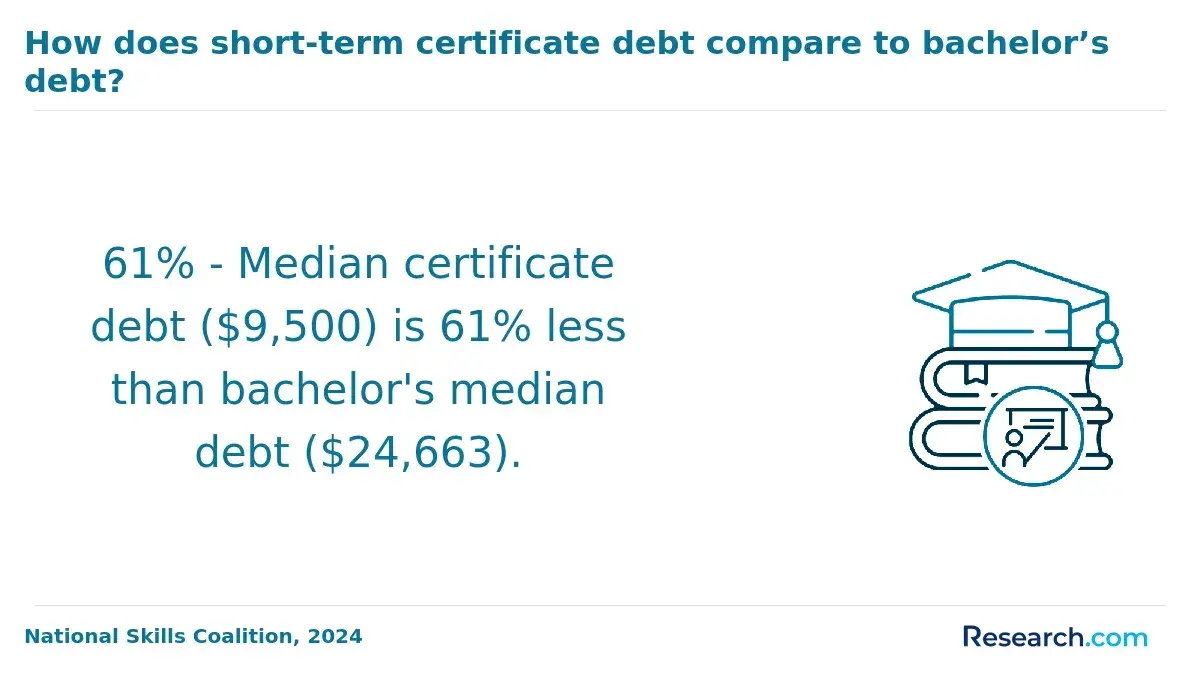
A forensic accounting master's degree usually costs more than a graduate certificate because it requires more credits and keeps students enrolled longer. Public universities charge in-state students between $15,000 and $30,000 for the full program, while out-of-state students typically pay between $30,000 and $50,000. Private schools tend to cost more, with total costs ranging from $40,000 to $70,000.
Forensic accounting graduate certificates are generally less expensive, with tuition usually between $5,000 and $15,000 depending on the school and whether the student enrolls full time or part time. The lower price can make certificates attractive for professionals who want to add forensic accounting skills without taking on the cost of a full graduate degree.
Why the master's costs more: Master's programs often require 30 to 40 credits, while certificates commonly require 12 to 15. The degree may also include more advising, research supervision, capstone support, and access to broader university resources.
Financial aid and employer support: Master's students may have access to assistantships, fellowships, loans, scholarships, or employer tuition reimbursement. Certificate students may have fewer institutional aid options, though some employers are willing to fund shorter professional credentials.
Hidden costs: Tuition is only part of the decision. Master's students may reduce work hours, delay full-time employment, or take longer to recover their educational investment. Certificate students often continue working while studying, which can reduce income disruption.
Return on investment: The better financial choice depends on your current role, target job, employer support, and expected salary growth. If affordability is the main concern and you are still comparing accounting education routes, reviewing a best online accounting program can help you benchmark costs before committing to a forensic accounting specialization.
One professional who completed a forensic accounting master's reflected on her experience navigating these financial considerations. She noted how balancing coursework with a part-time job was challenging but manageable thanks to the financial aid she secured. "It wasn't just tuition," she said, "but the time away from full-time income that made me weigh my options carefully." Ultimately, the master's credential helped her transition into a specialized role with better long-term salary potential. She advised others to thoroughly assess both immediate costs and future benefits before committing to either path.
How Does Earning a Forensic Accounting Master's Degree Affect Salary Compared to a Forensic Accounting Graduate Certificate?
A forensic accounting master's degree is generally associated with stronger salary potential than a graduate certificate, especially when the degree supports advancement into senior investigation, compliance, audit, consulting, or management roles. Data from the Bureau of Labor Statistics and Georgetown University's education-wage studies show that professionals with a forensic accounting master's degree generally receive higher median wages than those holding only a graduate certificate.
The salary difference is not caused by the credential alone. Employers often pay more for the combination of advanced education, deeper accounting knowledge, stronger analytical training, and readiness for complex assignments. Master's degree holders may also be better positioned for promotion tracks where a graduate degree is preferred or expected.
The gap is especially relevant in financial services, government auditing, and corporate compliance sectors. Large multinational corporations and federal agencies may place more value on the broader preparation of a master's degree. Certificate holders may see stronger results in smaller firms, boutique forensic accounting practices, or technical roles where employers need specific skills more than a full graduate degree.
There are exceptions. Certificate holders with strong experience, specialized technical skills, or professional credentials such as the Certified Fraud Examiner credential may compete well for roles in fraud investigation, internal auditing, or forensic data analytics. A certificate can produce a faster return if it helps a working professional qualify for new responsibilities without leaving the workforce.
Recent NACE salary surveys indicate that forensic accounting professionals with master's degrees earn approximately 20% more on average than certificate holders within five years of credential completion. That figure should be weighed against tuition, time away from work, employer reimbursement, and the type of job the credential is likely to unlock.
Which Forensic Accounting Career Paths Favor a Master's Degree Over a Graduate Certificate?
A forensic accounting master's degree is usually favored for roles that require advanced judgment, leadership responsibility, complex financial analysis, regulatory interpretation, or research depth. These positions often involve more than identifying suspicious transactions. They may require leading investigations, presenting findings to executives or legal teams, supervising staff, or working across accounting, law, compliance, and technology.
- Leadership roles: Senior manager, director, and department-level forensic accounting positions often favor a master's degree because the work requires broad technical knowledge, supervisory ability, and strategic decision-making.
- Complex investigation roles: Cases involving large organizations, cross-border activity, litigation support, or extensive financial records may require the deeper analytical preparation associated with a master's program.
- Licensed or certification-oriented pathways: Certain states and certification bodies mandate a master's degree or equivalent advanced education to qualify for forensic accounting licenses or certifications, such as the Certified Fraud Examiner (CFE) in some jurisdictions.
- Government and regulatory roles: Agencies that handle auditing, enforcement, financial crimes, or compliance may prefer candidates with full graduate degrees for advanced or competitive positions.
- Research-intensive positions: Academic institutions, government agencies, and think tanks may prefer or require a master's or higher degree because these roles demand methodological training and theoretical grounding.
- Promotion thresholds: Some employers use a master's degree as a formal or informal requirement for advancement beyond entry or mid-level roles.
Job market trends indicate a growing emphasis on graduate-level credentials in forensic accounting fields, with demand for roles requiring advanced education rising by 15% year-over-year. Professionals aiming for leadership, complex investigations, regulatory work, or research-focused positions should treat the master's degree as a strategic credential rather than merely an academic upgrade.
Which Forensic Accounting Career Paths Favor a Graduate Certificate Over a Master's Degree?
A forensic accounting graduate certificate can be the better fit when the target role values specific, current, job-ready skills more than a broad graduate degree. This is especially true for professionals who already have a background in accounting, finance, auditing, law enforcement, compliance, data analysis, or business and need forensic accounting training to redirect or sharpen their career.
- Fraud examiner roles: A certificate can help professionals build focused knowledge in fraud schemes, detection methods, investigation documentation, and evidence handling.
- Compliance analyst roles: Professionals working in regulated industries may use a certificate to add forensic accounting knowledge relevant to internal controls, monitoring, and suspicious activity review.
- Internal audit roles: Accountants and auditors may use a certificate to move into fraud-focused auditing or strengthen their ability to identify red flags in financial records.
- Rapid skill upgrades: Professionals who already hold a bachelor's or master's degree in accounting, finance, or a related field may not need another full degree. A certificate can fill a specific skills gap more efficiently.
- Career changes with limited risk: A certificate can help career-changers test forensic accounting before investing in a longer and more expensive master's program.
- Smaller firms and boutique practices: Some employers care most about immediate technical contribution. In these settings, relevant skills, experience, and professional certifications may matter as much as or more than a master's degree.
- Cost-sensitive career moves: Because certificates require fewer credits and less time, they can offer a faster return for students who need practical training without a large tuition commitment.
The strongest certificate candidates usually pair the credential with evidence of applied ability: audit experience, accounting coursework, case-based projects, data analysis skills, or professional certification progress. For comparison, other specialized fields also reward targeted credentials; for example, some learners explore high-paying jobs with environmental science degree credentials to understand how focused education can support niche career paths.
Is a Forensic Accounting Graduate Certificate Stackable Toward a Master's Degree?
A forensic accounting graduate certificate may be stackable toward a master's degree, but only if the institution allows it. There is no universal transfer rule. Stackability means that credits earned in the certificate can be applied to a related master's program, potentially reducing the time and cost required to complete the degree later.
This pathway can be useful for students who are not ready to commit to a full master's program, want to prove they can handle graduate coursework, or need a shorter credential first for work reasons. However, students should confirm the policy before enrolling, not after completing the certificate.
- Institutional matching: Credits are most likely to stack when the certificate and master's degree are offered by the same university or an approved partner institution.
- Grade requirements: Schools commonly require a minimum grade, often a B or above, before certificate credits can count toward the degree.
- Time limits: Credits may need to be applied within a specific period, such as five years from certificate completion.
- Course alignment: Only courses that match the master's curriculum are likely to transfer. Extra electives or professional development courses may not count.
- Formal admission: Completing a certificate does not always guarantee admission to the master's program. Some schools require a separate application and review.
- Credit caps: Even when stacking is allowed, a program may limit the number of certificate credits that can be applied.
The safest approach is to ask admissions or the program director for written confirmation of which courses transfer, what grades are required, how long credits remain valid, and whether certificate completion improves admission to the master's program.
Graduate certificates in forensic accounting can function much like cybersecurity courses online that offer stackable learning options, but the value depends entirely on the policies of the institution awarding the credits.
How Do Employers in the Forensic Accounting Field Perceive a Master's Degree Versus a Graduate Certificate?
Employers do not evaluate forensic accounting master's degrees and graduate certificates in the same way across every role. Their perception depends on the industry, size of the organization, complexity of the work, and the candidate's overall profile. A master's degree tends to carry more weight for advancement and complex assignments, while a certificate can be persuasive when it demonstrates focused, current skills.
- Regulated industries: Banking, government, insurance, public accounting, and academia often place stronger value on a master's degree because it signals advanced preparation and long-term commitment.
- Senior roles: Positions involving leadership, litigation support, major investigations, expert reporting, or cross-functional decision-making may prefer candidates with a master's degree.
- Technical or entry-focused roles: Graduate certificates may be sufficient for roles that require targeted knowledge in fraud detection, compliance support, transaction review, or internal audit assistance.
- Experience matters: A certificate paired with relevant work experience may outperform a master's degree with little practical exposure, especially in employers that prioritize immediate productivity.
- Institutional credibility: Accreditation, program reputation, faculty expertise, and curriculum relevance affect how employers interpret both credentials.
- Current skills: Employers in consulting, technology-enabled investigations, and analytics-heavy environments may value recent certificate training if it covers tools or methods directly used on the job.
The best credential is the one that matches the job description you are targeting. Before enrolling, review postings for your desired roles and note whether employers ask for a master's degree, a graduate certificate, a CPA background, a CFE credential, audit experience, data analytics skills, or some combination of these qualifications.
Can a Forensic Accounting Graduate Certificate Help Someone Transition Into the Field From a Different Background?
Yes. A forensic accounting graduate certificate can help career-changers move into the field, especially when they already have related experience in accounting, finance, auditing, business, compliance, law enforcement, data analysis, or legal support. The certificate provides a structured way to learn forensic accounting concepts without committing immediately to a full master's degree.
- Speed: Certificate programs require fewer credits and can often be completed in a matter of months, which helps career-changers build relevant knowledge quickly.
- Affordability: Lower tuition can make a certificate more realistic for mid-career professionals who do not want to take on the cost of a full graduate degree.
- Practical focus: Many certificates emphasize applied skills such as fraud examination, forensic auditing, report writing, case analysis, and investigation support.
- Credibility: A graduate certificate can signal serious interest in forensic accounting, particularly when the applicant's previous background is adjacent but not identical.
- Stackability: Some certificates can later become part of a master's degree plan, allowing students to progress gradually.
- Limitations: A certificate may not be enough for senior, highly specialized, or research-oriented roles that prefer a full graduate degree.
- Career strategy: Career-changers should combine the certificate with practical experience, portfolio work, internships, volunteer projects, audit exposure, or progress toward relevant professional credentials.
A certificate works best as a bridge. It can help you enter conversations with employers, qualify for adjacent roles, or move internally toward investigation and compliance work. If your long-term goal is leadership or advanced forensic accounting practice, a master's degree may still be the stronger next step after you gain experience.
What Graduates Say About Which Is Better: A Forensic Accounting Master's Degree or a Forensic Accounting Graduate Certificate
- : "Choosing between a forensic accounting master's degree and a graduate certificate really came down to time and employer recognition for me. The master's took longer to complete but gave me a significant edge when applying for senior roles-employers clearly valued the depth of study. While the certificate was more affordable and quicker, I felt the master's better prepared me for the complexities of real-world investigations. — Nathanael"
- : "I appreciated how the forensic accounting certificate required fewer admission hoops and didn't tie me down financially like a master's program might. If you're working full-time or need a faster path, the certificate makes a lot of sense. However, I've noticed that in terms of salary impact-especially in competitive markets-the master's degree tends to open doors to higher-paying opportunities more consistently. — Russell"
- : "Reflecting on my journey, the biggest factor was career utility. The certificate gave me foundational skills quickly and was cost-effective, but the master's degree led to broader opportunities across industries. In the long run-I believe the master's degree is a stronger investment if you want to maximize your impact and growth as a forensic accounting professional. — Jessica"
Other Things You Should Know About Forensic Accounting Degrees
Internships or practical experience are often integral to a Forensic Accounting master's program, providing hands-on learning. Graduate certificates, however, generally focus on specific skills and may not include such components, depending on the institution's curriculum.
Accreditation is critical for both masters and graduate certificates, as it ensures programs meet accepted academic standards. A master's degree from an accredited institution often provides stronger career and academic prospects. Graduate certificates should also come from accredited schools to be credible, but the level of program rigor may vary more widely, affecting how employers and graduate schools view them.
A Forensic Accounting master's degree typically requires 30-36 credit hours, offering more comprehensive coursework, while a graduate certificate generally demands 12-18 credit hours. This difference reflects the depth and breadth of study in each program, affecting the time commitment and subject mastery.
References
- Master of Science inForensic Accounting https://www.albany.edu/business/programs/ms-forensic-accounting
- Best of 2025: Online Master’s Programs in Forensic Accounting https://www.onlinemastersdegrees.org/best-programs/business/accounting/forensic-accounting/
- Admissions & Costs - Forensic Accounting, M.S. https://www.oldwestbury.edu/programs-courses/forensic-accounting/admissions-costs
- Auditing and Forensic Accounting Graduate Certificate https://www.etamu.edu/programs/auditing-and-forensic-accounting-graduate-certificate/
- Forensic Accountant https://www.acfe.com/career/career-paths/career-path-accounting/career-path-detail-forensic-accountant
- How to Become a Forensic Accountant https://www.snhu.edu/about-us/newsroom/business/how-to-become-a-forensic-accountant
- Graduate Certificate in Accounting with Fraud and Forensics https://www.neumann.edu/academics/grad/certificate-fraud-and-forensics
- How to Start a Career in Forensic Accounting https://www.learnsignal.com/blog/forensic-accounting-career/
- Top Master's in Forensic Accounting Online | Accounting.com https://www.accounting.com/degrees/forensic-accounting/masters/best-online-programs/
- Forensic Accounting: A Career Overview | DeVry University https://www.devry.edu/blog/forensic-accounting-a-career-overview.html