2027 How to Become a Child and Family Social Worker

Co-Founder and Chief Data Scientist
Choosing a career in child and family social work means preparing for one of the most consequential roles in human services: protecting children, strengthening families, and helping people navigate crises that can affect safety, housing, health, education, and long-term stability. The work matters because children continue to face serious risks, including sexual abuse, malnutrition, neglect, and physical violence. Global data show that one in five women and one in seven men reported experiencing sexual abuse during childhood, underscoring why trained professionals are needed in child welfare and family support systems.
This guide explains how to become a child and family social worker, what the job involves, how long the path can take, what credentials may be required, where to gain experience, and how to evaluate whether this career fits your goals. It also covers salary, job outlook, common specializations, certifications, workplace challenges, professional development, and practical questions to ask before choosing a program or career path.
Quick answer: How do you become a child and family social worker?
Most aspiring child and family social workers start with a Bachelor of Social Work (BSW) or a related bachelor’s degree, complete supervised fieldwork, and then pursue state licensure if required. Many roles, especially clinical, supervisory, school-based, or advanced child welfare positions, prefer or require a Master of Social Work (MSW). The full path usually takes between four and eight years, or longer, depending on degree level, full-time or part-time enrollment, supervised experience requirements, and state licensure rules.
| Step | What it involves | Why it matters |
| Earn a bachelor’s degree | Complete a BSW or a related degree in psychology, human development, education, or a similar field. | A bachelor’s degree is the usual starting point for entry-level social service roles. |
| Complete field education | Gain supervised experience through internships, practicums, or agency placements. | Child and family work requires practical judgment, documentation skills, and client-facing experience. |
| Consider an MSW | Pursue graduate-level training in assessment, intervention, policy, and clinical or child welfare practice. | An MSW can improve eligibility for advanced roles, licensure, and specialized practice. |
| Meet state licensing rules | Check your state’s education, exam, supervised experience, and continuing education requirements. | Licensure rules vary by state and can affect where and how you may practice. |
| Build specialized expertise | Choose experience, certifications, or continuing education in areas such as foster care, CPS, school social work, trauma, or family services. | Specialization can help you qualify for roles that match your interests and strengths. |
Key Things You Should Know About Becoming a Child and Family Social Worker
- Child and family social workers help children and families access support, improve home stability, remain safely together when possible, or secure permanent placements when reunification is not appropriate.
- 53% of pediatric social workers in the United States have a bachelor's degree, 45% earned a master's degree, and 2% completed a doctorate degree.
- The typical preparation timeline is four to eight years, though it may take longer depending on graduate study, part-time enrollment, state licensing requirements, and supervised practice hours.
- The employment of child and family social workers is set to increase by 5% from 2023 to 2033.
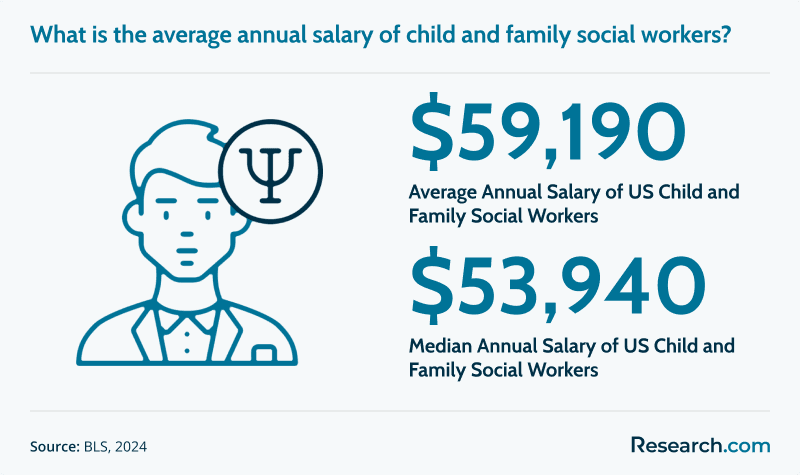
- The average annual salary of a child and family social worker in the United States is $59,190, while the median annual salary is $53,940.
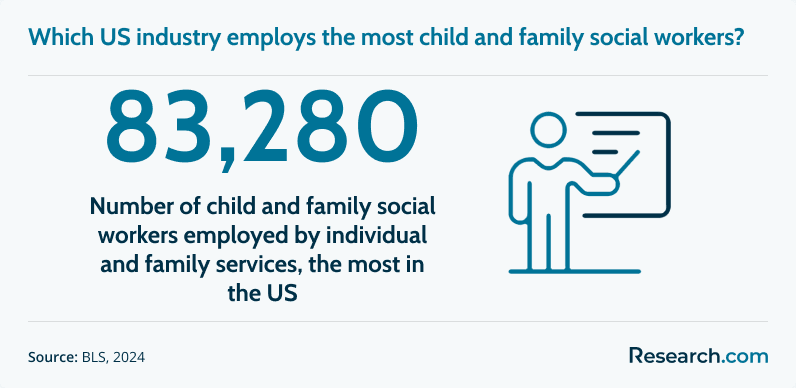
- The industries employing the largest numbers of child, family, and school social workers are individual and family services (83,280), local government units (69,170), state government units (67,790), elementary and secondary schools (57,700), and community food, housing, and other relief services (10,300).
Jump to a Section
- What child and family social workers do
- How to become a child and family social worker
- How long the career path usually takes
- Child and family social work specializations
- Where to find internships and field placements
- Skills child and family social workers need
- Useful certifications for child and family social workers
- Professional development strategies
- Career paths in child and family social work
- Using a PsyD online degree for career advancement
- Affordable online counseling options
- Legal and ethical responsibilities
- Cultural competency in practice
- Policy influence and advocacy
- Digital tools in child and family social work
- Advanced education and career growth
- Using current research to improve practice
- Job outlook for child and family social workers
- Average salary for child and family social workers
- Major challenges in the profession
- Burnout prevention and career sustainability
What does a child and family social worker do?
A child and family social worker helps children, parents, caregivers, and family systems address safety concerns, emotional stress, poverty-related barriers, housing instability, school problems, health needs, family conflict, and child welfare involvement. The goal is not simply to “fix” a family. The work involves assessing risk, coordinating services, documenting case progress, advocating for clients, and making difficult recommendations when a child’s safety is at stake.
Depending on the role, child and family social workers may work in child protective services, foster care and adoption agencies, schools, hospitals, nonprofit family service agencies, mental health clinics, juvenile justice programs, or community organizations. Some focus on short-term crisis response, while others provide ongoing case management, therapy, resource coordination, or court-related support.
Common responsibilities
- Assessing reports of child abuse or neglect: Child welfare social workers review concerns, interview relevant parties, evaluate safety, and compare the child’s circumstances against legal and agency standards.
- Responding when a child is unsafe: If a home environment presents serious danger, social workers may help arrange emergency placement with relatives or foster care after the appropriate legal process, including a court order when required.
- Creating family service or reunification plans: Social workers may coordinate with parents, attorneys, courts, therapists, and agencies to define the steps needed for a child to safely return home.
- Connecting families to practical resources: Families may need help accessing housing assistance, food programs, child care, mental health care, parenting classes, transportation, benefits, or substance use treatment.
- Providing counseling or therapeutic support: Some professionals, particularly those with appropriate graduate training and licensure, support individuals, couples, and families through therapy, crisis intervention, and skill-building.
- Advocating across systems: Child and family social workers often communicate with schools, courts, healthcare providers, public agencies, and community organizations to protect client rights and improve access to care.
- Maintaining accurate documentation: Case notes, safety assessments, referrals, court reports, progress updates, and service plans are central to ethical and legally defensible practice.
If you are comparing related helping professions, this child counselor career guide can help you understand how child counseling differs from broader child and family social work.
Education levels vary across the field. As far as educational attainment is concerned, 2025 data from Zippia reveals that 53% of pediatric social workers in the United States have a bachelor's degree, 45% earned a master's degree, and 2% completed a doctorate degree.
How to Become a Child and Family Social Worker for 2026
Becoming a child and family social worker usually requires a mix of formal education, supervised field experience, state credentialing, and ongoing training. The right path depends on whether you want entry-level case management, child welfare investigation, school social work, clinical practice, supervision, policy work, or leadership.
- Start with the right bachelor’s degree: A Bachelor of Social Work (BSW) is the most direct undergraduate option because it is designed around social work ethics, policy, human behavior, field practice, and casework. Some entry-level roles may accept degrees in psychology, early childhood education, human development, sociology, or related fields, but a BSW is often the stronger preparation. Students trying to control costs may compare the cheapest online social work degree options.
- Check accreditation before enrolling: For social work, accreditation can affect field placement quality, graduate school eligibility, and licensure pathways. Do not assume that every online or low-cost program will meet your state’s requirements.
- Use fieldwork strategically: BSW and MSW programs usually include supervised field education. Choose placements that match your intended direction, such as CPS, foster care, schools, hospitals, domestic violence agencies, family service nonprofits, or behavioral health clinics.
- Decide whether you need an MSW: A Master of Social Work is strongly recommended for many child and family social work careers and may be required for clinical, advanced, supervisory, or specialized roles. MSW programs typically deepen training in assessment, intervention, research, policy, and advanced practice with children and families. Students who need flexibility can compare online MSW programs.
- Understand your state’s licensure process: Licensing requirements vary widely. Many states require a degree from an accredited social work program, supervised experience, an exam, background checks, and continuing education. If you plan to move, verify whether your license will transfer or whether you will need additional steps.
- Build experience before specializing: Early roles in case management, family services, schools, shelters, or child welfare agencies can help you understand whether you prefer direct practice, crisis response, clinical work, administration, policy, or advocacy.
- Maintain continuing education: Child welfare law, trauma-informed care, mandated reporting, documentation standards, telehealth practices, and family support models change over time. Continuing education also helps maintain licensure in many states.
Which education path fits your goal?
| Career goal | Typical education path | Best fit for |
| Entry-level family services or case support | BSW or related bachelor’s degree | Students who want to start working sooner and build experience before graduate school. |
| Child welfare, foster care, or adoption casework | BSW or MSW, depending on employer and state rules | People comfortable with documentation, home visits, legal processes, and complex family systems. |
| School social work | Often MSW plus state-specific school credentialing | Professionals who want to support students, families, educators, and school-based intervention teams. |
| Clinical work with children and families | MSW plus clinical licensure requirements | Those who want to provide therapy, assessment, and mental health interventions. |
| Leadership, policy, teaching, or advanced practice | MSW, DSW, PhD, PsyD, or another advanced credential depending on role | Experienced professionals seeking program leadership, research, administration, or specialized expertise. |
How long does it take to become a child and family social worker?
The journey to becoming a child and family social worker typically takes between four and eight years, or even longer, depending on the individual's educational path and state-specific requirements. A BSW usually takes four years and can lead to some entry-level opportunities. An MSW commonly adds two years after the bachelor’s degree, although BSW graduates may qualify for advanced standing options that shorten the graduate timeline. Students looking for a faster graduate route can explore 1 year MSW programs online.
Licensure can add more time after graduation because many states require exams and supervised post-degree experience, particularly for clinical practice. In many cases, this adds one to three years or more. The total timeline depends on whether you study full time or part time, whether you already have transferable credits, whether you qualify for advanced standing, and what type of license your target role requires.
| Pathway | Approximate timeline | What to consider |
| Bachelor’s route | Usually four years | Can open entry-level roles, but may not be enough for clinical or advanced positions. |
| Bachelor’s plus MSW | Often about six years total | Better preparation for specialized, clinical, or supervisory work. |
| Advanced standing MSW | Potentially less than a traditional MSW after a BSW | Availability depends on program policies, prior coursework, GPA, and accreditation requirements. |
| MSW plus supervised licensure | May add one to three years or more | Essential for many clinical roles and some advanced practice settings. |
| Doctoral or advanced clinical training | Longer than the standard MSW path | May support leadership, advanced practice, research, teaching, or specialized clinical work. |
What are the specializations within child and family social work?
Child and family social work is not one single job. It includes several practice areas that differ in daily duties, emotional demands, legal involvement, and long-term career opportunities. Students may encounter these areas through MSW concentrations, electives, practicum placements, agency training, or programs such as the best and easiest social work degree pathways.
| Specialization | Main focus | Best suited for |
| Child Protective Services (CPS) | Investigating abuse, neglect, and unsafe home conditions; coordinating safety plans and court-related actions. | Professionals who can make high-stakes decisions, manage conflict, and document carefully. |
| Foster Care and Adoption | Supporting placements, reunification, permanency planning, foster families, birth families, and adoptive families. | People interested in long-term case relationships and child stability. |
| School Social Work | Helping students with mental health, behavior, attendance, family stress, bullying, and academic barriers. | Those who enjoy working within education systems. Review school social worker requirements by state before choosing this route. |
| Medical and Pediatric Social Work | Assisting families dealing with chronic illness, disability, hospitalization, medical trauma, and care coordination. | Professionals comfortable working with healthcare teams and emotionally intense cases. |
| Domestic Violence and Family Crisis Intervention | Providing safety planning, counseling referrals, shelter coordination, legal resource referrals, and crisis support. | Social workers who can respond calmly to urgent safety and trauma-related needs. |
| Juvenile Justice and Court Social Work | Supporting youth involved in courts, probation, rehabilitation, diversion, or family-related legal matters. | Those interested in legal systems, youth advocacy, and alternatives to incarceration. |
| Mental Health and Trauma-Informed Practice | Supporting children and families affected by trauma, PTSD, abuse, anxiety, depression, and behavioral concerns. | Professionals pursuing clinical training and evidence-based intervention skills. |
| Substance Abuse and Family Support | Helping families affected by substance use disorders, relapse risk, parenting instability, and treatment access. | Those interested in addiction services, family therapy, and child safety planning. |
| Early Childhood and Developmental Services | Supporting young children, parents, developmental milestones, early intervention, and family education. | People drawn to prevention-focused work with infants, toddlers, and young children. |
| Community Outreach and Advocacy | Designing programs, educating families, improving access to services, and advocating for policy change. | Professionals who want to influence systems, not only individual cases. |
Where can aspiring child and family social workers find internships?
Internships and practicums are where students learn whether child and family social work fits them. A strong placement should expose you to real cases, ethical decision-making, documentation, supervision, referrals, interdisciplinary collaboration, and client interaction appropriate to your training level.
- Government child welfare agencies: Child Protective Services and Departments of Human Services may offer placements involving case documentation, family support, supervised home visits, foster care coordination, crisis response, and child welfare procedures.
- Nonprofit and community organizations: Family resource centers, youth programs, domestic violence shelters, homeless services, and community agencies can help interns learn resource navigation, advocacy, intake, safety planning, and family support.
- Schools and early childhood programs: Public schools, school districts, Head Start programs, and early childhood centers can provide experience with student support, special education teams, family engagement, attendance issues, crisis intervention, and developmental services.
- Hospitals and healthcare settings: Children’s hospitals, pediatric clinics, rehabilitation centers, and mental health clinics may allow students to observe or assist with care coordination, family counseling support, trauma response, and resource referrals.
- Foster care and adoption agencies: These placements can involve permanency planning, foster parent support, adoption preparation, reunification services, case reviews, and post-placement support.
- University career and field education offices: Social work departments often maintain approved agency partnerships and can help students choose placements that meet program standards and career goals.
- Online internship boards and professional job sites: Students may find openings through Idealist.org, the National Association of Social Workers (NASW) Career Center, Indeed, LinkedIn, the American Red Cross, United Way, and local agency websites.
Questions to ask before accepting a field placement
- Will I receive regular supervision from a qualified professional?
- What types of cases will I observe or support?
- Will the placement meet my school’s field education requirements?
- How does the agency protect intern safety during home visits or crisis situations?
- What documentation systems, legal processes, or assessment tools will I learn?
- Does the placement align with my intended specialization?
If you are still comparing social work specialties, this guide on how to become a disability social worker can help you evaluate another practice area that also serves vulnerable clients and families.
What are the essential skills for child and family social workers?
Child and family social workers need more than compassion. The role requires careful judgment, legal awareness, cultural humility, crisis management, documentation accuracy, and the ability to build trust with people who may be frightened, angry, overwhelmed, or distrustful of systems.
- Active listening: Social workers must hear both what clients say and what they avoid saying, while paying attention to tone, body language, developmental stage, and safety indicators.
- Clear communication: The job often requires explaining difficult information to children, parents, courts, schools, healthcare teams, and agencies in language each audience can understand.
- Empathy and emotional intelligence: Building rapport with families requires respect and care, even when the situation involves conflict, trauma, or court involvement.
- Critical thinking: Social workers must weigh competing information, identify risk, distinguish poverty from neglect, and decide when intervention is necessary.
- Cultural awareness: Effective practice requires understanding family values, language, community context, immigration concerns, religion, race, disability, and historical mistrust of institutions.
- Advocacy and resource coordination: Families may need help navigating agencies, benefits, schools, healthcare, housing, legal aid, and mental health services.
- Professional boundaries: The work can be personal and emotionally charged, so social workers need boundaries that protect both clients and professionals.
- Organization and time management: Caseloads, deadlines, court reports, visits, referrals, and emergencies require disciplined systems.
- Collaboration: Child and family social workers frequently coordinate with teachers, doctors, therapists, attorneys, judges, foster parents, relatives, and nonprofit providers.
- Adaptability: Family situations can change quickly. Workers must adjust service plans, safety strategies, and communication approaches as conditions evolve.
- Ethical decision-making: Confidentiality, mandated reporting, informed consent, client autonomy, and child safety must be balanced in every case.
According to Zippia, the skills that most commonly appear on the resumes of child and family social workers in the United States are social work (32.7%), patients (23.8%), mental health (7.1%), patient care (6.8%), MSW (6.7%), family therapy (2.1%), and community agencies (1.9%).
To understand how child and family practice fits into broader social work systems, review this explanation of what is micro mezzo and macro social work.
The chart below shows the US states that employ the most child and family social workers.
What are the top certifications for child and family social workers?
Certifications are not always required, but they can demonstrate focused expertise, support advancement, and help employers understand your practice strengths. The following credentials from the National Association of Social Workers (NASW) may be relevant depending on your education level, license, experience, and career direction.
| Certification | Who it is for | Key eligibility details stated |
| Certified Children, Youth & Family Social Worker (C-CYFSW) | BSW-level professionals providing direct services to children, adolescents, and families. | Requires a Bachelor of Social Work (BSW), 20 hours of post-degree continuing education, at least one year of paid and supervised work experience, and a current state social work license. |
| Certified Advanced Children, Youth & Family Social Worker (C-ACYFSW) | MSW-level or higher professionals with advanced child and family practice expertise. | Recognizes specialized family-centered practice and may support leadership or supervisory roles. |
| Certified Social Work Case Manager (C-SWCM) | BSW-level social workers focused on assessment, service planning, client engagement, and advocacy. | Available to social workers with a BSW and requires at least three years of supervised, paid experience specifically in case management. |
| Certified Advanced Social Work Case Manager (C-ASWCM) | MSW-level case managers handling complex cases or supervising case management work. | Designed for experienced professionals with graduate-level social work preparation. |
| Qualified Clinical Social Worker (QCSW) | Clinical social workers involved in assessment, treatment, and prevention of mental health and behavioral concerns. | Requires an MSW, a clinical social work license in the relevant state, 30 hours of continuing education focused on clinical practice, and at least three years of paid and supervised clinical experience. |
| Certified School Social Work Specialist (C-SSWS) | Social workers practicing in school settings. | Useful for professionals supporting students, families, teachers, and school teams. |
| Certified Social Worker in Health Care (C-SWHC) | Social workers helping families manage medical needs, healthcare navigation, and health-related stress. | Candidates must have an MSW, at least two years of supervised experience in healthcare social work, and a current state license. |
If you are choosing graduate coursework with certification goals in mind, this overview of what are the different MSW specializations can help you compare concentration options.
How can child and family social workers optimize their professional development?
Professional development should be intentional, not random. Child and family social workers benefit most from training that directly improves case quality, client safety, documentation, supervision, trauma response, leadership, and ethical decision-making. Workshops, agency trainings, certifications, conferences, supervision groups, and advanced degrees can all be useful when they match a clear career goal.
Experienced practitioners who want leadership, teaching, policy, or advanced practice roles may consider doctoral-level study. Flexible options such as online DSW programs can help working professionals study systems leadership, practice innovation, and applied research while continuing in the field.
Professional development priorities to consider
- Trauma-informed care for children, adolescents, and caregivers
- Mandated reporting and legal documentation
- Family preservation and reunification practice
- Clinical assessment and evidence-based interventions
- Cultural humility and anti-oppressive practice
- Secondary traumatic stress and burnout prevention
- Supervision, leadership, and program evaluation
- Policy advocacy and child welfare reform
What are the possible career paths of aspiring child and family social workers?
Child and family social work can lead to direct service, clinical, school-based, healthcare, court-related, nonprofit, or policy roles. The right option depends on your tolerance for crisis work, interest in legal systems, preference for long-term counseling versus case management, and desired education level.
| Career path | Primary responsibilities | Common work settings |
| Child and Family Social Worker | Assess family needs, coordinate resources, provide advocacy, support safety planning, and help families address poverty, abuse, mental health concerns, or instability. | Government agencies, nonprofits, social service programs, family service agencies. |
| Child Protective Services Caseworker | Investigate abuse and neglect reports, assess home safety, coordinate interventions, and work with legal systems when needed. | State or county child welfare agencies. |
| School Social Worker | Support students with behavioral, emotional, academic, family, and social challenges through counseling, crisis intervention, and collaboration. | Public schools, private schools, districts, special education programs. |
| Foster Care and Adoption Specialist | Coordinate placements, support foster and adoptive families, assist with reunification, and provide post-adoption support. | Child welfare agencies, adoption agencies, nonprofits. |
| Family and Domestic Violence Advocate | Help survivors access safety planning, shelter, legal resources, counseling, and long-term support. | Domestic violence shelters, crisis centers, victim advocacy organizations. |
| Juvenile Justice Social Worker | Support youth involved in courts, probation, detention, diversion, rehabilitation, and family counseling. | Juvenile courts, detention centers, probation programs, community intervention agencies. |
| Medical and Pediatric Social Worker | Help families cope with hospitalization, disability, chronic illness, care coordination, and healthcare-related stress. | Children’s hospitals, pediatric clinics, rehabilitation centers. |
| Substance Abuse Social Worker | Connect families to treatment, counseling, relapse prevention, and support services when substance use affects family stability or child safety. | Rehabilitation centers, outpatient clinics, community service agencies. |
| Early Childhood and Family Support Specialist | Support young children and caregivers through parenting education, developmental services, childcare referrals, and early intervention. | Head Start programs, preschools, family support agencies. |
| Community Outreach Coordinator | Design programs, build partnerships, educate families, advocate for services, and support program funding or expansion. | Nonprofits, public health organizations, government agencies, community programs. |
How can a PsyD online degree enhance career advancement in child and family social work?
A PsyD may be relevant for professionals who want deeper preparation in psychological assessment, intervention, research-informed practice, and leadership within multidisciplinary behavioral health environments. It is not a substitute for checking social work licensure requirements, and it may not be necessary for many child welfare or case management roles. However, for experienced professionals interested in advanced clinical knowledge, supervision, consultation, or specialized psychological practice, PsyD online degree programs may be worth comparing carefully.
What affordable online counseling options can enhance professional credentials?
Some child and family social workers add counseling-related education to strengthen their understanding of therapy, family systems, trauma, and mental health. Before enrolling, verify whether the program supports the license you want in your state. Affordable options such as the cheapest online LPC programs can be useful only if they meet accreditation, practicum, internship, and state licensing expectations.
What are the key legal responsibilities and ethical considerations for child and family social workers?
Child and family social workers operate in a field where legal and ethical mistakes can have serious consequences. They must understand mandated reporting, confidentiality, informed consent, documentation standards, client rights, professional boundaries, court involvement, and state-specific child welfare laws. They also need to know when confidentiality must be limited to protect a child or another person from harm.
- Mandated reporting: Social workers must follow state laws for reporting suspected child abuse or neglect.
- Confidentiality: Client information must be protected, but exceptions may apply when safety, abuse, court orders, or legal duties are involved.
- Informed consent: Clients and caregivers should understand the purpose, limits, risks, and expectations of services whenever possible.
- Documentation: Accurate notes and reports support continuity of care, legal accountability, and ethical decision-making.
- Professional boundaries: Social workers must avoid dual relationships, conflicts of interest, and actions that compromise objectivity.
- Licensure compliance: Professionals must practice within the limits of their credential and state scope-of-practice rules.
Those comparing related clinical credentialing timelines may find useful context in How long does it take to be a therapist?.
How can child and family social workers enhance cultural competency in their practice?
Cultural competency is not a one-time training requirement. It is an ongoing practice of learning, self-examination, respectful communication, and adaptation. Child and family social workers must consider how culture, race, language, religion, disability, immigration status, socioeconomic conditions, family structure, and community history affect trust and service access.
Professionals can strengthen cultural responsiveness through supervision, community partnerships, interpreter use, culturally relevant assessments, and training that challenges assumptions. Faith-informed or culturally specific programs, including the best Christian counseling master's programs, may be relevant for some practitioners, but the key is ensuring that services remain ethical, client-centered, and appropriate to each family’s values and needs.
How can child and family social workers effectively influence public policy?
Child and family social workers see firsthand how housing shortages, food insecurity, underfunded schools, healthcare access, addiction, domestic violence, and poverty affect children. That experience can inform stronger policy advocacy. Practitioners can contribute by documenting service gaps, participating in professional associations, submitting public comments, joining local coalitions, educating lawmakers, supporting research, and helping families tell their stories safely and ethically.
Training in family systems and therapeutic intervention can also help professionals connect individual casework to broader reform. Programs such as a cheap online MFT program may provide additional perspective for those interested in family-centered intervention and policy work, but students should still verify licensure alignment before enrolling.
How are digital tools transforming child and family social work?
Digital tools now affect case documentation, telehealth, client communication, referral tracking, data reporting, training, and interdisciplinary coordination. Secure record systems can improve continuity of care, while telehealth can expand access for some families. Data tools may help agencies identify service gaps, monitor outcomes, and manage caseloads more effectively.
Technology also creates risks. Social workers must protect confidentiality, follow telehealth laws, use secure platforms, document remote services accurately, and consider whether a family has reliable internet, privacy, language support, and digital literacy. If you are comparing timelines for related counseling careers, this guide on how many years to become a counselor may provide helpful context.
How can advanced education strengthen career opportunities in child and family social work?
Advanced education can help social workers move into clinical practice, supervision, administration, policy, research, teaching, program evaluation, or specialized family services. The best choice depends on the role you want. An MSW is often the central graduate credential for social work practice, while additional degrees or certificates may support narrower areas such as behavior analysis, psychology, counseling, or leadership.
For professionals working with children who have developmental, behavioral, or learning needs, an affordable BCBA online masters program may add specialized behavioral expertise. Before choosing this route, confirm whether it supports your state requirements, employer expectations, and long-term career goals.
How does integrating current research boost practice outcomes?
Research-informed practice helps child and family social workers choose interventions based on evidence rather than habit, agency culture, or assumptions. Current research can improve risk assessment, trauma treatment, family preservation strategies, school-based support, permanency planning, and policy advocacy. It also helps practitioners evaluate whether services are producing meaningful outcomes for children and families.
Professionals who want stronger research and analytical skills may consider additional study, such as an online accelerated psychology degree, especially if they want broader preparation in human behavior, assessment, or behavioral science. Any added credential should be evaluated for cost, accreditation, relevance, and licensing value.
What is the job outlook for child and family social workers?
According to the United States Bureau of Labor Statistics (BLS), the employment of child and family social workers is set to increase by 5% from 2023 to 2033, slightly faster than the national average (4%). With this, the number of these social workers will increase from 365,900 in 2023 to 383,800 by 2033.
Within the same period, the openings for social worker roles, including those for child and family social workers, amount to about 67,300 each year. As of February 2025, Indeed lists over 9,000 job openings for child and family social workers in the country.
The industries that employ the most child, family, and school social workers are individual and family services (83,280), local government units (69,170), state government units (67,790), elementary and secondary schools (57,700), and community food, housing, and other relief services (10,300).
What the outlook means for students
- Demand exists across public agencies, schools, nonprofits, healthcare, and community services, but hiring requirements vary widely.
- Applicants with relevant field placements, strong documentation skills, and state-aligned credentials may be better positioned for competitive roles.
- Job growth does not guarantee employment in every city, agency, or specialization, so students should research local demand before enrolling.
What is the average salary of a child and family social worker?
The average annual salary of a child and family social worker in the United States, according to recent data from the BLS, is $59,190, while the median annual salary is $53,940. This is higher than the national average for US workers, which is $48,060. Actual pay can vary by state, employer, education level, license, union status, experience, workload, and specialization.
The sectors that provide the highest average annual salaries to child and family social workers are scientific research and development services ($90,180), home healthcare services ($75,440), business schools and computer training ($72,840), religious organizations ($71,440), and trade and technical schools ($71,130).
As for the US states that offer the highest average annual social worker salary amounts, they are the District of Columbia ($76,330), New York ($74,080), New Jersey ($73,680), Maryland ($71,870), and Connecticut ($70,200).
Salary factors to compare before choosing this career
| Factor | Why it affects earnings |
| State and local labor market | Pay can differ substantially by region, cost of living, agency budgets, and demand. |
| Employer type | Government, school, healthcare, nonprofit, research, and private organizations may use different pay structures. |
| Degree level | Some higher-paying or clinical roles may require an MSW or advanced credential. |
| Licensure | Clinical and advanced licenses may expand role eligibility, depending on state law and employer requirements. |
| Specialization | Healthcare, research, school-based, supervisory, or clinical roles may differ from general case management roles. |
| Caseload and working conditions | Higher pay should be weighed against workload, travel, crisis response expectations, and burnout risk. |
What are the biggest challenges faced by child and family social workers?
Child and family social work can be deeply meaningful, but it is also demanding. Professionals may handle trauma, conflict, court deadlines, urgent safety decisions, public scrutiny, limited resources, and high caseloads. Understanding these realities before entering the field can help students prepare with clearer expectations.
- High caseloads: Workers may be responsible for more cases than they can manage comfortably, making time management and supervision essential.
- Emotional strain: Repeated exposure to abuse, neglect, family separation, grief, violence, and conflict can affect mental health and job satisfaction.
- Limited resources: Families may need housing, treatment, childcare, transportation, food assistance, or legal support that is difficult to access quickly.
- Public misunderstanding: Social workers can be criticized for outcomes shaped by laws, courts, funding, agency policy, and family circumstances beyond one person’s control.
- Secondary trauma exposure: Listening to traumatic stories and responding to children in crisis can create stress reactions in professionals.
- Systemic barriers: Poverty, racism, addiction, homelessness, underfunded services, and generational violence can make family stabilization complex.
- Balancing empathy and objectivity: Workers must care deeply while still making evidence-based decisions that prioritize child safety.
Common mistakes aspiring child and family social workers should avoid
| Mistake | Better approach |
| Choosing a program without checking accreditation | Confirm that the degree supports your state’s licensure and field education requirements. |
| Looking only at tuition | Compare total cost, fees, field placement support, transfer credits, financial aid, and graduation timeline. |
| Assuming all online programs meet licensure rules | Contact the school and your state licensing board before enrolling. |
| Ignoring field placement quality | Ask where students are placed and whether placements match your career goals. |
| Assuming salary outcomes are guaranteed | Use BLS and local job postings to compare pay by state, employer, and credential requirements. |
| Underestimating burnout risk | Seek strong supervision, build boundaries, and choose workplaces with realistic caseload support when possible. |
| Relying only on rankings | Use rankings as one input, not a substitute for checking accreditation, licensure fit, cost, and career outcomes. |
How can child and family social workers manage burnout effectively?
Burnout prevention is a career skill in child and family social work. Professionals need strategies that address emotional load, workload, supervision, safety, and personal recovery. Self-care alone is not enough if the workplace has unsustainable caseloads or poor support, but individual habits and professional boundaries still matter.
- Use supervision consistently to process difficult cases and improve decision-making.
- Set realistic boundaries around availability, documentation time, and after-hours communication when the role allows.
- Build peer support with colleagues who understand the emotional demands of the work.
- Watch for signs of secondary traumatic stress, compassion fatigue, sleep disruption, irritability, and emotional numbness.
- Use vacation time, mental health support, and employee assistance resources when available.
- Choose continuing education that improves confidence in crisis response, documentation, and trauma-informed care.
- Evaluate workplace culture before accepting a job, including caseload expectations, safety policies, supervision quality, and turnover.
Advanced study, such as a doctorate in psychology online, may help some professionals deepen their understanding of trauma, stress, behavior, and intervention. However, additional education should complement—not replace—healthy supervision, manageable workload expectations, and organizational support.
Is becoming a child and family social worker worth it?
Becoming a child and family social worker can be worth it if you want a mission-driven career helping children and families through high-risk situations and complex systems. It is a strong fit for people who can combine empathy with documentation, advocacy with objectivity, and resilience with ethical judgment. It may not be the right fit if you want predictable hours, low emotional exposure, limited paperwork, or a career with minimal legal and crisis-related responsibility.
| This career may fit you if... | You may want another path if... |
| You want to work directly with children, parents, and caregivers facing serious challenges. | You prefer work that is less emotionally intense or less crisis-driven. |
| You can handle documentation, court-related processes, and interagency coordination. | You dislike paperwork, compliance requirements, or structured case procedures. |
| You are willing to pursue licensure or graduate education if your target role requires it. | You want to enter a clinical role quickly without additional supervised experience. |
| You value advocacy, family support, and child safety. | You are uncomfortable making difficult recommendations in high-stakes cases. |
| You can develop strong boundaries and seek supervision when cases are difficult. | You prefer a role with minimal exposure to trauma, abuse, neglect, or family conflict. |
Key Insights
- Child and family social workers protect children, support caregivers, connect families with resources, and work across agencies, schools, courts, healthcare systems, and community organizations.
- The most direct education route is a BSW followed by field experience; an MSW is often important for advanced, clinical, supervisory, or specialized roles.
- The full timeline commonly ranges from four to eight years, but licensure and supervised experience can extend the process.
- State requirements matter. Always verify accreditation, field placement rules, exam requirements, supervised hours, and licensure portability before choosing a program.
- The field offers several specializations, including CPS, foster care and adoption, school social work, pediatric healthcare, domestic violence advocacy, juvenile justice, trauma-informed practice, and early childhood services.
- BLS data show employment growth of 5% from 2023 to 2033, with average annual salary of $59,190 and median annual salary of $53,940 for child and family social workers in the United States.
- The career can be rewarding, but it carries real challenges: high caseloads, emotional strain, limited resources, legal responsibilities, and burnout risk.
- The best program or credential is not always the fastest or cheapest one. Choose based on accreditation, licensure fit, field placement quality, total cost, career goals, and long-term sustainability.
References:
- BLS (2024, April 3). 21-1021 Child, Family, and School Social Workers. BLS
- BLS (2024, August 29). Social Workers. BLS
- World Health Organization (2024, November 5). Child maltreatment. World Health Organization
- Zippia (2025, January 8). Pediatric Social Worker Education Requirements. Zippia
- Zippia (2025, January 8). Pediatric Social Worker skills for your resume and career. Zippia
Other Things You Should Know About Becoming a Child and Family Social Worker
Most programs require a criminal background check, a child abuse clearance, and sometimes an FBI fingerprint check before field placement. Agencies often require these clearances to be current within 12 months, and some placements also require a TB test and immunization records before the student starts.
In 2027, to become licensed as a child and family social worker, you must complete an accredited social work degree, gain supervised work experience, and pass the Association of Social Work Boards (ASWB) exam. Each state may have specific additional requirements, so check with your local licensing board.