2027 Best Accredited Online Patient Safety & Quality Degree Programs: Compare Tuition, Admissions, and Career Outcomes

Co-Founder and Chief Data Scientist
Choosing an online patient safety and quality degree is a high-stakes decision because the field sits at the center of healthcare cost, risk, regulation, and outcomes. The U. S. Bureau of Labor Statistics reports that medical and health services managers had a median pay of $117,960 in May 2024, showing why quality-focused leadership training can matter. This guide is for clinicians, administrators, and career changers who want to compare accredited programs by cost, admissions, flexibility, and return on investment before applying.
Key Things You Should Know
- The best overall value usually comes from institutionally accredited programs that combine healthcare-specific quality improvement coursework, transparent tuition, flexible online delivery, and strong employer relevance rather than from the lowest sticker price alone.
- Most online patient safety and quality degrees are graduate-level programs; many are designed for working clinicians, healthcare administrators, risk managers, and public health professionals who already have a bachelor's degree or clinical background.
- Career outcomes vary by prior experience, but BLS data for medical and health services managers shows a May 2024 median salary of $117,960 and projected 23% employment growth from 2024 to 2034, making healthcare quality leadership a strong labor-market category.
Which Accredited Online Patient Safety & Quality Degree Programs Offer the Best Overall Value?
The best accredited online patient safety and quality degree program is not the same for every student. A nurse seeking a quality leadership role, a hospital administrator moving into risk management, and a public health professional entering healthcare improvement may need different combinations of price, reputation, admissions flexibility, and curriculum depth.
Patient safety and quality programs usually teach systems thinking, root-cause analysis, healthcare analytics, quality improvement methods, risk reduction, implementation science, regulatory compliance, and leadership. The strongest value comes from programs that help students apply these tools to real healthcare problems, not just complete online coursework.
The table below compares well-known U.S. online or online-friendly patient safety, healthcare quality, and quality management programs by practical value factors. Students should confirm current tuition, curriculum, and format directly with each school because program structures can change.
| Program | Credential type | Best fit | Value strengths | Potential trade-offs |
| Johns Hopkins University, Master of Science in Patient Safety and Healthcare Quality | Master's degree | Clinicians and healthcare leaders who want a nationally recognized patient safety curriculum | Strong brand recognition, patient safety specialization, applied healthcare focus | Private university tuition may be higher than public alternatives |
| George Washington University, MSHS in Health Care Quality | Master's degree | Working professionals seeking an online health sciences quality degree | Designed around healthcare quality, policy, measurement, and leadership | Applicants should compare total fees and employer tuition support before enrolling |
| University of Alabama at Birmingham, MS in Healthcare Quality and Safety | Master's degree | Students who want a public university option with healthcare systems relevance | Public university setting, healthcare quality focus, online-friendly structure | Students outside Alabama should verify online tuition rules and residency pricing |
| Thomas Jefferson University, MS in Healthcare Quality and Safety | Master's degree | Healthcare professionals interested in quality improvement, safety, and interprofessional practice | Healthcare-centered curriculum and strong clinical environment | Students should ask how much live participation is required |
| Drexel University, MS in Quality, Safety, and Risk Management in Healthcare | Master's degree | Professionals interested in quality, patient safety, risk, and compliance roles | Combines safety, risk management, and healthcare operations themes | Quarter-credit pricing can make cost comparisons less intuitive |
For overall value, start by matching the program to your target role. If your goal is quality director, patient safety officer, or clinical improvement leader, a specialized master's degree may justify a higher price. If you already hold a graduate healthcare degree and only need targeted skills, a graduate certificate may provide a better cost-to-benefit ratio.
A common mistake is treating national reputation as a substitute for fit. A well-known private university can be a strong choice if it improves your network, confidence, and leadership opportunities, but a lower-cost public university may be the better investment if it offers the same applied curriculum and your employer values experience over prestige.
What Accreditation Should Students Look for in an Online Patient Safety & Quality Degree Program?
Students should first look for institutional accreditation from an agency recognized by the U.S. Department of Education or the Council for Higher Education Accreditation. Institutional accreditation is the baseline quality signal that affects federal financial aid eligibility, credit transfer, employer recognition, and admission to future graduate programs.
Patient safety and quality is not like nursing, medicine, or dietetics, where a single programmatic accreditor typically controls entry into licensed practice. Instead, the relevant specialized accreditation depends on the degree's home department and career goal.
The table below explains which accreditation signals matter most and how to interpret them when comparing online programs.
| Accreditation or recognition | Where it applies | Why it matters | What to verify |
| Institutional accreditation | Entire college or university | Confirms the school meets recognized academic and administrative standards | Check the institution's current status, not just historical accreditation |
| CAHME accreditation | Healthcare management or health administration programs | Can be valuable for students targeting healthcare administration leadership roles | Confirm whether the specific online program is included |
| CEPH accreditation | Public health schools and programs | Useful when the degree is housed in public health and emphasizes population health quality | Check whether the credential is a public health degree or only a related concentration |
| CCNE or ACEN accreditation | Nursing programs | Important when patient safety training is part of a nursing degree pathway | Confirm whether the program leads to or builds on nursing licensure |
| Professional certification alignment | Quality, safety, risk, or healthcare improvement curriculum | May help prepare for credentials such as CPHQ or CPPS | Ask whether coursework maps to exam domains, but do not assume exam eligibility |
Use a simple verification process before applying. This helps avoid the red flag of enrolling in a program that sounds healthcare-focused but lacks recognized academic standing.
- Search the school in the U.S. Department of Education accreditation database and confirm the accreditor is currently recognized.
- Ask the admissions office whether the online program, not just the university, is covered by any specialized accreditation or professional alignment.
- Confirm whether credits can transfer into another graduate program if your plans change.
- Ask employers or professional mentors whether the degree name is recognized in your target healthcare setting.
Accreditation should not be the only factor, but it should be non-negotiable. If a school is vague about accreditation, pressures you to enroll quickly, or cannot explain how the program supports healthcare quality careers, treat that as a serious warning sign.
How Do Tuition Costs Compare Across Accredited Online Patient Safety & Quality Degree Programs?
Tuition for online patient safety and quality programs can be difficult to compare because schools may charge by semester, credit, quarter credit, residency status, or program package. The right comparison is total estimated cost, not only advertised tuition per credit.
Many graduate patient safety and quality master's programs fall in the range of roughly 30 to 45 graduate credits, but the number of credits is only one part of cost. Fees, technology charges, textbooks, travel for any required intensives, and lost work time can change the real price substantially.
The table below shows the main cost categories students should compare across accredited online programs. This is especially important when comparing a public university, a private nonprofit university, and a private online-focused program.
| Cost factor | Why it matters | How to compare programs fairly |
| Tuition per credit | This is the largest visible cost, but it can be misleading by itself | Multiply tuition by the exact number of required credits |
| Program length | A shorter program may reduce fees and opportunity cost | Compare total credits and expected semesters to completion |
| Online and technology fees | Some schools add recurring fees that raise the effective price | Ask for a written full-cost estimate before applying |
| Residency pricing | Public universities may charge different rates for in-state, out-of-state, or online students | Confirm which rate applies to your state and program format |
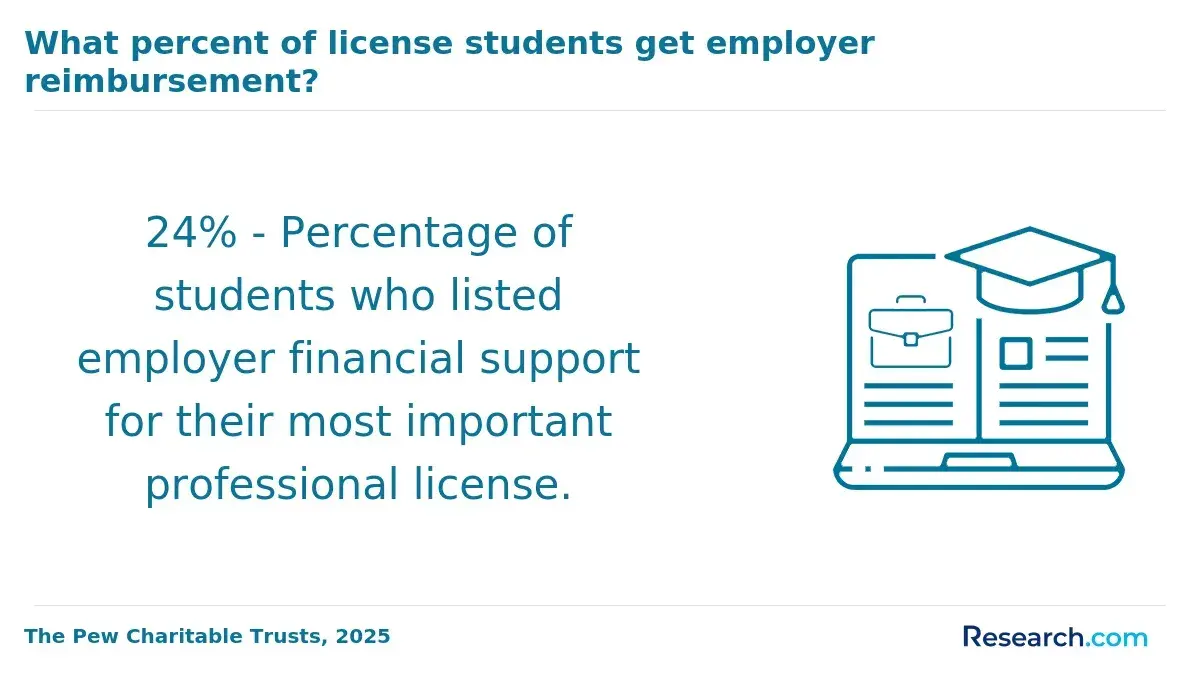
| Employer tuition assistance | Healthcare employers often support degrees tied to quality, safety, and leadership | Compare how much of each program your employer would reimburse |
| Time away from work | Required synchronous sessions or residencies may affect income | Ask whether participation can fit your work schedule |
Federal borrowing limits also matter. Graduate students may be eligible for up to $20,500 per academic year in Direct Unsubsidized Loans under current federal aid rules, with Grad PLUS loans sometimes available for additional costs. That makes it important to avoid assuming that loan eligibility means a program is affordable.
To compare cost realistically, use this sequence before you choose a school.
- Request a total program cost estimate that includes tuition, mandatory fees, course materials, and any residency expenses.
- Subtract confirmed grants, scholarships, employer reimbursement, military benefits, or tuition discounts.
- Estimate how much you would borrow and what the monthly repayment could look like after graduation.
- Compare the remaining cost against the roles you are realistically qualified for after completing the program.
The lowest-cost option is not automatically the best value. Paying more may make sense if the program has stronger faculty access, a recognized healthcare network, or a curriculum that directly supports your target role. Paying more is harder to justify if the program does not publish clear outcomes, requires coursework unrelated to your goals, or limits flexibility for working adults.
How Competitive Is Admission to Accredited Online Patient Safety & Quality Degree Programs?
Admission to accredited online patient safety and quality degree programs is usually moderately competitive rather than purely open-access. Schools often look for applicants who can connect healthcare experience, leadership potential, and quality improvement goals, even when standardized tests are not required.
Most master's programs require a bachelor's degree from an accredited institution. Some prefer or require healthcare experience, while others accept students from administration, public health, analytics, nursing, pharmacy, medicine, allied health, or risk management backgrounds.
The table below summarizes common admissions expectations and how they affect different applicants.
| Admissions factor | Common expectation | Who benefits | What to watch for |
| Bachelor's degree | Required for most master's programs | Applicants from healthcare, business, public health, nursing, or science backgrounds | Some programs may require prerequisite coursework |
| Professional experience | Often preferred, especially in healthcare settings | Clinicians, managers, quality analysts, and risk staff | Applicants without healthcare experience may need a stronger statement of purpose |
| GPA | Programs commonly review undergraduate performance | Applicants with strong academic records | A lower GPA may be offset by professional experience in some programs |
| GRE or standardized test | Often waived or not required in many professional healthcare graduate programs | Working adults and experienced applicants | Do not assume test-optional means academically easy |
| Statement of purpose | Usually important for explaining career goals | Applicants who can describe a real quality or safety problem they want to solve | Generic essays weaken an otherwise strong application |
| Letters of recommendation | Often requested from supervisors, faculty, or healthcare leaders | Applicants with workplace evidence of leadership or improvement work | Choose recommenders who can discuss measurable responsibilities |
Applicants from nursing often have an advantage when they can connect bedside experience to systems improvement. If you are still deciding whether to build your clinical foundation first, comparing online nursing programs for working adults may be more useful than applying immediately to a quality master's program.
Admissions flexibility should not be confused with weak academic quality. Many online programs are designed for professionals, so they may emphasize experience, motivation, and fit more than standardized testing.
The red flag is not a flexible admissions policy; it is a school that admits students without discussing workload, prerequisites, professional goals, or program expectations.
Which Learning Formats Offer the Greatest Flexibility in Online Patient Safety & Quality Degree Programs?
The most flexible online patient safety and quality programs are usually asynchronous, part-time, and designed around healthcare work schedules. However, flexibility has trade-offs: fully asynchronous programs may require more self-direction, while live online programs can provide stronger discussion and faculty interaction.
Because many students in this field work in hospitals, clinics, public health agencies, or healthcare organizations, scheduling can affect persistence as much as tuition does. The best format is the one you can complete consistently while maintaining work and family responsibilities.
The table below compares common online learning formats and the students they fit best.
| Format | How it works | Best for | Trade-off |
| Fully asynchronous online | Students complete weekly modules without required live class meetings | Shift workers, traveling clinicians, and students across time zones | Requires strong time management and comfort learning independently |
| Synchronous online | Students attend live virtual sessions at scheduled times | Learners who want discussion, structure, and real-time faculty access | Less flexible for rotating shifts or unpredictable schedules |
| Hybrid online | Most coursework is online, with occasional campus or residency requirements | Students who value networking and face-to-face learning | Travel can add cost and scheduling pressure |
| Accelerated online | Courses run in shorter terms with a faster pace | Experienced professionals who want to finish quickly | Can be difficult during heavy work periods |
| Part-time cohort | Students move through the program with a group over a defined timeline | Working adults who want structure and peer connection | Less freedom to pause or change course load |
| Self-paced or competency-based elements | Students progress by demonstrating mastery of defined skills | Experienced professionals with prior quality improvement knowledge | Not always available in specialized patient safety degrees |
Technology is also changing online healthcare quality education. Programs increasingly use virtual simulations, data dashboards, electronic health record scenarios, and AI-supported analytics exercises to teach quality improvement.
These tools can be valuable when they help students practice root-cause analysis, process mapping, and measurement, but they should not replace faculty feedback or applied projects.
Before enrolling, ask whether the program requires live attendance, group projects across time zones, proctored exams, practicum hours, or campus visits. A program that looks flexible on the homepage may be much less flexible once clinical schedules, team assignments, and capstone deadlines are considered.
What Student Support Services Improve Success in Online Patient Safety & Quality Degree Programs?
Student support can strongly influence whether an online patient safety and quality student finishes on time. This is especially true for working adults who may be balancing shift work, leadership responsibilities, caregiving, and graduate-level writing or statistics.
The most helpful support services are the ones tied directly to academic progress and career application. Look beyond general promises of "personalized support" and ask what services are actually available online, after hours, and within the program.
The following support features are worth prioritizing because they affect both completion and career readiness.
- Dedicated graduate advising that helps students plan course loads around healthcare work schedules and avoid unnecessary delays.
- Faculty access through virtual office hours, timely feedback, and guidance on applied quality improvement projects.
- Writing and research support for students who have been away from school or need help with graduate-level evidence synthesis.
- Statistics, analytics, or informatics tutoring for courses involving quality measurement, dashboards, and outcome data.
- Career services with healthcare-specific resume, interview, and promotion support rather than only general job-search resources.
- Capstone support that helps students design feasible improvement projects using realistic healthcare settings and data limits.
Strong programs should also help students translate coursework into workplace value. For example, a capstone project on medication reconciliation, infection prevention, discharge delays, patient falls, or documentation accuracy can become a portfolio artifact for quality analyst, safety coordinator, or leadership applications.
Common red flags include limited faculty availability, unclear advising ownership, no online library support, vague capstone expectations, or career services that do not understand healthcare quality roles. If you are a working adult, also ask how the school supports students who must temporarily reduce course load because of clinical or family demands.
Which Financial Aid Options Are Available for Accredited Online Patient Safety & Quality Degree Students?
Financial aid for accredited online patient safety and quality students may include federal loans, institutional scholarships, employer tuition assistance, military education benefits, professional association scholarships, payment plans, and graduate assistantships where available. The best financial aid package is the one that lowers total debt without forcing you into an unrealistic course load.
To qualify for federal student aid, students generally need to attend an eligible accredited institution and complete the FAFSA. Graduate certificate students should be especially careful because not every certificate program is eligible for federal aid, even when the university itself is accredited.
The table below summarizes common funding options and the practical questions students should ask before relying on them.
| Funding option | Who may use it | Key question to ask |
| Direct Unsubsidized Loans | Eligible graduate students | How much would I borrow over the full program, not just one year? |
| Grad PLUS Loans | Graduate students who need funding beyond unsubsidized loan limits | Is the added borrowing justified by my realistic career path? |
| Employer tuition assistance | Healthcare employees whose organizations support continuing education | Does reimbursement require a grade minimum, service commitment, or approved major? |
| Institutional scholarships | Students selected by the university or department | Is the award renewable, and does it apply to online students? |
| Professional association scholarships | Members of quality, nursing, public health, or healthcare management associations | Does the scholarship favor specific credentials, roles, or project interests? |
| Military and veteran benefits | Eligible service members, veterans, and dependents | Does the program meet benefit rules for online study? |
| Payment plans | Students paying out of pocket | Are there added fees, and can I sustain payments during every term? |
Nurses who are weighing a quality master's degree against a research-focused doctorate should compare funding and career direction carefully. In some cases, PhD programs for nurses may offer a better path for those aiming at research, faculty, or evidence-generation roles rather than operational quality leadership.
When comparing aid offers, avoid focusing only on the largest award. A smaller scholarship at a lower-cost public program may reduce debt more than a larger discount at a higher-cost private program. Ask each school for a net cost estimate after grants, scholarships, employer benefits, and expected borrowing.
Which Career Outcomes Are Associated With Accredited Online Patient Safety & Quality Degree Programs?
Accredited online patient safety and quality programs are most closely associated with healthcare quality improvement, patient safety, risk management, clinical operations, compliance, and healthcare leadership roles. The degree can strengthen advancement potential, but outcomes depend heavily on prior healthcare experience, credentials, employer needs, and local labor markets.
The strongest labor-market signal comes from healthcare management. The U.S. Bureau of Labor Statistics reported a May 2024 median annual wage of $117,960 for medical and health services managers and projected 23% employment growth from 2024 to 2034.
This does not mean every graduate will become a manager, but it shows that healthcare leadership and operations roles are expanding faster than many occupational categories.
The table below shows common career directions and how a patient safety and quality degree may support each one.
| Career path | Typical responsibilities | How the degree may help | Important limitation |
| Patient safety specialist or coordinator | Review safety events, support root-cause analysis, track prevention initiatives | Builds knowledge of systems thinking, safety culture, and event analysis | Clinical experience may be preferred in hospitals |
| Quality improvement analyst | Measure outcomes, analyze process data, support improvement projects | Strengthens skills in quality metrics, dashboards, and improvement methods | Data skills may matter as much as the degree title |
| Risk management or compliance professional | Identify organizational risk, support regulatory readiness, reduce preventable harm | Connects safety events, documentation, policy, and organizational accountability | Some roles require legal, clinical, or compliance experience |
| Clinical quality manager | Lead quality initiatives, supervise staff, report performance measures | Supports leadership, project management, and evidence-based improvement | Management roles often require several years of experience |
| Healthcare operations leader | Improve workflows, patient throughput, documentation, and care coordination | Helps translate quality tools into operational decisions | An MBA, MHA, or management background may also be valued |
| Population health or public health quality professional | Improve outcomes across patient groups or community programs | Applies quality methods to prevention, equity, and outcomes measurement | Public health training may be needed for some roles |
Students from allied health or nutrition backgrounds may also move into quality roles tied to food safety, clinical nutrition processes, or population health. Those still building the credential foundation for that route may want to compare online registered dietitian programs before choosing a graduate quality degree.
The degree is most worth it when it builds on relevant experience and leads to a clear next role. It may be a weaker investment for students who have no healthcare exposure, are unsure whether they want operations work, or expect the degree alone to replace clinical licensure, management experience, or professional certification.
How Do Online and Campus-Based Patient Safety & Quality Degree Programs Compare?
Online and campus-based patient safety and quality programs can lead to similar academic outcomes when they are accredited, well-designed, and taught by qualified faculty. The better choice depends on schedule, learning style, networking needs, and whether the student needs hands-on clinical training or professional advancement coursework.
Online learning is often the better fit for experienced healthcare workers because patient safety and quality concepts can be applied directly in the workplace. Campus-based learning may be better for students who want in-person networking, local healthcare system access, or more structured classroom interaction.
The table below compares the main differences students should consider before choosing a format.
| Factor | Online program | Campus-based program | Best decision rule |
| Schedule | Often more flexible for working adults | More fixed class times | Choose online if your work schedule changes frequently |
| Networking | Virtual networking with classmates across regions | More face-to-face interaction with local peers and faculty | Choose campus if local healthcare connections are a major goal |
| Applied projects | May allow workplace-based quality projects | May connect students to nearby partner sites | Choose the format that gives you access to real improvement work |
| Cost | May reduce relocation and commuting costs | May include commuting, housing, or parking costs | Compare total cost, not tuition alone |
| Learning style | Requires self-direction and written communication | Provides more immediate classroom structure | Choose based on how you stay accountable |
| Clinical preparation | Usually not designed to provide initial clinical licensure | May be better when hands-on clinical training is required | Do not use a quality degree as a substitute for licensure education |
If your first priority is becoming licensed as a nurse, a patient safety and quality master's degree is usually not the starting point. A hybrid or clinical pathway such as an ASN program online may be more appropriate before later moving into quality improvement leadership.
The biggest mistake is choosing online solely because it sounds convenient. Online graduate study can be rigorous, writing-intensive, and collaborative. Before enrolling, review sample syllabi, weekly time expectations, group project requirements, and whether the school offers strong online advising and library access.
How Should Students Choose the Best Accredited Online Patient Safety & Quality Degree Program?
Students should choose the best accredited online patient safety and quality degree program by matching the program to a specific career goal, then testing whether the curriculum, cost, format, accreditation, and support services make that goal realistic. Rankings can help you create a shortlist, but they should not replace a personal ROI analysis.
Use the following process to compare programs in a practical order. This keeps you from overvaluing one factor, such as prestige or low tuition, while missing another factor that could affect completion or career value.
- Define your target role, such as patient safety specialist, quality analyst, risk manager, clinical quality leader, or healthcare operations manager.
- Confirm institutional accreditation and any relevant specialized accreditation or professional certification alignment.
- Compare total program cost after scholarships, employer assistance, fees, and expected borrowing.
- Review curriculum depth in quality improvement, patient safety science, analytics, leadership, regulation, and implementation.
- Ask whether the capstone or applied project can connect to your workplace or target healthcare setting.
- Check scheduling requirements, including synchronous sessions, group projects, residencies, and course load options.
- Evaluate student support, especially advising, writing help, analytics support, faculty access, and healthcare-specific career services.
- Ask admissions counselors for graduation timelines, student profile information, and examples of roles alumni pursue, while remembering that outcomes are not guaranteed.
Students who are not yet ready for a graduate healthcare quality program should consider a lower-commitment pathway first. For example, someone exploring patient-facing healthcare work may start with medical assistant certification before deciding whether to pursue a nursing, health administration, or quality improvement degree later.
A strong final shortlist usually includes three types of programs: a lower-cost accredited public option, a highly specialized program with strong reputation, and a flexible program that best fits your schedule. Comparing all three makes the trade-offs clearer and helps you avoid choosing based on price, prestige, or convenience alone.
The best program is the one you can complete, afford, and apply. If the degree helps you build measurable improvement skills, produce a credible capstone, and move toward a realistic healthcare quality role, it is more likely to deliver long-term value.
Other Things You Should Know About Patient Safety & Quality
No. A healthcare administration degree usually covers broader management topics such as finance, strategy, staffing, and operations. A patient safety and quality degree focuses more directly on reducing harm, improving care processes, measuring outcomes, and leading quality improvement initiatives.
Not always. Some roles are open to administrators, analysts, public health professionals, or compliance staff. However, hospitals may prefer or require a clinical license for positions that involve direct review of clinical practice, patient care processes, or nursing-sensitive quality measures.
Usually no. Certifications such as CPHQ or CPPS can demonstrate specialized knowledge, while a degree provides broader graduate education and academic credit. Experienced professionals may benefit from certification alone, but students seeking leadership mobility may prefer a degree plus certification preparation.
A strong capstone should identify a real healthcare problem, use evidence-based improvement methods, define measurable outcomes, consider stakeholder impact, and explain how results would be monitored. Good projects are practical, ethical, and feasible within the student's setting and data access.
References
- Certified Professional in Patient Safety (CPPS) TM https://www.ihi.org/learn/certifications/cpps
- JHU Online MAS in Patient Safety and Healthcare Quality https://www.mhaonline.com/school-profiles/jhu-bloomberg-online-mas-patient-safety-and-healthcare-quality
- Executive Master's in Healthcare Quality & Patient Safety https://seu.edu.sa/en/programs/executive-master-program-in-healthcare-quality-and-patient-safety/about/
- Where are they now? https://www.sciencespo.fr/carrieres/en/recruit/recruit-students-graduates/graduates-survey/
- Online Master’s in Patient Safety and Healthcare Quality (PSHQ) Programs https://www.onlineeducation.com/healthcare/masters-in-patient-safety-healthcare-quality-programs
- Health Care Accreditation, HEDIS® Measures & Quality Improvement - NCQA https://www.ncqa.org/
- Top 15 Online Healthcare Quality and Patient Safety Master's Programs 2020 - Healthcare Management Degree Guide https://www.healthcare-management-degree.net/best/online-masters-healthcare-quality-patient-safety/
- Health Care Quality and Patient Safety https://www.regis.edu/academics/majors-and-programs/certificate/health-care-quality-patient-safety-certificate
- How does a college degree improve graduates’ employment and earnings potential? - APLU https://www.aplu.org/our-work/4-policy-and-advocacy/publicuvalues/employment-earnings/