2027 BCBA Career Paths Outside Autism Services

Co-Founder and Chief Data Scientist
A BCBA credential can support far more than autism intervention, but many behavior analysts are trained, supervised, and hired into autism-focused roles by default. If you want to use behavior analysis in schools, workplaces, healthcare, aging services, wellness technology, mental health, or public systems, the key is to choose the right coursework, fieldwork setting, supervision, and professional network early.
This guide explains where BCBAs can work outside autism services, what education and certification steps are required, how to evaluate online and accredited programs, what non-autism roles may look like, and how salary and job prospects can vary by setting. It is written for prospective students comparing BCBA programs, current trainees planning fieldwork, and certified professionals who want to reposition their skills for broader behavior-change careers.
Key Things You Should Know
- BCBAs increasingly pursue roles in organizational behavior management, education, and healthcare settings beyond traditional autism services, reflecting a 22% sector growth since 2024.
- Skills in behavior analysis apply to workforce training, mental health interventions, and gerontology, expanding BCBA impact and diversifying career options.
- Certification demand outside autism rises, with 18% of newly certified BCBAs employed in non-autism roles by early 2026, indicating evolving market opportunities.
What are BCBA career paths outside autism services?
BCBAs can work in many settings where behavior change, performance improvement, data-based decision-making, and intervention design are valuable. Although autism services remain a major employment area, the Behavior Analyst Certification Board reports that 22% of BCBAs work in fields outside traditional autism services.
Common non-autism BCBA career paths include organizational behavior management, behavioral healthcare, general and special education systems, gerontology, sports performance, public health, staff training, and technology-supported behavior change. These roles often use the same core ABA skills—assessment, measurement, reinforcement systems, skill acquisition, intervention monitoring, and ethical decision-making—but apply them to different populations and outcomes.
Examples of BCBA roles beyond autism
| Field | How BCBAs apply behavior analysis | Typical work products |
| Organizational behavior management | Improve workplace performance, safety, training, and supervision systems. | Performance dashboards, feedback systems, staff training plans, safety interventions. |
| Behavioral healthcare | Support treatment planning for substance use, mood disorders, psychiatric rehabilitation, and health behavior change. | Behavior plans, adherence strategies, progress-monitoring systems. |
| Education | Support school-wide behavior systems, teacher coaching, classroom management, and positive behavioral interventions and supports. | Functional behavior assessments, PBIS plans, educator training materials. |
| Gerontology and dementia care | Improve quality of life, reduce challenging behavior, and train caregivers in senior care settings. | Caregiver protocols, environmental supports, data-based behavior plans. |
| Sports and performance coaching | Improve motivation, skill acquisition, practice adherence, and performance routines. | Goal plans, reinforcement schedules, performance tracking tools. |
The main barrier is not that ABA is limited to autism; it is that employers outside autism services may not immediately recognize what a BCBA can do. Job titles may not say “BCBA,” even when the work fits behavior analytic training. Search for roles using terms such as performance consultant, behavior specialist, clinical consultant, instructional coach, health behavior specialist, program evaluator, or organizational development consultant.
Professionals who want these paths should build evidence that translates across industries. Useful steps include choosing diverse fieldwork sites, completing continuing education in the target population, learning the language of the field, and presenting outcome data in terms employers understand, such as safety incidents reduced, adherence improved, staff performance increased, or classroom disruptions decreased.
Prospective students can compare BCBA schools with affordable and flexible options, but they should look beyond tuition alone. The strongest program for a non-autism path is usually one that can help secure relevant supervision, electives, faculty mentorship, and fieldwork aligned with the career setting the student wants.
What education is required to become a BCBA?
To become a Board Certified Behavior Analyst, candidates must meet education, coursework, supervised experience, and examination requirements set by the Behavior Analyst Certification Board. Most candidates earn a master’s degree in behavior analysis, education, psychology, or a related field and complete graduate coursework aligned with BACB requirements, often through a Verified Course Sequence.
The education requirement is not only about earning credits. A strong BCBA program should teach students how to assess behavior, identify environmental variables, design interventions, measure outcomes, follow ethical standards, and communicate recommendations to families, staff, clients, agencies, or organizations.
Core education components
- Graduate-level study: Candidates typically complete a master’s degree in behavior analysis, education, psychology, or a related field.
- Approved behavior analysis coursework: Coursework should align with BACB content requirements and prepare students for the BCBA exam.
- Supervised practical experience: Candidates complete between 1,000 and 2,000 hours of independent fieldwork or concentrated practicum under a qualified supervisor, depending on the approved pathway.
- Certification examination preparation: Programs should prepare students for exam content in measurement, assessment, ethics, intervention, supervision, and research design.
Students interested in non-autism roles should use the education phase strategically. A student aiming for organizational behavior management should look for OBM electives, workplace consulting projects, or practicum sites in business or human services administration. A student interested in healthcare should seek experience with treatment adherence, chronic disease management, psychiatric rehabilitation, or substance use programs.
OBM is a common route for BCBAs outside clinical autism services. Professionals interested in this area may benefit from coursework or supplemental training in organizational psychology, management, leadership, safety, or human performance. OBM has been linked to a 25-50% improvement in employee productivity in recent studies.
Those comparing BCBA master's programs should verify the program’s BACB-aligned coursework, supervision options, faculty expertise, and electives before enrolling. A program can be academically strong and still be a poor fit if it cannot support the fieldwork setting or specialization a student needs.
How do I get BCBA certification and licensure?
BCBA certification is earned through the Behavior Analyst Certification Board, while licensure is controlled by individual states. Certification and licensure are related but not identical. A person may need BCBA certification to qualify for state licensure, and many states require additional applications, fees, background checks, fingerprinting, continuing education, and renewal.
Typical BCBA certification steps
- Complete qualifying graduate education. Most applicants complete a master’s degree in behavior analysis or a related field with coursework that meets BACB standards.
- Accrue supervised fieldwork. Candidates complete supervised experience under a qualified BCBA. Supervised fieldwork ranges from 1,500 to 2,000 hours based on the experience type, including practicum and independent fieldwork.
- Apply for exam eligibility. Candidates document education and fieldwork according to BACB rules.
- Pass the BCBA exam. The exam covers areas such as measurement, experimental design, assessment, behavior-change procedures, ethics, and supervision.
- Apply for state licensure if required. State rules vary, so candidates should check the licensing board in the state where they plan to practice.
For non-autism careers, certification can still matter even when the job title is not “BCBA.” It signals formal training in behavior analysis, ethics, data-based decision-making, and intervention evaluation. In healthcare, education, corporate consulting, and public systems, that credibility can help distinguish a behavior analyst from a general coach, trainer, or consultant.
Licensure deserves careful attention. Some states restrict the practice of behavior analysis or the use of certain professional titles. Others may exempt particular work settings or require separate professional credentials for mental health, education, or healthcare roles. Before accepting a job, changing states, or offering independent services, confirm whether BCBA certification alone is sufficient for the work you plan to perform.
A 2025 study in the American Journal of Health Promotion found that BCBA-certified health coaches recorded 40% higher client adherence to fitness goals than non-behavioral coaches. For candidates who need a flexible education route, a master's in behavior analysis online can help fulfill coursework requirements, but students should confirm fieldwork supervision and state licensure alignment before enrolling.
Online BCBA programs can be a practical option for working adults, career changers, and students who cannot relocate. The most important issue is not whether the coursework is online; it is whether the program’s coursework is recognized for BCBA eligibility and whether the student can complete appropriate supervised fieldwork.
Universities such as the University of Cincinnati, Pennsylvania State University World Campus, and Arizona State University offer online coursework with verified course sequences that meet BACB requirements. Program details can change, so applicants should always confirm current status directly through the BACB verified course sequence directory and the institution before applying.
How to evaluate an online BCBA program
- Verify BACB course sequence status. Do not rely only on marketing language. Confirm the program appears in the official directory or otherwise meets current BACB coursework standards.
- Ask how fieldwork works. Some programs provide placement support; others expect students to arrange supervision independently.
- Check state licensure fit. Online coursework may meet certification requirements but still need to align with state licensing rules.
- Review specialization options. Look for coursework or projects in schools, healthcare, OBM, gerontology, or other non-autism settings if those are your goals.
- Assess student support. Strong online programs offer advising, exam preparation, faculty access, and clear fieldwork documentation guidance.
For students planning careers beyond autism services, fieldwork is often the deciding factor. An online program may have excellent coursework, but if all local supervised opportunities are autism clinic placements, the student may graduate with limited evidence for a school, healthcare, corporate, or aging-services role.
Applied behavior analysis is also expanding into general education. Studies in the Journal of Applied School Psychology show a 62% reduction in classroom disruptions during recent U.S. public school pilots, which highlights the value of training that prepares candidates to work in broader educational environments.
Prospective students can review ABA undergraduate programs online for additional education planning, but BCBA eligibility requires graduate-level preparation and compliant fieldwork. Before enrolling, ask the program for written information about coursework alignment, supervision expectations, exam pass support, and whether graduates have entered the kinds of roles you are targeting.
A BCBA curriculum is built around behavior analytic principles that apply across populations, not only autism services. The same science used to teach communication, reduce unsafe behavior, or build adaptive skills can also support workplace safety, addiction recovery, classroom management, caregiver training, health behavior change, and performance coaching.
Common curriculum areas
- Behavior assessment: Students learn to identify the conditions that influence behavior and to conduct functional behavior assessments.
- Measurement and data analysis: Coursework emphasizes direct observation, data collection, graphing, interpretation, and treatment decisions based on evidence.
- Experimental analysis and research design: Students learn how to evaluate whether an intervention is producing meaningful change.
- Intervention design: Programs teach reinforcement, prompting, shaping, skill acquisition, behavior reduction, and maintenance strategies.
- Ethics and professional practice: Students study consent, scope of competence, documentation, supervision, confidentiality, and responsible service delivery.
- Staff training and supervision: Coursework often includes performance feedback, treatment integrity, caregiver coaching, and team consultation.
- Organizational behavior management: Some programs include workplace performance, safety, employee motivation, and systems-level change.
Beyond autism services, these skills can be adapted to many settings. In addiction counseling, behavior-analytic interventions have shown a 55% increase in abstinence rates over standard care in controlled trials. In workplaces, behavior analysts may focus on performance feedback and safety behavior. In gerontology, they may train caregivers and adjust environments to improve quality of life. In schools, they may support teacher practices, classroom routines, and academic engagement.
The best curriculum for a flexible career does more than teach procedures. It helps students learn how to define socially meaningful outcomes, select interventions that fit the setting, evaluate risk, collaborate with other professionals, and communicate findings to people who may not know ABA terminology.
Students who want non-autism roles should examine elective lists, faculty publications, practicum partnerships, and capstone options. A program with only autism-focused examples may still meet certification requirements, but students may need to seek supplemental experience to build competence in other fields.
BCBA program admission requirements vary by institution and by program type. A master’s program, a post-master’s certificate, and a verified course sequence for students already in a related graduate program may each have different requirements. Applicants should separate program admission requirements from BCBA certification requirements, because being admitted to a university does not automatically make a student eligible for certification.
Common admission materials
- Bachelor’s degree or prior graduate education, depending on the program level.
- Official transcripts showing prior coursework and minimum academic performance required by the institution.
- Statement of purpose explaining career goals and interest in behavior analysis.
- Letters of recommendation from academic or professional references.
- Resume or CV showing relevant work, volunteer, research, or human services experience.
- Interview or writing sample, if required by the program.
For BCBA certification, candidates must complete qualifying graduate coursework and supervised fieldwork. The fieldwork requirement may include either 1,500 hours of supervised independent fieldwork or 2,000 hours of practicum fieldwork supervised by a qualified BCBA. These hours need to be documented and accrued within 12 to 36 months, depending on the supervision type.
Students should ask admissions offices direct questions before enrolling: Does the program’s coursework meet current BACB standards? Does the program help students find supervision? Are there placements outside autism services? Are there OBM, school-based, healthcare, aging-services, or community-focused options? What happens if a student lives in a state with separate licensure rules?
Applicants interested in corporate consulting or organizational behavior management should pay particular attention to faculty expertise and applied projects. OBM consulting is growing quickly, with an 18% increase in 2025 and reported client ROI above 300% on interventions, according to the OBM Network Annual Report, 2025. Students interested in corporate roles should prioritize programs offering OBM coursework and opportunities to analyze workplace performance problems.
Flexible online options can help working professionals meet coursework requirements, but flexibility should not replace verification. A program should provide clear documentation of BACB alignment, fieldwork expectations, advising support, and any limitations for students seeking licensure in specific states.
BCBA programs generally take 12 to 24 months, depending on whether the student attends full time or part time, the program format, transfer credits, course sequencing, and how quickly fieldwork can be completed. Candidates often complete a master’s degree or graduate certificate in applied behavior analysis, along with supervised fieldwork.
The supervised experience requirement can significantly affect the timeline. Many candidates complete 1,500 hours of supervised fieldwork, and this hands-on portion usually takes 9 to 12 months in practical settings. Students who work full time, change supervisors, or have limited fieldwork opportunities may take longer.
Typical cost considerations
| Cost item | What to check before enrolling |
| Tuition | Tuition can range from $10,000 to $25,000 for graduate certificates or master’s degrees. |
| Supervision fees | Some programs include supervision; others require students to arrange and pay for it separately. |
| Books and materials | Ask whether textbooks, software, and assessment tools are included in the listed cost. |
| Exam preparation | Determine whether exam preparation is embedded in coursework or requires separate paid resources. |
| Certification and licensure expenses | Budget for application, exam, state licensure, renewal, and continuing education costs. |
Some online programs offer tuition near $12,000 but require students to arrange paid supervision independently, which can raise total costs. Traditional university programs often charge over $20,000 but may include integrated supervision and exam preparation. The lower-tuition option is not always cheaper if external supervision is expensive or difficult to secure.
Students targeting emerging non-autism fields should also consider whether the program can support that specialization. Demand in gerontology and aging services increased 35% between 2024 and 2025. Behavioral gerontology courses are available in 12% of U.S. senior care facilities, reflecting a growing need for professionals who understand aging, caregiver support, dementia-related behavior, and quality-of-life interventions.
Before committing, compare total cost, time to completion, fieldwork access, BACB alignment, state licensure fit, and specialization opportunities. A program that helps you finish quickly but leaves you without relevant supervised experience may not be the best investment.
BCBAs can pursue roles in technology, healthcare, education, organizational behavior management, social services, mental health-adjacent programs, public health, staff training, and research. The best opportunities often appear under job titles that do not explicitly mention “BCBA,” so professionals should search by function as well as credential.
Non-autism job options for BCBAs
| Job area | Possible responsibilities | Helpful preparation |
| Organizational behavior management consultant | Improve employee performance, safety, training, supervision, and process adherence. | OBM coursework, business communication, data visualization, leadership training. |
| School behavior specialist | Support classroom behavior systems, teacher coaching, PBIS, and individualized intervention plans. | School-based fieldwork, educator collaboration, special education law awareness. |
| Health behavior coach or consultant | Design adherence, wellness, exercise, nutrition, or chronic disease management supports. | Healthcare experience, motivational systems, interdisciplinary teamwork. |
| Behavioral gerontology specialist | Train caregivers, improve routines, reduce challenging behavior, and support dementia care. | Gerontology training, caregiver consultation, senior care fieldwork. |
| Technology or product behavior consultant | Advise on habit formation, user engagement, wellness tools, and intervention evaluation. | Digital product knowledge, research methods, user behavior analytics. |
| Program evaluator or policy consultant | Measure outcomes for agencies, nonprofits, or public health programs. | Research design, grant reporting, systems-level intervention experience. |
In technology, BCBAs may help develop and evaluate behavior-informed apps focused on habit formation, wellness, and mental resilience. Their expertise can support user engagement strategies, as shown by 2.1 million downloads and 73% retention for habit-building features in 2025.
In education, BCBAs may work with students with ADHD, trauma histories, developmental delays, or classroom behavior needs. In organizational behavior management, they may build feedback systems, improve safety protocols, or train supervisors. In healthcare and community programs, they may support treatment adherence, substance use recovery, eating disorder programs, or anxiety-related behavior change, while staying within legal and ethical scope.
To move into these roles, BCBAs should translate their experience into employer-relevant language. Instead of describing only clinical procedures, highlight measurable outcomes: improved attendance, reduced incidents, increased adherence, stronger staff performance, faster skill acquisition, or better treatment integrity. Additional training in the target field can also reduce scope-of-practice risk and improve credibility with interdisciplinary teams.
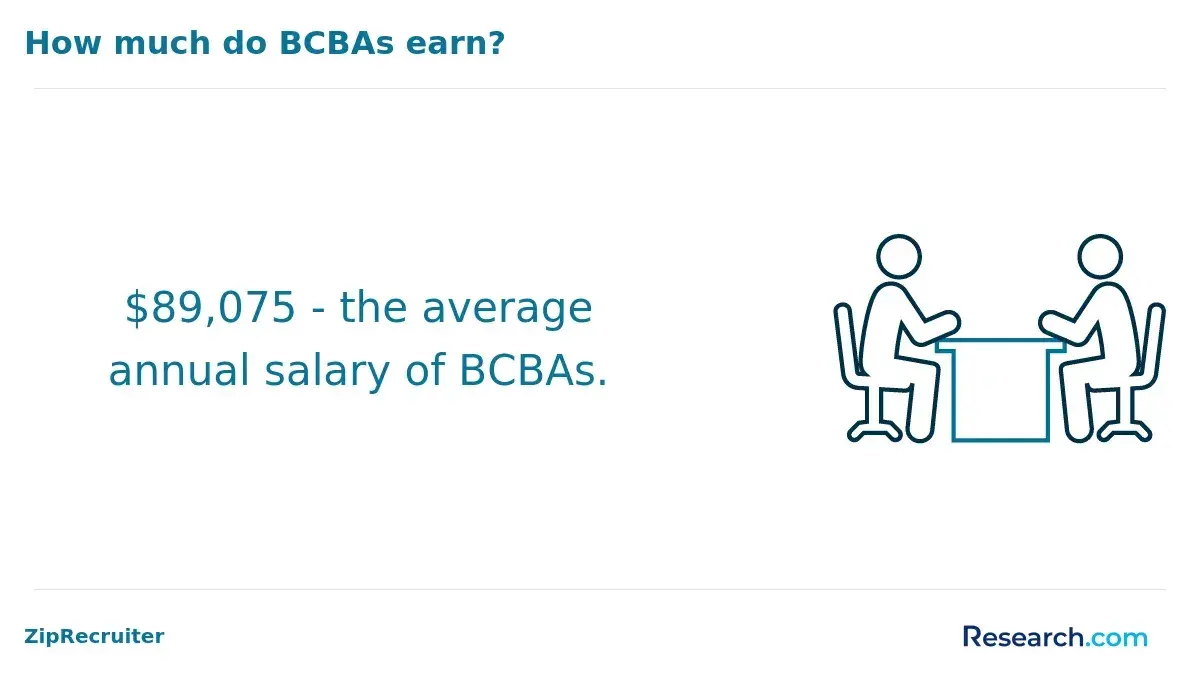
The average salary for a Board Certified Behavior Analyst in 2026 generally ranges from $65,000 to $95,000 annually, depending on region, employer type, experience, supervision responsibilities, specialization, and work setting. Some BCBAs in non-autism roles, including organizational behavior management, consulting, education leadership, or specialized healthcare settings, may earn toward the higher end or beyond this range.
Salary comparisons should be interpreted carefully. A corporate consulting role may advertise higher compensation but require travel, sales responsibilities, independent contracting, or business development. A school or public agency role may pay less but offer stability, benefits, predictable schedules, and pension eligibility. Clinical and supervisory roles may pay more when they include staff management, billable-hour targets, or multi-site oversight.
Factors that influence BCBA pay
- Regional cost of living and local demand for behavior analysts.
- Years of experience and record of measurable outcomes.
- Supervisory, training, or program leadership responsibilities.
- Specialization outside autism services.
- Employer type, including schools, healthcare organizations, nonprofits, government agencies, and corporate employers.
- Independent consulting versus salaried employment.
Job prospects remain strong as behavior analysis expands into community services, integrated care, schools, public health, and organizational performance. In child welfare, BCBAs have contributed to a 28% improvement in family reunification rates between 2024 and 2025, showing how behavior analytic support can affect outcomes beyond clinic-based services.
Professionals who want stronger earning potential should build a portfolio that shows results in the setting they want to enter. Useful evidence includes outcome reports, staff training data, intervention fidelity measures, consultation summaries, and examples of cross-disciplinary collaboration. Additional certifications, supervisory experience, and consultative roles can also support career advancement.
How to choose the best BCBA program?
The best BCBA program is the one that meets certification requirements, fits your state licensure needs, supports high-quality supervised fieldwork, and prepares you for the setting where you want to work. For students interested in careers beyond autism services, program choice should be based on more than convenience or tuition.
BCBA program selection checklist
- BACB alignment: Confirm that coursework meets current certification requirements and that the program can document this clearly.
- Fieldwork access: Ask whether placements or supervision are available in schools, healthcare, OBM, gerontology, or other non-autism settings.
- Faculty expertise: Look for instructors with applied experience or research in the specialization you want.
- Licensure fit: Verify whether the program supports requirements in the state where you plan to practice.
- Exam preparation: Review pass support, advising, mock exams, and remediation options.
- Career outcomes: Ask where graduates work, especially those who entered non-autism roles.
- Total cost: Compare tuition, supervision, fees, books, exam costs, and any travel or residency requirements.
- Delivery format: Choose online, hybrid, or in-person study based on schedule, support needs, and fieldwork logistics.
Students aiming for non-autism BCBA careers should prioritize specialized coursework in areas such as organizational behavior management, behavioral gerontology, coaching, school systems, health behavior, or staff performance. Non-autism BCBA careers offered a 15% salary premium over autism clinic positions, with average salaries around $105,000.
Practicum quality is especially important. A program may be accredited or aligned with BACB expectations but still provide limited exposure to the populations or systems you want to serve. Ask whether students can complete projects in corporate environments, school districts, healthcare programs, senior care, or community agencies. If the program cannot support those placements directly, ask whether it permits outside supervision and how it reviews supervisor qualifications.
Alumni outcomes can reveal more than brochures. Look for graduates working in behavioral finance, wellness consulting, staff training, school consultation, healthcare adherence, public systems, or other applied roles. Strong programs should be able to explain how coursework, supervision, and mentoring connect to those outcomes.
In short, choose a BCBA program that satisfies certification rules while helping you build a credible specialty. The right program should make you eligible for the exam, prepare you to practice ethically, and give you supervised evidence that your behavior analytic skills transfer beyond autism services.
Other Things You Should Know About Applied Behavior Analysis
Employers often require an active BCBA credential from the Behavior Analyst Certification Board and, in licensed states, a state behavior analyst license. Many healthcare and school systems also ask for current supervision and ethics compliance, plus state-specific background checks and training.
Yes, BCBAs increasingly apply behavior analysis principles to support geriatric populations, focusing on improving daily living skills, managing chronic health conditions, and addressing behaviors related to dementia or cognitive decline. Interventions may include behavior modification to enhance medication adherence, physical activity, and social engagement in older adults. This emerging area highlights the adaptability of applied behavior analysis across age groups.
BCBAs must adhere to the Behavior Analyst Certification Board's Professional and Ethical Compliance Code, which emphasizes client dignity, consent, and confidentiality in all practice areas. When working outside autism services, professionals must consider cultural competence and respect for individual differences related to age, disability, and setting. Ethical practice ensures that interventions are appropriate, respectful, and in the best interest of each client.
- Above & Beyond ABA Therapy | ABA Therapy for Autism https://www.abtaba.com/
- BCBA Salaries: How Much Do Board Certified Behavior Analysts Make? https://www.abaresourcecenter.com/post/bcba-salaries-how-much-do-board-certified-behavior-analysts-make
- BCBA Jobs: What Can You Do as a Board Certified Behavior Analyst? https://www.moralismachina.com/blog/bcba-jobs
- BCBA Jobs and Salary: Demand for Behavior Analysts Continues to Grow, New Report Finds https://www.abamatrix.com/bcba-jobs-and-salary-demand-for-behavior-analysts-continues-to-grow-new-report-finds/
- Non-clinical ABA Jobs: Exploring Career Options https://centriahealthcare.com/resources/non-clinical-aba-jobs/
- LBA vs. BCBA – What’s the Difference? https://onlinecounselingprograms.com/mental-health-careers/how-to-become-behavior-analyst-bcba/lba-vs-bcba/
- Top Online ABA Master's Degrees Of 2026 | Psychology.org https://www.psychology.org/rankings/best-online-masters-applied-behavior-analysis/
- Understanding Certification and Licensure in Behavior Analysis Practice https://www.abatechnologies.com/blog/understanding-certification-and-licensure-in-behavior-analysis-practice
- How Much Does it Cost to Take (Or Retake) the BCBA® Exam? https://passthebigabaexam.com/how-much-does-it-cost-to-take-or-retake-the-bcba-exam/
- BCBA® Certification & Requirements: A Step-by-Step Guide https://www.appliedbehavioranalysisedu.org/bcba-certification/