2027 BCBA Salary vs Student Debt: Is the ROI Worth It

Co-Founder and Chief Data Scientist
Becoming a BCBA can be a strong career move, but it is not a low-cost decision. Most candidates need graduate coursework, supervised fieldwork, exam preparation, and, in many states, licensing steps before they can practice independently. The question is not simply whether applied behavior analysis is a growing field; it is whether the expected salary, job stability, and career fit justify the tuition, debt, and time required.
This guide helps prospective students compare BCBA salary potential with the real cost of certification. It explains what BCBAs do, how earnings vary by setting and region, what degree and fieldwork requirements usually involve, and how to think through return on investment before choosing a program. Use it as a practical framework for deciding whether a BCBA pathway aligns with your finances, schedule, and long-term career goals.
Key Things You Should Know
- In 2026, the average BCBA salary in the U.S. is approximately $68,000 annually, reflecting steady growth driven by rising demand for behavior analysis services.
- Average student debt for BCBA certification ranges between $25,000 and $40,000, creating significant financial considerations for graduates entering the field.
- Return on investment depends on factors such as geographic location and job setting, with urban areas typically offering higher salaries that better offset education costs.
What is a BCBA and what do they do?
A Board Certified Behavior Analyst, or BCBA, is a graduate-level professional who assesses behavior, identifies environmental factors that influence it, and designs intervention plans using applied behavior analysis. BCBAs often support individuals with autism spectrum disorder, intellectual disabilities, developmental delays, behavioral challenges, and related needs. Their work is focused on measurable, socially meaningful outcomes rather than general counseling or informal behavior advice.
In practice, the BCBA role combines clinical judgment, data analysis, supervision, and communication with families, educators, technicians, and care teams. Common work settings include schools, autism service providers, clinics, hospitals, residential programs, community agencies, and private practice environments.
Core BCBA responsibilities
- Conducting functional behavior assessments to understand why a behavior occurs
- Writing individualized behavior intervention plans and skill-building goals
- Training caregivers, teachers, and Registered Behavior Technicians (RBTs)
- Monitoring client progress through data collection and treatment adjustments
- Supervising service delivery and ensuring ethical, evidence-based practice
- Collaborating with families, schools, insurers, and healthcare providers
The median BCBA salary hovers around $78,500, but pay depends heavily on experience, employer type, caseload expectations, location, and whether the role includes supervision or program leadership. Experienced professionals in specialized clinics or urban areas may earn upwards of $110,000, while entry-level roles in schools and community agencies often start closer to $55,000.
To qualify for BCBA certification, candidates generally need a graduate degree in behavior analysis or a related field, supervised fieldwork, and a passing score on the national BCBA exam. Because program choice affects both certification eligibility and debt, prospective students should compare curriculum, fieldwork support, and affordability before enrolling. Reviewing BCBA masters programs can help candidates identify lower-cost options that still align with certification goals.
How much do BCBAs earn in salary?
BCBA salaries vary widely across the United States. The biggest factors are experience level, state and metro area, employer setting, clinical specialty, supervisory responsibility, and whether the position is school-based, clinic-based, remote, or private practice. For ROI planning, use a conservative salary estimate for your target region rather than relying only on national averages.
Typical BCBA salary ranges by career stage
| Career stage | Common salary range | What usually affects pay |
| Entry-level BCBA | $55,000 to $65,000 annually | First BCBA role, school or community agency work, limited supervisory experience |
| Mid-career BCBA | $70,000 to $90,000 annually | About five years in the field, stronger clinical judgment, supervision duties, higher-demand regions |
| Senior BCBA or clinical leader | $95,000 to $130,000 or more | Clinical director, program manager, multi-site oversight, administrative and program development responsibilities |
Higher salaries are more common in urban areas, specialized clinical environments, and roles with leadership expectations. However, a higher salary may come with heavier caseloads, productivity requirements, travel, evening hours, or administrative duties. A lower-paying school district role, for example, may offer a more predictable calendar or public-sector benefits that matter in the overall compensation picture.
Graduate education can improve access to higher-paying BCBA roles, but the return depends on program cost and debt. Students considering ABA masters programs should compare expected earnings in their state with tuition, fees, loan interest, and the time required to complete fieldwork.
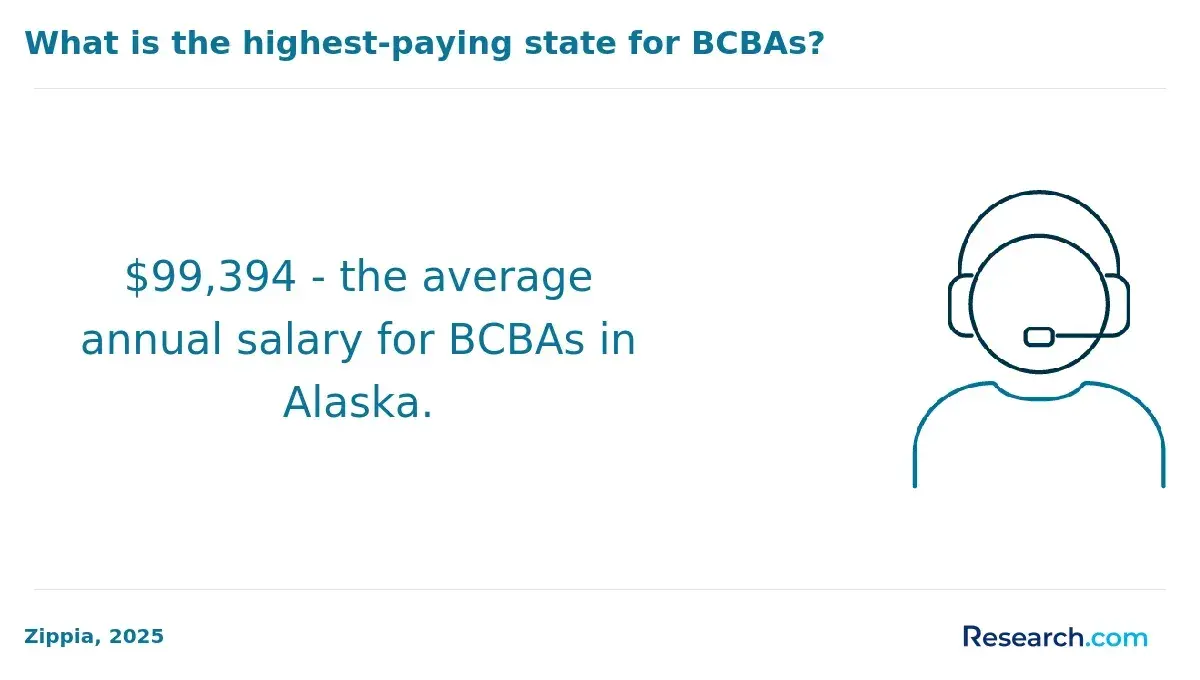
When researching average earnings for behavior analysts by state, look beyond a single salary number. Compare local demand, cost of living, licensure rules, employer types, and whether the posted salary includes bonuses, billable-hour expectations, or supervision responsibilities.
What is the average cost and debt for BCBA programs?
The average cost of BCBA certification programs ranges from about $15,000 to $30,000 in tuition, depending on the institution, delivery format, and whether the student is completing a full graduate degree or a narrower certification-focused sequence. When prerequisite master's and undergraduate degrees are included, total education expenses can exceed $60,000. Typical student debt for BCBA graduates falls between $20,000 and $40,000, though the final amount can rise with living expenses, fees, unpaid fieldwork hours, and loan interest.
Online programs often advertise lower tuition, around $15,000, while on-campus options may reach or exceed $25,000. Online study can reduce commuting or relocation costs, but students should still check for technology fees, proctoring charges, supervision costs, and whether local fieldwork placements are easy to secure. A cheaper program is not always the better financial choice if it delays certification or leaves students to arrange supervision without support.
Cost factors to compare before enrolling
- Tuition and fees: Include per-credit tuition, university fees, exam preparation costs, and any required residencies.
- Supervision and fieldwork: Confirm whether supervised hours are built into the program, available through employer partnerships, or paid separately.
- Program length: Longer programs may spread payments out but can delay full BCBA earnings.
- Work flexibility: Part-time study may reduce borrowing but can extend the timeline to certification.
- Local salary outlook: The same debt load is easier to manage in a higher-paying market than in a lower-paying one.
Salary potential can help offset debt, but it should not be treated as guaranteed. For example, New Jersey averages $92,000 annually with over 4,200 employed BCBAs, while California offers about $89,500 on average for more than 12,500 BCBAs. Those figures suggest strong earning potential in some markets, but cost of living, taxes, commuting, and caseload structure still affect take-home value.
Prospective students should evaluate program accreditation and exam pass rates, part-time options that reduce upfront costs, employer tuition assistance or loan forgiveness programs, and long-term earning potential in the geographic areas where they intend to work. Comparing ABA masters programs can help students find formats that match both certification requirements and financial constraints.
BCBA candidates generally need a master's degree in behavior analysis, psychology, education, or a related field from an accredited institution, along with graduate coursework that satisfies Behavior Analyst Certification Board (BACB) standards. Common degree options include a Master of Science in Behavior Analysis, a Master of Arts in Psychology with a behavior analysis emphasis, or a master's in special education that includes the required behavior analysis coursework.
A bachelor's degree alone is not enough for BCBA certification. Students who have only an undergraduate degree must complete an eligible master's program and the required supervised fieldwork before they can sit for certification. Candidates who already hold a master's degree in a related field may be able to complete additional behavior analysis coursework, but they must verify that the pathway meets current BACB rules before investing time or money.
Degree pathway options
| Starting point | Likely next step | Financial consideration |
| Bachelor's degree holder | Complete an eligible master's degree with required ABA coursework | Usually the largest tuition commitment, but it can open access to full BCBA eligibility |
| Master's degree holder in a related field | Complete missing graduate-level behavior analysis coursework if eligible | May cost less than a second master's, but eligibility must be confirmed carefully |
| Working educator or clinician | Choose an online, hybrid, or part-time program that fits employment and fieldwork needs | May reduce lost income but can extend the time to certification |
Supervised practical experience is as important as the degree itself. A program may look affordable on paper, but if it does not help students access quality fieldwork, the path to certification can become slower and more expensive. Students should ask how supervision is arranged, whether placements are available in their area, and whether the program has experience supporting working adults.
Regional salary differences also matter when choosing a degree pathway. For instance, BCBAs in the West earn between $75,000 and $100,000 annually, while those in the South earn $60,000 to $80,000, based on Flywheel Centers data. A program that is financially manageable in one region may be harder to justify in another if expected salaries are lower.
Flexible online and hybrid options can make the pathway more accessible, especially for students who need to keep working while completing fieldwork. Prospective students can review ABA degree programs to compare formats, costs, and alignment with career goals.
BCBA certification is awarded through the Behavior Analyst Certification Board (BACB) and typically requires three major steps: eligible graduate education, supervised practical experience, and a passing score on the BCBA certification exam. State licensure, where required, is a separate legal authorization to practice and can add applications, fees, jurisprudence exams, and renewal requirements.
Main certification requirements
- Graduate education: Candidates must have at least a master's degree in behavior analysis, education, psychology, or a related field recognized by the BACB.
- Required coursework: Graduate coursework must cover core applied behavior analysis topics, including experimental analysis of behavior, ethics, assessment, and behavior-change procedures.
- Supervised experience: Candidates complete supervised independent fieldwork, practicum, or intensive practicum under a qualified BCBA supervisor.
- Certification exam: The exam assesses applied behavior analysis knowledge, clinical decision-making, and ethical practice.
Supervised practical experience generally requires between 1,500 and 2,000 hours completed over a minimum of nine months, depending on the supervision model. These hours are not just a box to check; they shape a candidate's readiness for real cases, ethical challenges, parent training, school collaboration, and staff supervision.
Licensing rules differ by state. Many states require the BCBA credential as part of licensure, but they may also require a state application, background check, jurisprudence exam, continuing education, or renewal every one to three years. Before choosing a program, students should check requirements in the state where they plan to work, not only where the school is located.
The demand signal for certification remains strong. According to BACB data, there were over 132,000 job postings in 2025 requesting BCBA certification, a 28% increase from the previous year. National growth is projected at 17% through 2034, which supports the long-term value of meeting certification and licensure standards. Still, demand does not remove the need to verify local job quality, salary, benefits, and caseload expectations.
Becoming a BCBA usually takes two to three years after earning a bachelor's degree. The timeline depends on whether the student attends full time or part time, how quickly supervised fieldwork hours can be completed, and how soon the candidate can sit for and pass the certification exam.
Typical BCBA timeline
- Master's degree: About two years of full-time study in behavior analysis or a related eligible field.
- Required coursework: Completed as part of the master's program or through an approved graduate-level sequence, depending on the candidate's background.
- Supervised experience: 1,500 to 2,000 hours, depending on the supervision model.
- Exam preparation and scheduling: Often completed after coursework and fieldwork are finished, though preparation may begin earlier.
Some programs allow students to complete coursework and supervised fieldwork at the same time, which can shorten the overall pathway. However, balancing graduate school, employment, and fieldwork is demanding. Working professionals and part-time students often take closer to three years, while full-time students in intensive programs may finish in about two years.
Exam timing can add additional months if a candidate needs more preparation time, must wait for documentation review, or does not pass on the first attempt. Students should build this possibility into financial planning, especially if a promotion or BCBA-level salary depends on certification.
The financial commitment can be substantial. Graduate surveys report average student loan debt between $45,000 and $60,000 for behavior analysis master's degree holders. Candidates should compare that debt with expected first-year salary, monthly loan payments, and whether they can earn income while completing supervised hours.
Accelerated programs, flexible formats, employer tuition assistance, and loan forgiveness options can affect both timeline and total cost. The fastest route is not always the best route if it produces unmanageable debt or weak fieldwork preparation.
The job outlook for BCBAs is strong because behavior analysis services continue to expand in autism support, developmental disability services, schools, healthcare, and organizational settings. The Behavior Analyst Certification Board (BACB) reports that the number of certified BCBAs has more than doubled over the past five years, reflecting sustained demand for credentialed professionals.
Job opportunities are expected to rise by about 20% through 2028, outpacing the average for all occupations. Growth is especially visible in school districts, private clinics, insurance-funded services, and telehealth programs. Entry salaries typically start between $50,000 and $60,000 annually, with higher earnings possible as BCBAs gain experience, supervision responsibilities, or leadership roles.
Where demand is strongest
- School districts: BCBAs may support special education teams, behavior plans, staff training, and student interventions.
- Private clinics: Autism and developmental disability service providers often hire BCBAs to supervise treatment programs and RBTs.
- Healthcare and community programs: BCBAs may work in outpatient, residential, or interdisciplinary care settings.
- Telehealth programs: Remote supervision, parent coaching, and consultation can expand access, though requirements vary by employer and state.
Strong demand does not mean every BCBA job offers the same quality. Candidates should compare caseload size, billable-hour expectations, supervision support, benefits, travel requirements, ethical culture, and opportunities for advancement. A slightly lower salary may be preferable if the role offers manageable caseloads, strong mentorship, or better benefits.
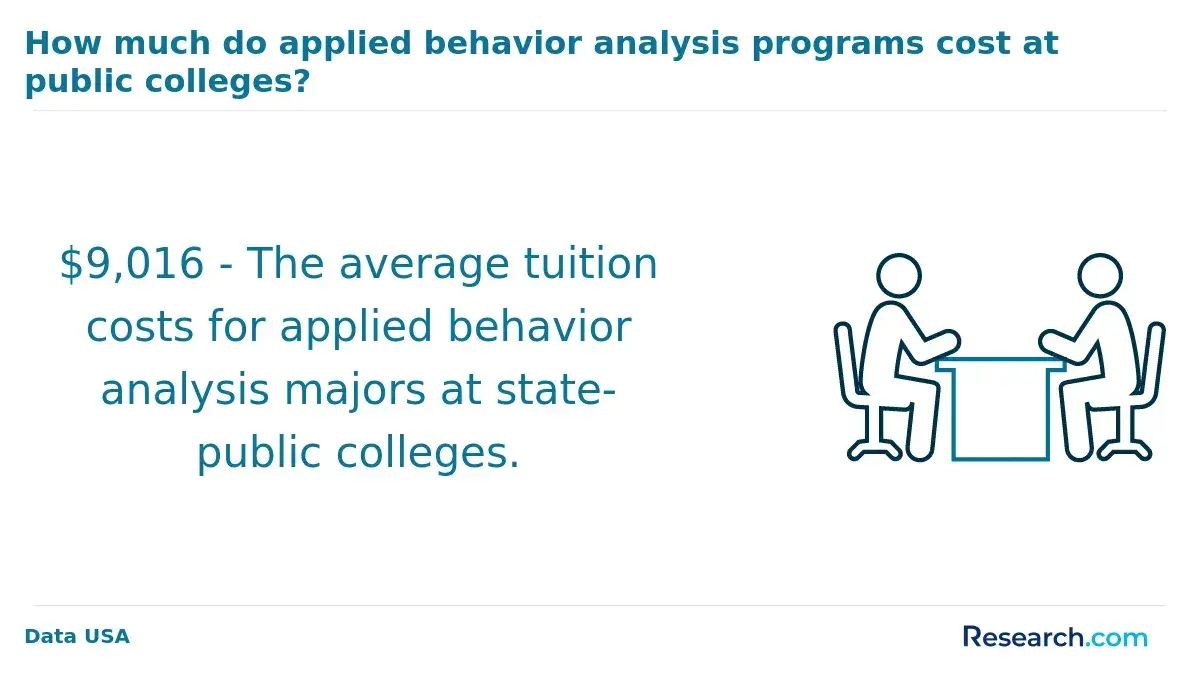
Tuition for accredited master's degree programs ranges widely, from $30,000 to $50,000 at public in-state universities to over $60,000 at private institutions. Prospective students should weigh these costs against expected salaries in their target market. Regional demand, employer tuition support, loan repayment options, and state licensure rules can all affect the actual return on a BCBA education.
Key considerations for those pursuing a career in applied behavior analysis include regional demand and compensation, differences among school, clinical, and private practice roles, and the availability of financial support programs such as loan repayment or tuition sponsorship.
Yes. Students can pursue BCBA preparation through online, campus-based, and hybrid applied behavior analysis programs. The best format depends on your schedule, learning style, access to supervised fieldwork, and budget. Delivery format matters, but certification eligibility depends on whether the program's coursework and fieldwork pathway meet current requirements.
Online vs. campus BCBA programs
| Format | Best for | Potential trade-offs |
| Online | Working adults, students outside major metro areas, candidates who need flexible scheduling | Requires strong self-management; fieldwork placement may be the student's responsibility |
| Campus-based | Students who want direct faculty access, peer interaction, and on-site resources | May involve commuting, relocation, or less schedule flexibility |
| Hybrid | Students who want flexibility with some in-person support | May still require travel for classes, intensives, or supervision-related activities |
Online programs often use synchronous classes, asynchronous coursework, or a mix of both. They can be a practical choice for students who need to keep working while completing graduate coursework and supervised fieldwork. Campus programs may offer more immediate access to faculty, clinics, research opportunities, and peer networks. Hybrid programs try to balance flexibility with structured support.
Before enrolling, confirm accreditation status, BACB alignment, fieldwork support, faculty qualifications, exam preparation resources, and outcomes such as pass rates or employment support. Do not assume that an online program is automatically cheaper or that a campus program automatically provides better supervision; ask for details.
Return on investment is a major factor. A BCBA graduate with $50,000 in student debt and a starting salary near $78,500 can typically recoup their investment within 2.5 to 3 years, assuming a 5% annual salary increase. This translates into a lifetime ROI premium of 15-20% compared to non-degree careers, according to data from Practice Test Geeks and 2025 debt calculators.
Students comparing formats should consider tuition fees and financial aid options, fieldwork placement support, scheduling flexibility, networking opportunities, and clinical training access. Online programs may reduce relocation and commuting expenses, while campus-based study may better suit students who prioritize direct mentorship and a structured learning community.
To calculate ROI for BCBA certification, compare the full cost of becoming certified with the additional income you expect to earn after certification. The goal is not to prove that the degree will pay off under ideal conditions; it is to test whether it still makes sense under realistic salary, debt, and timeline assumptions.
Step-by-step ROI calculation
- Add direct costs: Include graduate tuition, university fees, supervision fees, exam costs, study materials, background checks, and licensing fees where applicable.
- Add indirect costs: Include reduced work hours, unpaid internships, commuting, childcare, relocation, and interest that accrues while you study.
- Estimate post-certification income: Use local salary data and your likely first role, not only senior-level earnings.
- Estimate the income increase: Compare expected BCBA earnings with what you would earn without certification.
- Apply the ROI formula: ROI = (Annual Income Increase × Years Practicing − Total Certification Costs) ÷ Total Certification Costs.
Post-certification, the average clinical BCBA salary ranges between $70,000 and $85,000. Additional income streams such as supervision or private practice, highlighted by Practice Test Geeks (2026 guide), can bring in $50,000 to $100,000+ annually for seasoned professionals. These figures should be treated as potential gross income, not guaranteed take-home pay.
For example, a $30,000 total investment with an additional $60,000 yearly income over five years produces an ROI of 9, or 900% return. That simple calculation is useful, but it does not capture every real-world factor. Loan interest, taxes, benefits, part-time work, state licensure costs, and delayed certification can change the outcome.
A strong ROI case is more likely when tuition is controlled, fieldwork is completed without major delays, the student can keep earning income during training, and local BCBA salaries are strong. A weaker ROI case may occur when a student borrows heavily for a private program, lives in a lower-paying region, or needs several extra months to complete supervision and pass the exam.
How to choose an accredited BCBA program?
Choosing a BCBA program starts with eligibility verification. Do not rely only on marketing language such as “BCBA track” or “ABA-focused.” Confirm that the program's coursework, degree level, and supervised fieldwork structure align with Behavior Analyst Certification Board (BACB) requirements for the certification pathway you plan to use.
What to check before applying
- Certification alignment: Verify that the curriculum supports BCBA exam eligibility and covers the 5th edition task list.
- Institutional accreditation: Make sure the university is properly accredited and that credits will be recognized for graduate-level requirements.
- Fieldwork support: Ask whether placements, supervisors, or employer partnerships are available, and whether supervision costs are included.
- Exam outcomes: Review pass rates, graduate outcomes, and the program's history of preparing candidates for certification.
- Total cost: Compare tuition, fees, textbooks, technology charges, supervision costs, and expected loan interest.
- Format and schedule: Decide whether online, in-person, or hybrid study best fits your work and family responsibilities.
- Faculty access: Look for instructors with applied experience, research involvement, and availability for mentoring.
Tuition can range widely, with some programs costing over $20,000 while others are more affordable. A lower price can be attractive, but value depends on whether the program helps students finish efficiently, secure appropriate supervision, and pass the certification exam. Financial aid, scholarships, employer tuition assistance, and payment plans can reduce the amount borrowed.
Fieldwork quality is one of the most important selection factors. Programs connected to reputable clinics, schools, or service providers may offer more structured supervision and clearer professional pathways. Weak fieldwork support can delay certification and reduce ROI, even if tuition is relatively low.
The number of BCBA certificants has more than tripled recently, pushing salaries higher, with top earners surpassing $100,000. That growth makes program choice more important, not less. As the field expands, employers may favor candidates who completed rigorous training, gained strong supervised experience, and can demonstrate ethical, data-based practice.
Finally, choose a program that matches your career goal. A master's degree may offer stronger long-term earning potential than a certificate-only route, but only if it fits your background, state requirements, and financial plan. Before committing, compare at least several programs side by side and calculate the likely debt-to-salary outcome for the region where you intend to work.
Other Things You Should Know About Applied Behavior Analysis
Yes, various forms of financial assistance exist for students in applied behavior analysis programs, including federal student loans, scholarships, and grants specific to the field. Some universities and professional organizations offer scholarships targeted at BCBA candidates, which can help reduce the overall debt burden. Additionally, certain employers provide tuition reimbursement or loan repayment programs for employees pursuing BCBA certification.
Candidates must complete 2,000 hours of supervised fieldwork or 1,500 hours of concentrated supervised fieldwork before sitting for the BACB exam. At least 5% of total hours must be supervised each month, under a qualified supervisor approved by the Behavior Analyst Certification Board.
In 2027, BCBA salaries vary by location due to cost of living differences, state demand for behavior analysts, and regional differences in funding for behavioral services. Urban areas or states with higher demand and funding typically offer higher salaries compared to rural areas.
Geographic location significantly influences BCBA salaries and job availability. Urban areas and regions with higher demand for behavioral services tend to offer more job openings and competitive salaries. Conversely, rural or underserved locations may have fewer positions but sometimes offer incentives such as loan forgiveness or higher pay to attract qualified BCBAs.
- Board-Certified Behavior Analyst (BCBA) Salary Guide â Trusted Health https://www.trustedhealth.com/allied-career-guide/behavior-analyst/salary-guide
- BCBA and ABA Salaries by State https://www.appliedbehavioranalysisedu.org/salaries/
- BCBA Job Outlook in 2026 Explained | Divine Steps ABA https://www.divinestepstherapy.com/blog/bcba-job-outlook
- Dave Ramsey Medical School Debt-to-Salary Ratio | White Coat Investor https://www.whitecoatinvestor.com/maximum-student-loan-debt-to-salary-ratio/
- BCaBA vs BCBA: What’s the Difference Between a BCaBA and a BCBA? - LEARN Behavioral https://learnbehavioral.com/blog/bcaba-vs-bcba-whats-the-difference-between-a-bcaba-and-a-bcba
- BCBA Programs & Schools | Sunray ABA https://www.sunrayaba.com/post/bcba-programs-schools
- BCBA Salary by State | Flywheel Centers https://flywheelcenters.com/bcba-salary-breakdown/
- LBA vs. BCBA – What’s the Difference? https://onlinecounselingprograms.com/mental-health-careers/how-to-become-behavior-analyst-bcba/lba-vs-bcba/
- BCBA® Certification and Licensure by State https://www.thebehavioracademy.com/blog/bcba-certification-and-licensure-by-state
- BCBA Job Outlook in 2025 Growing Demand and Opportunities https://www.connectncareaba.com/blog/bcba-job-outlook