2027 ABA Course Sequence Guide: What Classes You Need for BCBA Eligibility

Co-Founder and Chief Data Scientist
If you want to become a BCBA but your undergraduate degree is not in behavior analysis, the hardest part is often knowing which coursework actually counts. General psychology, education, counseling, or human services classes may be useful, but they do not automatically satisfy BCBA academic requirements. Choosing the wrong sequence can mean paying for courses that do not support exam eligibility.
This guide explains how ABA course sequences work, which classes typically satisfy BCBA coursework expectations, how verified course sequence programs fit into the certification pathway, and what to compare before enrolling. It is written for career changers, graduate students, educators, clinicians, and working professionals who need a practical path toward applied behavior analysis training without wasting time or tuition.
Key Things You Should Know
- The 2026 aba course sequence must include core content covering ethics, behavior assessment, and intervention to meet the BACB's Verified Course Sequence (VCS) requirements.
- Students need at least 270 hours of direct instruction, with over 70% of programs offering updated syllabi aligned to the BACB 5th Edition Task List released in 2024.
- Completing an approved VCS is essential for BACB certification eligibility, with data showing that 85% of successful applicants in 2025 were enrolled in accredited courses.
What is the ABA course sequence for BCBA eligibility?
The ABA course sequence for BCBA eligibility is a set of graduate-level behavior analysis courses designed to cover the academic content required for Board Certified Behavior Analyst certification. These courses usually address behavior principles, assessment, measurement, experimental design, intervention planning, ethics, supervision, and professional practice.
Many students complete this coursework through Verified Course Sequences (VCS) recognized by ABAI or through ABAI-accredited institutions. These pathways matter because they reduce uncertainty: the coursework has been organized around the required content areas instead of leaving students to piece together unrelated graduate classes.
Data from 2025 show 68% of first-time BCBA exam passers used Pathway 1 via ABAI-accredited programs, while 52% succeeded through Pathway 2 VCS. The takeaway is not that one route is automatically right for every student, but that structured, recognized coursework is usually safer than guessing which classes will apply.
Graduate students must complete around 270 classroom hours in behavior-analytic coursework. In practical terms, that means students should look for a sequence that clearly documents coverage of foundational behavior analysis, research methods, ethics, assessment, and applied intervention skills.
Before enrolling, confirm three things in writing: the program’s current verification or accreditation status, the version of the coursework standards it follows, and whether the sequence is sufficient for the certification pathway you plan to use. Students comparing affordability and credential fit can start with Research.com’s guide to BCBA certification programs.
Which classes complete the ABA coursework requirements?
The classes that complete ABA coursework requirements are not simply “behavior-related” electives. They must collectively cover the behavior analysis content expected for BCBA eligibility. A strong course sequence usually includes both conceptual foundations and applied decision-making, so students learn not only what ABA is but how to use it ethically and effectively.
Common course areas include:
Principles of behavior and basic behavior-analytic concepts
Measurement, data collection, and visual analysis
Experimental design and research methods in behavior analysis
Behavior assessment, including functional assessment practices
Behavior-change procedures and intervention design
Ethics, professional conduct, and client rights
Supervision, staff training, and service delivery systems
When these courses are offered as an ABA Verified Course Sequence (VCS) approved by the Behavior Analyst Certification Board (BACB) and verified by the Association for Behavior Analysis International (ABAI), they support academic eligibility for the BCBA exam. The ABAI VCS Directory Pass Rate Report 2025 reveals a 64% first-time pass rate for candidates completing verified sequences, higher than the 59% average for all exam takers.
Students should be careful with substitutions. A graduate course in child development, special education, counseling theory, or general psychology may be valuable, but it may not satisfy behavior-analytic content requirements unless the program confirms that it is part of the approved sequence. Ask for the official course map, not just a catalog description.
Programs may deliver the sequence online, in person, or in hybrid formats over one to two years. The best option is the one that fits your schedule while still giving you access to qualified instructors, clear documentation, and a path to supervised fieldwork. If you are comparing institutions, Research.com’s overview of top BCBA programs can help you evaluate program structure and credential alignment.
How does ABA course sequence lead to BCBA certification?
An ABA course sequence is one part of the BCBA certification process. It does not, by itself, make someone certified. Instead, it helps satisfy the academic coursework requirement that candidates must pair with an eligible graduate degree, supervised fieldwork, and successful completion of the BCBA exam.
The sequence builds the knowledge base that BCBA candidates need before they are responsible for assessment, intervention planning, supervision, and ethical decision-making. Courses typically cover measurement, experimental design, behavioral assessment, intervention procedures, ethics, and systems of service delivery.
Students pursuing BCBA eligibility should choose coursework that clearly aligns with BACB standards. ABAI Tier 1 accredited programs showed a 72% BCBA pass rate in 2025, which is 15 percentage points higher than non-accredited programs with Verified Course Sequences (VCS). That difference suggests that program structure, faculty expertise, and curriculum quality can affect exam readiness.
There are several common ways to complete the coursework:
Master’s degree in ABA: best for students who need both the graduate degree and the full behavior analysis curriculum.
Post-graduate or post-master’s certificate: useful for students who already have a qualifying graduate degree but still need the ABA coursework.
ABA coursework embedded in a related discipline: suitable only if the behavior analysis sequence is properly verified or accredited and documented.
Online verified sequence: often practical for working professionals, provided fieldwork supervision can be arranged appropriately.
Students should track supervised fieldwork alongside coursework rather than waiting until the end of the program. Delays often happen when candidates complete classes but discover that their fieldwork documentation, supervisor qualifications, or course sequence does not match eligibility rules. Prospective students seeking flexible graduate options can review an online masters in ABA pathway to see how coursework and certification planning can fit together.
Verified course sequence programs are academic course groupings that have been reviewed to show that they cover required behavior analysis content for BCBA coursework purposes. In plain terms, a VCS tells students that the listed courses were designed as a certification-oriented sequence rather than a loose collection of related electives.
A VCS is different from a general graduate program in psychology, education, or counseling. A general program may include helpful content, but a verified sequence is organized around behavior analysis competencies such as ethics, assessment, intervention, measurement, and research methods. That structure can make it easier for students to document academic eligibility later.
Pathway 2 commonly involves earning a graduate degree from an accredited institution and completing a verified course sequence. Candidates following this path experienced a 14% increase in first-time pass rates on the BCBA exam, reaching 61%, according to the BACB Annual Certification Report 2025.
When comparing VCS options, review more than the program name. Ask these questions before applying:
Is the course sequence currently verified, and for which standards?
Does the program provide a written course map for BCBA eligibility?
Are courses offered online, on campus, or in a hybrid format?
Can the program help students identify appropriate supervised fieldwork opportunities?
Are faculty members experienced in applied behavior analysis practice, research, or supervision?
What exam pass-rate information and student outcome data are available?
Some VCS programs are housed in education, psychology, or special education departments. That can be helpful if your career goal involves schools, autism services, developmental disabilities, or clinical behavioral support. However, the key issue remains the same: the behavior analysis sequence must be properly documented. Students comparing remote options can review Research.com’s guide to best online ABA programs.
Admission requirements for ABA programs vary by degree level, but most graduate-level programs require a bachelor’s degree from an accredited institution. Many applicants come from psychology, education, special education, social work, counseling, or human services backgrounds, but students with unrelated majors may still be eligible if they meet the program’s academic prerequisites.
Typical application materials include official transcripts, letters of recommendation, a resume, and a personal statement explaining the applicant’s interest in behavior analysis. Some programs may require interviews or GRE scores, while others do not. Because requirements vary, applicants should review each program’s admissions page early rather than assuming that all ABA programs use the same process.
Programs may prefer applicants who have experience with ABA services, autism support, classroom behavior intervention, developmental disabilities, mental health, or direct care. This experience is not always mandatory, but it can help applicants understand the field and write a stronger statement of purpose.
Students without a behavior analysis background should ask whether the program offers bridge coursework, prerequisite support, or advising for career changers. A bachelor’s degree in an unrelated field is not necessarily a barrier, but missing prerequisites can affect course sequencing and time to completion.
The Faculty Teaching and Post-Doc Pathway 3 reported a notable 78% BCBA exam pass rate, the highest among pathways in 2025, despite only 4% using this route (BACB Eligibility Pathways Analysis 2025). This shows that advanced academic or research-focused preparation can be effective, though it is not the standard route for most applicants.
The most important admissions question is not just “Can I get in?” It is “Will this program put me on the correct eligibility pathway?” Before accepting an offer, confirm that the program’s coursework aligns with the BCBA coursework curriculum recognized for exam eligibility.
ABA programs typically take 1 to 3 years to complete, depending on whether the student enrolls in a full master’s degree, a post-master’s certificate, or an accelerated format. Full-time master’s programs often take about two years and may combine coursework with supervised fieldwork planning. Certificate programs can be shorter, but they still require serious time management, especially for students working while completing fieldwork.
Traditional master’s programs in behavior analysis usually require substantial graduate coursework, advising, and fieldwork coordination. Accelerated or online certificate programs can shorten the classroom timeline to 12 to 18 months, but they do not eliminate the need for supervised clinical or applied experience.
Costs vary widely. Public university graduate degrees in behavior analysis usually range from $12,000 to $30,000 for the entire program, while private or specialized institutions may charge $25,000 to $45,000. Post-master’s certificates often cost between $8,000 and $20,000.
Students should budget beyond tuition. Additional expenses may include supervision fees, exam costs, textbooks, technology fees, background checks, and travel for any required in-person meetings. Some programs bundle supervision with tuition, but others require separate agreements with BCBA supervisors, adding $2,000 to $5,000 depending on supervised hours required for exam eligibility.
Cost should be evaluated against program fit, documentation quality, supervision access, and exam preparation support. A cheaper program can become expensive if courses do not apply, if supervision is hard to secure, or if poor advising delays certification.
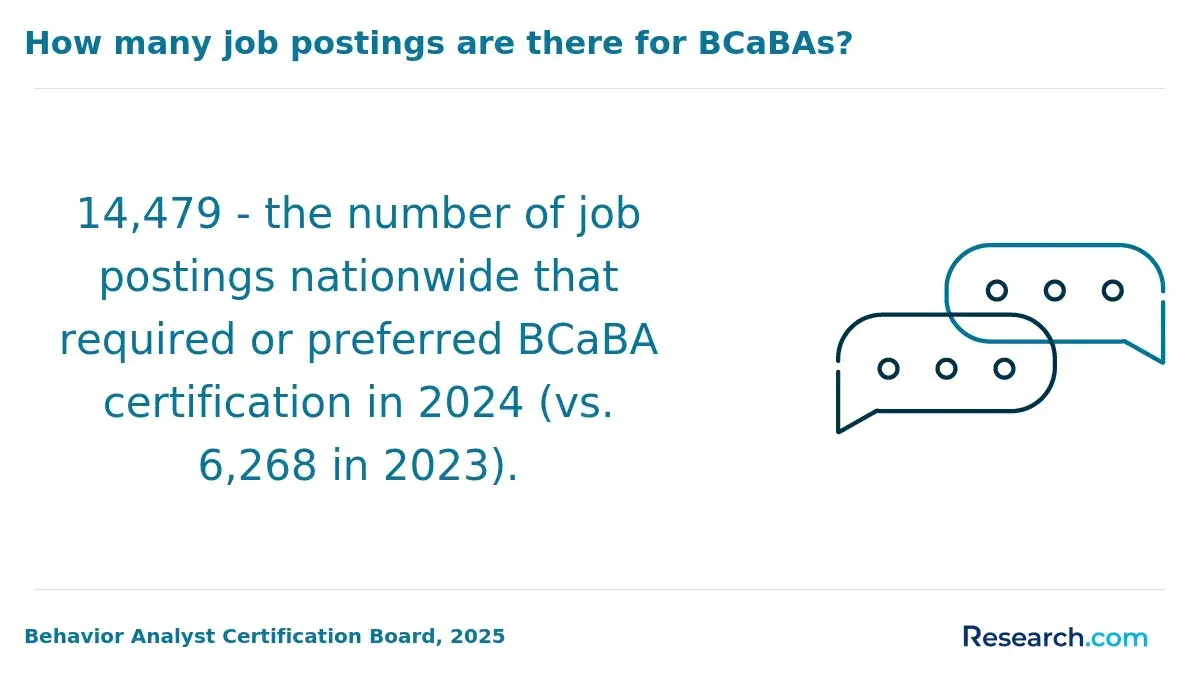
The demand for board-certified behavior analysts is growing rapidly. According to the ABAI Employment Trends Report 2025, BCBA job postings increased by 28% year-over-year, with over 12,000 openings nationwide. This growth spans healthcare, education, and behavioral services, making ABA coursework a strategic investment for students who choose an eligible, well-supported program.
Online and campus ABA programs can both support BCBA preparation when the coursework is properly verified or accredited. The better choice depends on how you learn, where you live, whether you are working, and how you will complete supervised fieldwork.
Online ABA programs are often best for working professionals, career changers, and students who do not live near a campus-based ABA program. They may use asynchronous lectures, live virtual meetings, discussion boards, and remote advising. The main advantage is flexibility; the main risk is that students must be proactive about scheduling, fieldwork, and documentation.
Campus-based programs provide more structured interaction with faculty and classmates. Students may have access to in-person labs, university-affiliated clinics, school partnerships, and practicum sites. This format can be especially helpful for students who want more direct mentoring or who are new to ABA practice.
Hybrid programs combine online coursework with in-person intensives, workshops, supervision meetings, or practicum experiences. They can be a strong middle ground for students who need flexibility but still value face-to-face training.
When comparing formats, focus on outcomes and support rather than delivery mode alone. Ask how students find supervised fieldwork, how faculty monitor progress, whether courses are synchronous or asynchronous, and how the program prepares students for the BCBA exam.
Career outcomes reflect the value of recognized training. The median starting salary for BCBA graduates from Verified Course Sequence (VCS) programs increased 9% to $78,500, according to the Behavior Analyst Salary Survey 2025 by ABA Technologies. This does not mean every graduate will earn that amount, but it does show that employers continue to value formal ABA preparation.
To choose an accredited ABA program, start by verifying the program’s status before comparing tuition, format, or marketing claims. Accreditation and verification affect whether your coursework will support BCBA eligibility, so they should be treated as minimum requirements rather than bonus features.
Look for recognized accreditation by bodies such as the Behavior Analyst Certification Board (BACB) or an equivalent regional agency, and confirm how the program aligns with current certification expectations. If the program advertises BCBA preparation, it should be able to explain exactly which eligibility pathway it supports.
A strong program should cover the full sequence of required classes, including foundational concepts, assessment, skill acquisition, intervention, ethics, research design, and supervision. The coursework should align with the 2026 BACB Task List where applicable, and the program should provide clear documentation for students.
Use this checklist before enrolling:
Accreditation or verification: Confirm the program’s current status through official sources, not only the school website.
Course map: Request a list showing how each class satisfies required content areas.
Fieldwork support: Ask whether the program helps students locate, document, and monitor supervised experience.
Faculty qualifications: Review whether instructors have ABA research, clinical, educational, or supervisory expertise.
Student outcomes: Compare graduation data, exam pass rates, advising support, and job placement resources where available.
Total cost: Include tuition, supervision, fees, materials, and any travel or residency expenses.
Tuition and return on investment should be weighed carefully. According to the National Behavior Analysis Workforce Report 2025, graduates of BCBA sequences demonstrate a 245% ROI within five years. That figure can support the value of ABA training, but individual outcomes still depend on location, experience, employer demand, and certification completion.
Avoid choosing a program solely because it is fast, cheap, or fully online. The best ABA program is the one that is properly recognized, transparent about requirements, realistic about fieldwork, and aligned with your career setting.
ABA coursework and BCBA certification can lead to careers in clinical services, education, developmental disability support, behavioral health, consultation, supervision, and organizational behavior management. Most roles involve assessing behavior, designing evidence-based interventions, training caregivers or staff, and using data to evaluate progress.
Common BCBA career paths include:
Clinical behavior analyst: Designs and monitors treatment plans for individuals with autism spectrum disorder, developmental disabilities, or behavioral challenges.
School-based behavior specialist: Supports students, teachers, and families through behavior intervention plans, classroom strategies, and staff training.
Residential or community services consultant: Helps programs improve daily living skills, reduce challenging behavior, and maintain ethical service delivery.
Supervisor or clinical director: Oversees behavior technicians, trainees, and service teams while maintaining quality and compliance.
Research or academic professional: Studies intervention effectiveness, behavior-change methods, and service delivery models.
Organizational behavior management specialist: Applies ABA principles to workplace productivity, performance systems, safety, and employee behavior.
Some BCBAs also work alongside mental health professionals, educators, physicians, and social service teams. Scope of practice matters: BCBAs should use ABA methods within their training and credential limits and refer clients to other professionals when needs fall outside behavior analysis.
The top 10 Verified Course Sequence programs reported pass rates above 80%, with 62% offering hybrid online-in-person formats, showing effective learning environments recognized by BACB VCS Performance Metrics. For students, this reinforces the importance of program quality and practical training, not just completion of coursework.
Successful ABA careers require analytical thinking, patience, ethical judgment, communication skills, and comfort using data. Certification is not the end of professional development; BCBAs must continue learning and meet continuing education requirements to maintain competence.
What is BCBA salary outlook and job demand?
The median annual salary for board certified behavior analysts (BCBAs) typically ranges from $65,000 to $85,000, with variation by location, experience, employer type, and specialization. Entry-level BCBAs usually start near $60,000, while professionals with advanced expertise or years of experience can earn over $90,000.
Higher salaries are often found in urban areas, regions with strong demand for autism and behavioral health services, and settings where BCBAs supervise teams or manage programs. Schools, clinics, hospitals, home-based service agencies, residential providers, and consulting organizations may all compensate differently.
Job growth in behavioral health fields is projected to be much faster than average through 2030, driven by expanding autism services, state insurance requirements, and growing recognition of behavior analysis in educational and healthcare settings. Demand is especially strong where employers need certified professionals who can supervise services, document outcomes, and ensure ethical treatment planning.
The American Board of Behavior Analysis Institute (ABAI) forecasts that by 2026, 45% of BCBA candidates will complete Verified Course Sequences (VCS) fully online, up from 29% in 2025. This shift may make the field more accessible to working professionals and students outside major university regions, while also increasing the importance of choosing online programs carefully.
Prospective BCBAs should treat salary figures as planning ranges, not guarantees. The strongest career outlook usually comes from combining eligible coursework, well-documented supervised experience, exam readiness, and a clear target setting such as schools, autism services, healthcare, or behavioral consultation.
Other Things You Should Know About Applied Behavior Analysis
Only courses in a BACB Verified Course Sequence count toward BCBA eligibility. The sequence must include the required graduate-level behavior-analytic content and the supervised fieldwork or practicum hours required by the BACB, along with a qualifying degree before you can sit for the BCBA exam.
The 2027 ABA Course Sequence Guide for BCBA Eligibility includes courses covering basic behavior-analytic skills, client-centered responsibilities, measurement and data analysis, experimental design, ethical and professional conduct, and supervising and training others. Each course is designed to meet the standards set forth by the Behavior Analyst Certification Board (BACB).
The 2027 ABA Course Sequence Guide requires students to complete a minimum of 270 credit hours specific to behavior analysis coursework. This includes topics such as ethics, research methods, and behavioral assessment, as set by the Behavior Analyst Certification Board (BACB).
For BCBA eligibility in 2027, research experience is not a mandatory requirement. Candidates must complete coursework in applied behavior analysis approved by the Behavior Analyst Certification Board and gain supervised experience, but specific research experiences are optional rather than compulsory.
- ABA Certification Explained: RBT, BCaBA, BCBA, BCBA-D https://onlinecounselingprograms.com/mental-health-careers/how-to-become-behavior-analyst-bcba/aba-certification-explained/
- How Long Does ABA Therapy Take? - Cultivate BHE https://cultivatebhe.com/how-long-does-aba-therapy-take/
- BCBA Job Outlook in 2026 Explained | Divine Steps ABA https://www.divinestepstherapy.com/blog/bcba-job-outlook
- How Much Does ABA Therapy for Autism Cost? - Autism Parenting Magazine https://www.autismparentingmagazine.com/aba-therapy-autism-cost/
- Applied Behavior Analysis Master’s—100 % Online https://www.baypath.edu/academics/graduate-programs/applied-behavior-analysis-ms/
- Is Becoming a BCBA a Good Career in 2026? Salary, Growth, and What to Expect https://mindfulsproutsaba.com/blog/is-becoming-a-bcba-a-good-career-in-2026-salary-growth-and-what-to-expect/
- What Jobs Can a BCBA Do - What are the Roles? https://www.biermanautism.com/resources/blog/what-jobs-can-a-bcba-do/
- Verified Course Sequence in Behavioral Analysis https://www.gonzaga.edu/school-of-education/graduate/verified-course-sequence-in-behavioral-analysis
- Exploring the Roadmap to a Rewarding BCBA Career - apricott ABA https://www.apricott.com/resources/bcba-career-path-to-take
- Career Types in Applied Behavior Analysis | Regency ABA https://regencyaba.com/career-types-in-applied-behavior-analysis/