2027 How to Choose an Online Data Science Degree With Strong Outcomes

Co-Founder and Chief Data Scientist
Choosing an online data science degree is a high-stakes decision because the field is growing quickly, but outcomes vary widely by program quality, cost, and hands-on preparation. The U. S. Bureau of Labor Statistics projects data scientist employment to grow 34% from 2024 to 2034, much faster than average, which makes program selection especially important. This guide is for prospective bachelor's, master's, and career-changing students who want to compare online options, avoid weak programs, and choose a degree that supports real career goals.
Key Things You Should Know
- Strong online data science degrees combine statistics, programming, machine learning, databases, ethics, and portfolio-based projects rather than offering only theory or tool tutorials.
- The BLS reported a 2024 median annual wage of $112,590 for data scientists, but individual outcomes depend on experience, location, industry, internships, and technical depth.
- Cost should be evaluated against total completion price, transfer credit, employer tuition support, project quality, and career services-not tuition alone.
What should you look for when choosing an online data science degree program?
The best online data science degree for you is the one that matches your career target, current skill level, budget, and preferred learning format. A strong program should make it clear what you will learn, how you will practice it, and how graduates are supported in the job market.
Use the following criteria to compare programs before requesting information or applying:
- Career alignment: Check whether the curriculum prepares you for your target role, such as data analyst, data scientist, machine learning engineer, business intelligence analyst, or analytics manager.
- Technical depth: Look for Python or R, SQL, statistics, machine learning, data visualization, data engineering foundations, cloud tools, and responsible AI or data ethics.
- Hands-on evidence: Prioritize programs with capstones, applied labs, employer-sponsored projects, research options, or internship support.
- Outcome transparency: Ask for graduation rates, retention rates, job placement methods, career services access, and examples of graduate employers when available.
- Flexibility with structure: Confirm whether courses are asynchronous, live, accelerated, cohort-based, self-paced, or part-time friendly.
- Total cost and aid: Compare tuition, fees, software, textbooks, residency requirements, transfer credits, and employer reimbursement eligibility.
This table summarizes how different selection factors affect your decision. It is useful because an affordable or well-known program is not automatically the strongest fit if it lacks the technical or career support you need.
| Selection factor | Why it matters | Stronger signal | Potential red flag |
| Curriculum | Determines whether you build job-ready technical skills | Balanced coverage of statistics, coding, databases, machine learning, and ethics | Heavy reliance on general business courses with limited technical practice |
| Projects | Helps you prove ability to employers | Portfolio-ready assignments using real or realistic datasets | No capstone, no code review, or only quiz-based assessment |
| Faculty | Influences academic quality and mentoring | Faculty with research, industry, or applied analytics experience | Little information about instructors or academic oversight |
| Career support | Can affect internship access and job search readiness | Resume reviews, interview prep, employer events, and analytics-specific advising | Generic career office with no data-focused services |
| Format | Affects whether you can finish while working | Clear schedule expectations and support for part-time pacing | Unclear time commitments or frequent required live sessions you cannot attend |
One common mistake is choosing a program because it advertises "AI" or "big data" without checking the actual courses. Read course descriptions carefully and ask admissions staff which tools, programming languages, datasets, and project deliverables students use.
How do online data science degrees compare with campus-based programs for outcomes?
Online and campus-based data science degrees can lead to similar outcomes when the online program has the same academic standards, faculty oversight, and career support as the campus version. The difference is usually not the delivery format itself but the quality of instruction, project work, networking access, and student discipline.
Online education is now mainstream rather than unusual. NCES data released in 2024 showed that more than half of U.S. postsecondary students took at least one distance education course in fall 2022, which means employers are increasingly familiar with online learning formats.
This comparison can help you decide whether online or campus study better fits your constraints. The strongest choice is the format that you can complete while building a credible portfolio and professional network.
| Factor | Online data science degree | Campus-based data science degree |
| Flexibility | Often better for working adults, caregivers, military students, and students outside major tech markets | Better for students who want a fixed schedule and in-person academic routine |
| Networking | Can be strong if the program offers live sessions, Slack or Teams communities, employer events, and group projects | Often easier through labs, clubs, campus recruiting, and informal faculty access |
| Hands-on work | Can be equally strong if projects use coding notebooks, cloud platforms, and real datasets | May offer easier access to physical labs, research groups, or local internships |
| Cost control | May reduce relocation and commuting costs, though tuition varies widely | May offer campus-based assistantships or local employer connections |
| Best fit | Self-directed students who need schedule flexibility | Students who learn best through in-person structure and frequent face-to-face interaction |
Choose online if you need flexibility and can stay consistent without daily campus structure. Choose campus-based study if you value in-person networking, research labs, or a traditional college environment enough to justify the additional time and location constraints.
Which accreditation and institutional quality signals matter for online data science degrees?
Accreditation is the first quality checkpoint because it affects credit transfer, federal financial aid eligibility, graduate school admission, and employer confidence. For U.S. students, the institution should be accredited by an agency recognized by the U.S. Department of Education or the Council for Higher Education Accreditation.
Data science programs may not always have a specialized programmatic accreditor, so you should evaluate both institutional accreditation and discipline-specific quality signals. These signals help you distinguish a rigorous online degree from a lightly supervised credential.
- Institutional accreditation: Verify the school's accreditation status directly through recognized accreditation databases, not only through marketing pages.
- Academic home: Check whether the degree is housed in computer science, statistics, engineering, business, information science, or an interdisciplinary unit, because this shapes the curriculum.
- Faculty qualifications: Review faculty profiles for relevant research, analytics practice, publications, or industry work.
- Assessment standards: Ask whether online students complete the same exams, projects, capstones, and grading standards as campus students.
- Student support: Look for tutoring, coding help, quantitative support, library access, disability services, and academic advising for online learners.
- Public accountability: Review graduation and retention information where available, but remember that program-level outcomes may not always be published separately.
Be cautious if a school avoids accreditation questions, pressures you to enroll quickly, makes unusually specific salary promises, or cannot explain who teaches the courses. A legitimate program should be transparent about credit hours, faculty, transfer policies, costs, and student responsibilities.
What prerequisites and admissions requirements do online data science bachelor's and master's programs have?
Admissions requirements vary because data science degrees exist at several levels. Bachelor's programs often accept students with limited technical background, while master's programs commonly expect prior coursework or experience in statistics, programming, calculus, or linear algebra.
This table shows typical expectations by degree level. It can help you identify whether you are ready to apply now or should complete bridge courses first.
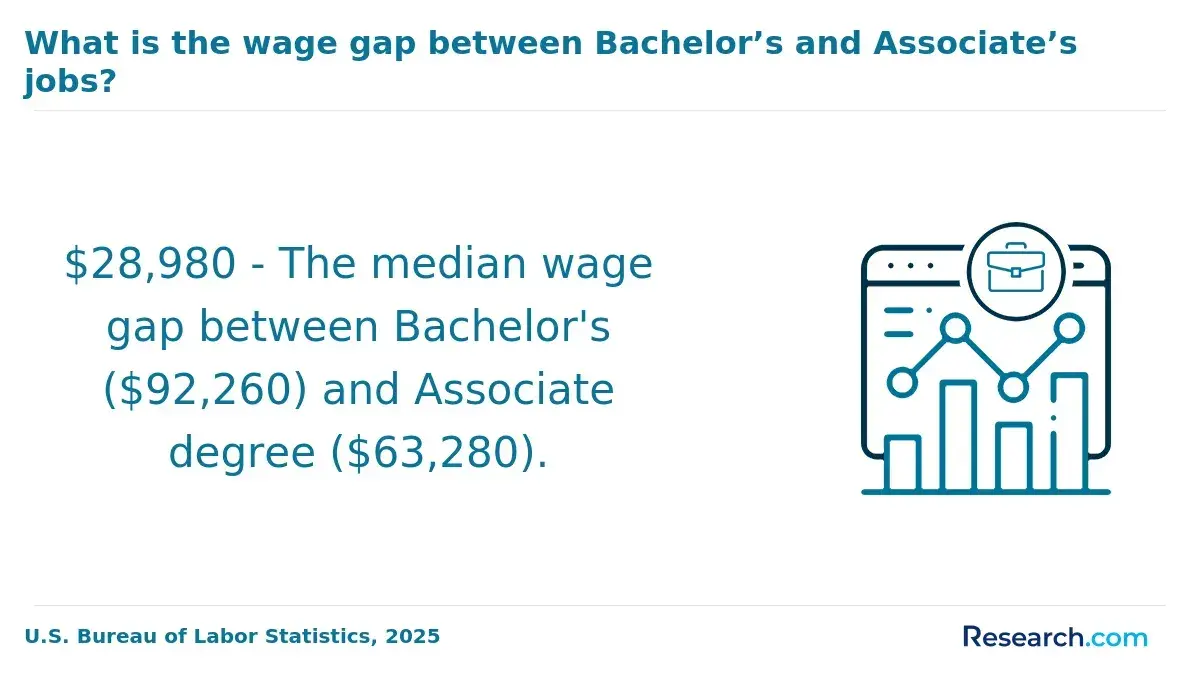
| Program level | Typical academic background | Common admissions materials | Preparation to strengthen your application |
| Online bachelor's in data science | High school diploma, GED, or transfer credits | Transcripts, application form, possible placement tests, and sometimes essays | Algebra, introductory statistics, basic Python, spreadsheet skills, and strong writing |
| Online bachelor's completion program | Prior college credits or an associate degree | College transcripts, minimum GPA, and transfer credit evaluation | Complete general education and prerequisite math courses before transfer if possible |
| Online master's in data science | Bachelor's degree, often with quantitative or technical coursework | Transcripts, resume, statement of purpose, recommendations, and sometimes GRE scores | Python, SQL, statistics, calculus, linear algebra, and evidence of analytical work |
| Online graduate certificate | Bachelor's degree or professional experience, depending on the school | Shorter application, transcripts, and sometimes resume | Introductory programming and statistics before enrolling in advanced courses |
If you are missing prerequisites, do not automatically rule out graduate study. Many universities offer bridge courses, conditional admission, or preparatory sequences, but you should ask whether those credits count toward the degree and how they affect total cost and timeline.
Career changers should pay special attention to math readiness. You do not need to be a theoretical mathematician for every analytics role, but weak foundations in probability, statistics, and linear algebra can make machine learning courses much harder.
How long do online data science degrees take, and what do they cost?
Online data science bachelor's programs often take about four years for first-time students and less time for transfer students. Online master's programs commonly take one to three years, depending on whether you study full time, part time, or in an accelerated format.
Cost varies more than timeline. College Board's 2024 Trends in College Pricing reported average published tuition and fees of $11,610 for in-state students at public four-year colleges and $43,350 at private nonprofit four-year colleges for 2024-25; online students may pay different rates, but the data shows why total price matters when comparing programs.
If price is your main constraint, compare total program cost rather than cost per credit. You can also review rankings for an affordable data science degree, but verify whether each listed option fits your admissions profile and career goals.
The table below summarizes common cost and timeline patterns. Use it to estimate the practical investment before you apply.
| Program type | Common completion time | Main cost drivers | Best fit |
| Online bachelor's degree | About four years for first-time students | Tuition, fees, general education credits, textbooks, and technology requirements | Students seeking an entry-level foundation and broad undergraduate credential |
| Online bachelor's completion degree | Often one to three years depending on transfer credits | Accepted transfer credits, residency requirements, and upper-division tuition | Students with prior college coursework who want to finish efficiently |
| Online master's degree | Often one to three years | Graduate tuition, prerequisite courses, software, cloud computing usage, and capstone fees | Career changers or professionals aiming for advanced analytics roles |
| Online graduate certificate | Often several months to one year | Per-credit tuition and whether credits later transfer into a degree | Professionals testing the field or adding targeted skills |
Before enrolling, ask the school for a written estimate of tuition, mandatory fees, course materials, expected credits, and any residency or immersion costs. Also ask whether transfer credits, prior learning assessment, employer reimbursement, military benefits, scholarships, or assistantships can reduce your net price.
What core courses and specializations are included in strong online data science curricula?
A strong online data science curriculum should teach you how to collect, clean, analyze, model, explain, and ethically use data. The best programs do not treat data science as only coding or only business reporting; they connect statistical reasoning, computing, and domain problem-solving.
Core courses usually build from foundations to applied modeling. Review syllabi when possible because course titles can sound similar while covering very different levels of depth.
- Programming for data science: Python or R, version control, notebooks, reproducible workflows, and basic software practices.
- Statistics and probability: Inference, regression, experimental design, uncertainty, and interpretation of results.
- Database systems and SQL: Data querying, relational databases, data modeling, and sometimes NoSQL systems.
- Machine learning: Supervised and unsupervised learning, model evaluation, feature engineering, and overfitting prevention.
- Data visualization and communication: Dashboards, storytelling, stakeholder communication, and visual design principles.
- Data ethics and governance: Privacy, bias, fairness, security, transparency, and responsible AI use.
- Capstone or applied project: End-to-end work that shows how you handle messy data and communicate findings.
Specializations can help you signal direction, but they should not replace the core. Students whose long-term goal is AI research may eventually compare a master's pathway with an online PhD artificial intelligence option, especially if they want to work on advanced model development or academic research.
This table explains common specialization areas and the type of student each one usually serves. Use it to avoid choosing a concentration based only on buzzwords.
| Specialization | Typical focus | Good fit for students interested in |
| Machine learning and AI | Predictive models, neural networks, natural language processing, and model deployment | Advanced analytics, AI product teams, research-oriented technical roles |
| Business analytics | Decision support, dashboards, forecasting, and performance measurement | Business intelligence, operations, marketing analytics, management-facing roles |
| Data engineering | Pipelines, databases, cloud platforms, data architecture, and reliability | Building the infrastructure that allows data scientists and analysts to work |
| Healthcare analytics | Clinical, claims, public health, and operational healthcare data | Hospitals, insurers, health tech, and policy analysis |
| Cybersecurity analytics | Anomaly detection, threat data, logs, and risk modeling | Security operations, fraud detection, and risk intelligence |
How do online data science programs provide hands-on experience, projects, and internships?
Hands-on experience is one of the strongest predictors of whether an online degree feels useful in the job market. Employers often want to see that you can work with messy data, write code, explain trade-offs, and deliver results to nontechnical stakeholders.
Strong online programs create applied experience through multiple channels rather than relying on one final project. Look for evidence that students practice the full data science workflow.
- Applied labs: Weekly assignments using Python, R, SQL, notebooks, visualization tools, or cloud environments.
- Portfolio projects: Public or shareable work samples that show problem framing, data cleaning, modeling, evaluation, and interpretation.
- Capstones: End-to-end projects, sometimes with industry partners, faculty research groups, or community organizations.
- Internship support: Guidance on finding remote, local, or summer analytics internships, even if placement is not guaranteed.
- Team projects: Collaboration that mirrors workplace expectations around code review, documentation, deadlines, and presentation.
- Career deliverables: Resume bullets, GitHub repositories, dashboards, case studies, and interview-ready project explanations.
Ask admissions advisors direct questions about project ownership: Will you be allowed to publish projects? Do you receive feedback on code quality? Are datasets realistic? Does the capstone involve a real stakeholder or only a classroom prompt?
A common mistake is assuming that a degree alone will replace a portfolio. For data science, the degree can open doors, but projects often show whether you can apply the material in a practical setting.
What data science careers can you pursue with an online degree?
An online data science degree can support several career paths, but the right role depends on your degree level, prior experience, portfolio, industry knowledge, and technical depth. Entry-level graduates often begin in analyst roles, while advanced modeling or engineering roles may require stronger programming, statistics, or graduate-level preparation.
Data science is also expanding into domains beyond traditional tech. For example, students comparing analytics-heavy environmental careers may find it useful to explore what can you do with an environmental science major because environmental monitoring, climate risk, geospatial analysis, and sustainability reporting increasingly use data skills.
The table below outlines common career options and how they differ. Use it to match your program's curriculum with the job family you actually want.
| Career path | Typical responsibilities | Skills employers commonly expect | Likely preparation level |
| Data analyst | Clean data, build reports, analyze trends, and communicate insights | SQL, spreadsheets, statistics, dashboards, and business communication | Bachelor's degree, certificate, or experience-backed portfolio |
| Business intelligence analyst | Create dashboards, track metrics, and support strategic decisions | SQL, Tableau or Power BI, data modeling, and stakeholder communication | Bachelor's degree or business analytics-focused training |
| Data scientist | Build models, test hypotheses, evaluate algorithms, and explain findings | Python or R, machine learning, statistics, experimentation, and communication | Bachelor's plus experience or a master's for many competitive roles |
| Machine learning engineer | Deploy, monitor, and improve machine learning systems | Software engineering, ML frameworks, cloud tools, APIs, and MLOps | Technical master's degree, computer science background, or substantial engineering experience |
| Data engineer | Build pipelines, manage databases, and support data infrastructure | SQL, Python, cloud platforms, ETL, data warehousing, and systems thinking | Computer science, data engineering, or technically rigorous data science preparation |
| Analytics manager | Lead analytics teams, set priorities, translate business problems, and present results | Analytics strategy, communication, leadership, and domain expertise | Experience plus graduate study or management preparation |
If you are new to the field, target roles with a realistic first step. A data analyst or BI analyst position can help you build domain experience before moving into data science, machine learning, or analytics leadership.
What are salary expectations and job outlook for data science graduates?
Salary expectations should be based on role, location, industry, experience, and skill level rather than the degree title alone. The BLS reported a 2024 median annual wage of $112,590 for data scientists, which provides a useful benchmark but should not be treated as a guaranteed outcome for every graduate.
The job outlook is also strong. BLS employment projections for 2024 to 2034 show 34% growth for data scientists, which reflects ongoing demand for professionals who can turn large datasets into decisions, models, and products.
This table puts common data-related roles into context. It is not a promise of earnings, but it can help you compare how technical depth and responsibility often affect compensation potential.
| Role category | Salary context | Outlook considerations | What can improve competitiveness |
| Data analyst and BI roles | Often lower than specialized data scientist roles, especially at entry level | Broad demand across business functions | SQL, dashboards, domain knowledge, and clear communication |
| Data scientist roles | BLS 2024 median annual wage for data scientists was $112,590 | Strong projected growth, but competition can be high for entry-level postings | Portfolio projects, statistics, machine learning, experimentation, and internships |
| Machine learning and AI roles | Can be higher in technical industries, but requirements are often stricter | Demand is influenced by AI adoption and product investment | Software engineering, model deployment, cloud tools, and advanced math |
| Analytics leadership roles | Often tied to experience and management scope | Growth depends on industry investment in data-driven decision-making | Business strategy, team leadership, stakeholder management, and measurable results |
AI is changing the field, but it is not eliminating the need for data professionals. Routine coding and dashboard tasks may become more automated, while demand remains stronger for people who can validate data quality, design experiments, evaluate models, manage risk, and explain results responsibly.
How do certificates, bootcamps, and graduate programs fit into data science career pathways?
A degree is not the only way to enter or advance in data science, but it is often the most comprehensive credential. Certificates, bootcamps, and graduate programs each serve different goals, and the right choice depends on your background, timeline, budget, and target role.
If your interests sit closer to information organization, digital archives, data stewardship, or knowledge management, comparing data science with master of library science online programs may clarify whether you want a technical analytics path or an information science path.
This comparison shows where each credential type usually fits. Use it to avoid overpaying for a credential that is either too broad or too narrow for your goal.
| Pathway | Best for | Limitations | Smart use case |
| Short online certificate | Learning a specific tool or filling a focused skill gap | May not provide enough depth for competitive data scientist roles | Add SQL, Python, visualization, or cloud skills to an existing degree |
| Bootcamp | Fast, project-heavy training for motivated career changers | Quality varies, and career outcomes depend heavily on prior background and portfolio | Build practical projects quickly after confirming the provider's placement transparency |
| Graduate certificate | Professionals testing graduate-level data science before a full degree | May be less recognized than a master's degree on its own | Start with stackable credits that can apply toward a master's if you continue |
| Online master's degree | Career changers and professionals seeking deeper technical credibility | Requires more time, money, and prerequisite preparation | Prepare for data scientist, analytics manager, or specialized technical roles |
| Doctoral study | Research, advanced AI, academic careers, or highly specialized technical leadership | Longer and more research-intensive than most industry roles require | Pursue when your goal requires original research or advanced specialization |
To choose the right pathway, start with the job postings you want and work backward. Note the required degree level, tools, years of experience, portfolio expectations, and domain knowledge, then choose the least expensive credible path that closes those gaps.
Avoid the common mistake of stacking credentials without applying them. One strong project that solves a real problem and is clearly explained can be more valuable than several disconnected certificates with no evidence of practical skill.
Other Things You Should Know About Data Science
Usually, your diploma and transcript identify the institution and degree, not necessarily the course delivery format. Employers are more likely to care about accreditation, skills, projects, internships, and whether you can explain your work clearly.
You need a reliable computer, stable internet, and enough memory to run common tools, but many programs use cloud platforms or virtual labs for heavier computing. Ask the school for technical requirements before enrolling.
In 2027, proficiency in languages like Python and R remains crucial in data science. Leading online programs often emphasize these languages due to their integral role in data analysis. Python's versatility and R's statistical capabilities are key skills for graduates aiming for strong job outcomes.
A strong program should provide a required capstone or internship option, employer partnerships, and career services that help place students in data-related roles. Look for at least one applied project course, access to job boards, and documented student placement support tied to internships or co-ops.
References
- Accreditation & Recognition | Data Science Institute https://www.datascienceinstitute.net/accreditation
- 10 Best Data Science Courses With Guaranteed Career Growth https://skillifysolutions.com/blogs/data-science/best-data-science-courses/
- Top 6 Universities Offering a Fully Online MSc in Data Science - Toolshero https://www.toolshero.com/featured-posts/top-6-universities-data-science/
- Data Scientist Job Market 2024: Analysis, Trends, Opportunities – 365 Data Science https://365datascience.com/career-advice/data-scientist-job-market/
- Shortlisted & Invitee Institutions | World Data Science & AI Initiative (WDSAI) https://www.wdsai.org/invitee-institutions
- Data Science AI Bootcamp and Internship Online | iXperience https://www.ixperience.co/for-university/programs/online/data-science-ai
- How to Get Internships in Data Science: Complete Guide for Beginners https://nareshit.com/blogs/how-to-get-internships-in-data-science
- European Online University Accreditation Explained - MIA Digital University https://miauniversity.com/european-online-university-accreditation/
- Data Science Course vs. University – Which path is better in 2026? https://www.wbscodingschool.com/blog/data-science-course-vs-university/
- J Multimed Inf Syst: An Analysis of Curricula for Data Science Undergraduate Programs https://www.jmis.org/archive/view_article