2027 Online Data Science Degrees That Prepare Students for AI and Predictive Analytics Roles

Co-Founder and Chief Data Scientist
Choosing an online data science degree now means deciding whether the curriculum can keep pace with AI-driven hiring. The U.S. Bureau of Labor Statistics projects data scientist employment to grow 36% from 2023 to 2033, far faster than average, based on projections released in 2024.
This guide is for working adults, career changers, and students comparing online programs. You will learn how degrees differ, what skills matter, what schools offer, what costs to expect, and how to choose a program that supports AI and predictive analytics goals.
Key Things You Should Know
- Online data science degrees are most useful for AI roles when they combine statistics, machine learning, programming, databases, cloud tools, ethics, and applied capstone projects rather than offering only broad analytics theory.
- BLS data released in 2024 projects 36% growth for data scientists from 2023 to 2033, but outcomes vary by portfolio quality, technical depth, industry, location, and prior experience.
- For cost planning, use total program cost instead of tuition alone; College Board's 2024-25 benchmark shows published undergraduate tuition and fees at $11,610 for in-state public four-year institutions and $43,350 for private nonprofit four-year institutions.
What is an online data science degree and how does it prepare students for AI roles?
An online data science degree is a structured undergraduate or graduate program that teaches students how to collect, clean, analyze, model, and communicate data. For AI roles, the strongest programs go beyond dashboards and basic statistics by adding machine learning, natural language processing, deep learning foundations, model evaluation, responsible AI, and production-oriented tools such as Python, SQL, Git, and cloud platforms.
The main value of a degree is sequencing. Instead of learning isolated tools, students build from math and coding into supervised learning, predictive modeling, experimentation, deployment, and interpretation. This matters because employers increasingly expect data professionals to explain why a model works, where it can fail, and how it should be monitored after deployment.
Students comparing online data science programs should look closely at whether the degree is designed for entry-level learners, experienced analysts, software professionals, or quantitative career changers. A program that is excellent for a statistician may be frustrating for a beginner without programming experience, while a beginner-friendly program may not go deep enough for machine learning engineering goals.
The table below summarizes common online degree options and when each one usually makes sense. Use it to match the credential level to your current background and target AI or analytics role.
| Degree option | Best fit | AI and predictive analytics preparation | Decision point |
| Bachelor's in data science | Students seeking a first technical degree | Builds foundational math, programming, statistics, databases, and introductory machine learning | Best for learners who need a full undergraduate credential and broad career flexibility |
| Master's in data science | Working professionals or graduates from STEM, business, economics, or social science backgrounds | Usually offers deeper modeling, advanced analytics, cloud computing, and capstone experience | Best when the goal is to move into data scientist, machine learning, or senior analytics roles |
| Master's in analytics | Students focused on business intelligence, forecasting, operations, or decision support | Often emphasizes predictive modeling, optimization, visualization, and business communication | Best when the target role is analytics manager, decision scientist, or business-focused data professional |
| Graduate certificate | Professionals testing the field or filling specific skill gaps | May cover Python, statistics, machine learning, or data visualization in a shorter format | Best when a full degree is not yet necessary or when employer tuition support is limited |
A degree is most likely to be worth considering if you need a recognized credential, want structured feedback, and can use projects to build a portfolio. A certificate, bootcamp, or self-study path may be more practical if you already have a quantitative graduate degree and only need a targeted tool upgrade.
How do online data science programs compare to campus-based options for AI and analytics?
Online and campus-based data science programs can lead to similar academic outcomes when they share the same faculty standards, curriculum, admissions bar, and institutional accreditation. The better choice depends less on delivery format and more on how you learn, how much scheduling flexibility you need, and whether the program gives you enough applied practice.
The comparison below shows where online programs usually help and where campus programs may offer advantages. This can help you avoid choosing based only on convenience or prestige.
| Factor | Online data science degree | Campus-based data science degree | What it means for AI-focused students |
| Schedule | Often asynchronous or evening-friendly | Usually fixed class meetings | Online study may fit working professionals better, but it requires stronger time management |
| Hands-on work | Can include virtual labs, cloud notebooks, team projects, and capstones | May include in-person labs, research groups, and campus computing resources | Check whether projects use real datasets and modern tools, not just textbook exercises |
| Networking | Depends on cohort design, live sessions, Slack-style communities, and career events | Often easier through campus events, research labs, and local employer visits | Online students should actively seek mentorship, portfolio reviews, and alumni connections |
| Cost structure | May reduce relocation and commuting costs, but technology and distance fees can apply | May include campus fees, housing, commuting, and opportunity costs | Total cost should include time away from work, not only tuition |
| Employer perception | Strong when the transcript and institution are reputable | Strong when the school has recognized faculty, research, or employer ties | Employers usually care more about skills, projects, and school credibility than the classroom format alone |
Choose online if you need flexibility, already work in a related field, or can build a disciplined weekly study routine. Choose campus if you want immersive research access, face-to-face networking, or a traditional full-time graduate experience. Either format can prepare students for AI and predictive analytics roles if the curriculum includes model-building, deployment awareness, statistical reasoning, and portfolio-ready projects.
Which accredited U.S. schools offer online data science degrees focused on AI?
Many accredited U.S. universities now offer online data science, analytics, or computing degrees with AI-relevant coursework. Because data science does not have one universal programmatic accreditor, students should first confirm institutional accreditation from an agency recognized by the U.S. Department of Education or the Council for Higher Education Accreditation. For some computing-heavy programs, ABET accreditation may be relevant, but it is not standard for most graduate data science degrees.
The examples below are not a ranking. They illustrate the kinds of accredited online options students often compare when looking for AI, machine learning, and predictive analytics preparation.
| School | Online degree example | AI or analytics emphasis to verify | Good fit for |
| University of Illinois Urbana-Champaign | Online Master of Computer Science in Data Science track | Machine learning, data mining, cloud computing, scalable systems | Students who want a computer science-centered data science path |
| Georgia Institute of Technology | Online Master of Science in Analytics | Analytics, machine learning, optimization, business intelligence | Students seeking a rigorous analytics degree with technical and business applications |
| University of Texas at Austin | Online Master of Science in Data Science | Statistics, machine learning, deep learning foundations, data systems | Students seeking a math and computing-oriented online master's |
| University of California, Berkeley | Online Master of Information and Data Science | Machine learning, data engineering, ethics, applied projects | Students who value cohort learning and applied data science practice |
| Johns Hopkins University | Online Master of Science in Data Science | Applied machine learning, statistical models, data-intensive systems | Professionals seeking a technically structured graduate program |
| Penn State World Campus | Online data analytics and data science-related graduate options | Predictive analytics, data management, statistical analysis | Students who want an established online public university option |
Students who are open to business-focused analytics rather than a strictly data science-labeled degree can also compare analytics masters programs. This can be a smart move for applicants targeting forecasting, operations analytics, product analytics, marketing analytics, or decision science roles rather than machine learning engineering.
Before applying, verify the current curriculum, delivery format, tuition, accreditation status, faculty, and career services directly with the school. Program names can sound similar, but one may be heavy in statistics while another may focus on business dashboards or software systems.
What core courses and technical skills are taught in online data science programs?
Strong online data science programs teach both technical execution and analytical judgment. AI roles require more than running a model; professionals must understand data quality, statistical assumptions, model bias, business context, privacy, and how results will be used.
The table below groups common courses and skills by the questions they help students answer. This makes it easier to see whether a curriculum is balanced or missing a key area.
| Curriculum area | Common courses | Skills students should gain | Why it matters for AI roles |
| Programming and data systems | Python, R, SQL, databases, data engineering foundations | Cleaning data, joining datasets, writing reproducible code, using APIs | AI projects depend on reliable data pipelines before modeling begins |
| Statistics and probability | Statistical inference, regression, experimental design, Bayesian methods | Estimating uncertainty, testing hypotheses, interpreting model results | Predictive analytics requires knowing whether patterns are meaningful or misleading |
| Machine learning | Supervised learning, unsupervised learning, model validation, feature engineering | Building, tuning, comparing, and explaining models | These are core skills for data scientist and applied AI roles |
| Advanced AI foundations | Deep learning, natural language processing, generative AI concepts, reinforcement learning electives | Understanding neural networks, embeddings, language models, and modern AI applications | Useful for students targeting AI product, NLP, computer vision, or ML roles |
| Communication and ethics | Data visualization, responsible AI, privacy, governance, storytelling with data | Explaining results clearly, identifying bias, documenting limitations | Employers need professionals who can make AI systems understandable and defensible |
When reviewing a course plan, look for evidence that students will produce work they can show employers. The strongest project-based programs usually require several of the following deliverables:
- A reproducible analysis notebook using Python or R with clear documentation and version control
- A predictive model evaluated with appropriate metrics, validation methods, and discussion of limitations
- A data visualization or dashboard that explains insights to nontechnical stakeholders
- A capstone project using a real or realistic dataset tied to a business, health, government, finance, or social problem
- An ethics or responsible AI component that addresses privacy, bias, explainability, and model misuse
If a program's curriculum lists many trendy AI topics but does not show prerequisites, assignments, datasets, or project requirements, ask for sample syllabi. A credible program should make the learning path clear enough for you to judge whether you will graduate with practical evidence of skill.
What admissions requirements do online data science degree programs typically have?
Admissions requirements vary by degree level and school, but most online data science programs want evidence that applicants can handle quantitative coursework and programming. Selective graduate programs may not require a computer science degree, but they often expect readiness in calculus, linear algebra, statistics, and at least one programming language.
The table below outlines common requirements and how applicants can strengthen their profile before applying:
| Requirement | Common expectation | How to prepare |
| Prior degree | Bachelor's degree for master's programs; high school diploma or equivalent for bachelor's programs | Confirm whether the program accepts non-STEM applicants and whether bridge courses are available |
| Math background | Statistics, calculus, linear algebra, or discrete math may be required or recommended | Take a community college, university extension, or approved online prerequisite if your transcript is weak |
| Programming | Python, R, Java, or another programming language may be expected | Build a small coding portfolio before applying, especially if your degree was nontechnical |
| Professional experience | Helpful but not always required | Use work projects, internships, research, or volunteer analytics work to show applied interest |
| Application materials | Transcripts, resume, statement of purpose, recommendations, and sometimes test scores | Explain your career goal clearly and connect it to the program's curriculum |
Applicants without a technical background should not assume they are automatically disqualified. However, they should be realistic about the ramp-up. Before enrolling, ask whether the program offers foundation courses, tutoring, bootcamps, math refreshers, or conditional admission pathways.
A practical application plan usually includes these steps:
- Choose a target role, such as data analyst, data scientist, machine learning engineer, or analytics manager.
- List the math, programming, and statistics prerequisites required by each school.
- Complete missing prerequisites before or during the application cycle if the school allows it.
- Create one or two small projects that show curiosity, clean code, and clear communication.
- Ask admissions advisors whether your background fits the program's typical successful student profile.
One common mistake is applying only to the most recognizable university names without checking fit. A slightly less famous program with better prerequisite support, stronger project feedback, and a more relevant curriculum may be the better investment for a career changer.
How long do online data science degrees take and what do they cost?
Online data science degree timelines depend on level, pace, prerequisites, and whether the program uses semesters, quarters, or short terms. Bachelor's degrees commonly take about four years for first-time full-time students, while transfer students may finish faster. Master's programs often take one to three years, with part-time options designed for working adults.
Cost is harder to compare because schools may charge by credit, course, semester, or program. For context, College Board's 2024-25 figures show how published undergraduate tuition and fees differ by sector:
- $11,610 for in-state students at public four-year institutions
- $30,780 for out-of-state students at public four-year institutions
- $43,350 for students at private nonprofit four-year institutions
These figures are not specific to online data science programs, but they are useful benchmarks. Online graduate tuition can differ substantially from undergraduate published tuition, and some public universities charge the same online rate regardless of residency, while others do not.
The table below shows cost and timeline factors that often change the real price of an online data science degree. Use it before comparing financial aid packages.
| Factor | Why it matters | What to ask |
| Credit requirements | A lower per-credit price can still lead to a higher total cost if the program requires more credits | What is the total number of credits needed to graduate? |
| Fees | Technology, online learning, graduation, proctoring, and course materials fees can add up | What mandatory fees apply to online students? |
| Prerequisites | Bridge courses can extend the timeline and increase cost | Are prerequisite courses included in the advertised program cost? |
| Transfer credit | Accepted credits can reduce time and tuition for bachelor's students | How many credits can transfer, and how are they evaluated? |
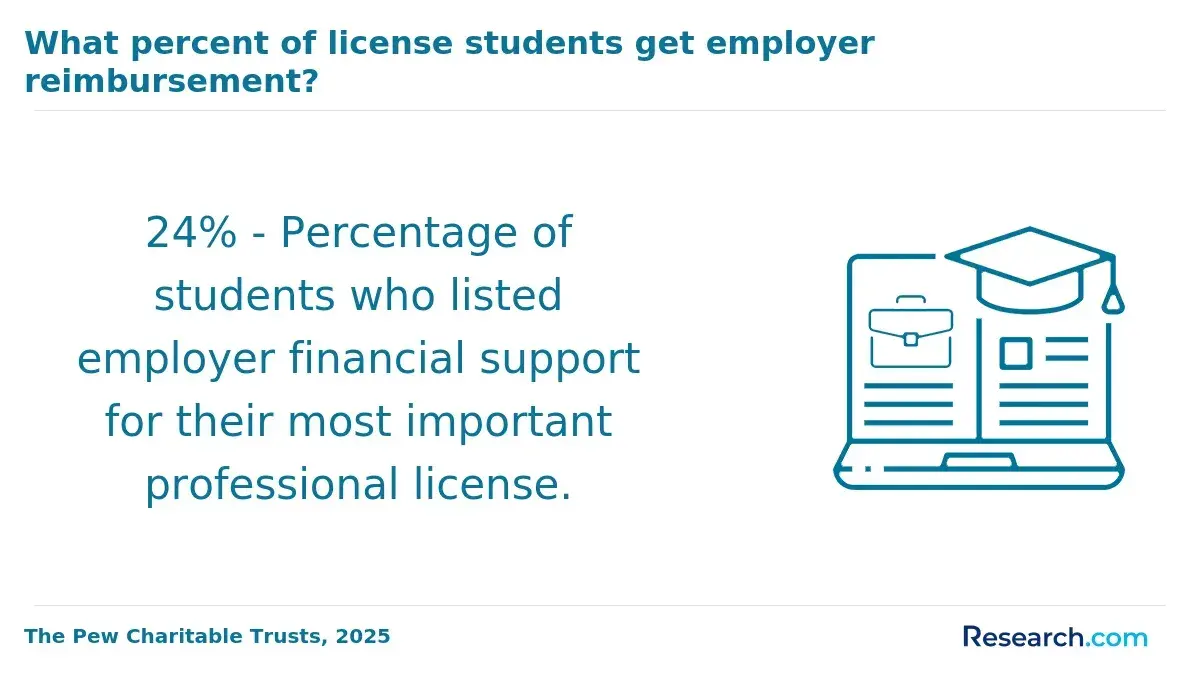
| Employer support | Tuition assistance can reduce out-of-pocket costs but may include grade or retention requirements | Does the school coordinate billing or documentation for employer reimbursement? |
| Borrowing cost | Loan interest affects long-term affordability | What is the estimated monthly repayment under different borrowing scenarios? |
Federal Student Aid set the 2024-25 Direct Unsubsidized Loan interest rate for graduate and professional students at 8.08%. That rate matters because a program that looks affordable upfront can become less attractive if the student borrows heavily and takes longer to finish.
To evaluate affordability, compare total cost against your realistic career path, not only the highest salary you see online. A lower-cost program may be the better choice if it offers adequate technical depth, credible projects, and strong support. A higher-cost program may make sense if it provides access to specialized faculty, stronger employer connections, or a curriculum closely aligned with your target role.
What AI, machine learning, and predictive analytics careers can graduates pursue?
Graduates of online data science programs can pursue roles across technology, finance, healthcare, insurance, logistics, manufacturing, retail, government, and consulting. The best role depends on the student's technical depth, domain knowledge, portfolio, and comfort with software engineering.
The table below connects common AI and predictive analytics career paths with the work they usually involve. It can help students choose electives and projects that match their intended direction.
| Career path | Typical responsibilities | Best preparation | Entry point |
| Data analyst | Query data, build dashboards, analyze trends, explain business metrics | SQL, statistics, visualization, Excel or BI tools, business communication | Often accessible with a bachelor's degree, certificate, or strong portfolio |
| Data scientist | Build predictive models, test hypotheses, design experiments, translate data into decisions | Python or R, statistics, machine learning, feature engineering, communication | Often requires a master's degree or equivalent project and work experience |
| Machine learning engineer | Deploy models, build model pipelines, optimize performance, monitor systems | Software engineering, machine learning, cloud platforms, MLOps, data engineering | Usually best for students with strong programming or computer science preparation |
| Predictive analytics specialist | Forecast demand, risk, customer behavior, or operational outcomes | Regression, time series, classification, optimization, domain knowledge | Common in business, finance, insurance, supply chain, and healthcare analytics |
| AI product analyst | Measure AI product performance, evaluate user behavior, define success metrics | Experimentation, product analytics, causal inference, visualization | Good fit for students combining analytics and product or business experience |
| AI trainer or data annotation lead | Improve AI outputs through data labeling, prompt evaluation, quality review, and feedback workflows | Domain expertise, writing, evaluation rubrics, data quality, responsible AI awareness | Can be an entry or transition role for people learning the AI ecosystem |
Students curious about human-in-the-loop AI work can explore "What is an AI trainer?" to understand how data quality, evaluation, and domain expertise support model improvement. This path is different from becoming a machine learning engineer, but it can be relevant for people who want to work with AI systems while building deeper technical skills.
To prepare for these careers, students should align projects with job postings. For example, a healthcare analytics goal may call for privacy-aware predictive modeling and clinical data familiarity, while an e-commerce analytics goal may call for experimentation, recommendation systems, and customer segmentation.
What salary ranges can data science and AI professionals expect in the U.S.?
U.S. salary ranges for data science and AI-adjacent roles vary by occupation, experience, industry, location, degree level, and technical specialization. The most useful way to read salary data is as a market benchmark, not a promise that a degree will produce a specific income.
BLS May 2024 wage data shows that relevant technical occupations can fall into a wide median-pay band. The table below highlights selected roles commonly connected to data science, AI, and predictive analytics work.
| Occupation | Relevant to | Median annual wage, May 2024 | How to interpret it |
| Operations research analysts | Optimization, forecasting, decision analytics, logistics, operations | $91,290 | A strong benchmark for analytics roles that focus on business decisions and quantitative modeling |
| Data scientists | Predictive modeling, machine learning, statistical analysis, experimentation | $112,590 | A useful midpoint for many data science roles, though senior AI roles and entry-level analyst roles can differ significantly |
| Software developers | AI applications, model integration, data products, MLOps-adjacent work | $133,080 | Relevant when a student's path leans toward engineering and production systems |
| Computer and information research scientists | Advanced AI research, algorithms, computing methods, experimental systems | $140,910 | Often associated with advanced research roles that may prefer or require graduate education |
The practical takeaway is that technical depth usually matters. Students targeting higher-paying AI engineering or research roles may need more programming, algorithms, cloud, and MLOps preparation than students targeting dashboarding or reporting roles. Conversely, strong domain knowledge can raise a candidate's value in regulated industries such as healthcare, insurance, finance, and government analytics.
Salary comparisons should also account for geography and work model. Remote roles can broaden access, but they also increase competition because candidates may be compared against a national applicant pool. Before enrolling, review current job postings in your preferred region and note which skills appear repeatedly.
What is the job outlook for data science, AI, and predictive analytics roles?
The job outlook for data science, AI, and predictive analytics remains strong, but it is not evenly distributed across every role. Employers are hiring for people who can turn messy data into useful systems and decisions, yet they are also raising expectations around engineering ability, responsible AI, and business communication.
BLS projections released in 2024 for the 2023 to 2033 period show particularly strong growth in several data-related occupations. The table below summarizes selected roles that are relevant to online data science graduates:
| Occupation | Projected employment growth, 2023-2033 | What it suggests for students |
| Data scientists | 36% | Demand is strong, but candidates still need strong projects, statistics, coding, and communication skills |
| Computer and information research scientists | 26% | Advanced AI and computing roles may reward deeper graduate preparation and research ability |
| Operations research analysts | 23% | Predictive analytics and optimization skills remain valuable in logistics, finance, healthcare, and operations |
| Software developers | 17% | AI systems increasingly need developers who can build, integrate, and maintain production applications |
Three trends should shape how students choose programs. First, generative AI is changing workflow expectations: analysts may use AI-assisted coding and documentation, but they still need to verify outputs and understand errors. Second, employers increasingly value data governance, privacy, and model risk management. Third, the line between data science and software engineering is narrowing for some roles, especially those involving model deployment.
Students should avoid assuming that demand alone makes any program worthwhile. A weak curriculum, no capstone, limited feedback, or poor technical support can leave graduates underprepared even in a growing field. The safer strategy is to build a portfolio that shows end-to-end problem solving: data preparation, modeling, validation, explanation, and responsible use.
How can students evaluate and choose a reputable online data science program?
Choosing a reputable online data science program starts with fit, not rankings. The right program should match your target role, current background, budget, learning style, and need for support. A career changer may need structured foundations, while an experienced software developer may need advanced machine learning and MLOps electives.
Use the following checklist before committing to a program:
- Confirm institutional accreditation through an official accreditor or federal database, not only the school's promotional pages.
- Compare the full curriculum against your target job postings and note whether machine learning, statistics, SQL, Python, cloud tools, and capstone work are included.
- Ask for sample syllabi to see assignments, datasets, grading expectations, and software tools.
- Review faculty qualifications and whether instructors have current research, industry, or applied analytics experience.
- Check whether online students receive career coaching, portfolio reviews, interview preparation, and access to employer events.
- Calculate the total cost, including fees, prerequisites, software, textbooks, travel for any residency, and loan interest.
- Ask how team projects work for online students and whether collaboration happens across time zones.
- Verify whether the transcript or diploma differs from the campus version, if that matters to you.
Red flags deserve equal attention. Be cautious if a program promises guaranteed salaries, hides total cost, lacks transparent accreditation information, uses outdated tools, offers no applied projects, or cannot explain how students receive feedback. Also be careful with programs that advertise AI heavily but include only one introductory AI elective.
It can help to compare decision-making across very different online degree fields. For example, students researching animal science degrees online still need to check accreditation, total tuition, lab requirements, and career alignment; data science students should apply the same discipline, with added scrutiny around technical depth and portfolio outcomes.
The final decision should answer one question: will this program help you become a stronger candidate for the specific role you want at a cost and pace you can sustain? If the answer is unclear after speaking with admissions, faculty, alumni, and career services, keep comparing options.
Other Things You Should Know About Data Science
For a 2027 online data science degree, students should be comfortable with statistics, linear algebra, and basic calculus. These areas are essential for understanding AI and predictive analytics, giving you the foundation needed to excel in data-driven roles.
Most accredited universities accept up to 60 transfer credits for a bachelor’s degree, but major-specific courses in statistics, machine learning, and data mining often must be completed at the granting institution. Official transcripts are usually required before admission decisions are finalized.
Yes. A portfolio helps employers see how you think, code, document, and communicate. Include projects that show the full workflow: data cleaning, analysis, modeling, validation, visualization, and explanation of limitations.
Yes, but the transition usually requires deliberate preparation. Nontechnical professionals should start with statistics, SQL, Python, and small applied projects, then choose a degree or certificate that provides enough structure to close technical gaps.
References
- Data Science Course vs. University – Which path is better in 2026? https://www.wbscodingschool.com/blog/data-science-course-vs-university/
- Choosing a master’s degree: data science or artificial intelligence | edX https://www.edx.org/resources/choosing-a-masters-degree-data-science-or-artificial-intelligence
- Online AI and Data Courses for Career Growth. Learn AI and Data with Certification. – 365 Data Science https://365datascience.com/
- 7 Data Analytics Careers That Are in High Demand, and How to Stand Out https://www.bentley.edu/news/7-data-analytics-careers-are-high-demand-and-how-stand-out
- Data Science Courses & Tutorials | Codecademy https://www.codecademy.com/catalog/subject/data-science
- 16 Artificial Intelligence Career Paths https://www.calmu.edu/news/artificial-intelligence-career-paths
- MS in Business Data Science and AI https://udallas.edu/academics/programs/data-science-artificial-intelligence-master-science/index.php
- Uncovering Data Science: Skills, Careers and Education https://www.databricks.com/blog/uncovering-data-science-skills-careers-and-education
- Data Analysis Course: How to Choose the Right One https://infinisynapse.com/en/blog/data-analysis-course
- 2026 Data Scientist and Data Science Engineer Salary Guide https://motionrecruitment.com/it-salary/data-science