2027 Data Science Careers With the Best Long-Term Stability

Co-Founder and Chief Data Scientist
Choosing a data science career is no longer just about chasing the highest-paying tech job; it is about finding work that can survive automation, economic shifts, and changing employer needs. The U. S. Bureau of Labor Statistics projects data scientist employment to grow 36% from 2023 to 2033, far faster than average, which signals durable demand but also rising competition.
This guide helps students, career changers, and working analysts compare stable roles, education paths, salaries, industries, credentials, and program choices so they can invest in training with clearer expectations.
Key Things You Should Know
- Data scientist roles have one of the strongest official growth outlooks, with the U.S. Bureau of Labor Statistics projecting 36% employment growth from 2023 to 2033.
- The most stable paths are usually data science roles tied to core operations: machine learning infrastructure, data engineering, healthcare analytics, cybersecurity analytics, fraud detection, and decision science.
- Long-term security depends less on a single tool and more on durable skills: statistics, SQL, Python, cloud data systems, model evaluation, domain knowledge, communication, and responsible AI practices.
Which data science careers offer the strongest long-term job stability and resilience?
The most stable data science careers are the ones connected to recurring business needs rather than short-term experiments. A role is usually more resilient when it supports revenue forecasting, risk control, fraud prevention, patient outcomes, cybersecurity, supply chains, regulatory reporting, or infrastructure that other teams rely on every day.
Data science is a broad field. It includes people who build predictive models, design data pipelines, analyze business performance, create dashboards, deploy machine learning systems, and translate data into decisions. The table below compares career paths by long-term stability, not just current popularity.
| Career path | Why it tends to be stable | Best fit |
| Data scientist or applied machine learning scientist | Organizations need predictive modeling, experimentation, forecasting, personalization, and AI evaluation across many industries. | People who like statistics, coding, experimentation, and solving open-ended business problems. |
| Data engineer | Data models and AI tools depend on clean, governed, reliable data pipelines and cloud infrastructure. | People who prefer software systems, databases, automation, and backend technical work. |
| Machine learning engineer or AI engineer | Employers increasingly need models that can be deployed, monitored, secured, and improved in production. | People with strong programming skills who want to build scalable AI systems. |
| Analytics engineer or business intelligence developer | Executives, finance teams, marketing teams, and operations teams need trusted metrics and dashboards for ongoing decisions. | People who combine SQL, business context, data modeling, and communication. |
| Operations research analyst or decision scientist | Optimization, logistics, staffing, routing, and resource allocation remain essential in healthcare, transportation, manufacturing, and government. | People who enjoy math, optimization, simulation, and practical decision-making. |
| Healthcare data scientist or biostatistician | Healthcare organizations, insurers, pharmaceutical companies, and public health agencies rely on evidence-based analysis and regulated data practices. | People interested in health outcomes, clinical data, epidemiology, or research. |
| Cybersecurity, fraud, or risk analytics specialist | Threat detection, fraud prevention, credit risk, identity analytics, and compliance are high-priority functions even when budgets tighten. | People who like pattern detection, risk modeling, investigative work, and regulated environments. |
The safest choice for many students is not necessarily the most glamorous job title. A data engineer or analytics engineer role can be more stable than a narrow "AI research" role because every modern analytics team needs dependable data foundations before advanced modeling can work.
What is the long-term job outlook for data scientists and related analytics roles?
The long-term job outlook is strong, but it is uneven across roles. The best opportunities are likely to go to candidates who can combine technical tools with business judgment, data quality discipline, and the ability to explain results to nontechnical stakeholders.
The BLS projection for data scientists is especially important because it reflects national labor market demand rather than a single employer trend. A projected 36% increase from 2023 to 2033 suggests that organizations expect data-driven decision-making and AI adoption to remain central, but it does not mean every entry-level applicant will find work easily.
| Occupation | Recent U.S. labor market signal | What it means for career stability |
| Data scientists | BLS projects 36% employment growth from 2023 to 2033. | Strong demand, especially for candidates who can build useful models and evaluate AI outputs responsibly. |
| Operations research analysts | BLS projects 23% employment growth from 2023 to 2033. | Resilient option for people interested in optimization, logistics, pricing, scheduling, and resource planning. |
| Information security analysts | BLS projects 33% employment growth from 2023 to 2033. | Useful adjacent path for data professionals who specialize in threat analytics, anomaly detection, and risk monitoring. |
| Computer and information research scientists | BLS projects 26% employment growth from 2023 to 2033. | Strong but often requires advanced graduate study and deeper research or systems expertise. |
For job seekers, the takeaway is straightforward: data science is not disappearing because of AI. However, basic reporting, simple dashboarding, and routine code generation are easier to automate. Stability increasingly comes from owning the harder parts of the work: framing the problem, validating data, testing assumptions, deploying reliable systems, managing bias and privacy risks, and connecting analysis to decisions.
Which industries provide the most secure employment opportunities for data science professionals?
The most secure industries for data science professionals are those where analytics is tied to essential services, regulation, operational efficiency, or risk control. These industries may not always offer the highest equity upside, but they often provide steadier demand than roles built around experimental consumer products.
Healthcare is a major example. BLS industry projections released in 2024 identify healthcare and social assistance as one of the largest sources of projected employment growth from 2023 to 2033, which supports continued demand for analysts who understand patient data, insurance claims, quality metrics, and population health.
| Industry | Stable data science opportunities | Important trade-off |
| Healthcare, public health, and life sciences | Clinical analytics, biostatistics, quality improvement, claims analytics, real-world evidence, epidemiology, and hospital operations. | Requires strong privacy awareness and comfort with regulated data. |
| Finance, insurance, and banking | Credit risk, fraud detection, anti-money laundering analytics, pricing, customer retention, and regulatory reporting. | Can be cyclical, but risk and compliance analytics remain mission-critical. |
| Cybersecurity and defense | Anomaly detection, threat intelligence, identity analytics, vulnerability prioritization, and secure AI monitoring. | Some roles may require background checks, citizenship requirements, or security clearances. |
| Government and public sector | Program evaluation, labor analytics, transportation planning, public safety analytics, and environmental data. | Hiring can be slower, but roles may offer predictable benefits and long-term projects. |
| Logistics, manufacturing, and utilities | Forecasting, routing, predictive maintenance, demand planning, energy optimization, and supply chain analytics. | Requires practical knowledge of operations, not just modeling techniques. |
| Education and research organizations | Institutional research, learning analytics, survey analysis, grant-funded research, and student success analytics. | Compensation may be lower than in private-sector tech, but mission-driven stability can be attractive. |
Students interested in health-related data work should also compare whether they want a technical analytics role or a more patient- and wellness-focused path. For example, a person drawn to nutrition outcomes and public health may want to compare data science training with a nutrition school online before choosing a degree direction.
What education and training pathways lead to the most stable data science careers?
The most stable education pathway depends on the role you want. Data science employers commonly look for proof that you can work with real data, write code, use statistics, and understand the business or scientific problem behind the analysis.
A bachelor's degree is often the foundation for entry-level analyst and junior data roles, while a master's degree can help with more competitive data scientist, machine learning, research, or specialized analytics positions.
Students comparing affordability and curriculum depth can start by reviewing options for a data scientist degree, then compare those programs against their target job descriptions.
| Pathway | Typical role preparation | When it makes sense |
| Bachelor's in data science, statistics, computer science, information systems, or applied math | Prepares for analyst, junior data scientist, business intelligence, database, or entry-level engineering roles. | Best for first-time college students or career changers who need a broad technical foundation. |
| Master's in data science, analytics, statistics, computer science, or applied AI | Prepares for data scientist, machine learning, decision science, research analytics, or leadership-track roles. | Best for candidates who already have a degree and want deeper specialization or stronger signaling. |
| Bootcamp or intensive certificate | Prepares for portfolio-based entry into analytics, SQL, Python, visualization, or applied machine learning roles. | Best for motivated learners with some prior quantitative, technical, or business experience. |
| Employer training, MOOCs, and self-study | Builds targeted skills such as SQL, Python, cloud tools, dashboards, or generative AI workflows. | Best as a supplement, not usually as the only credential for competitive data scientist roles. |
| PhD or research-intensive graduate study | Prepares for advanced AI research, biostatistics, scientific computing, econometrics, or academic research roles. | Best when the target role explicitly values research depth and publication-quality methods. |
Before enrolling, map your education path to actual job postings. A practical approach is to collect 20 postings for your target role and identify the repeated degree levels, tools, programming languages, and domain requirements. This prevents a common mistake: choosing a program because it sounds modern without checking whether it teaches the skills employers repeatedly request.
How do data science bachelor's, master's, and bootcamp programs compare for career stability?
Bachelor's degrees, master's degrees, and bootcamps can all support data science careers, but they serve different risk profiles. The right choice depends on your current education level, budget, timeline, and target role.
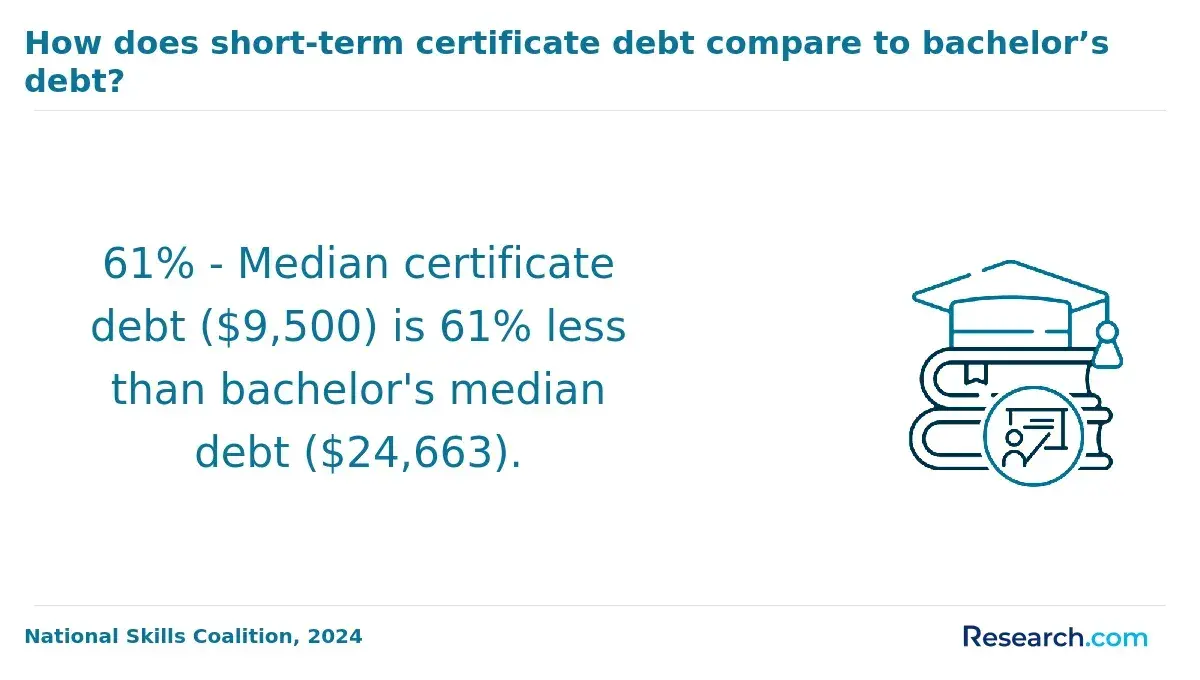
Cost is one of the biggest trade-offs. College Board's 2024 pricing data reported average published tuition and fees of $11,610 for in-state students at public four-year institutions for 2024-25, while private nonprofit four-year institutions averaged $43,350. That matters because long-term career stability improves when education debt stays proportionate to realistic early-career earnings.
| Program type | Career stability advantage | Main limitation | Best choice for |
| Bachelor's degree | Provides broad foundations in programming, math, statistics, databases, and general education. | Takes longer and may include courses not directly tied to immediate job skills. | Students seeking a first degree and broad access to analyst, engineering, and graduate-study options. |
| Master's degree | Can strengthen credibility for data scientist, machine learning, research, or senior analytics roles. | May not pay off if the curriculum is too theoretical or if the student lacks practical projects. | Working professionals, STEM graduates, and analysts aiming for higher-level roles. |
| Bootcamp | Can build job-ready tools quickly, especially SQL, Python, dashboards, and portfolio projects. | Usually carries less signaling power than an accredited degree for roles requiring formal education. | Career changers who already have a degree or relevant professional experience. |
| Graduate certificate | Offers focused upskilling without committing to a full master's degree. | May not be enough for employers that explicitly require a degree. | Professionals adding analytics, AI, or data engineering skills to an existing career. |
This same decision logic applies outside data science as well: the credential must match the role, the accreditation expectations, and the financing plan. Career changers comparing applied online options, such as online medical assistant programs that accept financial aid, should ask similar questions about aid eligibility, employer recognition, and total cost before enrolling.
A bachelor's degree is usually the safest long-term option for someone without a degree. A master's degree often makes sense for someone who already has technical foundations and wants to move into modeling, AI, or leadership. A bootcamp can be useful for fast skill-building, but it is riskier as a stand-alone credential if the target jobs list degree requirements.
What data science skills and specializations are most important for long-term career security?
The most secure data science professionals are not just tool users. They understand how to define a problem, test assumptions, manage data responsibly, and communicate what the results mean for decisions.
AI tools can now generate code, summarize data, and draft visualizations, so long-term security comes from skills that are harder to automate. The table below separates foundational skills from specializations that can increase resilience.
| Skill area | Why it supports stability | Examples |
| Statistics and experimentation | Helps professionals avoid false conclusions and evaluate whether a model or intervention actually works. | Regression, hypothesis testing, causal inference, A/B testing, confidence intervals. |
| Programming and data manipulation | Allows professionals to clean, transform, automate, and analyze data at scale. | Python, R, SQL, notebooks, scripting, version control. |
| Data engineering fundamentals | Improves employability because models are only useful when data pipelines are reliable. | ETL/ELT, databases, APIs, data warehouses, orchestration, data quality checks. |
| Cloud and production systems | Supports movement from analysis to deployed, monitored, repeatable systems. | AWS, Azure, Google Cloud, containers, model monitoring, MLOps. |
| Responsible AI and governance | Becomes more valuable as organizations face privacy, bias, compliance, and audit concerns. | Model documentation, fairness testing, privacy controls, explainability, data lineage. |
| Domain knowledge | Helps analysts ask better questions and avoid technically correct but operationally useless work. | Healthcare claims, banking risk, supply chains, marketing attribution, public policy. |
| Communication and decision support | Turns analysis into action and helps data professionals influence leadership. | Storytelling, stakeholder interviews, executive summaries, dashboards, recommendations. |
If you are building a skill plan, prioritize the sequence below. It is more reliable than learning disconnected tools because it mirrors how real data work moves from question to decision.
- Learn SQL well enough to join, filter, aggregate, and validate business data.
- Build Python or R skills for cleaning, modeling, automation, and reproducible analysis.
- Study statistics deeply enough to understand uncertainty, sampling, bias, and model limitations.
- Create portfolio projects using messy, realistic data and explain the decisions your analysis supports.
- Add one specialization such as healthcare analytics, fraud analytics, machine learning engineering, cloud data engineering, or operations research.
A common mistake is chasing every new AI tool without mastering the fundamentals. Tools change quickly, but employers continue to value people who can verify outputs, spot weak assumptions, protect sensitive data, and explain whether a model is useful in the real world.
How do salaries and total compensation differ across stable data science career paths?
Data science salaries vary widely by role, industry, region, experience, education, and employer size. Compensation can include base pay, bonuses, equity, retirement contributions, health benefits, tuition support, and remote-work flexibility, so base salary is only one part of the decision.
BLS May 2024 wage data provides a useful national benchmark because it reflects actual U.S. labor market reporting rather than self-reported online estimates. These figures should be used as context, not as guaranteed outcomes for any individual graduate.
| Role or related occupation | Median annual wage from BLS May 2024 data | Compensation context |
| Computer and information research scientists | $140,910 | Often tied to advanced research, AI, algorithms, or systems roles that may require graduate education. |
| Information security analysts | $124,910 | Relevant for data professionals specializing in cybersecurity analytics, threat detection, and risk. |
| Data scientists | $112,590 | Strong benchmark for applied modeling, analytics, machine learning, and advanced data work. |
| Database administrators and architects | $104,620 | Useful comparison for data engineering, data architecture, and platform-oriented careers. |
| Operations research analysts | $91,290 | Often stable in logistics, healthcare, government, manufacturing, and optimization-heavy roles. |
Higher pay is not always the same as better stability. A startup AI role may offer high upside but more volatility, while a healthcare, government, utilities, or insurance analytics role may offer steadier employment, clearer advancement ladders, and stronger benefits.
When comparing offers or career paths, look beyond the headline salary. These factors can materially change the value of a role over time.
- Benefits such as health insurance, retirement matching, paid leave, tuition assistance, and professional development budgets.
- Location and remote-work policy, because salaries and living costs differ significantly across U.S. regions.
- Stability of the employer's revenue model, especially whether analytics supports a core function or an experimental project.
- Promotion paths, including whether the organization has senior individual contributor, management, and architecture tracks.
- Skill transferability, because roles built around widely used tools and methods are usually safer than roles dependent on a single proprietary system.
How do online data science programs compare to campus-based options for career outcomes?
Online and campus-based data science programs can both lead to good outcomes, but they serve different learners. Employers generally care more about accreditation, curriculum quality, projects, internships, technical depth, and demonstrated skills than whether every course met in a classroom.
The best format depends on your schedule, learning style, networking needs, and access to internships or employer-sponsored projects. The table below highlights the most important career-outcome differences:
| Factor | Online data science programs | Campus-based data science programs |
| Flexibility | Stronger for working adults, parents, military learners, and students outside commuting range. | Less flexible, but structured schedules can help students who need in-person accountability. |
| Networking | Depends heavily on live sessions, cohort design, career services, and alumni access. | Often stronger for local employer events, faculty access, labs, and peer relationships. |
| Hands-on experience | Can be strong if the program includes real datasets, capstones, cloud tools, and team projects. | Can be strong if students have access to labs, research groups, internships, and campus recruiting. |
| Cost and opportunity cost | May reduce relocation and commuting costs, but tuition varies widely. | May offer campus resources, but relocation, parking, housing, and time costs can increase total cost. |
| Employer perception | Strongest when the school is accredited and the transcript or diploma is not treated as a lesser credential. | Strong when the institution has recognized faculty, employer relationships, and internship pipelines. |
Online tech education has expanded beyond data science into adjacent fields such as fintech, cybersecurity, and distributed systems. Students comparing a data science program with a blockchain degree online should pay close attention to whether the curriculum builds transferable programming, data, security, and systems skills rather than focusing only on one trend.
Online study is usually a strong choice when you are self-directed and need flexibility. Campus study may be better if you want in-person research experience, local internship pipelines, structured peer support, or access to faculty labs.
Either way, the program should produce evidence you can show employers: code repositories, dashboards, model reports, data engineering projects, and clear explanations of your decisions.
What role do certifications and professional credentials play in data science career stability?
Certifications can improve data science career stability when they validate a specific skill employers need. They are most useful as supplements to a degree, work experience, or a strong portfolio, not as a complete replacement for foundational training.
There is no universal license required to work as a data scientist in the U.S. However, credentials can help in cloud computing, analytics platforms, database systems, security, project management, and vendor-specific machine learning tools.
| Credential type | Examples | Best use |
| Cloud certifications | AWS, Microsoft Azure, Google Cloud | Useful for data engineering, machine learning engineering, and production analytics roles. |
| Analytics and visualization certifications | Tableau, Power BI, SAS | Useful for business intelligence, reporting, dashboarding, and enterprise analytics roles. |
| Data platform certifications | Databricks, Snowflake, database vendor credentials | Useful for analytics engineering, data warehousing, and modern data stack roles. |
| Security credentials | Security-focused and cloud security credentials | Useful for cybersecurity analytics, fraud detection, risk analytics, and data governance roles. |
| Project or agile credentials | Project management and agile credentials | Useful for senior analysts, analytics managers, and cross-functional data product roles. |
Choose certifications based on job postings, not marketing pages. If five employers in your target market mention Azure data services, Power BI, or Databricks, that is a stronger signal than a credential that is popular online but absent from local or remote job requirements.
Avoid these certification mistakes because they can waste time and money:
- Collecting beginner certificates without building projects that show applied skill.
- Paying for a credential before confirming whether target employers recognize it.
- Choosing a vendor-specific credential before learning transferable fundamentals such as SQL, statistics, and data modeling.
- Assuming a certificate will overcome missing degree requirements for roles that explicitly require a bachelor's or master's degree.
How can prospective students evaluate and choose reputable, accredited data science programs?
Choosing a reputable data science program requires more than comparing rankings or tuition. The strongest programs combine recognized accreditation, rigorous curriculum, practical projects, qualified faculty, career support, transparent costs, and realistic outcome information.
Start by confirming institutional accreditation through recognized accrediting agencies and checking whether the school participates in federal student aid programs if you plan to use aid. Then evaluate whether the curriculum matches the actual career path you want.
- Check institutional accreditation and make sure the school is recognized by appropriate U.S. higher education authorities.
- Review the curriculum for SQL, Python or R, statistics, machine learning, databases, data ethics, cloud systems, and capstone work.
- Ask whether projects use realistic datasets, version control, reproducible workflows, and written business or technical reports.
- Compare total cost, including tuition, fees, software, books, residency requirements, travel, and lost work time.
- Ask about career services, internship support, employer partnerships, alumni networks, and portfolio review.
- Request outcome information, but treat salary and placement claims carefully unless the school explains how the data was collected.
- Confirm transfer credit, part-time options, academic support, and whether courses are taught by faculty with relevant technical or industry experience.
Red flags should slow your decision. A program may still be legitimate, but you should ask more questions before committing money or time.
- The school avoids clear answers about accreditation, transfer credits, graduation requirements, or total cost.
- The curriculum promises advanced AI careers but has little statistics, programming, database, or data engineering content.
- Career claims sound guaranteed or unusually precise without a transparent methodology.
- The program relies only on pre-recorded lessons and offers little feedback on code, projects, or career preparation.
- Admissions pressure is high, but advisors do not ask about your math background, work experience, schedule, or target career.
The best program is the one that fits your goal and reduces avoidable risk. For a future data engineer, cloud architecture and databases may matter more than research theory. For a future healthcare data scientist, privacy, biostatistics, and domain-specific projects may matter more. For a future business intelligence analyst, SQL, dashboards, stakeholder communication, and metric design may be the highest-value skills.
Other Things You Should Know About Data Science
Yes, but the transition is easier if you build a bridge from your current field. For example, a marketing professional can start with customer analytics, while a healthcare worker can move toward clinical or operations analytics. The key is to add SQL, statistics, Python, and portfolio projects while using your domain knowledge as an advantage.
Entry-level competition can be high because many people are trying to enter the field at the same time. Candidates improve their chances by applying beyond the "data scientist" title, including analyst, business intelligence, data quality, junior data engineer, operations analyst, and research analyst roles.
A portfolio is especially important for candidates without direct experience. Strong projects should show a clear question, messy data cleaning, defensible methods, readable code, visual summaries, and practical recommendations. Employers should be able to understand what decision your work supports.
Roles tied to business decisions and regulated environments are least vulnerable, especially analytics translators, machine learning engineers, and data governance specialists. These jobs require human judgment, stakeholder communication, and compliance with standards such as GDPR and ISO 27001, which automation cannot fully replace.
References
- 5 Jobs You Can Get with a Data Science Certification https://lumifylearn.com/blog/blog-5-unexpected-jobs-you-can-get-with-a-data-science-certification/
- How to Choose the Right Data Science Course? https://henryharvin.ae/blog/how-to-choose-the-right-data-science-course/
- Data Science Bootcamp vs Degree | Find Your Path https://gradious.com/data-science-bootcamp-vs-degree/
- How an Online Data Science Degree Can Propel Your Career Forward https://www.ucumberlands.edu/blog/how-an-online-data-science-degree-can-propel-your-career
- Choosing a master’s degree: data science or artificial intelligence | edX https://www.edx.org/resources/choosing-a-masters-degree-data-science-or-artificial-intelligence
- Data Science Course vs. University – Which path is better in 2026? https://www.wbscodingschool.com/blog/data-science-course-vs-university/
- Data Analyst vs Data Scientist Salary in 2026: Who Earns More? https://skillifysolutions.com/blogs/data-science/data-analyst-vs-data-scientist-salary/
- Careers in data science: Which path is right for you? | Learning People UK https://www.learningpeople.com/uk/career-insights/blog/careers-in-data-science-which-path-is-right-for-you/
- How to Choosing the Right Data Science Course https://iabac.org/blog/how-to-choose-data-science-course
- Data Analytics & Data Science Careers: Roles and Pathways - DataWiz College https://datawizcollege.com/data-analytics-and-data-science-career-path/