2027 Best Online Master’s in Gerontology Programs

Co-Founder and Chief Data Scientist
An online master’s in gerontology is designed for students and working professionals who want to understand aging, improve services for older adults, and qualify for roles in healthcare, social services, policy, administration, research, or community programs. The need is not abstract: the United States has more than 58 million adults aged 65 and above (United States Census Bureau, 2024), and organizations that serve older adults need professionals who understand the biological, psychological, social, economic, and policy dimensions of aging.
This guide explains what an online master’s in gerontology covers, how online programs compare with campus programs, what they cost, which admissions requirements to expect, how to evaluate accreditation and career outcomes, and when this degree is worth the investment. It is also useful for healthcare professionals, nurses, social workers, public health workers, and students exploring aging-related careers, including those researching social work career paths that may involve older adults and their families.
Online Master’s in Gerontology Table of Contents
- Can you complete a master’s in gerontology fully online?
- Do employers respect online gerontology degrees?
- Are online gerontology degrees accepted internationally?
- 2027 Best Online Master’s in Gerontology Programs
- Online vs. Traditional Master’s Degree in Gerontology
- How much does an online master’s in gerontology cost?
- What are the requirements for an online master’s degree in gerontology?
- Courses to Expect in Online Master’s in Gerontology
- How to Choose an Online Master’s Degree in Gerontology
- Financial aid options for online gerontology students
- Can an Online Master’s in Gerontology Accelerate My Nursing Career?
- What Additional Certifications Can Complement Your Online Master’s in Gerontology?
- Emerging Technologies and Future of Gerontology
- What career support and networking opportunities do online gerontology programs offer?
- How do online master’s in gerontology programs integrate practical learning opportunities?
- How do online gerontology programs address interdisciplinary academic challenges?
- How can gerontology professionals stay updated with industry trends and advancements?
- Can I become a physician assistant (PA) with an online Master's in Gerontology?
- Is an Online Master’s in Gerontology a Cost-Effective Investment Compared to Other Healthcare Degrees?
- What factors ensure the quality and credibility of online gerontology programs?
- How an Online Master’s in Gerontology Prepares You for Leadership Roles in Aging Services
Quick Answer: Is an Online Master’s in Gerontology Worth Considering?
An online master’s in gerontology can be a strong option if you want to work with older adults in healthcare, social services, long-term care, public health, program management, policy, research, or aging services leadership. The degree is especially practical for working adults because many programs offer flexible online coursework while covering the same core academic areas as campus-based programs.
The degree is not the right credential for every goal. It generally does not qualify someone to become a physician assistant, nurse practitioner, occupational therapist, or licensed social worker by itself. Those roles may require separate licensure-specific degrees, supervised clinical hours, certification exams, or state approval. Before enrolling, confirm accreditation, fieldwork requirements, total cost, transfer policies, and whether the program supports your target career.
| Best Fit | May Not Be the Best Fit |
| Professionals who want to manage aging services, senior programs, long-term care initiatives, community health programs, or policy projects | Students whose main goal is a licensed clinical role that requires a separate approved pathway |
| Nurses, social workers, public health workers, and healthcare administrators who want aging-specific expertise | Applicants who need extensive in-person lab work or clinical training unavailable in their state |
| Students who need flexible scheduling while continuing to work | Students who choose a program without verifying accreditation, practicum support, or career alignment |
Can you complete a master’s in gerontology fully online?
Yes. Many colleges and universities offer online master’s in gerontology programs that allow students to complete most or all didactic coursework remotely. Some programs are fully online, while others may include internships, practicum placements, campus intensives, clinical requirements, or local field experiences. Students should read each program’s requirements carefully before assuming that “online” means no in-person obligations.
Online graduate learning has become common enough that many students are comfortable with the format. In one reported measure, 72% of online students said they were satisfied or very satisfied with their experience (Statista, 2024). Still, the quality of an online gerontology program depends less on the delivery format and more on accreditation, curriculum design, faculty qualifications, field placement support, and student services.
Gerontology master’s programs may be offered through different degree types. An MS often emphasizes research, science, assessment, data, and evidence-based practice. An MPH with an aging focus typically connects gerontology with public health systems, population health, policy, and prevention. An MA may place more weight on social, behavioral, cultural, ethical, and qualitative dimensions of aging.
| Degree Type | Typical Focus | When It Makes Sense |
| Master of Science in Gerontology | Research, aging science, program evaluation, applied gerontology, data-informed practice | Choose this if you want analytical, administrative, research, or evidence-based aging services roles. |
| Master of Public Health with aging-related focus | Population health, prevention, health policy, community programs, systems-level planning | Choose this if you are interested in public health degree careers, community health, policy, or aging population initiatives. |
| Master of Arts in Gerontology | Human development, psychology, social context, ethics, culture, communication, caregiving systems | Choose this if your goals are in advocacy, social services, education, program coordination, or community-based work. |
Do employers respect online gerontology degrees?
Employers are generally more likely to focus on the institution, accreditation, relevance of coursework, practical experience, and the applicant’s skills than on whether courses were taken online. According to the cited Statista 2024 data, 43% of hiring managers are more concerned about where applicants earned their degrees than how they completed them. That matters for students exploring aging services, healthcare administration, public health, or related public health degree careers.
The same logic applies to online healthcare education more broadly. The cited data also notes that 75% of hiring managers are open to hiring applicants with online health education degrees. However, “online” should never be treated as a shortcut. Students should prioritize regionally accredited institutions, relevant program-level accreditation where applicable, strong faculty credentials, and documented fieldwork or applied learning opportunities.
What employers may look for besides the degree
- Accreditation and institutional reputation: A degree from a recognized institution usually carries more credibility than an unaccredited or poorly documented program.
- Experience with older adults: Internships, practicum work, volunteer experience, healthcare employment, case management, or long-term care experience can strengthen your profile.
- Role-specific skills: Employers may value program evaluation, care coordination, policy analysis, grant writing, communication, leadership, and interdisciplinary collaboration.
- Licensure fit: For regulated roles, employers will verify that you meet state or professional licensing requirements.
Are online gerontology degrees accepted internationally?
An online master’s in gerontology can provide the same academic credential as an on-campus program at the same institution, but recognition outside the United States is not automatic. Degree acceptance can vary by country, employer, licensing body, immigration authority, and credential evaluation process. If you plan to work internationally, ask whether the degree will be evaluated as equivalent to a local graduate credential.
Interest in gerontology programs is closely tied to population aging. According to the Administration for Community Living", people aged 65 and older represented 17.3% of the US population in in the past. It is projected to grow by 22% by 2040." This demographic shift creates demand for professionals who can support aging-related services, policy, research, and care systems.
Online learning can also support students already working in healthcare or human services. The cited data notes that 53.9% of nursing students taking gerontology or health information management courses illustrated the positive impact of online education on the learning process. Even so, students should confirm whether their intended career path requires in-person clinical training, local approval, or country-specific registration.
Questions to ask if you plan to use the degree outside the US
- Will a credential evaluation agency recognize this online master’s degree as equivalent to a local graduate degree?
- Does the country distinguish between online and campus-based degrees for employment or professional registration?
- Does the program provide transcripts, syllabi, and documentation needed for credential review?
- Will the degree support your target role, or will you need local licensure, exams, or supervised practice?
2027 Best Online Master’s in Gerontology Programs
Research.com reviewed available program information from credible sources to identify online master’s in gerontology and adult-gerontology programs that may fit different professional goals. The programs below vary in degree type, cost, credits, accreditation, and clinical or leadership orientation, so students should compare them based on career alignment rather than ranking position alone.
| Program | Best For | Key Details |
| University of Southern California | Students seeking leadership roles in aging services, program administration, and direct-service organizations | Program Length: Two to four years; Cost per Credit: $2,137; Required Credits to Graduate: 44; Accreditation: Accreditation for Gerontology Education Council |
| The George Washington University | Registered nurses pursuing Adult-Gerontology Primary Care Nurse Practitioner preparation | Program Length: Two to four years; Cost per Credit: $1,450; Required Credits to Graduate: 48; Accreditation: Commission on Collegiate Nursing Education |
| University of Utah | Students who want a broad gerontology program focused on aging, services, programs, and leadership | Program Length: One to two years; Cost per Credit: $972; Required Credits to Graduate: 34; Accreditation: Commission on Collegiate Nursing Education |
| University of Connecticut | RNs interested in Adult-Gerontology Acute Care Nurse Practitioner preparation | Program Length: Four years; Cost per Credit: $925; Required Credits to Graduate: 45; Accreditation: Commission on Collegiate Nursing Education |
| McDaniel College | Students seeking an interdisciplinary gerontology curriculum with aging biology, psychology, and research methods | Program Length: Two years; Cost per Credit: $548; Required Credits to Graduate: 36; Accreditation: Academy for Gerontology in Higher Education |
1. University of Southern California
The University of Southern California offers an online Master of Science in Gerontology for graduate students preparing to lead programs, services, and organizations that support older adults. The curriculum is built for students who want to understand aging across direct service, administration, program planning, and evaluation contexts.
- Program Length: Two to four years
- Tracks/concentrations: Human development and aging, psychology, care management, nutrition, geriatric care, end of life
- Cost per Credit: $2,137
- Required Credits to Graduate: 44
- Accreditation: Accreditation for Gerontology Education Council
2. The George Washington University
The The George Washington University online Master of Science in Nursing in Adult-Gerontology Primary Care Nurse Practitioner prepares registered nurses for advanced practice with adult and older adult populations. Coursework addresses settings such as home health, long-term care, assisted living, and related care environments, and the program prepares RNs to sit for the ANCC and AANP certification exams.
- Program Length: Two to four years
- Tracks/concentrations: Nursing leadership, population health, healthcare policies and political processes
- Cost per Credit: $1,450
- Required Credits to Graduate: 48
- Accreditation: Commission on Collegiate Nursing Education
3. University of Utah
The University of Utah offers an online Master of Science in Gerontology that helps students study the aging process, aging-related social issues, and the design of services for older adults. The program is suited for students seeking leadership, education, or service-oriented roles in the aging field.
- Program Length: One to two years
- Tracks/concentrations: The aging process, educational gerontology, services and programs for older adults
- Cost per Credit: $972
- Required Credits to Graduate: 34
- Accreditation: Commission on Collegiate Nursing Education
4. University of Connecticut
The University of Connecticut offers an online Master of Science in Nursing with an Adult-Gerontology Acute Care Nurse Practitioner focus for RNs who want to care for acutely ill adult patients. The program emphasizes advanced clinical judgment, diagnosis, chronic and acute conditions, and complex care needs among adults and older adults.
- Program Length: Four years
- Tracks/concentrations: Advanced nursing practice across the lifespan, advanced diagnosis, common and chronic health problems, and acute care
- Cost per Credit: $925
- Required Credits to Graduate: 45
- Accreditation: Commission on Collegiate Nursing Education
5. McDaniel College
McDaniel College offers an online Master of Science in Gerontology for students who want an interdisciplinary understanding of aging, research, service delivery, and policy. The program may fit students who want to work in care coordination, senior services, organizational leadership, advocacy, or aging-related research support.
- Program Length: Two years
- Tracks/concentrations: Interdisciplinary approaches to gerontology, biology and psychology of aging, and research methodologies
- Cost per Credit: $548
- Required Credits to Graduate: 36
- Accreditation: Academy for Gerontology in Higher Education
Online vs. Traditional Master’s Degree in Gerontology
Online and campus-based master’s programs in gerontology can lead to the same academic credential, but the learning experience can differ significantly. Full-time students may complete a program in one to two years, while part-time students often need two to four years, depending on credit load, program design, and fieldwork requirements.
Strong gerontology programs prepare students for work in settings such as nursing homes, assisted living facilities, hospitals, hospices, public agencies, nonprofit organizations, senior centers, and community health programs. Many programs also examine how technology is changing healthcare, including telehealth, remote monitoring, data systems, and digital tools used in aging services.
| Comparison Factor | Online Master’s in Gerontology | Campus-Based Master’s in Gerontology |
| Scheduling | Often better for working professionals, caregivers, and students who need asynchronous or evening options | May provide more fixed class times and structured campus engagement |
| Location | Can reduce or eliminate relocation and commuting, though some programs still require fieldwork or campus visits | Requires regular campus attendance and may involve relocation |
| Networking | Depends on virtual advising, online cohorts, alumni events, and practicum placements | May offer easier access to campus events, faculty offices, and local partnerships |
| Cost Considerations | May reduce housing, transportation, and relocation expenses, but tuition and fees vary widely | May include campus fees, commuting, housing, and local cost-of-living expenses |
| Learning Style | Best for self-directed students who can manage deadlines independently | Best for students who prefer face-to-face discussion, campus routines, and immediate in-person access |
Advantages of online gerontology programs
- Lower indirect costs: Online students may avoid relocation, campus housing, parking, and daily commuting costs, even when tuition is similar to campus tuition.
- Flexible pacing: Some programs offer synchronous classes, asynchronous modules, or a mix of both. The cited EducationDynamics 2024 data reports that 57% of online college students prefer asynchronous online learning.
- Access without relocation: Students can often enroll from another city or state, which is useful for working adults and caregivers.
- Work-school balance: Online formats can make it easier to continue employment while completing graduate coursework.
- Immediate application: Students already employed in healthcare, social services, or community organizations may be able to apply course concepts directly to their current work.
Is an online degree cheaper?
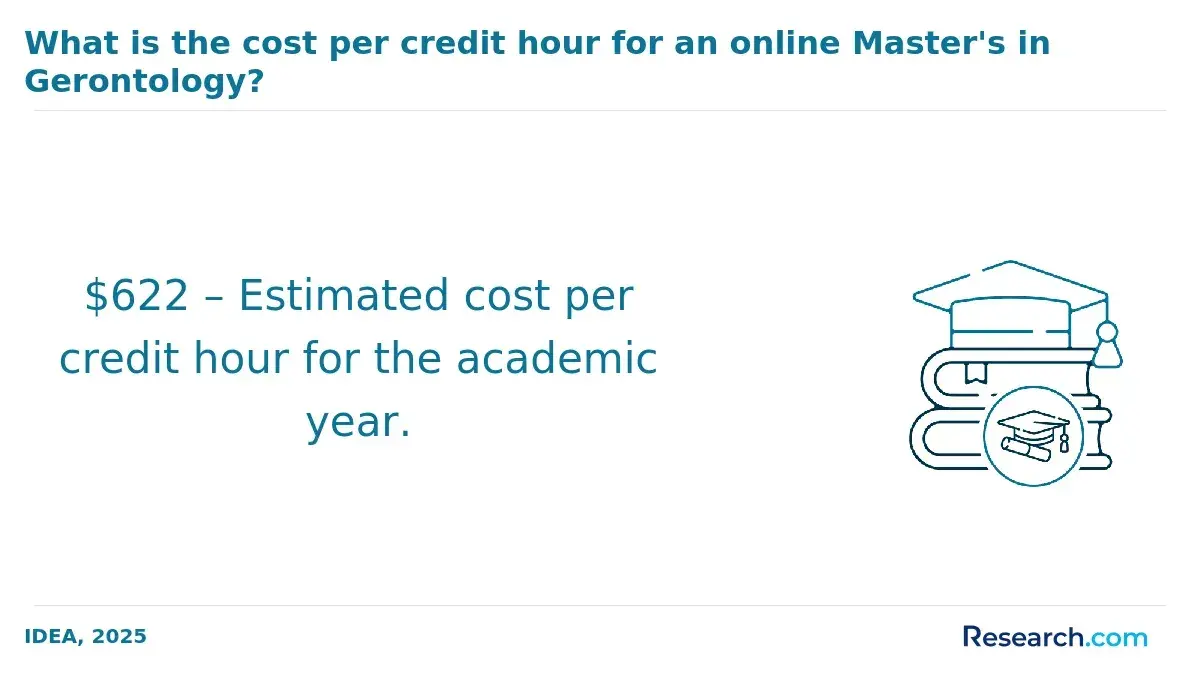
An online gerontology master’s can be cheaper than a campus program, but it is not guaranteed. Many schools charge online students by the credit. If a program charges $548 per Credit and requires 36 credits to graduate, the tuition calculation can reach at least $9,864 per academic year depending on enrollment pace and institutional billing practices.
Residency status can also affect tuition. Some public universities charge different rates for in-state and out-of-state students, while others use a flat online tuition rate regardless of where a student lives. Students should ask for a complete cost sheet, not just the tuition rate.
Online students should also budget for technology fees, learning management system fees, textbooks or digital materials, background checks, practicum-related expenses, graduation fees, and possible travel if the program requires campus visits or local field placements.
Is an online degree as credible as a campus degree?
An online master’s degree in gerontology can be just as credible as a traditional degree when it is earned from a properly accredited institution with rigorous coursework, qualified faculty, and meaningful applied learning. The delivery format alone does not determine quality.
Students who plan to enter regulated healthcare roles should be especially careful. For example, someone researching online nurse practitioner programs must confirm that the program meets certification and licensure requirements in the state where they plan to practice. A general gerontology master’s is not the same as an NP program, even if both involve aging-related care.
Career outcomes vary by role, prior experience, location, and credentials. One occupation related to aging support is home health and personal care aide, with an average annual salary of $33,380 (U.S. Bureau of Labor Statistics, 2024). A master’s degree may be more relevant for supervisory, program, policy, education, research, or administrative roles than for entry-level direct-care aide roles.
How much does an online master’s in gerontology cost?
The cited average cost of an on-campus master’s degree ranges between $22,430 and $43,620 per academic year (National Center for Education Statistics, 2024). For online master’s in gerontology programs, the cited range is $9,900 to $47,100. Because program length and credit requirements vary, students should compare total program cost rather than only cost per credit.
| Online Learning | In-campus Learning | |
| Public In-state | $9,900 | $12,400 |
| Public Out-of-state | $18,600 | $14,300 |
| Private | $47,100 | $28,500 |
| *Values are estimates |
Costs to include in your budget
- University fees: Registration, student services, program fees, health or activity fees, technology fees, and graduation fees can raise the total cost.
- Course materials: Online students may still pay for digital textbooks, journal access, software, simulations, assessment tools, or lab-related materials.
- Residency pricing: Some institutions bill online students differently based on state residency, while others charge a single online rate.
- Travel and fieldwork: Online programs may still require occasional campus visits, local practicum placements, background checks, immunization documentation, or transportation to community sites.
- Opportunity cost: Students reducing work hours to study should factor lost income into the real cost of attendance.
Is an online master’s degree in gerontology worth it?
An online master’s in gerontology can be worth it when the degree clearly supports your career goals and the cost is reasonable relative to your expected role. The aging population is projected to continue rising to 21% of the total population by 2030 (U.S. Census Bureau, 2024), which reinforces the long-term need for aging-related services and leadership.
The degree may be especially valuable for professionals who already work in nursing, public health, care coordination, social services, nonprofit programs, healthcare administration, or community health. Students coming from online nursing degree programs may use gerontology coursework to strengthen expertise in older adult care, although clinical advancement may require separate nursing credentials.
How to estimate return on investment before enrolling
- Identify the specific job titles you want after graduation.
- Check whether those jobs require a master’s degree, a license, clinical certification, or simply experience.
- Compare total tuition and fees across at least three programs.
- Ask each program for career outcomes, practicum sites, alumni roles, and employer partnerships.
- Calculate whether the credential helps you move into a higher-level role, a more stable sector, or a specialized aging services niche.
What are the requirements for an online master’s degree in gerontology?
Admissions requirements vary by institution, but most online master’s in gerontology programs require a bachelor’s degree, transcripts, a statement of purpose, and evidence that the applicant can handle graduate-level work. Some programs prefer applicants with healthcare, social science, psychology, nursing, public health, human services, or related academic backgrounds.
Gerontology programs are designed around the realities of aging and health. The cited National Center for Health Statistics data reports that 23.4% of people aged 65 and older assess their health as fair or poor (National Center for Health Statistics, 2024). As a result, coursework often addresses aging biology, mental health, healthcare delivery, family systems, public policy, ethics, and service coordination.
Common admission requirements
- Bachelor’s degree: Applicants are usually expected to hold a bachelor’s degree from an accredited institution. Some programs accept many majors, while others prefer social sciences, psychology, nursing, healthcare, human services, or related preparation, including adjacent healthcare backgrounds such as a medical billing and coding associate degree online.
- Official transcripts: Schools typically require transcripts from prior undergraduate and graduate coursework to verify academic history.
- GPA evidence: Many programs prefer a GPA of 3.0 or higher, although some may review applicants with lower GPAs if they have strong experience or other qualifications.
- Statement of purpose: Applicants may need to explain why they want to study gerontology, how their background connects to aging services, and what career goals they plan to pursue.
- Resume or CV: Programs often request a resume that summarizes education, employment, volunteer work, research, publications, certifications, and aging-related experience.
Skills students should build during the program
| Skill | Why It Matters in Gerontology |
| Communication | Professionals must explain complex information clearly to older adults, families, care teams, administrators, and community partners. |
| Empathy and compassion | Aging services often involve illness, disability, loss, caregiver stress, and major life transitions. |
| Critical thinking | Gerontology professionals evaluate needs, interpret evidence, compare service options, and solve complex care or program problems. |
| Research literacy | Graduates should be able to read studies, assess evidence, and apply findings responsibly in practice or policy. |
| Interdisciplinary collaboration | Aging work often involves nurses, physicians, social workers, psychologists, public health workers, administrators, and family caregivers. |
| Cultural competence | Older adults differ by culture, language, income, disability status, family structure, religion, and life experience. |
| Leadership and advocacy | Graduates may lead programs, influence policy, protect older adults’ rights, and improve service systems. |
What technology do online students need?
Online learners typically need dependable high-speed internet and access to a laptop or desktop computer. Program requirements vary, but the following specifications are commonly recommended.
Recommended Operating Systems
- Windows 10 or newer
- macOS 10.14 or newer
- Linux Ubuntu, Elementary OS, or Mint
Hardware Specifications
- The device must not be more than five years old
- Processor: At least 2GHz
- Hard Drive: At least 32 GB
- Memory (RAM): At least 4 GB
- Ethernet (LAN) connection or wireless adapter (Wi-Fi)
- Sound card with speakers
A webcam, microphone, and noise-canceling headphones can also improve participation in synchronous classes, advising appointments, group projects, and virtual presentations. Students should also confirm whether their program requires specific software, proctoring tools, secure browsers, or video conferencing platforms.
Courses to Expect in Online Master’s in Gerontology
Course titles vary by institution, but most online master’s in gerontology programs combine aging theory, health, services, policy, research, and applied practice. Students should look for a curriculum that matches their target role, whether that role is administrative, clinical-adjacent, research-focused, policy-oriented, or community-based.
| Course Area | What Students Typically Learn |
| Introduction to Gerontology | Foundational theories of aging, major demographic trends, and the effects of aging on individuals, families, organizations, and society |
| Aging and Health | Physical and mental health concerns, prevention, chronic conditions, health promotion, and wellness among older adults |
| Policy and Advocacy in Gerontology | Programs and policies affecting older adults, including Social Security, healthcare policy, long-term care, and advocacy strategies |
| Aging and Society | Economic, social, cultural, and intergenerational implications of population aging |
| Research Methods in Gerontology | Quantitative and qualitative research approaches, study design, data collection, and evaluation of aging-related evidence |
| Long-Term Care and Aging Services | Home care, assisted living, hospice, nursing homes, service delivery, access, and quality issues |
| Aging and Mental Health | Depression, anxiety, dementia, cognitive change, assessment approaches, and treatment considerations for older adults |
These courses can prepare graduates for aging-related positions in direct service organizations, public agencies, healthcare-adjacent settings, research teams, and community programs. Salary outcomes depend on the occupation, location, employer, prior experience, and credentials.
| Job Roles | Average Annual Salary |
| Occupational Therapy Assistants and Aides | $61,520 |
| Social and Human Service Assistants | $37,610 |
| Health Education Specialists | $ 37,140 |
| Nursing Assistants and Orderlies | $30,290 |
| Community Health Workers | $ 32,180 |
How to Choose an Online Master’s Degree in Gerontology
The best online gerontology program is the one that fits your career goal, budget, schedule, learning style, and credential requirements. A highly ranked or well-known program is not automatically the right choice if it lacks your needed specialization, fieldwork structure, licensure alignment, or support services.
- Confirm accreditation: Check institutional accreditation and any relevant program-level accreditation. The Accreditation for Gerontology Education Council accredits some gerontology programs, while nursing programs with adult-gerontology tracks may be accredited by the Commission on Collegiate Nursing Education.
- Match curriculum to career goals: Review whether courses emphasize leadership, policy, research, care management, public health, long-term care, dementia, clinical nursing, or community services.
- Review the learning format: Determine whether classes are synchronous, asynchronous, hybrid, accelerated, cohort-based, or self-paced.
- Ask about practical learning: Fieldwork, internships, practicums, case studies, simulations, and community partnerships can make the degree more useful.
- Compare total cost: Include tuition, fees, books, software, travel, lost income, and financial aid opportunities.
- Check student support: Look for advising, writing support, library access, career services, disability services, technical help, and internship coordination.
Common mistakes to avoid
| Mistake | Better Approach |
| Choosing the cheapest program without checking accreditation | Verify institutional and relevant program accreditation before comparing price. |
| Assuming every online program is fully remote | Ask about residencies, practicums, campus visits, clinical placements, and local site requirements. |
| Focusing only on tuition per credit | Calculate total program cost, including required credits, fees, materials, and travel. |
| Expecting the degree to guarantee a specific salary | Research actual job titles, employer expectations, experience requirements, and local wages. |
| Ignoring licensure rules | Confirm whether your target role requires a separate approved degree, certification, exam, or supervised practice. |
| Relying only on rankings | Use rankings as one input, then evaluate curriculum, outcomes, faculty, fieldwork, and support. |
Questions to ask admissions advisors
- Is the program fully online, or are campus visits required?
- What organizations host internships, practicums, or applied projects?
- What roles have recent graduates pursued?
- Does the program prepare students for any certification or licensure pathway?
- How are online students supported in career planning and networking?
- Are tuition rates different for in-state and out-of-state online students?
- Can transfer credits, employer reimbursement, scholarships, or graduate assistantships reduce the cost?
What financial aid opportunities exist for online gerontology programs?
Online gerontology students may be eligible for several forms of aid, including institutional scholarships, grants, federal student aid, employer tuition reimbursement, payment plans, and low-interest loan options. Some universities also provide financial counseling to help students compare borrowing, part-time enrollment, and employer benefits before committing.
Students focused on affordability should compare total program cost, required credits, transfer credit policies, and fees. For a starting point, review Research.com’s guide to affordable masters in gerontology online programs.
Can an Online Master’s in Gerontology Accelerate My Nursing Career?
For nurses, gerontology training can strengthen expertise in older adult care, long-term care, rehabilitation, home health, chronic disease management, and community health. It may also support movement into care coordination, education, leadership, case management, or administrative roles involving older adults.
However, nurses should distinguish a general gerontology master’s from an advanced practice nursing program. If the goal is nurse practitioner practice, the program must align with certification and licensure requirements. Nurses who want a structured bridge into advanced nursing education may also compare ADN to MSN bridge programs before choosing a gerontology-focused path.
What Additional Certifications Can Complement Your Online Master’s in Gerontology?
Additional credentials can make a gerontology degree more targeted. The right choice depends on whether you want to work in clinical care, dementia services, care management, health education, long-term care administration, policy, research, or leadership. Healthcare professionals may also compare advanced clinical leadership routes such as MSN to DNP online programs if their long-term goal involves doctoral-level nursing practice, research translation, or executive healthcare leadership.
| Professional Goal | Credential Strategy to Consider |
| Care coordination or geriatric care management | Look for certifications or training in care management, dementia care, case management, and family caregiver support. |
| Long-term care leadership | Check state requirements for long-term care administration or nursing home administration before choosing electives. |
| Nursing advancement | Compare adult-gerontology nursing tracks with general gerontology programs and verify certification eligibility. |
| Public health or policy work | Prioritize training in program evaluation, health policy, data analysis, community health, and advocacy. |
| Research or doctoral preparation | Choose courses in statistics, research design, evidence appraisal, and aging-related methodology. |
Using a Gerontology Master’s to Improve Quality of Life for Older Adults
People are living longer, and longer lives create new demands for healthcare systems, families, communities, employers, housing providers, and public agencies. Gerontology professionals help translate knowledge about aging into better programs, policies, services, and care models.
Graduates may pursue aging-related roles in care management, senior center leadership, policy advocacy, program evaluation, community health, social services, research, and nonprofit administration. Students can also explore broader gerontology careers to understand how degree choice, prior experience, and credentials affect job options.
The strongest programs do more than describe aging. They teach students how to evaluate needs, design services, interpret research, collaborate across disciplines, communicate with families, and advocate for older adults in complex systems.
Emerging Technologies and the Future of Gerontology
Gerontology is increasingly shaped by digital health, remote care, data tools, assistive technologies, and advances in aging research. Professionals who understand both older adults’ needs and technology’s limits will be better prepared to evaluate innovations responsibly. Some students may also connect aging research with adjacent scientific fields, including genetics masters programs.
Technologies changing aging services
- Telehealth and remote monitoring: Video visits, remote check-ins, and wearable devices can support ongoing monitoring, but they also raise questions about access, privacy, digital literacy, and continuity of care.
- Artificial intelligence in elder care: AI tools may assist with risk prediction, workflow support, documentation, and pattern recognition, but gerontology professionals must understand bias, transparency, and human oversight.
- Smart home technologies: Sensors, automated reminders, fall detection systems, and connected devices may help older adults remain at home longer when implemented safely and ethically.
Future research directions
Gerontology increasingly intersects with genetics, neuroscience, public health, informatics, rehabilitation, and behavioral science. Researchers continue to examine areas such as:
- Genetic markers influencing longevity
- Neuroplasticity and cognitive preservation techniques
- Personalized intervention strategies based on individual genetic profiles
Ethical issues professionals must understand
- Protecting privacy when using monitoring tools and health data
- Ensuring informed consent among older adults with changing cognitive capacity
- Reducing unequal access to digital health tools and assistive technologies
- Balancing independence, safety, family involvement, and professional responsibility
The future of gerontology is not only about helping people live longer. It is about helping people age with dignity, connection, safety, autonomy, and appropriate support.
What career support and networking opportunities do online gerontology programs offer?
Career support can be a major differentiator among online gerontology programs. Strong programs may offer career coaching, resume support, interview preparation, employer events, mentorship, alumni networks, internship coordination, and partnerships with healthcare or community organizations.
Students should ask whether online learners receive the same career services as campus students. They should also look for evidence of active partnerships with aging services organizations, long-term care facilities, public agencies, hospitals, nonprofits, and community health groups. Professionals comparing healthcare advancement paths may also review accelerated clinical options, such as the shortest DNP programs, to understand how gerontology fits into a broader career plan.
How do online master’s in gerontology programs integrate practical learning opportunities?
Practical learning helps students connect theory with real-world aging services. Online programs may use virtual simulations, case studies, applied projects, remote labs, community-based assignments, and local practicum placements. Some programs partner with healthcare providers, senior centers, long-term care organizations, or public agencies so students can complete fieldwork without relocating.
Students should not assume practical learning is included. Ask how sites are approved, who arranges placements, whether background checks or immunizations are required, and whether the program has partnerships in your area. Learners exploring adjacent healthcare education options may also compare easy nursing schools to understand different entry points into healthcare training.
How do online gerontology programs address interdisciplinary academic challenges?
Aging is not limited to one discipline. Online gerontology programs often combine public health, psychology, sociology, biology, healthcare management, social policy, ethics, research methods, and service delivery. This interdisciplinary structure can be challenging for students who come from a single professional background, but it is also one of the degree’s main strengths.
For example, nursing bridge programs may focus primarily on clinical skill progression, while gerontology curricula often examine broader social, organizational, behavioral, and policy issues. Students moving from clinical training to interdisciplinary aging studies may find it useful to review What are the challenges in RN to BSN programs? to compare workload, academic expectations, and professional transitions.
How can gerontology professionals stay updated with industry trends and advancements?
Gerontology changes as research, policy, technology, and healthcare delivery evolve. Professionals who want to remain effective should plan for continuing education throughout their careers.
- Attend professional conferences: Events such as the Gerontological Society of America's Annual Scientific Meeting can provide exposure to current research, policy discussions, and practice innovations.
- Read peer-reviewed journals: Journals such as The Gerontologist and Journal of Aging & Social Policy can help professionals follow new findings and debates in aging research and services.
- Join professional organizations: Groups such as the American Society on Aging (ASA) may offer webinars, publications, networking, and professional development opportunities.
- Complete continuing education: Short courses can help professionals update knowledge in dementia care, long-term care policy, caregiver support, health informatics, ethics, and aging services leadership.
- Monitor technology adoption: Telehealth, wearable devices, electronic health records, remote monitoring, and health informatics tools are increasingly relevant to older adult care.
Can I become a physician assistant (PA) with an online Master's in Gerontology?
No. A master’s in gerontology does not qualify you to become a physician assistant. PA practice requires completion of an accredited physician assistant studies program, appropriate clinical training, and required certification or licensing steps. Gerontology knowledge can complement a PA career, but it is not a substitute for PA education.
Required PA pathway
- Master's Degree in Physician Assistant Studies: This is the standard educational route for becoming a PA. Applicants usually need science prerequisites, healthcare experience, and completion of national certification exams after graduating from an accredited PA program.
Students comparing PA options can review Research.com’s guide to PA online programs.
How gerontology can support PA practice
- Deeper aging knowledge: Gerontology coursework can help PAs better understand physical, cognitive, social, and family-related aspects of aging.
- Improved older adult care: Training in aging can support more appropriate communication, care planning, and coordination for older patients.
- Geriatric specialization: A gerontology background may strengthen a PA’s profile in geriatric medicine, long-term care, rehabilitation, or community-based older adult care.
Other aging-focused career paths
- Occupational therapy: Supporting older adults in daily functioning, safety, mobility, and independence.
- Social work: Helping older adults and families navigate resources, care decisions, housing, grief, benefits, and support systems.
- Geriatric care management: Coordinating services, communicating with families, and advocating for older adults across care settings.
Is an Online Master’s in Gerontology a Cost-Effective Investment Compared to Other Healthcare Degrees?
An online master’s in gerontology can be cost-effective if it helps you move into a role that values aging expertise without requiring a more expensive or clinically intensive degree. It may be a practical choice for professionals aiming for program management, care coordination, policy, community health, senior services leadership, or aging-related administration.
It may be less cost-effective if your target job requires a different credential. For example, licensed nursing, PA, occupational therapy, and other clinical roles have distinct education and licensure requirements. Students comparing healthcare training costs may find it useful to review related pathways such as How much does it cost to become a LPN? before committing to a graduate program.
Cost-effectiveness checklist
- Does the degree qualify you for the role you actually want?
- Can you keep working while enrolled?
- Will your employer reimburse part of the tuition?
- Does the program offer practicum or project experience that improves employability?
- Are there cheaper programs with similar accreditation and outcomes?
- Would a certificate, licensure-specific degree, or related healthcare credential be a better fit?
What factors ensure the quality and credibility of online gerontology programs?
Quality online gerontology programs are transparent about accreditation, curriculum, faculty, student support, costs, outcomes, and practical learning expectations. A credible program should clearly explain what students learn, how they are assessed, what support they receive, and what careers the degree is designed to support.
Faculty expertise is especially important in gerontology because students need current knowledge across healthcare, public policy, social services, psychology, research, and aging systems. Students comparing aging-related and nursing-related graduate paths may also review affordable FNP online programs to understand how cost, clinical requirements, and accreditation differ across healthcare degrees.
| Quality Factor | What to Verify |
| Accreditation | Institutional accreditation and relevant program-level accreditation where applicable |
| Curriculum relevance | Courses aligned with aging services, policy, research, leadership, care coordination, or clinical-adjacent goals |
| Faculty background | Faculty with gerontology research, healthcare, policy, social services, or aging services experience |
| Applied learning | Internships, practicums, simulations, case studies, capstones, or community partnerships |
| Student support | Academic advising, technical support, library access, writing help, career services, and disability services |
| Transparency | Clear disclosure of tuition, fees, graduation requirements, placement expectations, and career outcomes |
How an Online Master’s in Gerontology Prepares You for Leadership Roles in Aging Services
An online master’s in gerontology can prepare students to lead programs and services for older adults by combining aging theory with management, ethics, policy, communication, research, and program evaluation. Graduates may use these skills in nursing homes, senior centers, community organizations, healthcare systems, public health agencies, advocacy groups, and nonprofit organizations.
Leadership in aging services requires more than compassion. Professionals must manage teams, evaluate outcomes, understand regulations, communicate with families, coordinate across disciplines, advocate for older adults, and adapt services as community needs change. Students with nursing backgrounds may also compare gerontology programs with options such as the cheapest BSN to MSN online programs if they want a nursing-specific leadership pathway.
Key Insights
- An online master’s in gerontology is best for aging-focused leadership, policy, care coordination, research, public health, and service roles: It is not a universal substitute for licensure-specific clinical degrees.
- Program fit matters more than format: Employers are more likely to value accreditation, institution quality, experience, and relevant skills than whether coursework was online.
- Costs vary widely: Cited online program costs range from $9,900 to $47,100, so students should compare total program cost, fees, required credits, and financial aid.
- Accreditation is nonnegotiable: Check institutional accreditation and relevant gerontology or nursing accreditation before enrolling.
- Fieldwork and applied learning can make the degree more valuable: Practicums, internships, capstones, simulations, and community projects help students build career-ready experience.
- Career planning should come before enrollment: Identify target job titles, required credentials, expected experience, and local employer expectations before choosing a program.
- Technology is reshaping aging services: Gerontology professionals increasingly need to understand telehealth, remote monitoring, AI tools, smart home systems, privacy, and digital equity.
References:
- College Factual. (2025). 2025 Best Gerontology Schools. https://www.collegefactual.com/majors/multi-interdisciplinary-studies/gerontology/rankings/top-ranked/
- EducationDynamics. (2024). Online college students report 2024. https://insights.educationdynamics.com/rs/183-YME-928/images/EDDY-Online-College-Students-2024.pdf
- IDEA. (2025). Online Gerontology Master's Degree & Graduate Certificate. https://www.idea.edu/program/gerontology
- National Center for Education Statistics. (2024). Average cost of graduate school. https://www.bestcolleges.com/research/cost-of-grad-school/
- National Center for Health Statistics. (2024). Summary Health Statistics: National Health Interview Survey. Centers for Disease Control and Prevention. https://www.cdc.gov/nchs/nhis/shs.htm
- Statista. (2024). Hiring Manager Concerns in 2024. https://www.statista.com/statistics/1234567/hiring-manager-concerns/
- Statista. (2024). Satisfaction with online education among students in the United States. https://www.statista.com/statistics/1109033/student-satisfaction-online-education-us/
- U.S. Bureau of Labor Statistics. (2024). Occupational Outlook Handbook: Home Health and Personal Care Aides. U.S. Department of Labor. https://www.bls.gov/ooh/healthcare/home-health-aides-and-personal-care-aides.htm
- U.S. Bureau of Labor Statistics. (2025). Occupational Outlook Handbook: Healthcare. https://www.bls.gov/ooh/healthcare/
- U.S. Bureau of Labor Statistics. (2025). Nursing Assistants and Orderlies. Occupational Outlook Handbook. https://www.bls.gov/ooh/healthcare/nursing-assistants.htm
- U.S. Census Bureau. (2024). Population projections. Retrieved from https://www.census.gov/programs-surveys/popest/data/tables.html
Other Things You Should Know About Online Master’s in Gerontology Programs
In 2027, online master's degrees in gerontology typically include courses on aging policies, geriatric psychology, research methods, and health care management. Programs might also offer electives in palliative care or technology use among older adults.
Many online master’s in gerontology programs require a supervised practicum or internship of 120 to 300 hours. Students often complete it in a senior living community, hospital, public health agency, or aging-services organization, and some programs require an approved site plus faculty supervision.
In 2027, online master's degrees in gerontology often offer a more cost-effective option than traditional programs. They typically have reduced tuition fees, and students save on relocation, commuting, and on-campus housing costs. Additionally, many online programs provide flexible payment plans or financial aid opportunities.
Graduates of 2027 online master’s programs in gerontology have diverse career options, including roles in healthcare management, social services for older adults, policy advisory positions, and research roles. These programs prepare students with the skills needed for leadership in aging societies and related industries.
Financial aid for 2027 online master’s programs in gerontology includes federal student loans, grants, and scholarships specific to gerontology. Check with individual programs for institution-specific aid packages and eligibility requirements, as these can vary significantly by school.