2027 Online Data Science Degrees With Business Analytics Focus

Co-Founder and Chief Data Scientist
Choosing an online data science degree with a business analytics focus is really a decision about career direction, cost, and return on learning time. Demand is strong, the U.S. Bureau of Labor Statistics reports a May 2024 median pay of $112,590 for data scientists, with much faster-than-average projected growth.
This guide is for students, career changers, and working professionals comparing online programs. You will learn what these degrees teach, how online formats compare, what accredited schools offer, and how to judge whether the investment fits your goals.
Key Things You Should Know
- Accredited online data science and business analytics degrees are commonly offered at the bachelor's and master's levels, with many graduate programs designed for working adults and requiring roughly 30 to 36 credits.
- The strongest programs combine statistics, programming, machine learning, databases, data visualization, and business decision-making rather than treating analytics as only a software skill.
- Career outcomes vary by role, location, experience, and portfolio quality, but BLS May 2024 data places median pay at $112,590 for data scientists and $101,190 for management analysts.
What is an online data science degree with a business analytics focus?
An online data science degree with a business analytics focus is a college program that teaches students how to collect, clean, model, interpret, and communicate data for business decisions. The "data science" side usually emphasizes programming, statistics, machine learning, databases, and predictive modeling. The "business analytics" side focuses on using those tools to solve problems in finance, marketing, operations, supply chain, healthcare administration, product strategy, risk, and management.
The key difference from a general data science degree is context. A general program may prepare students for technical modeling roles across many industries, while a business analytics-focused program usually asks students to translate models into revenue, efficiency, customer, or risk decisions. That matters because many employers do not need someone who can only build a model; they need someone who can explain what the model means and what action should follow.
Students often compare this pathway with computer science, statistics, information systems, and analytics programs. A computer science degree may go deeper into software engineering, while a statistics degree may go deeper into mathematical theory. A business analytics-focused data science degree sits between technical depth and business application. Students who want a narrower graduate path can also compare options in masters data analytics programs, especially if they already know they want applied analytics rather than broader data science training.
This degree is usually a good fit for people who want to work with data but also want to influence strategy, operations, or management decisions. It may be a weaker fit for students who want pure artificial intelligence research, low-level systems engineering, or a highly theoretical mathematics path.
How do online data science programs compare to campus-based options for business analytics?
Online and campus-based data science programs can lead to similar academic outcomes when they are accredited, taught by qualified faculty, and include the same learning objectives. The bigger differences are usually schedule, networking style, hands-on support, and how much structure the student needs.
The table below compares the practical trade-offs students should weigh before choosing a format. It is not meant to suggest that one format is always better; the right choice depends on work schedule, learning style, budget, and access to local campus programs.
| Factor | Online data science degree | Campus-based data science degree |
| Best fit | Working adults, career changers, military students, caregivers, and students who need geographic flexibility | Students who want in-person structure, campus recruiting, labs, clubs, and frequent face-to-face faculty access |
| Schedule | Often asynchronous or evening-friendly, though some programs include live sessions | Usually follows fixed class times and campus calendars |
| Networking | Depends heavily on cohort design, virtual career events, group projects, and alumni access | Often stronger for spontaneous peer interaction, local employer events, and faculty office hours |
| Hands-on learning | Strong programs use cloud labs, coding notebooks, case studies, capstones, and employer-style projects | May include in-person labs, hackathons, research assistantships, and campus data centers |
| Cost considerations | May reduce relocation and commuting costs, but technology fees and out-of-state tuition rules vary | May offer campus resources but can add housing, commuting, parking, and relocation costs |
Online study makes the most sense when flexibility is essential and the program still provides serious applied work. It is less ideal for students who struggle with self-paced coursework, need frequent in-person accountability, or want a traditional campus recruiting experience. A good online program should still include faculty interaction, structured deadlines, team projects, and career support rather than simply posting recorded lectures.
Which U.S. schools offer accredited online data science degrees in business analytics?
Many U.S. universities offer accredited online degrees in data science, business analytics, analytics, applied data science, or closely related fields. Accreditation matters because it helps confirm that the institution has been reviewed for academic quality, financial stability, faculty qualifications, and student support. For most students, institutional accreditation from an agency recognized by the U.S. Department of Education is the baseline requirement.
The examples below illustrate the range of accredited U.S. options available online. Program names and delivery formats can change, so students should verify current details directly with the university before applying.
| School | Example online program | Level | Business analytics connection |
| University of Illinois Urbana-Champaign | Master of Computer Science in Data Science through online delivery | Graduate | Technical data science foundation with electives and applications useful for business decision-making |
| Georgia Institute of Technology | Online Master of Science in Analytics | Graduate | Interdisciplinary analytics curriculum spanning computing, statistics, and business |
| Arizona State University | Online programs in data science, business analytics, and related computing or information systems areas | Bachelor's and graduate options vary | Applied analytics options connected to business, technology, and organizational decision-making |
| Penn State World Campus | Online analytics and data-focused graduate programs | Graduate | Career-focused analytics training with applied business and organizational use cases |
| University of Wisconsin system programs | Online data science and analytics programs offered through participating campuses | Bachelor's and graduate options vary | Applied curriculum often designed for working professionals using analytics in industry settings |
| Southern New Hampshire University | Online data analytics, business analytics, or data-focused degree pathways | Bachelor's and graduate options vary | Career-oriented analytics coursework tied to business reporting, databases, and decision support |
Because program titles differ, students should search beyond the exact phrase "data science with business analytics." Relevant accredited options may be named "business analytics," "applied data science," "analytics," "information systems and analytics," "data analytics," or "data science with management analytics." The most important test is whether the curriculum matches the student's target role.
What courses and specializations are included in a data science-business analytics curriculum?
A strong data science-business analytics curriculum should build both technical fluency and business judgment. Students need enough coding and statistics to work with real data, but they also need enough business context to define the right problem, choose practical metrics, and communicate findings to nontechnical leaders.
Most programs organize the curriculum around several skill clusters. The list below shows what students should expect to see and why each area matters for career preparation.
- Programming and data wrangling: Courses commonly use Python, R, SQL, or similar tools to clean, transform, join, and analyze structured and unstructured data.
- Statistics and probability: Students learn inference, regression, experimental design, uncertainty, and model evaluation so they can avoid misleading conclusions.
- Machine learning and predictive analytics: Coursework may cover supervised learning, classification, clustering, forecasting, model selection, and responsible use of algorithms.
- Business intelligence and visualization: Students practice dashboards, reporting, storytelling, KPI design, and executive communication using tools such as Tableau, Power BI, or cloud analytics platforms.
- Database systems and cloud tools: Programs often include relational databases, data warehouses, distributed systems, and cloud-based workflows used in modern analytics teams.
- Business strategy and domain applications: Case-based courses may focus on marketing analytics, financial analytics, operations analytics, supply chain analytics, healthcare analytics, or customer analytics.
- Ethics, privacy, and governance: Students examine bias, explainability, data security, privacy compliance, and the limits of automated decision-making.
- Capstone or practicum: A final project usually asks students to solve a realistic business problem, build a model or dashboard, and explain recommendations to stakeholders.
Specializations help students align the degree with a career path. For example, marketing analytics fits students interested in customer behavior and campaign performance, while operations analytics fits students drawn to logistics, forecasting, and process improvement. Students targeting leadership roles should look for coursework in strategy, data governance, and analytics management, not only technical electives.
What are typical admission requirements for online data science programs with analytics emphasis?
Admission requirements vary by degree level and school selectivity, but most online data science and business analytics programs look for evidence that applicants can handle quantitative, technical, and writing-intensive work. Some programs are built for beginners, while others expect prior coursework in calculus, statistics, programming, or databases.
The table below summarizes common requirements by program level. Use it as a planning guide, not as a substitute for a school's official admissions page.
| Requirement area | Bachelor's programs | Master's programs |
| Academic background | High school diploma or equivalent; transfer students may submit college transcripts | Bachelor's degree from an accredited institution, often with quantitative or technical preparation |
| Prerequisite skills | College algebra, precalculus, statistics, or introductory computing may be required or built into the program | Statistics, programming, linear algebra, calculus, or database experience may be required or recommended |
| Test scores | SAT or ACT requirements vary and are often optional at many institutions | GRE or GMAT requirements vary; many online analytics programs are test-optional or offer waivers |
| Professional experience | Usually not required | Helpful for business analytics programs, especially when applicants can show work with data or business problems |
| Application materials | Transcripts, application form, and sometimes a personal statement | Transcripts, resume, statement of purpose, letters of recommendation, and sometimes a quantitative skills statement |
Students without a technical background should not assume they are disqualified. Many programs offer bridge courses, foundation modules, or conditional admission. However, applicants should be honest about preparation. Entering a rigorous program without basic statistics, spreadsheet, and programming readiness can turn an otherwise good degree into a frustrating experience.
Before applying, students can strengthen their profile with a small portfolio: a cleaned dataset, a dashboard, a short Python or R analysis, or a business case write-up. The goal is not to look like a senior data scientist; it is to show readiness, curiosity, and the ability to explain data clearly.
How long do these online degrees take, and what do they usually cost?
Time and cost vary widely because online data science and business analytics programs differ by level, credit load, public or private pricing, residency rules, transfer policies, and whether tuition is charged per credit or as a flat program rate. The most accurate comparison is total program cost, not just the advertised per-credit price.
College Board's 2024 pricing report lists average published tuition and fees for full-time undergraduate students at $11,610 for in-state public four-year institutions and $43,350 for private nonprofit four-year institutions for the 2024-25 academic year. That gives a broad cost context, but online program pricing can be higher or lower depending on credits, fees, residency, and transfer credit.
The table below gives practical ranges students commonly encounter when comparing online degrees. Exact costs should always be confirmed with the school's official tuition and fee schedule.
| Program type | Typical completion time | Main cost drivers | Best-fit student |
| Online bachelor's in data science, analytics, or business analytics | About 4 years full time; shorter with transfer credits | Total credits required, transfer acceptance, residency pricing, technology fees, books, and proctoring costs | Students seeking entry-level analytics roles or a first technical business degree |
| Online master's in data science or analytics | About 1 to 3 years depending on pace | Per-credit tuition, 30 to 36 credit curriculum, employer tuition benefits, and whether foundation courses add cost | Working professionals, career changers, and bachelor's graduates moving into analytics roles |
| Online graduate certificate | Several months to about 1 year | Number of courses, stackability into a degree, and software or platform fees | Professionals testing the field or filling a specific skills gap before committing to a full degree |
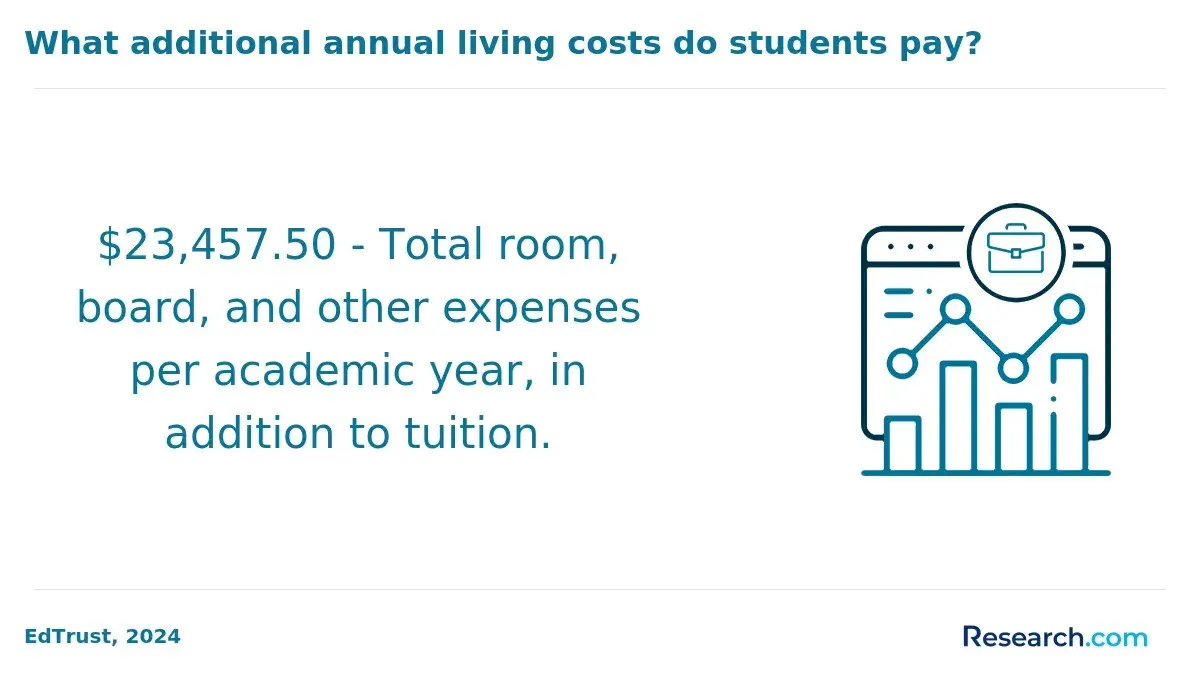
To estimate the true cost, students should include tuition, mandatory fees, books, software, hardware, exam proctoring, travel for any residency requirements, and lost income if they plan to reduce work hours. Financial aid may be available for eligible degree programs, but not every certificate qualifies for federal aid.
The smartest low-cost strategy is not always choosing the cheapest advertised tuition. A slightly more expensive program may be a better value if it accepts more transfer credits, includes career services, has strong employer recognition, or lets students finish faster without sacrificing learning quality.
What careers can graduates pursue with a data science degree focused on business analytics?
Graduates can pursue technical, business-facing, and hybrid analytics roles. The best match depends on programming depth, statistical ability, domain knowledge, communication skills, and project portfolio. A business analytics focus is especially useful for roles that require translating data into operational or strategic decisions.
The table below connects common roles with what professionals typically do. It can help students choose electives and projects that match a realistic career target.
| Career path | Typical responsibilities | Useful degree emphasis |
| Data analyst | Clean data, build reports, analyze trends, create dashboards, and answer business questions | SQL, spreadsheets, visualization, statistics, and business intelligence |
| Business analyst | Translate business needs into data requirements, document processes, evaluate performance, and support decisions | Business process analysis, communication, requirements gathering, and analytics tools |
| Business intelligence analyst | Develop dashboards, manage reporting pipelines, define KPIs, and support executive reporting | Data warehouses, BI platforms, SQL, visualization, and stakeholder communication |
| Data scientist | Build predictive models, test hypotheses, analyze complex datasets, and communicate model results | Machine learning, Python or R, statistics, data engineering basics, and applied business cases |
| Marketing analytics specialist | Analyze campaign performance, customer segments, conversion funnels, and retention patterns | Marketing analytics, experimentation, attribution, and customer data platforms |
| Operations or supply chain analyst | Use data to improve forecasting, logistics, inventory, staffing, and process efficiency | Optimization, forecasting, operations management, and simulation |
| Analytics manager | Lead analytics projects, manage teams, set reporting standards, and align analytics work with business priorities | Leadership, data governance, strategy, project management, and analytics communication |
Students should also consider industry-specific analytics paths. Healthcare, finance, retail, insurance, manufacturing, cybersecurity, sports, and life sciences all use data, but they value different domain knowledge. For example, someone comparing data-driven life science careers may want to review bioinformatics major jobs to understand how biological data careers differ from business analytics roles.
Career changers should focus on building proof of skill while studying. A portfolio with two or three business-oriented projects can be more persuasive than a long list of tools. Good projects define a business question, explain the dataset, show the method, interpret the result, and discuss limits or risks.
What salary ranges and earning potential exist in data science and business analytics roles?
Salary potential in data science and business analytics depends heavily on job title, experience, location, industry, technical depth, and leadership responsibility. A degree can help candidates qualify for roles, but it does not guarantee a specific salary. Employers usually evaluate the combination of education, skills, portfolio quality, and relevant experience.
The table below uses U.S. Bureau of Labor Statistics May 2024 median wage data for roles that commonly overlap with data science and business analytics. These are national medians, so local pay can be higher or lower.
| Role category | May 2024 median pay | How to interpret the figure |
| Data scientists | $112,590 | Relevant for graduates with stronger programming, statistics, modeling, and machine learning preparation |
| Operations research analysts | $91,290 | Relevant for analytics work involving optimization, forecasting, resource allocation, logistics, and decision modeling |
| Management analysts | $101,190 | Relevant for business-facing roles that combine data interpretation, process improvement, and consulting-style recommendations |
| Market research analysts | $76,950 | Relevant for customer, market, campaign, and consumer behavior analytics roles |
| Computer and information research scientists | $140,910 | Relevant to advanced research-oriented roles that may require graduate study and deeper technical specialization |
For students evaluating return on investment, the most useful question is not "What salary will this degree get me?" but "Which role am I preparing for, and what evidence will I have when I graduate?" A student aiming for a data scientist role usually needs stronger coding, modeling, and portfolio evidence than a student aiming for business intelligence or reporting roles.
Location also matters. Analytics roles in major technology, finance, consulting, and healthcare markets may pay more, but those markets can also be more competitive and expensive. Remote work has expanded access to opportunities, yet many employers still consider time zone, collaboration needs, security requirements, and occasional office presence.
What is the job outlook for data science and business analytics professionals in the U.S.?
The U.S. job outlook is strong for several data-related occupations, especially roles tied to machine learning, business intelligence, optimization, and digital transformation. The BLS projects employment for data scientists to grow 36% from 2023 to 2033, much faster than the average for all occupations. For students, this signals broad demand, but not automatic hiring; entry-level candidates still need practical projects and credible technical skills.
Several trends are shaping the market. Generative AI has increased interest in automation, but it has also raised the bar for data quality, governance, model monitoring, and explainability. Employers increasingly want analysts who can use AI tools responsibly, validate outputs, protect sensitive data, and explain uncertainty to decision-makers. In other words, AI is changing the workflow, not removing the need for analytical judgment.
The table below summarizes how current trends affect program choice. Students can use it to look for curricula that match where the field is moving rather than where it was several years ago.
| Trend | Why it matters for students | Program feature to look for |
| Generative AI adoption | Analysts increasingly need to evaluate, prompt, audit, and responsibly use AI-assisted tools | Coursework in machine learning, AI ethics, model evaluation, and human-in-the-loop decision-making |
| Data governance and privacy | Organizations need reliable, secure, and compliant data practices before analytics can be trusted | Courses covering privacy, security, governance, documentation, and responsible analytics |
| Cloud analytics platforms | Many teams store, process, and deploy analytics workflows in cloud environments | Exposure to cloud databases, data warehouses, APIs, and scalable analytics workflows |
| Business translation skills | Technical results have limited value if leaders cannot act on them | Capstones, presentations, stakeholder communication, and business case analysis |
Students who want research-intensive or senior technical roles may eventually need doctoral preparation, especially in AI research, advanced machine learning, or academic data science. Those students can compare a PhD in data science online after gaining a clear sense of whether they need research training or applied professional training.
How can students evaluate and choose a reputable online data science analytics program?
Choosing a reputable online data science analytics program requires more than scanning rankings or picking the lowest tuition. The best program is the one that is accredited, affordable for your situation, technically rigorous enough for your target role, and realistic for your schedule.
Use the steps below to compare programs in a disciplined way before applying. They are designed to prevent the most common enrollment mistakes.
- Verify institutional accreditation through the school and the U.S. Department of Education's recognized accreditation resources before considering cost or curriculum.
- Match the curriculum to a target role, such as data analyst, business intelligence analyst, data scientist, operations analyst, or analytics manager.
- Check whether the program teaches core tools directly through projects, including SQL, Python or R, statistics, visualization, databases, and machine learning where relevant.
- Ask whether online students receive the same faculty access, career services, library resources, tutoring, and alumni support as campus students.
- Compare total program cost, including fees, software, books, transfer credits, foundation courses, and time away from work.
- Review capstone expectations and ask whether projects can be portfolio-ready or connected to employer problems.
- Look for transparent admissions standards, graduation requirements, student support policies, and course rotation schedules.
- Ask how the program updates courses for AI tools, cloud platforms, data ethics, and current employer expectations.
Common red flags include vague curriculum descriptions, unclear accreditation language, aggressive admissions pressure, missing faculty information, no evidence of hands-on projects, and promises about guaranteed jobs or salaries. Students should also be cautious when a program lists many tools but does not explain how those tools are used in real assignments.
It can help to compare online program quality markers across fields, not only within data science. For example, the same questions about accreditation, transfer credit, flexibility, and student support also matter when evaluating unrelated online options such as exercise science degrees online. The field changes, but the due diligence process is similar.
The right program should leave you with more than a credential. It should help you build a portfolio, explain business problems clearly, understand the limits of data, and compete for roles that match your preparation.
Other Things You Should Know About Data Science
Yes, many online data science degrees with a business analytics focus require at least one college-level statistics course before admission or early in the first term. Some also expect algebra or quantitative reasoning, and transfer applicants usually need a minimum 2.5 to 3.0 GPA.
A certificate can be enough if you already have a degree, relevant work experience, and need a targeted skills upgrade. A full degree is usually more useful if you are changing careers, lack a technical background, want broader employer recognition, or need a structured path that includes foundations, projects, and career support.
Start with spreadsheet analysis, SQL, and either Python or R. Then add a visualization tool such as Tableau or Power BI. You do not need to master every platform before enrolling, but basic exposure can make early coursework much easier.
Many online programs are designed for working adults, but the workload can still be demanding. A part-time schedule is often more realistic for full-time workers, especially in courses involving programming, statistics, or capstone projects. Before enrolling, ask how many hours per week students typically spend per course.
References
- Which schools are best for an MS in Business Analytics in the USA? https://mentr-me.com/question/which-schools-are-best-for-an-ms-in-business-analytics-in
- Data Science vs. Business Analytics: Which Career Path is Better? https://www.dypatilonline.com/blogs/data-science-vs-business-analytics-career-path-better
- Masters’ in business analytics vs. data science comparison | edX https://www.edx.org/resources/should-you-get-a-masters-in-business-analytics-or-data-science
- Top Data Science & Business Analytics Courses 2025 https://riskprofs.com/data-science-business-analytics-courses/
- Master in Big Data Science https://www.kozminski.edu.pl/en/programs/graduate-programs-master/master-big-data-science
- Data Science Degree Specializations & Concentrations https://hakia.com/degrees/data-science/specializations/
- Specializations https://www.mastersindatascience.org/data-science/masters/specializations/
- Master of Science (MSc) – Data Science and Business Analytics https://www.hec.ca/en/programs/masters/master-data-science-and-business-analytics