2027 Online Data Science Degrees That Help Build Analyst-to-Data Scientist Transition Skills

Co-Founder and Chief Data Scientist
Moving from analyst to data scientist usually means proving deeper skills in statistics, machine learning, coding, and model deployment. That transition matters because the U.S. Bureau of Labor Statistics lists data scientists among the fastest-growing occupations, with projected job growth far above the average for all jobs.
This guide is for analysts, business intelligence professionals, and career changers comparing online data science degrees. You will learn what programs teach, how to evaluate quality and cost, and when a degree is worth the investment.
Key Things You Should Know
- Online data science degrees are most useful for analysts who already know reporting, SQL, dashboards, or business metrics but need stronger Python, statistics, machine learning, experimentation, and portfolio evidence.
- Regional institutional accreditation is the baseline quality check; specialized computing accreditation can help, but it is less common for graduate data science programs than for traditional computer science or engineering degrees.
- BLS May 2024 wage data places the median annual wage for data scientists at $112,590, but salaries vary widely by industry, location, seniority, and whether the role involves production machine learning or mostly analytics.
What are online data science degrees for analyst-to-scientist transitions?
An online data science degree is a structured undergraduate or graduate program that teaches students how to turn data into predictions, decisions, and deployed analytical products. For an analyst-to-data-scientist transition, the key difference is depth: analysts often describe what happened, while data scientists build statistical and machine learning systems that estimate what may happen next and how confident the organization should be in the result.
These degrees are not all designed for the same learner. Some are conversion programs for working analysts, while others assume a strong quantitative or computing background from the first course. The table below shows the most common online degree options and when each makes sense:
| Program type | Best fit | Typical transition value | Watch for |
| Online bachelor's in data science | Students without a completed bachelor's degree or analysts in early career roles | Builds broad foundations in programming, statistics, databases, and applied analytics | May take longer than a certificate or master's if you already hold a bachelor's degree |
| Online master's in data science | Working analysts with a bachelor's degree who want advanced technical credibility | Usually offers the strongest blend of machine learning, statistics, data engineering, and capstone work | Can be mathematically demanding, especially if prerequisites are weak |
| Online analytics master's | Analysts moving toward decision science, experimentation, or business-facing data roles | Often balances predictive modeling with business communication and optimization | May have less depth in machine learning engineering than a data science or computer science program |
| Online certificate or graduate certificate | Professionals testing the field or filling specific gaps | Can strengthen Python, statistics, or machine learning without a full degree commitment | Usually carries less labor-market signaling power than a degree |
A degree makes the most sense when you need a coherent pathway, access to faculty feedback, graded projects, and a credential that employers can recognize. It may be less efficient if you only need one narrow skill, such as learning a specific visualization tool or cloud platform.
If your goal is a domain-specific analytics career, the right degree may also depend on the industry: sports performance analysts, for example, may combine data science coursework with an online sports science degree or related background.
Which accreditation matters for online data science programs?
Accreditation matters because it helps verify that a school meets recognized academic and administrative standards. For online data science degrees, the most important baseline is institutional accreditation from an accreditor recognized by the U.S. Department of Education or the Council for Higher Education Accreditation. This affects transfer credit, employer recognition, and access to federal financial aid for eligible students.
Specialized accreditation is more nuanced. ABET accreditation is respected in computing, engineering, and applied science fields, but many legitimate data science master's programs do not have ABET accreditation because the field is interdisciplinary and newer than traditional engineering disciplines. The absence of specialized accreditation is not automatically a red flag, but the absence of recognized institutional accreditation should be treated seriously.
Before enrolling, use accreditation as a first filter rather than the only quality measure. A strong program should also show clear curriculum maps, qualified faculty, transparent tuition, student support services, and meaningful applied projects. Use the following checks before you speak with admissions.
- Confirm the institution's recognized accreditation status through official accreditors or federal databases, not only the program website.
- Review whether credits can transfer into or out of the program, especially if you may later pursue a master's or doctoral degree.
- Ask whether the online degree transcript or diploma differs from the campus version and how employers typically verify the credential.
- Look for required capstones, practicum options, or project-based courses that produce portfolio evidence for job applications.
- Check whether the program publishes student services for online learners, including tutoring, career advising, library access, and technical support.
A common mistake is assuming that rankings substitute for accreditation. Rankings can be useful for discovery, but they do not replace the basic due diligence of verifying school recognition, program fit, costs, and outcomes.
How do online and campus data science programs compare?
Online and campus data science programs can teach similar content, but the learning experience differs. Online programs usually appeal to working analysts because they reduce relocation and commuting barriers, while campus programs may provide more face-to-face networking, research access, and structured lab environments.
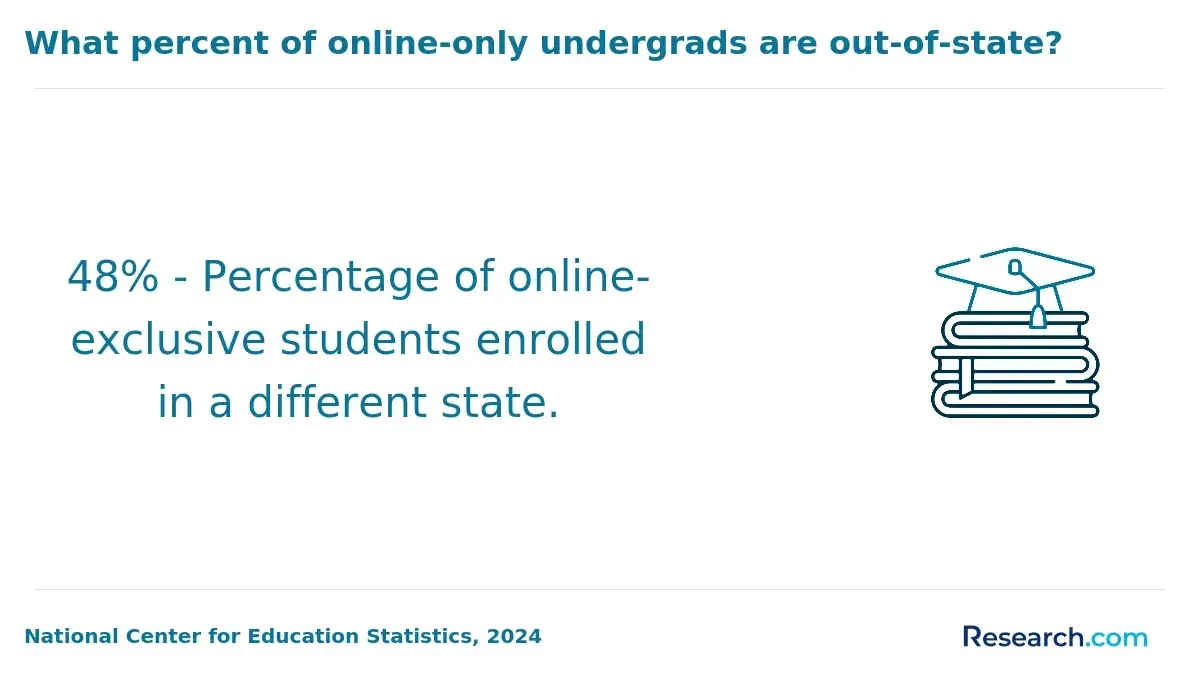
The online format is no longer a niche option. NCES reported in 2024 that more than half of U.S. postsecondary students were enrolled in at least one distance education course in a recent fall term, which means employers and universities are increasingly accustomed to online learning.
For readers, the important question is not whether online is acceptable in general, but whether a specific program provides enough interaction, rigor, and career support.
| Factor | Online data science degree | Campus data science degree | Best choice if... |
| Schedule | Often asynchronous or evening-friendly | More likely to follow fixed class times | You need online flexibility if you are working full-time. |
| Networking | Depends heavily on cohort design, live sessions, and career events | Often easier to build informal peer and faculty relationships | You may prefer campus if in-person networking is a top priority |
| Hands-on work | Can be strong when courses use cloud labs, GitHub, and capstones | May offer physical labs, research assistantships, or local internships | You should compare project requirements rather than assume one format is better |
| Cost | May reduce commuting, relocation, and opportunity costs | May provide assistantships or campus employment opportunities | You should compare total cost, not tuition alone |
| Career services | Varies widely for online learners | May have more visible campus recruiting | You should ask whether online students receive equal career support |
Choose online if you can stay disciplined, build projects independently, and use virtual office hours, discussion boards, and peer channels. Choose campus if you learn better through in-person structure, want research exposure, or can benefit from local recruiting pipelines. The red flag in either format is a program that relies heavily on passive lectures without supervised applied work.
What courses build data scientist transition skills?
The strongest transition-focused curriculum does more than add a few machine learning courses to a business analytics degree. It connects statistics, programming, data systems, and communication so students can frame problems, build models, evaluate trade-offs, and explain results to nontechnical stakeholders.
For analysts, the most valuable courses are the ones that close gaps between dashboard reporting and production-ready data science. The list below shows the course areas to prioritize when comparing curricula:
- Python or R programming: Look for courses that require reusable code, version control, notebooks, testing habits, and real datasets rather than only syntax exercises.
- Probability and statistics: Regression, inference, uncertainty, sampling, and experimental design help analysts move from descriptive reporting to defensible modeling.
- Machine learning: A useful sequence should cover supervised learning, unsupervised learning, model validation, overfitting, feature engineering, and ethical limitations.
- Databases and data engineering: SQL, data modeling, pipelines, and cloud storage matter because many data scientists spend significant time preparing data before modeling it.
- Optimization and decision analytics: These courses help translate predictions into business actions, resource allocation, pricing, scheduling, or risk decisions.
- Data visualization and communication: Data scientists still need to persuade decision-makers, document assumptions, and explain uncertainty clearly.
- Capstone or practicum: A capstone should produce a portfolio artifact that shows problem framing, code, evaluation, interpretation, and limitations.
If your skills gap is mostly software development rather than analytics, compare data science programs with a computer science degree online. Computer science may be the stronger path for roles that emphasize algorithms, backend systems, distributed computing, or machine learning infrastructure.
A common mistake is choosing the program with the most trendy course titles. "Generative AI" and "deep learning" can be valuable, but they should not replace foundations in statistics, validation, data quality, and reproducible coding. Employers often test those fundamentals through technical interviews and take-home projects.
What admission requirements do online data science degrees require?
Admission requirements vary by degree level and selectivity, but online data science programs commonly evaluate academic preparation, quantitative readiness, programming exposure, and career goals. Master's programs often accept applicants from business, economics, engineering, mathematics, computer science, and social science backgrounds, but students without prerequisites may need bridge courses.
The table below summarizes common requirements and what they mean for a working analyst. Use it to identify whether you are ready to apply now or should strengthen your profile first.
| Requirement | Common expectation | Why it matters | How analysts can prepare |
| Bachelor's degree | Usually required for master's programs | Shows academic readiness for graduate study | Confirm whether your major is acceptable or whether bridge coursework is required |
| Math preparation | Statistics, calculus, or linear algebra may be expected | Machine learning depends on quantitative reasoning | Complete prerequisite courses before starting advanced modeling classes |
| Programming | Python, R, Java, or similar experience may be preferred | Data science work requires coding beyond spreadsheet analysis | Build small projects using Python, pandas, scikit-learn, and SQL |
| Professional experience | Often helpful, sometimes optional | Analyst experience can strengthen applied problem-solving evidence | Highlight dashboards, metrics design, experimentation, or automation work |
| GRE or GMAT | Often optional or waived, depending on the school | Some programs use tests to assess quantitative readiness | Ask whether a strong transcript or work record can offset testing |
| Statement of purpose | Usually required | Explains goals and fit | Describe the exact transition you want, such as forecasting, experimentation, NLP, or ML engineering |
To improve your odds, do not present yourself only as someone who "likes data." Show evidence of analytical judgment. Strong applicants can explain a business problem, the data used, the method chosen, the limitations, and how the result affected a decision.
If you are missing prerequisites, a practical sequence can help you avoid overpaying for remedial coursework inside a degree program:
- Complete introductory statistics and Python before applying if the program expects both.
- Create two small projects that use real datasets, clear documentation, and a model evaluation section.
- Ask admissions whether prerequisite courses count toward degree credits or only prepare you to begin.
- Request a written answer on transfer credit, prior learning, or course waiver policies before committing.
How long do online data science degrees take?
Online data science degrees can range from one year to several years depending on degree level, credit load, transfer credit, prerequisites, and whether you study full time or part time. Working analysts often choose part-time study because they can apply course projects to workplace problems, but that flexibility usually extends the timeline.
The table below gives a practical planning view rather than a promise. Actual time to completion depends on the school calendar, course availability, and whether the program allows accelerated pacing.
| Program | Typical time range | Good fit | Trade-off |
| Graduate certificate | 6 to 12 months | Analysts filling a targeted skills gap | Faster and cheaper than a degree, but usually less comprehensive |
| Online master's, accelerated | 12 to 18 months | Students who can handle a heavy course load | Less time for portfolio building, internships, or deep prerequisite review |
| Online master's, part-time | 2 to 3 years | Working analysts balancing study and employment | More manageable, but a career transition may take longer |
| Online bachelor's completion | 1 to 3 years after transfer credit | Students with prior college credits | Transfer policies can significantly change the timeline |
| Full online bachelor's | About 4 years full-time | Students starting college from the beginning | Longer path, but offers broad foundational preparation |
Acceleration is not always better. Data science requires practice, debugging, and repeated exposure to messy data. If you rush through courses without building a portfolio, you may finish faster but still struggle to pass technical screens. A reasonable plan is to map each term to one portfolio artifact, such as a forecasting model, classification project, experiment analysis, or end-to-end data pipeline.
How much do online data science degrees cost?
The cost of an online data science degree depends on tuition structure, residency rules, required fees, textbooks, software, prerequisites, and lost work time. Some online programs charge a flat program price, while others charge per credit. Public universities may offer lower rates, but not always; private nonprofit universities can be expensive or generous with aid, and institution type alone does not determine value.
Published tuition should be treated as the starting point, not the full price. Use the table below to compare the main cost drivers that affect total investment.
| Cost factor | What to check | Why it affects ROI |
| Tuition model | Per-credit, per-course, per-term, or flat program tuition | Accelerated students may benefit from term pricing, while part-time students may prefer per-credit clarity |
| Program length | Total credits required and whether prerequisites add credits | A lower per-credit price can still cost more if the program requires many additional courses |
| Fees | Technology, distance learning, graduation, proctoring, and student service fees | Fees can change the real price even when tuition appears affordable |
| Transfer or waiver policy | Whether prior graduate work, certificates, or prerequisites reduce required coursework | Accepted credits can reduce both cost and time |
| Employer support | Tuition assistance, reimbursement rules, grade requirements, and repayment obligations | Employer funding can improve affordability but may limit job mobility temporarily |
| Opportunity cost | Reduced work hours, delayed job search, or unpaid internship time | The cheapest tuition is not always the lowest total career cost |
As a budgeting benchmark, federal student aid data and university tuition disclosures show that online graduate programs can vary dramatically, from low-cost public options to premium private programs. Because published prices change, build your own side-by-side worksheet using the exact credit count and fees from each school.
Before enrolling, ask each program for a written total-cost estimate. The most useful estimate should include tuition, mandatory fees, expected books or software, prerequisite costs, and the maximum number of transfer credits allowed.
- Ask whether tuition is locked for your cohort or may increase before you finish.
- Compare the total program cost, not only the advertised cost per credit.
- Confirm whether online students qualify for the same scholarships, assistantships, or employer partnership discounts as campus students.
- Calculate the break-even point using conservative salary assumptions rather than best-case salary stories.
- Avoid borrowing based on the highest salaries in the field, because compensation varies by location, industry, and experience.
What jobs can data science graduates pursue?
Data science graduates can pursue several roles, but the right target depends on your starting experience. A business analyst with strong stakeholder skills may move into product analytics or experimentation first, while a technical analyst with Python and SQL may be closer to machine learning or data engineering-adjacent roles.
The table below summarizes common job paths and how they differ. Use it to choose a program with courses and projects that match your intended role.
| Role | Typical responsibilities | Skills to emphasize | Good transition route |
| Data scientist | Build predictive models, test hypotheses, evaluate model performance, and communicate recommendations | Python, statistics, machine learning, SQL, experimentation, visualization | Move from analyst work into modeling projects and capstone evidence |
| Machine learning analyst | Apply ML methods to classification, forecasting, segmentation, or recommendation problems | Feature engineering, model validation, scikit-learn, cloud tools, documentation | Start with applied ML projects before pursuing ML engineering depth |
| Product data analyst | Analyze user behavior, experiments, funnels, and product metrics | A/B testing, causal inference, SQL, dashboards, stakeholder communication | Strong fit for analysts with business and metrics experience |
| Business intelligence developer | Build reporting systems, data models, dashboards, and metric layers | SQL, data warehousing, visualization tools, semantic modeling | Useful stepping-stone if you need stronger data infrastructure skills |
| Data engineer associate | Support pipelines, data quality, storage, and transformation workflows | SQL, Python, ETL, cloud services, orchestration basics | Good route for analysts who enjoy systems and automation |
| Decision scientist | Use statistics, experiments, and optimization to improve business decisions | Experiment design, causal inference, optimization, communication | Strong fit for analysts in operations, marketing, finance, or product teams |
Domain knowledge can also shape opportunities. Environmental, healthcare, sports, finance, retail, and public-sector organizations all use data science, but they value different datasets, regulations, and decision contexts. If you are comparing data science with science-focused career paths, exploring "What can you get with an environmental science degree?" can help you see how domain expertise and analytics may combine in sustainability, geospatial, policy, or risk roles.
The practical move is to choose one target role before selecting electives. Trying to prepare for every role at once often leads to a shallow portfolio. A better strategy is to build three aligned projects that show a clear identity, such as product experimentation, forecasting, NLP, computer vision, risk modeling, or data engineering for analytics.
What salaries do data scientists and analysts earn?
Salary data can help you estimate potential return on investment, but it should never be treated as a guaranteed outcome. Pay depends on industry, region, technical depth, education, portfolio quality, interview performance, and whether the role is truly data science or a renamed reporting job.
The BLS May 2024 wage data provides a useful national benchmark for several related occupations. The table below compares roles that analysts commonly consider when moving toward data science:
| Occupation | U.S. median annual wage | How to interpret it |
| Data scientists | $112,590 | This is the clearest federal benchmark for data scientist roles, but individual offers vary significantly by market and employer |
| Computer systems analysts | $103,790 | This can overlap with analytics and systems work, especially in organizations where data roles support business technology decisions |
| Operations research analysts | $91,290 | This role is relevant for optimization, logistics, decision science, and quantitative operations work |
| Statisticians | $103,300 | This benchmark is useful for roles emphasizing inference, survey methods, experimentation, or statistical modeling |
| Database administrators and architects | $117,450 | This comparison matters for analysts considering data architecture or engineering-adjacent pathways |
For job outlook, BLS projections released in 2024 show data scientist employment growing much faster than the average for all occupations over the 2023 to 2033 period. That signal supports strong demand, but it does not remove competition. Employers increasingly expect candidates to demonstrate practical work through code repositories, case studies, internships, capstones, or job-based projects.
Use salary data conservatively when evaluating a degree. Compare the program's total cost with realistic target roles in your region, then ask whether the curriculum and career support help you reach those roles. Be cautious of schools that imply a single salary figure applies to all graduates.
Which certifications help data analysts become data scientists?
Certifications can help analysts document targeted skills, especially in cloud computing, data tools, and machine learning platforms. They are most useful when paired with projects; a certification alone rarely proves that you can solve an ambiguous data problem from start to finish.
The table below compares certification categories rather than ranking individual credentials. Choose based on the tools used in your target industry and the gaps in your degree plan.
| Certification category | Examples of skills covered | Best for | Limitation |
| Cloud data and ML certifications | Cloud storage, model training, deployment workflows, managed ML services | Analysts targeting data scientist or ML platform roles in cloud-heavy companies | Can become tool-specific if not supported by general modeling knowledge |
| Analytics platform certifications | Dashboards, semantic models, BI governance, reporting automation | Analysts moving toward advanced BI, analytics engineering, or product analytics | May not show machine learning depth |
| Database and SQL certifications | Relational databases, querying, optimization, administration basics | Analysts who need stronger data infrastructure credibility | Does not replace statistics or ML preparation |
| Machine learning certificates | Model selection, evaluation, feature engineering, neural networks, applied AI | Professionals supplementing a degree or building portfolio depth | Quality varies, so project evidence matters |
| Statistics or experimentation certificates | Hypothesis testing, causal inference, A/B testing, experimental design | Product, marketing, operations, and decision science roles | May be too narrow for ML engineering roles |
AI is changing credential choices. Generative AI tools can accelerate coding, documentation, and exploratory analysis, but employers still need professionals who understand evaluation, bias, privacy, data leakage, and business risk. If you want a broader AI-centered pathway rather than a data science degree, compare data science programs with degrees in AI online.
A practical certification plan is to avoid collecting credentials randomly. Pick one certification that supports your target role, complete a project using the same tools, and write a short case study explaining the problem, method, results, and limitations.
Other Things You Should Know About Data Science
Yes. Many online data science degrees require a capstone in the final term, often worth 3 to 6 credit hours. Students usually complete a real dataset project, submit code and a written report, and present results to faculty or industry reviewers.
Most serious programs require at least statistics, and many expect calculus or linear algebra for machine learning. If you have been working mainly with dashboards and spreadsheets, taking a math refresher before enrolling can make the degree more manageable.
A strong portfolio should include clean code, a clear problem statement, real or realistic data, model evaluation, visual explanation, and a discussion of limitations. Three focused projects are usually more persuasive than many unfinished notebooks.
References
- How to Transition from Data Analyst to Data Scientist https://www.turingcollege.com/blog/how-to-transition-from-data-analyst-to-data-scientist
- Data Science Course vs. University – Which path is better in 2026? https://www.wbscodingschool.com/blog/data-science-course-vs-university/
- Data Science Graduate Jobs | Gradcracker - Careers for STEM Students https://www.gradcracker.com/search/computing-technology/data-science-graduate-jobs
- Career Opportunities After Data Science Course in India https://jims.in/blogs/career-opportunities-after-data-science-course-india
- Data Analyst vs Data Scientist Salary in 2026: Who Earns More? https://skillifysolutions.com/blogs/data-science/data-analyst-vs-data-scientist-salary/
- Step-by-Step Guide to Data Scientist Career Transition Course https://claas2saas.com/blog/step-by-step-guide-to-data-scientist-career-transition-course/
- Find the Best Data Science Degree for you https://www.datascienceprograms.org/
- Data Scientist https://www.mastersindatascience.org/careers/data-scientist/
- 9 Popular Data Analyst Certifications 2025 Guide - ONLC https://www.onlc.com/blog/popular-data-analyst-certifications/
- Alliance for Data Science Professionals launches University Accreditation Scheme https://ima.org.uk/28113/alliance-for-data-science-professionals-launches-university-accreditation-scheme/