2027 How to Become a Special Education Teacher in South Carolina: Requirements & Certification

Co-Founder and Chief Data Scientist
Becoming a special education teacher in South Carolina is a high-impact career decision, especially as districts continue to report unfilled teaching roles. During the 2023-2024 school year, South Carolina reported 1,613 teacher vacancies, a 9% increase from the prior year, and special education remains one of the areas districts struggle most to staff.
This guide explains how to become a special education teacher in South Carolina, including degree options, certification steps, timelines, exams, salary expectations, financial aid, job demand, advancement paths, and practical ways to choose the most affordable and effective route. It is written for first-time college students, career changers, current educators, and out-of-state teachers who want to understand what this career requires before committing time and money.
Quick Answer: How Do You Become a Special Education Teacher in South Carolina?
To become a special education teacher in South Carolina, you typically need to earn a bachelor’s degree in special education or a related teacher preparation field, complete student teaching or an approved clinical experience, pass required licensure exams, clear background checks and fingerprinting, and apply for state certification. Career changers may be able to use alternative or post-baccalaureate pathways, while experienced educators can pursue graduate study, endorsements, or advanced roles.
| Step | What It Involves | Why It Matters |
| Earn the required degree | Complete a bachelor’s degree, post-baccalaureate program, or graduate pathway in special education or a related area. | South Carolina requires teachers to demonstrate formal preparation before entering public school classrooms. |
| Complete supervised teaching | Finish student teaching, an internship, or another approved classroom-based experience. | Special education teachers must be ready to write IEPs, adapt instruction, and support students with diverse needs. |
| Pass licensing requirements | Complete required exams, background checks, and fingerprinting. | These steps verify professional readiness and help protect students. |
| Apply for certification | Submit documentation through the appropriate South Carolina educator certification process. | You must be properly certified to teach in most public school special education positions. |
| Maintain and grow your credential | Complete renewal requirements and ongoing professional development. | South Carolina teacher certification must be renewed, and special education practices continue to evolve. |
Key Things You Should Know About Becoming a Special Education Teacher in South Carolina
- South Carolina expects demand for special education teachers to rise, with a projected 10% increase in openings over the next decade.
- The average salary for special education teachers in South Carolina is approximately $58,865, though pay differs by district, grade level, experience, and credentials.
- Professional organizations such as the South Carolina Council for Exceptional Children (SCCEC) can help teachers access training, networking, and continuing education.
- Large public school systems, including Charleston County and Greenville County, are among the major employers seeking qualified special education teachers.
- Education requirements for South Carolina special education teachers
- How long the process usually takes
- Licensing and certification requirements
- Job demand and hiring outlook
- Salary expectations in South Carolina
- Professional development options
- Moving from public schools to private schools
- Advanced roles for experienced special education teachers
- Using technology in special education instruction
- Communication training and career mobility
- Challenges special education teachers should expect
- Leadership and management development
- Mentorship for new and experienced teachers
- Collaboration with school psychologists
- How South Carolina special education laws affect teachers
- Early childhood strategies and special education
- Transitioning into elementary education
- Adding BCBA certification
- Using counseling strategies in the classroom
- Scholarships, grants, and financial aid
- Interdisciplinary support careers
- Other education careers for special education teachers
- Most cost-effective pathway to a South Carolina teaching credentialKey insights
What are the educational requirements to be a special education teacher in South Carolina?
South Carolina special education teachers need formal preparation in both teaching and disability-specific instructional support. The goal is not only to understand classroom instruction, but also to learn how to evaluate student needs, adapt lessons, document progress, collaborate with families, and help develop Individualized Education Programs (IEPs).
The most common route is a bachelor’s degree in special education through an approved teacher preparation program. Some candidates enter through related education majors, post-baccalaureate programs, or graduate programs if they already hold a degree.
| Education Option | Best For | What to Check Before Enrolling |
| Bachelor’s degree in special education | First-time college students who want the most direct route into classroom teaching. | Confirm that the program prepares students for South Carolina teacher certification and includes supervised classroom experience. |
| Related bachelor’s degree plus certification pathway | Students who majored in education, psychology, child development, or another related field. | Ask whether additional coursework, exams, or clinical practice will be required for special education certification. |
| Master’s degree in special education | Career changers, currently certified teachers, or educators seeking deeper specialization. | Verify whether the program leads to initial licensure, advanced certification, or professional development only. |
| Post-baccalaureate or alternative route | Adults who already have a bachelor’s degree and want a faster transition into teaching. | Compare tuition, required fieldwork, employment eligibility, and state approval status. |
Programs at institutions such as the University of South Carolina and Clemson University include preparation relevant to special education practice. Graduate options, including programs at schools such as the College of Charleston, may allow educators to focus more deeply on areas such as learning disabilities or emotional disturbances.
Many programs expect candidates to meet academic benchmarks, often around a minimum cumulative GPA of 2.75. Because admissions and certification requirements can change, applicants should confirm current standards directly with the institution and South Carolina certification authorities before applying.
The need for well-prepared teachers is substantial. Around 14% of students in South Carolina are identified as having disabilities, which means special education teachers must be ready to serve students with a wide range of learning, behavioral, developmental, and communication needs.
How long does it take to become a special education teacher in South Carolina?
The timeline depends on your starting point. A traditional undergraduate path usually takes about four years for the bachelor’s degree, followed by certification steps and supervised teaching. For many candidates, the full process can take five to seven years, especially if they add graduate study or move through an alternative route after completing another degree.
| Pathway | Typical Timeframe Stated | Who It Fits |
| Bachelor’s degree route | Four years for the degree, plus certification requirements. | Students beginning college with the goal of becoming licensed teachers. |
| Certification program after a degree | One to two years, depending on the program and route. | Career changers or graduates whose first degree did not include teacher preparation. |
| Student teaching or internship | One semester, or roughly four to five months. | Teacher candidates who need supervised classroom practice before certification. |
| Master’s degree in special education | Another one to two years. | Educators who want advanced preparation, specialization, or broader career options. |
Students who need flexibility can compare campus-based and online special education programs. Online formats may help working adults manage coursework, but candidates should still verify field placement requirements, student teaching expectations, and whether the program meets South Carolina certification standards.
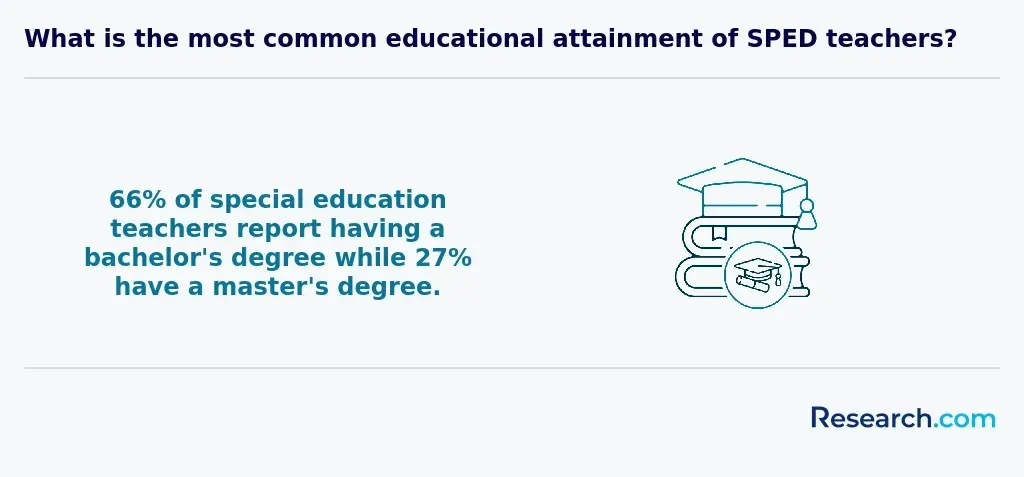
Graduate education is common among educators in the state. Since 63.7% of teachers in South Carolina hold advanced degrees, a master’s program may support long-term advancement, although it is not always the fastest or least expensive route to initial certification.
What are the licensing requirements for special education teachers in South Carolina?
South Carolina requires special education teachers in public schools to meet educator certification requirements. The exact requirements can vary based on whether you complete a traditional teacher preparation program, enter through an alternative pathway, or already hold a teaching license from another state.
- Approved preparation: Candidates generally need to complete a state-recognized teacher preparation pathway that includes coursework and supervised classroom experience.
- Licensure exams: Aspiring teachers must pass required exams that assess professional teaching knowledge and subject-area readiness.
- Background checks and fingerprinting: Candidates must complete screening requirements before being cleared to work with students.
- Certification application: After meeting education, testing, and background requirements, candidates apply for the appropriate South Carolina educator certificate.
- Renewal: South Carolina teacher licenses are renewed every five years, and renewal commonly depends on professional development or approved continuing education.
- Out-of-state educators: Teachers licensed elsewhere may qualify through the Interstate Agreement of the National Association of State Directors of Teacher Education and Certification (NASDTEC), but they still must meet South Carolina’s criteria.
Before enrolling in any program, ask the admissions office and certification office this direct question: “Does this program lead to South Carolina special education teacher certification, and what additional exams or steps will I need after graduation?” That single question can prevent costly surprises.
| Requirement | Common Mistake | Better Approach |
| Program approval | Choosing a degree because it sounds relevant to special education. | Confirm that the program is approved for the credential you want. |
| Testing | Waiting until graduation to learn which exams are required. | Ask early and build exam preparation into your timeline. |
| Field experience | Assuming online coursework means no in-person placement. | Verify student teaching, internship, or practicum expectations before enrolling. |
| License renewal | Thinking certification is a one-time requirement. | Track renewal deadlines and professional development hours from the start. |
| Reciprocity | Assuming an out-of-state license transfers automatically. | Review South Carolina’s out-of-state educator process before accepting a job. |
What is the demand for special education teachers in South Carolina?
South Carolina’s demand for special education teachers is shaped by persistent teacher vacancies, retirements, and the continuing need for specialized services for students with disabilities. Approximately 5,000 special education teachers are currently employed in the state.
Current projections point to around 10% growth through 2030 for special education teachers in South Carolina. Depending on the category and source used, that demand translates to around 60 to 290 job openings each year. Some openings come from growth, while others result from educators retiring, transferring, or leaving the profession.
Shortage conditions make special education a practical option for candidates who want strong public-service impact and relatively steady hiring need. However, demand should not be confused with guaranteed employment. District hiring depends on location, certification area, budget, student enrollment, and local staffing needs.
Candidates comparing state requirements may also find it useful to review how certification and renewal work elsewhere, such as guidance on Washington teacher certification renewal, but South Carolina’s rules should guide your actual licensure decisions.
This chart shows the distinct shortage areas under special education positions in the U.S.
How much do special education teachers in South Carolina earn?
Special education teacher pay in South Carolina varies by district, grade level, experience, credentials, and local salary schedules. The average salary for teachers in the state is approximately $58,865, while special education teachers commonly earn between $55,000 and $62,000.
- Entry-level special education teachers typically earn between $42,000 and $49,000.
- Mid-career teachers generally earn between $50,000 and $60,000.
- Experienced professionals may earn as much as $70,000 to $80,000.
U.S. Bureau of Labor Statistics wage data for South Carolina reports the following special education teacher figures:
| Special Education Teaching Level | Wage Data Listed |
| Preschool | $59,520 |
| Kindergarten/Elementary School | $59,590 |
| Middle School | $61,880 |
| Secondary School | $61,270 |
| All Other | $54,590 |
Salary should be evaluated alongside benefits, cost of living, commute, caseload expectations, planning time, classroom support, and available stipends. Some districts, especially those with hard-to-fill positions, may offer bonuses or stipends, but candidates should request written details before relying on extra compensation in their financial planning.
What professional development opportunities are available for special education teachers in South Carolina?
Professional development is essential in special education because legal requirements, instructional methods, assistive technology, behavior supports, and documentation practices change over time. It also matters for license renewal, career advancement, and teacher retention.
- South Carolina Department of Education Special Education Services: Training may cover compliance, instructional practices, disability categories, documentation, and support strategies.
- South Carolina Council for Exceptional Children (SCCEC): Webinars, local events, and networking opportunities can help educators stay connected to current special education practice.
- South Carolina Association for Supervision and Curriculum Development (ASCD): Conferences and professional learning sessions may include topics relevant to inclusive instruction and curriculum improvement.
- District-based training: Many districts provide professional development related to IEP implementation, behavior intervention, data collection, and classroom management.
- Graduate certificates or advanced degrees: These may support specialization, salary movement, or eligibility for leadership roles, depending on district policies.
The best professional development is not simply a collection of credits. It should help teachers solve real classroom problems, such as reducing disruptive behavior, improving reading access, strengthening family communication, or collecting better progress-monitoring data.
This chart illustrates the national demand for special education teachers in 2023.
How can special education teachers transition to private schools in South Carolina?
Some special education teachers move from public schools to private schools because they want smaller learning environments, a different school mission, or a more specialized instructional model. Private schools may offer more flexibility in curriculum and classroom structure, but expectations vary widely by institution.
Public school certification may not always be required in the same way for private school roles, but it can still strengthen your candidacy. Schools that serve students with disabilities often value teachers who understand IEPs, differentiated instruction, behavior supports, and family collaboration.
Before making the move, compare compensation, benefits, class size, legal responsibilities, student support services, planning time, and whether the school has access to related service providers. Teachers should also ask how the school supports students who need accommodations, therapy services, behavioral plans, or specialized instructional materials.
If this route interests you, review how to become a private school teacher in South Carolina to understand how hiring expectations can differ from public school employment.
Are there advanced roles for experienced special education teachers in South Carolina?
Special education can lead to career paths beyond the classroom, especially for teachers who build expertise in assessment, compliance, instructional coaching, behavior intervention, or program leadership. Advanced roles may require a master’s degree, additional certification, leadership experience, or district-specific qualifications.
| Advanced Role | What the Role Focuses On | When It Makes Sense |
| Lead classroom teacher | Mentoring peers, improving instructional practice, and supporting curriculum decisions. | You want to remain close to students while taking on more responsibility. |
| Educational diagnostician | Evaluating student needs and helping teams design appropriate learning plans. | You are interested in assessment, data, and eligibility decisions. |
| Special education instructional coordinator | Supporting IEP implementation, compliance, curriculum, and teacher training. | You want to influence practice across multiple classrooms or schools. |
| Behavior intervention specialist | Designing and monitoring strategies for students with behavioral and social-emotional needs. | You have strong classroom management skills and interest in behavior support. |
| Director or program manager | Overseeing special education services, staffing, compliance, and inclusive practices. | You are ready for administrative leadership and system-level decision-making. |
Advanced roles can also connect to some of the best paying education careers, but higher pay is not automatic. District salary schedules, credentials, responsibility level, and local funding all matter.
How can technology enhance special education instruction in South Carolina?
Technology can make special education more individualized when it is used with a clear instructional purpose. Assistive software, communication tools, adaptive learning platforms, digital organizers, speech-to-text tools, and data-tracking systems can help teachers support students who need different ways to access content or show what they know.
Technology is most useful when it improves access, independence, communication, or progress monitoring. It is less useful when it simply adds another platform for teachers and students to manage. South Carolina special education teachers should evaluate tools based on student need, privacy requirements, accessibility, training, and whether the tool can be used consistently at school and home.
| Technology Use | How It Can Help | Question to Ask First |
| Assistive technology | Supports reading, writing, communication, mobility, or access to classroom materials. | Does the student need this tool to access instruction or demonstrate learning? |
| Data systems | Helps teachers monitor IEP goals, interventions, and progress over time. | Will the system make documentation more accurate and easier to review? |
| Adaptive learning tools | Adjusts practice or content based on student performance. | Does it align with the student’s goals and curriculum standards? |
| Virtual collaboration tools | Helps teachers, families, and specialists coordinate support. | Is it secure, accessible, and practical for all team members? |
Educators who want a broader look at teaching pathways and digital instruction can also compare strategies discussed in how to become an English teacher in South Carolina.
How can advanced communication training enhance career prospects for special education teachers in South Carolina?
Special education teachers communicate with students, parents, general education teachers, administrators, therapists, advocates, and district teams. Strong communication skills can improve IEP meetings, reduce conflict, clarify student needs, and help teachers advocate for services without damaging professional relationships.
Teachers who want to move into leadership, advocacy, consulting, or community-facing roles may benefit from more formal training in messaging, public speaking, crisis communication, and stakeholder engagement. A public relation degree can provide communication training that may be useful for educators interested in policy, administration, nonprofit work, or family engagement roles.
What are the biggest challenges faced by special education teachers in South Carolina?
Special education teaching is meaningful work, but candidates should understand the pressures before entering the profession. The role often involves teaching, case management, documentation, family communication, behavior support, and collaboration with multiple professionals.
- Heavy workload: Teachers may manage lesson planning, IEP documentation, progress monitoring, meetings, accommodations, and direct instruction at the same time.
- Limited resources: Some schools may lack enough materials, support staff, planning time, or specialized tools, making implementation harder.
- Emotional strain: Supporting students with significant disabilities or behavioral needs can lead to compassion fatigue without strong school support.
- Compensation pressure: The National Education Association ranks South Carolina 35th in the nation for educator wages, and many educators face financial pressure compared with the minimum living wage of $56,360.
| Challenge | What to Ask Before Accepting a Job | Why It Matters |
| Caseload | How many students will I serve, and what are their support needs? | Caseload affects workload, service quality, and burnout risk. |
| Planning time | How much protected time is available for IEPs, data, and lesson preparation? | Special education documentation requires time and accuracy. |
| Support staff | Will I work with paraprofessionals, therapists, behavior specialists, or co-teachers? | Team support can determine whether services are sustainable. |
| Training | What professional development is provided for new special education teachers? | Strong onboarding can prevent early-career overwhelm. |
| Retention | How does the district support special education teacher retention? | High turnover can signal workload or support concerns. |
Looking at certification systems in other states, such as Virginia teacher certification, can provide context, but South Carolina candidates should focus on local district conditions and state requirements when choosing where to work.
How can special education teachers develop leadership and management skills in South Carolina?
Leadership skills help special education teachers manage complex teams, lead IEP meetings, coach paraprofessionals, coordinate services, and contribute to school improvement. These skills become especially important for teachers who want to become instructional coordinators, department chairs, behavior specialists, or administrators.
Useful leadership areas include conflict resolution, meeting facilitation, data-based decision-making, project management, team communication, and strategic planning. Flexible training options, such as the best online leadership and management courses, may help working educators build these skills without leaving the classroom.
How can mentorship programs benefit special education teachers in South Carolina?
Mentorship can reduce isolation and help teachers handle the practical realities of special education work. A strong mentor can help a new teacher organize IEP deadlines, communicate with families, manage paraprofessionals, prepare for meetings, and select interventions that match student needs.
Mentorship is also useful for experienced teachers who are moving into leadership or new service areas. Pairing school-based mentorship with external training, including the best online leadership and management courses, can strengthen both classroom practice and long-term career mobility.
How do special education teachers collaborate with school psychologists in South Carolina?
Special education teachers and school psychologists often work together on evaluation, eligibility, IEP development, behavior planning, and progress monitoring. Teachers contribute classroom observations, instructional data, and day-to-day knowledge of student performance. School psychologists bring assessment expertise, behavioral insight, and knowledge of student development and disability identification.
Effective collaboration depends on clear communication, shared data, defined roles, and regular follow-up. Teachers interested in this allied role can review school psychologist requirements South Carolina to understand how preparation differs from special education teaching.
How do South Carolina’s special education laws impact teachers?
Special education teachers in South Carolina work within federal and state rules that affect evaluation, eligibility, services, parent participation, placement, and documentation. These laws influence daily practice because teachers must implement IEPs, provide accommodations, document progress, and collaborate with families and specialists.
- Qualification standards: Teachers must meet professional requirements to serve students with disabilities in public school settings.
- Child find responsibilities: Local education agencies must identify students who may need special education services, including children who may appear to be making academic progress but still require evaluation.
- IEP implementation: Teachers are responsible for delivering or supporting services described in the student’s IEP.
- Private school placement issues: When students with disabilities are placed in private schools under applicable requirements, educational programming must align with the IEP at no cost to parents.
- Highly mobile students: Child find efforts include students who move frequently, requiring teachers to be responsive, organized, and culturally aware.
Teachers should not rely on informal school customs when legal requirements are involved. When in doubt, ask the district special education office, review state guidance, and document decisions clearly. Candidates comparing licensure exams in other states may find resources such as Oklahoma teacher certification exams useful for context, but South Carolina law and district procedures are the standards for practice in the state.
Can integrating early childhood education strategies improve special education outcomes in South Carolina?
Early childhood strategies can strengthen special education practice because many learning, communication, social, and behavioral needs are easier to address when teachers understand developmental milestones. Techniques such as play-based learning, structured routines, early language support, family engagement, and developmental observation can help teachers design more responsive instruction.
Special education teachers who work with younger students or students with developmental delays may benefit from studying early childhood education methods. For related credentialing information, review preschool teacher requirements in South Carolina.
How can special education teachers transition to elementary education roles in South Carolina?
Special education teachers often have strong skills in differentiation, small-group instruction, classroom accommodations, and student support. These skills can transfer well to elementary education, especially in inclusive classrooms where teachers must serve students with varied academic and behavioral needs.
The transition may require additional certification, coursework, exams, or district approval, depending on the teacher’s current credential. Teachers considering this move should compare requirements in how to become an elementary school teacher in South Carolina before changing roles.
Can special education teachers expand their expertise by becoming BCBA-certified in South Carolina?
Board Certified Behavior Analyst training can be valuable for special education teachers who want deeper expertise in behavior assessment, intervention planning, and data-driven behavior support. This path may be especially relevant for educators who work with students who need intensive behavioral intervention.
BCBA certification has its own eligibility, coursework, supervised field experience, and examination requirements. Teachers should compare those expectations carefully with their current workload and career goals. For a step-by-step overview, see how to become a BCBA BCBA in South Carolina.
How can special education teachers integrate counseling strategies to enhance student learning?
Special education teachers are not a substitute for licensed counselors, but counseling-informed strategies can improve classroom relationships and support students’ emotional and behavioral readiness to learn. Examples include active listening, de-escalation, restorative conversations, social-emotional routines, and trauma-aware classroom practices.
Teachers who want to move further into student support services should understand the difference between classroom strategies and professional counseling credentials. For a related pathway, review school counselor requirements in South Carolina.
Are there scholarships and grants available for special education teachers in South Carolina?
Teacher preparation can be expensive once tuition, fees, books, exams, transportation, and unpaid clinical placements are included. Financial aid can make the difference between choosing a traditional undergraduate route, a graduate program, or a faster credentialing pathway.
- South Carolina Teaching Fellows: This state-funded program provides up to $24,000 in assistance for students who commit to teaching in South Carolina public schools and targets high-need areas, including special education.
- Essential Visionaries Scholarship Fund: This scholarship offers up to $40,000 for individuals committed to special education teaching.
- Legislative Incentive for Future Excellence (LIFE) Scholarship: This merit-based program provides aid for up to eight terms to help cover higher education costs.
Before accepting any scholarship or grant, read the service obligation carefully. Some programs require recipients to teach in a specific setting, subject area, or state for a defined period. If you do not meet the commitment, funds may convert to a repayment obligation.
| Financial Aid Question | Why You Should Ask It |
| Does this award require me to teach in South Carolina after graduation? | Service commitments can affect where you work after earning your credential. |
| Does the award cover fees, exams, books, or only tuition? | Out-of-pocket costs can still be significant even with tuition assistance. |
| What happens if I change majors or leave teaching? | Some awards may require repayment if conditions are not met. |
| Can I combine this aid with federal financial aid or institutional scholarships? | Stacking aid may reduce borrowing, but rules vary by program. |
Can special education teachers broaden their impact by exploring interdisciplinary support roles?
Special education teachers build skills that can transfer into broader student support careers, including behavior intervention, counseling-adjacent roles, family support, nonprofit education services, and disability advocacy. These paths often require additional credentials, but classroom experience can provide a strong foundation.
Educators interested in behavioral health or social service pathways can compare requirements for related roles, including how to become a substance abuse counselor in South Carolina.
Can special education teachers in South Carolina pursue other careers in education?
Yes. Special education teachers can move into other education careers if they meet the required credentials for the new role. Their experience with individualized instruction, documentation, family collaboration, accessibility, and intervention planning can be valuable in many settings.
- Instructional coordinator
- Behavior intervention specialist
- School counselor, with the appropriate counseling credential
- School psychologist, with the required graduate preparation and credentialing
- Elementary education teacher, if certification requirements are met
- Speech-language pathology, after completing the required clinical and licensure pathway described in how to become a speech language pathologist in South Carolina
The best next step depends on whether you want to stay in direct instruction, move into student services, specialize in behavior, or enter administration.
What is the most cost-effective pathway to obtain a teaching credential in South Carolina?
The most cost-effective route depends on your current education level. A first-time college student may save money by choosing an in-state approved bachelor’s program with strong financial aid. A career changer who already has a bachelor’s degree may spend less by using a post-baccalaureate or alternative pathway rather than completing a second full degree.
When comparing options, look beyond tuition. Include application fees, testing costs, books, technology fees, transportation to field placements, unpaid student teaching time, and the opportunity cost of reducing work hours. Candidates seeking affordable options can compare teaching credential programs in South Carolina to identify routes that balance cost, state approval, and speed.
| Your Starting Point | Potentially Cost-Effective Route | Important Caution |
| No bachelor’s degree | Approved in-state bachelor’s program in special education. | Make sure the program leads to South Carolina certification, not just a general education degree. |
| Bachelor’s degree in another field | Alternative, post-baccalaureate, or master’s route leading to certification. | Do not assume every graduate program includes initial licensure. |
| Already certified teacher | Endorsement, graduate coursework, or district-approved pathway into special education. | Confirm which certification area you need for the students and grade levels you want to serve. |
| Out-of-state teacher | South Carolina reciprocity or out-of-state educator review process. | Additional exams or documentation may still be required. |
Common Mistakes to Avoid When Becoming a Special Education Teacher in South Carolina
- Choosing a program without checking certification alignment: A degree is not enough if it does not meet South Carolina educator preparation requirements.
- Focusing only on tuition: Fees, exams, field placement travel, and unpaid student teaching can change the real cost.
- Assuming online programs are automatically accepted: Online coursework can be convenient, but the program still must meet certification and fieldwork requirements.
- Ignoring caseload expectations: A job offer should be evaluated based on workload, support staff, planning time, and student needs, not salary alone.
- Waiting too long to prepare for exams: Testing delays can postpone certification and hiring.
- Overlooking renewal requirements: South Carolina licenses renew every five years, so professional development should be tracked from the beginning.
- Assuming salary outcomes are guaranteed: Pay varies by district, grade level, credentials, and experience.
- Relying only on rankings or reputation: A well-known school is not automatically the best fit if it does not meet your budget, timeline, and certification needs.
Key Insights
- South Carolina’s teacher shortage makes special education a high-need career area, with 1,613 vacancies reported in 2023-2024 and special education among the hardest-to-fill roles.
- The standard route is a bachelor’s degree in special education or a related approved teacher preparation program, followed by supervised teaching, licensure exams, background checks, and certification.
- The process often takes five to seven years, but the timeline can be shorter or longer depending on whether you start as an undergraduate, career changer, already-certified teacher, or graduate student.
- Special education teachers in South Carolina commonly earn between $55,000 and $62,000, with entry-level teachers typically earning between $42,000 and $49,000 and experienced professionals potentially earning as much as $70,000 to $80,000.
- Before choosing a program, verify state approval, field placement requirements, exam expectations, total cost, and whether the program leads to the specific South Carolina certification you need.
- Strong special education teachers build skills in IEPs, differentiated instruction, assistive technology, behavior support, family communication, and legal compliance.
- Career growth can lead to roles such as instructional coordinator, behavior intervention specialist, educational diagnostician, program manager, or director, but advanced roles may require additional credentials.
- The best pathway is the one that fits your current degree level, budget, timeline, and preferred student population while meeting South Carolina certification rules.
Related Articles for Nearby States
- 2027 How to Become a Special Education Teacher in Georgia: Requirements & Certification
- 2027 How to Become a Special Education Teacher in North Carolina: Requirements & Certification
- 2027 How to Become a Special Education Teacher in Florida: Requirements & Certification
- 2027 How to Become a Special Education Teacher in Tennessee: Requirements & Certification
- 2027 How to Become a Special Education Teacher in Alabama: Requirements & Certification
- 2027 How to Become a Special Education Teacher in Virginia: Requirements & Certification
- 2027 How to Become a Special Education Teacher in Kentucky: Requirements & Certification
- 2027 How to Become a Special Education Teacher in Mississippi: Requirements & Certification
- 2027 How to Become a Special Education Teacher in West Virginia: Requirements & Certification
- 2027 How to Become a Special Education Teacher in Louisiana: Requirements & Certification
References:
- Cartiff, B., Dmitrieva, S., & Starrett, A. (2024, September). South Carolina teacher workforce profile for 2022–23. SC TEACHER. https://www.sc-teacher.org/EWP-teacher-workforce-sep2024
- Center for Educator Recruitment, Retention, & Advancement. (2024). 2023-2024 SC educator supply and demand report. South Carolina Annual Educator Supply & Demand Report. Retrieved October 29, 2024, from https://www.cerra.org/supply-and-demand.html
- National Center for Education Statistics. (2024, May). Students with Disabilities. Condition of Education. https://nces.ed.gov/programs/coe/indicator/cgg/students-with-disabilities
- National Education Association. (2024, April 18). 2024 Educator Pay in America. https://www.nea.org/resource-library/educator-pay-and-student-spending-how-does-your-state-rank
- ONET OnLine. (2024, October 8). Special education teachers, elementary school. South Carolina Employment Trends. Retrieved October 29, 2024, from https://www.onetonline.org/link/localtrends/25-2056.00?st=SC
- South Carolina Report Cards. (n.d.). State Reports. Retrieved October 29, 2024, from https://screportcards.com
- Teacher Recruitment and Retention Task Force. (2023, May). Teacher Recruitment and Retention Task Force Recommendations. South Carolina Department of Education. https://ed.sc.gov/newsroom/teacher-recruitment-and-retention-task-force-recommendations
- U.S. Bureau of Labor Statistics. (2024, April 3). May 2023 state occupational employment and wage estimates - South Carolina. Occupational Employment and Wage Statistics. https://www.bls.gov/oes/current/oes_sc.htm
Other Things You Should Know About Becoming a Special Education Teacher in South Carolina
To become a certified Special Education teacher in South Carolina in 2027, candidates must complete specific coursework including classes in multicultural education, instructional strategies for students with disabilities, and behavioral management, totaling at least 30 credit hours. These are mandated by the South Carolina Department of Education.
South Carolina special education certification candidates must complete a supervised clinical practice experience, usually embedded in an approved educator preparation program. This field experience is required before recommendation for initial certification by the South Carolina Department of Education and typically includes full-time classroom teaching under supervision.