2027 Fastest Accredited Online Physical Education Programs: Accelerated Degrees and Completion Times

Co-Founder and Chief Data Scientist
Choosing the fastest online physical education degree is really a timing, accreditation, and career-fit decision. The U. S. Bureau of Labor Statistics reported a May 2024 median annual wage of $65,220 for secondary school teachers, making licensure-ready preparation important for many future PE educators. This guide is for transfer students, working adults, teachers, coaches, and career changers comparing accredited accelerated programs. You will learn what "fast" actually means, which formats shorten graduation, and how transfer credits, prerequisites, course load, student teaching, internships, and state rules can change the advertised timeline.
Key Things You Should Know
- The fastest accredited online physical education master's programs commonly advertise about 12 months for 30 to 34 credits, while bachelor's degree-completion paths can be fastest for students bringing 60 to 90 accepted transfer credits.
- Accelerated usually means 7- or 8-week terms, year-round enrollment, stacked course starts, or self-paced progress; it does not mean less work than a 15- or 16-week course.
- Starting from zero college credits, a 120-credit bachelor's degree usually takes closer to four years full time, but transfer-friendly programs that accept up to about 75% of the degree can reduce the remaining timeline substantially.
Which Colleges Offer the Fastest Accredited Online Physical Education Programs?
The fastest accredited online physical education programs are usually not "shortcut" degrees. They are accredited programs that compress the calendar through shorter terms, multiple annual start dates, transfer-friendly policies, or graduate-level course sequencing. For students comparing broader online options, it can help to review how accredited institutions are evaluated in guides to the best online degrees before focusing only on speed.
The table below highlights examples of U.S. institutions that have advertised online physical education or closely related health and physical education degrees with accelerated or completion-friendly formats. Program details can change, so use this as a decision-support starting point and verify current catalog, accreditation, licensure, and fieldwork rules before applying.
| College | Example online program | Degree level | Commonly advertised speed factor | Who it may fit best |
| Arkansas State University | Online M.S.E. in Physical Education | Master's | 30 credits, accelerated online terms, advertised completion as few as 12 months | Licensed or aspiring educators seeking a faster graduate PE credential |
| University of West Alabama | Online M.Ed. in Physical Education P-12 | Master's | 34 credits, accelerated online coursework, advertised completion in about one year for eligible students | Teachers who want graduate preparation tied to school-based PE |
| Southeastern Oklahoma State University | Online M.Ed. in Curriculum and Instruction with Health and Physical Education emphasis | Master's | 30 credits, multiple online start dates, accelerated course sessions | Educators who want health and PE specialization within curriculum and instruction |
| Emporia State University | Online graduate study in health, physical education, and recreation | Master's | Graduate-credit structure that may be completed faster than a traditional two-year sequence | Teachers, coaches, and recreation professionals seeking advanced study |
| Eastern New Mexico University | Online physical education-related bachelor's completion options | Bachelor's | Transfer-friendly undergraduate pathway; timeline depends heavily on accepted credits | Students with prior college credit who want an online bachelor's route related to PE, sport, or recreation |
For most students, the fastest option depends less on the school name and more on starting point. A master's student with the right bachelor's degree and teaching background may finish in about a year, while a first-time bachelor's student may need several years even in an accelerated calendar.
How Long Does It Take to Complete an Accredited Online Physical Education Degree?
"Completion time" means the total time from first enrolled course to degree conferral, not just the number of weeks listed on a course page. In physical education, the real timeline can include general education, major courses, electives, observation hours, internship placements, student teaching, background checks, and state testing if the program leads to teacher licensure.
The table below compares realistic timelines by student profile. This matters because the same "accelerated" program can be a one-year finish for one student and a multi-year degree for another.
| Student starting point | Typical credits remaining | Fast realistic completion range | Main timeline risk |
| Master's applicant with required bachelor's degree | 30 to 36 graduate credits | 12 to 24 months | Taking one course at a time, capstone scheduling, or educator licensure requirements |
| Bachelor's completion student with an associate degree | About 45 to 70 credits | 18 to 30 months | Major prerequisites, upper-division residency rules, and fieldwork availability |
| Transfer student with 90 accepted credits | About 30 credits | 12 to 18 months | Credits not matching PE major requirements or minimum institutional credit rules |
| First-time bachelor's student | About 120 credits | 3 to 4 years full time | Course overload, sequencing, general education, and practicum requirements |
| Part-time working adult | Varies | 2 to 6 years depending on level | Limited course load and skipped terms |
Shorter terms can speed up the calendar, but they concentrate the workload. Students researching very compressed formats such as 5 week college courses online should ask whether those courses are available in the PE major itself or only in general education and electives.
A good rule of thumb is to separate "calendar speed" from "academic load." A 7-week course may cover the same outcomes as a 15-week course, so taking two accelerated classes while working full time can feel like taking a heavy full-time load.
How Do Accelerated and Competency-Based Online Physical Education Programs Work?
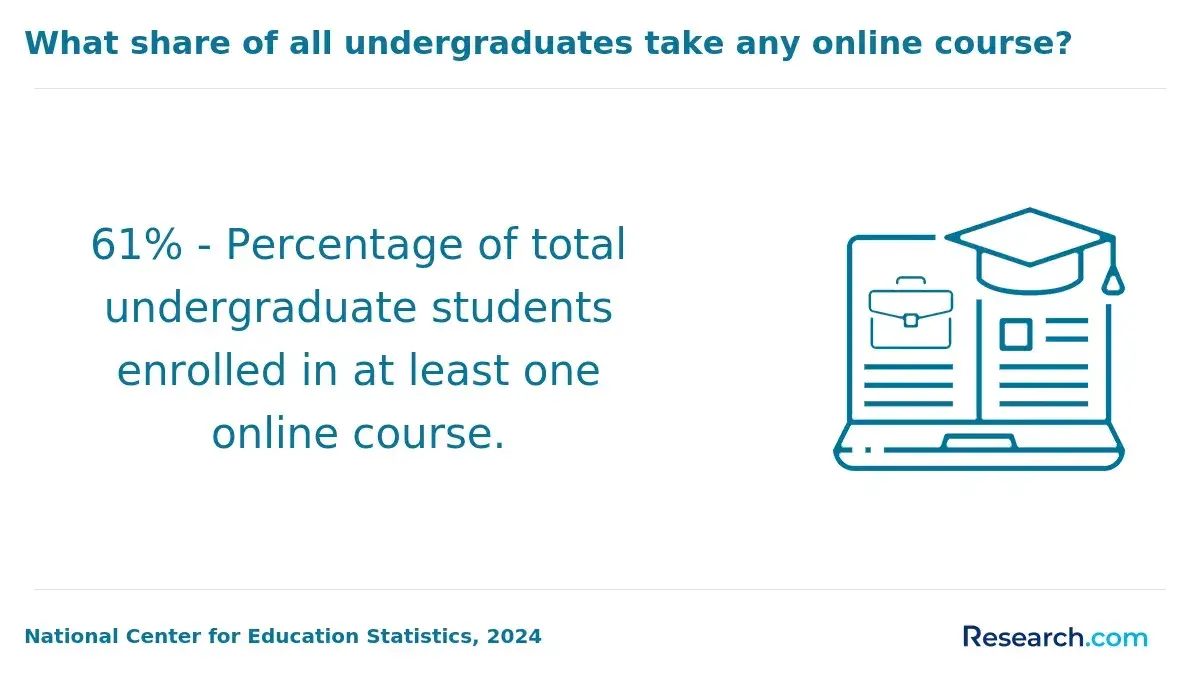
Accelerated online physical education programs work by changing the delivery model, not by removing required learning outcomes. Students may study motor development, kinesiology, exercise physiology, coaching methods, adapted physical education, assessment, health education, and curriculum design through asynchronous modules, video demonstrations, local field assignments, and online exams.
These are the main formats that can shorten the path to graduation, each with a different trade-off for pace, flexibility, and workload:
- Accelerated terms: Courses run in 5-, 6-, 7-, or 8-week sessions instead of a traditional semester, allowing more course starts each year.
- Year-round enrollment: Programs offering fall, spring, and summer courses let motivated students avoid long academic breaks.
- Stacked course scheduling: Students take one compressed course at a time but complete multiple courses in succession during a semester.
- Degree-completion design: Bachelor's programs focus on upper-division major requirements after transfer students bring in general education and elective credits.
- Competency-based education: Students progress by demonstrating mastery, although true competency-based PE degrees are less common because fieldwork and performance assessment are harder to standardize.
Competency-based education can be appealing, but PE students should be cautious. A self-paced academic course may move quickly, while placements, labs, practicum hours, or student teaching may still follow school-district calendars that cannot be accelerated easily.
What Accreditation Should an Online Physical Education Program Have?
Accreditation is the safeguard that helps confirm a college meets recognized academic standards. For online physical education students, it affects credit transfer, federal financial aid eligibility, graduate school admission, employer recognition, and teacher licensure review.
Before enrolling, verify these accreditation layers because each one answers a different question about quality and career use:
- Institutional accreditation: The college or university should be accredited by an agency recognized by the U.S. Department of Education or the Council for Higher Education Accreditation.
- Educator preparation accreditation: If the degree leads to teaching licensure, check whether the educator preparation unit has approval or accreditation such as CAEP, where applicable.
- State approval: For K-12 PE teaching, the program must align with the state where you plan to seek licensure, not only the state where the school is located.
- Specialized program alignment: Non-licensure programs may not need teacher-preparation approval, but they should clearly state whether they prepare students for coaching, fitness, recreation, wellness, or graduate study.
A major red flag is an online PE degree that claims to be "nationally recognized" but does not clearly identify institutional accreditation or state licensure alignment. Another red flag is a program that advertises teacher preparation without explaining field experience, background checks, student teaching, or out-of-state licensure steps.
How Can Transfer Credits and Prior Learning Shorten an Online Physical Education Degree?
Transfer credit is often the biggest reason one accredited online physical education degree is faster than another. A student who transfers an associate degree, military training, coaching-related coursework, or general education credits may be able to skip months or years of lower-division study, but only if the receiving school accepts those credits into the degree plan.
Use the following steps before choosing a program, because transfer policy details can change your actual graduation date more than the advertised term length:
- Request an unofficial transfer evaluation before applying or immediately after admission.
- Ask how many credits can transfer into the degree and how many must be completed at the institution.
- Confirm whether old science, anatomy, physiology, or health courses expire or require department review.
- Ask whether prior learning assessment is available for military training, professional certifications, coaching credentials, or work experience.
- Separate credits that transfer as electives from credits that satisfy major, licensure, or prerequisite requirements.
- Get a written degree plan showing the fastest available sequence by term.
Credit transfer can shorten the degree, but it can also create false confidence. For example, 80 accepted credits may sound close to graduation, yet the student may still need a full sequence of upper-division PE methods courses, field observations, and student teaching that only run in specific terms.
What Are the Admission Requirements and Start Dates for Accelerated Online Physical Education Programs?
Admission requirements vary by degree level. Bachelor's programs usually require a high school diploma or equivalent, transcripts, and sometimes minimum GPA standards for transfer credit. Master's programs usually require a bachelor's degree, official transcripts, a minimum GPA, and may require a teaching license or education background if the program is designed for practicing teachers.
Accelerated programs often have more frequent start dates than traditional programs, but "more starts" does not always mean "instant completion." This table shows common admissions and calendar factors that affect how quickly students can begin and finish.
| Requirement or calendar factor | Why it matters for speed | What to ask admissions |
| Multiple annual start dates | Can reduce waiting time before the first course | How many starts are available for major courses, not just general education? |
| Transcript evaluation | Determines whether prior credits reduce the degree plan | When will I receive a course-by-course transfer map? |
| Prerequisite sequence | May block upper-level PE or methods courses | Which courses must be completed before practicum or student teaching? |
| Fieldwork clearance | Background checks and placement approvals can add time | Can fieldwork be completed near my home, and who arranges the placement? |
| Cohort model | Some courses only open in a fixed sequence | If I miss one course, do I wait a full term or full year? |
Students who want the fastest path should apply early, send every transcript, and ask for a term-by-term plan before committing. The most avoidable delay is enrolling first and learning later that a prerequisite or field placement is unavailable until a future term.
How Much Does a Fast Online Physical Education Degree Cost, and Is Financial Aid Available?
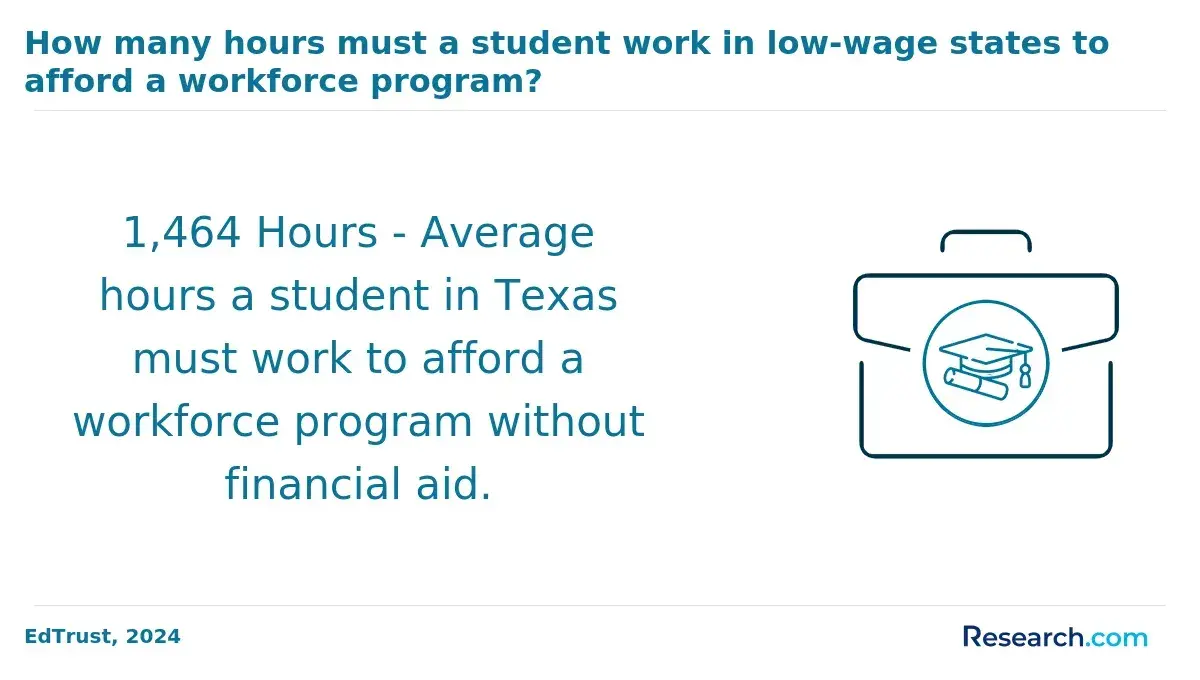
The cost of a fast online physical education degree depends on tuition per credit, number of credits remaining, online fees, textbooks or digital materials, background checks, testing fees, travel for fieldwork, and whether transfer credit reduces the total bill. Faster completion can lower some living or opportunity costs, but it does not always reduce tuition if the program charges by credit.
College Board's published 2024-25 pricing data listed average tuition and fees of $11,610 for in-state students at public four-year institutions and $43,350 at private nonprofit four-year institutions. Those figures are not PE-specific, but they give students a useful benchmark when judging whether an online program's per-credit price is unusually low, moderate, or high.
When estimating the total cost, separate direct tuition from costs that often surprise accelerated online students:
- Tuition per credit multiplied by the number of remaining credits after transfer evaluation
- Online course fees, technology fees, graduation fees, and transcript fees
- Books, digital platforms, fitness assessment tools, or video-recording equipment
- Background checks, fingerprinting, liability insurance, and state testing for teacher-preparation pathways
- Travel or unpaid time for local fieldwork, practicum, internship, or student teaching
Financial aid may be available if the school is properly accredited and the student meets eligibility rules. Students should complete the FAFSA, compare institutional scholarships, ask about employer tuition assistance, and review state grants for teacher candidates when available.
ROI depends on career goal, not speed alone. If you are comparing PE to other undergraduate paths, resources on majors that make the most money can help put education, health, fitness, and business-related options into a broader earnings context.
Can You Work Full Time While Completing an Accelerated Online Physical Education Degree?
Many students can work full time while completing an accelerated online physical education degree, but the realistic workload depends on how many credits they take at once and whether the program includes daytime fieldwork. Asynchronous courses are easier to fit around employment, while observation hours, student teaching, or local practica may require availability during school or business hours.
Use this workload comparison to decide whether the fastest calendar is manageable. It summarizes the practical trade-off between speed and weekly time pressure.
| Enrollment pace | Common course pattern | Best fit | Main caution |
| Aggressive accelerated | Two compressed courses at once or back-to-back with no breaks | Students with flexible work, strong study habits, and few outside obligations | Burnout and lower performance if fieldwork overlaps with exams |
| Balanced full time | One accelerated course at a time across multiple sessions | Working adults who can study most evenings and weekends | May still be intense in science, methods, or assessment courses |
| Part time | One course per term or selected terms only | Full-time workers, caregivers, and students with unpredictable schedules | Longer completion time and possible changes to catalog requirements |
A slower plan may be smarter if the program leads to teacher licensure. Student teaching often functions like a full-time job, and trying to maintain full-time employment during that semester can be difficult or impossible depending on state and school placement rules.
Are Accelerated Online Physical Education Degrees Respected by Employers and Graduate Schools?
Accelerated online physical education degrees can be respected when they come from accredited institutions, include appropriate learning outcomes, and match the student's career target. Employers and graduate schools usually care more about accreditation, licensure eligibility, transcripts, experience, and skills than whether the courses were online or accelerated.
For K-12 PE teaching roles, the key question is not simply "Is the degree online?" but "Does this program meet the licensure requirements where I plan to teach?" For coaching, wellness, recreation, and fitness-related roles, employers may also value CPR/AED training, coaching experience, internship experience, strength and conditioning knowledge, and the ability to use assessment technology.
Online education is also common in other licensed or health-adjacent fields, so students should not assume online delivery is automatically a disadvantage. For example, people researching an online speech pathology masters face similar questions about accreditation, clinical requirements, state authorization, and local placement rules.
The safest approach is to keep evidence. Save syllabi, catalog descriptions, fieldwork documentation, licensure disclosures, and accreditation pages. These documents can help if a district, licensing board, graduate program, or employer asks how your online accelerated degree met professional preparation standards.
How Should You Compare the Fastest Accredited Online Physical Education Programs?
The best fast program is the one that lets you graduate quickly without losing accreditation, licensure eligibility, academic quality, or schedule control. A one-year master's program may be ideal for an educator who already meets prerequisites, while a transfer-heavy bachelor's completion program may be better for an adult learner who wants to finish a long-delayed degree.
Use this checklist when comparing programs because it turns the advertised timeline into a realistic graduation plan:
- Verify institutional accreditation through recognized accreditation databases, not only the school's marketing page.
- Confirm whether the program is licensure, non-licensure, coaching-focused, fitness-focused, recreation-focused, or graduate-preparation focused.
- Ask for the fastest term-by-term plan based on your actual transfer credits and work schedule.
- Check whether required PE major courses are offered every term or only once per year.
- Ask how fieldwork, practicum, internship, or student teaching is arranged for online students in your state.
- Compare total cost after transfer credit, not just tuition per credit.
- Review maximum course-load rules and whether advisor approval is required for overloads.
- Ask what happens if you pause enrollment, fail a course, or miss a cohort sequence.
Common mistakes include assuming all credits will transfer, confusing short courses with easy courses, overlooking state licensure rules, and choosing the cheapest program without checking whether it supports your career goal. If you are still deciding between education, communication, marketing, or wellness-related online degrees, comparing alternatives such as colleges for social media marketing can clarify whether PE is the right fit or one of several flexible online pathways worth considering.
The practical next step is to narrow your list to three accredited programs, request written transfer evaluations, and compare the actual remaining credits, fieldwork timeline, start dates, and total price. The fastest accredited online physical education program for you is the one with the shortest verified path from your current transcript to your intended career outcome.
Other Things You Should Know About Physical Education
Yes. Many online PE programs use video demonstrations, local assessments, fitness logs, virtual coaching analysis, and supervised field experiences. Fully online coursework may still require in-person activities completed locally.
Sometimes. Students may need a webcam, smartphone or camera, reliable internet, basic fitness equipment, heart-rate or activity-tracking tools, and access to a safe space for movement-based assignments.
Prerequisites often include a high school diploma or equivalent, a minimum GPA, and possibly relevant coursework in biology or health. Some programs may require CPR certification or previous experience in physical activities. Check specific program requirements for details.
Yes, some accelerated online physical education programs may require students to take specific exams, like the Praxis Physical Education exam, to demonstrate competency. These exams are crucial for assessing both theoretical knowledge and practical skills essential for obtaining a degree and providing quality education.
References
- International Student Scholarship Search & International Financial Aid https://www.iefa.org/
- Types of Financial Aid for Online Colleges https://www.umassglobal.edu/blog-news/types-financial-aid-online-colleges
- The Historical Process of PE Curriculum Status Change in the New Era Has Multiple Dilemmas and Appropriate Directions https://www.scirp.org/journal/paperinformation
- Find Scholarships for College for FREE | Fastweb https://www.fastweb.com/
- Physical Education Master’s Programs Online: Compare Schools https://www.onlinemastersdegrees.org/best-programs/education/physical-education/
- The Rise of Hybrid Accreditation Models for Virtual Learning https://iacde.org/iacde-insights/the-rise-of-hybrid-accreditation-models-for-virtual-learning/
- Online Physical Education Degree | Forest Trail Academy https://foresttrailacademy.com/exploring-an-online-physical-education-degree-and-its-benefits-for-high-school-students/
- Traditional vs Progressive Physical Education: Which Is Better? https://blog.gophersport.com/traditional-vs-progressive-physical-education/
- Scholarships https://onlinephysicaltherapyprograms.com/scholarships/
- The Rise of Online Education and the Importance of Accreditation https://www.qahe.org/article/the-rise-of-online-education-and-the-importance-of-accreditation/