2027 Accredited Online Physical Education Degree Programs for Working Adults: Flexible, Part-Time, and Self-Paced Options

Co-Founder and Chief Data Scientist
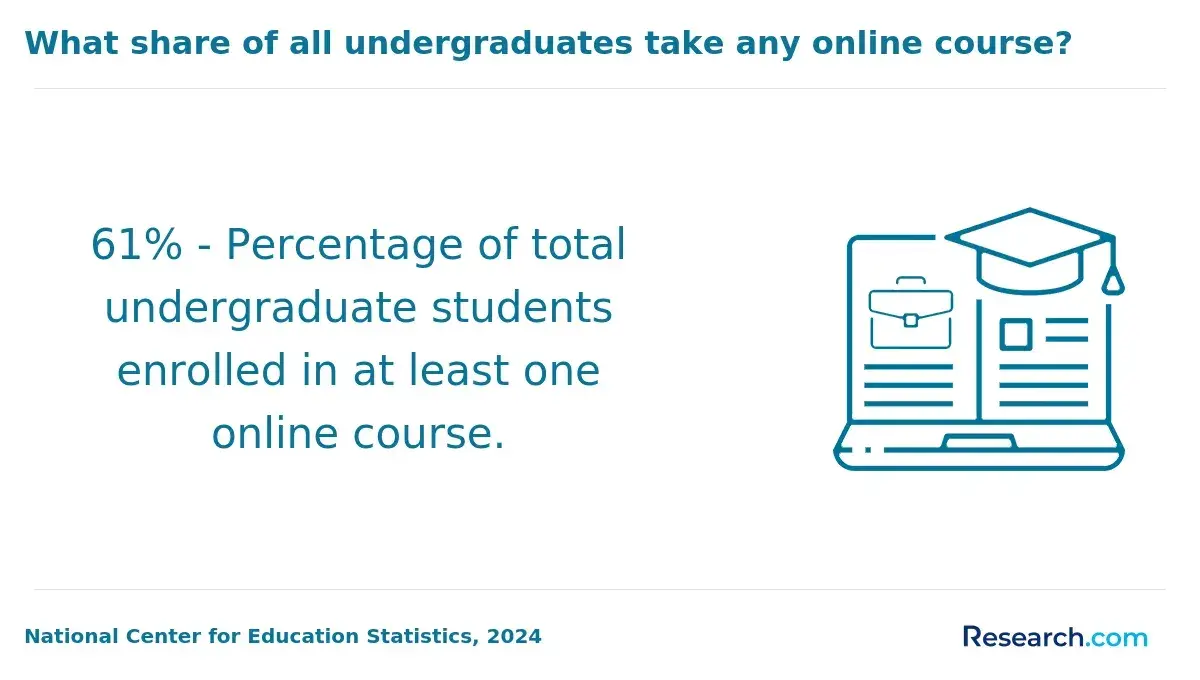
Choosing an online Physical Education degree while working full time means weighing accreditation, schedule flexibility, cost, and field experience requirements before you enroll. NCES data published in 2024 shows that more than half of U.S. undergraduates took at least one distance education course, reflecting why flexible formats now matter for adults changing careers or advancing in education, coaching, fitness, and wellness roles.
This guide explains how accredited online Physical Education programs work, who they fit, and how to compare part-time, self-paced, transfer-friendly, and licensure-oriented options.
Key Things You Should Know
- Choose a regionally accredited institution, and if you want K-12 teaching licensure, confirm the program is state-approved for educator preparation before assuming it will qualify you for certification.
- Full-time online study often requires roughly 30 to 40 hours per week, while part-time study may require about 10 to 20 hours depending on credits, labs, and field placements.
- Published 2024-25 tuition averages range from about $11,610 for in-state public four-year colleges to $43,350 for private nonprofit colleges, and transfer-friendly programs may accept 60 to 90 prior credits toward a bachelor's degree.
What Is an Accredited Online Physical Education Degree Program and Why Does Accreditation Matter?
An accredited online Physical Education degree program is a college program delivered fully or partly online that prepares students for work in physical education, health education, coaching, fitness, recreation, adapted physical activity, or related wellness fields. At the bachelor's level, programs commonly include anatomy, kinesiology, motor development, exercise science, instructional methods, health education, assessment, and practical teaching or coaching experience.
Accreditation matters because it affects financial aid eligibility, transfer credit, employer recognition, graduate school admission, and teacher licensure. For most working adults, the first checkpoint is institutional accreditation, especially regional accreditation from an agency recognized by the U.S. Department of Education. If your goal is to teach in public K-12 schools, you also need to confirm whether the program is approved by the state educator licensing authority where you plan to teach.
Online delivery does not automatically make a degree less credible. What matters is whether the college is accredited, whether the curriculum matches your goal, and whether required field experiences can be completed near where you live. If you are comparing online colleges broadly before narrowing your PE choices, Research.com's guide to the best online degrees can help you understand accreditation and online school quality signals.
The table below separates the major accreditation and approval terms working adults are likely to see. This distinction is important because a program can be academically legitimate yet still not meet a specific state's teacher licensure rules.
| Quality Check | What It Means | Why It Matters for Working Adults |
| Institutional accreditation | The college or university has been reviewed by a recognized accreditor. | Usually required for federal financial aid, credit transfer, and employer recognition. |
| State educator preparation approval | The program is approved to prepare teachers for licensure in a specific state. | Essential if your goal is public school PE teaching. |
| Programmatic recognition | A specialized body or state agency reviews curriculum quality in education or health-related fields. | Can strengthen confidence in curriculum alignment, but requirements vary by state and career path. |
| Professional certification alignment | Coursework may prepare students for certifications in coaching, fitness, strength and conditioning, or health education. | Useful for adults targeting non-teaching roles, but certification exams may have separate eligibility rules. |
Common red flags include vague accreditation claims, pressure to enroll quickly, no public information about state licensure eligibility, and programs that advertise "teacher certification" without naming the state. Before applying, verify the school in the U.S. Department of Education's accreditation database and check the state education agency's approved-program list.
Which Flexible Physical Education Degree Formats Are Best for Working Adults: Part-Time, Full-Time, or Self-Paced?
The best format depends on how predictable your schedule is, how quickly you want to finish, and whether the program includes labs, practicums, or student teaching. "Online" can mean very different things: some programs have live evening classes, some use asynchronous weekly deadlines, and some allow competency-based or self-paced progress within a term.
For many full-time workers, part-time asynchronous study is the safest starting point because it offers structure without requiring daily attendance. Self-paced formats can work well for disciplined learners with prior college experience, but they are not always faster; some programs impose term limits, minimum assessment requirements, or field placement schedules that cannot be accelerated.
The table below compares common formats by workload, flexibility, and best-fit student profile. Use it to identify the format that matches your real weekly schedule rather than your ideal schedule.
| Format | Typical Schedule | Best For | Trade-Off |
| Full-time online | Often 12 or more credits per term, with several course deadlines each week. | Adults who can reduce work hours or have strong support at home. | Fastest path, but the workload can feel like a second full-time job. |
| Part-time online | Often 6 to 9 credits per term, with a longer completion timeline. | Full-time employees, caregivers, and adults returning after a break. | More manageable, but may extend graduation by one or more years. |
| Asynchronous online | No required live class time, but weekly deadlines are common. | Shift workers and adults with changing schedules. | Flexible, but still requires steady weekly participation. |
| Synchronous online | Live virtual classes at set times, often evenings. | Learners who want instructor interaction and peer discussion. | Less flexible if work or family obligations change. |
| Self-paced or competency-based | Students progress through modules or assessments within school-defined limits. | Independent learners with strong time management and prior knowledge. | Can be efficient, but may offer less external structure. |
| Hybrid or low-residency | Mostly online with occasional campus, school, gym, or field-site requirements. | Students pursuing teaching, coaching, or activity-based skills. | Requires travel planning and schedule coordination. |
A useful way to choose is to match the format to your risk level. If you cannot reliably reserve study blocks during the week, avoid accelerated full-time schedules at first. If you are highly motivated but tend to procrastinate, choose asynchronous courses with weekly deadlines rather than fully self-paced study. If you need licensure, choose the format that gives you the strongest field placement support, not just the shortest advertised timeline.
Before committing, ask each school direct questions about flexibility. The most important questions are practical, not promotional.
- Are classes asynchronous, live, or a mix of both?
- How many hours per week do students usually spend per course?
- Are exams proctored, and can they be scheduled outside normal business hours?
- Can field experiences be completed near my home or workplace?
- Is part-time enrollment allowed every term, including during student teaching or internship terms?
- Are there maximum time limits for self-paced courses or competency-based terms?
What Are the Admission Requirements for Accredited Online Physical Education Degree Programs?
Admission requirements vary by degree level and school, but online PE programs generally expect evidence that you can handle college-level science, education, and activity-based coursework. Bachelor's programs may accept first-year students or transfer students, while master's programs often require a completed bachelor's degree and may target licensed teachers, coaches, or fitness professionals.
Physical Education degrees can be more hands-on than many online majors, so admissions offices may also ask about your location, access to field sites, background checks, or ability to complete in-person requirements. This is especially important for adults who work full time and need placements outside standard school hours.
The table below summarizes common admission requirements by applicant type. Use it to prepare documents early and avoid delays that can push your start date into a later term.
| Applicant Type | Common Requirements | Working Adult Consideration |
| First-time bachelor's applicant | High school diploma or GED, transcripts, application form, and sometimes placement scores. | Ask whether general education courses can be completed online and part time. |
| Transfer bachelor's applicant | College transcripts, minimum GPA, transfer credit evaluation, and major prerequisite review. | Request an unofficial transfer estimate before paying deposits. |
| Licensure-track applicant | Background check, GPA threshold, prerequisite education courses, and state testing rules in some states. | Confirm whether your state accepts the program for teacher certification. |
| Master's applicant | Bachelor's degree, transcripts, resume, statement of purpose, and sometimes teaching credentials. | Clarify whether the degree is for licensed teachers, career changers, or non-licensure advancement. |
| Certificate or endorsement student | Prior degree or current educator license may be required. | Check whether credits can later apply to a master's degree. |
Adults comparing multiple education-related pathways should also note that admissions requirements differ sharply by field. For example, an online speech pathology masters may involve clinical prerequisites and supervised clinical hours, while a Physical Education program may focus more on teaching methods, movement science, and school or community placements.
To avoid admissions mistakes, do not assume that an online application means the full program is available in your state. Some institutions restrict enrollment in licensure-track programs based on state authorization, placement availability, or certification rules. Ask for written confirmation if you plan to use the degree for teacher licensure.
How Much Does an Online Physical Education Degree Cost, and What Financial Aid Options Are Available?
The cost of an online Physical Education degree depends on tuition, fees, transfer credits, residency status, books, technology, background checks, liability insurance, travel to field sites, and certification exams. Online students sometimes save on housing and commuting, but they may still pay distance learning fees or course-specific costs for labs and assessments.
College Board's 2024-25 tuition data shows average published tuition and fees of about $11,610 for in-state students at public four-year colleges and $43,350 at private nonprofit four-year colleges. For working adults, the practical takeaway is that choosing an in-state public online program, a transfer pathway, or an employer-supported option can change total cost more than small differences in per-credit tuition.
Online programs may list costs in several ways. When you compare schools, calculate the full degree cost rather than relying only on the advertised per-credit price.
- Tuition per credit or per term
- Online course or technology fees
- Textbooks, learning platforms, and assessment tools
- Background checks, fingerprinting, or immunization documentation for school placements
- Travel costs for practicums, student teaching, internships, or short residencies
- Certification, licensure, or exam fees if required for your career path
Financial aid can reduce upfront cost, but it should be evaluated carefully. Federal aid is generally available only through accredited institutions and depends on eligibility, enrollment intensity, and satisfactory academic progress. For 2024-25, federal Direct Loans for undergraduate students carry a 6.53% fixed interest rate, which makes borrowing decisions especially important for adults who may already have family, housing, or existing debt obligations.
Common financial aid and cost-reduction options include the following. The right mix depends on your degree level, employer benefits, and willingness to study part time.
- Federal Pell Grants for eligible undergraduate students
- Federal Direct Subsidized and Unsubsidized Loans
- State grants or teacher education incentives
- School scholarships for transfer students, adult learners, educators, or online students
- Employer tuition assistance or reimbursement
- Military and veteran education benefits
- Community college transfer pathways before entering a bachelor's completion program
Return on investment should include both career goals and opportunity cost. A PE degree can support meaningful work in schools, recreation, coaching, and wellness, but it is not usually chosen solely for maximum salary. If salary ranking is a primary factor in your college decision, compare PE against broader lists of majors that make the most money before committing to a program.
How Long Does It Take to Complete an Online Physical Education Degree, and Can Transfer Credits Help You Graduate Faster?
A bachelor's degree in Physical Education typically requires about 120 credits. Full-time students may finish in about four years, while part-time students often take five to six years depending on course load, transfer credits, and field experience scheduling. Bachelor's completion programs for adults with an associate degree or substantial prior credit may be much shorter.
Transfer credit is one of the biggest timeline advantages for working adults. Many online bachelor's programs accept general education, elective, and lower-division major credits from accredited colleges, and some allow credit for military training, standardized exams, or prior learning portfolios. However, upper-division PE methods courses, student teaching, and licensure-specific coursework often must be completed through the degree-granting institution.
The table below shows how enrollment pace and transfer credits can affect completion planning. These are planning ranges, not promises, because course sequencing and practicum availability can change the final timeline.
| Starting Point | Likely Remaining Credits | Typical Adult-Friendly Timeline | Key Constraint |
| No prior college credit | About 120 credits | Four years full time or five to six years part time | General education and major sequencing |
| Some college credit | Varies by transfer evaluation | Often three to five years depending on accepted credits | How many credits apply to the major, not just electives |
| Associate degree completed | Often about 60 credits remaining | Often two to three years depending on pace | Upper-division major courses and fieldwork |
| Second bachelor's or licensed teacher adding PE | Varies widely | May be shorter if general education is waived | State licensure and endorsement rules |
| Master's degree student | Commonly 30 to 36 graduate credits | One to two years full time or two to three years part time | Capstone, practicum, or research project requirements |
Accelerated sessions can help adults maintain momentum, especially when courses are offered in shorter blocks. However, compressed schedules are not automatically easier; a short course may require the same work as a traditional course in fewer weeks. If you are considering accelerated calendars, compare them with options such as 5 week college courses online to understand how condensed academic terms affect workload.
Before enrolling, ask for a written degree plan that shows which credits transfer, which courses remain, when required courses are offered, and whether field placements can be completed during part-time enrollment. This document is more useful than a general statement that the school is "transfer friendly."
What Should You Look for When Comparing Accredited Online Physical Education Degree Programs?
The strongest online PE program is not always the cheapest, fastest, or most flexible. The best fit is the accredited program that matches your career goal, state requirements, schedule, budget, and need for hands-on support. Working adults should compare programs with a decision framework rather than relying on rankings or marketing language alone.
Start with career alignment. A licensure-track Physical Education degree is different from a non-licensure health and fitness degree, a coaching-focused degree, or a kinesiology program. If you want to teach public school PE, choose a program designed for teacher preparation. If you want to work in fitness, recreation, wellness, or coaching, a non-licensure program may be more flexible and practical.
The table below highlights key comparison factors and why they matter. Use it as a screening tool before speaking with admissions representatives.
| Comparison Factor | What to Check | Why It Matters |
| Accreditation and state approval | Institutional accreditation and licensure approval in your target state. | Protects financial aid eligibility and career qualification. |
| Program goal | Licensure, non-licensure, coaching, fitness, health education, or graduate preparation. | Prevents enrolling in a degree that does not match your intended role. |
| Course delivery | Asynchronous, synchronous, hybrid, self-paced, or cohort-based. | Determines whether the program can fit around work hours. |
| Field placement support | Who arranges placements and whether local sites are allowed. | Critical for adults who cannot relocate or stop working. |
| Transfer policy | Maximum credits accepted and how they apply to degree requirements. | Can reduce both cost and time to graduation. |
| Total cost | Tuition, fees, books, travel, exams, and lost work time. | Gives a more accurate ROI picture. |
| Student support | Online advising, tutoring, library access, tech support, and career services. | Improves persistence, especially for adults returning to school. |
After narrowing your list, use a step-by-step review so you do not miss hidden requirements. This process is especially useful when comparing programs that all describe themselves as flexible.
- Verify institutional accreditation through an official accreditor or federal database.
- Confirm whether the program is licensure-track, non-licensure, or endorsement-focused.
- Check state authorization and teacher certification eligibility for your state.
- Request a transfer credit estimate before enrolling.
- Ask for a sample course schedule for part-time and full-time students.
- Review all fieldwork, practicum, internship, and student teaching requirements.
- Calculate total cost, including fees and travel, not only tuition.
- Ask what happens if work or family responsibilities require you to stop out for a term.
Common mistakes include assuming that "online" means "self-paced," choosing the lowest tuition without checking fees, ignoring student teaching requirements, and enrolling in a program that does not meet your state's licensure standards. A better approach is to choose the program that gives you the clearest written answers before you commit.
What Career Opportunities and Salary Potential Can You Expect With a Physical Education Degree?
A Physical Education degree can lead to roles in K-12 education, coaching, recreation, youth development, fitness, adapted physical activity, health promotion, and community wellness. The strongest career fit depends on whether your program includes teacher preparation, exercise science coursework, coaching experience, or wellness programming.
Salary potential varies widely by state, employer, licensure, union contracts, experience, and whether the role is full time, seasonal, or part time. BLS May 2024 wage data reported median annual wages of about $46,480 for exercise trainers and group fitness instructors and $45,910 for coaches and scouts. These figures are useful as national benchmarks, but school-based teaching salaries often follow district pay scales and may require state licensure.
The table below summarizes common career paths for PE graduates. Use it to connect your degree format and specialization with the work you actually want to do.
| Career Path | Typical Responsibilities | Common Education or Credential Needs |
| K-12 Physical Education teacher | Teach movement skills, fitness concepts, health habits, teamwork, and safety. | Bachelor's degree, state-approved teacher preparation, student teaching, and licensure. |
| Health education teacher | Teach wellness, nutrition, substance prevention, mental health awareness, and personal health topics. | Teacher preparation and state endorsement rules vary. |
| Coach or athletic program assistant | Plan practices, support athletes, teach sport skills, and coordinate competitions. | Degree may help; CPR, first aid, coaching certification, or state school requirements may apply. |
| Fitness trainer or wellness instructor | Lead exercise sessions, assess fitness goals, and support behavior change. | Degree plus industry certifications can improve competitiveness. |
| Recreation or community wellness coordinator | Design youth, adult, senior, or community activity programs. | Degree in PE, recreation, kinesiology, or health promotion can be relevant. |
| Adapted physical activity specialist | Support inclusive movement and fitness programming for people with disabilities. | Specialized coursework, practicum experience, and employer-specific credentials may be needed. |
Some adults choose PE because they want direct, active, people-centered work. Others may realize they prefer adjacent careers such as sports communication, wellness marketing, recreation administration, or digital fitness content. If your interests lean toward media strategy or brand communication in the health and fitness space, researching colleges for social media marketing may help you compare a different education route.
A PE degree is most likely to be worth it when it is tied to a clear credential or career plan: teacher licensure, an endorsement, advancement in coaching, preparation for graduate study, or a structured move into health and wellness programming. It may be less practical if you want a fully remote career, cannot complete fieldwork, or need a high-salary outcome quickly.
How Can Working Adults Balance a Physical Education Degree With Full-Time Work and Family Responsibilities?
Balancing an online PE degree with full-time work requires more than motivation. You need a course load that matches your weekly availability, a family or employer communication plan, and a realistic understanding that online courses still require reading, projects, exams, discussion posts, video assignments, and sometimes in-person fieldwork.
A useful planning rule is to budget about two to three hours of study per week for each credit hour, with additional time during practicum or student teaching terms. A 6-credit part-time schedule may be manageable for many full-time workers, while a 12-credit schedule can become overwhelming if work hours are unpredictable.
Use a practical planning process before the term begins. These steps help reduce the risk of dropping courses after deadlines have passed.
- Choose a course load based on your worst workweek, not your best week.
- Block recurring study times on your calendar before classes start.
- Tell family members or roommates which hours are protected for schoolwork.
- Ask your employer early about tuition assistance, schedule flexibility, or predictable shift assignments.
- Take difficult science or methods courses during lighter work periods when possible.
- Save vacation days or flexible time off for exams, field observations, or practicum requirements.
- Use academic advising before withdrawing so you understand financial aid and timeline consequences.
Self-paced courses require a different strategy because there may be fewer external reminders. If you choose a self-paced or competency-based format, set your own weekly submission targets and treat them like work deadlines. Adults who wait until the end of a term often find that the flexibility that attracted them becomes the reason they fall behind.
Watch for signs that your schedule is overloaded: missed discussion deadlines, repeated late work, skipped workouts or sleep, and constant weekend catch-up. If these appear early, reduce your next term's course load rather than assuming you can sustain the same pace for years.
What Student Support Services and Online Learning Resources Should You Expect From a Physical Education Degree Program?
Strong support services can make the difference between enrolling and finishing, especially for working adults who may not be on campus. A quality online Physical Education program should offer more than recorded lectures; it should provide advising, academic support, technology help, field placement guidance, and career planning that are accessible outside traditional business hours when possible.
Support is particularly important in PE because students may need help with video-based skill demonstrations, lesson planning, observation hours, safety documentation, and teaching or coaching portfolios. Online learners should ask whether support services understand the specific requirements of education and movement-based programs.
Before you enroll, look for services that match the realities of adult online learning. The following supports are worth confirming directly with the program.
- Dedicated academic advising for online and part-time students
- Clear degree maps for licensure and non-licensure tracks
- Online tutoring for writing, science, statistics, and education courses
- Library database access and research help for remote students
- Technology support during evenings or weekends
- Field placement coordination or documented guidance for finding approved local sites
- Career services for teaching resumes, coaching portfolios, interviews, and certification planning
- Accessibility services for students who need accommodations
Ask how support is delivered, not just whether it exists. Email-only advising may be enough for some students, but adults juggling work and family often benefit from scheduled video appointments, extended office hours, and fast responses during registration or placement deadlines.
A good program should also be transparent about online learning tools. You should know which learning management system is used, whether video uploads are required, whether exams are proctored, and what technology you need for movement analysis, teaching demonstrations, or presentations.
Do Online Physical Education Degree Programs Include Internships, Practicums, or Other Hands-On Learning Requirements?
Yes, many online Physical Education degree programs include hands-on requirements, especially if they prepare students for teaching, coaching, fitness instruction, or adapted physical activity. The online portion may cover theory and coursework, while practical requirements are completed at approved schools, gyms, recreation centers, community organizations, or other local sites.
For licensure-track PE programs, student teaching is often the most important in-person requirement. It may require daytime availability in a school setting, which can be difficult for adults with full-time jobs. Non-licensure programs may instead require internships, capstone projects, coaching hours, observation assignments, or video-recorded skill demonstrations.
The table below explains common hands-on requirements and how they may affect working adults. Review these requirements before choosing a program format, because fieldwork can limit how flexible an otherwise online degree really is.
| Requirement | What It Usually Involves | Scheduling Concern |
| Observation hours | Watching PE teachers, coaches, or wellness professionals in approved settings. | May need to occur during school or program operating hours. |
| Practicum | Short supervised experience applying teaching, coaching, or activity-planning skills. | May require background checks and site approval. |
| Student teaching | Extended supervised teaching in a school setting for licensure candidates. | Often the least flexible part of a teacher preparation program. |
| Internship | Work-based experience in fitness, recreation, coaching, or wellness programming. | May be easier to schedule than student teaching but still requires site coordination. |
| Skills demonstrations | Video or in-person assessment of movement, instruction, safety, or coaching skills. | Requires space, equipment, and sometimes participant consent. |
| Capstone or portfolio | Final project showing lesson plans, assessments, reflections, or program designs. | Usually flexible but time-intensive near graduation. |
Working adults should ask how early field placements begin, whether weekend or evening sites are allowed, and who is responsible for finding placements. Some schools coordinate placements directly, while others require students to identify possible sites for approval. That difference matters if you live far from campus or have limited daytime availability.
The biggest mistake is waiting until the final year to think about hands-on requirements. If student teaching or an internship will require reduced work hours, plan financially and professionally at least several terms in advance. Ask whether placements can be split, completed near your workplace, or scheduled during a term when your job is less demanding.
Other Things You Should Know About Physical Education
Yes. Depending on the school, you may be able to focus on adapted physical education, coaching, health education, fitness and wellness, recreation, or strength and conditioning. Specializations vary, so compare actual course requirements rather than relying on program labels.
Not always. Many entry-level teaching and coaching roles begin with a bachelor's degree and the required state credential or employer qualification. A master's degree may help with salary advancement, leadership roles, specialized endorsements, or graduate-level career goals.
You do not need to be an elite athlete, but you should be comfortable learning movement skills, demonstrating safe activity techniques, and teaching people with different abilities. The focus is usually instruction, health, inclusion, and development rather than athletic performance alone.
Yes. Some graduates use PE coursework as a foundation for graduate study in kinesiology, exercise science, athletic administration, public health, occupational therapy preparation, or recreation management. Prerequisites vary, so check graduate program requirements early.
References
- Online, Hybrid, and More: Flexible Learning Options in College - ReUp Education https://reupeducation.com/blog/online-hybrid-and-more-flexible-learning-options-in-college/
- Online Degree vs. Traditional: Choosing the Right Path https://beal.edu/online-degree-vs-traditional/
- Guide To Self-Paced Online Colleges And Courses https://www.affordablecollegesonline.org/college-resource-center/self-paced-online-college/
- Professional career in physical education: a systematic review http://pepsic.bvsalud.org/scielo.php
- B.S.Ed. in Physical Education https://mayvillestate.edu/msu-online/programs/bsed-physical-education/
- Online Physical Education Degrees: Compare Top Programs https://www.degreesforgood.org/online-degrees/education-teaching-programs/physical-education-pe/
- Online College Costs: A Breakdown of Tuition and Fees | OnlineColleges.net https://www.onlinecolleges.net/for-students/online-college-costs/
- Self-Paced Online Degree Programs https://www.umassglobal.edu/why-umassglobal/flexible-ways-to-learn/self-paced
- Online Physical Education Degree | Forest Trail Academy https://foresttrailacademy.com/exploring-an-online-physical-education-degree-and-its-benefits-for-high-school-students/