2027 Online Physical Education Degree Programs With No Personal Statement or Admissions Essay Required

Co-Founder and Chief Data Scientist
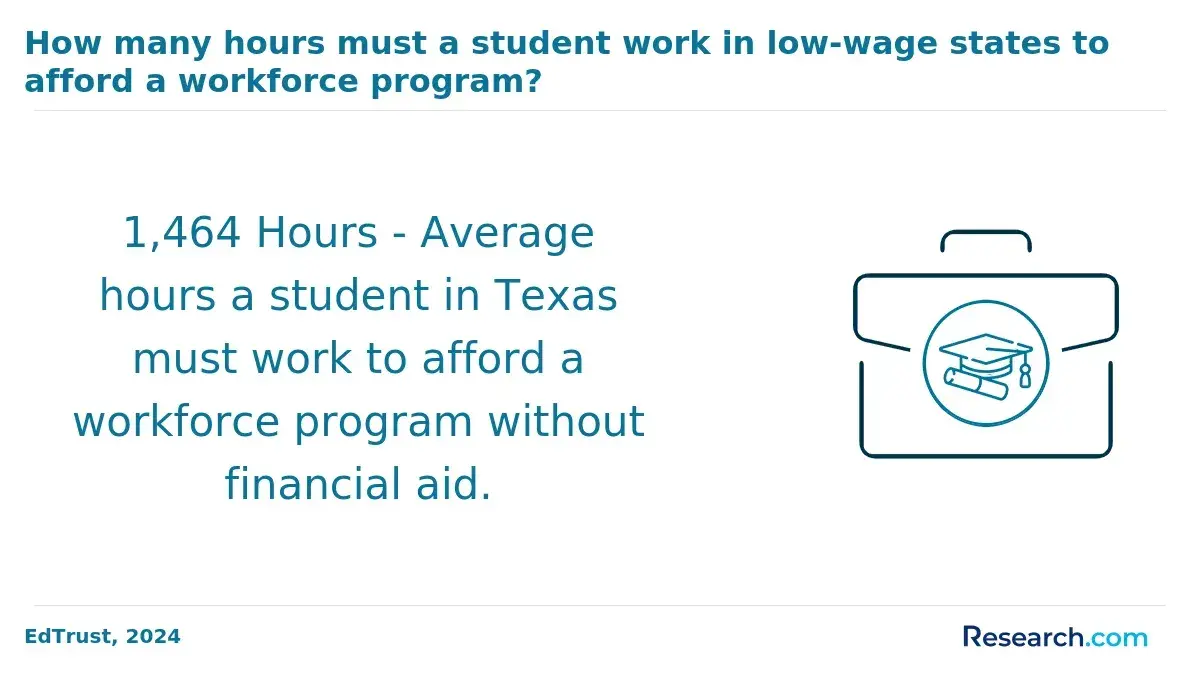
An online physical education degree can offer a simpler application when a school does not require a personal statement or admissions essay, but transcripts, GPA rules, prerequisites, and field-placement screening may still apply. National Center for Education Statistics data published in 2024 found that 54% of postsecondary students took at least one distance education course in fall 2022.
This guide helps first-time, transfer, and adult learners distinguish true no-essay policies from conditional waivers, evaluate program quality, and apply with fewer surprises.
Key Things You Should Know
- A true no-essay online physical education degree application does not request a personal statement for standard admission, but it may still require official transcripts, a minimum GPA, prerequisite courses, immunization records, background checks, or placement documentation.
- No essay does not mean automatic or open admission: teaching-track programs may use cohort limits, educator-preparation reviews, and state-required clinical placement standards. The NCES reported that 54% of postsecondary students took at least one distance education course in fall 2022, increasing the need to compare online formats carefully.
- No-essay means no essay is listed for the relevant applicant type; essay-optional lets an applicant submit one; and essay-waived removes it only under stated conditions. Honors programs, scholarships, appeals, and teacher-candidacy milestones can still require writing.
What Does No Personal Statement or Admissions Essay Required Mean for Online Physical Education Degree Programs?
For an online physical education degree, "no personal statement or admissions essay required" usually means the institution does not ask standard applicants to submit an original narrative explaining their goals, background, or readiness for college. The application may instead rely on objective materials, especially academic records and transfer-credit evaluations.
That description applies only to the admission stage and applicant category shown on the school's current admissions page. A school may have one policy for first-year applicants, another for transfer students, and a separate review for students entering a teacher-preparation concentration. Physical education programs that lead toward K-12 teaching licensure often include a later candidacy process before student teaching, even when initial university admission is essay-free.
Online physical education degrees also vary substantially in purpose. Some emphasize sport management, coaching, exercise science, health promotion, recreation, or community wellness. Others are educator-preparation programs designed to meet requirements for physical education teacher licensure. A fully online academic curriculum does not eliminate in-person requirements for practicum hours, observations, laboratory work, skills assessments, or student teaching.
The practical takeaway is simple: treat "no essay" as one application feature, not a measure of program rigor, professional eligibility, or career value. Ask whether the policy covers university admission, admission to the major, and admission to any licensure track.
What Admissions Requirements Do Online Physical Education Degree Programs Use Instead of an Essay?
Schools commonly replace an essay with records that show prior academic preparation and eligibility. Requirements differ by institution, degree level, residency status, and whether the program includes teacher licensure, so applicants should use the requirements for their exact program rather than a general online admissions page.
The following comparison shows the materials that frequently matter when no essay is required and why each one can affect an admission decision.
| Requirement | How schools use it | What applicants should confirm |
| Official transcripts | Verifies completed coursework, credits, and academic standing. | Whether all colleges attended must submit records, including withdrawn or low-grade terms. |
| Minimum GPA | May determine regular, conditional, or competitive admission. | Whether the GPA is cumulative, transfer-only, or calculated from prerequisite courses. |
| Prerequisite courses | Can establish readiness for anatomy, physiology, health, statistics, or education coursework. | Which courses must be completed before enrollment or before upper-division classes. |
| Test scores | May be optional, not considered, or requested in limited circumstances. | Whether scores can strengthen an application or are needed for placement. |
| Background and placement documents | Often support school-based fieldwork and student teaching eligibility. | Timing, cost, fingerprinting rules, and whether a placement can be arranged in the applicant's state. |
| Recommendations or resume | May be required for selective tracks, graduate study, or teaching candidacy. | Whether these are required at initial admission or later in the program. |
Applicants should also separate institutional admission from major admission. A university can admit a student without an essay while the education department later requires a disposition review, passing scores on required assessments, or evidence of experience working with youth.
When comparing requirements, use broader quality indicators as well as application simplicity. Guides to best online degrees can help applicants identify questions about institutional recognition, delivery format, student support, and transfer policies before they apply.
Who Is a Good Fit for Online Physical Education Degree Programs With No Admissions Essay?
No-essay programs can fit applicants who have a clear academic record and want an efficient application process. They are particularly useful for working adults, community-college transfers, military-affiliated students, and students returning after a break who would rather have their transcript evaluated than write an admissions narrative.
A strong fit usually has organized records, enough time for any required in-person experiences, and a specific career objective. For example, a future coach may prioritize sport leadership and athletic administration coursework, while a prospective K-12 physical education teacher should prioritize an approved educator-preparation pathway and state licensure compatibility.
Applicants may want a program that requires or permits an essay when their record needs context. An optional statement can help explain a long enrollment gap, a major GPA improvement, a change in career direction, or relevant coaching and youth-development experience that a transcript does not show. It can also be helpful when applying to selective scholarships or competitive teacher-candidacy programs.
Career changers should compare the likely outcomes of physical education with alternatives rather than choosing solely because the application is short. Reviewing majors that make the most money can provide useful earnings context, but fit should also include interest in movement instruction, safety, inclusive teaching, communication, and work with children or community participants.
A no-essay pathway may be a poor fit for someone who needs a fully online route to initial teacher licensure in a state where the school cannot arrange supervised placements. It may also be unsuitable for applicants seeking a fast credential without verifying whether the degree prepares them for their intended role.
What Is the Difference Between No-Essay, Essay-Optional, and Essay-Waived Physical Education Degree Admissions?
These labels sound similar, but they create different obligations and opportunities. Reading the exact wording matters because submitting an unnecessary essay can waste time, while failing to submit a required explanation can leave an application incomplete.
This comparison clarifies what each policy normally means for an online physical education applicant.
| Policy | Standard meaning | Best applicant response |
| No essay required | The regular application does not ask for an admissions essay or personal statement. | Confirm the policy applies to your degree, term, and applicant type; prepare all listed records. |
| Essay-optional | An essay is not mandatory, but the school will consider one if submitted. | Submit a focused essay only if it adds important context or demonstrates a meaningful strength. |
| Essay-waived | An essay is normally required but removed for applicants meeting a stated condition. | Verify that you meet the condition, such as a transfer-credit threshold or prior degree requirement. |
| Essay required later | Initial admission may be essay-free, while a later department, scholarship, or licensure review requires writing. | Map all checkpoints from enrollment through student teaching or graduation. |
Do not confuse no-essay admission with test-optional admission. Test-optional concerns whether standardized scores are required or considered; no-essay concerns written application materials. Either policy can exist independently of the other.
Students comparing several career-oriented online fields may find that application rules vary by discipline. For instance, programs at colleges for social media marketing may have different portfolio, transfer, or writing expectations than teacher-preparation programs, even at the same institution.
Are Online Physical Education Degree Programs With No Admissions Essay Easier to Get Into?
Not necessarily. Removing an essay can make an application faster to complete, but it does not automatically lower academic standards or guarantee admission. Schools can make decisions using GPA, completed credits, course prerequisites, space in a cohort, academic standing, and eligibility for required field experiences.
Teacher-preparation pathways often add another layer of selectivity. A student may be admitted to the university or a broad health-and-human-performance major, then later need to meet program standards before entering professional education coursework or student teaching. That distinction is especially important for applicants whose goal is public-school physical education teaching.
Admissions difficulty also cannot be judged from one requirement alone. A school with no essay may have strict prerequisite rules, while a school with an essay may admit a broader range of applicants and use the statement for context. Ask admissions staff for the current minimum requirements, whether admission is competitive, and what happens if an applicant meets the minimum but a cohort is full.
A common mistake is treating a simple application as proof that a degree is less demanding or more accessible in every way. A better approach is to compare the entire path: admission, course sequence, field placement, licensure eligibility, graduation requirements, and the ability to use the credential in your target state.
How Can You Verify Accreditation and Quality in No-Essay Online Physical Education Degree Programs?
Start by confirming institutional accreditation recognized by the U.S. Department of Education or the Council for Higher Education Accreditation. Institutional accreditation affects transferability, federal aid eligibility, and general employer recognition, but it does not by itself prove that a teacher-preparation program meets licensure standards.
For a degree intended to lead to K-12 physical education teaching, verify educator-preparation approval separately. Ask whether the program is approved by the institution's state, whether it leads to initial licensure, and whether it has determined that its curriculum meets requirements in the state where you plan to work. States can impose their own subject tests, background checks, coursework, and supervised clinical-experience rules.
Use the following checks to distinguish a credible online degree from an application-first marketing promise.
- Find the school's institutional accreditation status through an official accreditor or government-recognized database.
- Read the program page for required practica, laboratories, student teaching, and any residency expectations.
- Ask whether the school secures placements, supports out-of-state placements, or leaves placement arrangements to students.
- Request the total curriculum map, including general education, major, and licensure courses.
- Ask for current completion, licensure-exam, and placement information if the institution publishes it, along with the reporting period and cohort definition.
Quality review is especially important in regulated helping professions. Students considering adjacent graduate pathways, such as online speech pathology masters, face similar issues: online coursework may be available, but clinical and state licensing requirements still need independent verification.
Red flags include vague claims that a program "qualifies you everywhere," no clear explanation of fieldwork, pressure to enroll before receiving a written cost estimate, or an inability to explain whether graduates are eligible for their intended license. Save written answers from the school because policies and state determinations can change.
How Does the Application Process Work for Online Physical Education Degree Programs With No Personal Statement?
The process is usually document-driven rather than essay-driven. An applicant completes the institutional application, identifies the intended online physical education program, authorizes transcript delivery, and supplies any required identity, residency, or financial-aid information. The admissions office then evaluates eligibility and may request additional records.
Use this sequence to avoid confusing initial admission with later requirements.
- Choose the degree objective: teacher licensure, coaching, sport management, exercise-related study, or general health and wellness.
- Open the admissions page for the exact online program and term, then confirm in writing that no personal statement is required for your applicant category.
- Order official transcripts early from high school and every college attended, if required.
- Review prerequisite courses and submit any required test scores, placement information, or transfer-credit materials.
- Complete the Free Application for Federal Student Aid if you plan to seek federal aid, even if you expect to use employer assistance or savings.
- After admission, review major-entry, practicum, background-check, and student-teaching deadlines separately.
Applicants should retain copies of confirmation emails, transcript receipts, and any admissions checklist. A missing transcript or an unreported prior institution can delay review, even when there is no essay to submit.
It is also wise to ask whether an admission offer is regular, conditional, or preliminary pending transcript evaluation. Conditional admission may allow enrollment while requiring the student to meet GPA, course, or documentation conditions by a stated deadline.
Can Transfer and Adult Students Apply to Online Physical Education Degree Programs Without an Essay?
Yes, many transfer and adult applicants can apply without an admissions essay when the program's published policy includes their category. Transfer applicants are commonly evaluated on official college transcripts, transferable credits, cumulative GPA, academic standing, and completion of foundation courses. Adult learners may also need to provide high-school records if they have limited college credit.
The central issue for transfer students is not just admission; it is how many completed credits apply to the chosen degree. A course can transfer to the institution but count only as elective credit rather than satisfying a physical education, education, anatomy, or general-education requirement. Request a preliminary evaluation and compare the remaining course sequence before accepting admission.
Accelerated terms can help some students progress, but course pacing must match the program's prerequisites and fieldwork schedule. Students exploring 5 week college courses online should confirm whether compressed classes satisfy transfer rules and whether intensive schedules are realistic alongside observation or practicum obligations.
Adult students returning after years away should ask whether older credits have expiration rules, especially for science courses or state-specific teacher-preparation content. They should also check technology support, evening availability, asynchronous coursework, and whether field placements occur during standard school-day hours.
A frequent error is assuming a large transfer-credit award equals a shorter path to licensure. State-mandated professional courses and supervised student teaching may still require a fixed sequence, regardless of how many general credits transfer.
Do No-Essay Online Physical Education Degree Programs Affect Tuition, Financial Aid, or Scholarships?
A no-essay admission policy does not inherently reduce tuition or change eligibility for federal financial aid. Tuition depends on the institution, residency classification, number of credits, delivery fees, course fees, and required experiences. Online students should compare the full cost of attendance, not only the advertised per-credit tuition rate.
The College Board's 2024-25 average published tuition and fees for in-state students at public four-year institutions was $11,610. This national benchmark is not a quote for any specific online program and excludes important expenses such as housing, books, technology, travel, and field-placement costs; use it only as a broad comparison point while requesting school-specific estimates.
Scholarships are separate from admission. A university may admit students without an essay but require a scholarship statement, resume, recommendation, FAFSA record, or proof of leadership. Education-focused scholarships may additionally require evidence of service, teaching potential, or commitment to a particular community.
Before enrolling, ask the financial-aid office for a written breakdown of the following cost factors:
- Tuition by credit and whether online learners pay different rates.
- Mandatory technology, distance-learning, laboratory, assessment, or graduation fees.
- Estimated costs for fingerprints, background checks, liability insurance, transportation, and student teaching.
- Whether institutional scholarships require a separate application or written response.
- How transfer credits, repeated courses, and part-time enrollment affect aid eligibility.
Do not skip scholarship searches because the admissions application has no essay. The best financial choice may involve a little additional writing if it opens access to meaningful institutional or external aid.
How Should You Compare Online Physical Education Degree Programs With No Admissions Essay?
Compare programs in the order of their ability to support your end goal, not in the order of how quickly you can submit an application. A convenient no-essay policy is valuable only when the degree's curriculum, recognition, delivery format, and cost work for your intended career.
This table highlights the questions that most directly affect a physical education degree decision.
| Comparison area | What to verify | Why it matters |
| Career outcome | Whether the degree supports teaching licensure, coaching, sport administration, wellness, or another stated goal. | Degree titles alone do not establish professional eligibility. |
| Accreditation and approval | Institutional accreditation and, when relevant, educator-preparation approval. | These affect aid, transfer, licensure planning, and credential credibility. |
| Online format | Asynchronous, live-session, campus-residency, lab, and field-placement requirements. | "Online" may describe coursework rather than every required activity. |
| Admissions policy | Whether no essay applies to your applicant type and whether later reviews require writing. | Prevents incomplete applications and inaccurate expectations. |
| Transfer pathway | How credits apply to degree requirements and how long the remaining sequence takes. | Accepted credits do not always reduce time to completion equally. |
| Total cost and aid | Net price, fees, scholarships, and fieldwork expenses. | Lower tuition can be offset by additional mandatory costs. |
| Student support | Advising, placement coordination, tutoring, disability services, and licensure guidance. | Support can be crucial for online learners and students completing clinical requirements. |
Contact each finalist school with the same short set of questions: Does my application require an essay? Is admission to the university separate from admission to the teacher-preparation program? Can you place students in my state? What is my estimated net cost after typical aid? Which of my credits apply directly to graduation requirements?
Choose a program only after comparing written answers, catalog requirements, and state eligibility information. The strongest option is the one that removes unnecessary application barriers while still providing a credible, workable route to your target role.
Other Things You Should Know About Physical Education
Yes. A school can request additional written information if it needs clarification about academic history, residency, disciplinary issues, program eligibility, or an appeal. The standard application may still be no-essay, but individualized follow-up is possible.
Not always. Policies can differ for first-year, transfer, international, readmission, graduate, and teacher-candidacy applicants. Confirm the requirement for your program, degree level, enrollment term, and applicant category.
They may. Scholarship selection often uses separate criteria from admissions and can require short responses, personal statements, recommendations, leadership evidence, or proof of financial need. Review each scholarship's application separately.
Possibly, but initial teacher licensure usually requires supervised fieldwork and student teaching in a real school setting. Confirm that the program is approved for your intended state and can support required placements before enrolling.
References
- 2025 Most Affordable Online Master's in Physical Education https://www.onlineu.com/most-affordable-colleges/physical-education-masters-degrees
- Advantages and Disadvantages of Online Degree Programs - OnlineEducation.com https://www.onlineeducation.com/features/advantages-and-disadvantages-of-online-education
- Colleges That Don't Require Supplemental Essays https://www.collegexpress.com/lists/list/colleges-and-universities-that-dont-require-supplemental-essays/3008/
- College Applications Without Essays: Do They Exist? https://collegewise.com/blog/college-application-without-essay
- B.S. Ed. in Physical Education https://mayvillestate.edu/msu-online/programs/bsed-physical-education/
- Colleges Without Supplemental Essays? Yes, Please. - Top Tier Admissions https://toptieradmissions.com/colleges-without-supplemental-essays-yes-please/
- CEG's Ultimate Guide for Choosing Your High School Courses https://www.collegeessayguy.com/blog/how-to-choose-high-school-courses
- How does virtual learning impact students in higher education? | Brookings https://www.brookings.edu/articles/how-does-virtual-learning-impact-students-in-higher-education/
- The Writer's Toolbox - Faculty Articles - Gotham Writers Workshop https://www.writingclasses.com/toolbox/articles/how-to-write-the-personal-statement-for-college-applications
- Essays https://www.tmdsas.com/application-guide/essays.html