2027 Online Physical Education Degree Programs With No Letters of Recommendation Required

Co-Founder and Chief Data Scientist
An online physical education degree can be appealing when you have strong academic or work experience but no convenient academic references. "No letters of recommendation required" means letters are not part of the standard application for the specific program; it does not mean admission is automatic.
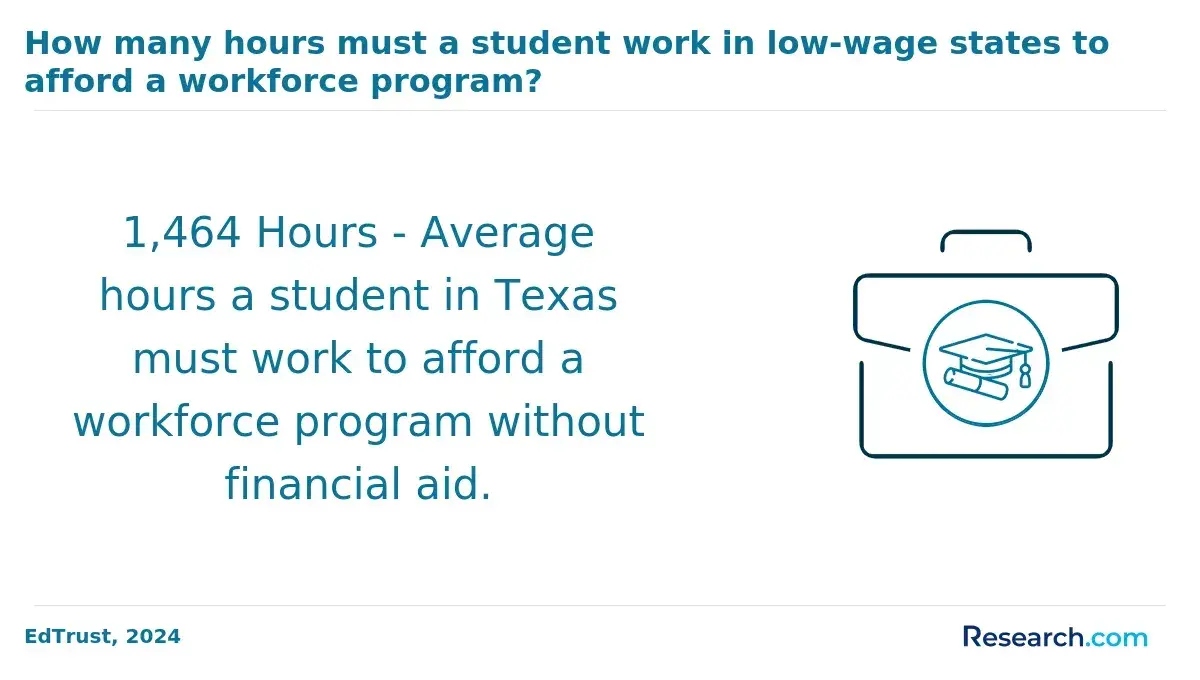
National Center for Education Statistics data show that more than half of U.S. postsecondary students took at least one distance-education course in recent reporting. This guide helps prospective undergraduate and graduate students identify no-recommendation options, confirm program quality, understand teacher-licensure limits, and compare cost, curriculum, and career fit before applying.
Key Things You Should Know
- Online physical education programs may omit recommendation letters, but applicants commonly still need official transcripts, a minimum GPA, an application, and sometimes a résumé, essay, prerequisite courses, or proof of teaching credentials.
- For school-based physical education teaching, a degree alone may not qualify you for a state license; compare the program's teacher-preparation pathway, field experience rules, and your state's certification requirements.
- Accreditation, total price, transfer policy, and career alignment matter more than a streamlined application: College Board reported average 2024-25 public four-year in-state tuition and fees of $11,610 before housing and other expenses.
Which Online Physical Education Degree Programs Require No Letters of Recommendation?
Programs marketed as online physical education degrees are not all designed for the same outcome. Some prepare licensed K-12 teachers and usually include in-person practicum requirements; others are non-licensure degrees in physical education, health, coaching, exercise science, sport leadership, or human performance. The latter group is more likely to use streamlined admissions because it does not need to verify eligibility for student teaching.
There is no permanent nationwide list of programs that require no recommendations. Admissions policies can change by term, degree level, and applicant type. A school may waive letters for applicants with a qualifying GPA while requiring them for conditional admission, graduate study, or teacher-certification tracks.
The comparison below shows the program types most likely to be worth screening. Treat "commonly possible" as a prompt to verify the current application checklist, not as a guarantee that every school in the category has the same policy:
| Online program type | Typical goal | No-letter admissions pattern | Important limitation |
| Bachelor's completion degree in sport, health, or physical education studies | Finish an undergraduate degree or move into recreation, coaching, wellness, or youth programs | Often evaluates transcripts and transfer credit rather than references | May not lead to K-12 teacher licensure |
| Non-licensure master's in physical education, coaching, or sport leadership | Advance teaching practice, coaching, administration, or wellness work | May require only a bachelor's transcript, GPA review, and application | Some programs still require recommendations for graduate admission |
| Teacher-licensure physical education program | Qualify for a state teaching credential | Less consistently available without letters because of field-placement screening | Requires supervised experiences and state-specific eligibility checks |
| Physical education endorsement or certificate | Add subject-area preparation for an already licensed teacher | Often uses transcript and license verification | Usually is not a stand-alone degree or initial license |
Start with an institution's degree-specific admissions page, not a general university application page. If you are also evaluating remote programs in other fields, this overview of best online degrees can help you compare institutional features, but each physical education program still needs separate licensure and curriculum review.
Ask admissions in writing: "For the online [degree name] and my intended start term, are recommendation letters required, optional, waived, or requested only for conditional admission?" Save the response with the dated application checklist.
What Are the Admission Requirements for Online Physical Education Degree Programs With No Recommendation Letters?
Admissions without recommendations are usually document-based rather than no-review admissions. Schools use records that are easier to standardize across working adults, transfer students, and applicants who have been out of school for years.
The materials below are common, although exact thresholds and prerequisites differ by institution and degree level:
| Requirement | What the school checks | Why it matters for physical education |
| Official transcripts | Completed coursework, credits, and academic standing | Programs may look for anatomy, health, education, or general-education preparation |
| Minimum GPA | Readiness for upper-division or graduate coursework | Graduate programs often set a higher minimum than bachelor's completion programs |
| Application and fee | Identity, residency, program choice, and enrollment term | Residency can affect tuition and licensure eligibility |
| Personal statement or goal statement | Career purpose and fit with the curriculum | May explain an interest in teaching, coaching, wellness, or administration |
| Résumé or employment history | Relevant experience and professional preparation | Can document coaching, recreation, fitness, military, school, or youth-work experience |
| Teaching license or background clearance | Eligibility for a licensure, endorsement, or practicum pathway | Frequently required for programs serving current educators |
GRE requirements are less common than they once were in many professional master's programs, but applicants should not assume a test-free policy. Teacher-preparation programs can also require interviews, fingerprinting, health documentation, skills testing, or placement approvals that have nothing to do with recommendation letters.
Applicants should review prerequisites early. A convenient online schedule cannot replace required local observations, lab work, or student teaching. If a program says it is "100% online," ask whether that description excludes clinical experiences or whether the school can arrange placement in your community.
Are Online Physical Education Programs With No Letters of Recommendation Easier to Get Into?
Not necessarily. Eliminating recommendation letters removes one administrative barrier, particularly for applicants who lack recent professors or supervisors. It does not indicate lower academic standards, a higher admission rate, or a lighter curriculum.
Admissions staff may make a decision from transcripts, cumulative GPA, prerequisite grades, an essay, professional experience, and space in the entering cohort. Licensure programs may also screen applicants for field-placement suitability and state requirements. A program can be selective without requesting references.
A simpler application is most useful for self-directed applicants with a clear record. It may be a weaker fit for someone whose GPA needs context, whose academic history is uneven, or who wants references to demonstrate teaching, coaching, or leadership strengths. In those cases, choose a program that accepts optional letters or use a strong personal statement to provide relevant context.
A common mistake is treating "no recommendations" as the main decision criterion. Instead, compare whether the degree leads to the credential and role you want. For example, a non-licensure sport leadership degree can be valuable for coaching or program coordination, but it usually cannot substitute for an approved initial teacher-preparation program.
What Do Online Physical Education Programs Evaluate Instead of Letters of Recommendation?
When references are not required, schools commonly use direct evidence of academic preparation and professional fit. This can be more transparent for applicants because the materials are under their control and appear in the published checklist.
Admissions reviewers may place the most weight on the following evidence:
- Transcript pattern, including cumulative GPA, recent coursework, and grades in required subjects.
- Personal statement that connects your goals to physical education, coaching, health promotion, recreation, or teaching.
- Résumé documenting experience with youth, athletics, fitness, camps, community recreation, schools, or leadership.
- Professional license, certification, or teaching credential when the program serves practicing educators.
- Interview, writing sample, or portfolio when the program needs evidence of communication and professional judgment.
Use the application to demonstrate competencies that references might otherwise describe: communication, inclusive activity planning, safety awareness, teamwork, organization, and ability to motivate learners. Be specific without overstating your role. A résumé entry that identifies the age group served, activity planned, and responsibility held is more useful than a vague claim of "sports experience."
For graduate applicants, explain how the degree supports a realistic next step. Physical education teachers plan instruction, assess student learning, maintain safe activity environments, and adapt lessons for different abilities. Coaching and wellness roles may require related but different skills, so make sure your statement matches the program's focus.
For cost-effective graduate school alternative pathways, see our list of the most affordable online MBA for your reference.
How Can You Tell if an Online Physical Education Degree With No Recommendation Requirement Is Accredited and Legitimate?
Legitimacy begins with institutional accreditation, but physical education applicants need an additional check: whether the degree's format and curriculum meet the requirements for their intended credential. Institutional accreditation supports transferability, federal-aid eligibility, and employer confidence; it does not automatically make a program state-approved for teacher licensure.
Use this verification sequence before paying an application fee:
- Confirm the institution's recognized accreditation through the school's official accreditation disclosure and the U.S. Department of Education or CHEA directories.
- Read the degree plan and distinguish a physical education, health, coaching, sport management, or exercise science curriculum.
- For K-12 teaching, ask whether the program is approved for initial licensure, which state approves it, and whether it supports placement where you live.
- Request the program's disclosure for out-of-state students and compare it with your state education agency's current requirements.
- Verify total tuition, refund rules, required in-person work, and who arranges practicum or student-teaching placements.
Programmatic recognition can also be useful, especially for educator preparation, but it should not replace checking state approval. A school should clearly identify its accreditor, physical address, faculty, curriculum, complaint process, and licensure disclosures.
Be cautious if it promises a teaching license without supervised fieldwork, will not provide a written cost estimate, or uses "accredited" without naming the accrediting agency.
Employer perception generally depends more on whether the institution is accredited and whether you hold the required state credential than on whether you submitted recommendation letters. The same principle applies when comparing specialized graduate options such as online speech pathology masters: professional licensure pathways require more than simply choosing an online format.
How Much Do Online Physical Education Degree Programs With No Letters of Recommendation Cost?
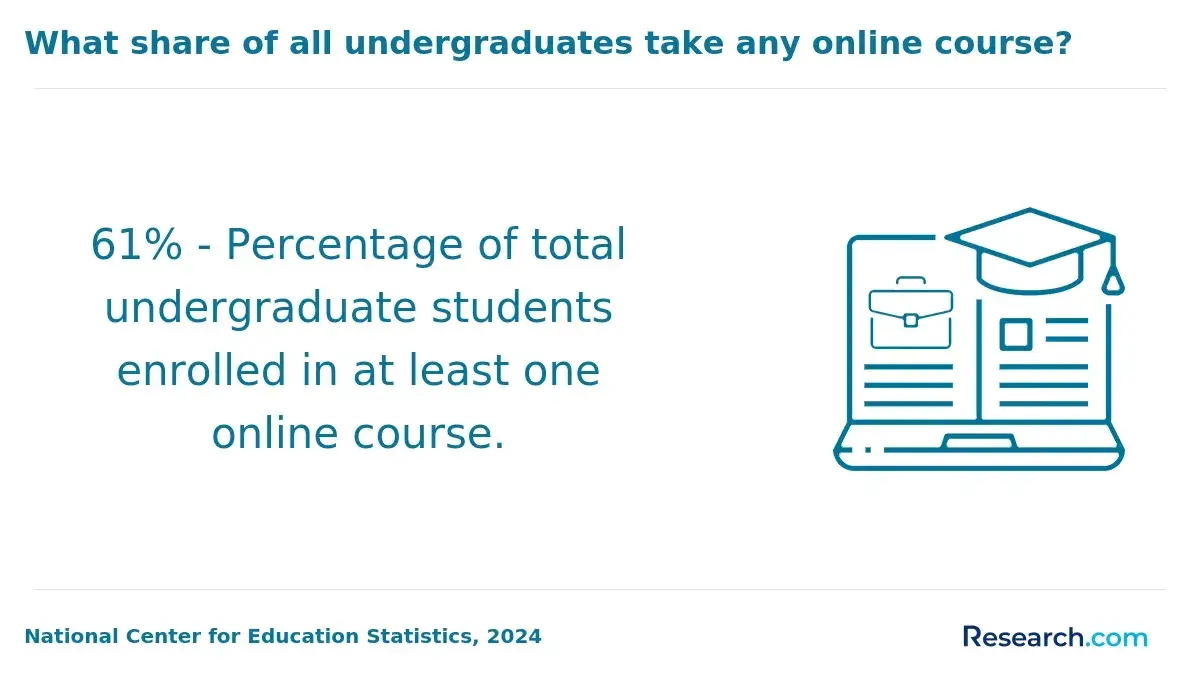
Cost varies more by institution, residency, transfer credit, degree level, and required field experiences than by recommendation-letter policy. A no-letter application does not inherently cost less, although it can reduce the time and effort needed to assemble an application.
Use published tuition per credit and required credits to estimate tuition, then add fees, books, technology, testing, travel, background checks, and any local practicum expenses. The table identifies the cost categories that most often change a program's real price:
| Cost factor | What to confirm | Potential effect on total cost |
| Tuition model | Per-credit, flat-rate, term-based, in-state, or online rate | Can substantially change the cost for part-time students |
| Transfer evaluation | Maximum accepted credits and equivalencies | More applicable credits can reduce remaining tuition and completion time |
| Program fees | Technology, graduation, course, proctoring, and distance-learning fees | May not be included in headline tuition |
| Licensure expenses | Testing, fingerprinting, background checks, and certification applications | Often paid separately from tuition |
| Field experiences | Travel, missed work, placement, and insurance needs | Can be significant even in an online program |
For context, College Board's 2024-25 average published tuition and fees at public four-year institutions was $11,610 for in-state students, while individual online programs can fall above or below that benchmark. It is a comparison point, not a quote for a particular degree and does not include all living or program expenses.
Compare net cost rather than a single tuition number. Students considering accelerated schedules should also confirm whether compressed terms affect workload, aid disbursement, or practicum timing. Options such as 5 week college courses online may illustrate accelerated delivery, but a physical education degree with clinical or licensure components may not be able to move at that pace.
Employer Confidence in Online vs. In-Person Degree Skills, Global 2024

Can You Get Financial Aid for an Online Physical Education Degree With Streamlined Admissions?
Yes. A streamlined admissions process does not by itself prevent access to federal financial aid. Students enrolled in an eligible program at an accredited institution can generally be considered for federal aid if they meet citizenship, enrollment, satisfactory academic progress, and other eligibility requirements.
Complete the FAFSA as early as practical, then compare each school's aid offer with its net price and borrowing terms. For the 2025-26 award year, the maximum Federal Pell Grant is $7,395 for eligible undergraduate students; the amount an individual receives depends on financial need, enrollment intensity, cost of attendance, and other eligibility factors.
Ask the financial-aid office whether online students are charged the same fees as campus students, how aid is recalculated if you take fewer credits, and whether field experiences create costs outside the official budget. Employer tuition assistance, state aid, school-district benefits, military education benefits, and scholarships may also be relevant, especially for working educators.
Do not choose a program solely because it accepts aid. Compare federal loans, institutional grants, scholarship renewal rules, and the likely value of the credential for your target role. Borrow conservatively when a program does not lead to the license or advancement you need.
How Long Does an Online Physical Education Degree With No Letters of Recommendation Take to Complete?
Completion time depends on the credential, how many credits transfer, enrollment pace, and whether required field experiences must follow a fixed school calendar. Online course delivery can add scheduling flexibility, but it does not eliminate academic-credit requirements or supervised practice.
A bachelor's degree commonly requires about 120 credits, while many master's programs require roughly 30 to 36 credits. A full-time student who starts with no transferable coursework may need about four academic years for a bachelor's degree; a full-time master's student may finish in roughly one to two years. Actual timelines vary, and licensure placements can extend them.
The table helps distinguish flexibility in course delivery from requirements that may still need to happen at set times:
| Format feature | Potential scheduling benefit | Question to ask |
| Asynchronous online courses | Allows coursework around work and family responsibilities | Are there required live sessions or group meetings? |
| Multiple start dates | May reduce the wait before beginning classes | Do all required courses run every term? |
| Transfer credit | Can shorten the remaining credit load | Which credits apply specifically to the major? |
| Practicum or student teaching | Provides supervised experience | How many hours are required, and can placement occur locally? |
Working adults should map term dates against sports seasons, school employment, family obligations, and placement availability before enrolling. A short online term can intensify reading, assignments, and assessments, so choose pace based on realistic weekly study time rather than advertised speed.
Can You Transfer Credits Into an Online Physical Education Degree Program With No Recommendation Letters?
Many online programs accept transfer credit, but the amount accepted and the way credits apply to a physical education degree are separate questions. General education credits may transfer readily while specialized pedagogy, kinesiology, methods, or student-teaching requirements must be completed through the new institution.
Request an official transfer evaluation before making an enrollment decision. A preliminary estimate is useful, but a written evaluation showing accepted credits, unmet prerequisites, and remaining degree requirements is more reliable for planning cost and time.
Applicants can improve the transfer process by taking these steps:
- Send transcripts from every previously attended college, including institutions where no degree was completed.
- Provide course descriptions or syllabi when a school needs to evaluate specialized physical education, health, or exercise coursework.
- Confirm whether transferred credits satisfy major requirements, elective requirements, or only general education.
- Ask about residency requirements that require a minimum number of credits to be completed at the new institution.
- For licensure pathways, verify whether transferred coursework and prior field hours meet the program's and state's current standards.
Do not confuse acceptance of transfer credits with acceptance into a teacher-preparation cohort. Some programs admit students to the university first and require a separate application for clinical practice or educator preparation later.
How Should You Compare Online Physical Education Degree Programs That Do Not Require Letters of Recommendation?
Compare programs by the outcome you need, then use admissions simplicity as one factor among several. A no-recommendation application is a good fit for applicants who can document readiness through transcripts and experience, but it should not outweigh licensure approval, program quality, affordability, or local career relevance.
This comparison framework can prevent the most expensive mistake: enrolling in a convenient program that does not qualify you for your intended role:
| Comparison question | Why it matters | Strong answer |
| Are recommendation letters truly not required? | Policies can differ by degree, term, and applicant category | The school confirms the requirement in writing for your program and start term |
| Does the degree lead to the right outcome? | Teaching, coaching, wellness, and sport administration have different pathways | The curriculum and credential match your target role |
| Is it accredited and, if needed, licensure-approved? | Accreditation and state approval affect aid, employment, and certification | The school provides clear institutional and state-authorization disclosures |
| What is the total cost after transfer credit and aid? | Tuition alone omits fees and required experiences | You have a written estimate of remaining credits and all expected charges |
| Can you complete fieldwork where you live? | Online programs may still require local placements | The school explains placement responsibility, timing, and eligibility |
For career context, the U.S. Bureau of Labor Statistics reported a 2024 median annual wage of $64,160 for elementary, middle, and high school teachers as a broad occupational benchmark. Physical education teacher pay varies by grade level, district, state, education level, and contract structure; use local salary schedules rather than treating a national median as a personal forecast.
Students aiming for education-related work should also compare alternative majors and earnings patterns realistically. Resources on majors that make the most money can add context, but compensation should be balanced against certification requirements, job satisfaction, local demand, and your interest in teaching movement and health.
Before applying, contact at least two programs, request written answers to the comparison questions, and review course sequences side by side. Avoid schools that pressure you to enroll before providing licensure disclosures, transfer results, or a complete cost breakdown.
Other Things You Should Know About Physical Education
Often, yes. No-recommendation programs can be especially practical for adults without recent faculty contacts. You may still need official transcripts, and some graduate programs may require a résumé, statement of purpose, or evidence of relevant work experience.
Only submit one if the application explicitly permits optional materials or the admissions office requests it. Unrequested documents may not be reviewed. A résumé and focused personal statement are usually better ways to present professional experience when letters are not part of the process.
Review the admissions checklist for the exact degree and entry term, then email admissions for confirmation. Ask whether letters are required for conditional admission, scholarships, educator preparation, or clinical placement even if they are not required for general university admission.
Only if it is an approved teacher-preparation pathway and you meet your state's licensure requirements. Many online physical education, coaching, and sport-management degrees are non-licensure programs, so confirm the outcome before enrolling.
References
- Best Physical Education Master's Degrees Online 2026 https://www.onlineu.com/degrees/masters-physical-education
- Financial Aid Guide for Students at Online Colleges - OnlineColleges.net https://www.onlinecolleges.net/for-students/financial-aid-online-students/
- Physical Education, BS - Elementary-Secondary Certification Kâ12 Option https://www.ucmo.edu/academics/programs/majors/coe/early-elementary-middle-and-physical-education/physical-education/physical-education-bs-elementary-secondary-cert-k-12/
- Financial Aid For Online College Students | LearnHowToBecome.org https://www.learnhowtobecome.org/career-resource-center/financial-aid-for-online-colleges/
- Beyond Financial Aid - Finaid https://finaid.org/beyond/
- College Graduation Rates and How ACE Compares | ACE Blog https://ace.edu/blog/college-graduation-rates-and-how-ace-compares/
- Financial Aid For Online Colleges https://www.affordablecollegesonline.org/financial-aid/financial-aid-for-online-colleges/
- B.S. Ed. in Physical Education https://mayvillestate.edu/msu-online/programs/bsed-physical-education/
- Financial Aid Types | Pikes Peal Community College https://www.pikespeak.edu/costs-scholarships-aid/financial-aid/aid-types/index.php
- Making the Right Moves: A Guide to Majoring in Physical Education - UNCF https://uncf.org/the-latest/making-moves-as-a-physical-education-major