
2027 Colleges Offering 6-Week Online Courses

Co-Founder and Chief Data Scientist
More colleges are adopting accelerated formats, with six-week online courses becoming one of the fastest-growing options for flexible learning. These condensed programs allow students to complete a full semester’s worth of coursework in less than half the time, appealing to working professionals and adult learners.
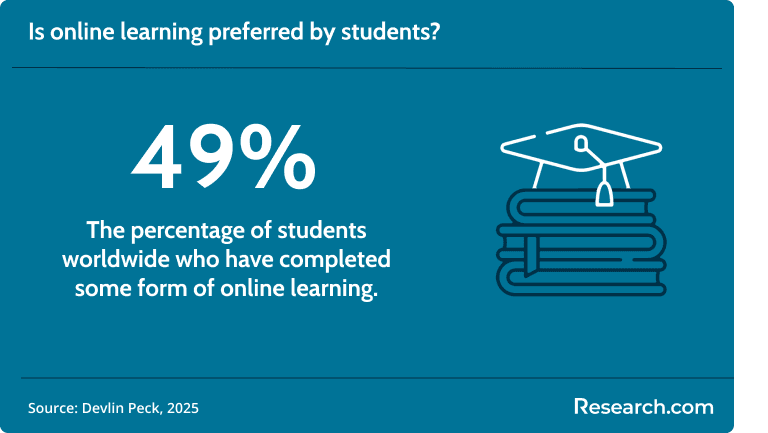
In fact, studies show that nearly 49% of students worldwide have completed some form of online learning, reflecting the growing demand for shorter, career-focused programs. This guide explores colleges offering six-week online courses, covering program details, costs, and specializations to help you choose the right path for your academic and career goals.
Key things you should know about colleges offering 6-week online courses:
- Six-week courses condense a full semester of material into a shorter timeline, allowing students to complete degrees faster and enter the workforce sooner.
- With 49% of students worldwide having completed some form of online learning, demand for short-term, flexible programs continues to rise.
- Colleges offer six-week courses across diverse fields, including business, healthcare, and technology, catering to both career changers and working professionals.
- Best Colleges Offering 6-Week Online Courses Best Colleges
- Are 6-week online courses accredited by recognized institutions? Accreditation
- What subjects are commonly offered in 6-week online courses? Common Subjects
- What are the benefits of taking a 6-week online college course? Benefits
- What are the admission requirements for 6-week online courses? Requirements
- Can you earn a degree through 6-week online courses? Online Degrees
- Are there professional certifications that use 6-week online formats? Certifications
- How much do 6-week online college courses cost on average? Average Cost
- Can I get financial aid for short-term online courses? Financial Aid
- Which high-demand careers can be pursued with short online programs? Career Paths
Best Colleges Offering 6-Week Online Courses
A 6-week online course can help you earn college credit, finish a prerequisite, test a subject before committing to a degree, or build a job skill without spending a full semester in class. The trade-off is pace: these courses move quickly, often requiring steady weekly study, fast assignment turnaround, and strong time management.
This guide is for students comparing accelerated online college courses, working adults looking for flexible credit options, and career changers considering short online training. You will learn which colleges offer short online formats, how accreditation works, what subjects are commonly available, how much these courses may cost, when financial aid applies, and how to decide whether a 6-week schedule is realistic for you.
Quick Answer: Are 6-Week Online Courses Worth Considering?
Yes, 6-week online courses can be a practical option if they are offered by an accredited college, count toward your academic or career goal, and fit your weekly schedule. They are best for focused learners who can keep up with a compressed timeline. They are not ideal for students who need a slower pace, heavy instructor support, or extra time to master difficult material.
| Best for | Use caution if | What to verify before enrolling |
| Students who need to finish prerequisites quickly | You are already overloaded with work, family, or other classes | Whether the course transfers or applies to your degree plan |
| Working adults who want flexible online access | You struggle with self-paced or asynchronous learning | Weekly workload, deadlines, exam format, and proctoring rules |
| Career changers exploring business, IT, healthcare, law, or public service | The field requires licensure, clinical hours, or hands-on practice | Accreditation, certification eligibility, and employer recognition |
1. Bucks County Community College
Bucks County Community College offers online six-week modular classes in January and March sessions. Available topics include nutrition, business law, and introductory paralegal studies. Courses are fully online, give students 24/7 access to course materials, and may include online-proctored exams. This format can work well for students who want to make faster progress without attending campus.
- Specialization: Nutrition, Business Law, Paralegal Introduction
- Course Cost: Approximately $170–$495 per semester credit hour
- College Accreditation: Middle States Commission on Higher Education
2. Dawson Community College
Dawson Community College (DCC) offers online credit and non-credit classes that generally run from six to ten weeks. Course areas include computer applications, accounting, sign language, and interior design. Students do not need to visit campus. Non-credit options are useful for focused professional development or personal learning, while credit courses may support a broader academic pathway.
- Specialization: Computer Applications, Teaching, Accounting, Sign Language, and Interior Design
- Course Cost: Ranges from $115 to $147 per course
- College Accreditation: Northwest Commission on Colleges and Universities
3. Hawkeye Community College
Hawkeye Community College offers accelerated “Minimesters” that last six or eight weeks during fall, spring, and summer terms. Online subjects include accounting, nutrition, and business. The format allows students to complete credit-bearing coursework faster than a standard semester and may be especially useful for learners who prefer concentrating on fewer subjects at once.
- Specialization: Accounting, Nutrition, Business
- Course Cost: Approximately $23
- College Accreditation: North Central Association of Colleges and Schools
4. Indiana University Online (IU Online)
Indiana University at Bloomington Online provides accelerated six- and eight-week online courses in fields such as business administration, data science, criminal justice, psychology, and public health. Students may have access to several enrollment dates, and some offerings may include micro-credentials or digital badges. This model is designed for learners who want a shorter academic term while still taking courses from a large university system.
- Specialization: Business Admin, Data Science, Criminal Justice, Psychology, Public Health, etc.
- Course Cost: Approximately $257–$592 per credit
- College Accreditation: Higher Learning Commission (HLC)
5. University of Iowa
The University of Iowa offers many asynchronous online and distance-learning courses, with some delivered in shortened formats close to six weeks. Subject areas include chemistry, business, global health, and psychology. With over 1,800 courses available year-round, students can use online scheduling to make progress outside a traditional semester structure.
- Specialization: Chemistry, Business, Psychology, Global Health
- Course Cost: Varies by program, level, and credit hours (contact departments for details)
- College Accreditation: Higher Learning Commission (HLC)
6. University of West Georgia (UWG)
The University of West Georgia offers eight-week compressed online classes in fall, spring, and summer. Subjects include anthropology, art, and communication. Although these are longer than six weeks, they still shorten the usual semester timeline and can help students complete required coursework more quickly.
- Specialization: Anthropology, Art, Communication
- Course Cost: General tuition plus online learning fee; no additional charges for out-of-state students.
- College Accreditation: Commission on Colleges of the Southern Association of Colleges and Schools (SACSCOC)
7. Arizona State University (ASU Online)
ASU Online Campus offers 6-week courses during summer sessions, along with 7.5-week formats in fall and spring. Courses are delivered through Canvas and may include asynchronous learning, virtual simulations, and faculty support. The shorter calendar gives students more start-date options throughout the year.
- Specialization: Various disciplines across degree programs, offered in summer accelerated formats.
- Course Cost: Varies by program and residency; additional tech/support fees may apply (not specified)
- College Accreditation: Higher Learning Commission (HLC)
8. University of Arizona Global Campus (UAGC)
The University of Arizona offers highly accelerated 5- and 6-week online classes through a one-course-at-a-time structure. Program areas include business, criminal justice, health care, IT, education, liberal arts, and social and behavioral sciences. This model can be helpful for students who want a steady sequence of short courses rather than juggling several full-term classes at once.
- Specialization: Business, Criminal Justice, Education, Healthcare, IT, Liberal Arts, Social & Behavioral Sciences
- Course Cost: Exact per-course rates not listed.
- College Accreditation: WASC Senior College and University Commission
9. Michigan Online (University of Michigan)
Michigan Online offers self-paced online courses that often run four to six weeks. Topics include data visualization, sustainability, public health, and artificial intelligence. Many short courses are free, especially those offered through MOOC-style platforms such as Coursera or Michigan’s own learning site, though fees may apply when courses are connected to formal degree pathways.
- Specialization: Sustainability, Data Visualization, Public Health, Artificial Intelligence.
- Course Cost: Often free; some courses may carry fees when linked to degree programs
- College Accreditation: Higher Learning Commission
10. City College of San Francisco (CCSF) – CityOnline
The City College of San Francisco offers online “Focus” sessions in six-week formats, along with 4, 8, 12, and full-semester online options. These intensive courses carry the same credit and academic content as regular classes but are completed in a shorter period. They can be useful for students who need scheduling flexibility or faster progress toward a certificate or degree.
- Specialization: General education and career-track subjects across certificate and degree programs
- Course Cost: Standard CCSF tuition rates
- College Accreditation: WASC Senior College and University Commission
How to Compare 6-Week Online Course Options
Do not choose a short online course based only on speed. A course is only valuable if it fits your academic plan, is accepted by your target school or employer, and gives you enough time to learn the material well.
| Factor | Why it matters | Question to ask |
| Accreditation | Accreditation affects credit transfer, financial aid, and employer trust. | Is the institution accredited by a recognized accrediting body? |
| Credit status | Some short courses are credit-bearing; others are non-credit continuing education. | Will this course appear on an official transcript? |
| Transfer policy | A course may be accredited but still not transfer to your target program. | Will my current or future college accept this course? |
| Weekly workload | A compressed course may require more frequent assignments and exams. | How many hours per week should I expect to study? |
| Format | Asynchronous courses offer flexibility, while scheduled sessions require set attendance. | Are lectures, exams, labs, or discussions live or self-paced? |
| Total price | Tuition is only one part of the cost. | Are there technology, proctoring, textbook, or online learning fees? |
Are 6-Week Online Courses Accredited by Recognized Institutions?
Many 6-week online courses are offered by accredited colleges and universities, but accreditation belongs to the institution or program, not simply to the course length. If the course is credit-bearing and delivered by a properly accredited school, it is more likely to meet academic quality standards and be considered for transfer or degree credit.
Before enrolling, confirm the school’s accreditation status through a recognized accreditor such as the Higher Learning Commission (HLC), Middle States Commission on Higher Education (MSCHE), or Accrediting Commission for Community and Junior Colleges (ACCJC). You should also ask your academic advisor whether the exact course number will apply to your degree requirements.
Accreditation matters for several practical reasons:
- Transfer potential: Credits from accredited institutions are more likely to be reviewed favorably by other colleges, although transfer is never automatic.
- Employer confidence: A course from an accredited school is easier for employers to evaluate than a course from an unknown provider.
- Financial aid access: Federal and state aid generally require enrollment through eligible accredited institutions and approved programs.
- Academic quality review: Accreditation provides an external check on institutional standards, student support, faculty qualifications, and learning outcomes.
- Licensure and certification alignment: Fields such as healthcare, legal studies, counseling, and education may require coursework from accredited institutions or approved programs.
What Subjects Are Commonly Offered in 6-Week Online Courses?
Six-week online courses are commonly available in general education, business, technology, healthcare-related subjects, legal studies, and social sciences. The best choice depends on whether you need transferable credit, professional skills, prerequisite completion, or personal enrichment.
- Business Administration and Management: These courses often introduce leadership, marketing, operations, and organizational behavior. They can help working professionals build management knowledge or help small business owners strengthen day-to-day decision-making.
- Accounting and Finance: Short accounting and finance courses may cover financial statements, budgeting, cost analysis, and basic reporting. Students can use these skills in bookkeeping, business administration, or personal financial planning contexts.
- Psychology and Human Behavior: Introductory psychology courses may examine cognition, development, mental health, and social behavior. They are useful for students considering human services, HR, counseling-related fields, or social science degrees.
- Criminal Justice and Law: Courses in this area may cover criminology, corrections, legal systems, and court procedures. They can help students explore roles in law enforcement, legal support, court administration, or related paths such as how to become a bailiff.
- Health Sciences and Public Health: Students may study nutrition, healthcare systems, wellness, community health, or public health concepts. These courses are often useful for learners already working in healthcare or preparing for health-related programs.
- Information Technology and Computer Applications: Common topics include software tools, coding basics, cybersecurity fundamentals, data skills, and productivity applications. These courses may support entry-level tech preparation or help professionals update workplace skills.
According to the stated undergraduate field data, liberal arts and sciences, general studies, and humanities represented the largest share of associate’s degrees conferred, accounting for 38 percent of all associate’s degrees conferred (383,300 degrees).
Health professions and related programs accounted for 18 percent (177,400 degrees), showing the importance of healthcare-related study among associate-level students.
The chart below summarizes common undergraduate fields of study in the U.S.:
What Are the Benefits of Taking a 6-Week Online College Course?
The main advantage of a 6-week online course is speed with structure. Students can complete a full course in a condensed window while keeping the flexibility of online learning. The format can be especially useful for learners who want to maintain momentum, recover credits, finish prerequisites, or add a skill quickly.
- Quicker academic progress: A six-week schedule can let students complete material normally spread across a longer term, helping them move through prerequisites or degree requirements faster.
- Flexible online access: Online delivery can make it easier to study around work, caregiving, military service, or other responsibilities, especially when courses are asynchronous.
- Focused course load: Many students prefer concentrating on one or two intensive subjects instead of managing several semester-long classes at the same time.
- Career skill development: Short online courses can help professionals add practical skills that support promotion, career change, or preparation for specific roles, including those described in a court clerk career guide.
- Potential cost efficiency: If accelerated courses help students finish a degree sooner, they may reduce some overall education-related expenses, although total savings depend on tuition, fees, transfer policies, and enrollment status.
Possible Drawbacks of 6-Week Online Courses
Accelerated online courses are not easier versions of regular classes. In many cases, they cover the same outcomes in less time. That can create pressure for students who underestimate the workload.
| Potential drawback | Why it can be a problem | How to reduce the risk |
| Fast deadlines | Assignments, discussions, quizzes, and exams may arrive every week. | Review the syllabus before the drop deadline and block study time early. |
| Limited recovery time | Falling behind in week two can affect the rest of the course. | Start readings before the first class week if materials are available. |
| More self-direction | Online courses require consistent independent work. | Use reminders, calendars, office hours, and tutoring resources. |
| Transfer uncertainty | Not every short course will fit your degree plan elsewhere. | Get written confirmation from your advisor or receiving institution. |
| Licensure limitations | Some careers require supervised practice, labs, clinical hours, or approved programs. | Check licensing board or certification requirements before enrolling. |
What Are the Admission Requirements for 6-Week Online Courses?
Admission rules depend on the college, course level, and whether the class is credit-bearing or non-credit. Because six-week courses move quickly, schools often want to confirm that students have the academic background and technical access needed to keep up.
- Educational background: Undergraduate credit courses commonly require a high school diploma or GED, while graduate-level courses usually require a bachelor’s degree.
- GPA standards: Some schools use minimum GPA expectations, typically between 2.0 and 2.5, to determine readiness. More selective or specialized programs may require stronger academic records.
- Prerequisite coursework: Courses in areas such as math, science, nursing, or advanced business may require earlier coursework before enrollment.
- Placement exams: Colleges may use English or math placement tests to ensure that students enter the correct course level.
- Technical requirements: Students generally need reliable internet, a working computer, updated software, and enough comfort with online learning tools to submit assignments and complete exams.
- Work experience for advanced options: Some professional or graduate-level courses may expect field experience, especially in business, nursing, leadership, counseling, or related areas. Students comparing counseling pathways can also review options such as the cheapest CACREP-accredited programs online.
Can You Earn a Degree Through 6-Week Online Courses?
Yes, but you do not earn an entire degree in six weeks. Instead, some colleges organize degree programs as a sequence of accelerated online courses, allowing students to complete one short term after another.
In this model, each 6-week course may cover the same academic outcomes that would otherwise be taught over a standard 15-week semester. Students can progress faster if courses are available back-to-back, degree requirements are planned carefully, and they maintain successful enrollment each term.
The growth of online learning also supports this format. Worldwide, 49% of students have completed some form of online learning, showing broad acceptance of flexible, technology-supported education.
For career-focused learners, stacking short online courses can support credential preparation, prerequisite completion, or movement toward fields such as medical coding, where students may also explore how to become CPC certified.
Are There Professional Certifications That Use 6-Week Online Formats?
Some professional certification prep programs and workforce courses use six-week online schedules. However, students should distinguish between completing a prep course and earning the certification itself. Many credentials require an exam, work experience, hands-on training, or eligibility review beyond the online course.
- Certified Medical Administrative Assistant (CMAA): Accelerated programs may introduce patient records, billing procedures, scheduling, healthcare office systems, and administrative workflows for entry-level healthcare office roles.
- Project Management Professional (PMP): Short online prep courses may review planning, scheduling, budgeting, risk management, and project leadership concepts used in PMP exam preparation.
- Certified Information Systems Security Professional (CISSP): Condensed cybersecurity courses may cover security architecture, risk management, compliance, access control, and network security topics aligned with certification study.
- Emergency Medical Technician (EMT): EMT training may include online theory components, but students should expect in-person skills practice or other hands-on requirements where licensing rules apply.
- Human Resources Certification (SHRM-CP): The Society for Human Resource Management Certified Professional credential can be supported by accelerated prep courses covering employee relations, compliance, workforce planning, and organizational strategy.
How Much Do 6-Week Online College Courses Cost on Average?
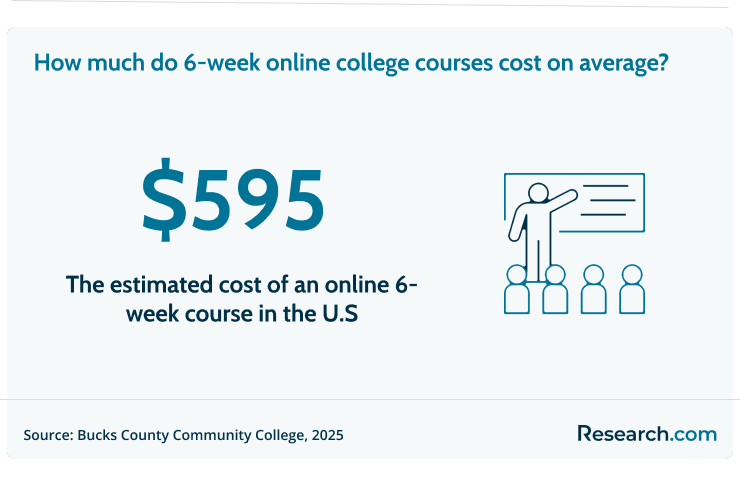
Costs vary widely by school type, residency status, academic level, credit status, and fees. The stated average tuition range is $150 to $600 per credit hour, and most courses carry three credit hours, bringing the total to an average of $595 per course.
Students should look beyond tuition. Technology fees, online learning fees, exam proctoring charges, textbooks, course materials, and transcript fees can change the real price. Some colleges also offer grants, scholarships, military discounts, adult learner aid, or employer-supported tuition benefits.
Community colleges may offer some of the lowest-cost accelerated options, with costs starting as low as $170 per credit, while larger universities may charge mid-range to higher tuition depending on program and residency rules.
The best value is not always the cheapest course. A low-cost course that does not transfer, does not meet a prerequisite, or does not qualify for aid may cost more in the long run. Always compare total cost, credit applicability, accreditation, and support services.
| Cost item | Why to check it |
| Tuition per credit or per course | This is the base price, but it may not include required fees. |
| Online or technology fee | Some schools charge extra for online platforms or digital support. |
| Books and materials | Short courses often begin quickly, so materials may need to be purchased immediately. |
| Proctoring fee | Online exams may require third-party or webcam-based proctoring. |
| Transfer or transcript cost | You may need official transcripts to move credits to another institution. |
| Financial aid eligibility | Non-credit and standalone courses may not qualify for federal aid. |
Can I Get Financial Aid for Short-Term Online Courses?
Financial aid may be available for short-term online courses, but eligibility depends on the school, the student’s enrollment status, and whether the course belongs to an approved credit-bearing degree or certificate program. Non-credit courses are less likely to qualify for federal aid.
- Federal student aid eligibility: The course usually must be part of an eligible program at an accredited institution and meet U.S. Department of Education requirements.
- Grants and scholarships: Some schools provide institutional scholarships or grants for short-term programs, particularly in workforce-focused areas such as healthcare and information technology.
- Employer tuition assistance: Employers may reimburse short courses when they relate to current job duties, promotion requirements, or approved professional development plans.
- Private loans and payment plans: If federal aid does not apply, students may consider private financing or school payment plans, while carefully reviewing interest, fees, and repayment terms.
- Workforce development funding: Some state programs support accelerated training tied to labor market needs, especially for approved certificates or in-demand technical fields.
Which High-Demand Careers Can Be Pursued With Short Online Programs?
Short online programs can prepare students for entry-level roles, certification exams, or career advancement in healthcare administration, technology support, legal services, digital marketing, and skilled trades. They are most effective when they match employer expectations and include any required hands-on or exam components.
- Medical Coding Specialist ($48,204): Medical coding specialists convert healthcare services into standardized billing and insurance codes. They may work in hospitals, medical offices, or remote billing environments. Students interested in healthcare support roles may also review medical assistant career growth.
- IT Support Specialist ($57,417): IT support specialists help users solve hardware, software, network, and access problems. Short online programs and industry certifications can support entry-level help desk and technical support opportunities.
- Paralegal ($61,010): Paralegals assist attorneys with legal research, document preparation, case organization, and client file management. Short legal studies programs may help students qualify for support roles in law firms, government offices, or corporate legal departments.
- Digital Marketing Specialist ($61,517): Digital marketing specialists work with SEO, social media, paid advertising, analytics, and content campaigns. Short courses can help learners build portfolio-ready skills for agency, in-house, or freelance work.
- HVAC Technician ($59,810): HVAC technicians install, maintain, and repair heating, ventilation, and air conditioning systems. Online coursework may support theory and exam preparation, but hands-on training is typically important for this trade.
As with the shortest master's programs in HR management, the value of a short program depends on alignment: the credential should match a clear career goal, employer need, and any required licensing or certification pathway.
The chart below compares selected careers by potential salary, training time, and job outlook.
Online vs. Campus 6-Week Courses: Which Format Should You Choose?
| Option | Best fit | Watch out for |
| Fully online asynchronous | Students who need maximum scheduling flexibility | You must manage deadlines without regular live class meetings. |
| Online with live sessions | Learners who want instructor interaction and scheduled structure | Meeting times may conflict with work or family responsibilities. |
| Hybrid | Programs requiring labs, skills practice, clinical work, or hands-on assessment | Campus visits may be required even if most coursework is online. |
| Campus-based accelerated | Students who learn better in person and want direct support | Commuting and fixed schedules can reduce flexibility. |
Common Mistakes to Avoid Before Enrolling
- Choosing only because the course is short: Speed is helpful only if the course supports your degree, transfer, certification, or career plan.
- Ignoring accreditation: Always confirm institutional or program accreditation before paying tuition.
- Assuming credits will transfer: Transfer decisions are made by the receiving institution, so get confirmation before enrolling.
- Underestimating the weekly workload: Six-week courses can require frequent reading, assignments, discussions, quizzes, and exams.
- Looking only at tuition: Add fees, books, proctoring, supplies, and transcript costs before comparing programs.
- Overloading your schedule: Taking multiple accelerated courses while working full time can be difficult without a clear study plan.
- Assuming online means self-paced: Many online courses have strict weekly deadlines even when lectures are asynchronous.
- Overlooking licensure rules: For healthcare, education, counseling, legal, and skilled-trade paths, check whether the course satisfies external requirements.
Questions to Ask a School Before You Register
- Is this course credit-bearing or non-credit?
- Will it appear on an official transcript?
- Is the institution accredited, and by which accreditor?
- Does this course meet a degree requirement, prerequisite, or certificate requirement?
- How many hours per week should students expect to study?
- Are exams proctored online, and are there extra proctoring fees?
- Are textbooks, software, labs, or supplies required?
- Can this course be covered by federal aid, scholarships, employer reimbursement, or a payment plan?
- What happens if I need to drop or withdraw after the course begins?
- Who can confirm transferability before I enroll?
What Graduates Say About 6-Week Online Courses
- Matthew: "The six-week schedule was demanding, but it helped me stay focused. I finished a full course while working, and having online access made the workload manageable."
- Danica: "I expected online learning to feel isolating, but the course platform was straightforward and class discussions helped me stay engaged. The pace forced me to plan carefully, and finishing early felt motivating."
- Krishna: "Taking a short online course showed me that I could continue studying without pausing my career. The assignments connected to practical skills, and instructor support made the fast format easier to handle."
Current Trends Affecting 6-Week Online Courses
- More demand for flexible credentials: Working adults increasingly look for education options that fit around employment and family responsibilities.
- Growth in skills-based learning: Short courses are often used to build targeted skills in areas such as data, AI, cybersecurity, digital marketing, healthcare administration, and business operations.
- Greater scrutiny of value: Students are comparing tuition, fees, transferability, job relevance, and completion time more carefully before enrolling.
- AI and technology changes: Courses in technology-related fields may need frequent updates, and students should look for current tools, applied assignments, and clear academic integrity policies.
- Employer expectations still matter: A short course can help, but some jobs still require degrees, certifications, experience, portfolios, apprenticeships, or licensure.
Key Insights
- 6-week online courses can be useful for earning credits quickly, completing prerequisites, or building focused career skills, but they require disciplined weekly study.
- Accreditation is essential. Confirm the school’s status and ask whether the exact course will transfer or count toward your program.
- Costs vary widely, with stated tuition ranging from $150 to $600 per credit hour and an average of $595 per course for most three-credit courses.
- Financial aid is more likely when the course is credit-bearing and part of an approved degree or certificate pathway; non-credit courses often have different funding rules.
- Short programs can support careers such as medical coding specialist, IT support specialist, paralegal, digital marketing specialist, and HVAC technician, but some fields require exams, hands-on training, or licensure.
- The best course is not necessarily the fastest or cheapest. Choose the option that fits your schedule, academic plan, transfer needs, and long-term career goal.
References:
- American Academy of Professional Coders. (n.d.). Welcome to AAPC's annual salary report. AAPC salary report
- Bucks County Community College. (2025). Career + Professional Development Ed2Go. BCCC online professional development
- Indeed. (2025). IT support salary in the United States. Indeed IT support salary
- National Center for Education Statistics. (2023). The most common undergraduate fields of study. NCES undergraduate fields data
- Peck, D. (2025). Online Learning Statistics: The Ultimate List in 2025. Devlin Peck online learning statistics
- U.S. Bureau of Labor Statistics. (2025). Occupational Outlook Handbook: Heating, Air Conditioning, and Refrigeration Mechanics and Installers. U.S. BLS HVAC occupational profile
Other Things You Should Know About Short Online Courses
Most 6-week online college courses in 2027 require a high school diploma or equivalent. Some courses may also necessitate specific prerequisites, such as introductory coursework in a related field, or relevant work experience, depending on the subject matter and institution offering the course.
Many 6-week online courses are not eligible for federal aid unless they are part of a degree or certificate program and meet U.S. Department of Education rules for Title IV funding. Schools must be accredited, and students usually need at least half-time enrollment for loan eligibility.


