2027 AI Master's Degrees for International Students in the U.S.

Co-Founder and Chief Data Scientist
Choosing an AI master’s degree in the U.S. is a high-stakes decision for international students because the right program can support a career pivot, strengthen work authorization options, and connect students with employers in a fast-moving field. The wrong choice can create problems: missing prerequisites, limited visa support, weak employer recognition, poor funding prospects, or a curriculum that is too theoretical for industry roles.
This guide explains how to compare U.S. AI master’s programs for 2026 with an international applicant’s needs in mind. It covers admissions requirements, English proficiency expectations, online versus campus formats, cost and funding, accredited coursework, salary outlook, program length, visa pathways, accreditation, and common AI career paths. Use it to narrow your options based on academic fit, budget, flexibility, and long-term return on investment.
Key Things You Should Know
- In 2026, over 300 U.S. universities offer AI master's degrees, with rising international enrollment reaching nearly 40% in top programs, reflecting global demand for advanced AI skills.
- Programs increasingly blend interdisciplinary coursework, combining AI with data science, ethics, and robotics, preparing students for diverse industry roles and emerging AI challenges.
- Visa policies and practical training opportunities like Optional Practical Training remain critical factors attracting international students to U.S. AI master's programs, supporting post-graduation employment pathways.
What are the top-ranked AI Master's degree programs in the United States that actively admit international students?
Top-ranked U.S. AI master’s options for international students are often found at universities with strong computer science, engineering, machine learning, and data science departments. Commonly cited institutions include Stanford University, Massachusetts Institute of Technology (MIT), Carnegie Mellon University, and the University of California, Berkeley. These schools may offer a dedicated AI or machine learning master’s degree, or they may offer AI-focused tracks inside computer science, electrical engineering, data science, or information programs.
Stanford University’s Master of Science in Computer Science includes an AI track with access to research activity and Silicon Valley employer networks. MIT’s Master of Engineering in Electrical Engineering and Computer Science includes AI-related coursework in machine learning, robotics, and data science. Carnegie Mellon University’s dedicated machine learning master’s program is known for research depth and industry connections. UC Berkeley’s Master of Information and Data Science offers AI-related electives with an applied, real-world orientation.
International students accounted for 56% of enrollment in computer science master’s programs at top U.S. universities, which suggests that many leading institutions already have experience reviewing international transcripts, English proficiency results, and global academic backgrounds. Still, “international-friendly” does not mean easy to enter. Applicants should verify prerequisites, GRE policies, English language minimums, financial documentation rules, and whether the program supports F-1 visa enrollment if studying in person.
How to compare top AI programs as an international applicant
| Factor | Why it matters | What to check |
| Academic fit | AI programs vary from research-heavy to industry-focused. | Required courses, electives, thesis or capstone options, and faculty research areas. |
| Prerequisites | Some programs expect prior computer science, mathematics, or engineering preparation. | Programming, linear algebra, probability, statistics, algorithms, and data structures requirements. |
| Career access | Internships, employer relationships, and location can affect job outcomes. | Career services, internship pipelines, alumni roles, and employer recruiting activity. |
| Visa practicality | International students need programs that align with student visa and work authorization rules. | Campus format, full-time enrollment expectations, international student office support, and OPT guidance. |
| Funding | Top programs can be expensive, and full funding is not guaranteed. | Assistantships, fellowships, tuition awards, and external scholarship eligibility. |
Students who need a more flexible academic path before or alongside graduate AI study can also review a 2-year computer science degree online. This type of option may help some learners strengthen programming or computer science foundations, but it should not be treated as a substitute for checking each AI master’s program’s official admission requirements.
What are the specific admission requirements and English language proficiency standards for international students applying to U.S. AI Master's programs?
International applicants to U.S. AI master’s programs typically need a bachelor’s degree in computer science, engineering, mathematics, or a related STEM field, often with a minimum GPA of 3.0 on a 4.0 scale. Some programs consider applicants from adjacent or nontraditional backgrounds, but they usually expect evidence of preparation in programming, algorithms, calculus, linear algebra, probability, and statistics.
English language proficiency is a major requirement for applicants whose prior education was not completed in English or in a country accepted by the university’s waiver policy. Many universities require a TOEFL iBT score between 88 and 100, while highly selective programs may expect scores near 100. Some elite programs may impose stricter cutoffs, such as TOEFL iBT scores of 105 or higher. IELTS scores of 7.0 or higher are also accepted by some schools. Conditional admission may be available at certain institutions after completion of a university-affiliated English language program, but applicants should confirm whether conditional admission applies to graduate AI programs specifically.
Common application materials
- Academic transcripts: International transcripts may need official translation, credential evaluation, or both, depending on the university.
- Statement of purpose: This should connect the applicant’s background, AI interests, target roles, and reasons for choosing the program.
- Recommendation letters: Strong letters usually come from professors, research supervisors, technical managers, or senior colleagues who can evaluate the applicant’s quantitative and programming ability.
- Resume or CV: Applicants should emphasize programming projects, research, internships, technical employment, publications, open-source work, or AI-related coursework.
- GRE scores: Many schools have relaxed this requirement recently, but policies vary by program and may change by application cycle.
- Technical screening: Some programs may use a coding assessment, technical interview, or supplemental prerequisite review.
The most common mistake is applying only to famous programs without checking academic prerequisites. A strong applicant for an AI master’s program is not defined only by grades or test scores; the admissions committee will look for evidence that the student can succeed in graduate-level mathematics, machine learning, and software development. Applicants from unrelated fields should consider bridge coursework, certificate study, or prerequisite courses before applying.
Students comparing adjacent fields can also review a data science master program ranking to identify programs that may overlap with AI, machine learning, and analytics while offering different admissions standards or cost structures.
How do online AI Master's degrees compare to campus-based programs in terms of curriculum, flexibility, and employer recognition?
Online AI master’s degrees from accredited, reputable U.S. institutions can be academically comparable to campus-based programs, especially when they use the same faculty, course outcomes, assignments, and grading standards. Core topics often include machine learning, deep learning, natural language processing, computer vision, algorithms, data engineering, model evaluation, and ethical AI. The biggest differences are usually not the course titles but the learning environment, access to research, networking, internships, and visa implications.
For working professionals and some international students, online programs offer major flexibility. Asynchronous coursework, part-time pacing, and remote project work can make it possible to study without relocating or leaving employment. Campus-based programs, however, may offer stronger access to labs, faculty research groups, in-person recruiting, peer collaboration, and internships tied to local employers.
| Comparison area | Online AI master’s degree | Campus-based AI master’s degree |
| Curriculum | Often similar or identical in core academic content when offered by the same institution. | May include more in-person labs, research seminars, and faculty-supervised projects. |
| Flexibility | Usually stronger for working professionals because of asynchronous or part-time options. | Usually less flexible but more immersive. |
| Networking | Depends on virtual career fairs, online cohorts, remote projects, and alumni access. | Often stronger through campus events, labs, student organizations, and local recruiting. |
| Employer recognition | Generally strongest when the institution is well known and the degree transcript does not signal lower rigor. | Well understood by employers, especially for research-heavy or lab-based roles. |
| International student considerations | May not support the same U.S. student visa pathway as an in-person program. | Can support F-1 study if the institution and program meet visa requirements. |
Employer recognition generally depends more on the university’s reputation, accreditation, technical rigor, and the graduate’s portfolio than on format alone. Hiring managers often care whether candidates can build, evaluate, deploy, and explain AI systems. A strong GitHub portfolio, capstone project, internship, research experience, or production deployment can matter more than whether lectures were attended online or in person.
Campus graduates may have an advantage for roles tied to physical labs, robotics facilities, sponsored research groups, or employers that recruit heavily from specific campuses. Online students can offset this by pursuing remote internships, contributing to open-source AI projects, attending industry conferences, and using virtual career services consistently.
The National Center for Education Statistics reported a 15% annual rise in online master’s enrollment, with nearly half of all graduate students engaged in fully or partially online programs. This trend has helped normalize online graduate education, but students should still confirm accreditation, faculty involvement, career support, and whether the program fits their visa and employment plans. Applicants comparing flexible options can review affordable online AI degrees.
What is the typical cost of an AI Master's degree for international students, and what funding or scholarship options are available?
The cost of an AI master’s degree for international students in the U.S. typically ranges from $60,000 to $120,000 in total tuition, depending on the institution, residency policy, program length, and whether the school is public or private. Public universities tend to be closer to $60,000 for the full program, while private research universities may charge $100,000 or more. International students should also budget for living expenses, health insurance, university fees, books, travel, technology, and visa-related costs. Living costs, health insurance, and fees can exceed $20,000 yearly.
Funding is possible but should not be assumed. About 8% of international graduate students receive full funding, according to recent data from the Institute of International Education. Many students use a combination of family support, savings, partial scholarships, assistantships, external scholarships, and loans. Graduate assistantships may include teaching or research roles and can sometimes cover tuition entirely while providing stipends, but these awards are highly competitive and vary by institution.
Common funding options for international AI master’s students
| Funding source | Typical benefit | Key limitation |
| University scholarships | Can reduce tuition through merit-based or program-specific awards. | Often limited, competitive, and not always open to international students. |
| Research assistantships | May provide tuition support and a stipend while building research experience. | Usually tied to faculty funding, research fit, and prior technical preparation. |
| Teaching assistantships | May provide tuition support and a stipend in exchange for instructional work. | Often requires strong academic performance and communication skills. |
| External scholarships | May come from foundations, governments, or home-country sponsors. | Deadlines, eligibility rules, and service obligations vary widely. |
| Employer sponsorship | Can reduce out-of-pocket cost for working professionals. | May require continued employment or repayment if the employee leaves. |
| Personal funds or loans | Can fill gaps when scholarships are partial. | Requires careful repayment planning, especially for students relying on post-graduation U.S. employment. |
Scholarships specifically reserved for international students in AI master’s programs are rare. Students should look for university-level awards, department-level support, AI research center fellowships, tech-company partnerships, private foundation awards, and government-sponsored scholarships in their home countries. Contacting admissions and financial aid offices early is important because funding deadlines may come before general admissions deadlines.
Before enrolling, international students should calculate the full cost of attendance rather than focusing only on tuition. A lower tuition program in a high-cost city may be less affordable than it first appears, while a higher tuition program with assistantship potential may become more competitive financially. Students seeking flexible or potentially lower-cost alternatives can compare data science masters online programs, especially if their target roles overlap with machine learning, analytics, or applied AI.
What core coursework and technical skills are covered in accredited AI Master's degree curricula?
Accredited AI master’s curricula typically combine graduate-level computer science, mathematics, statistics, machine learning, software development, and applied project work. The goal is not only to teach students how AI algorithms work, but also how to build systems that perform reliably on real data, meet business or research goals, and account for ethical and operational risks.
Mastery of machine learning, deep learning, and natural language processing forms the backbone of many programs. As outlined in the 2024 ABET accreditation standards review, most programs require proficiency in these core areas, including algorithm design for supervised and unsupervised learning, neural networks, and reinforcement learning methods. These topics prepare students to build models for prediction, classification, pattern recognition, decision support, and optimization.
Typical AI master’s coursework
- Machine learning: Supervised learning, unsupervised learning, model selection, generalization, regularization, and evaluation metrics.
- Deep learning: Neural networks, convolutional networks, recurrent architectures, attention mechanisms, and transformer models.
- Natural language processing: Parsing, sentiment analysis, text classification, embeddings, sequence modeling, and transformer-based models such as BERT.
- Computer vision: Image classification, object detection, segmentation, feature extraction, and vision model evaluation.
- Reinforcement learning: Agents, rewards, policies, value functions, and sequential decision-making.
- Mathematics for AI: Linear algebra, probability, statistics, optimization, and numerical methods.
- Data preparation: Data cleaning, preprocessing, feature engineering, data pipelines, and handling noisy or incomplete data.
- AI ethics and governance: Fairness, bias mitigation, explainability, accountability, privacy, and responsible deployment.
- Cloud and deployment: Model serving, monitoring, MLOps, and cloud platforms such as AWS and Google Cloud.
Programming ability is central. Most programs emphasize Python, while some also use R or Julia. Students commonly work with frameworks such as TensorFlow and PyTorch for model development and experimentation. In stronger applied programs, students also learn version control, reproducible workflows, experiment tracking, containerization, and deployment practices.
Hands-on projects and capstone courses are especially important for employability. A useful AI curriculum should require students to collect or prepare data, train models, evaluate performance, interpret results, and communicate limitations. For international students planning to work in the U.S. or global technology markets, projects involving cloud computing, scalable systems, and production-style workflows can make the degree more directly relevant to employer expectations.
What is the average salary and job outlook for AI Master's degree graduates in the U.S. job market?
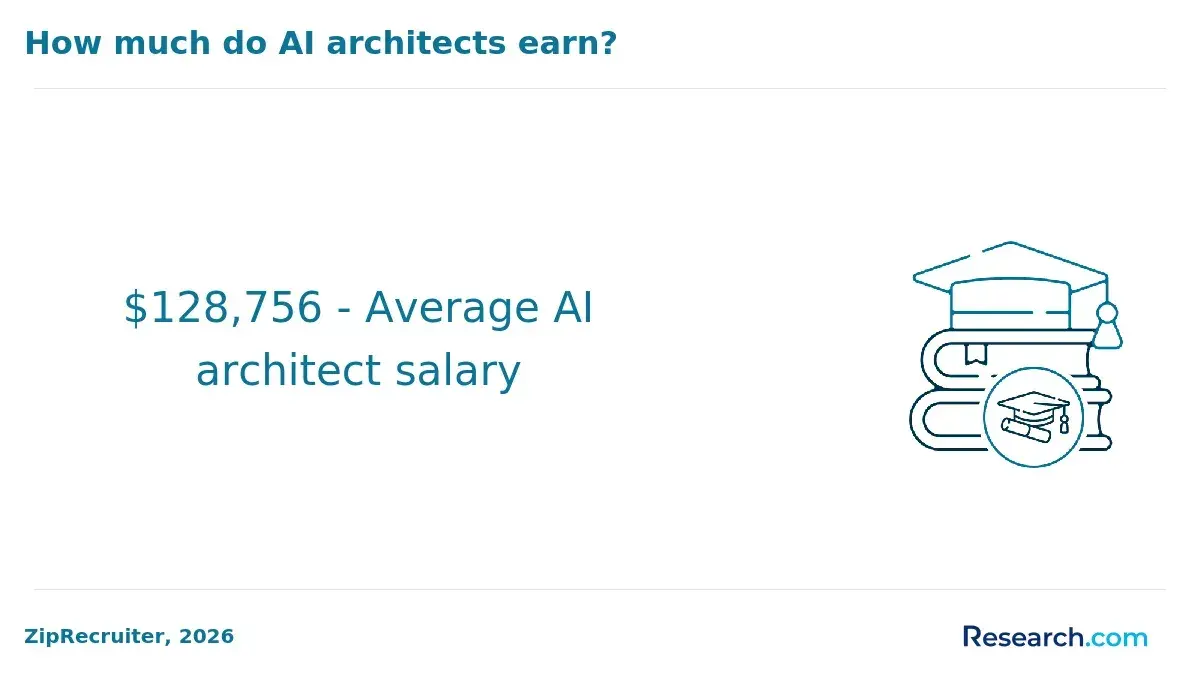
Graduates with a master’s degree in artificial intelligence in the U.S. earn an average starting salary of $135,000, according to the U.S. Bureau of Labor Statistics 2024 Occupational Outlook Handbook. The salary outlook is strong because AI skills are used across technology, healthcare, finance, automotive systems, cybersecurity, logistics, education technology, and research organizations. Specialized roles such as machine learning engineer and AI research analyst can command higher compensation when candidates have strong coding skills, mathematical depth, and evidence of applied project experience.
The job outlook is highly favorable, with an expected growth rate of 35% from 2022 to 2032, far exceeding the average for all occupations. Employers are looking for professionals who can design, test, deploy, monitor, and improve AI-driven systems rather than only understand models in theory.
Salaries vary by location, company size, specialization, and experience. Entry-level positions in tech hubs like Silicon Valley and Seattle can exceed $150,000. However, high salaries often come with intense competition, demanding interviews, and expectations for production-ready skills. International graduates should also consider whether employers have experience sponsoring work authorization.
How AI master’s students can improve job outcomes
- Build a portfolio: Include projects that show data preparation, modeling, evaluation, deployment, and business or research interpretation.
- Pursue internships or cooperative education: Internships and cooperative education roles during studies significantly improve hiring prospects and salary negotiations.
- Prepare for technical interviews: AI roles may test algorithms, statistics, machine learning concepts, system design, and coding ability.
- Choose electives strategically: Deep learning, NLP, computer vision, MLOps, and cloud deployment can support different career targets.
- Use career services early: International students should align recruiting timelines with CPT, OPT, and employer sponsorship requirements.
The best return on an AI master’s degree usually comes from combining strong coursework with practical experience. Students who graduate with only classroom assignments may struggle against candidates who have internships, research output, open-source contributions, or deployed AI systems.
How long does it take to complete an AI Master's degree, and what are the typical program formats and scheduling options?
The median completion time for full-time artificial intelligence master’s programs generally falls between 18 and 24 months, according to the Graduate Record Examinations Board’s 2024 survey. Part-time programs often take 3 to 4 years. These timelines usually include core coursework, electives, projects, research requirements, and a capstone or thesis when required.
Program format matters because it affects cost, visa eligibility, work-life balance, access to faculty, and career opportunities. Traditional on-campus programs provide direct access to professors, labs, research groups, peers, and campus recruiting. Hybrid programs combine online coursework with some in-person requirements. Fully online programs are often best suited for working professionals and students who need geographic flexibility.
| Format | Typical student fit | Main advantage | Main trade-off |
| Full-time campus | Students who can relocate and focus primarily on graduate study. | Strong access to campus resources, labs, and recruiting. | Higher relocation and living-cost commitment. |
| Part-time campus or hybrid | Working professionals near the institution or students needing a slower pace. | More manageable schedule than full-time study. | Completion often takes 3 to 4 years. |
| Fully online | Working professionals or students who cannot relocate. | Maximum flexibility and often asynchronous scheduling. | May provide less access to in-person networking, labs, and some visa pathways. |
| Accelerated | Students able to handle intensive study loads. | Can reduce the typical duration to about one year. | Heavy workload and limited flexibility. |
Scheduling options vary by institution and may include semester calendars, quarter systems, evening classes, weekend courses, modular formats, or intensive summer sessions. Accelerated programs can shorten time to completion but require a significant time commitment and are uncommon for part-time students.
International students should pay close attention to visa rules. Visa regulations often require full-time enrollment for international students, which can limit part-time options. Before choosing an online, hybrid, or reduced-load format, students should confirm with the university’s international student office whether the program structure supports their intended visa status.
What visa sponsorship and post-graduation work authorization options are available to international AI Master's graduates?
International AI master’s students usually rely on a sequence of U.S. work authorization options: F-1 student status during study, Optional Practical Training after graduation, the STEM OPT extension when eligible, and then employer-sponsored options such as H-1B. Students should treat visa planning as part of the degree decision, not something to solve after graduation.
Around 98% of these programs support H-1B visa sponsorship, allowing graduates to transition from an F-1 student visa to H-1B after securing a relevant job. This does not mean every employer will sponsor, and it does not guarantee selection under H-1B cap processes. It means graduates from these programs commonly pursue specialized employment pathways that can lead to H-1B sponsorship.
Optional Practical Training (OPT) allows eligible F-1 students to work for up to 12 months in a field related to their studies. For STEM-eligible programs, students may qualify for an additional 24-month extension, totaling 36 months. In 2024, 87% of international STEM master’s graduates took advantage of OPT extensions, showing how important STEM OPT is for career progression.
Key visa and work authorization considerations
- Apply on time: OPT applications must be planned before degree completion to reduce the risk of employment gaps.
- Confirm STEM eligibility: Not every AI-adjacent program is automatically treated the same way for STEM OPT purposes; students should confirm the program’s classification with the university.
- Check employer requirements: The STEM OPT extension requires employers to participate in E-Verify and provide a formal training plan.
- Target relevant roles: Jobs must be related to the field of study. Roles without sufficient STEM relevance may create eligibility issues.
- Plan for H-1B uncertainty: Because H-1B is subject to caps and lotteries, students often use OPT time to build experience and find employers with sponsorship experience.
Some graduates also pursue employer-sponsored permanent residency, but processing times can be lengthy. Alternatives to H-1B include O-1 visas for extraordinary ability and L-1 transfers, though these are less common for master’s graduates. International students should work closely with their university’s international student office and qualified immigration professionals when making visa-related decisions.
Which AI Master's programs offer accreditation from recognized bodies such as ABET or regional accrediting commissions?
For international students, accreditation is one of the most important quality checks before enrolling in a U.S. AI master’s program. Regional accreditation confirms that the institution meets recognized standards for academic quality and institutional operations. ABET or comparable specialized accreditation can provide additional assurance for engineering, computing, or technology-oriented programs, although not every strong AI master’s program has separate ABET accreditation.
About 42% of AI and machine learning master’s programs in the U.S. have ABET or equivalent regional accreditation, up from 28% in recent years, according to the Accreditation Board for Engineering and Technology. This growth reflects increasing attention to quality assurance in AI education, especially as more universities launch AI, machine learning, and data science degrees.
ABET accreditation is more common in universities with strong engineering or computer science departments. Programs such as the AI specialization in computer science at Georgia Tech and the University of Illinois Urbana-Champaign hold ABET accreditation through their engineering schools. This type of accreditation can signal that the curriculum meets technical standards valued by employers and graduate institutions.
Regional accreditation remains the baseline. Accrediting commissions such as the Middle States Commission or WASC validate institutional quality and are often important for credit transfer, federal financial aid eligibility, and visa-related institutional recognition. Schools such as Stanford University and the University of Southern California offer AI programs through regionally accredited institutions, though not all such programs have specific ABET recognition.
How to verify accreditation
- Check the university’s official accreditation page, not only marketing materials.
- Search official ABET listings when a program claims ABET accreditation.
- Confirm whether accreditation applies to the institution, the school or college, or the specific program.
- Ask admissions whether the degree is eligible for intended visa, transfer, employer, or licensing-related purposes.
- Be cautious with unaccredited providers or programs that use vague phrases such as “aligned with” accreditation standards without formal recognition.
For most international applicants, regional accreditation is the minimum standard. ABET or specialized accreditation adds another layer of confidence when the student wants a technically rigorous computing or engineering-oriented AI education.
What career paths and job titles do AI Master's degree holders typically pursue after graduation?
AI master’s graduates typically pursue roles that involve building models, analyzing data, developing AI-enabled software, researching new methods, or translating AI capabilities into business products. Common job titles include machine learning engineer, data scientist, AI researcher, AI software developer, computer vision engineer, natural language processing engineer, robotics engineer, AI product manager, and AI ethics specialist.
Machine learning engineer is one of the most visible career paths. Machine learning engineers design, train, test, and deploy models that allow systems to learn from data. LinkedIn reported a 74% year-over-year increase in job postings for this role, reflecting strong demand across sectors such as healthcare, finance, advertising technology, enterprise software, and automotive systems.
| Career path | Typical focus | Useful preparation |
| Machine learning engineer | Builds and deploys predictive and generative models. | Machine learning, deep learning, software engineering, MLOps, and cloud deployment. |
| Data scientist | Uses statistical and AI methods to extract insights from large datasets. | Statistics, Python or R, data visualization, experimentation, and business analytics. |
| AI researcher | Develops new algorithms, models, or theoretical approaches. | Advanced mathematics, research methods, publications, and thesis or lab experience. |
| NLP engineer | Works on text, speech, language models, search, translation, or conversational systems. | Natural language processing, transformers, deep learning, and evaluation methods. |
| Computer vision engineer | Builds AI systems for images, video, perception, or visual inspection. | Computer vision, deep learning, image processing, and model optimization. |
| AI product manager | Guides AI products from concept to launch while balancing business and technical constraints. | AI fundamentals, product strategy, stakeholder communication, and responsible AI awareness. |
| AI ethics specialist | Evaluates fairness, bias, transparency, accountability, and regulatory risk. | AI ethics, policy, governance, statistics, and domain knowledge. |
Software developers with AI specialization integrate models into applications, APIs, user-facing products, and enterprise systems. Data scientists with AI skills often focus on forecasting, segmentation, experimentation, and decision support. AI researchers may work in academia, corporate research labs, or specialized AI organizations where publications and advanced theory matter more.
Students should choose coursework and projects based on the role they want. Deep learning and deployment experience are especially useful for machine learning engineering. Statistics and experimentation are central for data science. Publications, thesis work, and faculty-supervised research matter more for research careers. Product and ethics roles require the ability to communicate AI risks, limitations, and trade-offs to nontechnical stakeholders.
Being aware of job market trends and in-demand skills, as highlighted in LinkedIn’s 2024 Jobs Report, can help graduates focus their portfolios and applications. For additional education and career research, visit Research.com.
Other Things You Should Know About Artificial Intelligence
International students typically need a bachelor's degree in a related field, TOEFL or IELTS scores for English proficiency, GRE scores, letters of recommendation, a statement of purpose, and sometimes coding experience to apply for AI master's programs in the U.S. in 2027.
Yes, AI master's programs in the U.S. often offer internship opportunities for international students. These internships provide practical experience and can be a part of the program curriculum. Students should check their school's partnerships with tech companies for available positions.
U.S. AI master's programs typically accept TOEFL or IELTS scores from international students to prove English proficiency. Minimum scores are often around 90 for TOEFL and 6.5 for IELTS, but exact requirements vary by institution. Check specific university requirements for details.
No. F-1 students generally must study full time in a SEVP-certified program, and the online course limit is one class or 3 credits per term. For a master’s in AI, that means the degree may include some online classes, but not be completed fully online on F-1 status.
References
- Accreditations | Maestro https://maestro.org/accreditations
- Despite AI Cutting Entry-Level Roles, These Graduate Careers Remain in High Demand https://www.investopedia.com/despite-ai-cutting-entry-level-roles-these-graduate-careers-remain-in-high-demand-11913594
- What You'll Learn in an AI MS Program | University of Bridgeport https://www.bridgeport.edu/news/masters-in-artificial-intelligence-program-curriculum/
- Top 10 Countries with Post-Study Work Visas https://scholarsavenue.com/post-study-work-visas/
- How Long Does it Take to Get a Master’s Degree? https://www.aiuniv.edu/degrees/business/articles/how-long-does-it-take-to-get-a-masters-degree
- Funding and scholarships in AI and Data Science - MSc/PhD Advice 19419 https://www.postgraduatestudentships.co.uk/advice/funding-and-scholarships-in-ai-and-data-science/19419
- Post-Study Work Visa Guide for Top Study Destinations https://www.applash.ai/post-study-work-visa-guide-top-destinations
- Master's in AI: US Job Market & Salary Outlook (2024) https://drrajus.com/masters-in-ai-career-outlook-and-salary-trends/
- Find Programs - ABET https://www.abet.org/accreditation/find-programs/
- Top 10 Countries with the Best Post-Study Work Visas for Student https://www.dbs.bank.in/in/treasures/articles/learning-centre/top-10-countries-best-post-study-work-visas-students