2027 Best Study Tips for AI Associate Degree Students

Co-Founder and Chief Data Scientist
Many students pursuing an associate degree in artificial intelligence struggle to balance coursework with work and family commitments. They often find it difficult to adopt effective study methods that fit their busy schedules and keep pace with rapidly evolving technologies. This challenge can lead to increased stress, lower retention, and delayed program completion. The article addresses these common obstacles by presenting proven study strategies tailored to the unique demands of artificial intelligence associate degree students. It guides readers on how to optimize learning time, improve comprehension, and stay motivated for successful academic and career outcomes.
Key Things You Should Know
- Active engagement with coding projects and hands-on AI tools improves learning retention by up to 40% for associate degree students, according to 2025 educational studies.
- Balancing theoretical concepts with practical applications is essential, as 72% of employers prioritize portfolio skills over coursework for AI-related roles.
- Regular interdisciplinary collaboration enhances problem-solving skills and adaptability, critical for AI careers where technology evolves rapidly and job functions diversify.
What are the most effective study strategies specifically designed for AI associate degree coursework?
Effective study strategies for artificial intelligence associate degree coursework emphasize active recall and spaced repetition. Research from the National Center for Education Statistics (NCES) shows students using these methods achieve 50% better retention than those relying on passive reading.
Active Recall
Active recall involves self-testing on key concepts such as machine learning algorithms or data preprocessing without consulting notes, strengthening memory by requiring the brain to retrieve information-crucial for mastering complex STEM content.
Spaced Repetition
Spaced repetition, which revisits material over increasing intervals, prevents forgetting foundational topics like neural networks or programming syntax. Scheduled reviews after one day, three days, and a week optimize long-term retention, vital for sequential course topics and the best learning techniques for AI associate degree students.
Application
Practical application through coding projects or simulation exercises helps reinforce theory. Writing small programs that implement AI models or debugging code deepens understanding and highlights knowledge gaps. Peer group discussions or study partners encourage explanation and active engagement, further improving comprehension.
Time Management
Time management is key, with study sessions broken into focused intervals of 25 to 50 minutes followed by brief breaks to enhance concentration and reduce burnout. Using course syllabi to prioritize subjects by difficulty or upcoming exams increases efficiency for those pursuing an artificial intelligence associate degree.
Visualization
Visual aids such as flowcharts for algorithm processes or annotated datasets support varied learning styles. Combining these approaches addresses challenges from dense technical material and fragmented coursework, boosting academic success and career readiness. Prospective students seeking an accelerated computer science degree program should consider these strategies when planning their studies.
How should students balance theoretical machine learning concepts with hands-on programming practice?
Balancing theoretical machine learning and practical coding skills requires dedicating at least half of study time to coding exercises, projects, and experimentation. LinkedIn's 2024 Jobs Report shows that 78% of AI job postings prioritize demonstrated project experience alongside conceptual knowledge. This highlights the equal importance employers place on implementation skills and foundational theory.
Effective study methods for AI associate degree programming include mastering core topics like linear algebra, probability, and algorithms, while simultaneously applying these concepts with hands-on coding in Python or R. Implementing models using frameworks such as TensorFlow or PyTorch and working on real datasets helps solidify understanding. For instance, after learning gradient descent theory, students should build and optimize models from scratch.
Integrating theory and practice through incremental projects-such as building classifiers and tuning hyperparameters-reinforces learning. Participating in Kaggle competitions or contributing to open-source AI projects offers valuable real-world experience. Frequent self-assessment with coding challenges and peer reviews helps identify gaps between theory and application, while reflection sessions keep learning goals aligned with job market needs.
Avoiding an imbalance between abstract concepts and unchecked implementation ensures readiness for technical interviews and productive AI roles. Prospective students looking for an affordable data science degree should prioritize programs encouraging both aspects for comprehensive skill development.
What time management techniques help associate degree students juggle AI coursework, labs, and projects?
Effective time management strategies for associate degree students balancing AI coursework involve structured scheduling to handle lectures, labs, and projects efficiently. Time-blocking, a technique where specific hours are set aside for focused tasks, can reduce total study time and enhance academic outcomes. According to The Chronicle of Higher Education's 2024 survey, STEM students using time-blocking average 22 hours of study weekly versus 31 hours for those without, improving GPA by 0.6 points.
Students should develop weekly plans dividing time between theory, lab work, coding practice, and project development. Allocating morning hours to lectures and afternoons to hands-on labs caters to different cognitive demands and increases focus. Implementing effective scheduling techniques for AI associate degree projects and labs also means using digital calendars with reminders to avoid task overlap and last-minute stress.
Task prioritization through frameworks like the Eisenhower matrix helps differentiate urgent work from routine assignments, ensuring critical deadlines are met. Breaking complex coding and data analysis labs into smaller subtasks with deadlines improves progress management. Collaborative projects benefit from shared milestones and workload distribution using tools like Trello or Asana.
Regular self-assessment identifies peak productivity times to adjust study blocks accordingly. Avoiding multitasking and concentrating on single tasks within each time block enhances efficiency. Prospective students seeking flexible learning options can explore online engineering programs for structured AI associate degrees that support balanced study approaches.
Which programming languages and tools should AI associate students prioritize learning first?
Python
Python remains the most practical starting language for AI associate degree students, appearing in 89% of entry-level AI job postings. Its versatility with data manipulation, machine learning libraries like TensorFlow and PyTorch, and straightforward syntax makes it ideal for beginners.
Students focusing on core Python skills such as data structures, loops, functions, and basic machine learning workflows position themselves strongly for diverse AI roles. This approach aligns well with the best programming languages for AI associate degree students entering the workforce.
SQL
SQL is another essential language, featured in 64% of AI job requirements. Mastering commands like SELECT, JOIN, and GROUP BY enables students to extract and preprocess structured data, a foundational task in many AI projects. Developing proficiency in SQL supports work with large datasets and reinforces foundational skills valuable to beginner associate students.
C++
C++ remains relevant for 41% of entry-level AI roles, especially for those focusing on embedded AI, robotics, or performance-critical systems. Learning C++ helps students understand memory management and object-oriented programming, which are crucial for optimized AI algorithm development.
Beyond programming languages, familiarity with tools such as Git for version control and Jupyter Notebooks for interactive Python coding is vital. These tools facilitate collaborative coding and experimentation, essential aspects of AI development. Prospective students can enhance their educational journey by exploring pathways like the cybersecurity degree online, which often overlaps with AI skills and tools.
How can students leverage peer study groups and tutoring resources in AI programs?
Peer study groups and tutoring resources are vital for students in AI associate degree programs aiming to deepen their understanding and improve outcomes. According to The Journal of Educational Psychology's 2024 research, structured peer study groups in STEM fields yield 35% higher course completion rates and 28% better performance on technical assessments compared to solo study. These groups foster collaboration where members share expertise, clarify concepts, and tackle coding problems together, often dividing complex topics such as neural networks and data structures for efficient peer tutoring.
Accountability within these groups encourages consistent study habits essential for mastering AI programming languages, machine learning algorithms, and data analysis techniques. Complementing peer collaboration, tutoring services offer personalized support targeting individual gaps. Many colleges provide tutoring staffed by AI professionals or advanced students, enabling quicker comprehension of challenging mathematical models or debugging processes. Online AI tutoring platforms further enhance flexibility, accommodating diverse schedules.
Integrating peer study groups with tutoring creates a comprehensive support system that addresses varied learning preferences and promotes steady progress. Students pursuing an AI associate degree are encouraged to leverage both methods to build technical proficiency and confidence-key to success in advanced courses and future careers.
What are the best practices for preparing for AI certifications while completing an associate degree?
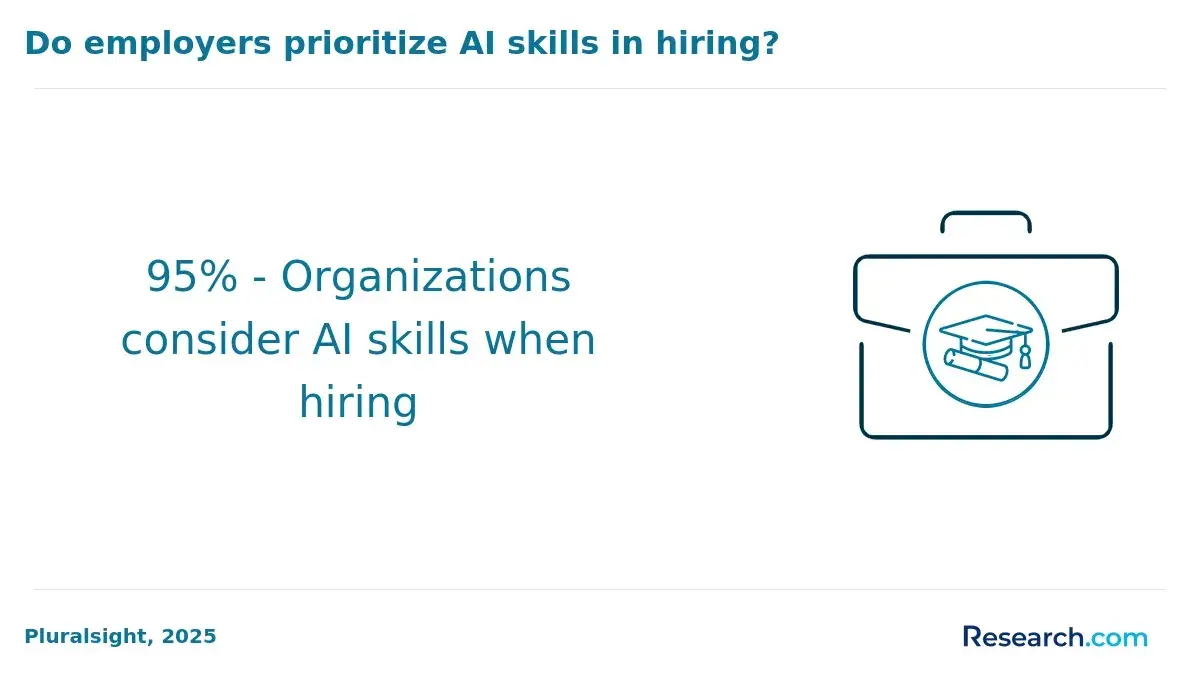
Students aiming to earn AI certifications alongside an associate degree should focus on aligning certification choices with their career goals. Popular options include the CompTIA Artificial Intelligence certification and the Microsoft Certified: Azure AI Fundamentals credential. Early integration of certification study materials into daily routines strengthens learning and eases exam preparation.
Effective time management is vital, with dedicated weekly blocks of two to four hours recommended for certification test study. Using reputable practice exams helps simulate real testing conditions, revealing weak areas and boosting confidence. Industry data indicates that completing timed mock exams can improve readiness by up to 40%.
Gaining hands-on experience through projects involving AI toolkits, programming languages such as Python, and cloud AI platforms is essential. Practical work not only reinforces theoretical knowledge but also prepares students to handle situational questions often found on exams. Building a portfolio of AI projects is highly advantageous, as many certifications require demonstrable skills.
Networking with peers, educators, and AI professionals provides insight into current exam updates and industry trends. According to CompTIA's 2024 Certification ROI Report, those holding AI-related certifications alongside an associate degree earn starting salaries averaging $62,500-31% higher than those without certifications, highlighting the significant career benefits of obtaining these credentials.
How do students effectively retain complex mathematical concepts required for AI coursework?
Students retain complex mathematical concepts in AI coursework more effectively by combining spaced practice with real-world AI applications. According to the American Mathematical Association of Two-Year Colleges (AMATYC) 2024 report, students using this approach achieve 73% accuracy in retention, compared to 41% accuracy when relying only on traditional problem sets without applied context. This highlights the value of integrating theory with practical examples.
Spaced practice means reviewing material at increasing intervals, which enhances memory and comprehension. For example, students might solve initial algorithm problems on Day 1, revisit optimization methods three days later, and then apply these concepts in a coding project a week after. This method strengthens long-term mastery by avoiding cramming.
Connecting mathematical ideas to tangible AI tasks improves understanding. Using datasets for exercises in linear algebra related to machine learning or applying probability models in natural language processing grounds abstract concepts in real uses. Students often ask questions like "How does matrix multiplication relate to data transformation?" or "What role does calculus play in tuning neural networks?" Practical application provides clear answers.
Instructors and learners benefit from visual tools such as graphs, flowcharts, and software simulations to clarify complex formulas and algorithms. Regular self-assessment through quizzes and coding exercises reinforces retention and identifies gaps. This structured, evidence-based approach supports success in AI associate degree programs.
What strategies help students transition from classroom learning to real-world AI projects and internships?
Bridging the gap between classroom learning and real-world AI projects requires hands-on experience and targeted skill development. Participating in lab sessions and coding challenges that simulate industry tasks-such as building machine learning models with real datasets or deploying AI algorithms on cloud platforms-helps solidify understanding and identify skill gaps.
Internships play a vital role in career readiness. According to the National Association of Colleges and Employers (NACE) 2024 survey, associate degree graduates with internship experience receive job offers 65% faster and negotiate starting salaries 18% higher in AI-related roles. Early internship engagement is essential; networking with professors, alumni, and industry professionals can facilitate access to relevant opportunities.
Building a portfolio showcasing competencies like data preprocessing, model training, and deployment is crucial. Projects such as chatbots, image classifiers, or predictive analytics dashboards, documented on platforms like GitHub, highlight practical expertise to employers.
Collaboration through team projects, AI clubs, or hackathons develops communication and problem-solving skills under real constraints, preparing students for multidisciplinary workplaces.
Familiarity with industry-standard tools and frameworks like TensorFlow, PyTorch, AWS, and Azure is necessary to stay competitive. Keeping current with emerging AI trends and obtaining certifications strengthens technical knowledge and resumes, easing the transition from academia to professional environments.
How should students organize and manage coding assignments, datasets, and technical documentation?
Effective management of coding assignments, datasets, and technical documentation is essential for students pursuing AI associate degrees. Using version control systems like Git helps track changes, supports collaboration, and allows reverting to earlier states, minimizing confusion and duplicated efforts often encountered in projects.
Datasets should be stored in well-labeled folders with metadata files detailing data sources, formats, and preprocessing steps. Adopting naming conventions that include dates and clear descriptors-such as "2026_customer_data_cleaned.csv"-speeds up data retrieval. Maintaining consistent folder hierarchies aligned with project phases, such as raw data, processed data, and results, improves overall organization.
Comprehensive technical documentation is vital throughout the project lifecycle. Documenting code functions, algorithm decisions, and dataset origins ensures transparency and facilitates peer reviews. Markdown files or wiki pages within repositories provide accessible and update-friendly formats for this purpose. The 2024 Stack Overflow Developer Survey found developers using systematic version control and documentation spend 40% less time debugging, linking these practices to higher project efficiency.
Version control also supports academic peer code reviews, encouraging clear commit messages and incremental updates to protect ongoing work from being overwritten. Regular backups in cloud storage or external drives further guard against data loss, a frequent issue faced by students.
What resources and study tools do top-performing AI associate students use to stay current with industry changes?
Top-performing AI associate degree students frequently utilize updated online platforms like Coursera, edX, and specialized AI learning environments that offer current courses, certifications, and hands-on projects. The 2024 Coursera Learning Impact Report highlights that learners who engage monthly with these updated resources see a 56% higher job placement rate within six months post-graduation compared to those relying on traditional textbooks.
Practical experience is crucial; students use open-source frameworks such as TensorFlow and PyTorch to build machine learning models. Participating regularly in coding competitions and hackathons enhances their problem-solving skills and prepares them for industry challenges.
Access to AI research aggregators and journals like arXiv and the Journal of Machine Learning Research ensures timely exposure to emerging studies. Many students supplement this with curated newsletters and podcasts that break down complex developments.
Tools like GitHub and Jupyter Notebooks facilitate version control and collaborative experimentation, vital for teamwork and continuous learning. Additionally, mentoring programs and professional networks, such as the Association for the Advancement of Artificial Intelligence (AAAI), provide valuable industry insights and career guidance.
Integrating these diverse resources regularly equips AI students with a strong, up-to-date skill set closely linked to improved employment prospects and career development.
Other Things You Should Know About Artificial Intelligence
Ethical considerations are critical in AI education as they prepare students to handle issues like bias, privacy, and decision-making transparency. Understanding ethical implications helps ensure AI systems are developed responsibly and safely. Many programs now integrate ethics modules to teach legal standards, fairness, and societal impacts.
Yes, working with big data is often a significant part of AI associate degree curricula. Students learn to collect, clean, and analyze large datasets essential for training AI models. Gaining skills with big data tools improves their ability to support AI projects in real-world environments.
Students frequently encounter challenges such as grasping complex mathematical concepts, balancing theory with programming tasks, and navigating rapidly evolving technologies. Time management and staying current with new AI developments are also common difficulties. Addressing these challenges early helps improve academic success and career readiness.
AI associate degree students should follow academic journals, AI forums, and online courses. Engaging with industry experts on platforms like LinkedIn is beneficial. Post-graduation, consider exploring best AI master’s programs for non-technical students to further enhance your expertise.
References
- 5 of the best AI study tools for students | Genio https://genio.co/blog/5-of-the-best-ai-study-tools-for-students
- Practical Strategies for Embracing AI in the Classroom | Jobs in Education https://jobsineducation.com/blog/practical-strategies-for-embracing-ai-in-the-classroom/
- Mastering AI Certifications – Tips and Tricks | SkillUp Online https://skillup.online/blog/mastering-ai-certifications-tips-and-tricks/
- How to study efficiently with AI tools https://www.rmit.edu.vn/students/student-news-and-events/student-news/how-to-study-efficiently-with-ai-tools
- Your Roadmap to Earning the Best AI Certifications https://www.usaii.org/ai-insights/your-roadmap-to-earning-the-best-ai-certifications
- AI Tutors: Bridging the Gap Between Students and Academic Success https://www.quadc.io/blog/bridging-the-gap-between-students-and-academic-success
- Promising Practices: Integrating AI into Project-Based Learning https://leadingeducators.org/resource/promising-practices-integrating-ai-into-project-based-learning/
- I Figured Out How to Use AI to Learn Faster, Without Getting Lazy. Here Are My Secrets | PCMag https://www.pcmag.com/articles/i-use-ai-to-learn-faster-without-getting-lazy-here-are-my-secrets
- How Peer Tutoring and Artificial Intelligence Can Strengthen Academic Support in Higher Education https://blog.joinknack.com/how-peer-tutoring-and-artificial-intelligence-can-strengthen-academic-support-in-higher-education
- Programming Assignments: A Complete Guide for Students - Evidence Based Practice https://www.evidencebasedpractice.help/programming-assignments-a-complete-guide-for-students/