2027 Best AI Degrees With the Best Job Placement Outcomes

Co-Founder and Chief Data Scientist
Many professionals with degrees in unrelated fields face uncertainty when seeking to enter the artificial intelligence job market. Without clear guidance on which programs offer strong career support and relevant skills, making an informed decision becomes difficult. The rapidly evolving AI landscape demands credentials that not only teach advanced concepts but also connect graduates with employers effectively.
This article examines university degrees known for proven job placement success in artificial intelligence, helping prospective students identify flexible and accredited pathways to pivot their careers confidently into this high-demand industry.
Key Things You Should Know
- Top AI degree programs in 2026 report job placement rates exceeding 85% within six months of graduation, reflecting strong employer demand for AI skills.
- Degrees combining AI with data science or robotics show higher salaries, averaging $95,000 annually for recent graduates in the U.S. job market.
- University partnerships with tech companies enhance practical training and internship opportunities, significantly improving graduates' employment prospects in AI-related roles.
What are the best AI degrees for strong job placement outcomes?
The best artificial intelligence degree programs in North America blend technical skills with practical applications in data science, machine learning, and business analytics. Degrees like master's programs in AI, data science, or machine learning, as well as AI-focused MBA programs, show some of the highest job placement rates within a few months of graduation. For instance, GMAC reports 81% of MBA graduates secure job offers within three months, highlighting the value of programs that combine analytics with business management.
Computer science degrees with AI specializations remain in demand, especially when paired with internships or industry research projects. Graduates of programs focusing on ethical AI, real-world problem solving, and data engineering often find accelerated hiring in applied AI roles. Popular choices include:
- Master's in Artificial Intelligence or Machine Learning
- MBA with a concentration in AI or Business Analytics
- Master's in Data Science with AI coursework
- Bachelor's in Computer Science offering AI tracks combined with internships
These programs emphasize skills in Python, TensorFlow, statistics, and deploying AI models at scale. Practical experience, such as completing capstone projects with real datasets, speeds up job placement compared to purely theoretical degrees. Prospective students should consider programs accredited by recognized bodies and those with strong industry connections. Fields like healthcare, finance, autonomous systems, and cloud computing align with over 80% placement rates.
For more information on accelerated pathways, see the accelerated computer science degree options that can complement AI education. Selecting top AI degrees with highest job placement rates involves balancing technical rigor and business insight to maximize career outcomes.
Which schools offer accredited AI programs with proven career outcomes?
ABET accreditation remains a crucial benchmark for identifying accredited artificial intelligence degree programs with strong job placement and proven career outcomes. With over 4,300 programs accredited worldwide, ABET certification ensures curricula meet rigorous standards that align with industry demands. Prospective students should prioritize schools offering ABET-accredited AI or related degrees to maximize both education quality and employment prospects.
Top schools offering AI degrees and proven career outcomes include Carnegie Mellon University, the University of California-Berkeley, and the Georgia Institute of Technology. These institutions often report job placement rates above 85% within six months of graduation, supported by strong partnerships with leading tech companies and research initiatives. Their programs commonly provide specializations in machine learning, data science, robotics, and software engineering tailored specifically to AI applications.
Students should weigh curriculum relevance and employer connections alongside accreditation. For example, Northeastern University's co-op programs place students in real AI roles during their studies, enhancing experience and hiring potential. Graduates from ABET-accredited programs typically earn 10-20% higher starting salaries compared to non-accredited counterparts, reflecting employer confidence in their skills and practical readiness.
When considering programs, examine specific career support services and transparent job placement data. Institutions with active industry advisory boards and strong employer networks create reliable pathways for successful AI careers. For those interested in affordable options, the cheapest online master's mechanical engineering degrees can also provide valuable interdisciplinary skills relevant to AI fields.
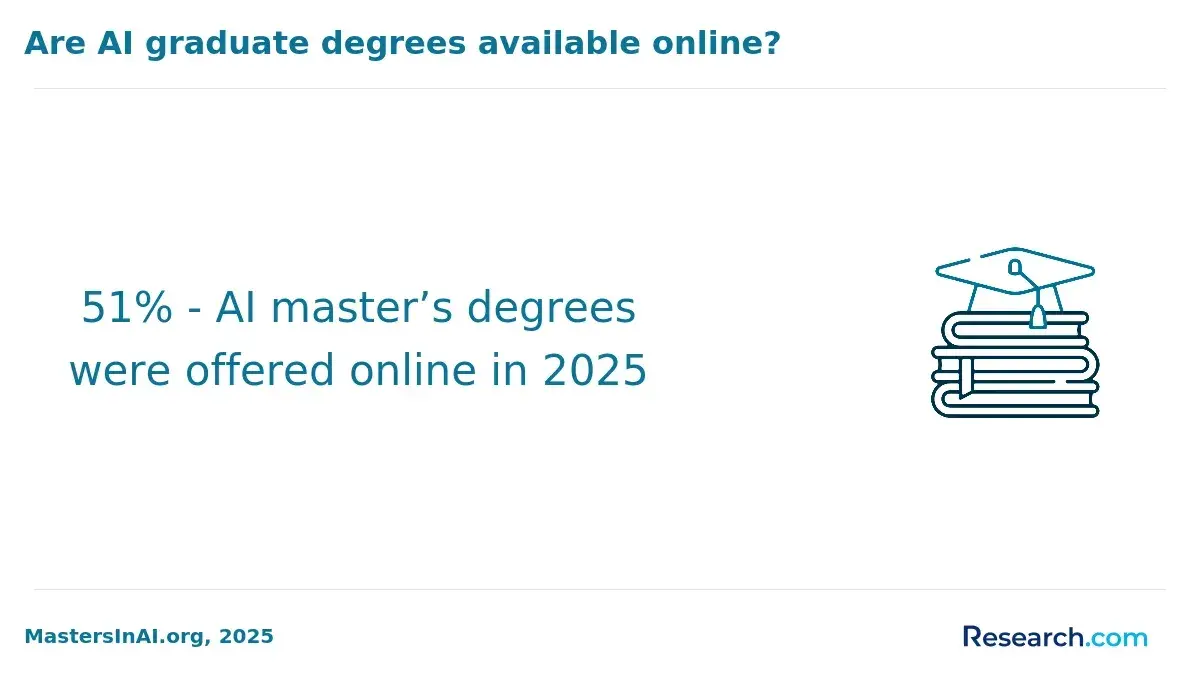
What jobs can you get with an AI degree?
Graduates with an AI degree can access diverse career paths across various industries, leveraging expertise in machine learning, data analysis, and software engineering. Roles with high job placement rates in artificial intelligence include data scientist, machine learning engineer, AI research scientist, AI software developer, and AI product manager. According to the U.S. Bureau of Labor Statistics, employment for data scientists is expected to grow by 35% from 2022 to 2032, demonstrating strong demand for AI skills in the United States.
Typical roles involve developing algorithms, designing intelligent systems, and applying AI techniques to address complex challenges. Common professions are:
- Data Scientist: Analyzes large datasets to extract actionable insights using AI methods.
- Machine Learning Engineer: Builds and optimizes models that enable automated decisions.
- AI Research Scientist: Advances theoretical AI foundations and invents novel approaches.
- AI Software Developer: Integrates AI into applications for industries like healthcare, finance, and robotics.
- AI Product Manager: Manages AI-driven product development balancing technical and business needs.
AI degrees also open doors to specialized positions such as natural language processing engineer or computer vision specialist. Graduates can join emerging sectors including autonomous vehicles or AI ethics. Employers range from startups and tech companies to government agencies and research institutions. Professionals seeking to switch careers can improve prospects through certifications and project portfolios tailored to their target fields.
For those exploring career options, consider video game programs that integrate AI components. Understanding domain-specific AI applications enhances employability in sectors like healthcare analytics, cybersecurity, and supply chain optimization, strengthening AI degree job opportunities in the United States.
What's the difference between an AI degree and data science or computer science?
The difference between an AI degree and degrees in data science or computer science lies mainly in focus and specialization, though they share significant overlap. AI degrees concentrate on machine learning, natural language processing (NLP), and deep learning, emphasizing algorithms that enable machines to simulate human cognition. Computer science offers a broader foundation, covering programming, algorithms, systems, and software engineering alongside AI components. Data science primarily focuses on extracting knowledge from data through statistics, analysis, and machine learning.
Lightcast found that AI skills like NLP and machine learning are increasingly integrated across various job roles, not limited to AI-specific positions. This labor market overlap highlights that AI degree versus data science programs career outcomes often intersect, with graduates working in robotics, predictive analytics, or autonomous systems depending on their specialization.
Prospective students should evaluate career goals: AI degrees fit those seeking specialized roles in algorithm design and cognitive modeling; data science degrees suit data-driven decision-making and statistical work; computer science provides flexibility in software development and systems architecture. Those exploring options may also consider affordable paths like an online data science masters program for broader analytics skills.
Overall, AI delivers domain-specific depth in intelligent systems, whereas data science and computer science equip learners with broad technical skills where AI forms one of many components. Recognizing differences between computer science and artificial intelligence degrees helps students align education with future job market demands.
What coursework and skills do top AI programs teach?
Top ai programs focus on rigorous coursework that develops practical skills in machine learning, data science, and software engineering aligned with industry needs. Core classes cover supervised and unsupervised learning, deep learning architectures, natural language processing, and computer vision, ensuring students grasp both theory and real-world application.
Emphasizing production machine learning, these programs teach model deployment, monitoring, and scalability using tools like TensorFlow Extended (TFX), MLflow, and Kubernetes. Stanford University's AI Index Report highlights industry's creation of significantly more machine-learning models than academia, stressing the importance of skills beyond theory.
Data engineering courses include data pipeline construction and cloud computing, while proficiency in Python, C++, and SQL remains essential. Electives often explore reinforcement learning, ethics in AI, and human-centered AI, broadening students' perspectives.
Hands-on learning through projects, internships, or capstones with industry partners builds problem-solving skills such as debugging and optimizing models under practical constraints.
Graduates typically master:
- Machine learning algorithms and deep learning frameworks
- Cloud deployment and MLOps practices
- Data management and feature engineering
- Programming languages relevant to AI development
- Ethical considerations and AI governance
Should you choose an online AI degree or an on-campus program?
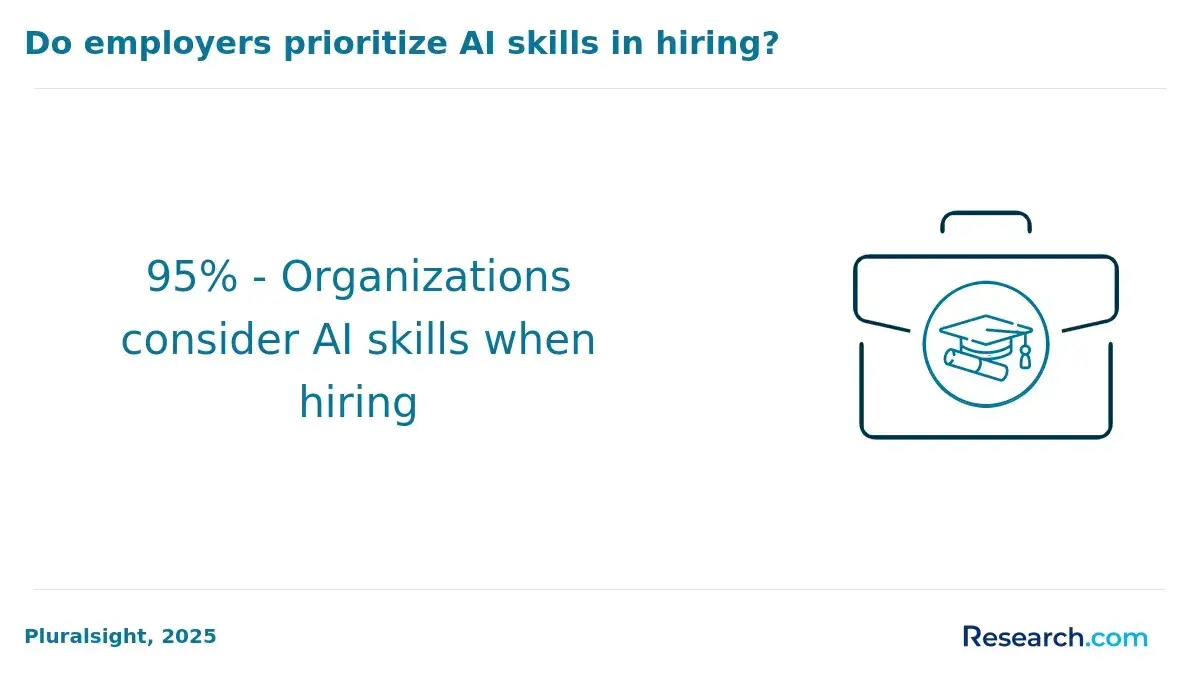
Choosing between an online ai degree and an on-campus program depends largely on your learning style, career goals, and personal situation. Online ai degrees offer flexibility, ideal for working professionals or those managing family roles. Many programs include virtual labs, group projects, and networking forums that mirror on-campus interaction. However, success requires strong self-discipline and time-management skills.
On-campus programs provide structured schedules, face-to-face mentoring, and direct access to campus resources. This environment benefits students who thrive with hands-on experience, such as lab work or collaborative research. Additionally, on-campus attendance can facilitate internships and job placements, especially in local tech hubs through career fairs and employer connections.
Some hybrid programs combine online coursework with in-person sessions, balancing flexibility and mentorship. When evaluating options, consider factors such as the level of support, internship access, and networking opportunities. Career services and alumni outcomes often impact job placement more than delivery mode.
- Online ai degrees offer pace flexibility and diverse expert access
- On-campus programs enhance hands-on learning and local employer ties
- Hybrid models provide a blend of convenience and direct mentorship
According to the National Center for Education Statistics (NCES), over half of postsecondary students take distance-education courses, reflecting the legitimacy of online ai education.
What are the admissions requirements for AI bachelor's and master's programs?
Admissions for AI bachelor's and master's programs emphasize academic achievement, relevant coursework, and standardized tests, though requirements vary by institution. Bachelor's applicants generally need a high school diploma with strong grades in mathematics, science, and computer science. Completion of courses like calculus, physics, and introductory programming is commonly expected. While some programs still require SAT or ACT scores, test-optional policies are increasingly popular.
Master's applicants typically hold a bachelor's degree in computer science, engineering, mathematics, or related fields. They must provide transcripts showing proficiency in algorithms, data structures, linear algebra, and programming languages such as Python or Java. Graduate programs often request letters of recommendation and a statement of purpose highlighting relevant experience and goals. Work experience or coding portfolios can strengthen applications to professional master's tracks.
Standardized testing requirements have shifted recently. The GRE General Test introduced a shorter version in September 2023, and many AI-related graduate programs have adopted GRE-optional policies. Strong academic records or professional experience often replace the GRE as a requirement, though some competitive programs still prefer or require these scores to distinguish applicants.
International students must demonstrate English proficiency through TOEFL or IELTS unless waived by prior degree completion in English-speaking countries. Early contact with specific programs is crucial, as admissions criteria vary widely across institutions.
How long do AI degrees take, and what do they cost?
AI degree programs usually take between two and four years, depending on the level of credential. An associate's degree often requires about two years, while bachelor's degrees typically span four years. Graduate studies, such as master's degrees with an AI specialization, generally take an additional one to two years beyond the bachelor's level, focusing on advanced and specialized knowledge.
Tuition costs vary by institution and residency. According to College Board data for the 2024-25 academic year, average annual tuition and fees are:
- In-state public four-year institutions: $11,610
- Out-of-state public four-year institutions: $30,780
- Private nonprofit four-year institutions: $43,350
These figures help estimate total tuition costs-for example, an in-state public university bachelor's degree in AI may cost around $46,440 for four years. Additional expenses like books, housing, and fees can increase the total significantly. Graduate AI programs, often offered by private or research universities, might range between $20,000 and $80,000 depending on program length and reputation.
Many students explore online or hybrid formats for more flexibility, sometimes at lower costs without extending completion times. Accelerated bachelor's or master's programs can reduce the time to degree to as little as three years.
Financial aid, scholarships, and employer tuition reimbursement can greatly reduce net costs. Prospective students should thoroughly research specific AI programs to understand both the financial and time commitments relative to their career goals and personal situations.
What salaries can AI graduates expect in common roles?
AI graduates can access competitive salaries across multiple roles, demonstrating strong demand for specialized skills. According to the U.S. Bureau of Labor Statistics (May 2024 OEWS release), the median annual wage for Computer and Information Research Scientists-covering advanced AI and machine learning researchers-is $145,080. This figure highlights the earning potential for roles requiring advanced degrees and research expertise.
Entry-level AI engineers usually earn between $85,000 and $110,000 annually. These positions focus on applying AI models and developing practical applications, often demanding proficiency in Python and machine learning frameworks. Data scientists with an AI focus typically earn from $95,000 to $130,000, depending on experience and industry sector; their role centers on analyzing large datasets and building predictive models to drive business decisions.
Specialized roles like machine learning engineers or NLP engineers often have salaries ranging from $110,000 to $140,000, especially within technology hubs or pioneering companies. Senior AI specialists and AI architects can exceed $160,000, reflecting their leadership in designing strategic AI systems.
Factors such as location, company size, and industry sector also influence pay levels. For instance, financial and healthcare industries tend to offer salary premiums due to their reliance on advanced analytics.
- Median wage for research scientists: $145,080
- Entry-level AI engineers: $85,000-$110,000
- AI-focused data scientists: $95,000-$130,000
- Machine learning/NLP engineers: $110,000-$140,000
- Senior AI specialists and architects: $160,000+
What certifications complement an AI degree and improve employability?
Certifications that complement an AI degree significantly boost employability by validating specialized skills and proving readiness for advanced roles. According to Pearson VUE's Value of IT Certification Report, certified professionals are more likely to receive raises or promotions after earning credentials, highlighting the advantage of combining an AI degree with recognized certifications.
Key certifications for AI graduates include cloud certifications such as AWS Certified Machine Learning - Specialty, Google Cloud Professional Data Engineer, and Microsoft Certified: Azure AI Engineer Associate. These demonstrate expertise in deploying AI solutions on leading cloud platforms, essential as businesses increasingly migrate AI workloads to the cloud.
Certifications focused on machine learning, like the TensorFlow Developer Certificate and IBM AI Engineering Professional Certificate, confirm hands-on skills in building and optimizing AI models. The Certified Artificial Intelligence Practitioner (CAIP) credential covers broader AI strategies and ethics, addressing enterprise-level AI use cases.
Programming and data science certifications, especially in Python and R, strengthen technical abilities crucial for AI engineers and data scientists. Security credentials such as Certified Information Systems Security Professional (CISSP) also enhance employability by signaling knowledge of secure AI deployment.
Employers value these certifications as proof of ongoing learning and practical competence. Candidates should select certifications aligned with their career focus-whether cloud AI, core machine learning, or AI ethics and security-for optimal job prospects.
Other Things You Should Know About Artificial Intelligence
In 2027, graduates with expertise in AI areas like natural language processing, autonomous systems, and AI ethics will find high job placement rates. Companies are increasingly seeking professionals who can innovate in AI-driven applications such as self-driving cars, conversational agents, and ensuring AI systems operate responsibly.
A strong foundation in mathematics is essential for careers in artificial intelligence. Key areas include linear algebra, statistics, calculus, and probability, which underpin machine learning algorithms and data analysis techniques. Mastery of these mathematical concepts helps AI professionals develop effective models and interpret results correctly.
Ethical concerns in artificial intelligence include bias in algorithms, data privacy, and the potential for job displacement due to automation. There is ongoing debate about accountability when AI systems make decisions, especially in high-stakes domains like healthcare or criminal justice. Addressing these concerns requires interdisciplinary collaboration and responsible AI design principles.
Yes, artificial intelligence skills are increasingly valuable beyond tech sectors. Industries such as healthcare, finance, manufacturing, and agriculture use AI to optimize operations, improve diagnostics, and enhance customer experiences. Professionals with AI expertise can find opportunities in research, consulting, and development roles across diverse fields.
References
- Artificial Intelligence Career Paths: Roles, Salaries, and Skills https://www.h2kinfosys.com/blog/artificial-intelligence-career-paths-roles-salaries-and-skills/
- 10 Most In-Demand Courses to Elevate Your AI Skills - Codecademy Blog https://www.codecademy.com/resources/blog/10-most-in-demand-ai-courses
- Best AI Certifications to Boost Your Career in 2026 – Dataquest https://www.dataquest.io/blog/best-ai-certifications/
- Top College Degrees for Securing the Highest-Paying AI Jobs in 2026 https://www.investopedia.com/top-college-degrees-for-securing-the-highest-paying-ai-jobs-in-2026-11946777
- Application and admission - Master Artificial Intelligence https://www.uva.nl/shared-content/programmas/en/masters/artificial-intelligence/application-and-admission/international-prior-education/international-prior-education-foldout-menu.html
- Top In Demand AI Skills (2025) https://www.skillsoft.com/blog/essential-ai-skills-everyone-should-have
- Top 10 Best AI Courses for Career Growth with Job Guarantee (2026) | Honest Reviews https://logicmojo.com/best-ai-courses-for-career-growth-with-job-guarantee/
- Top Artificial Intelligence Courses: Fees and Duration https://collegevidya.com/blog/artificial-intelligence-course-fees-structure-duration/
- Online AI Degrees vs On-Campus: Which Is Right for You in 2026? https://aidegreeonline.com/online-ai-degrees-vs-on-campus-which-is-right-for-you-in-2026/
- B.Sc. in Artificial Intelligence https://www.studyinpoland.pl/en/programme