2027 AI Bachelor's Degree Programs Best for Immediate Employment

Co-Founder and Chief Data Scientist
Many aspiring professionals face challenges transitioning into the rapidly evolving field of Artificial Intelligence due to inadequate program options that balance flexible learning with strong employment outcomes. Without targeted guidance, students risk investing time and resources in degrees that lack practical relevance or industry recognition. This uncertainty often leads to delayed career pivots and missed job opportunities.
This article highlights the best AI bachelor's degree programs designed for immediate employment, focusing on accredited, adaptable curricula that equip students-especially those from unrelated backgrounds-with the skills and credentials sought by employers in this competitive sector.
Key Things You Should Know
- U.S. AI bachelor's programs now emphasize hands-on experience, with over 70% of schools integrating practical projects and internships to boost immediate employability in high-demand tech roles.
- Graduates with AI degrees see a median starting salary increase of 15% compared to broader computer science, reflecting strong industry demand for specialized AI skills in 2025-2026.
- Top programs prioritize interdisciplinary coursework combining AI, data science, and ethics, preparing students for diverse roles including AI development, data analysis, and AI policy compliance.
What is an AI bachelor's degree, and what jobs does it prepare you for?
An AI bachelor's degree combines fundamental computer science with focused training in machine learning, neural networks, natural language processing, and robotics. This program equips students with skills in programming languages such as Python, data modeling, and algorithm development, preparing them for roles that require both software engineering and data-driven decision making.
Job prospects for those with an AI bachelor's degree in North America include positions like machine learning engineer, data scientist, AI research analyst, robotics programmer, and AI software developer. These roles involve developing models that enhance automation, predictive analytics, and intelligent user interfaces. Additionally, careers in AI ethics, product management, and consulting are also supported by this degree.
Lightcast (Burning Glass) 2024 data shows U.S. job postings seeking artificial intelligence skills grew about 100% from 2019 to 2023, especially in software development, data science/analytics, and IT sectors. Employers often expect entry-level candidates to have experience with AI frameworks like TensorFlow or PyTorch and knowledge of cloud computing platforms.
Building a portfolio of AI projects or internships significantly boosts employability. Soft skills such as problem-solving and cross-disciplinary collaboration are also critical as AI increasingly integrates with business strategies. For a deeper dive into an AI career path, resources are available that outline detailed trajectories and opportunities.
Which accredited colleges offer strong AI bachelor's programs for employment?
Several accredited colleges offer strong ai bachelor's degree programs for career placement in technology sectors. Leading universities with established computer science and ai curricula provide graduates with competitive skills aligned with employer needs. The University of California-Berkeley integrates machine learning and ai ethics into its computer science program, producing graduates with median salaries over $85,000 within four years, according to U.S. Department of Education College Scorecard data.
Top accredited universities with ai bachelor's programs for immediate job opportunities include the University of Washington, where hands-on ai projects and partnerships with Seattle tech firms help graduates achieve median earnings above $80,000 within four years. Georgia Institute of Technology offers an ai specialization focused on applied fields like robotics and natural language processing, supporting median incomes of $82,000.
Students should prioritize programs offering:
- Robust foundational ai concepts paired with practical applications
- Internships or cooperative education with industry partners
- Access to advanced labs and research centers
- Career services targeting ai and tech job markets
Choosing accredited universities with median earnings above $80,000 within four years supports strong career entry. Prospective students may also consider interdisciplinary studies in AI ethics, computer vision, or cybersecurity to match expanding employer expectations. For insights on managing costs, reviewing the mechanical engineering degree cost can offer useful financial perspective relevant to STEM fields including AI.
What AI roles can you get right after graduation with a bachelor's degree?
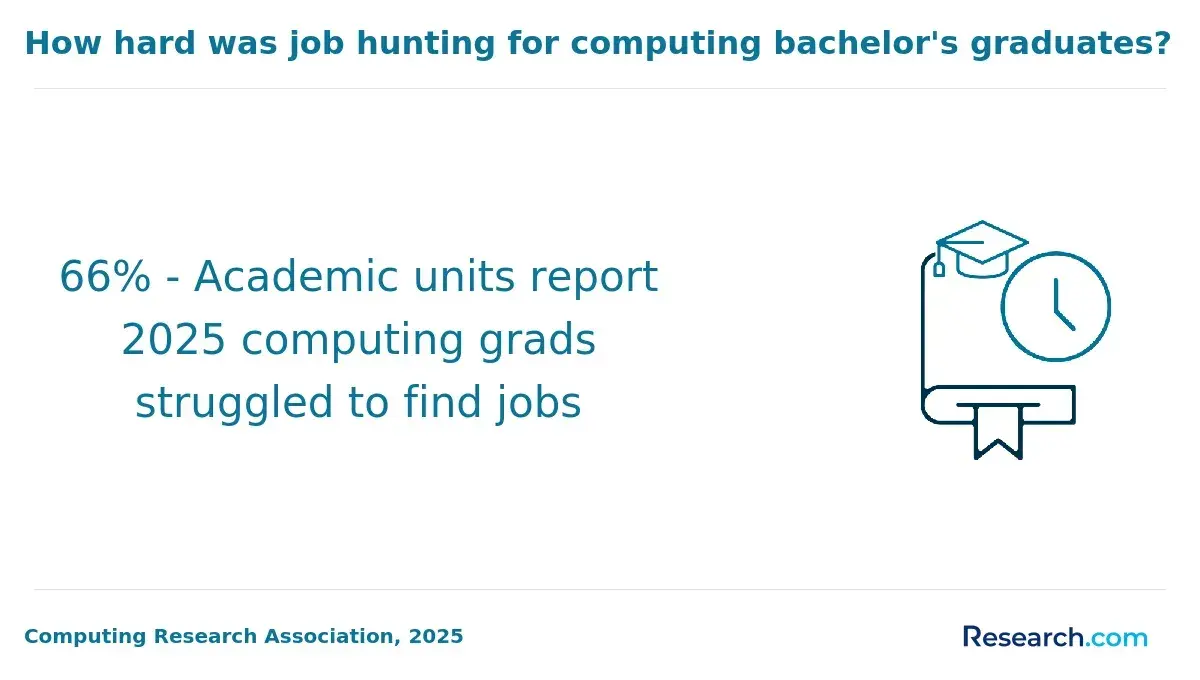
Graduates with a bachelor's degree in artificial intelligence can find various entry-level positions that incorporate AI tools and concepts. Common roles include data analyst, software developer, and cybersecurity analyst, each requiring programming knowledge and familiarity with machine learning frameworks. For those focusing on entry level artificial intelligence careers in the US, proficiency in data manipulation and AI model application is essential.
Data analysts interpret complex datasets using AI-enhanced tools like Python, R, or SQL paired with machine learning libraries such as TensorFlow or scikit-learn, emphasizing skills in statistics and visualization. Software developers create algorithms to automate processes and enhance user experience by integrating AI components. Cybersecurity analysts apply AI tactics to detect security anomalies and protect systems from cyber threats.
Additional positions including machine learning engineer assistants and AI product testers offer valuable experience toward advanced AI careers. According to the 2024 CompTIA Tech Jobs Report, demand for ai bachelor's degree jobs for new graduates has increased, with employers valuing hands-on experience with AI frameworks and problem-solving abilities.
Job seekers benefit from building portfolios with practical AI projects and internships. Mastering programming languages like Python, understanding cloud AI platforms, and ethical AI deployment significantly improve prospects. Students interested in pursuing affordable options can explore online AI degrees to begin their career journey effectively.
How do online AI bachelor's programs compare with on-campus programs for hiring?
Online AI bachelor's degree employment outcomes now closely mirror those of traditional on-campus programs, according to Gallup's research showing 52% of U.S. adults believe online degrees hold similar hiring value. Employers increasingly prioritize practical skills, portfolio work, and real-world experience over the education mode. Many online programs incorporate virtual labs, coding bootcamps, and capstone projects with tech internships, providing applicants opportunities to demonstrate relevant expertise.
Despite this, campus AI programs often offer enhanced faculty mentorship, research prospects, and networking through career fairs, which can ease immediate job placement in competitive firms. Prospective students should assess if an online program includes synchronous classes and career services that replicate these benefits. Hiring managers focus on skills assessments and coding challenges rather than whether a degree was earned online or in-person.
Graduates from online AI bachelor's programs report successful technical hires by showcasing comprehensive project portfolios and applied knowledge. Regional employer attitudes vary, making it essential to research company-specific views on online education. For those interested in further studies, exploring a data science degree online can complement AI skills effectively.
Comparative hiring rates for AI graduates reflect this shift toward valuing demonstrated ability. Job-seekers should build skillsets through practical projects and seek programs with strong industry engagement to enhance employment prospects.
What core courses and skills should an employable AI bachelor's curriculum include?
An employable AI bachelor's curriculum integrates foundational theory with practical skills. Core courses typically include programming languages like Python and Java, essential for AI development. Mathematics-especially linear algebra, calculus, probability, and statistics-underpins algorithms and data analysis techniques.
Key AI-specific classes cover machine learning, natural language processing, data mining, and computer vision, enabling students to create models and process unstructured data. Complementary skills such as data structures, algorithms, and software engineering principles enhance problem-solving and coding efficiency.
Hands-on experience with popular AI frameworks like TensorFlow, PyTorch, and scikit-learn is vital. Familiarity with cloud platforms such as AWS and Azure supports scalable AI model deployment. Courses addressing ethics and bias in AI prepare students to develop responsible and transparent systems.
Project-based learning and internships build real-world application skills, boosting employability. According to Microsoft and LinkedIn's 2024 Work Trend Index, 71% of leaders prefer candidates with AI expertise over those with more experience but limited AI knowledge. This reinforces the value of curricula balancing computer science fundamentals with practical AI tools.
Preparation in these areas aligns education with industry needs, reducing the transition time to employment after graduation.
What admissions requirements do AI bachelor's programs typically have in the U.S.?
Admission to AI bachelor's programs in the U.S. prioritizes strong academic performance, especially in math and science subjects. Applicants are commonly expected to have completed high school courses in algebra, geometry, calculus, physics, and programming when available. According to NACAC's 2024 State of College Admission, the most important criteria remain "grades in all courses" and "grades in college prep courses," even as standardized tests like the SAT or ACT have become largely optional.
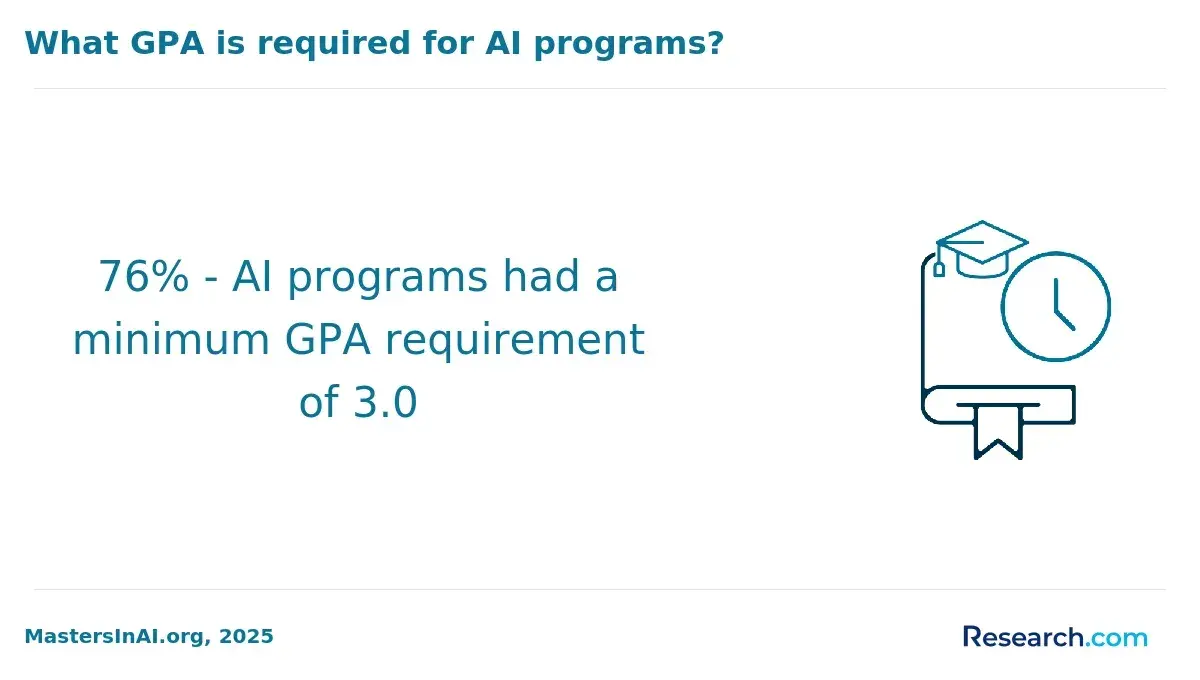
A competitive GPA, typically between 3.5 and 4.0 on a 4.0 scale, is essential for most programs. Many schools require a personal statement outlining the applicant's interest in artificial intelligence and career aspirations. Letters of recommendation highlighting analytical and technical skills are often requested. Submission of strong standardized test scores can still enhance an application if provided.
Foundational coding experience is increasingly valued, whether gained through AP computer science classes, online courses, or extracurricular projects. For nontraditional or transfer students, demonstrated work experience or completed college-level programming and math courses may substitute for high school credentials. Early focus on STEM and evidence of programming ability can boost chances of admission at AI programs focused on immediate employment readiness.
How long do AI bachelor's programs take, and what do they cost?
Most AI bachelor's degree programs in the U.S. span four years of full-time study, similar to traditional computer science degrees. Some schools offer accelerated or combined degree options to reduce this timeframe to three years, though these are less common and often require a heavier course load or prior college credits.
Tuition costs for these programs vary widely based on public versus private status and residency. Public four-year colleges average about $11,610 per year for in-state students, totaling roughly $46,440 before housing and materials. Private universities often charge significantly more, with AI-focused bachelor's programs sometimes costing between $160,000 and $180,000 in total tuition.
Some programs include co-op or internship elements, which may extend the duration but provide paid work experience to help offset costs. Online AI bachelor's programs offer flexible pacing and may have reduced fees for non-resident students.
When planning, prospective students should consider:
- Credit transfer policies that might shorten the degree.
- Living expenses in addition to tuition.
- The value of experiential learning opportunities, which can delay graduation but improve job prospects.
What internships, co-ops, and projects help AI majors get hired faster?
Internships, co-ops, and project-based experiences in artificial intelligence offer valuable hands-on skills and open pathways to employment by solving real-world challenges. Students working with companies focused on machine learning, natural language processing, or computer vision gain expertise that employers highly value. Data from the National Association of Colleges and Employers shows that 67.7% of interns in technology roles receive full-time job offers, highlighting these experiences as gateways to immediate careers.
Extended co-op programs provide immersive work terms where students refine critical abilities like neural network design, data preprocessing, and AI model deployment. These roles often complement academic learning, enabling students to build professional networks and contribute measurable project outcomes.
Project portfolios showcasing AI applications-such as recommendation engines, autonomous agent simulations, or real-time analytics platforms-enhance job readiness. Participation in multidisciplinary teams and open-source AI initiatives further demonstrates adaptability, teamwork, and coding proficiency.
Targeting internships or co-ops at startups, established AI firms, or university-affiliated research labs provides exposure to cutting-edge AI development and strengthens resumes.
- Internships in AI subfields including NLP, computer vision, and machine learning
- Co-ops offering extended, immersive project experience
- Hands-on application of AI algorithms to real problems
- Collaboration on multidisciplinary and open-source AI projects
- Experience in AI research labs or product development environments
These pathways deliver practical skills and networks to significantly increase the chances of converting internships or co-ops into full-time employment in AI.
What certifications complement an AI bachelor's degree for immediate employment?
Certifications that complement an artificial intelligence bachelor's degree significantly boost job readiness by validating practical skills sought by employers. Key certifications span programming, machine learning, cloud platforms, and data science. Examples include:
- Google Professional Machine Learning Engineer, demonstrating machine learning skills with Google Cloud for scalable AI solutions.
- Microsoft Certified: Azure AI Engineer Associate, proving the ability to deploy AI on Azure, widely used in enterprises.
- Certified Data Scientist credentials from organizations like DASCA, focusing on data analytics and modeling.
- Python certifications such as PCEP or PCAP by the Python Institute, emphasizing proficiency in the dominant AI programming language.
Additional IT certifications increase employability and salary potential. According to Pearson VUE's report, nearly 79% of certified professionals experience raises, promotions, or new job opportunities.
Security certifications like CompTIA Security+ or CISSP benefit AI roles protecting sensitive information. Project management credentials such as PMP or Scrum Master complement technical AI expertise by highlighting effective project delivery.
Choosing certifications aligned with target fields-healthcare AI, financial analytics, or other domains-maximizes their value. Combining programming, cloud, and domain-specific certifications strengthens profiles for entry- to mid-level AI positions, offering clear pathways to career advancement.
What salaries and job outlook can AI bachelor's graduates expect in the U.S.?
Graduates holding a bachelor's degree in artificial intelligence can expect competitive salaries and strong career prospects across various industries in the U.S. Entry-level roles typically offer annual salaries between $75,000 and $95,000, with variations depending on location and sector. Mid-level professionals, such as data scientists or AI specialists, often earn from $100,000 to $130,000, while experienced experts working in major tech hubs can surpass $150,000 annually.
Demand for AI-related expertise is rapidly increasing. According to U.S. Bureau of Labor Statistics projections, employment for data scientists is forecasted to grow by 35% from 2022 to 2032, indicating a robust job market for graduates with skills in artificial intelligence, machine learning, and data analytics.
Common industries where AI bachelor's graduates find opportunities include:
- Technology firms creating AI-driven solutions
- Financial services utilizing AI for risk management
- Healthcare organizations applying AI in diagnostics
- Manufacturing companies automating workflows
These sectors consistently seek strong technical and problem-solving skills. Candidates with internships or extra certifications often negotiate higher starting salaries. As AI continues to integrate across numerous fields, those with a bachelor's degree in artificial intelligence have significant chances for well-paying, stable careers with growth potential.
Other Things You Should Know About Artificial Intelligence
AI bachelor's programs in 2027 often offer introductory coding courses to accommodate students without prior experience. These courses are designed to build foundational skills, ensuring all students are equipped to tackle advanced AI topics and succeed in their studies.
Math skills are fundamental in AI, especially in areas like linear algebra, calculus, probability, and statistics. These disciplines underpin algorithms used in machine learning, data analysis, and neural networks. Developing proficiency in math is essential throughout the degree to understand and implement AI concepts effectively.
Many colleges provide tailored career services including resume workshops, interview preparation, and AI-specific job fairs. They often have connections with tech companies and research labs offering internships and entry-level positions. Access to mentorship programs and alumni networks can also help students transition directly into employment after graduation.
Yes, employers increasingly seek AI graduates who can combine technical expertise with skills in areas like ethics, communication, and domain-specific knowledge. Understanding business applications or healthcare, for example, enhances job prospects. Interdisciplinary skills improve adaptability and problem-solving in real-world AI applications.
In 2027, AI bachelor's graduates are highly sought after in industries like finance, healthcare, and e-commerce. These sectors are leveraging AI for data analysis, predictive modeling, and enhancing customer experiences. For further specialization, consider exploring best master’s programs in AI and finance.
References
- Bachelor in Management and Artificial Intelligence https://www.kozminski.edu.pl/en/programs/undergraduate-programs-bachelor/bachelor-management-and-artificial-intelligence
- Best Artificial Intelligence Schools: The Top Colleges and Universities for Artificial Intelligence Programs https://careerkarma.com/blog/best-schools-for-artificial-intelligence/
- How Long Does It Take to Complete an AI Course https://www.epw.com/blog/courses/how-long-is-ai-course
- Top College Degrees for Securing the Highest-Paying AI Jobs in 2026 https://www.investopedia.com/top-college-degrees-for-securing-the-highest-paying-ai-jobs-in-2026-11946777
- Key Skills Gained from a Bachelor of Science in Artificial Intelligence https://tetr.com/blog/key-skills-gained-from-a-bachelor-of-science-in-artificial-intelligence
- GitHub - speedyapply/2026-AI-College-Jobs: 2026 AI/ML internship & new graduate job list updated daily https://github.com/speedyapply/2026-AI-College-Jobs
- A Complete 4-Year Course Plan for an Artificial Intelligence Undergraduate Degree https://www.mihaileric.com/posts/complete-artificial-intelligence-undergraduate-course-plan/
- Artificial Intelligence Degree | Complete Guide by ABD https://allbachelordegrees.com/degrees/computers-it/artificial-intelligence/artificial-intelligence-degree-and-careers-guide/
- Top Artificial Intelligence Courses: Fees and Duration https://collegevidya.com/blog/artificial-intelligence-course-fees-structure-duration/
- AI Degrees: All Schools with Artificial Intelligence Bachelor’s Degrees - MastersInAI.org https://www.mastersinai.org/degrees/artificial-intelligence-degrees/